
A raised bed is only as good as the soil you pour into it. Too dense and your roots suffocate; too light and your plants starve mid-season. The best bagged soil for raised beds solves this with a specific blend of aeration, moisture retention, and slow-release nutrition that doesn’t require heavy amending at planting time.
I’m Min — the co-founder and writer behind Gadgets Feed. I’ve spent countless hours cross-referencing bag chemistry, customer durability reports, and ingredient lists to separate the premium mixes from the filler-heavy bags that compact after one rain.
Whether you’re topping off an established bed or starting fresh, the right foundation determines your yield. This guide breaks down the top contenders for best bagged soil for raised beds so you can fill your frame with confidence.
How To Choose The Best Bagged Soil For Raised Beds
Raised bed gardening demands a soil structure different from in-ground rows. You need a mix that stays loose enough for deep root penetration but holds moisture against the drying effect of elevated frames. The wrong bag compacts into clay-like bricks by mid-July.
Aeration and Drainage
Look for ingredients like perlite, pumice, or coarse sand that create pore spaces. Peat moss and coco coir provide water-holding capacity, but too much turns the bed into a sponge. The ideal bag has visible texture — chunks of bark, rice hulls, or biochar — not a uniform powder.
Organic Matter and Nutrient Profile
Worm castings, composted manure, kelp meal, and mycorrhizal fungi are the active ingredients that feed your plants without chemical salts. Premium bags list these on the front label. Budget options often rely on synthetic slow-release fertilizers that can burn tender roots in a confined bed.
Quick Comparison
On smaller screens, swipe sideways to see the full table.
| Model | Category | Best For | Key Spec | Amazon |
|---|---|---|---|---|
| Coast of Maine Castine Blend | Premium | Ready-to-use raised bed mix | 2 cu ft, biochar & mycorrhizae | Amazon |
| Espoma Organic Vegetable & Flower | Premium | Heavy feeders like tomatoes | 1 cu ft, Myco-Tone® fungi | Amazon |
| Michigan Peat Baccto Wholly Cow | Mid-Range | Soil amendment for poor native soil | 40 qt, composted manure blend | Amazon |
| Coast of Maine Tomato & Veggie | Mid-Range | Container and small raised beds | 20 qt, composted manure & peat | Amazon |
| Michigan Peat Garden Magic | Mid-Range | General purpose moisture retention | 40 lbs, reed sedge peat blend | Amazon |
| Back to the Roots Worm Castings | Budget | Amendment to boost existing soil | 5 lbs, pure vermicompost | Amazon |
| Rosy Soil Cactus Mix | Budget | Drought-tolerant plant sections | 4 qt, peat-free & chunky | Amazon |
In‑Depth Reviews
1. Coast of Maine Castine Blend Raised Bed Mix
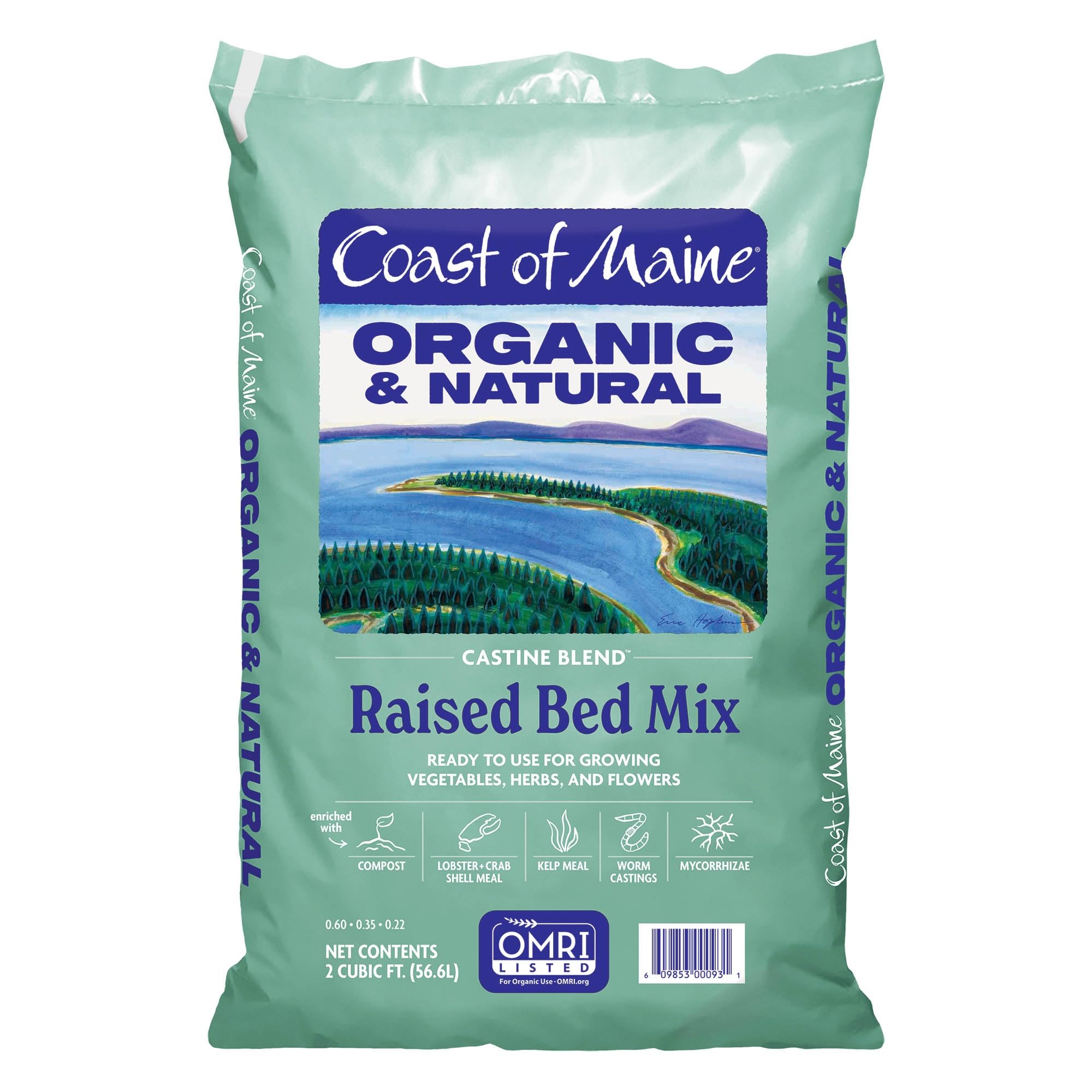
This is the closest you can get to a finished raised bed mix right out of the bag. The Castine Blend combines worm castings, mycorrhizae, biochar, green sand, kelp meal, and lobster and crab shell meal — a biodiverse recipe that mimics living soil. The texture is light and fluffy, not compacted, which lets water drain freely while biochar locks in moisture and nutrients.
Customers consistently report rich, dark, soft dirt with no twigs, bugs, or weed seeds — a rare find in bagged soil. The 2-cubic-foot bag covers a standard 4×4 bed to a depth of about 3 inches, making it ideal for topping off existing beds without heavy mixing. It also works as a powerful amendment for hard clay or sandy native soil, adding organic structure that improves over time.
For growers who want maximum yield with minimal guesswork, this blend is the gold standard. The only tradeoff is the premium position — it costs more per cubic foot than general-purpose mixes, but you are paying for a finished product that eliminates the need to buy separate amendments.
Why it’s great
- True ready-to-use mix with no additional amending needed
- Biodiverse ingredients (biochar, kelp, mycorrhizae) boost long-term soil health
- Light, airy texture prevents compaction in raised frames
Good to know
- Premium price per cubic foot compared to bulk blends
- May require supplemental fertilizer for heavy feeders in peak season
2. Espoma Organic Vegetable & Flower Garden Soil

Espoma’s OG formula has been a staple for organic gardeners for years, and for good reason. The VFGS1 blend is enriched with earthworm castings and a proprietary mix of endo and ecto mycorrhizae called Myco-Tone, which colonizes root systems to improve nutrient uptake. It is designed to be mixed with native garden soil — ideal for in-ground beds where you want to boost the existing dirt without replacing it entirely.
Customers report that plants in Espoma mixes visibly outperform those grown in generic organic alternatives within the first few weeks. The texture is rich and well-structured without being muddy, and the bags consistently arrive bug-free. It’s particularly effective for heavy feeders like tomatoes, squash, and peppers that demand steady nutrition.
The one-cubic-foot bag is smaller than some competitors, so you will need multiple bags for a full raised bed. But for targeted planting holes or amending a medium-sized bed, this is the most reliable way to inject concentrated organic biology into your soil.
Why it’s great
- Myco-Tone mycorrhizae deliver measurable root growth improvement
- Rich in worm castings for slow-release feeding
- Consistently bug-free and uniform texture
Good to know
- Smaller bag volume — budget for multiple units per bed
- Intended as a soil amendment, not a standalone fill
3. Michigan Peat Baccto Wholly Cow Compost & Manure
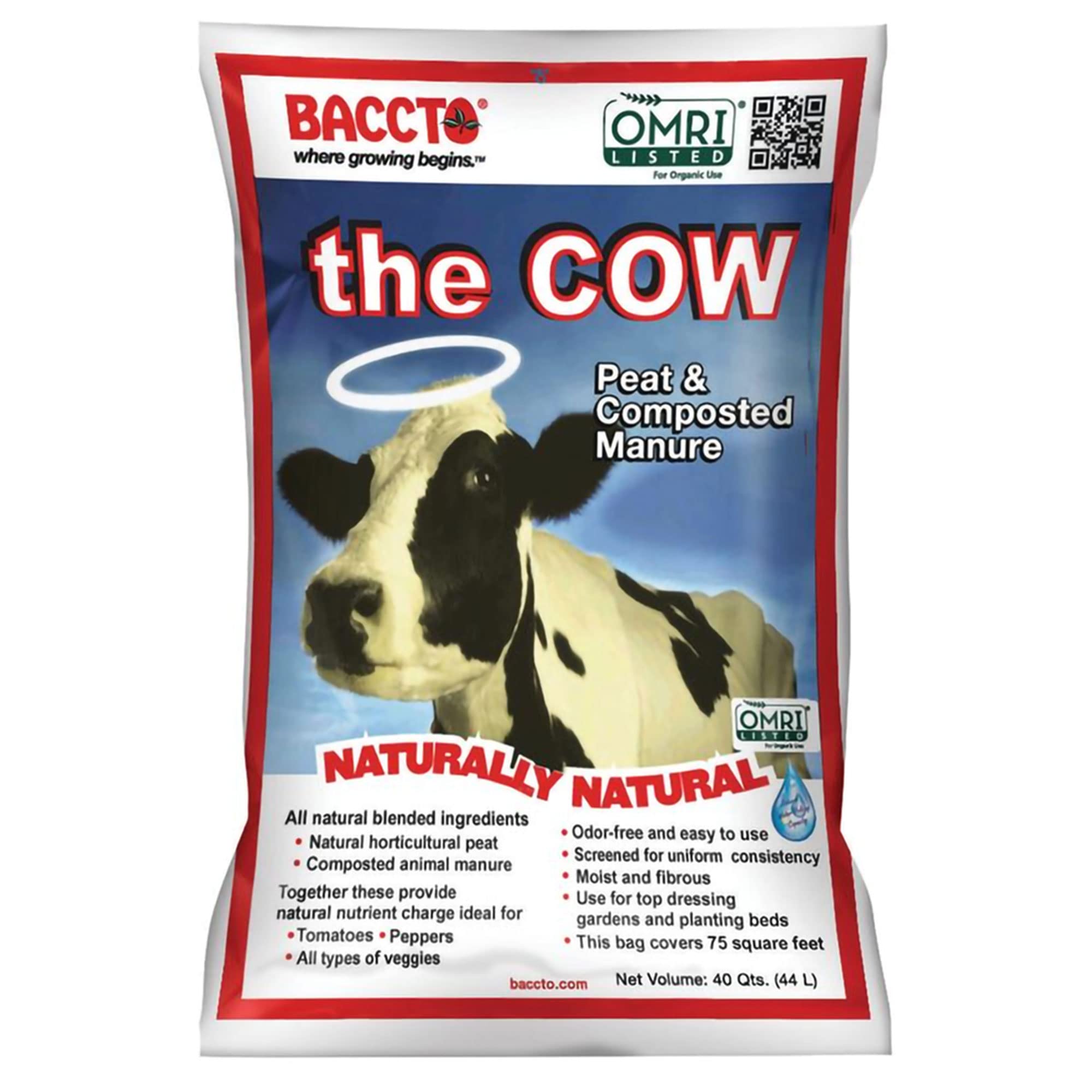
When your native soil is pure sand, heavy clay, or old river bottom, you need organic mass to build structure. Wholly Cow delivers exactly that — a 40-quart bag of peat and composted cow manure that is screened for uniform consistency and completely odor-free. It is not a standalone raised bed fill, but it is the best soil amendment you can add to a bed that already has a base layer of topsoil or loam.
Gardeners report using this to transform poor, sandy soil into rich, dark planting ground within one season. The high manure concentration provides a powerful nutrient kick, and the peat component improves moisture retention in fast-draining beds. Experienced growers also use it as a mushroom substrate at a 1:1 ratio with coco coir, proving its cleanliness and sterilization quality.
Because it is nutrient-dense, you can apply it as a top-dressing in spring or work it into the top 6 inches of an established bed. The 34-pound bag is heavy, but the texture remains fluffy and easy to handle once opened.
Why it’s great
- High manure concentration for heavy feeding without chemical burn
- Odor-free and screened for uniform texture
- Transforms poor native soil into productive growing medium
Good to know
- Not a standalone raised bed mix — needs a base soil
- Heavy bag at 34 pounds per 40-quart
4. Coast of Maine Tomato & Vegetable Planting Soil

This OMRI-listed organic mix from Coast of Maine strikes a strong balance between moisture retention and drainage, making it a versatile choice for both in-ground beds and containers. The formula uses composted manure and sphagnum peat moss to create a lightweight texture that supports vigorous root growth, particularly for heavy-producing plants like heirloom tomatoes.
Customers report visible growth within days of transplanting, with excellent moisture retention that reduces watering frequency during hot spells. The mix includes aromatic wood content that appears to help deter soil-dwelling insects, though a few users have noted fungus gnat larvae in sealed bags — a known risk with organic compost that can be mitigated by pre-treating with neem oil.
For small raised beds or container gardens, the 20-quart bag is a manageable size. However, if you are filling a full 4×8 bed, you will need several bags, and the per-bag cost adds up. It is best used as a top-off or for shallow-rooted vegetable sections rather than deep bed fills.
Why it’s great
- OMRI-listed organic with visible growth results within days
- Excellent moisture balance for hot, dry climates
- Lightweight texture ideal for containers and small raised beds
Good to know
- Some batches have reported fungus gnat larvae — pre-treat before use
- Not cost-effective for filling large beds; better as a top-off
5. Michigan Peat Garden Magic General Purpose Moisture Retaining Potting Soil
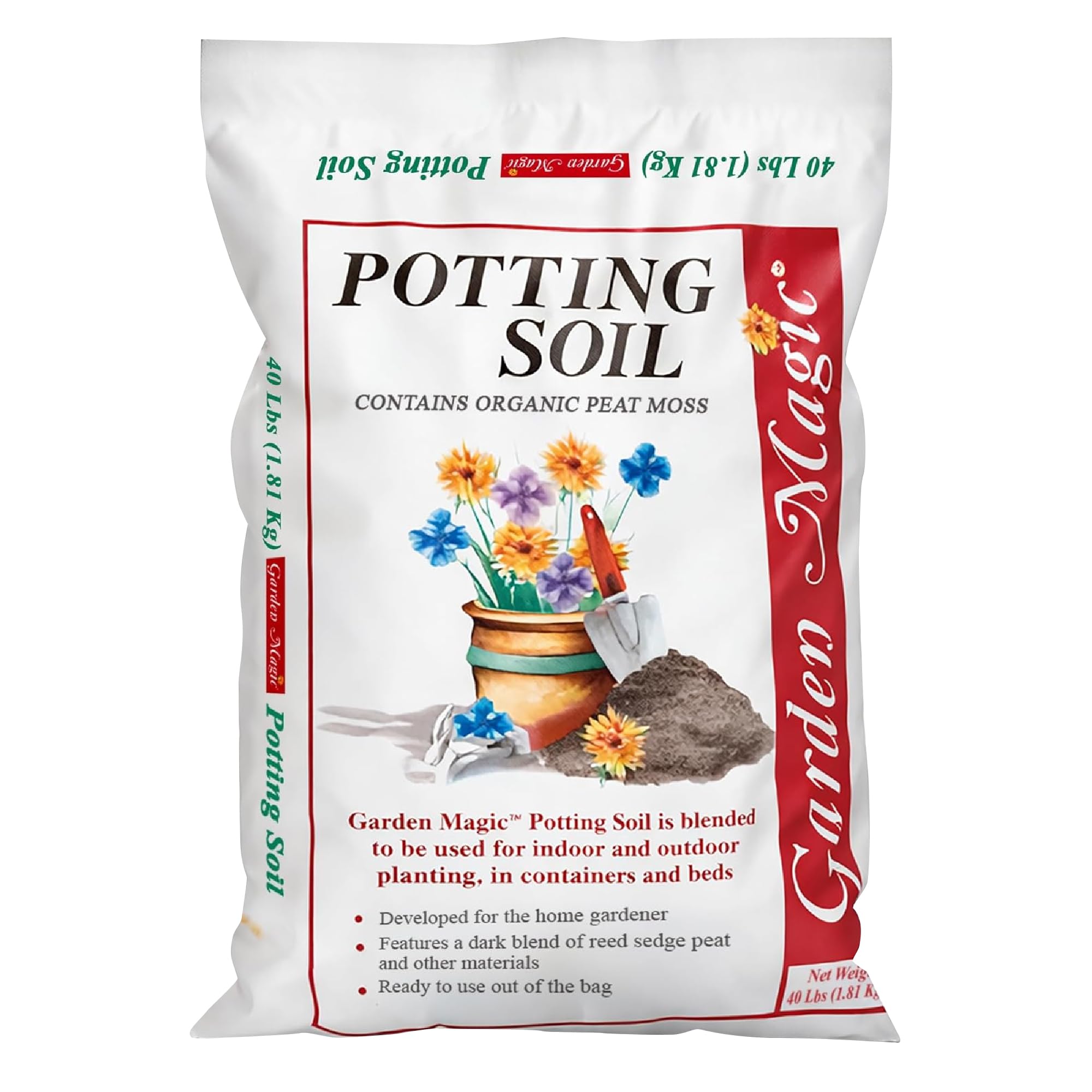
For gardeners on a budget who need a massive volume of soil, the Garden Magic 40-pound bag delivers the lowest cost per pound in this list. The formula is a dark blend of reed sedge peat, organic peat moss, and other natural materials designed to retain moisture during dry spells — a key feature for raised beds that dry out faster than in-ground plots.
Customer feedback is overwhelmingly positive for its value and quality. Users describe the soil as rich and fresh, with no foul odors or insect infestations. It comes ready to use straight from the bag for pots, flower beds, and even succulent containers. A few bags have contained larger wood sticks, which is common in non-screened peat products, but these are minor and can be picked out or left to compost.
The primary limitation is that this is a general-purpose mix, not a specialized vegetable blend. It lacks the targeted nutrient profile of premium raised bed soils, so you will need to supplement with compost or slow-release fertilizer for heavy-feeding crops like tomatoes or peppers.
Why it’s great
- Excellent value — 40 pounds for a low cost per pound
- High moisture retention protects plants during dry periods
- Ready to use out of the bag with minimal mixing
Good to know
- General-purpose formula lacks targeted vegetable nutrients
- Occasional larger wood sticks in the bag
6. Back to the Roots Organic Worm Castings

Worm castings are one of the most potent organic amendments you can add to a raised bed, and Back to the Roots delivers a clean, consistent product. This 5-pound bag of pure vermicompost is free of synthetic additives and provides a slow-release nitrogen source that won’t burn delicate roots — even for seedlings. It contains beneficial microbes that protect plants from harmful pathogens while improving soil structure.
Customers use this product in everything from heavy chunky mixes (coco chips, perlite, charcoal) to standard potting soil. The granules are uniform and dry, blending in without compacting, which preserves the aeration of your base soil. Many gardeners also report using it as a side-dressing for milkweed to support monarch butterfly populations without chemical risk.
Because it is a concentrated amendment rather than a bulk fill, you will need a separate base soil for your raised bed. But for anyone who wants to inject biological life into their existing mix, this is the purest option available. The resealable bag keeps the castings fresh between uses.
Why it’s great
- Pure vermicompost with no fillers or synthetic additives
- Slow-release nutrients won’t burn seedlings or sensitive plants
- Beneficial microbes improve soil health and pathogen resistance
Good to know
- Concentrated amendment — requires a base soil to mix with
- 5-pound bag covers only small sections; larger beds need multiple bags
7. Rosy Soil Cactus and Succulent Potting Mix
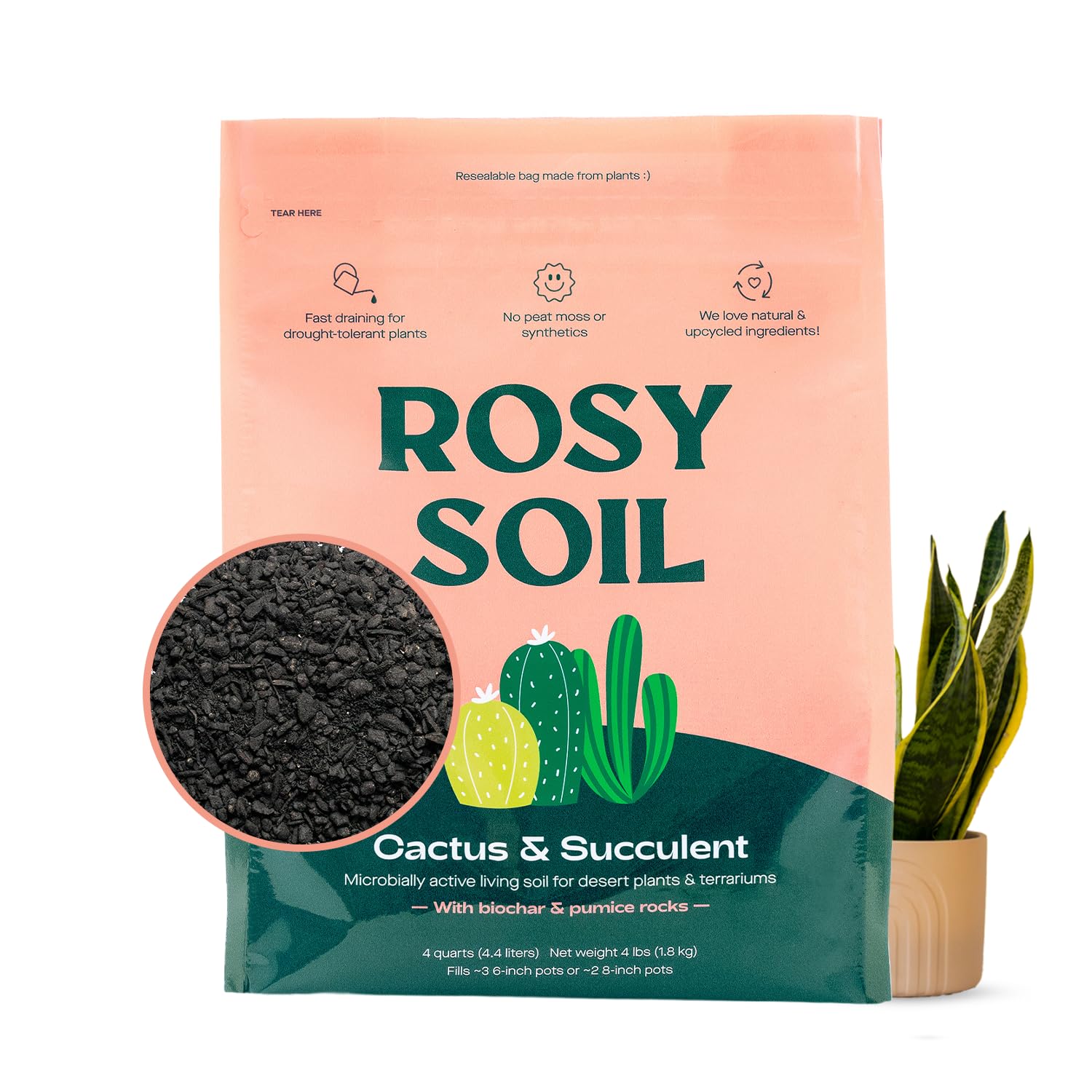
Most succulent potting mixes are too dense and hold water longer than roots can tolerate. Rosy Soil solves this with a chunky, peat-free formula that stays loose and airy, allowing excess moisture to drain fast. The mix comes pre-loaded with beneficial fungi, microorganisms, and organic worm castings, creating a living soil ecosystem in every bag without synthetic fertilizers.
Customers consistently rate this as the best soil they have used for succulents, ZZ plants, and aloe vera. The dark, even color and absence of bugs across multiple bags indicates a high-quality manufacturing process. Several growers note that adding a bit of gravel or bonsai soil creates an even grittier mix for finicky desert species like lithops or desert rose.
The 4-quart bag is small — designed for 2-3 potted plants rather than a full raised bed. But if you are dedicating a section of your raised bed to drought-tolerant plants, this mix provides the sharp drainage and root-boosting biology that succulents need to thrive outdoors.
Why it’s great
- Chunky, peat-free texture prevents compaction and overwatering
- Pre-loaded with beneficial microbes and worm castings
- Resealable bag keeps unused mix fresh
Good to know
- Small bag size — not for large raised bed fills
- May need additional grit for very sensitive desert species
FAQ
Can I use a general-purpose potting soil in a raised bed?
How much bagged soil do I need for a 4×8 raised bed?
Final Thoughts: The Verdict
For most users, the best bagged soil for raised beds winner is the Coast of Maine Castine Blend because it is a complete, ready-to-use mix with biodiverse ingredients that eliminate guesswork. If you want a concentrated organic boost for heavy feeders, grab the Espoma Organic Vegetable & Flower Garden Soil. And for transforming poor native soil on a budget, nothing beats the Michigan Peat Baccto Wholly Cow.