
Picking the wrong bagged soil is the single quickest way to get pale leaves, tiny fruit, and constant worry about watering. The real difference between a so-so harvest and a table-load of deep-red tomatoes comes down to one thing: how the soil handles moisture, feeding, and root space inside that bag before you ever open it. This guide breaks down five top contenders by what they actually deliver for your tomato plants — drainage, nutrient load, and texture — so you can match the bag to your specific garden setup.
I’m Min — the co-founder and writer behind Gadgets Feed. This guide is built by comparing the manufacturers’ published specifications and the patterns across verified customer reviews, so you get each pick’s real strengths and trade-offs instead of marketing spin.
The right mix can mean the difference between a bushy plant with a few fruit and one that produces steadily from July through frost. This is your straight-to-the-point rundown on the best bagged soil for tomatoes.
How To Choose The Best Bagged Soil For Tomatoes
A bag that says “potting mix” or “garden soil” isn’t automatically good for tomatoes. Tomato roots are sensitive to compaction, need steady but not constant moisture, and demand a specific nutrient balance early on. Here are the three things to look for before you buy.
Drainage and Aeration
Tomatoes hate sitting in water. Wet roots rot fast, and once the plant is stressed, the fruit quality drops. Look for a mix that mentions perlite (small white volcanic rocks that create air pockets), vermiculite (a mica mineral that holds water and expands when heated to create space), or sand. A “fluffy” texture means air can reach the roots, which is non-negotiable for a strong start.
Nutrient Content and pH
Tomatoes are heavy feeders — they pull a lot from the soil. The bag should list compost, worm castings, kelp meal, or bone meal. These break down slowly and feed the plant over weeks, not all at once. You also want a pH around 6.5 to 7.0 (where tomatoes absorb nutrients best). Most tomato-specific bags hit this range, but general-purpose potting mixes sometimes drift too acidic.
Volume and Bag Size
A 20-quart bag fills about two large 10-inch pots. A cubic foot bag covers roughly 4-5 smaller containers. For raised beds, you will often need multiple bags. Check the volume before you buy — a 1-cubic-foot bag holds 25% less than a 20-quart bag, even though the bag sizes look similar on a shelf.
Quick Comparison
On smaller screens, swipe sideways to see the full table.
| Model | Category | Best For | Key Spec | Amazon |
|---|---|---|---|---|
| Coast of Maine Organic & Natural Planting Soil for Vegetables & Tomatoes | Mid-Range | Heirloom tomatoes in containers | 20 Quarts | Amazon |
| Espoma Organic Potting Soil Mix | Mid-Range | Seed starting indoors | 16 Quarts | Amazon |
| Espoma Organic Vegetable & Flower Garden Soil | Mid-Range | Amending native garden soil | 1 Cubic Foot | Amazon |
| Coast of Maine Organic & Natural Castine Blend Soil | Premium | Large raised beds | 2 Cubic Feet | Amazon |
| Vermont Compost Company Fort Vee Organic Potting Mix | Premium | Seed starting and soil blocks | 20 Quarts | Amazon |
In‑Depth Reviews
1. Coast of Maine Organic & Natural Planting Soil for Vegetables & Tomatoes

The 20-quart bag is the largest premium organic option in this guide, making it the top pick for container gardeners who want one bag to fill two large pots without opening a second. It solves the two problems that ruin tomato soil: it holds moisture without drowning roots and stays light enough for deep root growth. That is why buyers report heirloom varieties thrive in it. The 20-quart bag uses composted manure and sphagnum peat moss, and one reviewer praised the “holds moisture well yet drains well” balance.
The aromatic wood material does a job many bags ignore — it naturally deters insects, so you skip spraying early in the season. At 20 quarts, it is 25% larger than the Espoma Potting Soil Mix’s 16 quarts. You get enough soil for a second container without opening a new bag.
If you grow a few containers or a small raised bed and want deep-flavored fruit, this is the bag to start with. skip it if you are filling a huge 4×8-foot bed, where the premium Coast of Maine Castine Blend gives better value for volume. For container tomato growers who value moisture balance and insect deterrence, this is the best bag to buy.
Why it’s great
- Balances moisture retention and drainage perfectly for heirlooms
- Natural wood material helps deter insects without chemicals
- OMRI listed for organic gardening
Good to know
- Pricey for large gardens or multiple beds
- Some buyers reported initial gnats, manageable with neem oil
2. Espoma Organic Potting Soil Mix

Volume is the catch here. At 16 quarts, this bag is 4 quarts smaller than the Coast of Maine planting soil, so you get less dirt for roughly the same price. What you earn instead is texture — buyers call it “light, fluffy, plenty of perlite, no large wood/plastic.” That softness makes it a top choice for seed starting, where a heavy mix can crush young roots.
The Myco-Tone blend contains endo and ecto mycorrhizae (beneficial fungi that attach to roots and help them pull more water and nutrients). That fungal boost gives seedlings a head start indoors, and one reviewer noted it beat a leading store brand in a side-by-side test.
If you only need a small bag for starting tomato seeds indoors and gentle root handling matters more than volume, this is a smarter buy than a denser, larger option. But for container growing from the start, the Coast of Maine gives you more soil per bag.
Where it shines
- Light, fluffy texture perfect for delicate seedlings
- Contains Myco-Tone for root-boosting fungi
- No large wood pieces or plastic in the mix
Worth noting
- Smaller volume than similarly priced competitors
- Not specially formulated for tomatoes specifically
3. Espoma Organic Vegetable & Flower Garden Soil

You have a patch of tired garden dirt that needs a serious boost before you tuck in your tomato transplants. This 1-cubic-foot in-ground mix is designed to be blended with your existing soil to fix poor native ground, not for use in a pot. One buyer mentioned that tomatoes and marigolds “significantly outperformed those in a store-bought organic alternative” after mixing this in.
The slow-release nutrition comes from earthworm castings and the Myco-Tone blend, which helps roots push through compact dirt. Because it is an in-ground formula, it is denser and holds more moisture than a fluffy potting mix — useful for a ground bed that dries out in summer. At 1 cubic foot, it offers a 2x volume advantage over the 20-quart Coast of Maine mix per bag, making it more economical for big bed projects.
If you are enriching an existing garden patch for tomato planting, this mix delivers nutrient density at a lower per-bag cost than the container-focused picks. Your tomato buyer who needs to fix native ground chooses this over any potting mix.
What stands out
- Rich, slow-release nutrients from worm castings and mycorrhizae
- Owners mention visibly better plant growth compared to alternative brands
- Bug-free on arrival, per multiple reviews
The trade-offs
- Designed for in-ground use, not containers
- Could cause soil gnats in indoor pots according to a few buyers
4. Coast of Maine Organic & Natural Castine Blend Soil
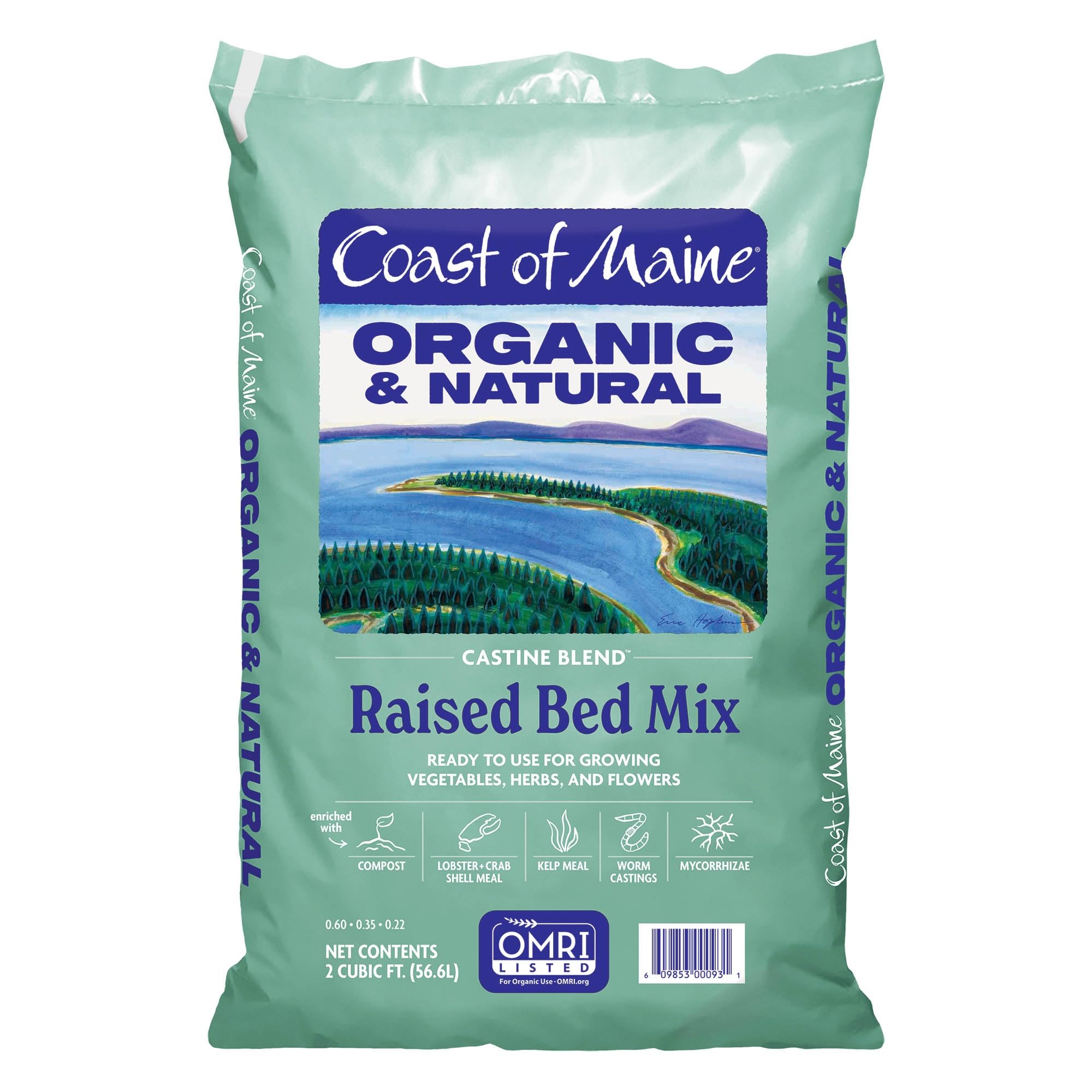
The single number that matters most in this category is 2 cubic feet (64 dry quarts, roughly 3.2x the size of a standard 20-quart bag) — the highest total soil mass per bag here. It weighs 40.25 pounds, a 40.2x weight difference from the 1-pound Espoma in-ground mix, and the volume makes it the most efficient choice for filling a large raised bed.
What you pay for is ingredients that keep feeding plants for months: biochar (a type of charcoal that holds nutrients and water at the root zone), mycorrhizae, kelp meal, and lobster and crab shell meal. Buyers call the soil “dark, rich, soft dirt” with no twigs or bugs. One owner reported it grew “pretty awesome tomatoes and sunflowers” without any extra fertilizer all season.
If you are filling a 2×4-foot raised bed or multiple large planter boxes, this bag keeps your cost per cubic foot low while giving you a nutrient profile that no mid-range option matches — the upfront spend is the only barrier, making it a high-value choice for the price if you can haul the heaviest bag.
The upsides
- Massive 2-cubic-foot volume ideal for raised beds
- Biochar and lobster shell meal provide long-term slow-release nutrition
- Buyers consistently rave about its dark, clean texture
Keep in mind
- Highest upfront cost in the lineup
- Heavy bag at over 40 pounds — needs sturdy carrying
5. Vermont Compost Company Fort Vee Organic Potting Mix

What you actually get at this lower price is a 20-quart bag of potting mix built for a specific job: soil blocks and seed starting. Tomato growers who start their own seeds value that specialization. It holds 25% more volume than the 16-quart Espoma Potting Soil Mix, so you get a bigger bag for the premium price.
You give up the broad convenience of the other picks — this mix is designed to hold its shape in soil blocks (compressed cubes of soil you plant directly) and to keep seeds moist without rotting them. Customers note it is “fluffy and light” with vermiculite for aeration and crushed granite for slow-release minerals, and that seeds germinate at very high rates. One reviewer called it “superb for seed starting” and noted it held water well even in 90°F Florida heat, which cut down on watering.
The ideal buyer starts dozens of tomato plants from seed indoors, uses soil blocks, and wants one mix for the whole lifecycle. If that is your routine, the Fort Vee is worth the extra spend for its germination reliability. If you just need bagged soil for one or two pots, the Coast of Maine planting soil is simpler and cheaper — making this pick perfect for the budget buyer who prioritizes seed-starting reliability over general-purpose convenience.
Why we’d pick it
- Designed for soil blocks and high-success seed germination
- Stays moist in high heat, reducing watering frequency
- Compost-based with granite and basalt for long-term mineral release
A few caveats
- Premium tier pricing for a 20-quart bag
- May contain small bark or twigs, as noted in some reviews
Understanding the Specs
Mycorrhizae
This is a group of beneficial fungi that attach to tomato roots and act like an extension of the root system, pulling more water and minerals (especially phosphorus) from the soil. You see “endo and ecto mycorrhizae” on bags like Espoma’s — it just means two types are present, one that wraps around the root’s exterior and one that grows inside the root cells.
Volume vs Weight
Tomato soil is sold in quarts and cubic feet, not pounds. A 20-quart bag fills about two 10-inch pots, while a 2-cubic-foot bag fills a standard 4×4-foot raised bed to about 6 inches deep. Weight varies by how wet or dry the mix is, so always check the volume measurement, not the weight.
FAQ
Can I use general potting soil for tomatoes?
How much bagged soil do I need for one tomato plant?
Should I mix bagged soil with my garden dirt?
Final Thoughts: The Verdict
If you want one dependable pick, the bagged soil for tomatoes winner is the Coast of Maine Organic & Natural Planting Soil for Vegetables & Tomatoes because it nails the moisture-drainage balance that heirloom tomatoes need and includes insect-deterring wood material. If you want to fill a large raised bed with premium long-term nutrition, grab the Coast of Maine Organic & Natural Castine Blend Soil. And for starting seeds indoors with high germination rates, the standout is the Vermont Compost Company Fort Vee Organic Potting Mix.