
A ruined 48-hour short rib cook isn’t usually caused by the meat or the temperature—it’s the bag that failed. A pinhole leak, a weak seal, or a material that couldn’t handle sustained heat turns a carefully planned meal into a waterlogged mess. The right bag that withstands prolonged submersion at stable temperatures is the single most critical consumable for any sous vide enthusiast.
I’m Min — the co-founder and writer behind Gadgets Feed. I’ve analyzed hundreds of vacuum bag constructions, from multilayer co-extruded films to textured embossed channels, to determine which materials and thickness ranges actually hold up during long-duration water bath cooking without leaching or leaking.
This guide drills into puncture resistance, heat tolerance, and seal integrity across seven of the most reliable options so you can confidently pick the best bags for sous vide cooking that match your prep style and equipment.
How To Choose The Best Bags For Sous Vide Cooking
Sous vide demands bags that can handle sustained heat, resist punctures from sharp bones and shells, and form an airtight seal that prevents water ingress. Not every vacuum bag sold for food storage meets these requirements. The three factors below are what separate a bag that lasts through a 72-hour cook from one that fails at hour three.
Material Thickness and Layer Construction
Standard vacuum bags have a smooth panel and an embossed dotted panel that creates channels for air extraction. The combined thickness, measured in mils (thousandths of an inch), determines puncture resistance. For sous vide, a total thickness of at least 3.0 to 4.0 mils on the smooth side and 4.0 to 7.0 mils on the textured side is ideal for handling bone-in meats and shellfish without tearing. Bags below 2.5 mil total thickness risk failure during long cooks.
Heat Tolerance and BPA-Free Certification
Sous vide typically operates between 130°F and 185°F. The bag material must remain stable and leach-free throughout that range. Look for bags explicitly rated to at least 212°F (boiling water safe) and certified BPA-free. Polyethylene (PE) and nylon (PA+PE) co-extruded films offer the best heat resistance without softening or releasing chemicals into the food.
Compatibility with Your Vacuum Sealer
Most vacuum sealers work with embossed bags, but not all bags create a complete seal on every machine. Single-side embossed bags are the universal standard—they allow air to flow out while the smooth side provides a clean sealing surface. If you use a chamber sealer, you need smooth bags without embossing. Always verify that the bag width fits your sealer’s sealing bar; 8-inch and 11-inch widths cover the majority of home sealers.
Quick Comparison
On smaller screens, swipe sideways to see the full table.
| Model | Category | Best For | Key Spec | Amazon |
|---|---|---|---|---|
| FRESKO 6-Pack Rolls | Premium Roll Set | Mixed-size versatility | 3 mil / 4 mil dual panels | Amazon |
| Syntus 11″ x 150′ Roll | Premium Roll | Long continuous roll | 3.15 mil / 6.7 mil panels | Amazon |
| MOMODA Reusable Valve Bags | Specialty Reusable | No sealer needed | Electric pump + 30 bags | Amazon |
| Anova Pre-Cut Bags | Pre-Cut Premium | Quick grab-and-go | 7-layer double ribbed | Amazon |
| FoodSaver Custom Fit Rolls | Mid-Range Rolls | OEM reliability | 8″ x 20′ 3-pack rolls | Amazon |
| L’ELEF MISTICO 3-Roll Pack | Budget Roll Pack | Cost-efficient alternative | 9-layer co-extruded film | Amazon |
| Wevac 11″ x 50′ 2-Pack | Budget Commercial | Heavy-duty value | 3.5 mil / 10 mil panels | Amazon |
In‑Depth Reviews
1. FRESKO Vacuum Sealer Bags 6-Pack Rolls

The FRESKO 6-pack delivers three 8-inch by 20-foot rolls alongside three 11-inch by 20-foot rolls, offering immediate width flexibility without buying separate SKUs. Each roll uses a 3-mil smooth top panel paired with a 4-mil embossed back panel—a differential that prevents bone punctures while ensuring full air evacuation during the vacuum cycle. The co-extruded PA+PE material holds up to 230°F, which covers the entire sous vide cooking range with a solid safety margin.
During extended cooks, the thicker embossed side maintains its channel structure even after hours of submersion, which is critical for bags that get jostled in the water bath. The 11-inch width handles large roasts and whole poultry comfortably, while the 8-inch rolls work well for individual portions and smaller protein cuts. Users consistently report strong seals on FoodSaver and comparable machines without the wrinkling issues that plague thinner budget rolls.
The only real tradeoff is that you get six separate rolls instead of a single continuous roll, which means slightly more storage footprint and end-piece waste from each roll’s startup. But the combination of puncture resistance, heat tolerance, and dual-sizing makes this the most complete bag solution for serious sous vide cooks who need both narrow and wide options regularly.
Why it’s great
- Dual-width 3-pack of 8″ and 3-pack of 11″ rolls for versatile sizing
- 3/4 mil differential panels resist bone punctures and seal cleanly
- Rated to 230°F, well above sous vide’s typical maximum
Good to know
- Six separate rolls create more packaging waste than a single long roll
- Embossed side must face down for proper air extraction on most sealers
2. Syntus 11″ x 150′ Vacuum Sealer Roll
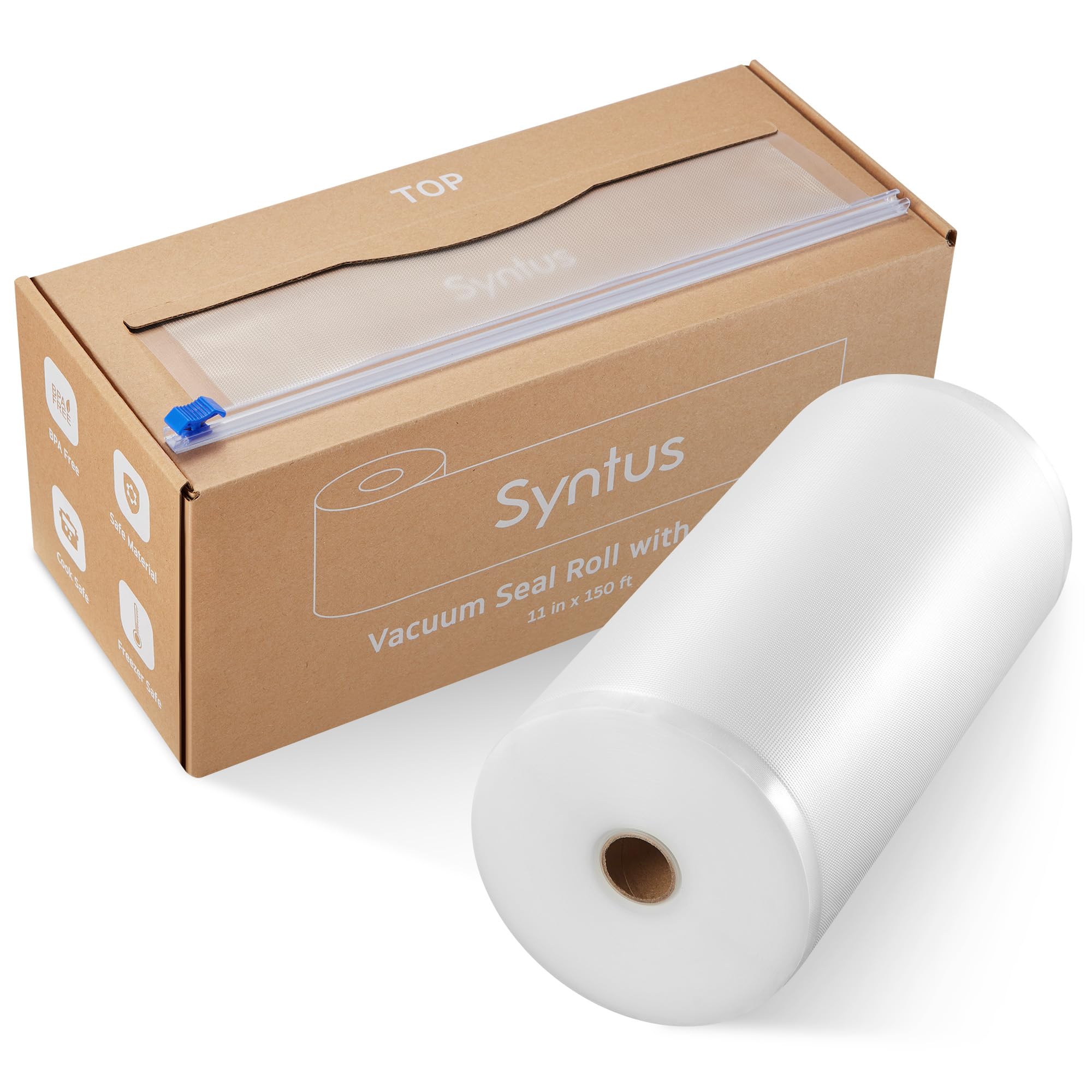
The Syntus 11-inch by 150-foot roll is built for heavy-volume meal preppers who want one continuous bag source without switching rolls. The material stack—3.15 mils on the smooth sealing side and 6.7 mils on the textured embossed side—creates a total thickness that rivals commercial-grade bags sold in catering supply stores. That nearly 10-mil combined thickness at the embossed panel means pork shoulder bones and frozen fish fins rarely punch through, even during 48-hour cooks.
The integrated cutter box is a practical upgrade over scissor-trimming: you pull the desired length through the slot, close the lid, and slide the blade for a straight cut every time. This eliminates the crooked seals that happen when cutting by hand, which is a common failure point when the bag doesn’t sit flat on the sealing bar. The PA+PE material handles temperatures from -4°F to 212°F, so you can move the same bag from freezer to water bath without intermediate thawing.
At 150 feet on a single roll, the Syntus offers more bag-making capacity than any 2-pack or 3-pack of shorter rolls. The tradeoff is that the roll is physically large—approx 2.5 kg—and won’t fit inside most sealer’s internal storage compartments. You’ll need to keep the box on a shelf or drawer and cut bags as needed. But for anyone processing bulk meat purchases weekly, the convenience and thickness justify the cabinet space.
Why it’s great
- 150 continuous feet eliminates roll changes during large prep sessions
- 3.15/6.7 mil dual-panel construction resists punctures reliably
- Box-integrated cutter delivers straight, repeatable cuts
Good to know
- Roll is too large to fit inside most vacuum sealer storage bays
- Must store box horizontally to prevent the roll from unspooling
3. MOMODA Sous Vide Cooking Bags with Electric Pump
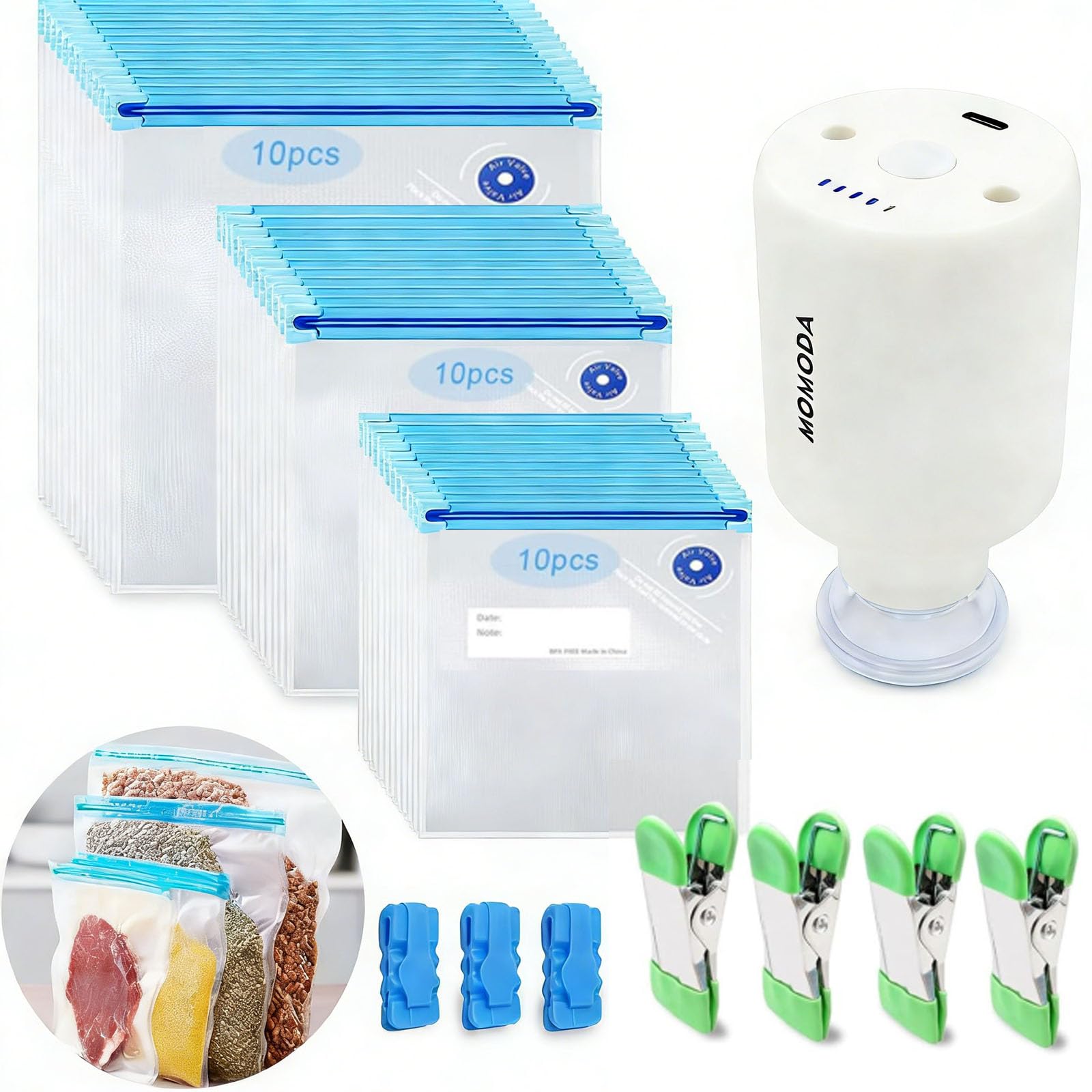
The MOMODA system breaks the conventional vacuum sealer dependency by using a dedicated electric pump that mates to a one-way valve on each bag. The set includes 30 bags across three sizes (6.3×8.7 inches, 10.2×11 inches, and 11.8×13.4 inches), plus the pump, bag clips, and zipper clips. This approach is ideal for cooks who own an immersion circulator but not a countertop vacuum sealer, or who want a portable option for camping and sous vide travel.
The bags use a zip-seal closure with a valve port, so you can open the bag after cooking, remove the food, wash the bag with warm soapy water, and reuse it multiple times. The food-grade PE material is rated to 190°F, which covers most sous vide temperatures except for the highest vegetable cooks near 185°F. The electric pump creates a stronger vacuum than manual hand pumps, pulling the bag tight against the food surface without the alignment fiddling that plagues older valve systems.
Reliability depends heavily on valve quality, and some users report occasional valve failures that prevent full air removal. The bags are also thinner than traditional vacuum sealer rolls, so sharp bones require extra care during loading. For cooks who prioritize reusability and portability over maximum puncture protection, however, the MOMODA system offers a genuinely different approach that works well for medium-duration cooks up to 12 hours.
Why it’s great
- No vacuum sealer required—electric pump handles air removal
- Reusable zip-seal design reduces plastic waste after each cook
- Three bag sizes included for different protein and vegetable portions
Good to know
- 190°F max temperature limits use at the highest sous vide ranges
- Valve inconsistency reported in some bags; inspect before each use
4. Anova Culinary Precision Pre-Cut Vacuum Bags

Anova designed these pre-cut bags specifically for sous vide, not as a generic food storage afterthought. Each bag is 8.6 inches by 11.8 inches with an easy-tear top that removes the need for scissors—you load the food, tear off the open end, seal, and submerge. The 7-layer double-ribbed construction uses alternating film layers to create extra rigidity at the seal interface, which reduces the chance of channel leaks during the vacuum cycle.
In practical sous vide use, the bags maintain seal integrity through 72-hour cooks without softening or developing pinholes. The 7-layer structure also provides good aroma isolation, though some users note that strong-smelling foods like smoked brisket can still permeate the bag into the water bath over extremely long cooks. The pre-cut format is significantly more expensive per bag than roll-cut alternatives, but the time savings during high-frequency cooking is tangible.
The bags pair perfectly with Anova’s own sealers, but they also work with FoodSaver, Nesco, and other standard home units. The tradeoff is the fixed 8.6-inch width—larger roasts and whole chickens may not fit. For cooks who consistently portion proteins into single-serving sizes, the grab-and-go convenience and reliable 7-layer seal make these a strong contender despite the higher per-bag cost.
Why it’s great
- 7-layer double-ribbed film designed specifically for sous vide heat profiles
- Easy-tear tops eliminate scissors for faster prep
- Reliable seal integrity through 72-hour cooks
Good to know
- Fixed 8.6-inch width limits use with larger roasts and whole poultry
- Pre-cut format has higher per-bag cost than roll alternatives
5. FoodSaver Custom Fit 8″ x 20′ Rolls 3-Pack

FoodSaver’s own brand rolls remain the baseline reference for compatibility because the multilayer film is engineered to the same tolerances as their sealing machines. Each 8-inch by 20-foot roll uses the company’s proprietary layer stack that produces a consistently flat seal without the curled edges that sometimes plague third-party bags. The material is BPA-free and rated for freezer, microwave, and boil-safe use, which covers sous vide temperatures without issue.
Real-world users consistently report fewer failed seals with OEM FoodSaver rolls compared to generics. The film’s texture creates reliable channeling for air evacuation, and the seal bar on FoodSaver machines interacts with the bag material predictably because the coefficients of friction were tested together. For cooks who own a FoodSaver sealer and want zero compatibility guesswork, this 3-pack delivers dependable performance cook after cook.
The 8-inch width is sufficient for most steaks, chicken breasts, fish fillets, and vegetable portions, but falls short for large roast cuts. The 20-foot per-roll length means three rolls provide 60 feet total, which is adequate for weekly sous vide users but runs out faster for heavy meal preppers. The premium over third-party equivalents is real, but the seal consistency eliminates the frustration of re-sealing failed bags mid-cook.
Why it’s great
- OEM film engineered for perfect seal compatibility with FoodSaver machines
- Multilayer design produces flat, wrinkle-free seals consistently
- BPA-free and safe for sous vide, freezer, and microwave use
Good to know
- 8-inch width too narrow for large roasts and bone-in whole chickens
- Higher per-foot cost compared to third-party roll options
6. L’ELEF MISTICO 11″ x 20′ 3-Roll Pack
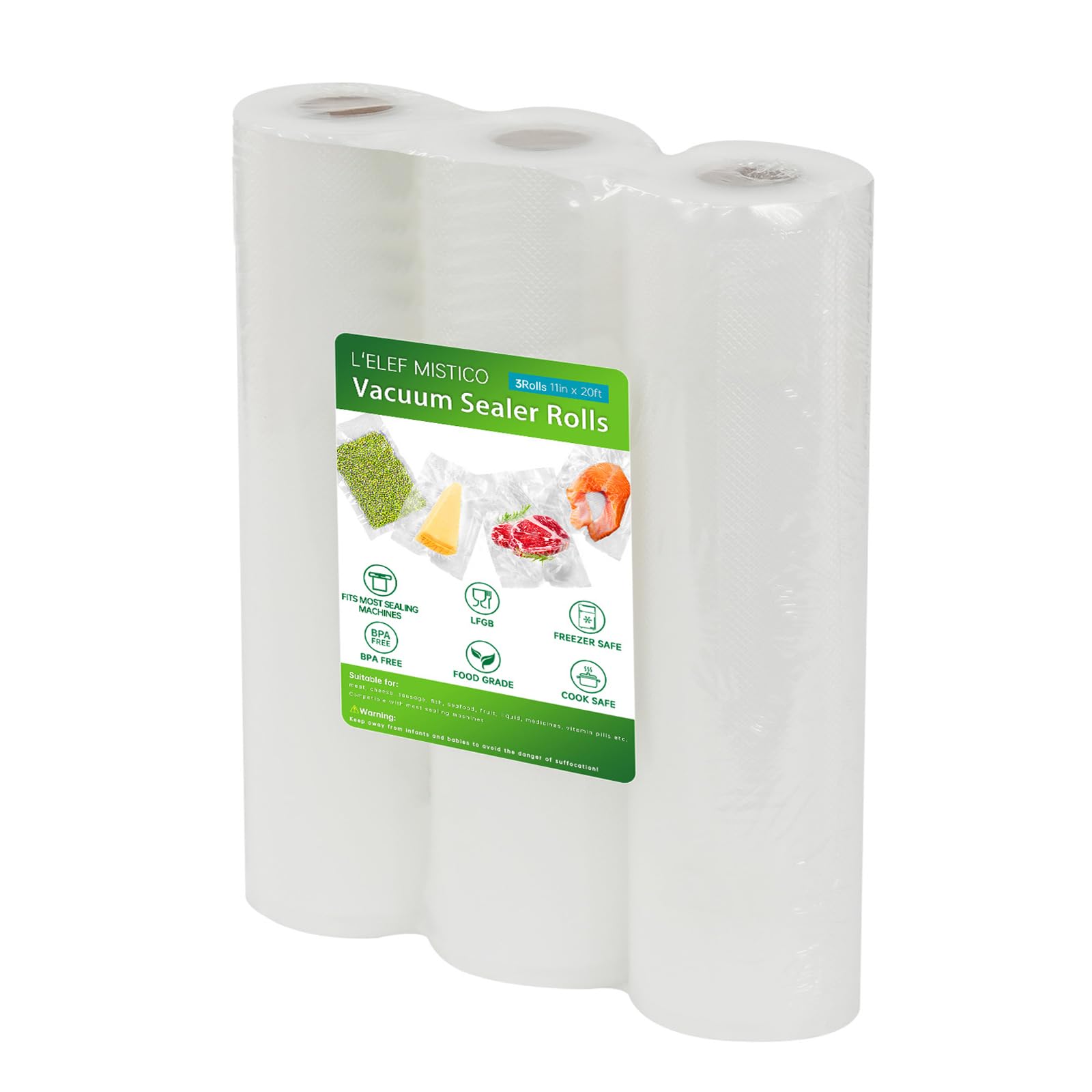
L’ELEF MISTICO delivers a 9-layer co-extruded barrier film at a price point that undercuts name-brand rolls by a meaningful margin. The 11-inch width handles large cuts, and the single-side embossed dotted pattern ensures standard compatibility with FoodSaver, Seal-a-Meal, and most home vacuum sealers. The material is BPA-free and holds up to sous vide temperatures without softening or clouding during the cook.
User reports highlight that the bags seal cleanly and maintain vacuum integrity through extended cooks, with no leakage on beef tenderloin and lamb chop preparations. The 9-layer construction provides good puncture resistance for boneless proteins, though bone-in cuts require careful wrapping to avoid sharp edges piercing the film. The embossed side should face down during vacuuming to maximize air channel performance, which is standard practice for this bag type.
The main compromise is the absence of a writable surface area on the bag, which matters for labeling cooks with dates and temperatures. The 20-foot rolls also run out faster than larger format options—three rolls give you 60 feet total, roughly a third of the Syntus single roll. For budget-conscious cooks who want reliable 11-inch width at a low entry price without sacrificing sous vide safety, these bags deliver the best cost-to-performance ratio in this comparison.
Why it’s great
- 9-layer co-extruded film provides solid barrier protection at low cost
- 11-inch width accommodates larger roasts and family-sized portions
- Embossed channels ensure reliable air extraction on most sealers
Good to know
- No writable surface for labeling dates and cook temperatures
- Only 60 total feet across three rolls; heavy users will need more
7. Wevac 11″ x 50′ Vacuum Sealer Rolls 2-Pack

The Wevac 2-pack of 11-inch by 50-foot rolls offers a combined 100 feet of bag material at a price that challenges every other option in this list. The material specification is surprising for the cost: a 3.5 mil clear side paired with a 10 mil embossed textured side, for a combined 13.5 mil thickness at the channeled panel. This makes the Wevac bags among the thickest options here, offering exceptional puncture resistance for bone-in cuts and shell-on seafood.
In practice, the thickness creates a bag that feels substantially heavier than typical retail rolls. The square embossed ripple pattern ensures complete air evacuation, and the 10 mil side provides enough rigidity that the bag holds its shape during submersion without collapsing onto the food unevenly. Users report clean seals on FoodSaver machines using the normal heat setting, with no leaking even during extended cooks.
The primary inconvenience is that the 3.5-inch roll diameter does not fit inside most countertop sealer storage compartments—you will need to re-roll the material onto a smaller cardboard core or store it externally. The 13.5 mil total thickness also means the bags are less flexible for tight wrapping around irregularly shaped items. For cooks who prioritize maximum puncture protection per dollar and don’t mind external roll storage, the Wevac delivers commercial-grade thickness at a fraction of the expected cost.
Why it’s great
- 13.5 mil combined thickness offers exceptional puncture and tear resistance
- 100 total feet across two rolls provides excellent value per cook
- Square embossed channels deliver complete air removal every time
Good to know
- 3.5-inch roll diameter won’t fit inside most sealer storage compartments
- Thick material is less pliable for wrapping odd-shaped items tightly
FAQ
Can I use regular zipper storage bags for sous vide cooking?
How long can sous vide bags stay submerged without failing?
Are reusable vacuum bags with zip valves as effective as roll bags for sous vide?
Why do some vacuum bags leak during sous vide while others don’t?
Final Thoughts: The Verdict
For most users, the bags for sous vide cooking winner is the FRESKO 6-Pack Rolls because the dual-width format and 3/4 mil panel construction provide the best balance of puncture resistance, heat tolerance, and sizing versatility for regular sous vide cooks. If you want maximum continuous footage without switching rolls, grab the Syntus 11″ x 150′ Roll with its built-in cutter and commercial-grade 6.7 mil textured panel. And for cooks who don’t own a vacuum sealer or prefer reusable bags, the MOMODA system with its electric pump and three bag sizes offers a portable, resealable alternative that still delivers solid sous vide performance.