
A frozen walkway turns a simple trip to the car into a hazard. The wrong de-icer can crack your concrete, irritate your pet’s paws, or simply stop working when the temperature drops below zero. Selecting the right bag of salt for snow means understanding the chemistry of melting versus the physics of traction.
I’m Min — the co-founder and writer behind Gadgets Feed. I’ve spent countless hours analyzing chloride formulas, temperature ratings, and real-world application data to separate the high-performance melts from the generic fillers most retailers push during winter storms.
This guide breaks down the fastest-acting, most concrete-safe, and best-value options available right now, so you can clear your driveway and steps with confidence. Keep reading for a complete breakdown of the best bags of salt for snow this season.
How To Choose The Best Bags Of Salt For Snow
Not all de-icing salts are chemically identical. The primary active ingredients — calcium chloride, magnesium chloride, sodium chloride (rock salt), and potassium chloride — each have different effective temperature ranges, corrosivity, and environmental impact. Choosing the right blend determines how fast your ice melts and whether your concrete survives the winter intact.
Effective Temperature Range
Standard rock salt (sodium chloride) stops working around 15°F. If your local winters regularly dip into single digits or below zero, a calcium-chloride-based melt rated down to -20°F or -25°F is essential. Magnesium chloride blends offer a middle ground, working effectively to -13°F while being gentler on surfaces.
Concrete and Surface Safety
The freeze-thaw cycle combined with chemical action can spall and pit concrete. Premium melts include anti-caking agents and specially shaped pellets that reduce the mechanical damage caused by flat, jagged crystals. Look for formulas explicitly labeled “concrete safe” — these typically use magnesium or calcium chloride blends with a rounded pellet structure.
Pet and Environmental Concerns
Traditional rock salt can burn paw pads and kill grass along walkways. Pet-safe options rely on magnesium chloride or urea-based formulas that are OMRI-listed for organic use. If you have pets or landscaped areas near your driveway, a pet-friendly melt is a practical upgrade.
Quick Comparison
On smaller screens, swipe sideways to see the full table.
| Model | Category | Best For | Key Spec | Amazon |
|---|---|---|---|---|
| Premium Ice Melt (Blue) | Premium | Large Driveways & Commercial Use | Effective to -20°F | Amazon |
| Peladow Calcium Chloride | Premium | Extreme Cold Performance | Effective to -25°F | Amazon |
| Scotwood Road Runner 50lb | Mid-Range | Blend Versatility | Quad-Chloride Blend | Amazon |
| Snow Joe Ice Beater | Mid-Range | Fast Melting on Concrete | Effective to -15°F | Amazon |
| Harris Kind Melt | Mid-Range | Pet & Concrete Safety | 100% Magnesium Chloride | Amazon |
| Maple99 Ice Melt | Mid-Range | Concrete-Safe Value | Effective to -15°F | Amazon |
| Scotwood Road Runner 12lb | Entry-Level | Small Spaces & Quick Jobs | 12lb Shaker Jug | Amazon |
In‑Depth Reviews
1. Premium Ice Melt, Blue (50 lb Bag)
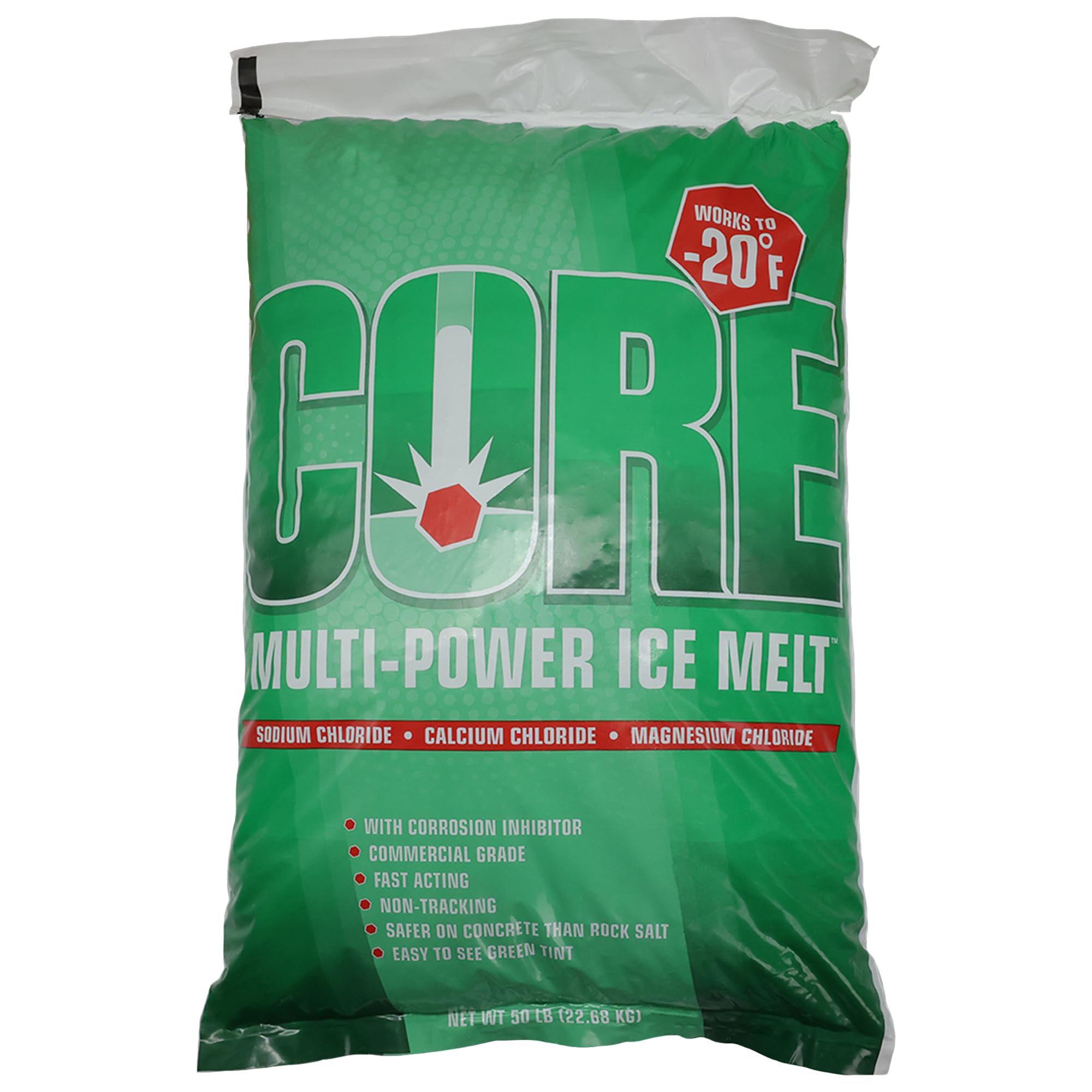
This industrial-grade blue-tinted melt is the heavy hitter for anyone managing large driveways, parking lots, or long sidewalks. The anti-caking agents keep the pellets free-flowing in humid conditions, and the blue coloring provides clear visibility during application so you never double-spread the same spot.
Rated to -20°F, this formula uses a calcium-chloride-rich blend that generates exothermic heat on contact. Multiple user reports confirm it maintains performance through 14-inch snowfalls and freeze-thaw cycles without leaving greasy residue or damaging asphalt or grass. The 50-pound bag offers the best coverage-per-dollar among premium options.
The concrete-safe claim holds up in practice — regular users who applied it over multiple seasons report no pitting or scaling. The only minor drawback is slightly slower action in heavy, single-digit snow compared to straight calcium chloride pellets, but the added spreadability and visibility make it the best all-rounder.
Why it’s great
- Visible blue tint prevents over-application
- Concrete-safe with no greasy residue
- Exceptional coverage for large surfaces
Good to know
- Slows down slightly in heavy, single-digit snow
- 50 lb bag requires a sturdy bucket for storage
2. Peladow Calcium Chloride Pellets, 50 lb

Peladow is the industry benchmark for calcium chloride ice melt. These dense, moisture-attracting pellets pull water from the air to generate heat immediately, creating a liquid brine that penetrates ice before the crystals even dissolve. This exothermic action means it works aggressively even at -25°F, a full 10 degrees colder than most competitors claim.
Because you need significantly less product per square foot compared to rock salt or even magnesium chloride blends, a single 50-pound bag stretches further than a standard 50-pound rock salt bag. Users consistently report using half the volume for the same melting area, making the higher upfront cost neutral over a full winter season.
The round pellet geometry is notably less damaging to concrete and masonry than jagged crystals. The only trade-off is that the pellets can clump if exposed to high humidity before opening — store the bag sealed in a dry location.
Why it’s great
- Works aggressively down to -25°F
- Requires half the volume of standard salt
- Gentle on concrete and masonry surfaces
Good to know
- Pellets can clump in humid storage
- More expensive per bag than rock salt
3. Scotwood Industries Road Runner Ice Melt, 50 lb

The Road Runner blend combines calcium, magnesium, potassium, and sodium chlorides in a single bag, offering broad-spectrum melting that works across a wide temperature range. This multi-salt approach means the melt remains effective even when temperatures fluctuate wildly during a storm — one compound handles the deep freeze while another maintains action during the daytime thaw.
Users consistently note the fast melting speed, with crystals that are intentionally aerated during manufacturing to increase surface area and accelerate dissolution. The bag size is ideal for residential use with a hand spreader, and the product leaves a visible residue that provides residual traction even after the ice breaks up.
The main limitation is that the quad blend’s lowest effective temperature hovers around 0°F to 5°F, so it struggles in prolonged sub-zero cold snaps. For most regions with typical winter lows above 0°F, this is a reliable and cost-efficient choice.
Why it’s great
- Multi-chloride blend works across varying temps
- Aerated crystals dissolve faster than standard salt
- Provides residual traction on treated surfaces
Good to know
- Not effective below 0°F
- Leaves salt residue that may need sweeping
4. Snow Joe Ice Beater Melter, 50 lb
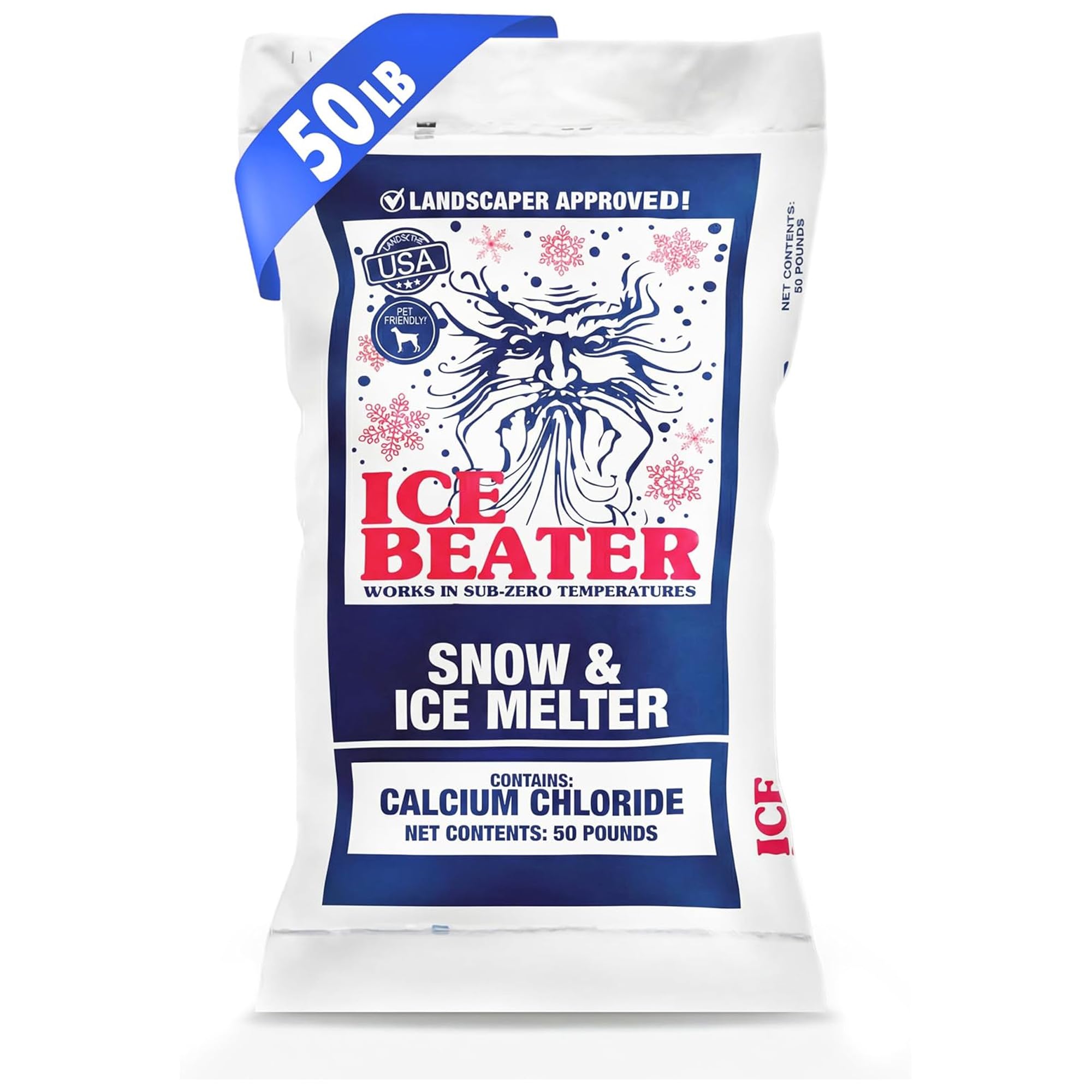
Snow Joe’s Ice Beater uses a calcium-blend formula that generates heat on contact, accelerating the melt process noticeably faster than standard rock salt. Users in NY and other northern states confirm it works well even during deep freezes, though a light spritz of water can speed up activation on the coldest days.
The 50-pound bag provides generous coverage, and the formula is explicitly labeled safe for concrete surfaces — no spalling or damage reported across multiple seasons of use. The pellets are small and uniform, spreading evenly through both hand application and rotary spreaders.
One reviewer flagged that the product appeared to contain a high ratio of sodium chloride to calcium chloride. While Snow Joe markets it as a calcium blend, the performance in extreme cold matches its -15°F rating if applied correctly. For northern winters where temperatures regularly hit -10°F, this is a solid mid-premium option.
Why it’s great
- Heat-generating pellets accelerate melting
- Safe for concrete and vegetation
- Spreads evenly with rotary spreaders
Good to know
- Activates faster with a light water spritz in extreme cold
- Salt-to-calcium ratio may vary by batch
5. HARRIS Kind Melt Pet Friendly, 10 lb

Harris Kind Melt is built around 100% pure magnesium chloride, a formula that is OMRI-listed for organic use and specifically designed to avoid burning pet paws or killing grass. The round pellet form lacks the jagged edges of rock salt, so it won’t cause micro-abrasions on sensitive paw pads or concrete surfaces.
It works immediately on contact, melting ice effectively down to -13°F. Users appreciate that the formula leaves no colored residue and that the bag (or transfer to a shaker) stays free-flowing even in humid winter air. For pet owners who let their dogs out to the backyard or walk them along salted sidewalks, this is the safest choice.
The 10-pound bag is smaller than industrial options, so it’s best suited for residential walkways, front steps, and small driveways. The price per pound is higher than standard salt, but the environmental and safety benefits justify the premium for households with pets.
Why it’s great
- 100% magnesium chloride — won’t burn paws
- OMRI-listed for organic use
- Round pellets are gentle on concrete
Good to know
- 10 lb bag covers only small areas
- Higher cost per pound than rock salt
6. Maple99 Ice Melt Safer for Concrete, 20 lb
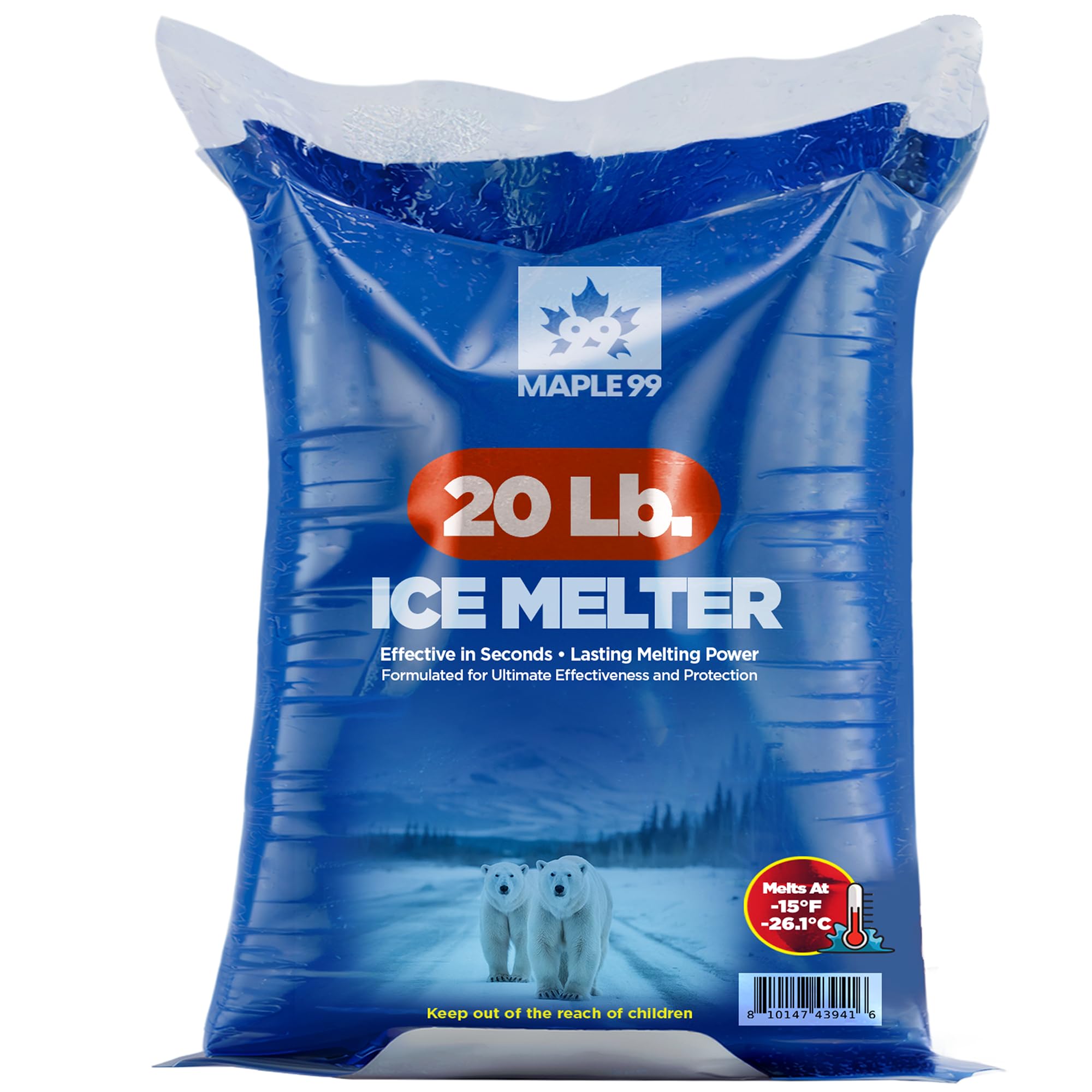
Maple99’s 20-pound bag targets homeowners who want concrete protection without stepping up to a full 50-pound industrial bag. Its advanced formula is marketed as notably less corrosive than traditional ice melt, and it features a refreeze-inhibiting property — once the ice is melted, the treated surface resists refreezing in extreme cold.
The effective range down to -15°F covers most winter conditions across the northern US. Users report that a light application (2-4 ounces per square yard) is sufficient, and the product spreads evenly without clumping. The compact 20-pound bag is easy to carry, store in a trunk, or keep on a porch for quick touch-ups.
Some users note that the price per pound feels higher than bulk options, but the combination of concrete safety, refreeze prevention, and compact packaging makes it a practical mid-range pick for homeowners with modest driveway and sidewalk areas.
Why it’s great
- Refreeze-inhibiting formula
- Concrete-safe with no pitting reported
- Compact 20 lb bag for easy handling
Good to know
- Higher cost per pound than bulk alternatives
- Label recommends pre-storm application for best results
7. Scotwood Industries Road Runner Premium, 12 lb

This 12-pound jug is the perfect entry point for those who only need to treat a small porch, front steps, and a short walkway. The proprietary blend uses a two-stage melting process: a patented outer layer liquefies on contact to create a brine, then the amide core penetrates the ice to break it up for easy shoveling.
The shaker-top jug is consistently praised across user reviews — it allows precise application without touching the product, eliminating the mess and skin irritation associated with bagged salt. The size is ideal for apartment dwellers, single-car garages, or as a trunk emergency backup.
At 12 pounds, the coverage is limited to small areas, and the effective temperature range is not specified as deeply as premium options. However, for quick, convenient melting on standard winter days, this shaker jug is the most user-friendly option available.
Why it’s great
- Convenient shaker-top jug avoids direct contact
- Two-stage melting process for fast action
- Ideal size for small spaces and emergency use
Good to know
- 12 lb bag covers only small areas
- Caps may open in transit if not taped by seller
FAQ
Can I use calcium chloride on new concrete?
How much ice melt do I need per square foot?
Final Thoughts: The Verdict
For most users, the best bags of salt for snow winner is the Premium Ice Melt (Blue) because it combines a -20°F rating, concrete-safe formula, and visible blue tint for precise application. If you need extreme cold performance down to -25°F, grab the Peladow Calcium Chloride Pellets. And for pet owners who want a no-worry solution for small walkways, nothing beats the HARRIS Kind Melt.