
Our readers keep the lights on and my morning glass full of iced black tea. As an Amazon Associate, I earn from qualifying purchases.
Specs are compiled from manufacturer listings and verified buyer reviews and can change over time — please confirm the key details on the product page before buying.
Picking your first baitcaster line is not about grabbing the cheapest spool on the shelf — it is about avoiding the brutal tangle known as a “bird’s nest” before you even make your first real cast. A beginner baitcaster setup demands a line that lays flat, resists digging into the spool, and lets you focus on thumb control instead of picking out knots. The wrong choice turns a fun afternoon into 20 minutes of frustration with clippers.
I’m Min — the founder and writer behind Gadgets Feed. This guide is built by comparing the manufacturers’ published specifications and the patterns across verified customer reviews, so you get each pick’s real strengths and trade-offs instead of marketing spin.
You want a line that casts smoothly without tangling and holds up when a fish fights back. For your first baitcaster, the right baitcaster line for beginners depends on three measurable things: line type (monofilament, fluorocarbon, or braid), breaking strength (how many pounds of pull it can take before snapping), and how much line memory (the tendency to hold a coil shape after being on the reel) it carries after a few days on the reel.
Quick Picks
- P-Line Tactical Premium Fluorocarbon 200 Yard — Premium Pick
- P-Line Floroclear Clear Fishing Line 600-Yard — Best Value
- GumMAX 545-Yard 8X Braided Fishing Line — Heavy Hauler
- Yo-Zuri Super Braid 300-Yard Dark Green — Budget Braid
- Zebco Cajun Line Smooth Cast, Low Vis Ragin’ Red — Budget Monofilament
- Yo-Zuri Topknot Mainline Natural Clear 200-Yard — Tough Fluorocarbon
- Seaguar Basix Freshwater Mainline — Entry Fluorocarbon
How To Choose The Best Baitcaster Line For Beginners
Three numbers define whether a spool will be a joy or a headache on your first baitcaster: the line type, the breaking strength in pounds, and the total yardage on the spool. A beginner who picks a high-memory fluorocarbon in 20-pound test is setting themselves up for a backlash on every cast. Here is what actually matters.
Line Type: Monofilament vs Fluorocarbon vs Braid
Monofilament (nylon single-strand) is the most forgiving for a beginner baitcaster because it has more stretch and less memory per cast. Fluorocarbon is denser and sinks faster, which helps in clear water, but it can coil up on a baitcaster spool if the diameter is too thick. Braid has zero stretch and a tiny diameter, which means you feel every nibble — but it also digs into itself on a loose spool and creates backlashes you cannot pick out.
Breaking Strength: Why 12 to 17 Pounds Is the balance
A 6-pound test line is too thin to build enough spool tension on a baitcaster — the line buries into the spool on a cast and locks up. A 20-pound test is overkill for bass fishing and creates too much drag friction for a beginner’s thumb. The 12 to 17-pound range gives you enough diameter to lay even on the spool while still letting you tie a strong knot without fighting stiff coils.
Yardage And Spool Fill: The 200-Yard Minimum
A baitcaster reel needs the spool filled to within about 1/8 inch of the rim to cast correctly. A 200-yard spool of 12-pound test is typically enough to fill a standard 100-size baitcaster. Going with a 600-yard spool gives you extra for re-tying hooks and replacing worn sections without buying a whole new spool.
Quick Comparison
| Model | Best For | Line Type | Breaking Strength | Yardage | Amazon |
|---|---|---|---|---|---|
| P-Line Tactical Premium Fluorocarbon | Abrasion resistance in cover | Fluorocarbon | 17 lb | 200 yd | Amazon |
| P-Line Floroclear | All-around copolymer value | Copolymer | 12 lb | 600 yd | Amazon |
| GumMAX 8X Braided | Maximum strength for big fish | Braided | 50 lb | 545 yd | Amazon |
| Yo-Zuri Super Braid | Budget braid for bass/inshore | Braided | 15 lb | 300 yd | Amazon |
| Zebco Cajun Line Ragin’ Red | High-yardage mono on a budget | Monofilament | 6 lb | 1850 yd | Amazon |
| Yo-Zuri Topknot Fluorocarbon | Tough fluorocarbon leader line | Fluorocarbon | 12 lb | 200 yd | Amazon |
| Seaguar Basix Fluorocarbon | Entry-level fluorocarbon mainline | Fluorocarbon | 15 lb | 200 yd | Amazon |
In‑Depth Reviews
1. P-Line Tactical Premium Fluorocarbon 200 Yard Filler Spool

The strongest abrasion guard on this list, purpose-built for fishing near oyster beds and jagged rocks.
You get a refractive index that makes this line virtually invisible once it enters the water, which means spooky bass in clear lakes will not spook at the sight of your line. The 17-pound breaking strength is the highest poundage among these picks, giving a beginner enough margin to muscle a fish out of heavy cover without snapping the knot. Buyers report “high abrasion resistance, excellent knot strength and castability,” with one reviewer noting it handled fish beyond its rated strength.
The trade-off is spool memory — the line tends to coil after sitting on the reel, and multiple buyers mention it is not ideal for spinning reels due to stiffness. On a baitcaster you can manage this with a line conditioner like KVD, but if you plan to swap this line between reels often, the memory might frustrate you.
One reviewer summed it up: “P-line = quality.” At 200 yards you get enough to fill most standard baitcaster reels, and the 17-pound diameter lays on thick enough to prevent digging on a cast.
What It Delivers Best
- outstanding knot strength — knots hold even under heavy drag pressure
- Incredibly abrasion resistant — stands up to shells, rocks, and submerged timber
- Virtually invisible underwater — the refractive index hides it from wary fish
What To Watch For
- Excessive spool memory — the line can coil and spin off the spool unevenly
- Too stiff for spinning reels — best used as a baitcaster mainline or braid leader
Reach for this if: you fish around heavy cover like docks, stumps, or riprap and need a line that shrugs off abrasion without snapping.
Look elsewhere if: you want a low-maintenance line you can spool and forget — this one needs a conditioner to tame the memory.
2. P-Line Floroclear Clear Fishing Line 600-Yard Spool

A 600-yard copolymer spool that splits the difference between mono and fluorocarbon without the big price tag.
The Floroclear is a copolymer — a blend of nylon and fluorocarbon that gives you the low visibility of fluorocarbon with the supple castability of monofilament. A special silicone treatment reduces memory, so the line comes off the baitcaster spool in smooth loops instead of tight curls that cause backlashes. You get 600 yards of 12-pound test, which is enough to fill a baitcaster multiple times or use the same spool on a spinning reel too.
Owners mention it is “very strong 4lb test — landed 6lb largemouth through ice” and that it casts well with “very low line memory/coil vs. mono.” One reviewer praised its toughness, saying “this fishing line is tough — I use it on all my baitcasters for soft plastic baits.” The 12-pound breaking strength is versatile enough for bass, walleye, and panfish, and the clear color disappears in most water conditions.
The only consistent complaint is that the line has more memory than some premium fluorocarbons, though it still outperforms standard monofilament in that department. For the yardage you get at a mid-range price, this is a forgiving line a beginner can spool once and fish all season.
Why It Excels
- 600-yard spool — fills multiple reels or lasts a whole season of re-tying
- Low memory copolymer design — casts smooth on baitcaster without coiling
- Virtually invisible underwater — the silicone treatment aids stealth
Minor Downsides
- Some memory on the spool after long storage — not as limp as pure mono
- Knot strength is solid but not quite fluorocarbon-class for extreme abrasion
Best for beginners who want one spool to rule them all: enough yardage for baitcaster and spinning reels, and the copolymer blend forgives casting mistakes.
skip it if you fish exclusively in rocky rivers: a pure fluorocarbon like the P-Line Tactical above handles abrasion better in those conditions.
3. GumMAX 545-Yard 8X Braided Fishing Line
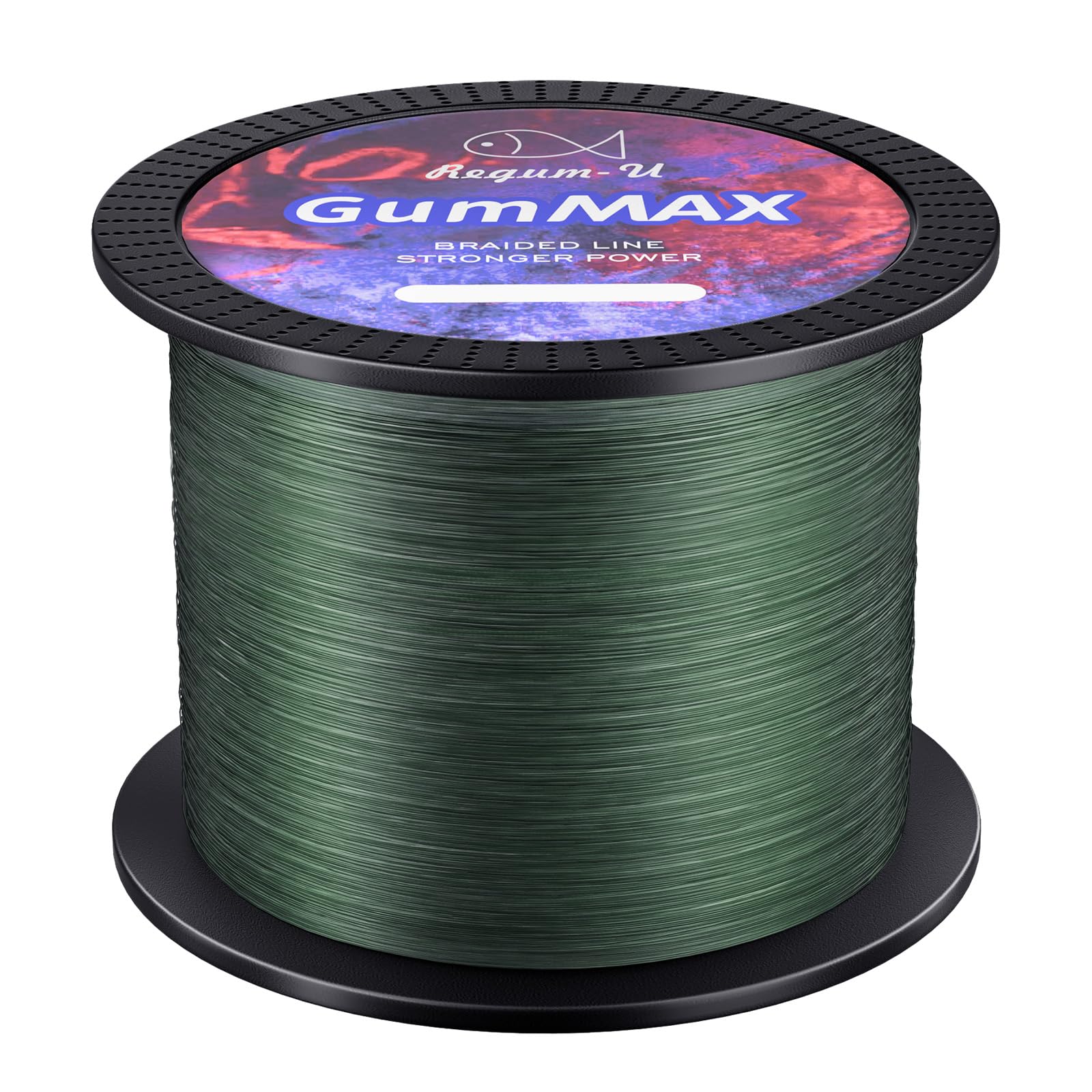
A 50-pound braid that takes the “beginner” label seriously by spooling up with confidence you will not break off.
This is the heaviest line on the list by a wide margin — 50-pound breaking strength compared to the 12-to-17-pound range of the other picks. The GumMAX uses 8 high-strength polyethylene strands woven into a tight, smooth surface that reduces water resistance on the retrieve. The brand claims the diameter is over 2x thinner than traditional 4-strand PE lines, so a 50-pound braid roughly equals the diameter of a standard 20-pound mono — useful for packing more line on a baitcaster spool without sacrificing strength.
Customers note “good value for yards/lb test” and that it “runs well on casting and open-face reels.” One reviewer landed a 37.5-pound travalley without issue, saying “smaller in size but very strong.” The blackish green color blends well in stained or mossy water, and the 545-yard spool gives you enough to fill a large baitcaster with a leader attached.
The catch is that braid has zero stretch, which means every thumb mistake on a baitcaster results in a backlash that is extremely hard to pick out. A beginner should pair this with a mono or fluorocarbon leader (about 3-4 feet) to add a bit of stretch and invisibility near the hook. One reviewer noted fraying where the sinker slides, so check the first few feet after a day of dragging bottom.
Where It Shines
- Massive 50 lb strength for big catfish, pike, or saltwater species
- Very thin diameter compared to mono of equal strength — more line on the spool
- Low stretch means immediate hooksets on long casts
Where Beginners Struggle
- Zero forgiveness on backlashes — a bird’s nest in braid is near-impossible to undo
- 50 lb is overkill for most bass fishing; 15-20 lb braid would be more practical
- Fraying where sinker slides — check the bottom section regularly
Grab this when you target fish that pull hard enough to spool a baitcaster: big catfish, musky, or saltwater species where 50 lb is a safety margin.
Not the right starter braid if you are still learning thumb control: start with the Yo-Zuri Super Braid at 15 lb before stepping up to this.
4. Yo-Zuri Super Braid 300-Yard Dark Green

A 15-pound braid that fishes well on a baitcaster without the nasty wind knots cheap braids produce.
The Yo-Zuri Super Braid uses a heat integration process that rounds and tightens the braid so it slides through the guides with less friction than traditional flat braids. The result is a line that casts farther and resists digging into itself on the spool — a common beginner braid problem. At 15 pounds, this is a more practical strength for bass and inshore fishing than the 50-pound GumMAX above, and the 300-yard spool fills a standard 100-size baitcaster with room for a leader.
Reviewers point out it “fishes well — no casting issues and lays well on the spool,” with one angler catching everything from 15-pound bass to false albacore on the same spool. Another reviewer noted “excellent abrasion resistance around cover” and said the color holds up well over a season. The dark green shade is designed for muddy, stained, or mossy water, though a clear leader is still a good idea in gin-clear lakes.
The vulnerability is toothy fish — pike, pickerel, and mackerel can cut through the thin diameter, so a fluorocarbon leader is recommended when those species are around. Compared to the GumMAX, this is a 15-pound vs 50-pound strength, and the 300-yard spool is about half the yardage, but for a beginner learning braid on a baitcaster, the 15-pound test is far more manageable.
Why It Works For Beginners
- Heat-integrated round braid reduces casting resistance and wind knots
- 15 lb test is a versatile weight for bass, walleye, and inshore species
- Long-lasting dark green color stays visible to you, hidden from fish
The Catch
- Vulnerable to toothy fish without a fluorocarbon leader
- Color fading over a full season is possible, though slower than other budget braids
A smart entry point into braid on a baitcaster: the 15-pound test lets you feel bottom structure without the risk of a heavy backlash ruining the spool.
Pick the P-Line Floroclear instead if you want a line that works on both spinning and casting reels: braid is less forgiving on a spinner.
5. Zebco Cajun Line Smooth Cast, Low Vis Ragin’ Red
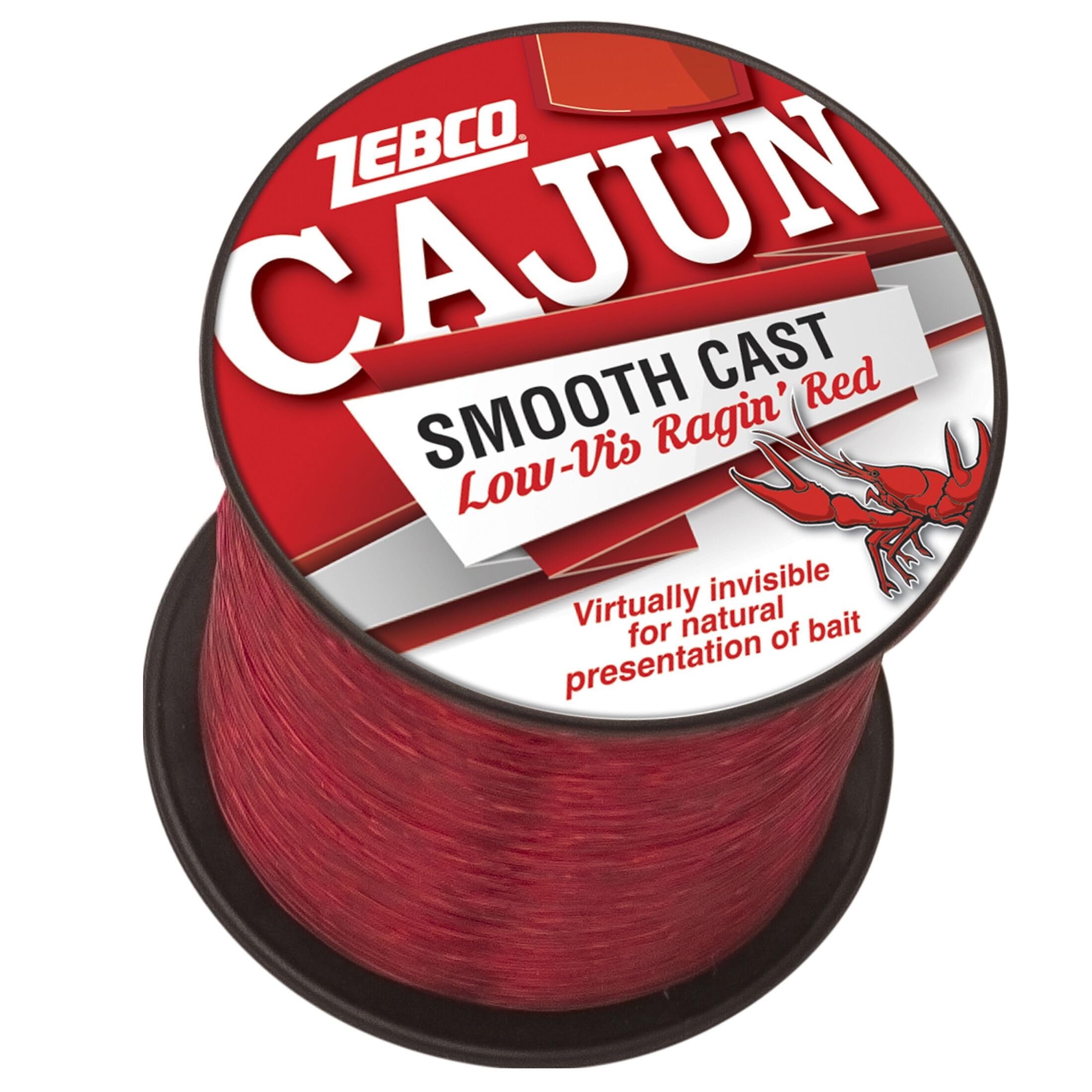
An 1850-yard monofilament spool that costs less per foot than any other line on this list.
The Cajun Line gives you a massive 1850 yards of 6-pound test — 9.2x more yardage than the 200-yard Seaguar Basix spool. That is enough line to fill a baitcaster spool multiple times over, or to use as a bulk filler for several reels. The monofilament construction is supple and casts smoothly, with the Low-Vis Ragin’ Red color that is visible to the angler above water but nearly invisible to fish below. Shoppers say it is a “favorite panfish line” with “great knot strength” and minimal line memory unless it sits unused for months.
The 6-pound breaking strength is the lightest on this list, and it is a 2.5x gap compared to the Yo-Zuri Super Braid’s 15-pound test. That means the Cajun Line is ideal for smaller species like bluegill, crappie, and trout, but you risk breaking off on a big bass that dives into cover. One reviewer caught a “big Largemouth Bass on 6lb Cajun test line” with careful drag management, but a beginner might not have that touch yet.
The material is a nylon blend, not pure fluorocarbon, so it is not invisible underwater the way the Seaguar Basix or Yo-Zuri Topknot are. For stained or murky water the red color works well, but in clear water a fluorocarbon leader would help.
what separates it
- 1850-yard spool is the best per-yard value in this guide — fills countless reels
- Supple mono casts smoothly with low memory for a nylon line
- Ragin’ Red color is nearly invisible underwater in lakes and rivers
What Limits It
- 6 lb test is too light for bass in heavy cover — risk of break-off is real
- Not as abrasion-resistant as the fluorocarbon picks on this list
Ideal for panfish and trout anglers who want bulk yardage for the price of a single lunch: fill every reel in your tackle bag for less.
Not for the beginner targeting 3-pound-plus bass: the 6-pound test will snap if you horse a fish out of lily pads.
6. Yo-Zuri Topknot Mainline Natural Clear 200-Yard Fluorocarbon
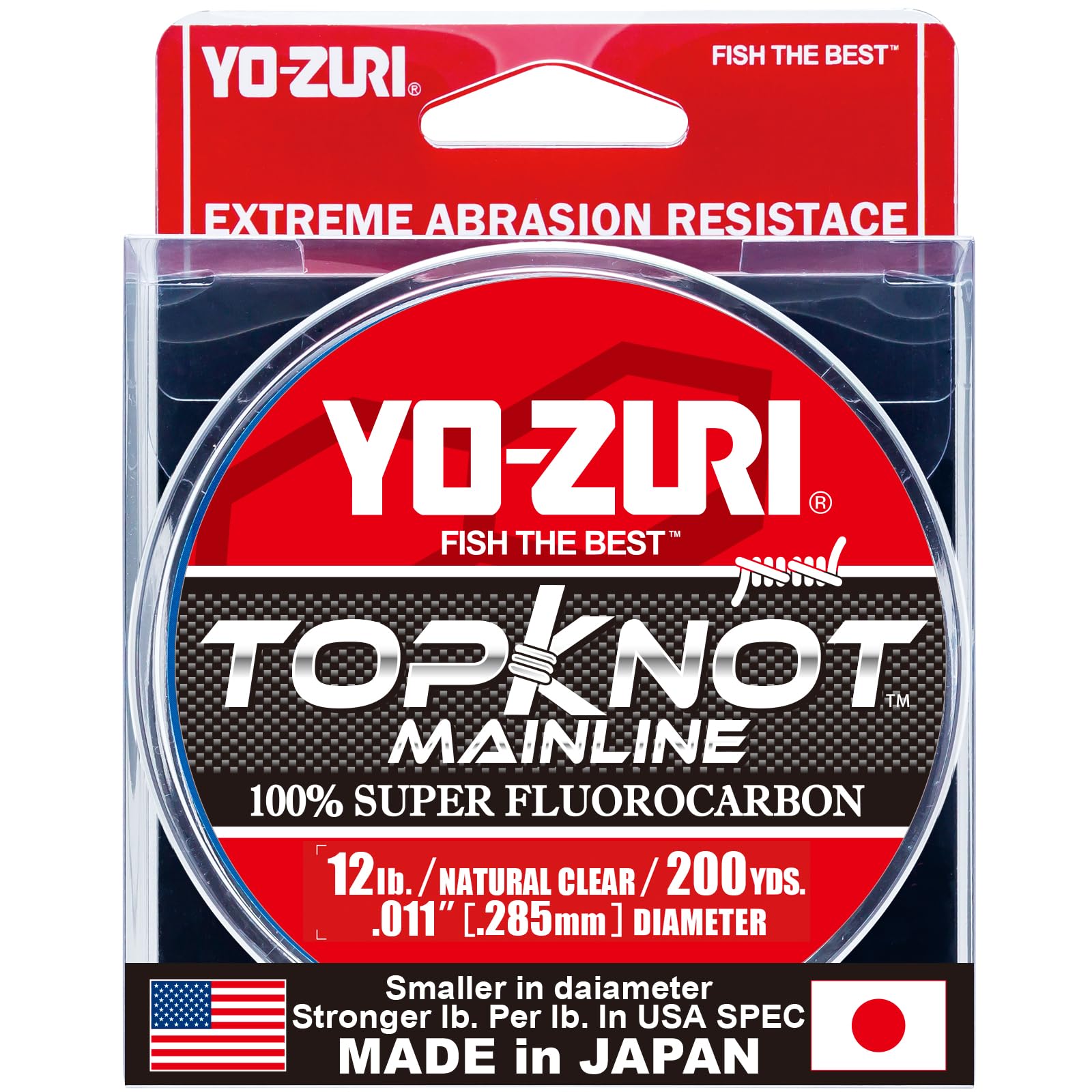
A 100% fluorocarbon mainline that reviewers call the best abrasion fighter in its price range.
The Topknot is made from pure super fluorocarbon that stays clear after extended use underwater, which means more bites because the fish do not see a reflective line passing over their heads. At 12-pound breaking strength, it is thick enough to hold its own on a baitcaster spool without digging in, and the 200-yard length fills a standard baitcaster reel. Buyers report it is “probably the best abrasion resistant fluoro in this price range,” with one reviewer saying you can “pull a submarine without breaking this stuff.”
The line does have some memory — multiple reviewers noted it can coil on the spool after sitting, but the knot strength and smoothness make up for it. Compared to the Seaguar Basix, the Topknot is similar in price and yardage but has a proven track record with buyers who fish around oyster beds and rocks. One reviewer who fishes near “oyster beds, shells, and rocks” said this line “performed above average” in those conditions.
At 12 pounds, it is lighter than the P-Line Tactical (17 lb) but heavier than the Zebco Cajun (6 lb), making it a middle-ground option for bass in moderate cover. The trade-off is stiffness — like most fluorocarbon, it is less forgiving than monofilament on a cast, so a beginner needs to set the spool tension properly to avoid overruns.
What Makes It Stand Out
- Best abrasion resistant fluorocarbon in this price tier — verified by oyster-bed anglers
- Superior knot strength and thin diameter for its 12 lb rating
- Stays clear underwater for increased invisibility
Potential Issues
- Line memory can cause coiling after storage — manage with a conditioner
- Stiffer than monofilament; requires precise spool tension on baitcaster
Choose this if you fish around structure that eats cheap line: rocks, timber, and oyster beds are where this fluorocarbon earns its keep.
Stick with the P-Line Floroclear if you want a softer line that handles casting mistakes better.
7. Seaguar Basix Freshwater Mainline, 100% Fluorocarbon

A 100% fluorocarbon mainline at 15 pounds that brings Seaguar’s resin tech to an entry-level price.
The Basix is made from custom Seaguar fluorocarbon resins, which makes it virtually invisible underwater — the same material science that made Seaguar famous in the leader market, now in a spool that costs roughly the same as a mid-range monofilament. At 15 pounds breaking strength with 200 yards, it fills a typical 100-size baitcaster reel and gives you enough diameter to resist spool dig-in (when the line buries into itself on the spool during a cast). Owners mention “good abrasion resistance and knot strength for leader use,” with one reviewer landing a catfish on 10-pound test against jagged rocks.
The soft, supple nature of this fluorocarbon makes it easier to cast than stiffer fluorocarbons, which is a real advantage for a beginner baitcaster user. However, some buyers noticed that after sitting on the spool through a winter, the line develops memory and may need to be replaced — though at this price point, replacing a spool is not a painful expense. The 200-yard length is about half the yardage of the P-Line Floroclear (600 yards), so you get less line per dollar, but the pure fluorocarbon construction offers better invisibility in clear water.
Compared to the Yo-Zuri Topknot (12 lb), the Basix is 15 lbs at the same 200-yard length, so it is slightly heavier and more suited for bass in open water. The Zeebco Cajun Line has 1850 yards at 6 lb — a huge gap in yardage — but the Basix is a better choice if you need a 15-pound mainline for a baitcaster rather than a light panfish setup.
Why It Works For New Anglers
- 100% Seaguar fluorocarbon resin — same invisibility as high-end leaders
- Soft and supple for its class — casts smoother than stiff fluorocarbon lines
- Solid knot strength and abrasion resistance for the price
One Weakness
- Memory builds up after long storage (winter layoff) — may need replacing each season
- 200-yard spool is shorter than budget options — buy two spools if you fish often
A perfect entry point into fluorocarbon on a baitcaster: the 15-pound test is forgiving enough for a beginner but strong enough for bass.
If you want a line you can spool once and forget for two seasons, the P-Line Floroclear copolymer handles memory better.
Understanding the Specs
Breaking Strength (Pounds)
This is the amount of steady pull the line can take before snapping — measured in pounds. A 12-pound test line handles a fish pulling 12 pounds before breaking. For a beginner baitcaster, 12 to 17 pounds is the balance: heavy enough to muscle a bass out of weeds but light enough that the line has enough diameter to lie flat on the spool without digging in. A 6-pound test is too thin for a baitcaster spool and will bury itself on a cast.
Line Memory
This is the tendency of a fishing line to hold the shape of the spool after you cast it. High-memory lines come off the reel in tight coils that cause loops and tangles — the number one cause of beginner bird’s nests. Monofilament generally has less memory than fluorocarbon, which is why the Zebco Cajun Line and P-Line Floroclear are beginner-friendly. Copolymer and fluorocarbon lines with silicone treatment (like the P-Line Floroclear) reduce memory while keeping low visibility.
Yardage and Spool Capacity
A standard 100-size baitcaster reel holds roughly 130 to 150 yards of 12-pound test line. A 200-yard spool gives you enough to fill one reel with a bit leftover. A 600-yard spool like the P-Line Floroclear can fill several reels or last a full season of re-tying hooks. The Zebco Cajun Line at 1850 yards is massive overkill — you will fill a reel 12 times over — but it is ideal if you spool multiple reels for the whole family.
Line Type: Mono vs Fluorocarbon vs Braid
Monofilament (nylon single-strand) is the most forgiving: it stretches a little, which absorbs casting mistakes, and has low memory so it lays smooth. Fluorocarbon is denser and sinks faster, making it invisible underwater, but it is stiffer and can coil. Braid (woven polyethylene strands) has zero stretch and a tiny diameter, so you feel every bite — but a backlash in braid is practically impossible to untangle. Beginners should start with a copolymer or mono before graduating to braid.
FAQ
What pound test should a beginner use on a baitcaster?
Is monofilament or fluorocarbon better for a beginner baitcaster?
Can I use braided line on a baitcaster as a beginner?
How much line do I need to fill a baitcaster reel?
What does line memory mean and why does it matter?
Will 6-pound test work on a baitcaster?
What is the difference between a mainline and a leader?
How often should I replace fishing line on my baitcaster?
Can I use the same line on both baitcasting and spinning reels?
What knot should I use for connecting line to a baitcaster?
Final Thoughts: The Verdict
For most beginners, the baitcaster line for beginners winner is the P-Line Floroclear because its copolymer blend gives you the low visibility of fluorocarbon with the forgiving castability of monofilament — and you get 600 yards to fill multiple reels. If you want the strongest abrasion protection for fishing around rocks and cover, grab the P-Line Tactical Premium Fluorocarbon. And for the best entry-level fluorocarbon on a budget, the Seaguar Basix offers Seaguar resin quality at a price that makes a full spool replacement painless each season.
How We Picked
We do not accept paid placement. Every pick is matched to a real buyer and a real use-case; we do not hands-on test units.
Sources & Methodology
Specifications: manufacturer listings and product documentation. Review insights: verified customer reviews, as of July 2026. Pricing: not shown on this page (it changes often); check the current price via the retailer link.
As an Amazon Associate, Gadgets Feed earns from qualifying purchases. This does not affect which products we feature.