
Handing a one-year-old their first set of wheels is a milestone filled with wobbles, proud steps, and the occasional tumble onto soft grass. At this age, a bike isn’t about speed — it’s about mastering the fundamental act of balancing on two points while keeping tiny feet close to the ground for safety. The wrong choice means a child who can’t reach the floor, a frame that tips too easily, or a seat that slides them forward mid-ride.
I’m Min — the co-founder and writer behind Gadgets Feed. I’ve spent countless hours analyzing the geometry, weight distribution, and material quality of toddler ride-ons to separate the genuinely stable beginner bikes from those that look right but fail a 12-month-old’s proportions.
Whether you are looking for an ultra-light aluminum option or a steel frame built to survive sibling hand-me-downs, this guide to the best balance bike for 1 year old buyers will help you find a safe, confidence-building first ride.
How To Choose The Best Balance Bike For 1 Year Old
Selecting a first balance bike for a 12-month-old requires a shift in thinking from how you would choose a bike for a three-year-old. At this stage, the bike must prioritize ground reach, steering resistance, and a low center of gravity above everything else.
Frame Material and Weight Limits
One-year-olds have limited leg strength, so every extra pound of bike weight reduces their ability to push off and stop safely. Steel frames (typically 5.5-7 pounds) offer durability at the cost of heft, while aluminum frames drop the weight to around 3.5 pounds but may flex under hard use. Look for a maximum weight rating of at least 40 pounds to ensure the frame survives multiple children without bending at the weld joints.
Steering Limitation and Wheel Design
Full 360-degree steering guarantees a face-plant when a one-year-old jerks the handlebars mid-stride. A good first bike restricts the fork to a 45-135 degree turning arc so the front wheel cannot tuck under the frame. Wide front-wheel spacing (above 5 inches) and dual rear wheels also help the bike stand upright when stationary, reducing the need for a kickstand that toddlers cannot operate.
Seat Adjustability and Saddle Shape
A seat that cannot drop to at least 9.5 inches from the ground will leave a 12-month-old’s feet dangling, forcing them to lean forward and destabilize the bike. Prioritize models with tool-free seat clamps that adjust between 9.7 and 14 inches so the bike grows with the child. Avoid narrow seats that lack a raised rear lip — the child will slide off the back during deceleration.
Quick Comparison
On smaller screens, swipe sideways to see the full table.
| Model | Category | Best For | Key Spec | Amazon |
|---|---|---|---|---|
| Radio Flyer Steady Start | Premium 3-Wheel | Early stability with dual rear wheels | 7 lbs / 3-wheel design | Amazon |
| Retrospec Cub | Premium Build | Puncture-proof tires and all-terrain use | 11-14.5″ seat height | Amazon |
| Liberry Baby Balance | Mid-Range | Adjustable seat with customizable name sticker | 9.7-11″ seat height | Amazon |
| Bobike Toddler Balance | Mid-Range | Adjustable seat up to 40 lbs capacity | Alloy steel frame | Amazon |
| PerKidern Baby Balance | Mid-Range | Taller frame for longer legs | Carbon steel frame | Amazon |
| SEREED Colorful Lighting | Budget-Friendly | Lightweight aluminum with glow wheels | 3.6 lbs / Aluminum frame | Amazon |
| Gotrax Baby Balance | Budget-Friendly | Highest load capacity at 66 lbs | 5.9 lbs / Steel frame | Amazon |
In‑Depth Reviews
1. Radio Flyer Steady Start Balance Bike

The Radio Flyer Steady Start uses a unique three-wheel geometry — a wide front wheel paired with dual rear wheels — that allows the bike to stand upright without a kickstand. For a 1-year-old who cannot yet balance on two points, this configuration eliminates the sideways tip that plagues traditional two-wheel balance bikes. The alloy steel frame weighs 7 pounds, which is on the higher side for the category, but the distribution of that weight across three contact points keeps the bike planted even when the child leans aggressively side to side.
The treaded wheels roll quietly on hardwood, carpet, and paved driveway surfaces, and the padded seat adjusts without tools from approximately 10.5 inches to 12.5 inches. That seat range suits a 12-month-old with a 10-inch inseam while leaving room to grow through age 3. The handlebar grips are rubber rather than foam, resisting the tearing that happens when a toddler chews or pulls on the grips during falls.
Assembly requires a Phillips head screwdriver and takes about eight minutes — the frame ships in two main pieces with the handlebar and seat post already attached to their respective clamps. The lack of a brake is typical for this age group; children stop by putting their feet down, and the dual rear wheels provide enough drag resistance to prevent sudden runaway rolls on flat terrain.
Why it’s great
- Three-wheel stance eliminates the need for a kickstand and prevents sideways tipping
- Tool-free adjustable seat grows with the child from 12 months to 3 years
- Treaded EVA tires deliver a genuinely quiet ride on any indoor surface
Good to know
- At 7 pounds, it is heavier than most aluminum-frame competitors
- The wide front wheel makes it less maneuverable in tight indoor spaces
2. Retrospec Cub Toddler Balance Bike

The Retrospec Cub stands apart from the entry-level competition because of its airless, puncture-proof tires. Instead of hollow EVA foam or thin rubber tubes that go flat after a few sidewalk runs, these solid tires maintain their shape over gravel, grass, and paved roads without compressing unevenly. The 12-inch wheel size and alloy steel frame produce a bike that weighs just under 7 pounds but feels denser due to the solid tire material, which dampens vibration better than any foam wheel in this class.
The seat adjusts from 11 inches to 14.5 inches using a quick-release clamp — the widest height range in this comparison — meaning a 12-month-old with a very short inseam can reach the ground flat-footed while a 3-year-old sibling can also use the bike without the seat topping out. The handlebars also use a quick-release mechanism, so the bike can be collapsed flat for trunk storage without tools. The low-frame design places the top tube close to the ground, allowing a toddler to step over the bike rather than swing a leg over a tall crossbar.
Rounded edges on the frame welds and non-slip rubber grips reduce the chance of scraped shins when the child inevitably drops the bike. The company states an age range of 18 months to 3 years, but parents of smaller 12-month-olds who have already started walking confidently will find the 11-inch minimum seat height works well. Assembly takes roughly 15 minutes with the included hex wrench.
Why it’s great
- Airless puncture-proof tires eliminate flat repairs and provide stable traction on mixed terrain
- Widest seat height adjustment range (11-14.5 inches) extends usability across multiple growth stages
- Quick-release handlebar and seat allow tool-free collapse for storage
Good to know
- The solid tires add weight, making the bike feel slightly heavier than its EVA-wheel peers
- The 18-month minimum age recommendation may be conservative for taller 12-month-olds
3. Liberry Baby Balance Bike
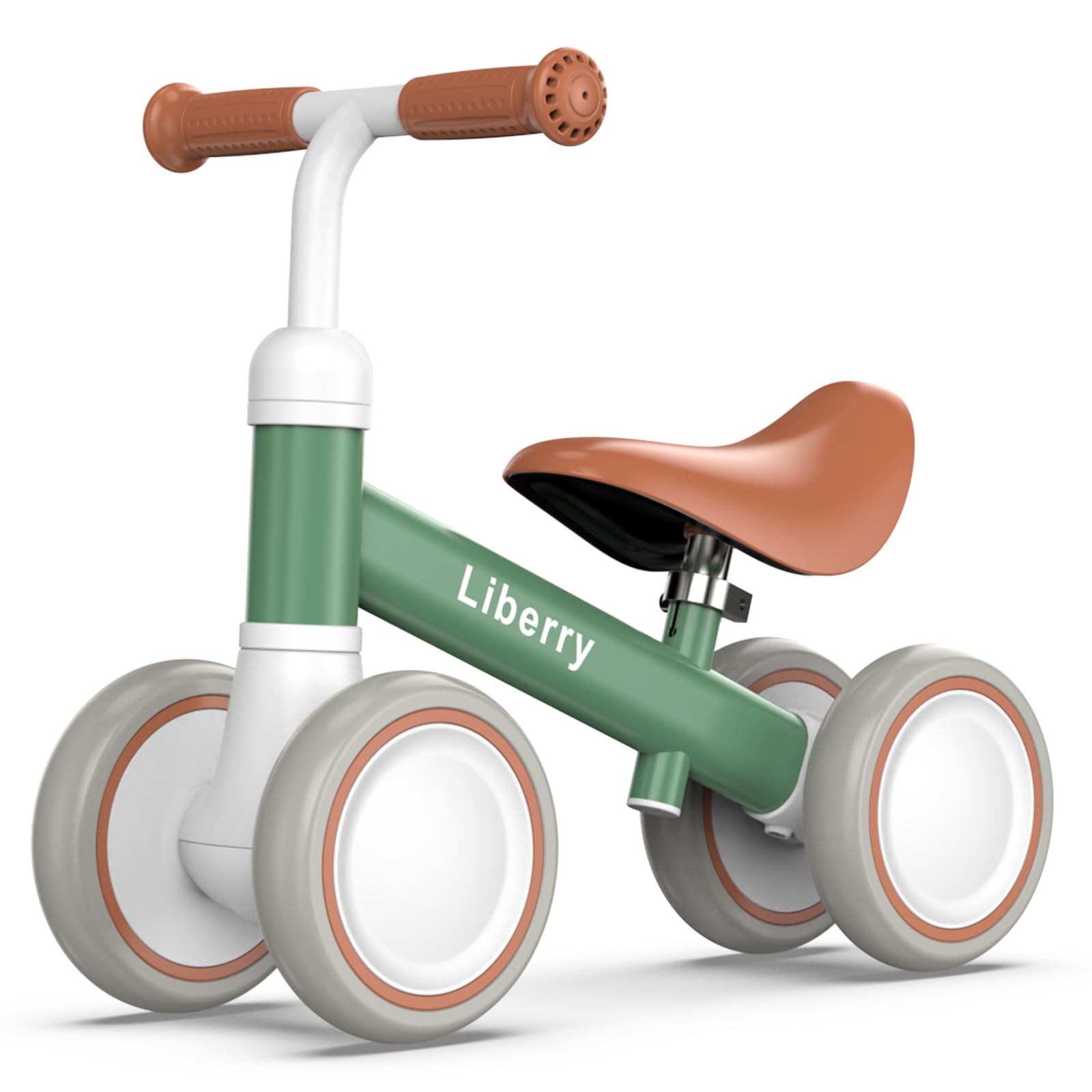
The Liberry Baby Balance Bike nails the essentials for a 1-year-old without adding gimmicks that inflate the cost. Its seat adjusts between 9.7 and 11 inches, making it one of the few models in this class that can accommodate a child with a 9-inch inseam — the typical measurement for a 12-month-old in the 25th height percentile. The alloy steel frame supports up to 55 pounds, which is generous for this category, and the closed four-wheel design prevents the child’s feet from slipping through the spokes during the wobbly walking phase.
The EVA tires are smooth and silent on hardwood floors, a critical detail if the bike will spend most of its time indoors during the winter months. The handlebars are wrapped in rubber rather than foam, eliminating the risk of a toddler tearing pieces off and swallowing them. The bike ships with a letter sticker sheet so parents can spell their child’s name on the frame — a simple customization feature that adds sentimental value without changing the ride dynamics.
The claimed maximum weight capacity of 55 pounds is high enough that a tall, heavy 2-year-old can still ride it safely, though the 11-inch seat ceiling means kids with inseams above 18 inches will eventually need a taller bike. Assembly takes about five minutes with the included Allen key, and the bike weighs 6.4 pounds — manageable for a toddler to push around but not so light that it feels flimsy.
Why it’s great
- Low minimum seat height (9.7 inches) fits the shortest 12-month-olds
- Closed four-wheel design prevents foot entrapment during early walking stages
- Rubber handlebars resist tearing better than foam alternatives
Good to know
- Maximum seat height of 11 inches limits use beyond 2.5 years for taller children
- EVA tires can wear smooth quickly if used exclusively on abrasive concrete
4. Bobike Toddler Balance Bike

The Bobike Toddler Balance Bike distinguishes itself with a 40-pound maximum carry weight and an adjustable seat that rises high enough to accommodate children up to age 4. The alloy steel frame uses a 135-degree steering limiter, which is tighter than the typical 180-degree stops found on cheaper models, reducing the likelihood that the front wheel folds sideways during a sharp turn. The closed wheel design uses solid plastic discs rather than spokes, eliminating pinch points entirely.
The seat adjusts without tools through a single cam clamp, and the height range covers children with inseams from approximately 11 inches to 16 inches. This means a 12-month-old at the 50th percentile can ride it immediately, and a 3-year-old sibling can still use it without buying a second bike. The handlebar grips are made of foam, which is a mild downgrade from rubber but still acceptable for this price bracket — just plan to tape them if the child chews.
One quirk to note: the bike ships directly from the brand’s Amazon store, but third-party sellers may list the same product under different ASINs, potentially complicating warranty claims. Verify the seller is listed as “Bobike” before completing the purchase. Assembly is straightforward with the included tool kit and takes roughly 10 minutes.
Why it’s great
- 40-pound weight capacity and tall seat range extend usability to age 4
- 135-degree steering limit prevents wheel tuck during sharp turns
- Fully enclosed wheels eliminate any risk of pinched toes
Good to know
- Foam handlebar grips may degrade faster than rubber on outdoor bikes
- Seller verification is necessary to avoid third-party warranty complications
5. PerKidern Baby Balance Bike

PerKidern deliberately extended the frame by 2 inches in length and raised it by 3 inches compared to standard toddler bikes, creating more legroom for taller 12-month-olds and preventing the knees from hitting the handlebars during the gliding motion. The carbon steel frame adds weight (4.6 pounds) but provides a rigidity that resists twisting when the child leans into turns. The PU foam saddle includes a raised rear lip that stops the child from sliding backward off the bike when they stop abruptly.
The four EVA silent wheels are high-density and wear-resistant, leaving no marks on laminate flooring while providing enough grip for gentle outdoor use on smooth pavement. The brown color scheme and saddle stitching give the bike a classic leather aesthetic that hides dirt better than bright pastels. Assembly requires five steps using the included tool kit, though the instructions use image-based diagrams that some parents find less intuitive than written steps.
The extended frame geometry is the bike’s defining strength, but it also means the turning radius is slightly wider than compact competitors. Children under 12 months who have not yet mastered walking may struggle to mount the bike independently because the longer wheelbase pushes the seat further from the starting position. For a confident 14-month-old who already walks well, this longer frame encourages a more natural stride pattern.
Why it’s great
- Extended frame (+2 inches length, +3 inches height) accommodates taller toddlers without knee collision
- Raised rear saddle lip prevents backward sliding during deceleration
- High-density EVA wheels protect indoor flooring while maintaining traction
Good to know
- Wider turning radius makes it less maneuverable in cramped rooms
- New walkers under 12 months may have difficulty mounting independently
6. SEREED Colorful Lighting Baby Balance Bike

At just 3.6 pounds, the SEREED balance bike is the lightest aluminum-frame option in this roundup, and that weight difference is immediately noticeable when a 1-year-old tries to lift the front wheel over a threshold or pivot in a tight hallway. The aluminum alloy frame resists corrosion better than steel, making this a strong candidate for families who store the bike in a garage or leave it outside between uses. The most distinctive feature is the LED lighting mechanism embedded in the wheels — no batteries are required because the lights are powered by the spinning motion of the wheel itself.
The 135-degree steering limit keeps the fork from over-rotating, and the closed wheel design uses solid discs rather than spokes to prevent foot entrapment. The non-slip TPU handles provide a secure grip even when the child’s palms are sweaty from indoor play, and the seat is cushioned with soft foam rather than hard plastic. The bike assembles in under one minute without any tools — the handlebar slides into the fork and locks with a quick-release collar.
The lightweight construction does come with a trade-off in load capacity; the frame feels less robust under a heavy 30-pound toddler, and the EVA wheels can develop flat spots if left stationary in one position for weeks. The LED lights are a fun attention-grabber, but they are a non-essential bonus — the real value here is the ease with which a tiny child can maneuver the bike independently.
Why it’s great
- Ultra-light 3.6-pound aluminum frame is the easiest for a 1-year-old to maneuver independently
- Battery-free LED wheels glow during motion, adding visual motivation without weight penalty
- Tool-free one-minute assembly with quick-release handlebar collar
Good to know
- Aluminum frame may flex under heavier toddlers approaching 35+ pounds
- EVA wheels can develop temporary flat spots if stored stationary for long periods
7. Gotrax Baby Balance Bike
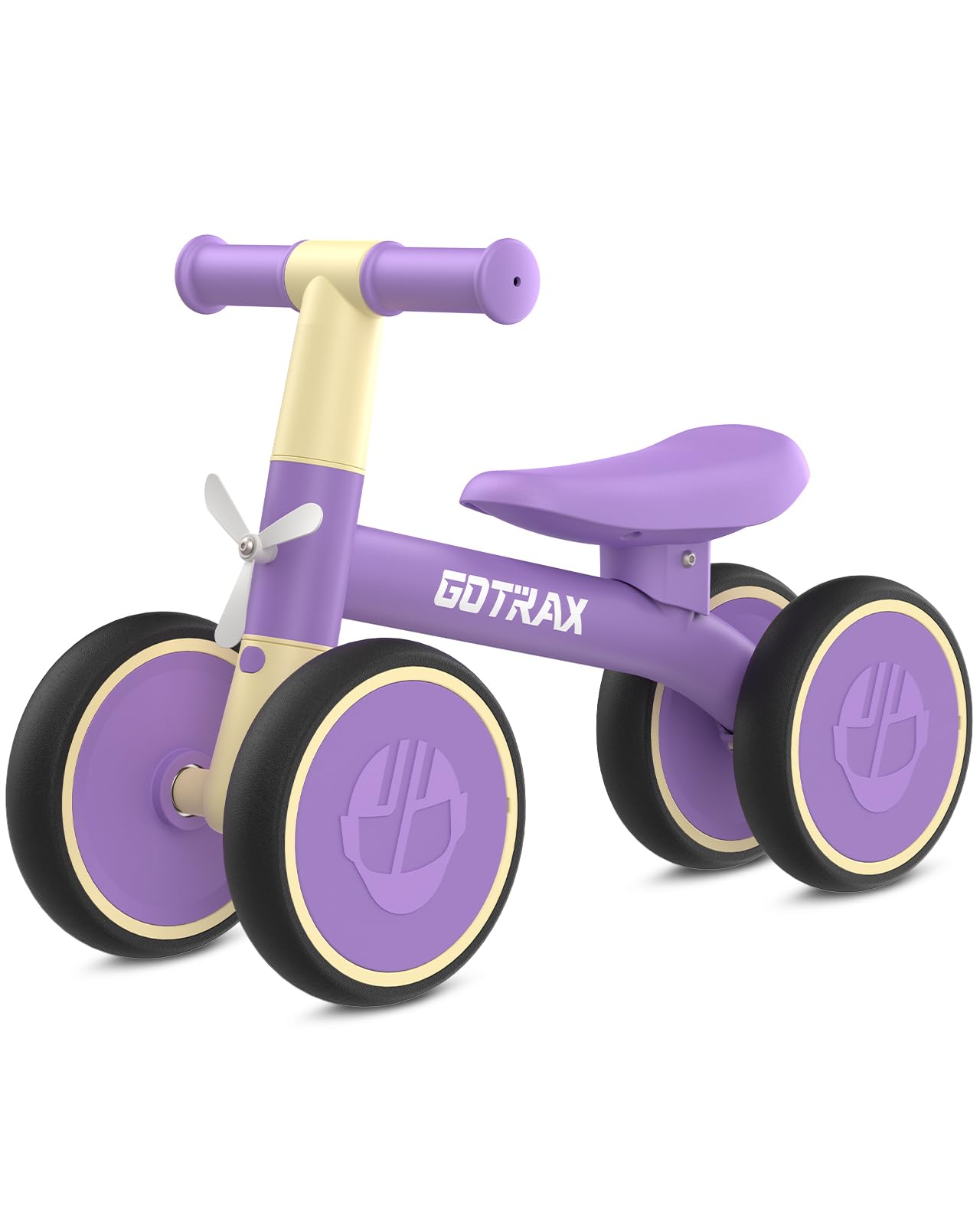
The Gotrax BA1 punches above its price tier with a steel frame rated to carry 66 pounds — the highest weight capacity in this comparison by a significant margin. That over-engineering means the bike can survive being ridden by multiple children in sequence without the frame developing cracks at the head tube or seat post welds. The 45-degree steering limit is the tightest in the roundup, which is deliberate: it prevents the front wheel from swinging far enough to destabilize the bike during the erratic steering motions common to 12-month-old riders.
The 7-inch front and rear EVA silent wheels use a 5.1-inch front wheel spacing that creates a wider stance than most competitors, reducing the chance of a sideways tip. The one-piece TPR handlebar is soft enough to absorb impact if the child falls forward onto the grips, and the curved PU seat keeps the child positioned correctly without sliding to either side. Assembly takes about two minutes thanks to a precision-locking system that aligns the fork and frame without guesswork.
The bike is CPC certified and ships with a 1-year warranty, which is rare at this price level. The main compromise is the weight — at 5.9 pounds, it is heavier than the aluminum options, so a very petite 1-year-old may struggle to lift it over obstacles. The purple colorway is vibrant and gender-neutral, and the included mini fan (a small spinning decoration on the handlebar) adds a whimsical touch that toddlers find motivating.
Why it’s great
- 66-pound weight capacity is the highest in the class, ensuring multi-child durability
- 45-degree steering limit provides maximum anti-tip stability for new riders
- 5.1-inch front wheel spacing creates a wide, stable stance
Good to know
- 5.9-pound steel frame is heavier than aluminum alternatives for petite toddlers
- Bright purple color may not appeal to all toddlers or parents
FAQ
Can a 12-month-old who doesn’t walk yet use a balance bike?
Are 4-wheel or 2-wheel balance bikes better for a 1-year-old?
What inseam length does a 12-month-old need for a balance bike?
Final Thoughts: The Verdict
For most users, the balance bike for 1 year old winner is the Radio Flyer Steady Start because its three-wheel stance offers unmatched stability for children still mastering upright walking while the tool-free seat adjustment extends usability through age 3. If you want puncture-proof tires that roll smoothly over grass and pavement without ever going flat, grab the Retrospec Cub. And for a budget-friendly ultra-light frame that a tiny toddler can carry and maneuver independently, nothing beats the SEREED Colorful Lighting.