
The search for the right two-wheeled starter often stalls over a single question: will this actually fit my child’s inseam without forcing a tiptoe reach? A mis-sized frame kills confidence before the first glide, turning a fun milestone into a frustrating ordeal. The difference between a bike that inspires mastery and one that collects dust in the garage comes down to adjustable seat range, overall weight, and tire construction.
I’m Min — the co-founder and writer behind Gadgets Feed. My research process for this guide involved cross-referencing seat height ranges against toddler anthropometric data and analyzing hundreds of verified owner experiences to identify which models genuinely help a three-year-old build balance without the bulk of an overly heavy frame.
After sifting through the specs and real-world feedback, I’ve assembled a focused list of the top contenders that fit the balance bike for 3 year old buyer’s real needs: proper inseam coverage, lightweight maneuverability, and durable tires that handle both sidewalk cracks and grassy knolls without complaint.
How To Choose The Best Balance Bike For 3 Year Old
Three-year-olds vary wildly in height, coordination, and confidence. Buying a bike solely on listed age range leads to mismatches where the seat is too low for a taller child or the frame too heavy for a lighter kid. Focus on three concrete specs: seat height adjustability, frame weight in pounds, and tire construction.
Seat Height and Inseam Match
The minimum seat height must allow your child’s feet to sit flat on the ground with a slight bend at the knee — not stretched straight or forced onto tiptoes. For a typical three-year-old, a seat range starting at 12–13 inches and extending to 17–18 inches provides enough room to grow over two to three years. Measure your child’s inseam from the crotch to the floor while they’re barefoot, then subtract one inch to find the ideal minimum seat height. A quick-release clamp makes adjustment painless when your child has a growth spurt.
Frame Weight and Material
A bike over 8.5 pounds becomes a draining burden for a three-year-old’s upper body and leg strength. Aluminum frames offer the best strength-to-weight ratio, tipping the scales around 5–7 pounds, while carbon steel frames add durability but push weight higher. Glass-reinforced nylon provides a middle ground with corrosion resistance and impact toughness. The lighter the bike, the easier it is for your child to steer, stop, and start independently.
Tire Construction and Ride Feel
EVA foam tires are maintenance-free and suitable for smooth pavement but transmit every crack and pebble into the rider’s hands. Air-filled rubber tires deliver superior shock absorption and grip on grass, gravel, and dirt, though they require occasional inflation. Flat-free foam rubber tires found on premium models balance durability with a forgiving ride. The choice depends on where your child will ride most — purely paved paths favor foam, while mixed-terrain adventures demand air tires.
Quick Comparison
On smaller screens, swipe sideways to see the full table.
| Model | Category | Best For | Key Spec | Amazon |
|---|---|---|---|---|
| Strider 12 Pro | Premium Aluminum | Lightest ride for confidence building | 11–19″ seat height, 5.6 lbs frame | Amazon |
| Ridego 14 Inch | Composite Frame | Largest inseam coverage for growth | 14.2–18.3″ seat height, 8.16 lbs | Amazon |
| bicystar 14 Inch | Steel Frame | Durable air-tire all-terrain rider | 13–21″ seat height, 8.5 lbs | Amazon |
| Retrospec Cub | Alloy Steel | First bike for smallest toddlers | 11–14.5″ seat height, 10 lbs | Amazon |
| banana bike LT | Aluminum Frame | Lightweight pick for petite riders | 12.2–15.7″ seat height, 6.4 lbs | Amazon |
| RIDYEE GreenSport | Carbon Steel | Customizable styling with storage | 13.4–15.8″ seat height, carbon steel frame | Amazon |
| Bobike Pink | Alloy Steel | Enclosed safety wheels for beginners | 12.5–15.5″ seat height, 135° steering limit | Amazon |
In‑Depth Reviews
1. Strider 12 Pro Bike

The Strider 12 Pro sits at the top of this category for a reason: its ultralight aluminum frame weighs just 5.6 pounds, making it the lightest full-featured balance bike on this list. Three-year-olds can lift, steer, and re-mount this bike without parental assistance, which directly accelerates the balance-learning feedback loop. The included regular and XL seat posts cover an inseam range from 12 to 20 inches, meaning a bike purchased at age 2 can still fit at age 5 with zero additional parts.
The flat-free foam rubber tires eliminate the puncture and inflation hassles associated with air-filled alternatives, while the padded saddle and mini grips keep small hands and legs comfortable during extended play sessions. Tool-free seat and handlebar adjustments let you dial in the perfect fit in under 30 seconds. Multiple verified owners report that children who started on this Strider transitioned to a pedal bike in under one hour — a testament to how effectively its low weight and ergonomic proportions teach balance.
Assembly is genuinely tool-free out of the box, and the 60-pound rider weight capacity provides a long usable lifespan. The one trade-off is the lack of a hand brake, which is standard for this category but worth noting if you prefer giving your child early brake-lever experience. Overall, the Strider 12 Pro delivers the best balance of lightness, adjustability, and proven learning outcomes for a three-year-old.
Why it’s great
- Incredibly lightweight 5.6-pound aluminum frame is easy for toddlers to control
- Dual seat posts provide an exceptionally wide inseam range from 12 to 20 inches
- Flat-free foam tires mean zero maintenance and no flats
Good to know
- No hand brake or foot brake — stopping is done with feet
- Premium price point reflects the build quality and brand reputation
2. Ridego 14 Inch Balance Bike

The Ridego 14 Inch Balance Bike stands out for its glass-reinforced nylon frame, a material rarely seen at this price tier that matches carbon steel’s strength at 8.16 pounds while resisting corrosion better than metal. Designed for ages 3 to 6, its seat adjusts from 14.2 to 18.3 inches — the highest maximum seat height on this list — making it an excellent fit for taller three-year-olds who have already outgrown smaller bikes. The 110-pound weight capacity means this bike can handle many years of abuse without structural failure.
Air-filled rubber tires with deep anti-slip tread provide genuine all-terrain grip across grass, gravel, pavement, and dirt. The padded saddle and integrated footrest keep riding posture correct and comfortable. Assembly reports consistently mention a five-minute setup with included tools. Several verified owners noted that their three- and four-year-olds took to the bike immediately, with one reviewer’s autistic child warming up to it gradually before riding confidently indoors and out.
The only notable caveat is that the footrest has a hard plastic surface that could scrape a bare foot if a child’s foot slips off during a glide. Wearing shoes eliminates this concern entirely. For families who need a bike that a three-year-old won’t outgrow in a single season, the Ridego’s tall seat range and corrosion-proof composite frame make it a compelling choice.
Why it’s great
- Glass-reinforced nylon frame is strong, lightweight, and corrosion-resistant
- Highest maximum seat height at 18.3 inches, perfect for taller toddlers
- Air-filled rubber tires with deep tread handle mixed terrain well
Good to know
- Hard plastic footrest can scrape bare feet if child’s shoe is off
- Requires occasional tire inflation unlike foam-tire models
3. bicystar 14 Inch Toddler Balance Bike
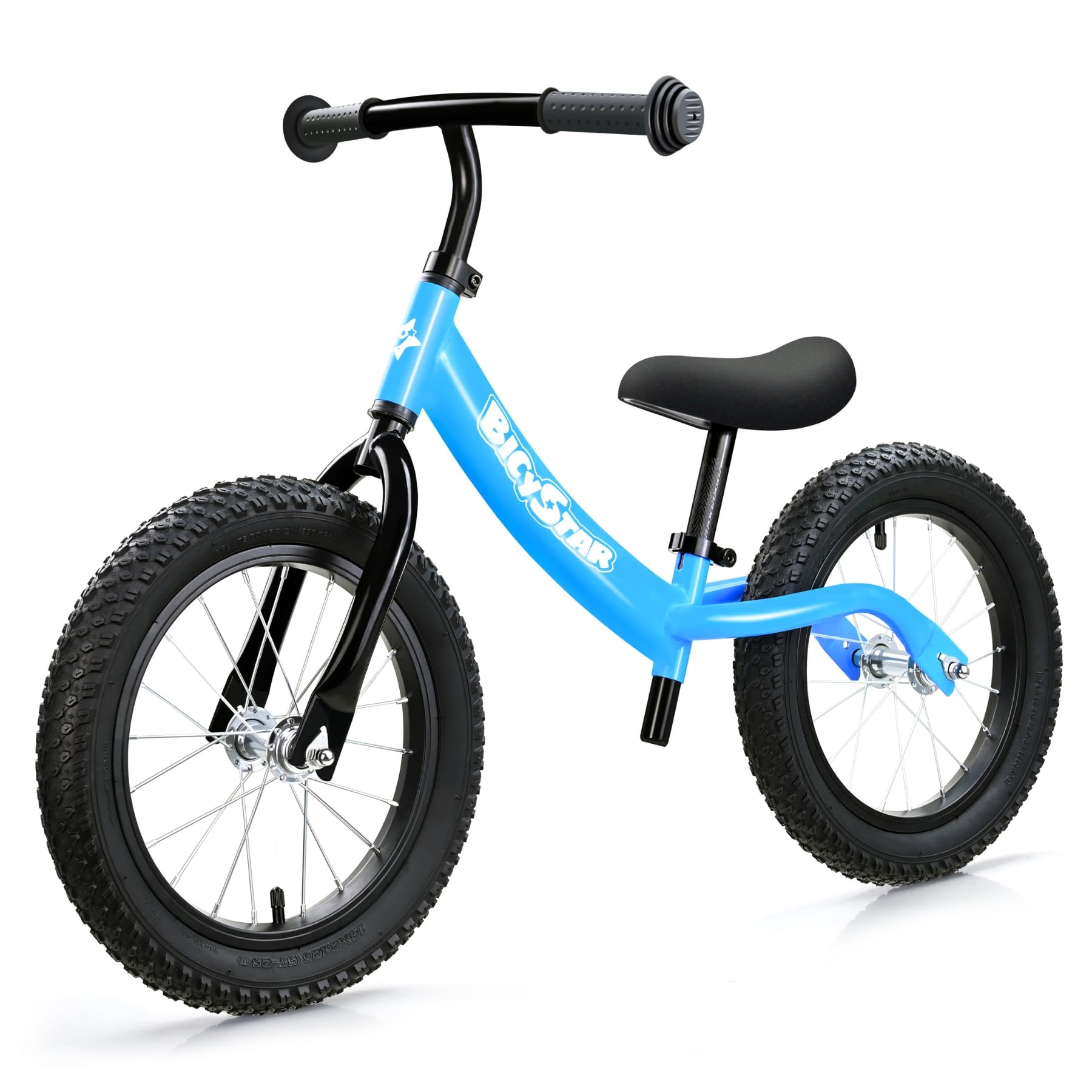
The bicystar 14 Inch Balance Bike delivers a compelling package for families who want real rubber air tires without climbing into premium price territory. Its carbon steel frame supports up to 110 pounds while keeping the complete bike at a manageable 8.5 pounds, and the seat adjusts from 13 to 21 inches — an enormous range that fits children with inseams from 13.5 to 22 inches. This adjustability alone makes it one of the longest-lasting options for a three-year-old who will keep riding for years.
The inflatable tires provide noticeably better shock absorption and traction than foam alternatives. Riders on pavement feel fewer vibrations, while grass and gravel paths remain stable rather than skittish. A soft padded seat, non-slip grips, and a built-in footrest round out the comfort features. Assembly took reviewers about 10 minutes using the included toolkit, and the 8-year frame warranty adds a layer of long-term confidence rarely seen at this level.
Some owners noted that the handlebar clamp requires an extra tightening pass after initial assembly to prevent gradual slipping. A few also wished for a bell or basket, though neither is standard for this category. For buyers who prioritize ride quality from real air tires and a seat range that spans four-plus years of growth, the bicystar offers excellent per-year value.
Why it’s great
- Real air rubber tires deliver superior grip and shock absorption
- Enormous 13–21 inch seat range fits children for many years
- Backed by an 8-year frame warranty for long-term peace of mind
Good to know
- Handlebar clamp may need extra tightening after first assembly
- Air tires require pump inflation every few weeks
4. Retrospec Cub Toddler Balance Bike

The Retrospec Cub is engineered specifically for the lower end of the age spectrum, with a minimum seat height of 11 inches that accommodates children with inseams as short as 10 inches. This makes it the best entry point for a young three-year-old or a small two-year-old who isn’t quite ready for taller frames. The alloy steel frame is sturdy enough to survive daily drops and scrapes, and the puncture-proof airless tires eliminate the flat-tire problem completely.
The low step-through frame design makes mounting and dismounting intuitive, which reduces frustration for first-time riders. Multiple verified owners reported that their toddlers went from hesitant walking to confident gliding within a week. The quick-release seat clamp allows on-the-fly adjustments without tools. Stickers are included in the box, which several reviewers noted as a fun way to involve children in personalizing their bike.
At 10 pounds, the Cub is heavier than aluminum-framed competitors, which can be a factor if your three-year-old is particularly slight. The seat maxes out at 14.5 inches, so taller or faster-growing children may outgrow the bike within a year. For parents with a smaller-than-average three-year-old who needs the lowest possible seat height, the Retrospec Cub delivers reliable quality at a fair price point.
Why it’s great
- Lowest minimum seat height at 11 inches for very small toddlers
- Airless puncture-proof tires require zero maintenance
- Low step-through frame builds confidence in first-time riders
Good to know
- 10-pound frame is noticeably heavier than aluminum alternatives
- Limited seat range means faster outgrowth for taller children
5. banana bike LT Balance Bike

The banana bike LT Version 4 weighs only 6.4 pounds, placing it among the lightest balance bikes available and second only to the Strider Pro on this list. The aluminum frame’s signature banana shape creates a low center of gravity that makes mounting and balancing easier for a three-year-old who’s still figuring out bike handling. The powder-coated paint resists scratches well, and the EVA foam tires keep the bike light while providing adequate grip for pavement and packed dirt.
The adjustable seat uses a quick-release clamp and spans from 12.2 to 15.7 inches, fitting most children from ages 2 through 4. Handlebars also adjust to accommodate growth, and the short wheelbase of 22 inches makes steering responsive without being twitchy. Verified owners with petite two-year-olds specifically praised this bike for being the first one that fit their child properly, with one reviewer noting that her husband — a professional cyclist — was impressed by the build quality.
The foam tires transmit more vibration on rough asphalt compared to air-filled alternatives, and the steering mechanism lacks sealed bearings, which a few long-term users noted could develop a slightly gritty feel over time. The bike does not include a hand brake, which is standard for this category. For parents whose priority is the lightest possible bike for a small three-year-old, the banana bike LT is an excellent choice.
Why it’s great
- Ultra-light 6.4-pound aluminum frame is easy for small toddlers to handle
- Low banana-shaped frame aids mounting and lowers the center of gravity
- Adjustable seat and handlebars accommodate ages 2–4
Good to know
- Foam tires provide less shock absorption on rough surfaces
- Steering may develop a gritty feel over extended use
6. RIDYEE Toddler Balance Bike
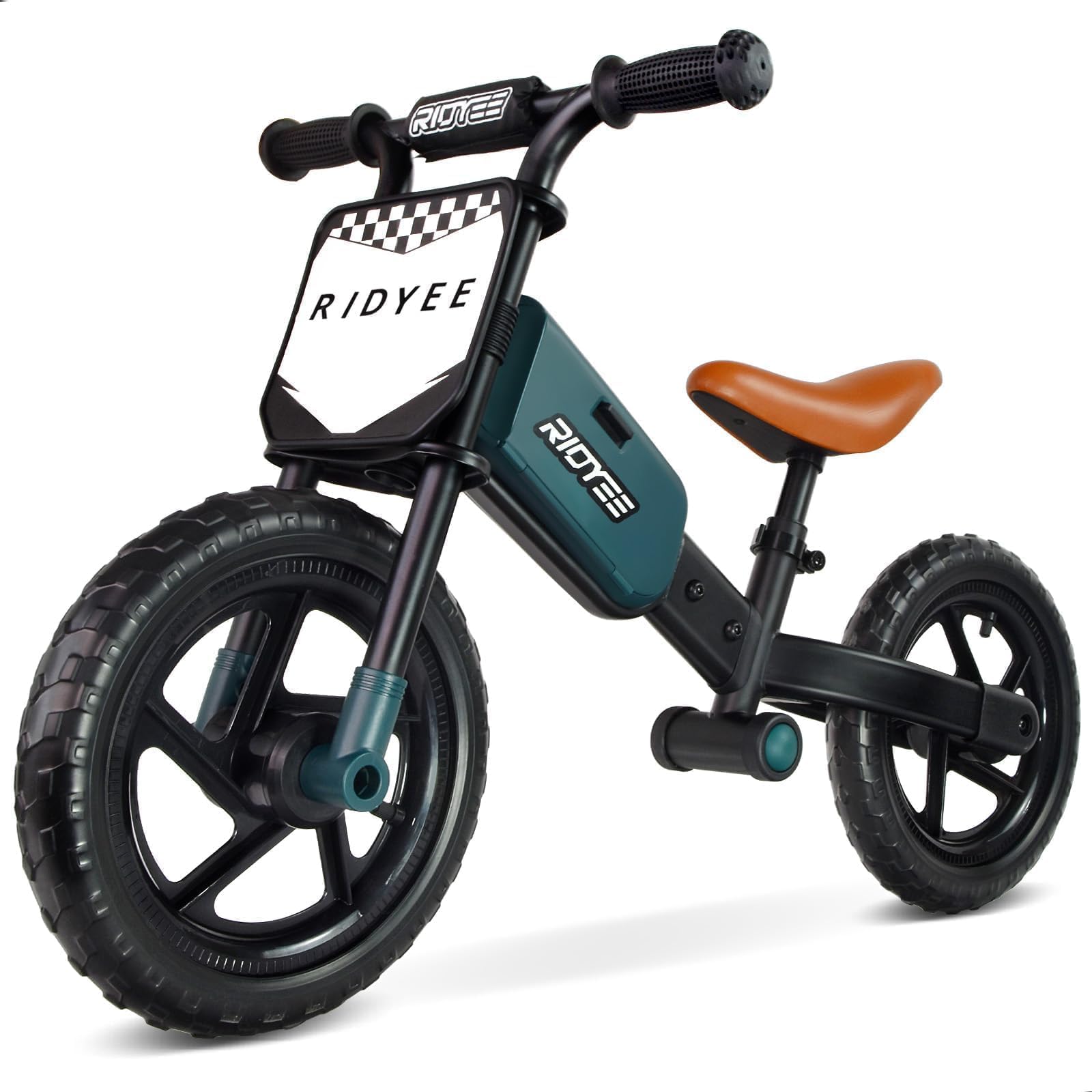
The RIDYEE GreenSport balance bike brings a motocross-inspired aesthetic to an entry-level price, featuring a carbon steel frame and a shock-absorbing padded seat that smooths out bumps. The seat adjusts from 13.4 to 15.8 inches without tools, fitting the average three-year-old well. A 135-degree steering limit prevents over-rotation and tip-overs, which is a thoughtful safety addition for first-time riders who tend to whip the handlebars wildly.
The included customizable name plate and letter/number stickers let children personalize their ride, which several verified owners noted increased their child’s attachment to the bike. The front synthetic leather handlebar bag serves as a small storage compartment for toys or snacks. Assembly requires no tools, and parents report getting the bike ride-ready in under 10 minutes. The bike’s sturdy build held up well to daily use, with one reviewer noting their child rode it confidently after an initial practice period.
The plastic tires are the weakest link here — several owners noted they wished for rubber tires for better grip and durability. The bike also lacks a rear footrest, which means children learning to glide must keep their feet under them rather than resting them when coasting. For buyers on a tighter budget who want a safe, feature-rich bike that a three-year-old will enjoy, the RIDYEE offers strong value with only minor compromises.
Why it’s great
- Tool-free seat adjustment with a shock-absorbing padded saddle
- 135-degree steering limit improves safety for new riders
- Customizable name plate and handlebar storage bag add personality
Good to know
- Plastic tires offer less grip and durability than rubber alternatives
- No integrated footrest for coasting glides
7. Bobike Toddler Balance Bike

The Bobike balance bike prioritizes safety with fully enclosed non-slip wheels and a 135-degree steering limit, which prevents the handlebars from turning too far and causing a sideways spill. The alloy steel frame is finished in a vibrant pink that photographs exactly as shown, and the seat adjusts to accommodate children from 12 months up to 4 years old. The enclosed wheel design completely covers the wheel spokes, eliminating the risk of small feet or fingers getting caught during riding.
Installation takes a few minutes. Several verified owners praised the bike’s cute appearance and reported that their toddlers took to it enthusiastically. The adjustable seat and handlebars allow the bike to grow with the child through several developmental stages. The 40-pound rider weight capacity is lower than some competitors, but it still covers the typical weight range for the intended age group of 1 to 4 years old.
A few buyers expressed frustration with the sourcing — the bike appears to come from a distributor rather than directly from Bobike, and customer support was described as unhelpful when one owner sought warranty assistance. Assembly difficulty was also mentioned by a small number of reviewers. For parents who want the extra peace of mind that comes from enclosed wheels and a restricted steering angle, the Bobike is a solid choice if you verify the seller beforehand.
Why it’s great
- Fully enclosed wheels prevent foot and finger injuries
- 135-degree steering limit reduces tip-over risk
- Vibrant color and cute design appeal to young children
Good to know
- Some buyers experienced difficulty with assembly steps
- Customer support may be inconsistent depending on the seller
FAQ
What inseam measurement does my three-year-old need for a balance bike?
Should I choose foam tires or air tires for a three-year-old?
Final Thoughts: The Verdict
For most users, the balance bike for 3 year old winner is the Strider 12 Pro because its 5.6-pound frame and 11–19 inch seat range offer the best combination of light weight and broad adjustability for growing toddlers. If you want air-filled tires for superior all-terrain riding, grab the Ridego 14 Inch. And for the budget-friendly entry-level build with a fun customization plate, nothing beats the RIDYEE GreenSport.