
Your first wobble board should feel less like a carnival trick and more like a legit step toward fixing that wobbly ankle or dodgy lower back. The problem is that most beginners grab a random round disc, step on, and immediately feel like they are about to tip over a cliff — not because they are uncoordinated, but because the board’s range of motion was never designed for someone still building that neural pathway.
I’m Min — the co-founder and writer behind Gadgets Feed. I pore over the engineering tolerances, load ratings, surface textures, and tilt angles that separate a therapeutic tool from a deathtrap, because the wrong board can turn a simple core exercise into a compensation disaster that reinforces bad movement patterns.
Whether you are rehabbing an injury, trying to stay engaged at a standing desk, or prepping for ski season without pulling a groin, your next purchase needs a controlled instability that builds confidence. Use this guide to find the best balance board for beginners that matches your actual starting point.
How To Choose The Best Balance Board For Beginners
Walking into the balance board aisle without a strategy is how you end up with a plastic toy that creaks on day three or a roller board that sends you flying into the coffee table. Narrow your decision down to three factors: board type, surface grip, and load capacity.
Start With the Right Board Type
Beginners should avoid full 360-degree wobble boards and roller boards with no stoppers. Rocker boards that restrict motion to one plane (forward/back or side/side) are the safest entry point. Cross-base wobble boards offer a middle ground with more control than a round base. If you eventually want a roller board, look for magnetic stoppers or fence rails that prevent accidental rollout.
Surface Texture Changes Everything
A slick plastic surface under a sweaty foot in a fast tilt is a recipe for a pulled hamstring. Look for textured EVA foam, an embedded grip pattern, or a genuine wood veneer with high-friction finish. The board must stay planted under your arch even when you start micro-adjusting. Non-slip pads on the bottom protect your floor but too much grip on carpet can limit the natural tilt you need to actually build stability.
Load Capacity and Build Quality
Most beginner boards claim 250 to 350 pounds, but the real test is the material. Solid wood (birch, maple, lauan) will hold up to daily rocking without warping or splintering, while cheap injection-molded plastic can crack under repeated 200-pound stress loads near the edge. Beginners also benefit from a wider platform — anything less than 15 inches across reduces your stance variability and makes the board feel unstable by design.
Quick Comparison
On smaller screens, swipe sideways to see the full table.
| Model | Category | Best For | Key Spec | Amazon |
|---|---|---|---|---|
| ProsourceFit Wooden Balance Board | Wobble Board | All-round beginner core training | 15.75″ diameter, 300 lb limit | Amazon |
| StrongTek Advanced Wobble Board | Cross-Base Wobble | Controlled 360° training | 17.5″ x 13.5″, 350 lb limit | Amazon |
| WOOD CITY Wobble Board | Rocker Board | Kids and family fun | 35″ long, 480 lb limit | Amazon |
| Theraband Rocker Balance Board | Rocker Board | Physical therapy and rehab | 13″ x 14″, 330 lb limit | Amazon |
| Fitlaya Balance Board Trainer | Roller Board | Surf/snowboard skill training | 29.1″ x 11″, 350 lb limit | Amazon |
| Gaiam Evolve Balance Board | Rocker Board | Standing desk micro-movement | 27″ x 12″, 250 lb limit | Amazon |
| Sportneer Balance Board | Multi-Mode Roller | Progressive difficulty challenges | 30.09″ x 11.8″, 450 lb limit | Amazon |
In‑Depth Reviews
1. ProsourceFit Wooden Balance Board

The ProsourceFit hits the exact diameter sweet spot where a new user can find the board’s edge without feeling like they are balancing on a manhole cover. The 360-degree wobble is fully functional, but the non-slip textured surface and the 300-pound weight limit give you the confidence to actually shift weight without second-guessing the platform.
Multiple verified owners report using this board through post-ACL surgery recovery, ski season prep, and even as a daily standing desk fidget tool on carpet and hardwood alike. At 3 pounds, it is light enough to toss into a gym bag yet thick enough that the solid wood and PP plastic composite does not flex or creak under load.
The instruction booklet includes basic core routines, but the real value is the board’s forgiving instability — it lets you catch yourself before you fall because the rotational resistance is predictable, not snappy. Beginners who stick with this board for three weeks report noticeably better single-leg stance control.
Why it’s great
- Textured grip surface prevents foot slip even in socks
- Low 3-pound weight makes it genuinely portable for office use
Good to know
- Slippery on polished hardwood without a non-slip rug underneath
- Not recommended for high-risk balance training or injury rehabilitation on its own
2. StrongTek Wooden Balance Board

The StrongTek cross-base wobble board solves the beginner’s single biggest fear — the round-base panic wobble — by using a wider floor contact area that keeps the board approachable while still offering full 360-degree directional tilt. The lauan hardwood plywood platform measures 17.5 by 13.5 inches, giving you a generous stance width that feels like a stable deck rather than a dinner plate.
Users in their 70s report using this board daily for proactive balance training without falling, and post-knee-surgery reviewers call it a great challenge that reveals hidden leg weakness. The non-slip surface is genuinely sticky enough for barefoot work, and the 350-pound limit means most body types stay well within the safety margin.
The only repeated complaint is that the adhesive on the bottom corner pads is not aggressive enough — they tend to pop off after a few weeks. A dab of superglue solves that in thirty seconds and leaves you with a board that punches far above its mid-range price point.
Why it’s great
- Cross-style base offers more control than any round-base wobble board at this price
- Textured wood surface grips well in bare feet and shoes
Good to know
- Rubber corner pads on the bottom tend to peel off over time
- Stiffer build than plastic options, which some users find less forgiving
3. WOOD CITY Wobble Board

The WOOD CITY board is technically a rocker board — it tilts along a curved longitudinal axis, not a 360-degree pivot — which makes it the safest possible introduction for absolute beginners and toddlers alike. At 35 inches long and nearly 12 inches wide, this board acts more like a balance beam that you can stand on, sit on, or flip upside down for creative play.
The 480-pound capacity is absurdly overbuilt for a kids’ toy, but it means adults can safely stand on it for yoga stretches or core work without worrying about a snap. Multiple verified reviews note that 4-year-olds pick it up immediately, while older family members use it for calf stretches and standing balance drills.
Because the natural wood is finished with eco-friendly lacquer, the surface is smooth rather than aggressively grippy — some users find it less confidence-inspiring for standing balance than the textured boards, but the trade-off is that you can use it as an open-ended play plank, a bench, or even a ramp for toy cars.
Why it’s great
- Extremely high 480-pound weight limit supports family use across all ages
- Versatile shape works as a rocker, bench, bridge, or play ramp
Good to know
- Smooth wood surface lacks the aggressive grip of textured boards
- Rocking action is limited to one axis — not for 360-degree wobble training
4. Theraband Rocker Balance Board
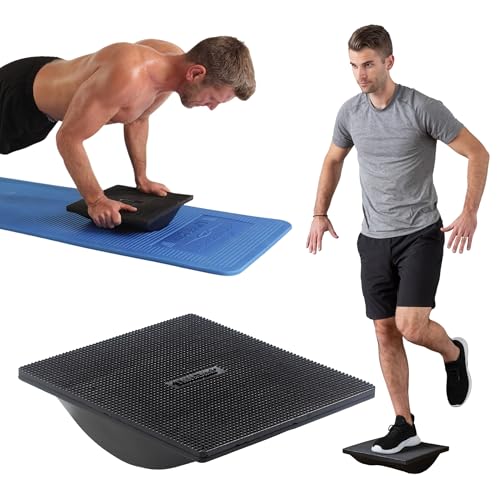
The Theraband is not trying to be fun — it is a clinical tool that physical therapists have prescribed for decades because it delivers exactly one plane of controlled instability at a time. The 13 by 14-inch molded plastic platform sits on a rocker base that tilts either forward/reverse or side/side, and you manually rotate the board to switch axes.
The tactile surface is textured enough to grip bare feet, and the anti-skid bottom holds firm on rugs without sliding. Weighing just 3.5 pounds, it is surprisingly easy to throw in a carry-on for trips where you cannot skip ankle rehab. The included illustrated guide lists 37 exercises, many of which integrate resistance bands and soft weights.
The single-plane limitation is a feature, not a bug — beginners who cannot control a 360-degree wobble will build actual strength and proprioception here before graduating to more dynamic boards. Theraband’s reputation in the rehab community means this board is built to withstand daily clinic use, not just weekend hobbyists.
Why it’s great
- Industry-standard rocker board trusted by physical therapists for decades
- Ultra-lightweight at 3.5 pounds with a full illustrated 37-exercise guide
Good to know
- Plastic construction can feel less premium than solid wood alternatives
- Only one plane of instability at a time — less dynamic than a wobble board
5. Fitlaya Balance Board Trainer

The Fitlaya is a true roller-style balance board built specifically for surfers, snowboarders, and skateboarders who want to train their edge control without leaving the living room. The platform is handcrafted from Canadian maple and measures 29.1 by 11 inches, with a high-friction anti-slip coating that keeps your feet locked in during aggressive weight shifts.
The included roller is 17.8 inches long with a 4.5-inch diameter, and the board has plastic guards that stop the platform from sliding completely off the roller — a critical safety feature that many cheaper roller boards omit. Users report that 10-year-old snowboarders pick this up quickly, but the learning curve is steeper than any wobble board or rocker board on this list.
The plastic end caps on the roller tube tend to pop off after extended use, though they snap back on easily. If your goal is to build the dynamic edge-to-edge stability required for turning a snowboard or carving a longboard, this is the most authentic training tool a beginner can buy without hitting a skatepark.
Why it’s great
- Maple wood deck with anti-slip coating and rail guards for safety
- Authentic edge-to-edge roller motion mimics board sport carving
Good to know
- Roller end caps can pop off with repeated use and need re-seating
- Steep learning curve — not ideal for absolute first-timers
6. Gaiam Evolve Balance Board
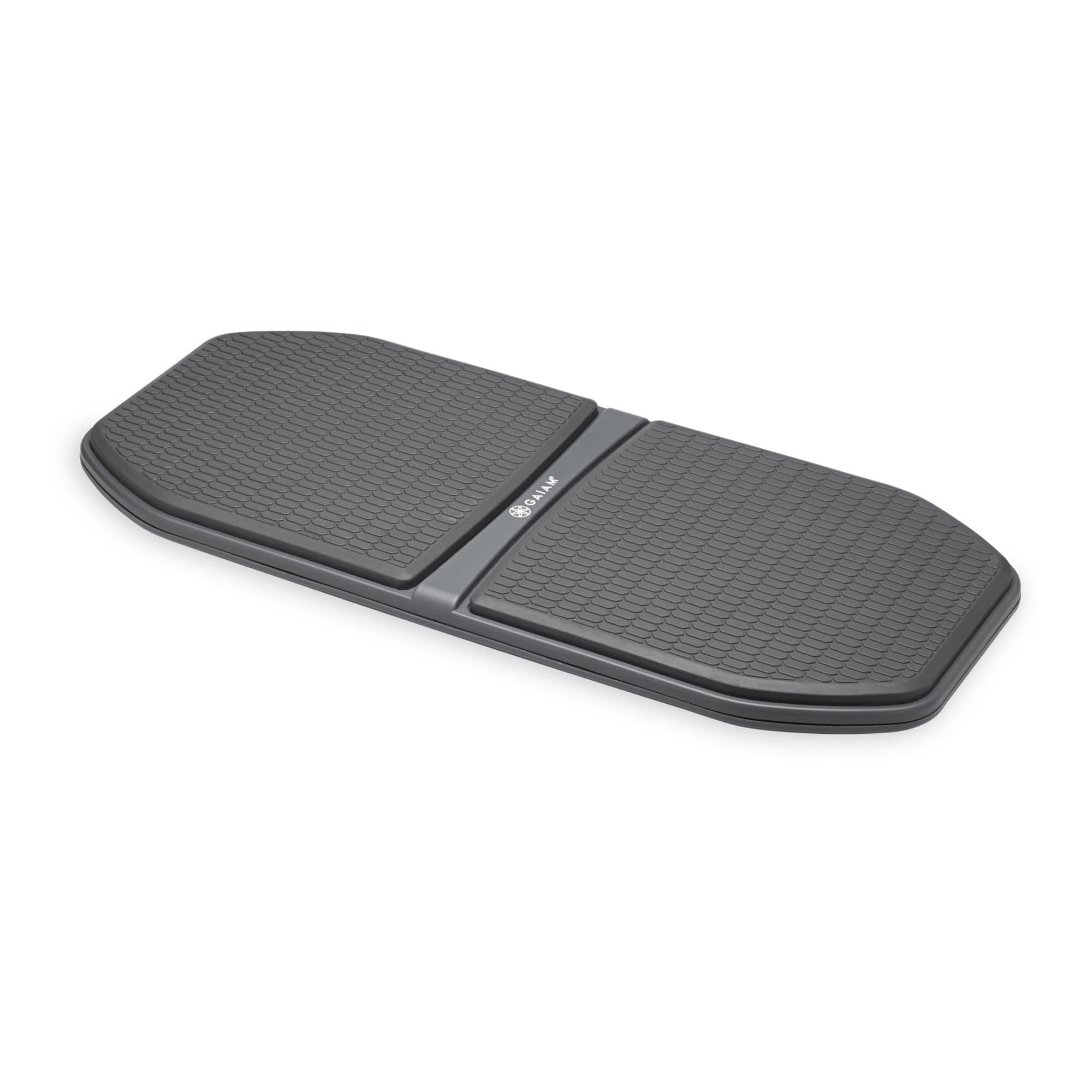
The Gaiam Evolve is purpose-built for standing desk users who want micro-movements without the risk of tipping over while typing. The 27-inch-long platform rocks forward and backward and also tilts side to side, with a honeycomb non-slip texture that grips socks and bare feet on both hard floors and low-pile carpet.
The soft cushion layer on top absorbs some of the floor fatigue that standing desk users normally feel in their heels and arches, but several long-term users note that the top cushion can start peeling near the center seam after a few months of daily use. The board itself is lightweight at 6.5 pounds and the corner grips prevent it from sliding out from under you during a shift.
The 250-pound weight limit is the lowest on this list, so larger users should double-check that they stay comfortably within the margin. If your primary use case is desk mobility and ankle flexing while you answer emails, this board’s controlled rocking range and wide stance make it a better ergonomic tool than any wobble disc on the market.
Why it’s great
- Wide 27-inch platform with cushioned surface reduces standing desk fatigue
- Dual-axis rocking motion plus corner grips for desk-safe stability
Good to know
- Top cushion layer may peel near the center seam over extended use
- 250-pound weight limit is the lowest on this list — verify your range
7. Sportneer Balance Board 7 Modes

The Sportneer board is the only multi-mode system on this list — it comes with a roller, a 2.8-inch ball, and four magnetic removable stoppers that let you configure seven distinct challenge levels. Beginners can lock the stopper rails in place to limit the roller’s range, then gradually remove them one by one as their ankle stability improves.
The birch wood platform measures 30.09 by 11.8 inches and features a thick EVA foam top pad that feels similar to a paddle board deck — comfortable in bare feet and less abrasive than raw wood. The 450-pound weight limit and solid construction mean even heavy users can push hard without worrying about structural failure.
The half-circle fence pieces snap in securely via the magnets but some users find them difficult to remove because there is no built-in finger indent. Once you dial in the right configuration, this board lets you progress from a cautious beginner to a confident roller-board user without buying a second piece of equipment.
Why it’s great
- Seven magnetic stopper configurations scale from beginner to expert
- Comfortable EVA foam deck surface reduces fatigue during longer sessions
Good to know
- Half-circle fence rails lack indentions, making them tricky to remove by hand
- Narrower platform than some long rocker boards — less forgiving for wide stances
FAQ
Should I start with a rocker board or a wobble board as a beginner?
Is a wooden balance board better than a plastic one for beginners?
How much weight capacity do I actually need on a beginner balance board?
Can I use a balance board on carpet, or do I need a hard floor?
Final Thoughts: The Verdict
For most users, the best balance board for beginners winner is the ProsourceFit Wooden Balance Board because its 15.75-inch diameter, textured grip surface, and forgiving 360-degree wobble give new users the perfect balance of challenge and safety at a lightweight, portable size. If you want controlled 360-degree training with a more stable base, grab the StrongTek Cross-Base Board. And for a family-friendly rocker that doubles as an open-ended toy for kids and adults alike, nothing beats the WOOD CITY Rocker Board.