
Falls represent a serious risk for older adults, and improving balance through targeted training is one of the most effective ways to maintain independence. A dedicated balance board provides a controlled, low-impact surface that challenges stability without overwhelming the joints.
I’m Min — the co-founder and writer behind Gadgets Feed. To build this guide, I spent many hours analyzing the technical specifications and real-world reviews of dozens of balance boards, focusing on the specific needs of seniors, including stability, adjustability, and ease of entry and exit.
After thorough research, I’ve selected the top contenders that prioritize safety and effectiveness. My goal is to help you find the right balance board for seniors to support your recovery or proactive wellness routine.
How To Choose The Best Balance Board For Seniors
Not every balance board is suitable for an older adult. The key is finding a board that provides a challenge without posing a fall risk. The wrong design can be too unstable, too small, or lack the necessary support features for a safe entry and exit.
Board Type: Foam Pad vs. Rocker vs. Wobble
Foam pads offer the most stable base, requiring only subtle micro-movements to maintain posture. They are excellent for beginners and those in early rehab. Rocker boards (single-plane) move front-to-back or side-to-side, offering more challenge while remaining predictable. Wobble boards (multi-directional) are best for advanced users as they tilt in every direction, demanding greater ankle and core strength.
Surface Size and Grip
A larger standing surface provides a more stable platform, reducing the risk of stepping off the edge. Look for boards that are at least 16 inches wide. A non-slip top surface is non-negotiable — it prevents your feet from sliding during movement. For seniors, a textured foam or a board with a rubberized top pad offers the best security.
Height and Entry
The height of the board off the floor is a critical factor. Low-profile foam pads (around 2 inches thick) are easiest to step onto. Wobble boards and rocker boards with a low center of gravity are safer than those with high, steep arches. A board that is too high can create a trip hazard during entry and exit.
Weight Capacity and Durability
Always check the maximum weight recommendation. Boards designed for heavier users are typically built with thicker, more robust materials — whether high-density foam or solid Baltic birch plywood. A board that feels too flexible or creaky under load is unsafe and will not provide the necessary stable platform for effective training.
Quick Comparison
On smaller screens, swipe sideways to see the full table.
| Model | Category | Best For | Key Spec | Amazon |
|---|---|---|---|---|
| Fitterfirst Professional Rocker Board – 20” | Premium Rocker | Adjustable rehab | 3 adjustable tilt angles (10°, 12°, 15°) | Amazon |
| FluidStance Adult Balance Board | Premium Wobble | Standing desk use | 24.25″ long recycled rubber deck | Amazon |
| WOOD CITY Wobble Board | Mid-Range Wooden | Versatile family use | 35″ x 11.8″ surface; holds 480 lbs | Amazon |
| XCMAN Surf Balance Board Trainer | Premium Roller | Advanced dynamic balance | 28.5″ wood board with separate roller | Amazon |
| THERABAND Stability Trainer Pad | Foam Pad | Entry-level training | 16.35″ x 10.25″ x 2.3″ foam pad | Amazon |
| StrongTek Wooden Balance Board | Mid-Range Wobble | 360° wobble training | 17.5″ x 13.5″ cross-base design | Amazon |
| ANVICTOX XL Balance Pad | Foam Pad | Large surface stability | 19.8″ x 15.7″ x 2.4″ TPE pad | Amazon |
In‑Depth Reviews
1. Fitterfirst Professional Rocker Board – 20”

The Fitterfirst Professional Rocker Board is the gold standard for senior balance training. Its 20-inch wide Baltic birch plywood deck provides a generous, stable platform. The key feature for seniors is the adjustable base with three tilt angles — 10, 12, and 15 degrees — allowing you to start with the gentlest slope and progress only as your confidence grows. This board moves in a single plane, either front-to-back or side-to-side, making its motion predictable and safe.
Real-world feedback from users in their 80s confirms its suitability. The non-slip texture on the top surface keeps feet planted, and the board supports up to 350 pounds. Reviewers report improved mobility, flexibility, and proprioception after ankle or hip rehab, noting that the adjustable height is a significant advantage over fixed-angle boards. It is built like a piece of furniture — over-engineered to last through years of daily use.
While the price is higher than basic foam pads, it replaces potentially multiple physical therapy sessions. The versatility of being able to rock in both the sagittal and frontal planes (by rotating the board) makes it a comprehensive tool for lower-body strengthening and fall prevention. It is made in Canada, adding to its quality pedigree.
Why it’s great
- Adjustable tilt angles (10°, 12°, 15°) allow gradual progression
- Wide 20″ surface provides excellent stability for entry/exit
- Durable Baltic birch plywood construction supports up to 350 lbs
Good to know
- Higher initial investment than foam alternatives
- Best used on a non-slip yoga mat to prevent sliding on hard floors
2. FluidStance Adult Balance Board
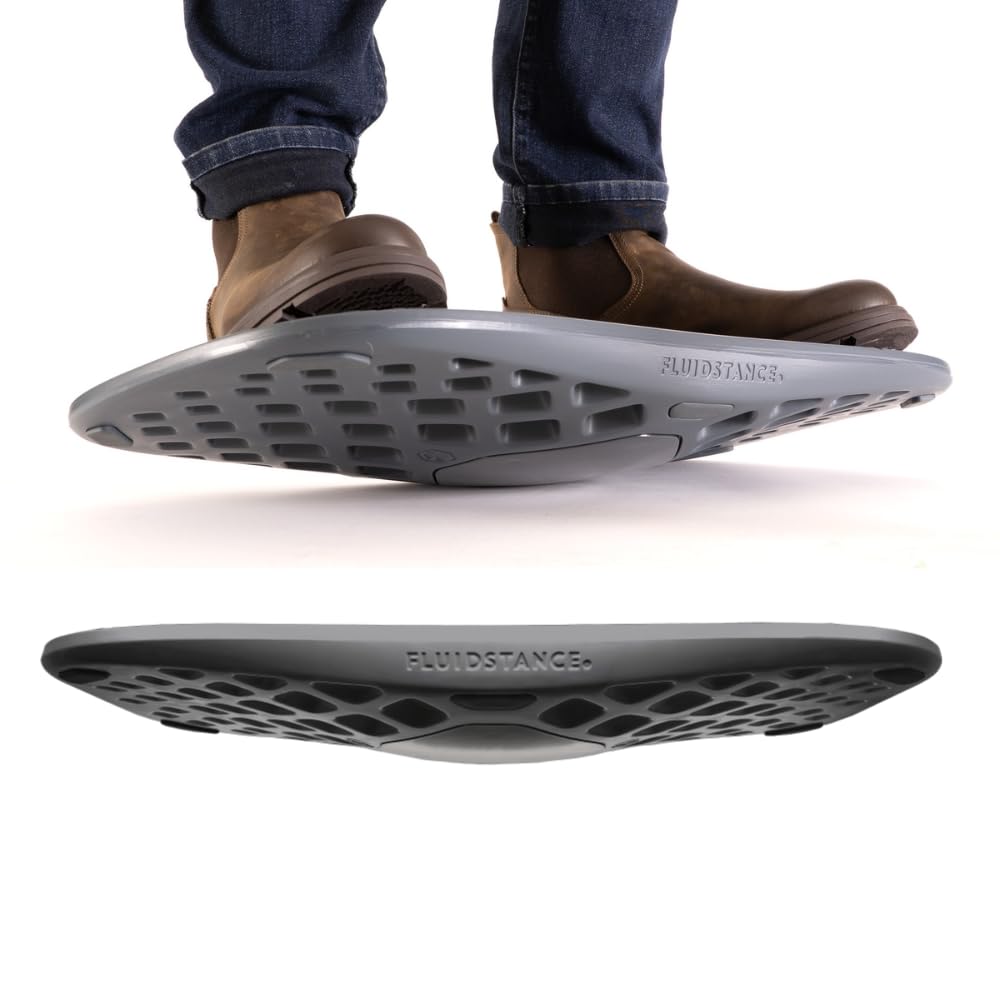
The FluidStance Plane is designed differently: it is a 360-degree wobble board optimized for standing desk use. This makes it an excellent way for seniors who work from home to incorporate low-level, constant movement into their day without distraction. The base is made from recycled plastic, and the top deck uses recycled tire treads, providing an excellent grip. The height is very low — only 2.5 inches — making it easy to step onto and off.
User feedback highlights that it is not a hardcore exercise board. Instead, it encourages micro-movements — small shifts in weight, toe raises, and subtle sways — that keep the core engaged and improve circulation without feeling unstable. Over a work day, these micro-movements can reduce hip and back stiffness. The board’s rubber bumpers provide natural stopping points, preventing over-rotation. At 200 pounds max capacity, it is best suited for lighter individuals.
For seniors who are already steady on their feet and want to add movement to a sedentary desk routine, this is a fantastic tool. The construction is high-quality, and it is made in the USA. It is not designed for aggressive ankle rehab or deep stretching, but it excels at promoting healthy fidgeting and sustained balance activation throughout the day.
Why it’s great
- Low profile (2.5″) simplifies stepping on and off the board
- Rubber bumpers prevent over-rotation, enhancing safety
- Promotes sustained micro-movement for joint health during desk work
Good to know
- Max weight recommendation of 200 lbs is lower than other boards
- Not challenging enough for advanced balance training or rehab
3. WOOD CITY Wobble Board

The WOOD CITY Wobble Board is a long, curved rocker board that offers a very different approach. Measuring 35 inches long and 11.8 inches wide, it provides a large footprint that can accommodate a wide stance. Its arc-shaped bottom allows for a gentle rocking motion, which is excellent for seniors who want to perform standing calf stretches or engage in a slow, controlled side-to-side sway. The board is made from high-quality natural wood and supports an impressive 480 pounds.
User reports indicate that older adults (even grandparents) find it fun and effective for balance practice. The board can also be used as a seat to help stretch the back, or propped up for other uses around the house. It is a Montessori-style toy that grows with the family. For seniors, the low 6-inch peak height is manageable, and the natural wood finish offers excellent grip without being sticky.
This board is best suited for active seniors who enjoy a more playful approach to fitness. It does not offer the controlled adjustability of the Fitterfirst, but its inherent versatility makes it a great addition to a home gym or living room. It is lightweight at only 4.55 pounds, so it is easy to move around. The lack of a non-slip coating on the wood can be a minor issue if socks are worn, so bare feet or athletic shoes are recommended.
Why it’s great
- Long 35″ deck allows for a comfortable wide stance
- Very high weight capacity of 480 lbs
- Multipurpose design can be used for stretching and play
Good to know
- No adjustable tilt angle — fixed rocker arc
- Natural wood surface can be slippery when wearing socks
4. XCMAN Surf Balance Board Trainer with Roller
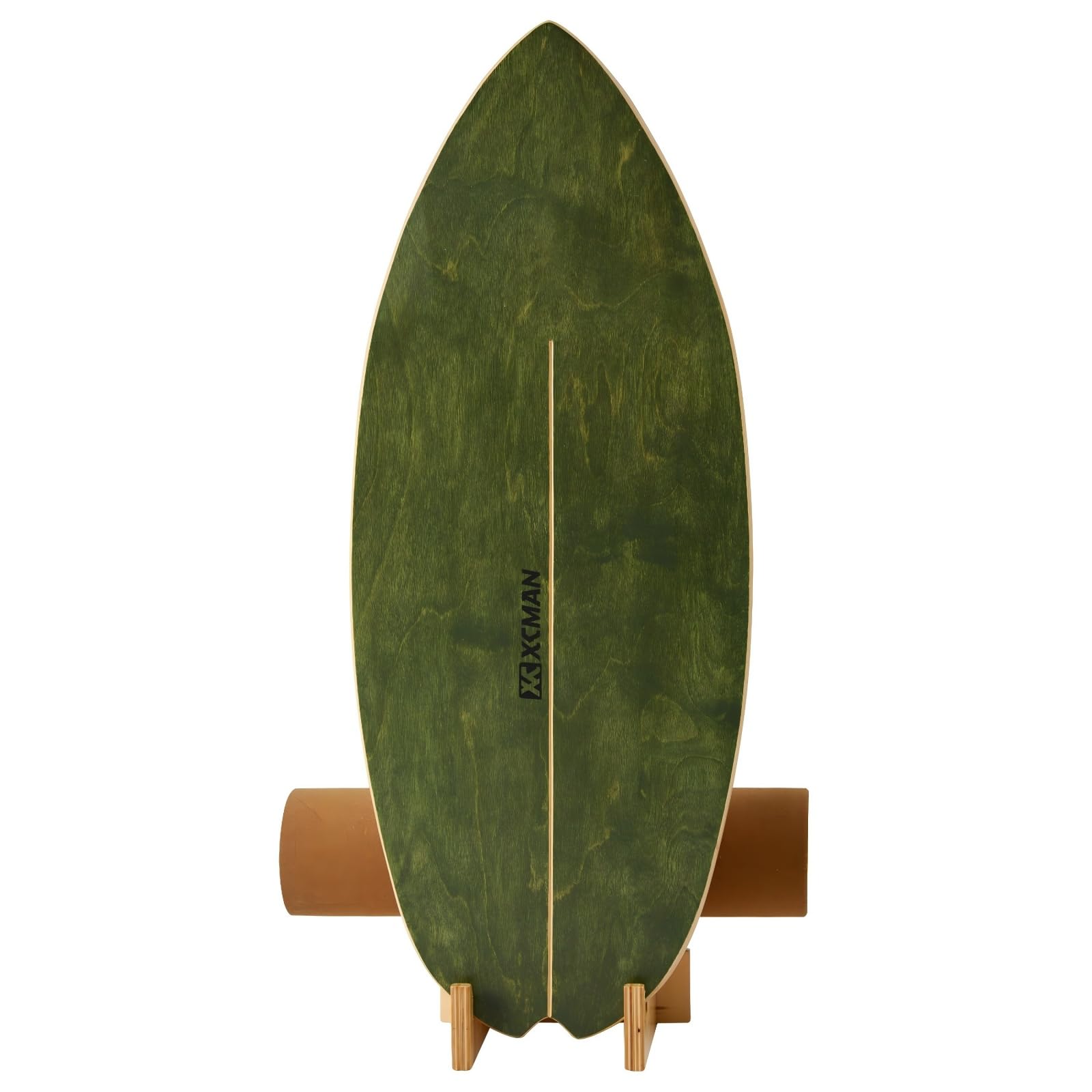
The XCMAN Surf Balance Board Trainer uses a classic roller system. The board sits on a separate wooden cylinder, allowing for full lateral and fore-aft movement that mimics surfing. For a senior, this is the most challenging type of board in this list and is only suitable for those with confident stability who want to push their balance further. The board is 28.5 inches long, made from heavy-duty wood, and supports up to 350 pounds.
User reviews emphasize its high quality and smooth gliding action. The roller is made of solid rubber, which protects floors from scratches. The board comes with a holder for the roller when not in use. This is a serious training tool that will dramatically improve reaction time and core strength. However, it requires careful use: the roller should always be used on a flat carpet or a yoga mat to prevent it from rolling away unexpectedly.
For a senior who has already mastered a rocker board or wobble board, the XCMAN offers the next step. It is lightweight (6.6 lbs) and easy to store. The lack of a defined pivot point means you must actively balance over the roller, making every session a full-body workout. It is not recommended for beginners, those with unsteady gait, or those in early-stage rehab due to the potential for a sudden loss of balance.
Why it’s great
- Excellent for advanced core and stabilizer muscle training
- Smooth roller glides without scratching floors
- Lightweight and portable design with included holder
Good to know
- Not suitable for beginners or those with significant balance issues
- Requires carpet or yoga mat underneath to prevent roller from slipping
5. THERABAND Stability Trainer Pad
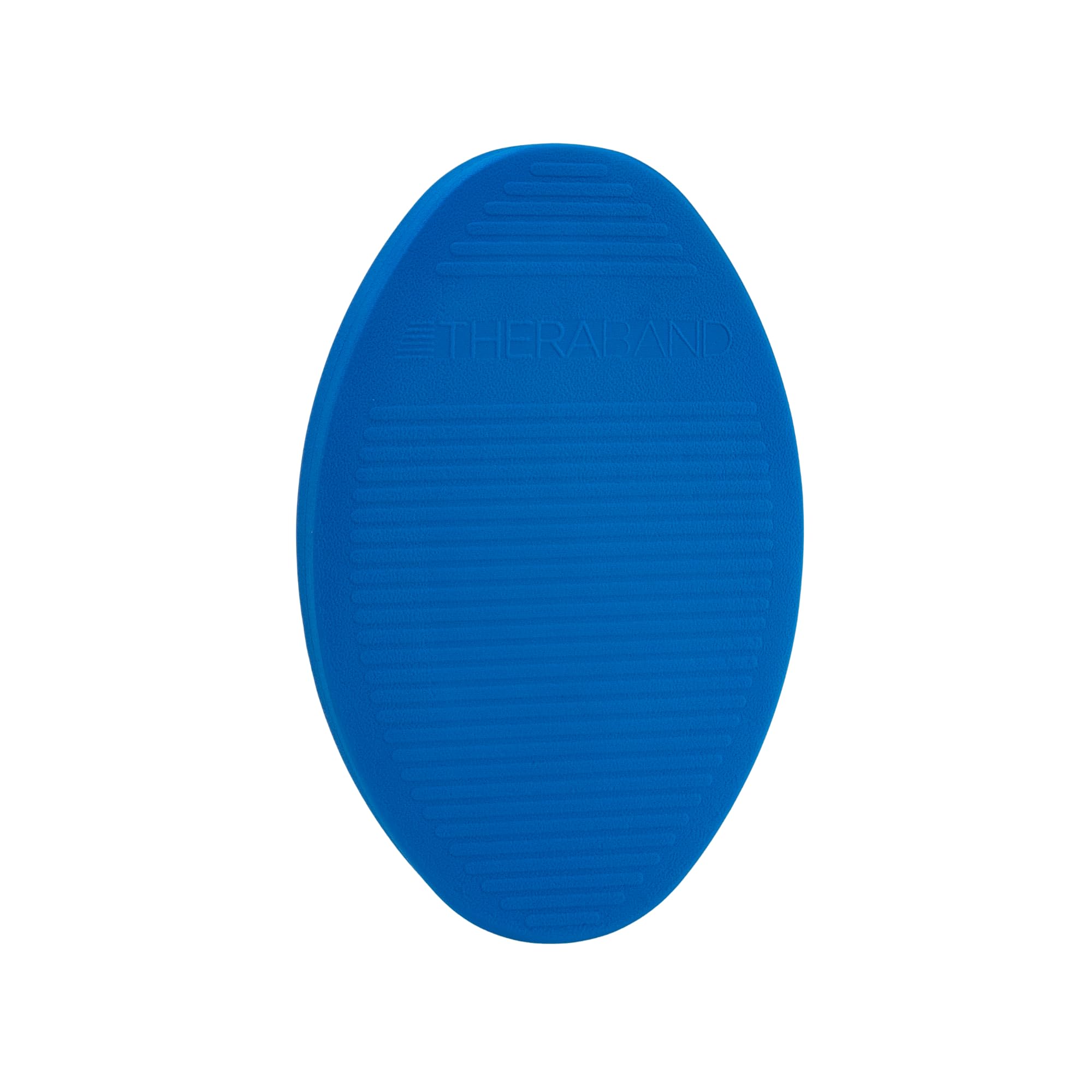
The THERABAND Stability Trainer Pad is a soft, blue foam pad designed for intermediate balance training. At 16.35 inches by 10.25 inches, it is the most compact and safest option for absolute beginners. The foam is firm yet slightly compliant, providing a micro-movement challenge without any risk of falling. It is only 2.3 inches thick, meaning there is virtually no trip hazard. This pad is commonly used in physical therapy clinics for initial rehab.
User feedback repeatedly confirms its effectiveness. One user noted visible improvement after using it for just 10 minutes a day. Another used it for knee rehab after surgery. The non-slip textured surface works well with bare feet or shoes, and the water-resistant material makes it easy to clean. It comes with a balance training guide. The blue color indicates an intermediate level of softness, offering a good middle ground between the firmer green and more challenging black pads.
For seniors who are deconditioned or nervous about standing on a raised board, this pad is the ideal starting point. It helps train the small stabilizing muscles in the feet, ankles, and core without requiring a major commitment. Its compact size makes it easy to store under a chair or in a drawer. The only trade-off is that experienced users may outgrow its challenge within a few weeks.
Why it’s great
- Extremely low profile (2.3″) — minimal fall risk
- Non-slip, water-resistant foam for safe, easy use
- Clinically proven design used in physical therapy settings
Good to know
- Small surface area may feel restrictive for taller individuals
- Limited challenge — beginners may progress beyond it quickly
6. StrongTek Wooden Balance Board

The StrongTek Wooden Balance Board fills the gap between a basic rocker and a traditional round-base wobble board. Its cross-shaped base provides a larger floor contact area than a round base, making the 360-degree wobble feel more controlled and approachable for a senior. The board is made from solid Lauan hardwood plywood and supports up to 350 pounds. The textured top surface provides solid grip, and the board’s moderate height (3 inches) is manageable.
User reviews from a 70-year-old highlight its effectiveness: daily use noticeably strengthened leg stabilizing muscles within weeks. Another user praised it for revealing leg weakness after knee surgery. The non-skid surface is highly praised, and the board stores neatly on its side. While the four edge protector pads on the bottom have been noted to have weak adhesive, this is a minor issue that can be fixed with a dab of super glue.
This board is ideal for seniors who have graduated from a foam pad and want to introduce multi-directional movement. The cross-base design offers a gentler learning curve than a full round-base wobble board, making it a safe stepping stone. It is also excellent for use at a standing desk, as the small footprint does not take up too much space. The maximum recommendation of 350 pounds ensures broad suitability.
Why it’s great
- Cross-base design provides a more controlled 360° wobble
- Non-slip textured surface keeps feet secure
- Sturdy construction with a 350 lb weight capacity
Good to know
- Edge protector pads may detach over time (easy fix with glue)
- Requires a few sessions to get comfortable with full-direction movement
7. ANVICTOX XL Balance Pad

The ANVICTOX XL Balance Pad is essentially a larger, more affordable version of a foam balance pad. Its XL size (19.8 x 15.7 inches) is a full 102 square inches larger than standard pads, making it ideal for taller seniors or those with larger feet. The pad is made from TPE material, which offers excellent elasticity, resilience, and wear resistance. It is 2.4 inches thick, providing a stable yet challenging surface for balance exercises.
User feedback confirms its quality and value. One 6’5″ user with size 15 shoes found it perfect for his size. Others appreciate its firm, non-slip texture that does not slide on the floor. It is used for strength and balance therapy, including preparations for knee replacement. The larger surface area provides a sense of security that smaller pads lack, allowing the user to move their feet without worrying about stepping off the edge.
This pad is a budget-friendly choice that does not compromise on performance. It is best suited for beginners and those in early rehabilitation who need a large, stable platform. The lack of a suggested exercise guide is a minor drawback, but its simple design allows for a wide range of standard balance exercises. It is also very easy to clean, maintaining hygiene after each use.
Why it’s great
- Extra-large surface area offers a generous, safe platform
- Firm TPE foam provides good instability without feeling flimsy
- Non-slip texture stays put on hard floors
Good to know
- Does not include a booklet of suggested exercises
- Foam pads are generally less challenging than wooden rocker boards
FAQ
Is a wobble board safe for a 70-year-old senior?
What is the difference between a foam pad and a wooden rocker board?
How long should a senior use a balance board each day?
Final Thoughts: The Verdict
For most users, the best balance board for seniors winner is the Fitterfirst Professional Rocker Board because its three adjustable tilt angles and wide, solid platform provide a customizable and very safe path to improved stability. If you want maximum versatility for a family and a budget-friendly price, grab the WOOD CITY Wobble Board. And for the gentlest possible start in balance training, nothing beats the low-profile, clinically-backed THERABAND Stability Trainer Pad.