
Our readers keep the lights on and my morning glass full of iced black tea. As an Amazon Associate, I earn from qualifying purchases.
Specs are compiled from manufacturer listings and verified buyer reviews and can change over time — please confirm the key details on the product page before buying.
A balance board for skateboarding builds the ankle stability, core control, and split-second reactions that keep you upright when the pavement gets unpredictable. The real question is which style—rocker, wobble, or roller—matches your skill level and floor type.
I’m Min — the founder and writer behind Gadgets Feed. This guide is built by comparing the manufacturers’ published specifications and the patterns across verified customer reviews, so you get each pick’s real strengths and trade-offs instead of marketing spin.
Whether you’re prepping for a surf trip, sharpening snowboard edges, or rehabbing an ankle, the right balance board changes everything. balance board for skateboarding training translates directly to stronger, more confident rides you can feel in your first week of practice.
Our Picks at a Glance

How To Choose The Best Balance Board For Skateboarding
Before you click buy, understand that not every balance board trains the same muscles. A skateboard moves on trucks that pivot and lean, so the trainer that mimics that feel best is a long deck balanced on a cylindrical roller. Wobble boards tilt in every direction and work your ankles harder, but they do not replicate the front-to-back carve of an actual skateboard.
Rocker, Wobble, or Roller — Which Motion Fits You?
A rocker board only tilts side to side, which makes it the easiest entry point for absolute beginners recovering from an injury. A 360-degree wobble board adds diagonal and circular movement, hitting more stabilizing muscles but demanding more ankle control. A roller-style board — the deck sitting on a cylinder — is the closest match to skateboarding, because you shift your weight forward and backward to stop the roller from escaping.
Adjustable Stoppers Change Everything
The best roller boards include rubber stoppers that you screw into the underside of the deck to limit how far the roller can travel. With the stoppers placed at a narrow distance, the roller barely moves and a beginner stays comfortable. Slide the stoppers wider apart and the same board becomes a serious challenge for an advanced rider. Look for boards that offer at least three distance settings so the difficulty grows with you.
Weight Capacity and Wood Quality Matter
Balance boards take real abuse, so the deck needs to handle your full body weight plus the impact of small jumps. Most quality boards are built from multiple layers of pressed hardwood — often 11-ply or 15-ply — and support anywhere from 300 to 350 pounds. A heavier rider should confirm the rating before buying, and anyone standing on the board for long sessions will appreciate a grippy, non-slip top so your feet stay planted.
Quick Comparison
| Model | Best For | Board Style | Max Weight | Deck Size | Amazon |
|---|---|---|---|---|---|
| The Original Indo Board★ Best Overall | Serious athletes & surf/skate cross-training | Roller | 350 lbs | 30″L x 18″W | Amazon |
| StrongTek Wooden Balance BoardCompact Pick | Standing desks & ankle rehab | 360° Wobble | 350 lbs | 17.5″L x 13.5″W | Amazon |
| Fitlaya Fitness Balance BoardBudget Champion | Boardsport skill building on a budget | Roller | 350 lbs | 29.1″L x 11″W | Amazon |
| BECAPRO Balance Board | Families with varied skill levels | Roller | 300 lbs | 29.1″L x 11.4″W | Amazon |
| Sportneer Balance Board | Progressive training with 7 modes | Roller & Ball | 450 lbs | 30.09″L x 11.8″W | Amazon |
| Yes4All Balance Board | Skate & snowboard carry-over training | Roller | 300 lbs | 29.53″L x 11.22″W | Amazon |
| XCMAN Surf Balance Board | Portable, floor-friendly practice | Roller | 264 lbs (120 kg) | 29.53″L x 11.81″W | Amazon |
| Fitterfirst Professional Balance Board | Ankle rehab with adjustable tilt | Wobble | 350 lbs | 20″ diameter | Amazon |
| Whirly Board Spinning Balance Board | Standing desks & 360° spinning workouts | Spinning | 220 lbs | Skinny/Variable | Amazon |
In‑Depth Reviews
1. The Original Indo Board
Our pick — over 4.5★ from 900+ verified ratings; the strongest balance of quality and price.
The gold standard that champion athletes still trust for carving, core control, and board feel.
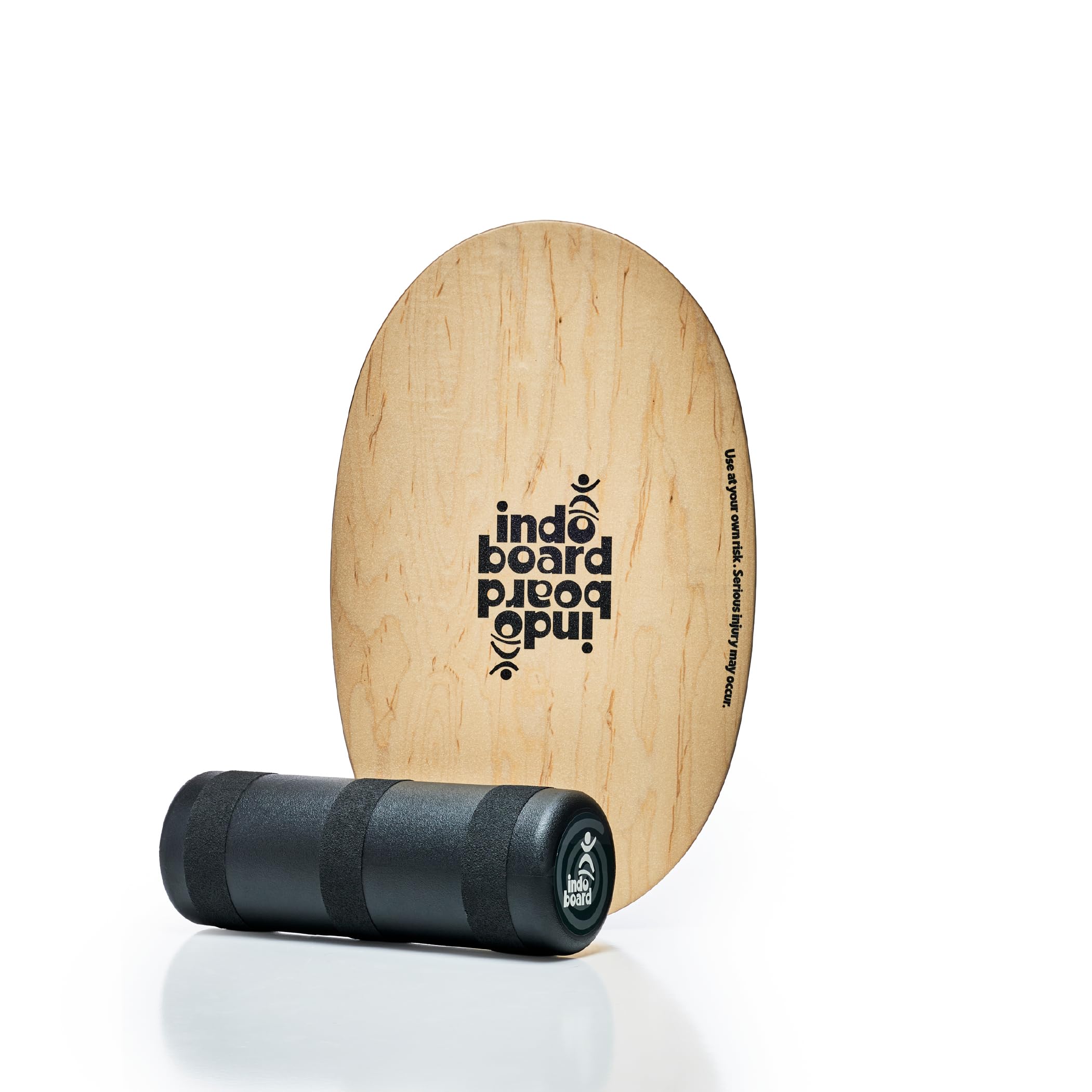
The biggest deck on this list — 30″L x 18″W — gives you a platform that feels like a real skateboard underfoot, and the maple wood build has been refined over nearly 30 years of testing. Buyers report smoother, more stable sessions the longer they ride, and the grip keeps feet locked during intense wobbles. It supports up to 350 pounds without flexing, covering bigger riders and heavy daily use.
You’ll buy it for balance training, but owners say quality and fun are close behind. One buyer calls it “Thick an heavy duty! Functions well, has really good grip on the board and balances well.” A user with 45 years of balancing experience says the roller runs trackless and smooth, and the gritty deck feels fine even barefoot. A 40-year-old beginner skater found the roller larger and higher than expected, so mount up near a wall or chair for your first sessions — the challenge is real, but so is the payoff in leg and core strength.
One honest caveat: this is an advanced-feeling board. Buyers warn that the wide tube is more challenging than ball-style trainers, so true beginners may want to start elsewhere and graduate to this. But for anyone with existing balance — skaters, surfers, snowboarders — the Indo Board is the closest thing to a home skate park you can buy.
Why Athletes Swear By It
- Generous 30″ x 18″ deck suits adult feet and heavy training
- Maple wood construction with near-30 years of design refinement
- Strong grip surface praised even for barefoot use
Who Should Start Elsewhere
- Roller is larger and higher than many beginners expect
- Falls can hurt even on carpet — use support initially
- Feels advanced compared to ball-based trainers
Reach for it if: you already ride a board and want the most authentic, durable cross-training tool available.
Look elsewhere if: you have never balanced before and want a gentler, lower-height first step.
2. StrongTek Wooden Balance Board
A desk-side wobble board that doubles as ankle rehab while you answer emails.
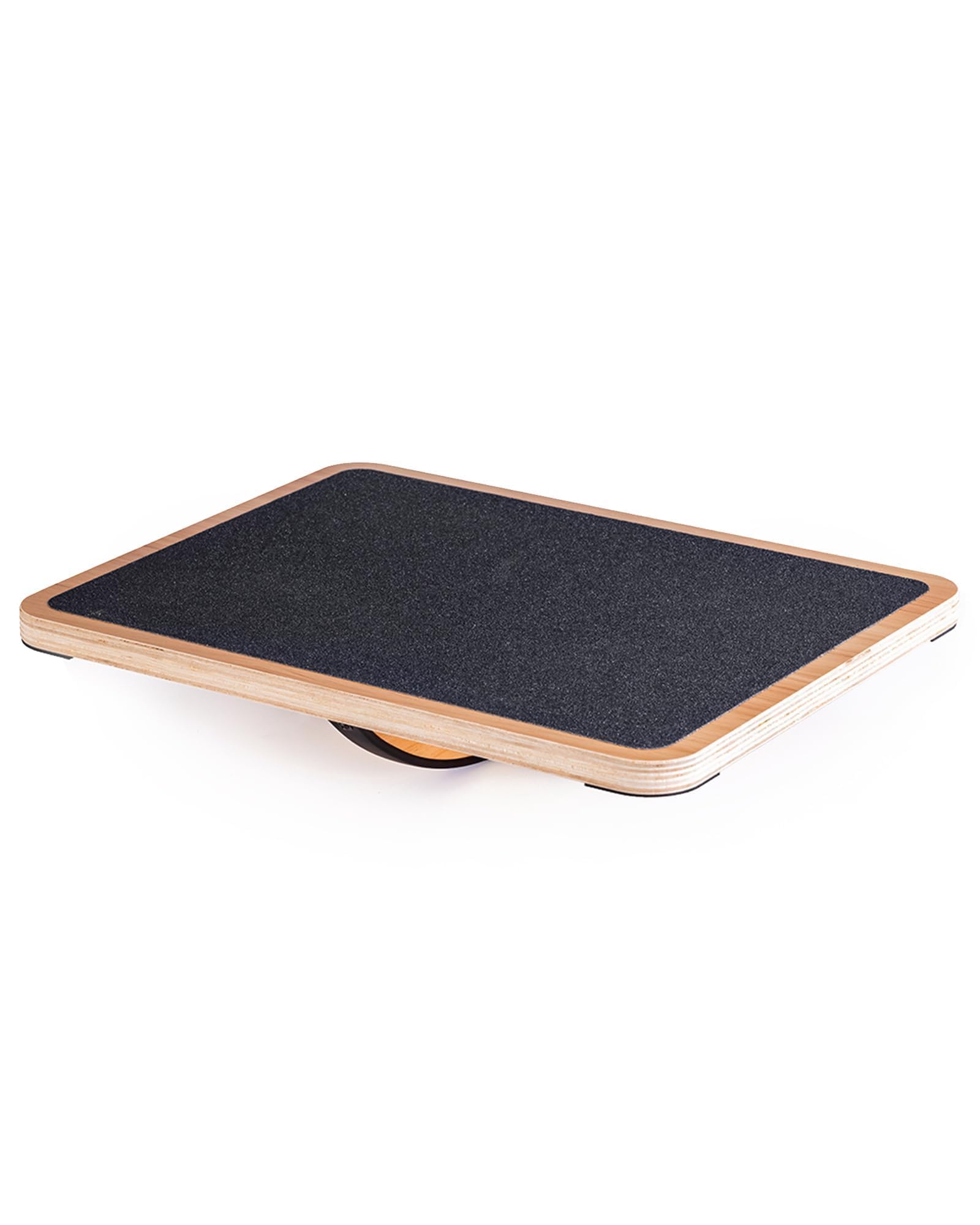
This is the most compact pick in this guide at 17.5″L x 13.5″W x 3″H — short enough to slide under a standing desk and light enough to move between rooms. The cross-style base follows a round wobble-board motion but spreads the floor contact over a larger area, so you get 360-degree directional control without the tippy feel of a full round base. It is a middle step that makes sense: easier to manage than a round board, yet clearly more challenging than a basic rocker.
The non-slip top keeps your feet secure as you shift weight, and the build quality is the story buyers tell most — it stands up to daily home workouts and standing-desk movement. As owners note: “Very sturdy and compact. Perfect height for standing desk use.” The textured surface is a genuine help for balance practice, and it stores neatly on its side when the workday ends. A post-knee-surgery user found it ideal for physical therapy, revealing leg weakness and supporting calf stretches alongside balance drills.
The catch worth knowing: the textured surface draws mixed feedback, and the corner rubber pads have a weak adhesive backing that some owners say peels off. One buyer simply removed the edge protectors after they kept falling off and still rates the board highly. If you plan to stand on this for hours at a desk, expect the pads to be the first thing you replace — the board itself holds up fine.
Desk-Day Hero: the low 3-inch height makes this ideal for standing-desk users who want subtle, constant movement while working.
Pad Warning: order it knowing the corner protectors may need a dab of stronger adhesive — a minor fix on an otherwise sturdy board.
Best for: office workers and rehab patients who want a compact, multi-directional board that disappears under a desk.
Not for: anyone who wants a skate-style roller motion — this is a tilt trainer, not a carve trainer.
3. Fitlaya Fitness Balance Board
A family-friendly roller board that makes young skaters feel like instant pros.
The 29.1″ x 11″ deck rides on a 17.8″ x 4.5″ roller, and the ratio feels right for skate-style training — long enough to shift your weight like a real deck, narrow enough to mimic a board’s width. The grip surface is a standout, with buyers specifically praising the grippy top that keeps feet in place, plus safety guards on the ends that stop you from sliding the whole deck off the roller. That guard is a real safety upgrade over some of the bare roller boards on the market.
The fun factor is the heart of this pick — a 10-year-old snow and skateboarder calls it a hit birthday gift, returning to it again and again because it is “challenging but not to the point of frustrating.” Quality is the most-discussed positive, with sturdiness and value close behind. The Canadian maple construction supports up to 350 pounds, so the whole family can take turns without worry, and the price makes it an easy entry point for testing whether balance training is for you.
One recurring complaint: the plastic end cap on the roller tube can pop off after extended use. It pushes right back on and the board keeps working, but it is the kind of small annoyance that prevents a perfect score. Difficulty also gets mixed feedback — some find it easy to pick up, others wish it were harder — so treat it as a solid mid-level challenge rather than an expert-only tool.
What Wins Families Over
- Safety guards prevent the deck from sliding off the roller
- Grippy, non-slip top praised in multiple reviews
- 350-lb capacity fits kids and adults on one board
Small Gripes
- Plastic roller end cap can pop off over time
- Difficulty level reads mixed — not a true expert board
Grab this if: you want a budget-friendly roller board that survives family game nights and young riders.
skip it if: you are an advanced skater chasing maximum challenge — you will outgrow this ceiling.
4. BECAPRO Balance Board

Three challenge distances in one board mean the kids and the athletes train on the same deck.
Four nontoxic rubber stoppers and two extra screw-nut line options let you set the roller travel to 9.7, 15.2, or 23.5 inches — so a 5-year-old learns on the tightest setting while a 235-pound dad cranks it wide for a real workout. The 11-ply, 18mm cold-pressed hardwood deck handles up to 300 pounds, and the roller itself is rated for a hefty 500 pounds, built from compacted industrial-use kraft paper. That split rating is why the board feels rock solid: a 6’1″, 235-pound buyer reports it “doesn’t flinch” when he steps on.
The deck measures 29.1″ x 11.4″ with a 19.4″ x 4.32″ roller, and the emery-polishing paper top stops your feet from sliding mid-session. Quality is the aspect owners praise most, with balance and stability close behind — a family favorite that guarantees use if you leave it out where kids can reach it. The non-slip roller works across floor, wood, carpet, and concrete, so you are not locked to one room.
The honest trade-off: the reliability verdict is mixed, which likely ties back to the stopper system needing occasional tightening. But the 300-pound deck rating is the lowest of the roller boards here, so very heavy riders should confirm the number matches their needs before committing.
Family Scaling: the 3-stop adjustment is the smartest feature on this list for households with mixed ages and abilities.
Heavy-Rider Check: 300 pounds is the ceiling — perfectly fine for most adults, but not the strongest deck here.
Choose this for: a household where a child and a serious athlete both want to train on one board.
Pass if: you weigh near 300 pounds and want maximum safety margin — pick a higher-rated deck.
5. Sportneer Balance Board

Seven modes of challenge — roller, ball, and rails — make this the most adjustable trainer in the guide.
This is the Swiss Army knife of balance boards. The included roller, a 2.8″ ball, and half-circle rails combine with four magnetic removable stoppers to create 7 distinct challenge modes, and the stoppers snap on and off tool-free. That means one board takes you from wobbling beginner all the way to ball-balancing expert without buying a second unit. The birch wood deck shrugs off up to 450 pounds — the highest capacity in this guide — and the textured non-slip EVA surface grips your feet whether you train in shoes or barefoot.
The balance benefits are the most-praised aspect, with adjustability and versatility close behind. Buyers describe a cushioned, paddle-board-like top that is quiet and comfortable, and the heavy-duty plastic ball won’t damage floors or collect hair. Families report it becoming a living-room magnet, and the magnetic fences snap securely into place and reconfigure in seconds. One owner notes the padded top is less durable with shoes on, so barefoot or sock sessions are kinder to the surface.
The durability verdict is genuinely mixed — most owners call it sturdy, but a few report the board breaking on them, so the EVA top is the part to monitor. The half-circle rails also lack indentions and can be stubborn to remove, though the straight rails pop off easily. For the range of workouts you get in one box, this is the most training-per-dollar option here.
The 7-Mode Appeal
- Roller, ball, and rails give real progression from beginner to expert
- Magnetic stoppers adjust without tools
- 450-lb capacity leads the entire list
Know Before You Buy
- Padded EVA top wears faster under shoes
- Half-circle rails can be tricky to pop off
- Occasional reports of boards breaking under heavy use
Perfect for: the home gym owner who wants one trainer that grows from shaky beginner to ball-balancing expert.
Think twice if: you train exclusively in shoes and want a surface built for hard daily abrasion.
6. Yes4All Balance Board

A 15-ply deck built for boardsports, with stopper distances that mirror real carving.
The 29.53″L x 11.22″W deck rides on a roller with two removable stoppers set at 11, 16, or 22 inches — or you can pull the stoppers entirely for advanced, free-rolling practice. That 22-inch setting is the widest travel in this guide, which means the most challenging carve for experienced riders who want to mimic the full weight-shift of a skateboard turn. The 15-ply pressed wood deck supports up to 300 pounds, and the special antiskid PEVA grip keeps your feet comfortable during long sessions.
Quality is the aspect owners single out most, with balance and fun trailing close behind. Buyers describe a solid, smooth board that works on hardwood without scratching it, and the challenge level ticks up nicely for advanced riders. Kids pick it up fast and show rapid progress, while adults use it to tone the waistline and glutes. The non-slip surface holds up well, and the quiet operation makes it a good living-room companion.
Two honest notes: the roller’s fabric collects pet hair and needs regular cleaning, and the durability verdict is mixed, with some owners reporting breakage within 30 days. A buyer with size 13 feet found their toes overhang the deck edge, so very large feet may want to check the 11.22-inch width against their stance.
Carve Training: the 22-inch stopper setting is the widest carve travel here — ideal for skaters who want real weight-shift practice.
Maintenance Note: the roller fabric attracts pet hair and the durability record is inconsistent — monitor it early.
Best for: intermediate riders who want the widest stopper range to practice deep, skate-like turns.
Not ideal for: size 13+ feet that will overhang the deck, or anyone wanting a hair-free roller.
7. XCMAN Surf Balance Board
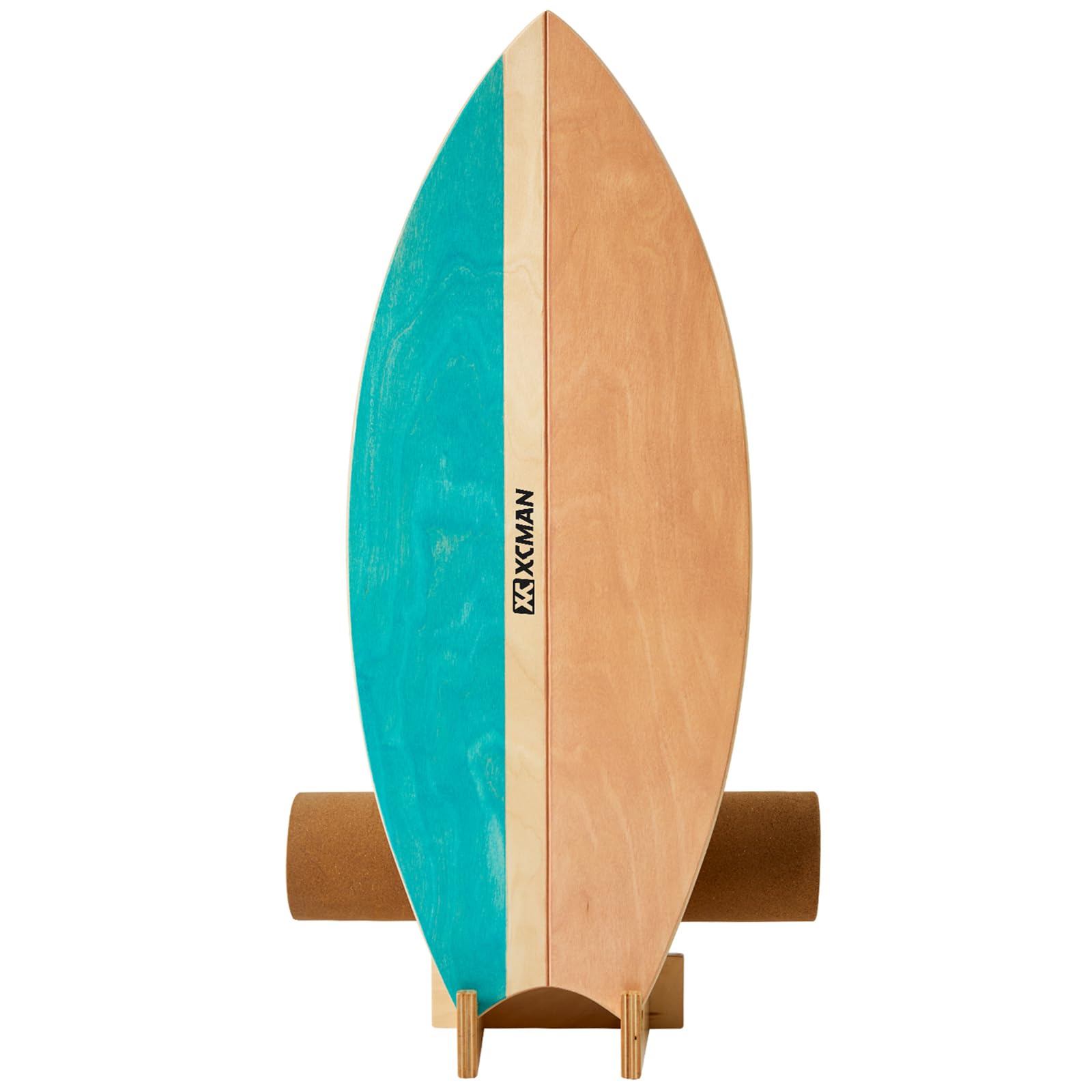
A gorgeous green deck that stows in a corner and glides over any floor without a scratch.
At only 6.6 pounds, this is the lightest roller board in the guide — easy to carry from the living room to the office to the physical therapist’s gym. The heavy-duty wood deck supports up to 120 kg (about 264 pounds) and wears a matte, non-skid surface that buyers consistently praise for grip. The rolling ball and roller are made from solid rubber, so they move smoothly without scuffing wood, carpet, cork, or concrete floors.
The Rocket Green color is a genuine conversation piece — owners call the appearance a big part of the appeal, alongside the solid, made-to-last build. The purchase includes the board, roller, and a balance board holder, so it arrives ready to use and easy to store. A teenage surfer received it as a birthday gift and uses it regularly, and owners mention their balance improved significantly within about a month of hopping on.
The lightweight design is the trade-off: at 264-pound capacity, it is not built for the heaviest riders, and the smaller footprint may feel snug for larger feet. The packaging lists two board shapes — arch and flat — so check the product photos carefully to match your preference before ordering.
The Lightweight All-Star
- 6.6 lb portability makes it the easiest board to move room to room
- Solid rubber roller glides clean over every floor type
- Rocket Green color and quality build earn consistent praise
Size Matters
- 264-lb capacity is the lowest of the roller boards here
- Compact footprint may feel tight for large feet
- Arch vs flat board shape requires careful product-photo reading
Reach for it if: you want a portable, floor-safe trainer you can bring to the office or gym.
Look elsewhere if: you weigh over 264 pounds or want a wide deck for size-13 feet.
8. Fitterfirst Professional Balance Board

The exact board your physical therapist uses, with three tilt heights for careful ankle rebuilding.
This is a round wobble board, and it is the specialist pick — buyers consistently report it is the same brand used at their physical therapist’s gym, which tells you its rehab credibility. The 20-inch diameter platform offers three elevation settings that change the tilt angle, letting you progress from a gentle 10-15 degrees on the low setting to a steeper challenge as your ankle strengthens. At 16 ounces it is light, yet buyers describe it as “very heavy” in use, meaning solid and confidence-inspiring underfoot.
Balance and quality are the two most-discussed positives, with adjustability close behind. An ankle-rehab patient with three fractures and surgery specifically chose the 20-inch size for its lower tilt angles, then later cut the board down to 16 inches to continue therapy at a higher difficulty. Others progressed from holding balance for seconds to two full minutes within two months of three-times-weekly use. It works at a standing desk on a yoga mat over hardwood without a single fall.
The honest limits: the top surface is quite smooth, so barefoot use feels slippery — grip socks or shoes are the fix. Value opinions run mixed, with some calling it expensive for what appears to be a simple wooden disc. But for ankle rehab specifically, the adjustability and proven PT-track record make it a category leader.
PT-Trusted: the three tilt heights make this the safest, most progressive ankle-rehab tool in this guide.
Grip Reality: the smooth surface demands grip socks or shoes — barefoot sessions will slide.
Choose it for: ankle injuries and PT-guided rehab where controlled tilt progression matters most.
Pass if: you want a skate-style roller motion or a grippy barefoot surface — this is a wobble disc, not a carve board.
9. Whirly Board Spinning Balance Board
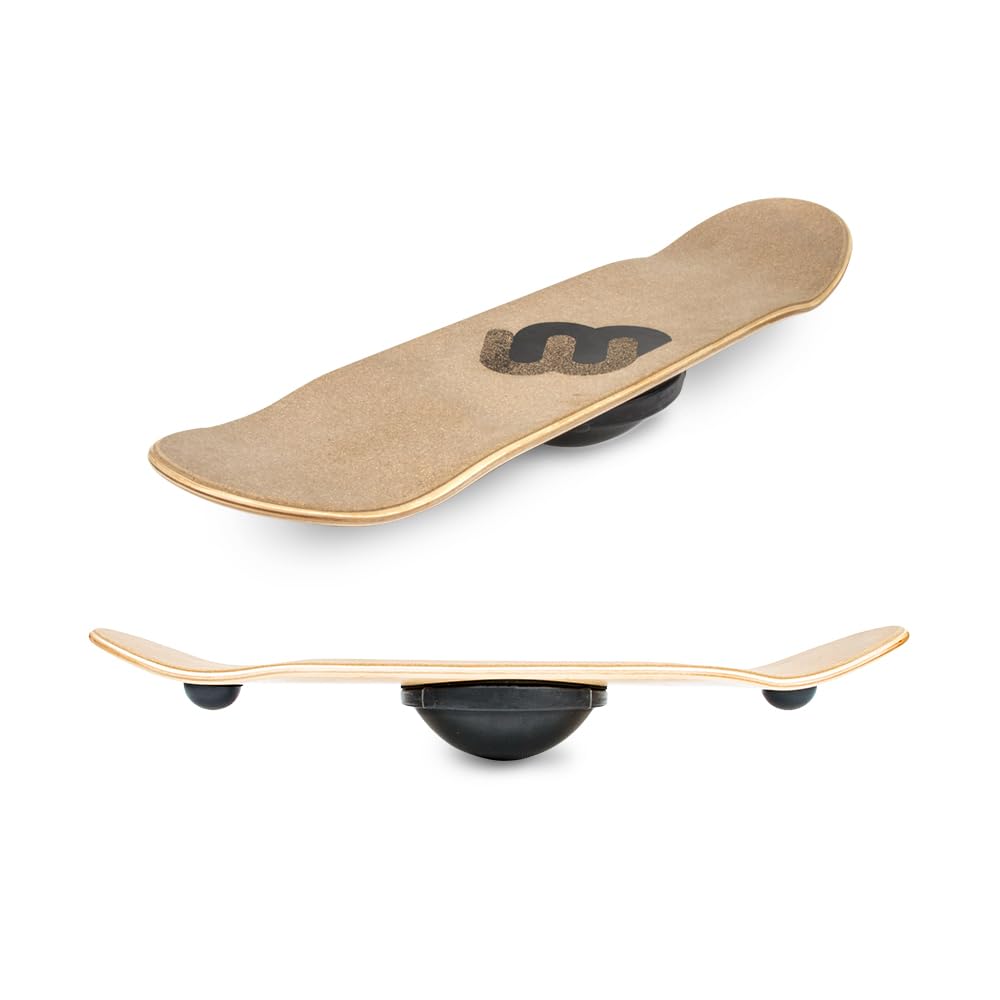
A handcrafted American spinner that adds 360-degree rotation to your standing-desk routine.
This is the only board in the guide that spins a full 360 degrees, and it is proudly made in Northern Wisconsin from 7-ply Canadian maple with high-traction grip tape. The unique rotating motion works your hips and thighs harder than a standard wobble board — buyers notice significantly more engagement in those underused stabilizing muscles. It comes with a lifetime replacement promise, a hand-signed note from the inventor, and a design that stands up to serious daily use at a standing desk.
Standing-desk users are the biggest fans: the board prevents stiff knees during long work hours, and the skater-style grip feels comfortable even barefoot for some. Beginners gain fast — one buyer went from holding balance for 3 seconds to 30-60 seconds within a week. The core workout is intense, and the adjustable challenge keeps even experienced balance users honest. It is a striking, well-crafted piece that looks good enough to keep in the living room.
The big caveat is foot size. Buyers with size 11 and size 15 feet both report the concave deck pressing painfully on the raised lip, causing numbness within 20 minutes even with shoes — several switched to the wider version of the same board. The cork-style grip also can’t be used comfortably barefoot for everyone. The 220-pound capacity is the lowest on the list, so heavier riders should look at the roller boards instead.
The Rotation Advantage
- Full 360-degree spin hits hips and thighs harder than wobble boards
- US-made 7-ply maple with a lifetime replacement promise
- Ideal for standing desks — prevents stiff knees
Foot-Size Limits
- Concave deck presses painfully on large feet — size 11 and up
- 220-lb capacity is the lowest here
- Grip can feel uncomfortable barefoot
Best for: standing-desk workers and athletes who want a hip-focused 360-degree challenge and buy with size-10-or-smaller feet.
Not for: large feet, riders over 220 pounds, or anyone wanting a carve-style roller motion.
Understanding the Specs
Roller Distance and Stoppers
The distance between the rubber stoppers on the underside of a roller board controls how far the cylinder can travel before it hits a stop. A narrow setting keeps the roller almost still, which is perfect for beginners. A wide setting lets the roller run further, forcing deeper weight shifts that mirror real skateboard carving. Boards with 3 or more distance options let you progress without buying a second unit.
Wood Ply Count and Weight Capacity
The number of pressed wood layers — typically 11-ply to 15-ply — determines how rigid the deck feels underfoot. More plies generally mean less flex and a sturdier platform. Weight capacity is the hard ceiling: most quality boards support 300 to 350 pounds, while premium birch decks reach 450. Always match the rating to your body weight plus a safety margin for small jumps.
FAQ
Will a balance board actually improve my skateboarding?
How much weight can a balance board hold?
What is the difference between a roller board and a wobble board?
How long does it take to see balance improvement?
Can I use a balance board at my standing desk?
Are balance boards safe for kids?
Is a balance board good for ankle rehab?
Do balance boards scratch hardwood floors?
How do adjustable stoppers change the difficulty?
What is the best balance board for a beginner skater?
Final Thoughts: The Verdict
For most skaters, the balance board for skateboarding winner is the The Original Indo Board because its 30-inch maple deck and champion-tested design deliver the most authentic, durable carve-training experience — and the crowd backs it with strong ratings from nearly a thousand owners. If you want a compact, desk-friendly board that grows your ankle stability while you work, grab the StrongTek. And for the widest range of challenges in one box — from beginner roller to expert ball balancing — the Sportneer is the one to reach for, with its 7 modes and 450-pound capacity leading the field.
How We Picked
We do not accept paid placement. Every pick is matched to a real buyer and a real use-case; we do not hands-on test units.
Sources & Methodology
Specifications: manufacturer listings and product documentation. Review insights: verified customer reviews, as of August 2026. Pricing: not shown on this page (it changes often); check the current price via the retailer link.
As an Amazon Associate, Gadgets Feed earns from qualifying purchases. This does not affect which products we feature.