
Standing still on a flat floor does little for your stability. True balance training demands controlled instability—a wobble, a rock, or a subtle shift that forces your ankles, core, and hips to constantly micro-adjust. Without the right piece of balance exercise equipment, you are either getting zero benefit or risking a fall from an unstable platform that was not designed for your skill level or intended use case.
I’m Min — the co-founder and writer behind Gadgets Feed. I have spent hundreds of hours analyzing the technical specifications, user feedback, and real-world application of balance training gear to separate the genuinely effective tools from the gimmicks that gather dust under a desk.
Whether you are rehabbing an injury, training for a sport, or simply trying to stay active while working at a standing desk, this guide breaks down the best options available and shows you exactly which best balance exercise equipment matches your specific fitness goal and environment.
How To Choose The Best Balance Exercise Equipment
Selecting the right balance tool starts with understanding the specific type of instability you need. A wobble board offers 360-degree tilt for dynamic core engagement, a rocker board restricts movement to one axis for safer rehab, a balance pad uses foam compression without moving parts, and a roller board demands the highest coordination for athletic performance. Matching the equipment type to your injury status, activity surface, and fitness level determines whether your training is effective or frustrating.
Board Shape and Range of Motion
The geometry of the base defines your movement options. Round-based wobble boards allow tilting in any direction, engaging oblique and hip stabilizers in a full range. Rocker boards with a curved rail limit motion to a single plane—ideal for ankle rehab where lateral stress must be controlled. Roller boards, such as the Indo Board, combine a flat deck with a separate cylinder for free multi-directional movement, making them the most challenging and sport-specific option. Beginners should start with a wider base and lower maximum tilt angle to build confidence before progressing to a deeper range of motion.
Surface Material and Floor Compatibility
The top traction and bottom grip of the board determine safety on your specific floor type. Textured wood, EVA foam, or rubberized PVC tops prevent foot slippage, especially during dynamic exercises. The bottom contact surface must not scratch hardwood or slide on tile. Many wooden wobble boards include felt or rubber corner pads to protect floors, but these pads can detach over time—a common complaint in budget models. Balanced boards with a full rubber base or a non-slip TPR matting, like the ZELUS half ball, offer better grip on smooth surfaces without needing aftermarket rugs.
Weight Capacity and Long-Term Durability
Maximum weight ratings often separate entry-level boards from premium equipment. A low rating of 250 pounds may be sufficient for lighter users but leaves no safety margin for dynamic loading during squats or jumps. Premium wooden boards from StrongTek and WOOD CITY rate up to 350 and 480 pounds respectively, indicating stronger laminates and reinforced pivot points. For stability trainers that rely on PVC air bladders, like the ZELUS, check that the valve design prevents gradual deflation—a weak point that undermines the base rigidity over months of use.
Quick Comparison
On smaller screens, swipe sideways to see the full table.
| Model | Category | Best For | Key Spec | Amazon |
|---|---|---|---|---|
| ProsourceFit Wooden Balance Board | Wobble Board | General core training and light rehab | 360° rotation, 15.75″ diameter | Amazon |
| StrongTek Wooden Balance Board | Wobble Board | Standing desk mobility and intermediate PT | 360° wobble, cross-style base, 350 lb limit | Amazon |
| Therapist’s Choice Balance Pad | Foam Pad | Low-impact rehab and joint protection | Closed-cell foam, 19″x15″x2.3″ | Amazon |
| WOOD CITY Wobble Board | Rocker Board | Open-ended play for kids and family fitness | 35″ long rocker, 480 lb capacity | Amazon |
| Gaiam Evolve Balance Board | Rocker Board | Office standing desk anti-fatigue use | 27″x12″ ergonomic rocker, honeycomb grip | Amazon |
| ZELUS 25in Balance Ball | Half Ball | Intense core and cardio workouts | 25″ diameter, 660 lb dynamic capacity | Amazon |
| The Original Indo Board | Roller Board | Elite athletic performance and surfing training | 30″x18″ maple deck with separate roller | Amazon |
In‑Depth Reviews
1. ProsourceFit Wooden Balance Board Non-Slip Wobble Core Trainer

The ProsourceFit wobble board strikes a rare balance between approachability and effectiveness for most users entering balance training. Its 15.75-inch diameter and 2.5-inch height provide a comfortable stance without feeling like a precarious pivot, and the textured surface keeps bare feet or shoes planted during dynamic exercises. The solid wood and PP plastic construction holds up well even after a full year of daily use, as multiple verified owners report no warping or delamination despite weights approaching the 300-pound limit.
Where this board truly earns its status is in the quiet way it integrates into varied routines. Users recovering from ACL surgery, those prepping for ski season, and even standing desk converts have found the 360-degree rotation responsive enough to challenge their stabilizers without overwhelming them. The 3-pound weight makes it genuinely portable—you can slide it under a couch or toss it in a gym bag without second thought. The manufacturer explicitly advises against using it for rehabilitation of serious injuries, but for general fitness and light therapy, it works.
The only real downside is the lack of a defined resistance progression. Unlike adjustable platforms, you cannot increase the tilt angle or alter the pivot resistance. Once your balance adapts to the standard wobble, you may need to graduate to a more challenging tool like a roller board or half-ball trainer. Still, for the vast majority of buyers wanting a single piece of balance exercise equipment for home or office, this remains the most reliable entry point.
Why it’s great
- Non-slip surface provides excellent grip in bare feet, socks, or shoes without marking floors
- Low 3-pound weight and compact footprint make it easy to store or travel with
- Proven durability—owners report minimal wear after a year of daily use
Good to know
- Not recommended for post-surgery rehab or high-risk balance training
- Fixed wobble angle offers no way to increase difficulty as you improve
2. StrongTek Wooden Balance Board with 2 Difficulty Options

The StrongTek board carves a unique niche between a basic rocker and a round-base wobble board. Its cross-style base creates a larger floor contact area than a traditional wobble board, which means more control for beginners while still allowing full 360-degree directional wobble. The platform measures 17.5 inches by 13.5 inches, offering a generous stable surface for users wearing larger shoe sizes—a detail appreciated by a six-foot senior reviewer who found it accommodated size 14 footwear comfortably.
This board shines brightest at standing desks where sustained micro-movements reduce joint stiffness. Multiple reviewers report being able to stand and work for 50-minute sessions, using the subtle wobble to eliminate shin splints and engage their core without distracting from typing. The Lauan hardwood plywood construction and 350-pound weight capacity inspire confidence that the board will not fatigue or crack under heavier loads or repeated use. The textured top surface adds security even during calf stretches and tree poses.
The adhesive on the corner pads is the weakest link here. Several users noted that the four edge protectors at the bottom corners detached within three days of use on hard floors. While the board remains fully functional without them, the missing pads can cause slight scuffing on delicate surfaces. A simple rug or a dab of stronger adhesive solves the issue, but it is an annoyance on an otherwise well-engineered product.
Why it’s great
- Cross-base design offers controlled 360° wobble that is less intimidating than round boards
- Large 17.5″ platform accommodates big feet and allows weight shifts between stances
- Proven standing desk companion with users reporting 50-minute sessions without fatigue
Good to know
- Corner edge protectors have weak adhesive and tend to fall off on hard floors
- May be too challenging for absolute beginners without a handhold nearby
3. Therapist’s Choice X-Large Balance Pad
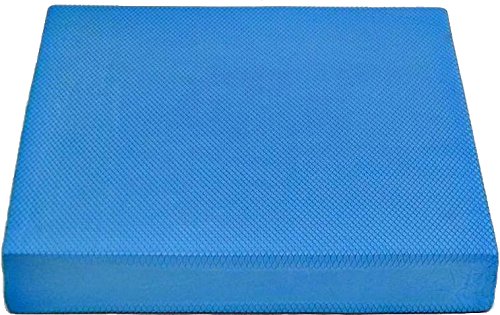
The Therapist’s Choice Balance Pad is the one piece of balance exercise equipment that does not rely on moving parts. Instead of a tilting board, it uses a block of premium closed-cell foam that compresses unevenly under your weight, forcing the tiny stabilizing muscles in your ankles, knees, and hips to fire continuously. At 19 inches by 15 inches by 2.3 inches thick, it provides ample surface area for single-leg stance drills, yoga poses, and even kneeling support during upper-body rehab.
Physical therapists widely use this exact pad in clinical settings, and the home version matches the professional spec. The foam density is firm enough to provide a genuine balance challenge—reviewers describe hating how difficult it is while admitting their balance measurably improved after daily use. The latex-free material also makes it safe for users with common allergies. It doubles as a kneeling pad for floor work and a sitting cushion for pelvic or lower back issues, adding versatility that a rigid board cannot match.
The primary caveat is the foam firmness itself. Some buyers expected a softer, more cushioned surface for gentle rehab and found the pad overly stiff for their needs. The product description does not specify durometer or compression rating, making it a gamble if you need a very soft surface for post-operative recovery. Additionally, while it is portable at 0.7 kilograms, the foam does not roll or fold, so storage requires flat shelf or drawer space.
Why it’s great
- Clinically proven design used by physical therapists for fracture and sprain rehab
- Dual-use as a kneeling pad and seated cushion adds value beyond balance training
- Closed-cell foam is durable and latex-free for allergy-safe use
Good to know
- Firmness level may be too high for those needing very soft post-surgery support
- Does not fold or compress, requiring flat storage space
4. WOOD CITY Wobble Board, Wooden Balance Board for Kids & Adults

The WOOD CITY Wobble Board is a 35-inch curved wooden rocker that defies categorization. It functions as a balance trainer for adults and toddlers alike, yet its open-ended design encourages children to use it as a bridge, a tunnel, a lounge chair, or a slide. The natural wood construction and eco-friendly lacquers give it a premium, toy-like feel that blends into a living room more gracefully than most gym equipment. The maximum weight rating of 480 pounds—confirmed by users testing it at 220 pounds with no flex—means this board can handle multiple children or a full-grown adult performing yoga poses.
For balance training, the curved rocker limits motion to a single front-to-back axis, which is significantly safer for beginners and children than a 360-degree wobble board. Adults use it for hamstring stretches, seated back extensions, and standing balance drills. The 11.8-inch width provides a forgiving platform for foot placement, and the 6-inch peak height challenges the vestibular system without creating a fall risk. Multiple families report that their 2-year-olds intuitively start using it as a balance beam within minutes.
The rocker shape means you cannot perform multi-directional stability work. If your goal is sport-specific training that requires lateral and rotational ankle control, this board will not provide that stimulus. The lack of a textured grip surface also means that during intense dynamic exercises, feet can slide if socks are worn. It is best viewed as a versatile family fitness tool rather than a precision balance instrument for serious athletes.
Why it’s great
- Incredible 480-pound weight capacity suits multiple users and heavy dynamic loading
- Open-ended shape encourages imaginative play for kids while still effective for adults
- Natural wood construction with eco-friendly finish looks like furniture, not gym gear
Good to know
- Rocker restricts movement to one axis, limiting multi-directional training
- Smooth wood surface can feel slippery in socks during active exercises
5. Gaiam Evolve Balance Board Standing Desk Rocker
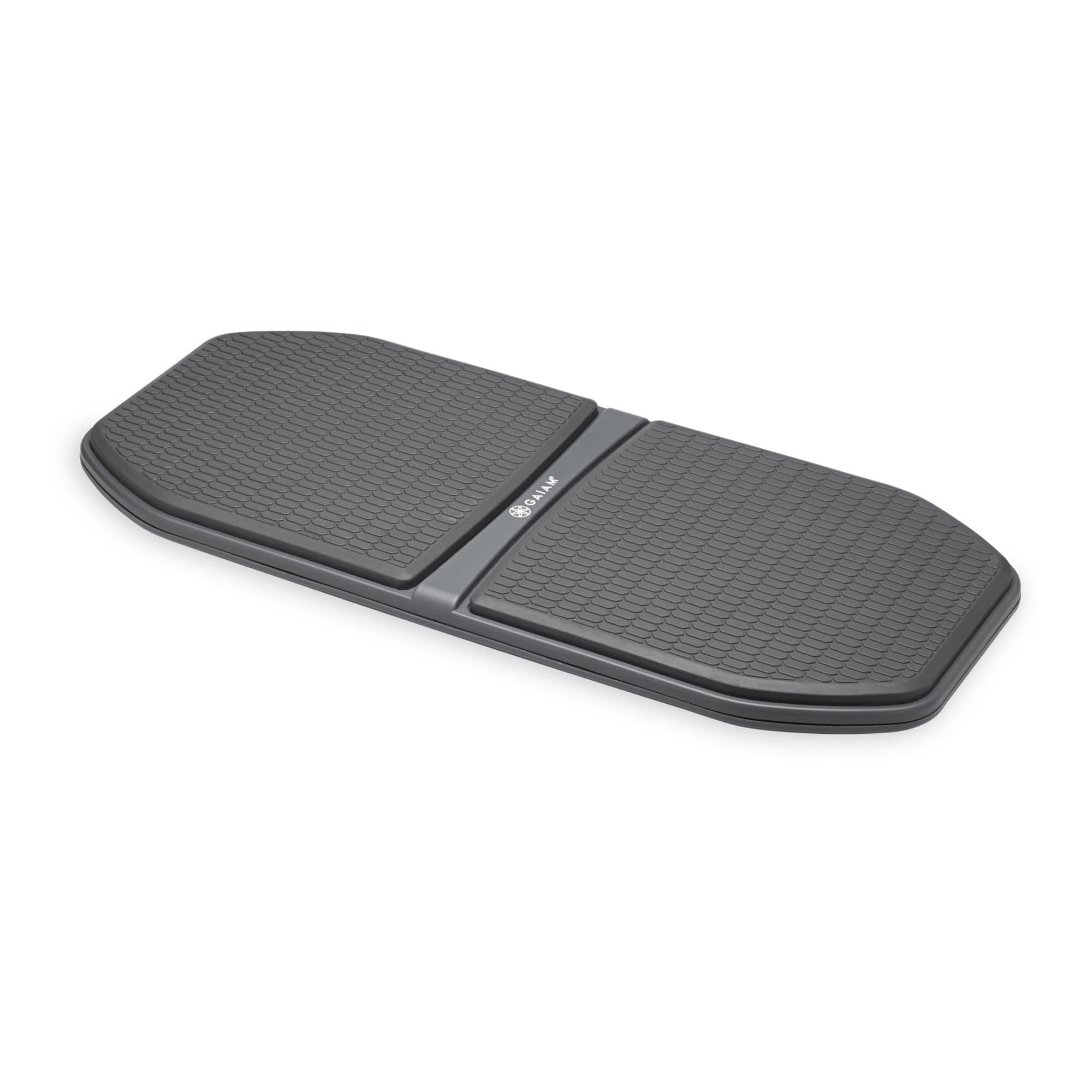
The Gaiam Evolve is purpose-built for one specific environment: the standing desk. Its 27-inch long, 12-inch wide platform allows a natural walking-width stance, and the curved bottom creates a subtle rocking motion that shifts between front-to-back and side-to-side depending on weight distribution. The honeycomb non-slip texture on the top surface keeps your feet planted, while the TPR corner grips on the bottom prevent sliding on both hard floors and low-pile carpet. This is not a board for high-intensity training—it is a tool for micro-movements that prevent the knee locking and lower back fatigue that comes from standing still for hours.
Users consistently report that the Evolve allows them to stand comfortably for four to five hours at a desk, something they could not do on a flat floor. The rocking motion is subtle enough that you can type, talk on the phone, and participate in video calls without the movement being noticeable to the camera. The 6.5-pound weight makes it heavier than portable wobble boards but still easy to slide under a desk when not in use. The ergonomic design also promotes neutral ankle positioning, reducing strain on the Achilles and calf muscles over long sessions.
After several months of daily use, the cushioned top layer near the center can begin to peel away, exposing the underlying hard plastic. This cosmetic issue does not affect the rocking function, but it detracts from the professional aesthetic that is important in an office setting. Additionally, the 250-pound weight rating is lower than many competing boards, so heavier users may find the pivot less responsive under load. If desk work is your primary use case, this board is unmatched; for gym-style balance training, look at the StrongTek or ProsourceFit instead.
Why it’s great
- Long, wide platform encourages natural weight shifts and calf stretches during desk work
- Honeycomb non-slip grip keeps feet secure on both hard floors and carpet
- Low profile and subtle motion allow discreet use during office video calls
Good to know
- Top cushion layer can peel after months of daily use
- 250-pound weight capacity is lower than wobble board alternatives
6. ZELUS 25in Balance Ball with Resistance Bands

The ZELUS 25-inch half ball trainer introduces a fundamentally different instability mechanism. Instead of a tilting platform, the inflated PVC dome creates a spherical instability that demands constant core engagement just to stay upright. The 25-inch diameter provides a wide stance area, and the non-slip TPR base grips the floor tenaciously, eliminating the risk of the whole unit sliding out from under you during high-intensity movements. The maximum dynamic weight capacity of 660 pounds is more than double most wood boards, reflecting the robust ABS base construction.
This unit is for users who want to sweat. The included pair of resistance bands with cushioned grips allows you to perform bicep curls, overhead presses, and rows while balancing, transforming a simple stability tool into a full-body workout station. The foot pump inflates the dome quickly, and the inflation port design minimizes air loss at the valve. Several reviewers recovering from fractured ankles and ligament damage found that partially deflating the ball created a lower, more stable platform for early-stage rehab, then increasing air pressure as strength returned.
The PVC dome does gradually lose air over weeks of use, requiring periodic top-offs to maintain consistent resistance. Some units arrived missing the metal clamp for the resistance band handles, making them unusable until a replacement clamp is sourced. The dome itself is heavy at over 15 pounds when inflated, so it is not a portable item you can easily move between rooms or take to the office. It is best suited for a dedicated home gym space where it can remain set up.
Why it’s great
- Inflatable dome allows variable resistance by adjusting air pressure for progressive training
- 660-pound capacity supports heavy weightlifting movements on the ball
- Resistance bands and extra yoga ball included for expanded workout variety
Good to know
- PVC dome requires periodic re-inflation to maintain consistent firmness
- Missing band clamp reported in some units; heavy weight limits portability
7. The Original Indo Board Balance Board Trainer
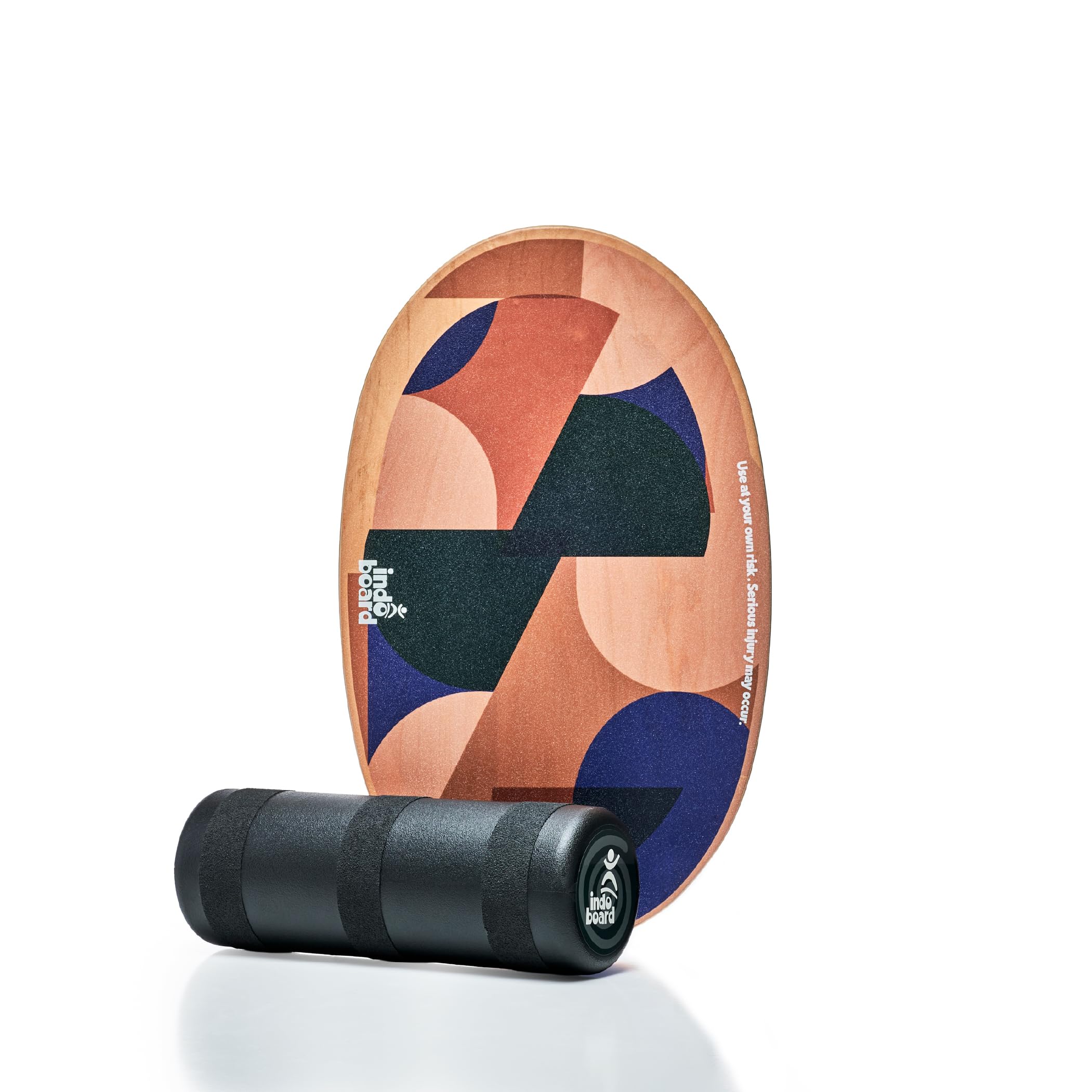
The Original Indo Board is the gold standard for athletes who need sport-specific balance training. The system uses a separate cylindrical roller under a flat maple deck, creating a free-floating instability that mimics the lateral and rotational demands of surfing, snowboarding, skateboarding, and skating. There is no pivot point, no hinge, and no guide—you must coordinate your entire body to keep the roller from shooting out from under the deck. The 30-inch by 18-inch deck provides ample room for foot placement adjustments, and the textured surface offers enough grip for barefoot use while remaining comfortable.
This board has been endorsed by Olympic champions across multiple sports for nearly thirty years, and that pedigree shows in the construction. The maple wood deck is thick and heavy-duty, with a maximum weight recommendation of 350 pounds. The roller is a lightweight plastic cylinder with grippy rubberized ends that prevent it from rolling away on hard floors. Users consistently rate the challenge factor at 10 out of 10, noting that it builds stability, core strength, and reflexes faster than any wobble board or half-ball trainer. The board also works well on carpet, which dampens the roller speed and makes initial learning safer.
The Indo Board is not for everyone. Beginners will struggle without a wall, chair, or spotter to stabilize themselves during the first sessions, and the roller can cause painful falls on hard floors if the user loses balance backward. The plastic roller itself feels lighter than some might expect, though it performs well under load. The premium price reflects the specialized design and durability, but if your goal is casual standing desk movement or gentle rehab, a wobble board or balance pad is a more practical and safer investment.
Why it’s great
- Unmatched challenge for sport-specific balance training with free-rolling cylinder
- Maple wood deck is durable, grippy, and feels premium underfoot
- Trusted by elite athletes across surfing, snowboarding, and skating for nearly 30 years
Good to know
- High difficulty level—beginners must use a support to avoid hard falls
- Premium price and specialized design not ideal for casual desk use or gentle rehab
FAQ
Can I use a wobble board on carpet without damaging it?
How long does it take to see noticeable balance improvement?
Should I choose a rocker board or a wobble board for ankle rehab?
Final Thoughts: The Verdict
For most users, the best balance exercise equipment winner is the ProsourceFit Wooden Balance Board because it offers the widest sweet spot of affordability, durability, and versatility for general core training and home use. If you need sustained micro-movement during your workday, grab the Gaiam Evolve Balance Board. And for intense athletic conditioning that builds sport-specific coordination, nothing beats the Original Indo Board.