
Flowers don’t lie. If your perennials refuse to open, your annuals look washed out, or your hanging baskets just sit there, the problem is almost never the sun or your watering schedule. It’s almost always the nutrients you’re giving them — specifically, a lack of balance. A fertilizer that’s too heavy in nitrogen pushes leaves at the expense of buds, while one that’s too low in phosphorus starves root and bloom development. The sweet spot is a balanced formula.
I’m Min — the co-founder and writer behind Gadgets Feed. I spend my time buried in independent spec sheets, agronomic research, and user-verified performance data to separate real formulation science from marketing fluff.
Whether you’re feeding a cutting garden, a row of rose bushes, or a container of petunias, the right blend delivers bigger, longer-lasting, more vibrantly colored flowers — without scorching roots or leaving chemical residue in the soil. This guide gets straight to the point: buy the best balanced fertilizer for flowers with confidence by understanding exactly what those three numbers on the bag actually mean for your blooms.
How To Choose The Best Balanced Fertilizer For Flowers
A balanced fertilizer doesn’t mean the three numbers are always equal. For flowers, the ideal ratio often leans slightly higher in phosphorus and potassium relative to nitrogen. The goal is to create a feeding schedule that promotes bud set and flower longevity without encouraging soft, leafy growth that attracts pests.
Understand the N-P-K Ratio for Blooming Plants
The three numbers — nitrogen (N), phosphorus (P), and potassium (K) — tell you the percentage of each macronutrient by weight. Nitrogen drives leaf and stem growth. Phosphorus is critical for root development and flower formation. Potassium improves overall plant health, disease resistance, and flower quality. For flowering plants, a ratio like 5-3-3 or 4-6-2 is more effective than a classic turf fertilizer like 20-0-5. Avoid anything with the first number significantly higher than the other two unless you’re trying to push foliage.
Choose Between Water-Soluble and Slow-Release Granular
Water-soluble formulas (like 20-20-20) deliver nutrients immediately, ideal for container plants and hanging baskets that are watered frequently. They require mixing and more frequent application but give you precise control. Slow-release granules feed over weeks or months with a single application, making them better for flower beds and established perennials where steady, gentle nutrition beats a quick spike that washes away.
Check for Organic Certification and Micronutrients
Organic fertilizers like OMRI-listed blends feed the soil microbiome first, releasing nutrients as microbes break them down. They include secondary nutrients like calcium, magnesium, and sulfur, plus trace elements like iron and zinc. Kelp meal adds growth hormones and natural cytokinins that can help flower bud development. Synthetic balanced fertilizers provide fast, predictable results but don’t build long-term soil structure. For flower gardens, a good organic option with microbial content often yields richer bloom colors and stronger stems.
Quick Comparison
On smaller screens, swipe sideways to see the full table.
| Model | Category | Best For | Key Spec | Amazon |
|---|---|---|---|---|
| FoxFarm Happy Frog All Purpose 6-4-5 | Organic Granules | All-around flower performance | 6-4-5 NPK with soil microbes and mycorrhizae | Amazon |
| Espoma Organic Plant-Tone 5-3-3 | Organic Granules | Long-term soil health | 5-3-3 NPK with Bio-tone and 5% calcium | Amazon |
| GreenView Multi-Purpose 10-10-10 | Synthetic Granules | Large beds and heavy feeders | 10-10-10 NPK; covers up to 10,000 sq. ft. | Amazon |
| GS Plant Foods Water Soluble 20-20-20 | Water Soluble | Immediate feeding for containers | 20-20-20 NPK with kelp extract and micronutrients | Amazon |
| Fertilome 20-20-20 Water Soluble | Water Soluble | Geraniums and petunias | 20-20-20 NPK; 3 lb bag | Amazon |
| Down To Earth All Natural 4-6-2 | Organic Granules | Transplants and gentle feeding | 4-6-2 NPK; OMRI-listed with kelp and fish bone meal | Amazon |
| Jobe’s Organics All Purpose 4-4-4 | Organic Granules | Budget-friendly organic feeding | 4-4-4 NPK; OMRI-listed; 16 lb resealable bag | Amazon |
In‑Depth Reviews
1. FoxFarm Happy Frog All Purpose Fertilizer 6-4-5

The FoxFarm Happy Frog All Purpose Fertilizer hits a nearly ideal 6-4-5 ratio for flowering plants: enough nitrogen for healthy foliage without sacrificing the phosphorus and potassium needed for strong blooms. Each granule is packed with beneficial soil microbes and mycorrhizal fungi, which form a symbiotic relationship with roots to dramatically improve nutrient and water uptake. The 4-pound bag is resealable and easy to store, and the OMRI listing means you can use it in organic gardens without second-guessing the label.
Gardeners report seeing yellowed tomato and zucchini plants turn dark green within a week of application, with explosive growth on ornamentals like monsteras and roses. The slow-release mechanism feeds the soil for several weeks, reducing the need for constant reapplication. Users note that the smell is pungent — typical of good organic material — and recommend wearing gloves and ventilating indoor spaces. A thin sprinkle avoids the white mold that can appear if product is piled too thickly around the crown.
For a one-bag option that covers flowers, vegetables, and ornamentals with genuine biological enhancement, this is the most versatile organic granular choice available. The microbial activity alone justifies its position at the top of the list for any gardener serious about bloom quality.
Why it’s great
- Includes proven soil microbes and mycorrhizae for root health
- Balanced 6-4-5 ratio supports blooms without excessive leaf growth
- OMRI-listed for certified organic production
Good to know
- Strong organic smell requires outdoor or well-ventilated application
- Thin layer needed to prevent surface mold on pots
2. Espoma Organic Plant-Tone 5-3-3 (2-Pack)

Espoma’s Plant-Tone is a time-tested organic formula that has been on the market since 1929, and its 5-3-3 NPK analysis reflects a deep understanding of what flowers actually need. With 5% calcium included, this blend supports strong cell walls and disease resistance — especially important for roses and perennials that are prone to petal burn and powdery mildew. The Bio-tone beneficial bacteria are proprietary to Espoma and are designed to colonize the root zone and unlock nutrients that are otherwise unavailable in the soil.
Users apply it twice a year for trees and shrubs or monthly during the growing season for flowers, and the results are consistently described as transformative. The granular form is ready to use straight from the bag — just sprinkle around the drip line and water in. The 2-pack delivers decent coverage for multiple beds, and the lack of sludges or toxic ingredients makes it safe for households with children or pets that explore the garden. The smell is often compared to chicken manure, so upwind application is a smart move.
This is the go-to choice for gardeners who want a single fertilizer they can rely on for everything from annuals to fruit trees. The long nutrient release curve means you don’t have to chase your plants with a watering can every week.
Why it’s great
- High calcium content (5%) strengthens stems and petals
- Bio-tone microbes improve nutrient availability naturally
- Approved for organic gardening; no synthetic chemicals
Good to know
- Strong farm-like odor during and after application
- Results may take 7-10 days to show compared to synthetic speed
3. GreenView Multi-Purpose Fertilizer 10-10-10

The GreenView Multi-Purpose Fertilizer is a straightforward synthetic granular with an even 10-10-10 NPK ratio, perfect for flower beds that need a consistent dose of all three macronutrients without any specialty additives. At 33 pounds, it covers up to 10,000 square feet of garden space, making it the most economical option per square foot for large-scale growers. The granules are well-formed and non-clumping, which means they spread evenly with a hand-held or push spreader without leaving hot spots that can burn roots.
Users in the Midwest report using it throughout the entire growing season on hostas, perennials, vegetables, and trees, noting quick greening and uniform growth. Unlike organic blends, synthetic 10-10-10 is immediately available to plants, so you’ll see a response within a few days of watering it in. This is particularly useful for giving a quick boost to flowers that are about to enter their peak bloom phase or recovering from transplant shock.
If you manage multiple beds, a vegetable patch, and a lawn and want one bag to feed them all, the value here is unbeatable. Just note that because it lacks organic matter and microbial inoculants, you should still incorporate compost or soil amendments separately for long-term soil structure.
Why it’s great
- Extremely cost-effective coverage for large gardens
- Uniform non-clumping granules for even distribution
- Fast-acting synthetic formula for quick results
Good to know
- Synthetic formulation doesn’t build soil microbiome
- Balanced ratio may need supplementing for heavy bloomers
4. GS Plant Foods Water Soluble 20-20-20 with Kelp
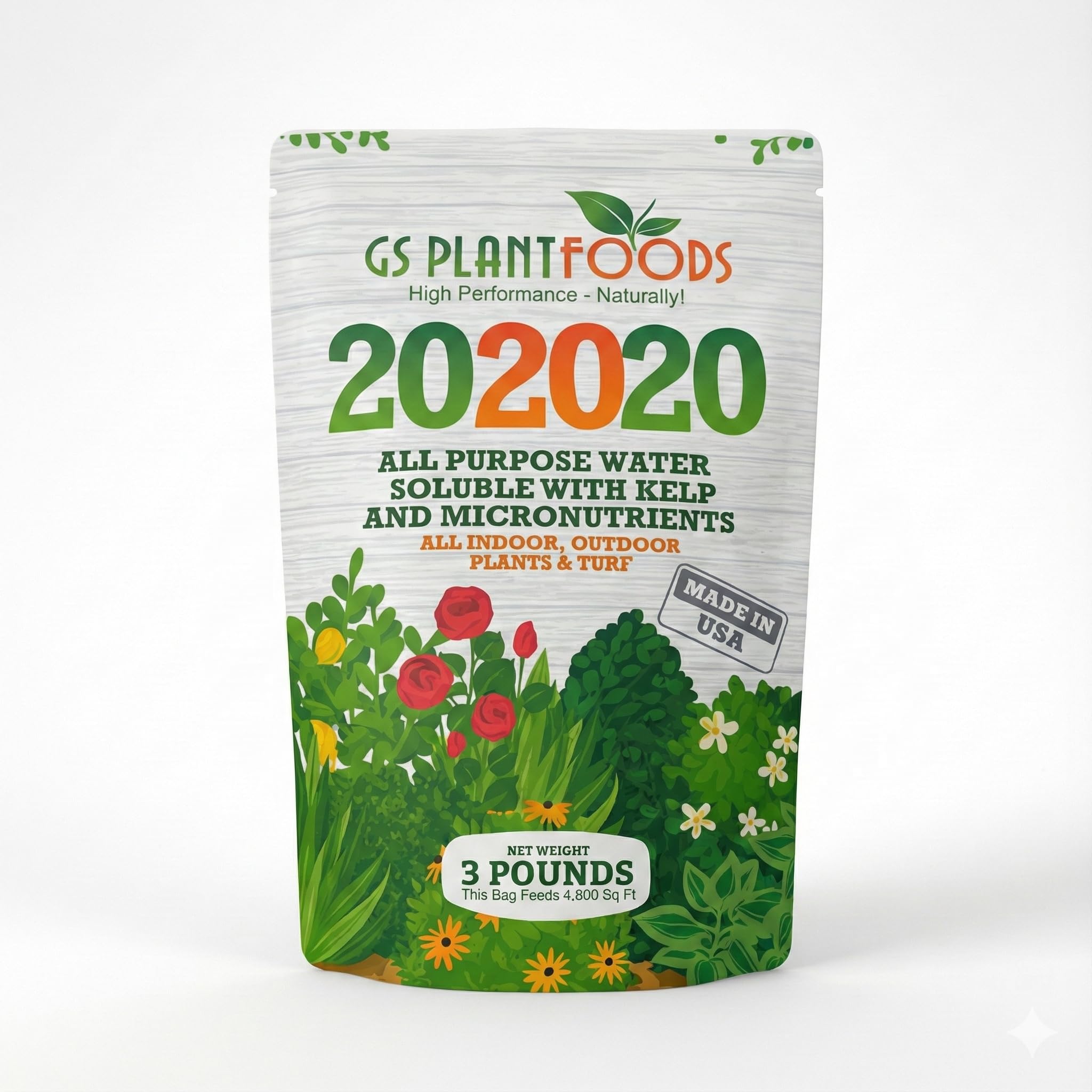
GS Plant Foods has created a water-soluble 20-20-20 that goes beyond the standard synthetic formula by incorporating Ascophyllum nodosum kelp extract — a natural source of cytokinins, auxins, and trace minerals that can enhance bud initiation and flower color saturation. The 3-pound bag dissolves completely in water without leaving sediment in sprayers, so you can apply it as a soil drench or a foliar spray. With a full suite of micronutrients including iron, manganese, zinc, and boron, this fertilizer addresses deficiencies that often cause pale blooms or stunted flower clusters.
Users note that orchids and houseplants responded within days, with new growth that looked visibly heartier than with standard 20-20-20 formulas. The instructions recommend 1 teaspoon per gallon of water, making the bag stretch to over 50 gallons of feed. One experienced gardener pointed out that this high-nitrogen ratio can produce massive leaves with slightly smaller blooms compared to a phosphorus-focused formula — so it works best when used on plants that can handle balanced feeding or when alternated with a bloom booster during the flowering phase.
For indoor enthusiasts, container gardeners, and anyone who wants pinpoint control over feeding frequency, this is the best water-soluble option. Keep the bag sealed in a dry location to prevent clumping.
Why it’s great
- Includes kelp extract for natural growth hormones
- Dissolves fully without clogging sprayers
- Broad micronutrient profile helps correct deficiencies
Good to know
- High nitrogen can encourage foliage over blooms in sensitive plants
- Requires weekly mixing and application schedule
5. Fertilome All Purpose Water Soluble 20-20-20

Fertilome’s 20-20-20 water-soluble formula is specifically targeted at flowering plants like geraniums, pansies, petunias, and impatiens — annuals that need a steady, balanced supply of nutrients to keep pumping out blooms from spring through frost. The label recommends 1 to 2 teaspoons per gallon of water for soil drench, or a weaker 0.25 to 1 teaspoon per gallon for foliar feeding. That flexibility lets you adjust the concentration based on the growth stage: a heavier mix during early bloom set and a lighter foliar spray to extend flower life in mid-summer heat.
Users with hibiscus bushes in Florida saw dying plants produce numerous new green buds within 20 days of two soil drench applications. The product is potent — reviewers emphasize that 1 teaspoon per gallon is plenty strong, and the 3-pound bag lasts many months for a standard patio container collection. The crystalline granules dissolve quickly in warm water without clumping. The seller also replaced a damaged shipment quickly, indicating responsive customer service.
If you primarily grow flowering annuals in containers, hanging baskets, or window boxes, this is the most reliable synthetic choice for consistent, vibrant bloom production. Reserve the organic granular options for your in-ground beds and keep this on the shelf for your potted showstoppers.
Why it’s great
- Specifically formulated for annual flowers like petunias and impatiens
- Can be used as foliar spray for direct leaf absorption
- Very concentrated — small amount per gallon goes far
Good to know
- Synthetic only; no soil-building organic matter
- Potent mix means over-application risks root burn
6. Down To Earth All Natural 4-6-2

Down To Earth’s All Purpose Mix is a 4-6-2 organic granular fertilizer that flips the typical ratio by providing more phosphorus and potassium than nitrogen — a profile that is ideal for flower and fruit production without encouraging an explosion of leafy growth. The ingredient list reads like a soil-building recipe: fish bone meal, blood meal, feather meal, rock phosphate, langbeinite, greensand, humates, and kelp meal. That diversity of organic sources ensures a slow, steady release of nutrients as soil microbes process each component at different rates.
The 5-pound bag is OMRI-listed and described as a gentle, non-burning formula, so it’s safe for delicate transplants and young seedlings that might be scorched by a stronger synthetic product. A five-pound bag lasts nearly a full season for an average home garden. Multiple reviewers mention that the smell is strong for the first few days after application but fades once the granules integrate into the soil. The fish-based ingredients are particularly attractive if you want to provide a natural source of phosphorus that synthetic triple superphosphate cannot replicate in terms of soil food web effects.
For gardeners who prioritize organic soil health and want a phosphorus-heavy formula to maximize flower bud count, this is the clear winner. Pair it with a balanced compost topdressing in the off-season.
Why it’s great
- Higher phosphorus (6) for flower and root development
- Non-burning formula safe for delicate transplants
- Wide range of organic ingredients for balanced soil biology
Good to know
- Unpleasant fishy odor dissipates in a few days
- Slower results compared to synthetic or water-soluble options
7. Jobe’s Organics Granular All Purpose 4-4-4

Jobe’s Organics All Purpose Fertilizer delivers a consistent 4-4-4 NPK ratio in a 16-pound bag, making it the largest organic granular option in this roundup for the lowest per-pound cost. The formula is OMRI-listed and contains no synthetic chemicals, so it meets USDA organic production standards. The NPK ratio is perfectly equal, which means it won’t push any single growth process too hard — it simply maintains a healthy baseline for flowers, vegetables, shrubs, and trees. The resealable bag keeps the granules dry and prevents the organic smell from escaping into the garage or shed.
Users describe the granules as small, darkish green, and friable enough to spread easily with a handheld spreader over a lawn or flower bed. One detailed user review explained how they made a liquid tea by steeping one cup of granules in a gallon of dechlorinated water for 24 hours, then using the resulting liquid weekly to feed squash, cucumbers, and peppers — with flowers opening within 48 hours of each feeding. The dry granular form works best when scratched into the top inch of soil around the drip line of each plant every 2-3 weeks during the growing season.
If you need to cover a lot of ground with a certified organic fertilizer without spending a premium, this is the most practical option. The 4-4-4 ratio is a safety net for those new to organic gardening — it is very difficult to over-fertilize with this formula.
Why it’s great
- Large 16-pound bag at a budget-friendly per-pound cost
- OMRI-listed for certified organic gardening
- Can be used dry or steeped into a liquid tea
Good to know
- Equal 4-4-4 ratio may need phosphorus supplementation for heavy bloomers
- Mild odor but milder than raw manure or fish-based blends
FAQ
What is the best N-P-K ratio for flowering plants?
Should I use organic or synthetic fertilizer for my flower garden?
Final Thoughts: The Verdict
For most users, the balanced fertilizer for flowers winner is the FoxFarm Happy Frog All Purpose 6-4-5 because it combines a flower-friendly N-P-K ratio with beneficial soil microbes that actively improve root health and nutrient uptake, all in an OMRI-listed organic formula. If you want a huge bag with versatile coverage for large beds and landscape use, grab the GreenView Multi-Purpose 10-10-10. And for immediate feeding of container flowers and hanging baskets, nothing beats the fast-dissolving GS Plant Foods Water Soluble 20-20-20 with added kelp for bloom vitality.