
Our readers keep the lights on and my morning glass full of iced black tea. As an Amazon Associate, I earn from qualifying purchases.
Specs are compiled from manufacturer listings and verified buyer reviews and can change over time — please confirm the key details on the product page before buying.
You stop thinking about cables and specs the moment you put on a great pair of wired headphones. Instead, you are just inside the music, hearing layers you never noticed before. That experience is what you get when you choose the right balanced headphones hi res. It is about making a few specific decisions before you click add to cart.
I’m Min — the founder and writer behind Gadgets Feed. This guide is built by comparing the manufacturers’ published specifications and the patterns across verified customer reviews, so you get each pick’s real strengths and trade-offs instead of marketing spin.
These picks represent what thoughtful audio engineering can deliver in balanced headphones hi res, whether you are sinking into an acoustic jazz set or chasing every detail on a complex orchestral recording.
Our Picks at a Glance
How To Choose The Best Balanced Headphones Hi Res
Stepping into high-resolution audio can feel like every spec sheet is written in code. Focus on three pillars: the driver that produces the sound, the cable that carries the signal, and the design that lets it all breathe. These are the only things that actually change what you hear.
The Driver is the Heart of the Sound
The driver inside each earcup converts an electrical signal into the sound waves you hear. Bigger drivers — like 42mm or 53mm models — move more air. That translates to deeper bass and a wider sense of space across the music. A smaller driver, such as a 13.6mm hybrid used in an in-ear monitor (IEM; a headphone that sits inside your ear canal), can be incredibly accurate and detailed. But it will not deliver the same chest-thumping physical sensation as a full-size over-ear design.
Why a Balanced Cable Matters
A standard headphone cable has three conductors — left, right, and ground shared by both channels. A balanced cable uses a separate ground wire for each channel. This cuts down on crosstalk (signal leaking from one side to the other). The result is a cleaner, blacker background between notes, better stereo separation, and a quieter noise floor. Look for 4.4mm or 2.5mm connectors — these are the most common balanced terminations (the plug that goes into your device) used on modern gear.
Open-Back vs. Closed-Back
Open-back headphones have grilles on the outside of the earcups that let air and sound pass through freely. This gives you a much more natural, speaker-like soundstage (the sense of space and direction in the music) — the music feels like it is happening around you rather than inside your head. The trade-off is that sound leaks both ways: people near you will hear your music, and you will hear your environment. Closed-back designs isolate you from noise, but they tend to have a more constrained, less airy sound.
Quick Comparison
| Model | Best For | Driver Size | Design Type | Balanced Cable | Amazon |
|---|---|---|---|---|---|
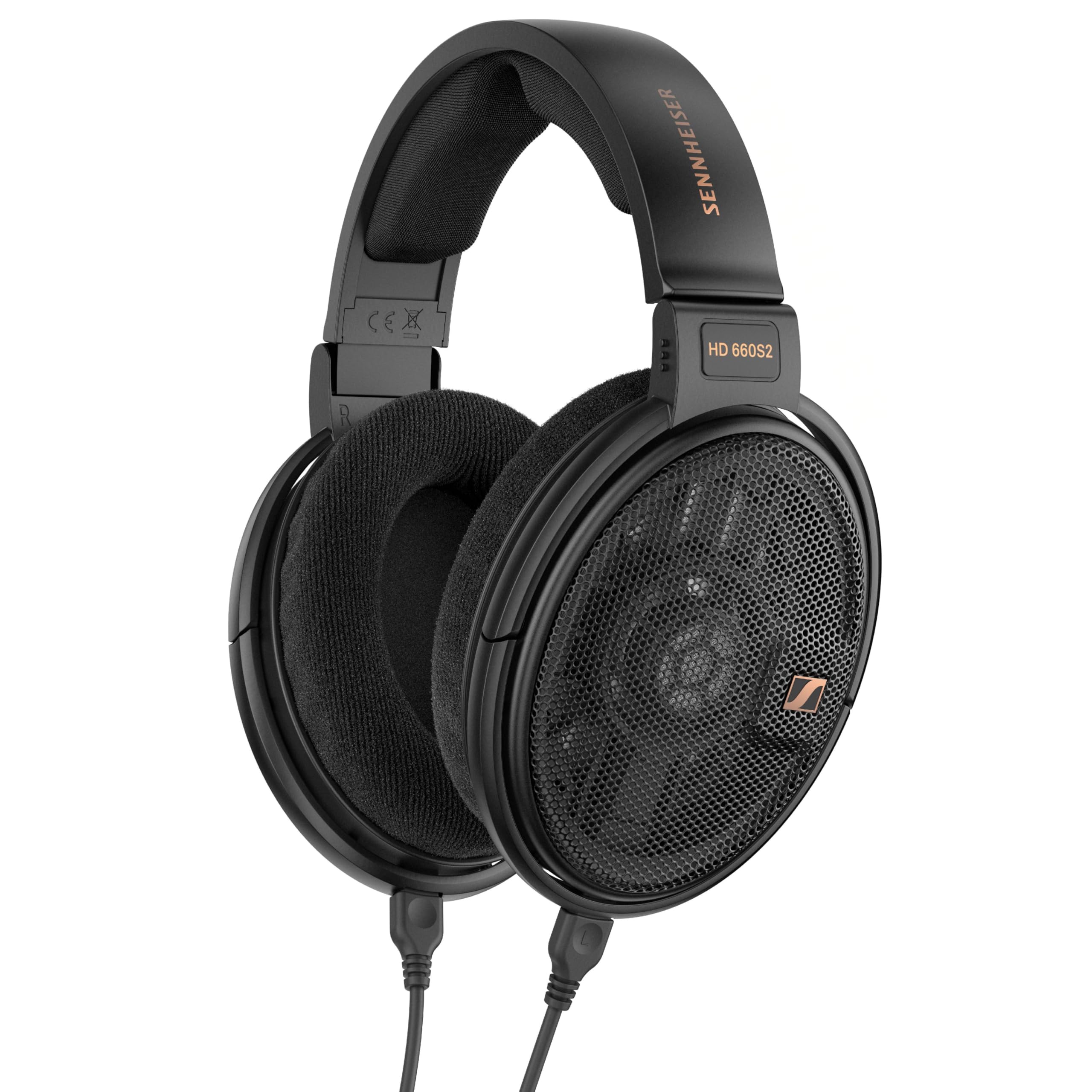
| Sennheiser HD 660S2★ Best Overall | Musical all‑rounder with vocals | 42mm | Open‑back | 4.4mm included | Amazon |
| FiiO FH9 | Portable clarity with swappable plugs | 13.6mm hybrid | In‑ear | 2.5/3.5/4.4mm plugs | Amazon |
| Audio‑Technica ATH‑WP900 | Portable high‑res with wooden elegance | 53mm DLC‑coated | Closed‑back | 4.4mm included | Amazon |
| Sennheiser HD 800 S | Reference‑grade soundstage | 56mm ring radiator | Open‑back | 4.4mm included | Amazon |
In‑Depth Reviews
1. Sennheiser HD 660S2
Our pick — 4.5★ from 750+ verified ratings; the strongest balance of quality and price.
The warm, musical all-rounder that makes vocals feel like a private performance.
The HD 660S2 earns its spot because it includes a 4.4mm balanced cable in the box, so you get the benefits of a separate ground for each channel right away — a cleaner, quieter signal. It is built around a 42mm dynamic driver that Sennheiser tuned for deeper sub-bass extension (lower bass frequencies you can feel) while keeping the mids lush and intimate. You get two cables: a 6.3mm single-ended and a 4.4mm balanced, both 1.8 meters long, plus a 6.3mm to 3.5mm adapter for direct use with a phone or laptop. The open-back design with plush, breathable ear cushions means you can wear these for hours without fatigue.
The sound quality wins people over most — well over 180 owners call it out in reviews. Paired with a Fosi DS2 over the 4.4mm balanced connection, buyers report vocals that feel “intimate and lifelike.” The bass is warm and punchy rather than aggressive. The soundstage is narrower than the open-back HD 800 S, but the imaging places every instrument with precision. One listener described the experience as “entering the concert hall.” The build quality is a point of pride: these are crafted in Germany and Ireland. The trade-off is that hard rock and metal lack some bite, and the plastic housing feels lighter than the price suggests. These reward you most when you catch them on a solid deal.
The vocal stage: The balanced cable open up a midrange that makes voices sound present and three-dimensional — exactly where these headphones shine brightest.
Reach for these if: You want a warm, musical everyday pair that makes long listening sessions feel easy. They partner beautifully with a desktop DAC/amp.
Look elsewhere if: You need a massive, airy soundstage or aggressive treble for metal and electronic — the HD 660S2 plays it smooth and close.
2. FiiO FH9

A titanium-clad IEM that packs six balanced armatures into one incredibly detailed shell.
This is not a traditional headphone — it is a high-resolution in-ear monitor (IEM) that uses one 13.6mm beryllium dynamic driver for the lows, paired with six Knowles balanced armature drivers (tiny, efficient drivers that handle specific frequency bands with high accuracy) for the mids and highs. This hybrid approach gives you the physical punch of a dynamic driver with the pinpoint accuracy of multiple armatures. The titanium alloy housing is machined from a solid block, which reduces unwanted vibrations that can cloud the sound. It ships with 14 pairs of ear tips ranging from balanced to foam to SpinFit models, so you can dial in the seal and tonality.
The standout feature is the detachable pure silver cable terminated with three swappable plugs: a 3.5mm single-ended, a 2.5mm balanced, and a 4.4mm balanced. This makes the FH9 future-proof across nearly any source you own. Buyers praise the sound quality most — 24 owners single it out — describing it as “crisp, detailed, and balanced,” with instrument separation that reveals every layer of a mix. One owner noted that on a 20-year-old iPod, they only needed 50% volume to drive them cleanly. The build quality is over-engineered, and the accessories (a travel case, filters, and all the tips) feel premium. Unlike the Sennheiser HD 660S2, this is an IEM — it sits inside your ear, so you will always feel it there, and the soundstage cannot match the airy spaciousness of a full-size open-back headphone.
Plug-and-play versatility: The swappable 2.5/3.5/4.4mm plugs mean you never need an adapter — just twist on the right connector for your device.
Grab these if: You want reference-level detail in a portable package and own multiple devices with different jack types. The FH9 loves a clean DAC source.
Skip them if: You need a wide, speaker-like soundstage or prefer the featherweight comfort of over-ears — IEMs are physically present in your ear canal.
3. Audio-Technica ATH-WP900
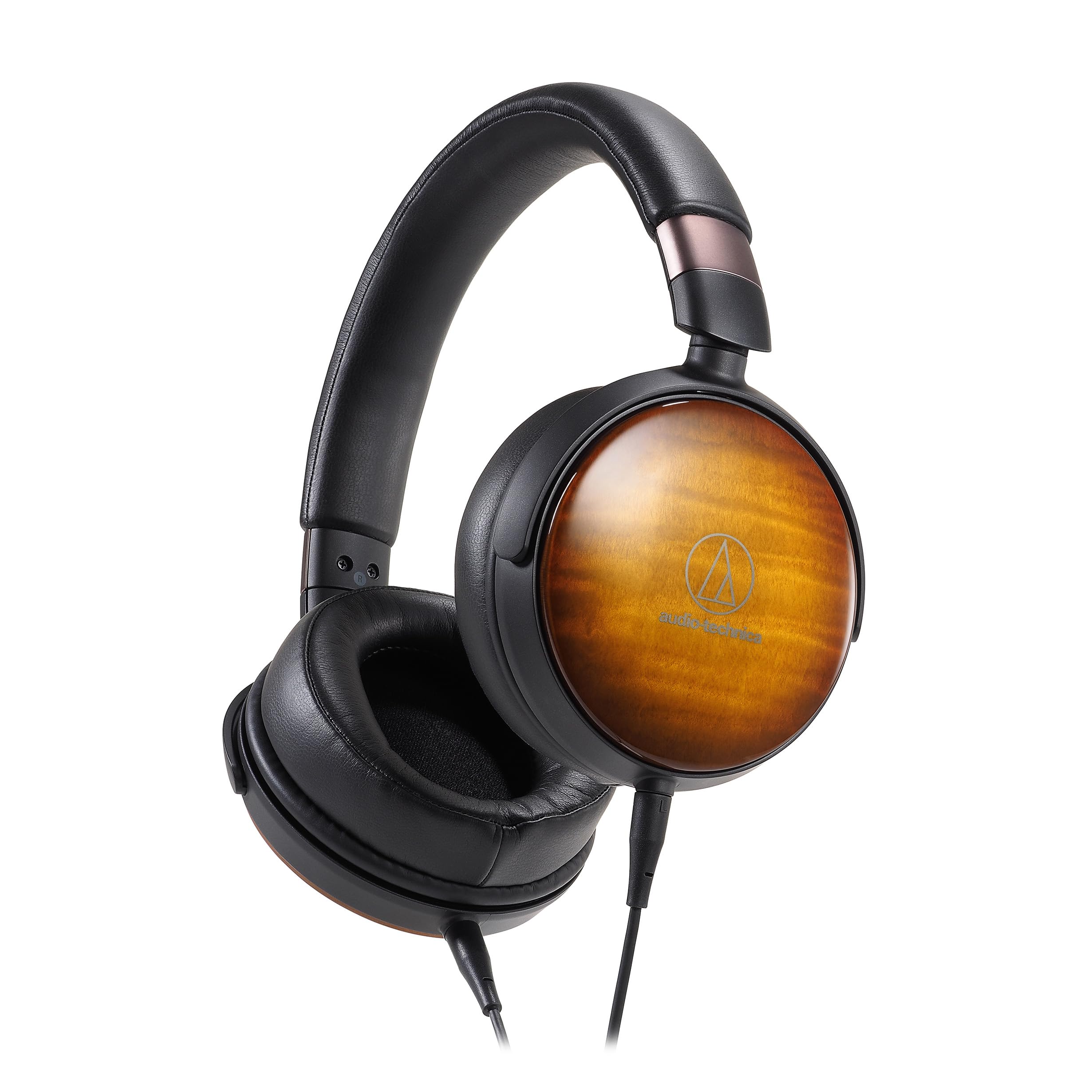
Japanese craftsmanship meets a 53mm diamond-like coated driver in a closed-back wooden shell.
The ATH-WP900 looks like an instrument and sounds like one. The ear cups are made of flame-grain maple, crafted by the guitar manufacturer Fujigen, with a thin veneer fused over solid machined maple. Inside, a 53mm driver uses a diamond-like carbon (DLC) coating on the diaphragm — the same rigid material used in high-end speaker tweeters — to improve high-frequency response without harshness. The frequency range (the span of pitches the driver can produce) stretches from 5 Hz to 50,000 Hz, well beyond the 20,000 Hz limit of human hearing, ensuring every upper harmonic in high-resolution tracks is reproduced cleanly. It weighs only around 243 grams, making it genuinely lightweight for a wooden full-size headphone.
Audio-Technica includes two detachable cables with A2DC connectors (their proprietary locking coaxial connection that twists to lock): a 1.2-meter cable with a 3.5mm plug and a second 1.2-meter cable with a 4.4mm 5-pole balanced plug. The wood housings produce a slightly warm, “bloomy” bass and an organic midrange, while the DLC coating brings a sparkly treble that owners say is “excellent for female vocals.” The soundstage on a closed-back is narrower than the open-back HD 660S2 or HD 800 S, but buyers find the tonal balance across the musical range “marvelous” and the ambiance reproduction very good for well-recorded music. The honest catch is that the plastic components on the yoke and headband feel less premium than the wood cups. The lack of a mic or inline remote is noticeable if you plan to take calls. The design, however, is the part everyone notices.
The wood resonance: The flame maple housing stiffens the structure and gives the midrange a natural, woody timbre that you simply cannot get from plastic or metal.
Choose these if: You want a gorgeous, portable closed-back that doubles as a conversation piece and delivers sparkling high-res treble. Best for vocal-centric or acoustic genres.
Pass if: You need a neutral, flat reference for mixing — the WP900 is intentionally musical and colored, not clinical.
4. Sennheiser HD 800 S

The largest dynamic driver ever used in headphones creates a soundstage that feels stadium-wide.
The HD 800 S is Sennheiser’s reference-class flagship, built around a 56mm ring radiator transducer (a dynamic driver with a ring-shaped diaphragm, not a dome). That massive driver is the biggest dynamic driver ever fitted to a headphone, and it moves more air than the 42mm driver in the HD 660S2 for a wider, airier sound. Combined with an innovative absorber technology that reduces unwanted frequency peaks, it delivers an open, airy soundstage that owners consistently describe as “stadium-like” or “like being in the same room as the performers.” The open-back earcups direct sound waves at a slight angle toward your ear, which tricks your brain into hearing a natural, spatial image rather than a cramped headphone sound. The headband is huge — and genuinely comfortable — but you need a larger head or some adjustment to get a perfect seal.
Sennheiser ships two cables: a single-ended cable with a 6.3mm (1/4-inch) plug and a balanced 4.4mm cable, both 9.8 feet long. You also get a USB flash drive with manuals and a cleaning cloth. Owners mention that the HD 800 S is ruthlessly revealing — it exposes poor recordings and requires a high-resolution source, a good DAC, and a powerful amplifier to really sing. With the right chain, the clarity and detail are superb. The honest trade-offs are significant: the bass is tight and punchy but not deep or boomy, so bassheads (listeners who want heavy, powerful bass) will feel under-served. The comfort is polarizing — some find it excellent for hours, others find the clamp and the sheer size slightly awkward. At this tier, you pay for the last 5-10% of performance, which is real but comes with diminishing returns.
The soundstage ceiling: No other headphone on this list places instruments with as much 3D separation as the HD 800 S. It is the benchmark for spatial audio.
Invest in these if: You have a dedicated desktop rig and want to hear every micro-detail in well-recorded classical, acoustic, or ambient music. The HD 800 S is the ultimate tool for critical listening.
Think twice if: You want a warm, bass-forward sound or a portable headphone — this pair demands a stationary, high-end setup and reveals the flaws in lower-quality files.
Understanding the Specs
Driver Size and Type
Driver size — measured in millimeters — is the diameter of the diaphragm that creates sound. Bigger drivers (42mm, 53mm, 56mm) move more air, which typically gives you deeper bass and a wider sense of space. The type matters more: a dynamic driver uses a single coil and magnet, while a balanced armature driver (common in IEMs) is smaller and more efficient across specific frequency bands. Hybrid designs like the FiiO FH9 combine both to get the punch of a dynamic driver with the detail of multiple armatures.
Balanced vs. Single-Ended Connection
A single-ended cable shares a ground wire between the left and right channels, which allows a tiny amount of crosstalk between them. A balanced cable gives each channel its own ground, which cancels out more noise and improves channel separation. The result is a quieter background and a wider, more focused stereo image. The most common balanced connectors are 2.5mm (often used on portable players), 4.4mm (the newer standard), and XLR (used on professional desktop gear). All four picks on this list include a balanced cable or plug option.
FAQ
Do I need a special amplifier for balanced headphones?
What does Hi-Res Audio certified mean?
Will balanced headphones sound better on a phone?
Is open-back or closed-back better for Hi-Res listening?
Can I use balanced headphones for gaming?
What is the difference between a balanced cable and a standard cable?
How long do high-res headphones last?
What is the difference between balanced armature and dynamic drivers?
Will these headphones work with a standard laptop?
What is the difference between 2.5mm and 4.4mm balanced connectors?
Final Thoughts: The Verdict
If you want one dependable pick, the balanced headphones hi res winner is the Sennheiser HD 660S2 because it delivers that warm, intimate vocal presence right from the start with a 4.4mm balanced cable included and a crowd-tested 42mm driver that sounds musical without being fatiguing. If you want defining clarity across instrument layers in a portable format, grab the FiiO FH9. And for the largest, most spacious soundstage available — one that feels like a live venue — the Sennheiser HD 800 S is the one to reach for.
How We Picked
We do not accept paid placement. Every pick is matched to a real buyer and a real use-case; we do not hands-on test units.
Sources & Methodology
Specifications: manufacturer listings and product documentation. Review insights: verified customer reviews, as of July 2026. Pricing: not shown on this page (it changes often); check the current price via the retailer link.
As an Amazon Associate, Gadgets Feed earns from qualifying purchases. This does not affect which products we feature.