
A yellowing palm frond is the first signal that your tree is starving for potassium and magnesium. Applying the wrong nitrogen-heavy lawn fertilizer to a palm tree can burn roots, trigger frizzle-top, and leave you with a tree that looks worse than when you started. The solution requires a specific ratio of nutrients — one that prioritizes potassium and manganese while keeping phosphorus low to avoid soil lockout.
I’m Min — the co-founder and writer behind Gadgets Feed. Over many hours, I’ve analyzed NPK ratios, micronutrient profiles, and slow-release technologies across dozens of palm-specific fertilizers to separate the formulas that actually green up fronds from those that just add nitrogen to the soil.
This guide walks you through the critical specs — from potassium percentages to chelated micronutrients — so you can pick the right best balanced palm fertilizer for your landscape without wasting money on filler ingredients.
How To Choose The Best Balanced Palm Fertilizer
Feeding a palm tree isn’t the same as feeding your lawn. Palms are heavy feeders of potassium and magnesium, and they suffer quickly if the nitrogen-to-potassium ratio is flipped. Understanding the numbers on the bag — plus the source of those nutrients — is the difference between a lush canopy and a frizzled mess.
NPK Ratio (The First Number Isn’t the Most Important)
The three numbers on the bag represent nitrogen (N), phosphorus (P), and potassium (K). For palms, the K number should be close to or higher than the N number. Look for ratios like 8-2-12 or 12-4-11 — high potassium supports cold hardiness, disease resistance, and frond strength. Phosphorus should stay low (the middle number) because palms don’t need much, and excess phosphorus can block micronutrient uptake in the soil.
Slow-Release vs. Quick-Release Technology
Granules that break down too fast release a nitrogen spike that burns roots and then washes away before the palm can use it. Slow-release coatings (like polymer-sulfur coating or XCU control-release technology) meter out nutrients over 6 to 12 months. This reduces application frequency and prevents the yellow-tip burn that quick-release synthetics often cause.
Micronutrient Profile (Magnesium, Manganese, Iron)
Macronutrients alone won’t fix a yellowing palm. Manganese deficiency causes frizzle-top — new fronds emerge stunted and tattered. Magnesium deficiency causes the lower fronds to turn yellow while the crown stays green. A balanced palm fertilizer must include chelated iron, magnesium sulfate, and manganese sulfate. The words “chelated” on the label indicate the minerals are stabilized for uptake even in alkaline soils.
Quick Comparison
On smaller screens, swipe sideways to see the full table.
| Model | Category | Best For | Key Spec | Amazon |
|---|---|---|---|---|
| Perfect Palm 7-14-40 | Granular | Winter recovery & cold resistance | 7-14-40 ratio with dual magnesium | Amazon |
| Leaves & Soul 8-2-12 | Slow-Release | Strong roots & disease resistance | 8-2-12 slow-release granular | Amazon |
| Espoma Palm-Tone 4-1-5 | Organic | Organic gardening & tropical plants | 4-1-5 with Bio-tone microbes | Amazon |
| Real Growers Palm 12-4-11 | Annual Feed | 12-month single-application feeding | 12-4-11 controlled release granules | Amazon |
| Jobe’s Palm Spikes 10-5-10 | Spikes | Mess-free, no-spill application | 10-5-10 time-release spikes | Amazon |
| Pennington 9-4-9 | Mid-Range | Hibiscus & queen palm combo | 9-4-9 with 3 chelated nutrients | Amazon |
| Down To Earth 6-2-8 | Organic | OMRI-listed organic palm food | 6-2-8 with feather & fish bone meal | Amazon |
In‑Depth Reviews
1. Perfect Palm 7-14-40 Dual Action

Perfect Palm’s 7-14-40 ratio looks unusual until you realize the middle number isn’t phosphorus — it’s potassium. That 40 percent potassium is the highest in this roundup, designed specifically to fortify palms against cold snaps, drought stress, and frond dieback. The formula includes dual forms of magnesium and iron for immediate and sustained uptake.
The 7-pound pail comes with a measuring scoop and claims to feed up to 14 palms with trunk widths of 2 to 6 inches. The 64-percent XCU control-release coating meters nutrients over a full season, which means one application replaces quarterly feedings. Customers report visible greening within two weeks after a freeze event.
The downside is the cost — this is a premium-tier purchase best suited for owners of multiple mature palms rather than someone feeding a single small potted sago. The resealable pail is a nice touch for storage, but the per-palm cost is still higher than bulk granular options.
Why it’s great
- Highest potassium content (40) for cold hardiness and stress recovery
- 64% XCU control-release technology feeds for months without burn
Good to know
- Premium pricing — most expensive per pound in this test
- Some find the scoop-to-palm ratio confusing for non-landscape use
2. Leaves & Soul 8-2-12 Slow-Release
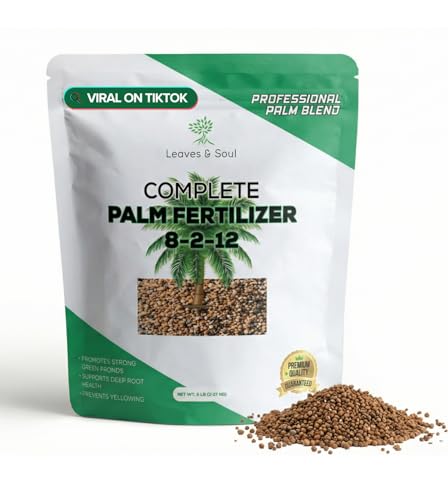
Leaves & Soul targets the sweet spot between balanced feeding and root safety with an 8-2-12 ratio that keeps nitrogen moderate and potassium high. The 8-2-12 blend is a classic palm formula because it provides enough N for green-up without triggering the frizzle-top that excess nitrogen can cause. The label adds magnesium and trace micronutrients missing from cheaper lawn-style fertilizers.
The slow-release granular format is straightforward — sprinkle around the drip line and water in. Customers who applied it to freeze-damaged palms in Florida noted visible new frond growth after rain activated the granules. The 5-pound bag covers multiple smaller trees or one medium-sized palm for a full growing season.
One bag arrived with a defective seal, which is a packaging quality concern. The price per pound sits mid-range, but the total outlay is reasonable for a targeted palm-specific feed. If you want reliable controlled-release without the sticker shock of premium brands, this is a solid middle path.
Why it’s great
- 8-2-12 ratio optimized for palm root health and frond strength
- Easy sprinkle-and-water application with no mixing required
Good to know
- Bag seal quality inconsistent — check before storing
- Higher price per pound compared to non-palm-specific blends
3. Espoma Palm-Tone 4-1-5 Organic
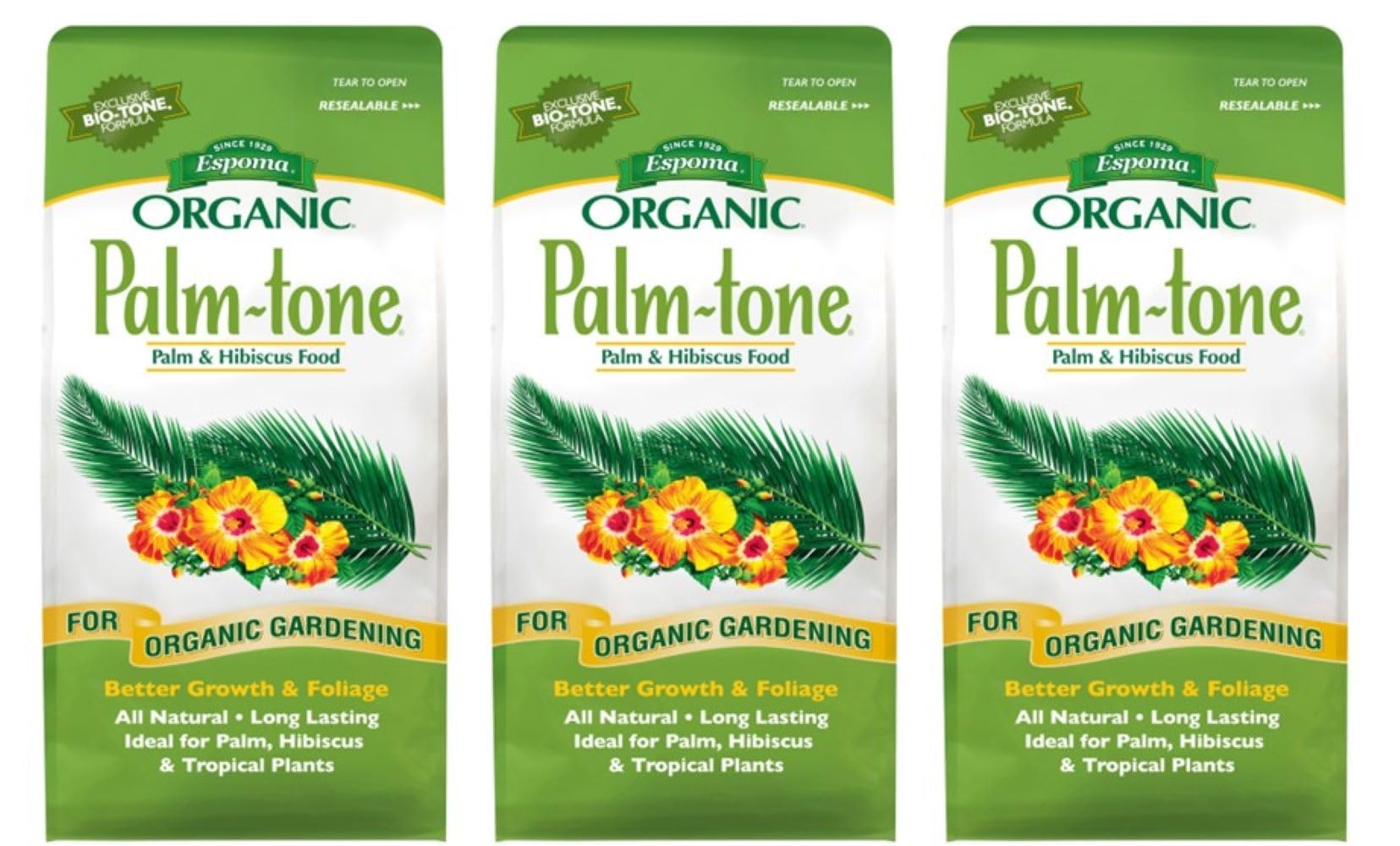
Espoma’s Palm-Tone is the organic standout in this lineup with a 4-1-5 analysis plus 5 percent calcium — a nutrient often missing from synthetic blends. The Bio-tone formula introduces beneficial microbes that break down organic matter in the soil, improving root zone activity for palms and hibiscus alike. It’s OMRI-listed and approved for organic gardening.
The granular formula is applied every three months for palms and monthly for tropical plants during the growing season. Customers report dramatic results on ailing hibiscus and yucca plants, with green-up within weeks. The barnyard odor is strong initially but fades after watering — a common trade-off with fish- and feather-meal-based organics.
The 4-1-5 ratio is lower in total NPK compared to synthetic competitors, so you need more frequent reapplication. For gardeners committed to organic soil management, the trade-off is worth it. The price per pound is higher than synthetic granulars, and the smell can be a problem if you’re entertaining outdoors shortly after applying.
Why it’s great
- OMRI-listed organic with calcium and Bio-tone microbes
- Proven results on hibiscus, palms, and yuccas in recovery
Good to know
- Strong barnyard smell that lingers for days after application
- Requires more frequent feeding than slow-release synthetics
4. Real Growers Ultimate Palm 12-4-11
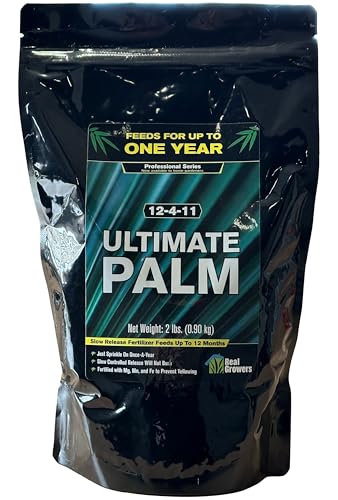
Real Growers positions its 12-4-11 formula as a set-it-and-forget-it solution for landscape palms. The controlled-release coating meters nutrients over 12 months from a single application — that’s one feed per year instead of the typical four. The NPK ratio is weighted toward higher nitrogen than some palm-specific blends, but the potassium at 11 still outpaces phosphorus comfortably.
The bag covers two average-sized palms for a full year, which translates to lower annual effort. The granules include magnesium, sulfur, iron, and molybdenum — a broad micronutrient spectrum that addresses deficiency symptoms simultaneously. Customers report palms shooting up with noticeably improved color within weeks of application.
The 2-pound bag is physically small, which makes it easy to handle but also means it runs out fast if you have more than two palms. The lack of clear application instructions for in-ground palms — the bag skews toward container guidance — is a frustration among buyers. You may need to look up recommended rates online for landscape trees.
Why it’s great
- Single annual application for 12 months of continuous feeding
- Includes molybdenum and iron for comprehensive micronutrient support
Good to know
- Small 2-pound bag covers only two palms per year
- Application guide is unclear for in-ground landscape palms
5. Jobe’s Palm Spikes 10-5-10 (Pack of 3)

Jobe’s takes the guesswork out of measuring by delivering a 10-5-10 formula in pre-formed spikes you hammer into the soil. Each package contains 5 spikes, and this listing bundles 3 packages for a total of 15 spikes. The spike format eliminates the dust cloud and spill risk of granular spreading — just tap them into the ground around the drip line.
The 10-5-10 ratio includes sulfur, magnesium, iron, and zinc as secondary nutrients. Time-release technology feeds continuously for about eight weeks per spike, meaning three to four applications per year. Customers consistently describe rapid results — pods appearing within days and drooping fronds perking up noticeably.
The spikes are effective but not cheap on a per-spike basis. For a single young palm, the cost per season adds up faster than a bulk granular bag. Also, the directions on the package tend to overestimate how many spikes you need per tree, so follow the lower recommendation to avoid overfeeding.
Why it’s great
- Completely mess-free application — no measuring or sprinkling
- Precise nutrient delivery at the root zone with time-release coating
Good to know
- Higher per-application cost than granular alternatives
- Package may suggest more spikes than necessary per tree diameter
6. Pennington Ultra Green 9-4-9

Pennington’s 9-4-9 formulation is designed for palms and hibiscus alike, with a balanced NPK that supports both foliage and flower production. The formula includes three chelated essential nutrients — iron, magnesium, and additional trace minerals — that remain bioavailable even in alkaline or sandy soils common in coastal palm regions.
The 5-pound bag feeds for up to four months per application, making it a twice-per-year schedule for most mature palms. The granular format has a water-retention additive that helps hold moisture in sandy soil, a subtle but useful feature for drought-prone areas. Customers who have used the product for years on queen palms and hibiscus report consistent results with twice-annual application.
The 9-4-9 ratio is lower in potassium than premium palm-specific blends like 8-2-12 or 12-4-11. If your palm is already showing deficiency symptoms like yellowing lower fronds or frizzle-top, you may need a higher-K product for recovery. This is best as a maintenance feed for healthy palms rather than a rescue formula.
Why it’s great
- Three chelated micronutrients for uptake in challenging soil conditions
- Water-retention formula helps maintain moisture in sandy or dry soil
Good to know
- Moderate potassium level — not ideal for palms showing deficiency symptoms
- Best suited as a maintenance feed for healthy established trees
7. Down To Earth 6-2-8 Organic

Down To Earth delivers a 6-2-8 organic formula made from feather meal, fish bone meal, basalt, langbeinite, volcanic ash, and kelp meal. The 6-2-8 ratio is lower in total NPK than synthetic competitors, but the organic matter feeds soil biology in ways that synthetics cannot. It’s OMRI-listed for certified organic use.
The 5-pound bag offers excellent coverage for the price point, making it one of the most affordable organic palm fertilizers available. The granules range from chunky to fine, which provides both immediate and slow-release nutrient availability. Customers report explosive growth on non-palm plants like tomatoes and squash, which speaks to the broad-spectrum organic base.
The fish-based ingredients produce a strong odor that several customers describe as overpowering and unpleasant — one reported the smell lingered for two weeks. This makes it unsuitable for use before outdoor gatherings or in confined spaces near patios. The smell is a dealbreaker for anyone with a small yard or close neighbors.
Why it’s great
- Affordable organic formula with diverse natural ingredient sources
- OMRI-listed for certified organic gardens and landscapes
Good to know
- Strong fish-and-barnyard odor that can persist up to two weeks
- Lower NPK numbers require more frequent application than synthetics
FAQ
Can I use regular lawn fertilizer on my palm trees?
What does frizzle-top look like and what causes it?
How often should I fertilize my palm trees?
Do organic palm fertilizers work as well as synthetic ones?
Final Thoughts: The Verdict
For most users, the best balanced palm fertilizer winner is the Leaves & Soul 8-2-12 because it nails the ideal potassium-to-nitrogen ratio for palm health without the premium price of specialist brands. If you want the highest potassium and cold-hardiness boost for multiple palms, grab the Perfect Palm 7-14-40. And for organic gardeners who value soil biology over raw NPK numbers, nothing beats the Espoma Palm-Tone 4-1-5.