
Our readers keep the lights on and my morning glass full of iced black tea. As an Amazon Associate, I earn from qualifying purchases.
Specs are compiled from manufacturer listings and verified buyer reviews and can change over time — please confirm the key details on the product page before buying.
You want a living room that feels like a humid jungle hideaway, and a banana plant houseplant delivers that fast — its broad, paddle-shaped leaves can unfurl a new leaf every few days in good light. The real challenge is picking a variety that fits your space and patience, because a dwarf that tops out is a very different plant from one that wants 8 feet of headroom.
I’m Min — the founder and writer behind Gadgets Feed. This guide is built by comparing the manufacturers’ published specifications and the patterns across verified customer reviews, so you get each pick’s real strengths and trade-offs instead of marketing spin.
You’ll find the best Banana Plant Houseplant choices ranked by growth habits, mature size, and indoor suitability, so you can pick the one that actually fits your home.
Our Picks at a Glance


How To Choose The Best Banana Plant Houseplant
To choose a banana plant, match the variety’s mature size to your room, then be honest about the light you can offer. Every banana plant wants warmth and sunshine, but the dwarf types are the ones that behave indoors.
Match the mature height to your space
The single biggest buying mistake is ignoring the mature size. A “super dwarf” like the Tropicana stays around 3-6 feet, which fits a bright corner, while a standard Dwarf Cavendish reaches 8-10 feet and will quickly own a room. Read the mature-height spec, not the cute 3-8 inch baby that arrives in the pot.
Full sun is non-negotiable
Nearly every banana variety in this guide asks for full sun. Indoors, that means a south-facing window with direct light for several hours a day, or a strong grow light. If you stick the plant in a dark corner, expect slow growth and pale leaves — these are tropical plants that photosynthesize hard.
Quick Comparison
| Model | Best For | Mature Height | Arrival Size | Count | Amazon |
|---|---|---|---|---|---|
| Goldfinger Dwarf Banana★ Best Overall | Cold & wind-resistant growing outdoors | 8 ft | 3″-8″ in 2″ pots | 1 | Amazon |
| Manzano Apple BananaBest Value | Heirloom apple-flavored fruit | — | Varies by batch | 1 | Amazon |
| Dwarf Apple BananaBest Backyard | Backyard fruit with large bunches | 8′-10′ | — | 1 | Amazon |
| Grand Nain (4 Pack) | High yield in compact pots | — | 2-inch pots | 4 | Amazon |
| Ice Cream Banana | Ornamental blue-tinted foliage | — | Starter size | 1 | Amazon |
| Dwarf Cavendish (2-Pack) | The classic indoor dwarf | 8-10 feet | 3-8 inches in 3″ pot | 2 | Amazon |
| Truly Tiny Tropicana (2-Pack) | Compact 3-6 ft container growing | 3-6 feet | 3-8 inches in 3″ pot | 2 | Amazon |
| Grand Nain (2-Pack) | Fast-growing fruit production | 8-10 feet | 3-8 inches in 3″ pot | 2 | Amazon |
| American Plant Exchange Dwarf | Large, showy indoor specimen | — | 6-inch pot | 1 | Amazon |
In‑Depth Reviews
1. Goldfinger Dwarf Banana Plant Tree – Fhia-01
Our pick — over 4★ from 60+ verified ratings; the strongest balance of quality and price.
The hardy dwarf that shrugs off wind and keeps growing indoors for over a year
If you want a banana you can actually keep as a living-room resident instead of a summer experiment, this is the one. Buyers report it’s still going strong a full 12 months in, thriving indoors in Western Washington — proof it adapts to a home environment rather than sulking in a pot. It’s a true dwarf, reaching about 8 feet tall, so it delivers that tropical canopy without swallowing your ceiling.
The flavor is the fun part: the maker calls it a dessert banana with a sweet-acid apple flavor, which makes it a conversation piece even before it fruits. It arrives as a young plant between 3-8 inches tall in a 2-inch pot, so be ready to pot it up quickly. It wants full sun, moderate watering, and sandy soil, with a USDA Hardiness Zone of 8 for outdoor stays.
Reviews sum it up well: “12 months on and it’s still growing.” The main honest caveat is shipping quality — some plants arrived bone dry with broken leaf stems, so a rough transit can set back an otherwise sound plant. That’s the lottery of live plants, not a strike against the variety itself.
What wins people over
- Growers praise it most for steady growth and overall quality — it keeps pushing out leaves month after month
- Backyard-friendly at 8 ft, and it comes back every year
- Sweet-acid apple flavor makes it a true edible, not just decor
What to watch
- An occasional shipment arrives bone dry with snapped leaf stems, so inspect on arrival
- Prefers full sun, which means a bright window at minimum indoors
Your pick if: you want a dependable dwarf that grows happily indoors for a year-plus and can also live outside in mild zones.
Think twice if: you can’t offer full sun — growth will stall without it.
2. Manzano Apple Banana Plant
An heirloom apple-flavored banana that earns its keep in fruit salads
This one is for the grower who actually wants to eat the payoff. The maker pitches it as an apple-flavored dessert banana that’s delicious as a hand fruit, tossed in fruit salads, or baked into breads — a versatile crop, not just a leafy backdrop. It’s an heirloom variety that wants full sun, moderate watering, and loam soil, with a Zone 8 rating.
Buyers consistently confirm the plant’s health on arrival — one detailed report describes a healthy 6-inch plant with 5 green leaves and no root rot, exactly what you want from any mail-order nursery. Another set of plants arrived well-packed with zero stress despite 100°F heat in zone 9b, and both put out new leaves within weeks.
The honest trade-off is size and speed. Some plants arrive smaller than the photos suggest, and growth reports are mixed — a few owners saw their plants die quickly. As a buyer, that’s the reality of a live starter: the health is strong, but the outcome still depends on your care and your light.
Health first: buyers rate the plant’s health and appearance positively, and the value holds up for what you get.
Set expectations: plant size varies from batch to batch, so don’t judge the listing photos too literally.
Reach for it if: you want an heirloom edible with genuine apple flavor and don’t mind a starter-sized plant.
Look elsewhere if: you need a guaranteed big plant immediately — size can disappoint.
3. Dwarf Apple Banana – Dwarf Hawaiian Apple Banana
A dwarf Hawaiian that rewards patience with 8-to-10-foot stature and large bunches
Buyers describe this as the “perfect backyard banana” — a dwarf Hawaiian apple variety with very good flavor that matures to 8-10 feet and produces nice large bunches. It’s an heirloom type that wants full sun, moderate watering, and sandy soil, so it’s built for a garden bed in a warm zone rather than a dim apartment.
The growth story is genuinely encouraging: one owner reports a previous purchase from the same nursery reached 4 feet high by the following summer, and another says the plant arrived already putting out a new leaf despite a rough postal journey. That resilience — arriving “a little sad” and perking right up with water and light — is the theme across the health feedback.
The honest catch is a labeling question that a few sharp-eyed buyers raised, wondering whether the red-leafed plant they received was truly an apple banana. If you’re buying purely for a specific fruit variety, that’s worth knowing. For most buyers, though, the healthy growth and backyard performance carry the day.
Resilient grower: buyers consistently note healthy arrival and quick new-leaf growth.
Know the gamble: a couple of owners questioned whether the variety matched the label, so buy for the grow, not the exact cultivar.
Your pick if: you have outdoor space in a warm zone and want a dwarf that still delivers big bunches.
Think twice if: you need certainty about the exact cultivar — labels have been questioned.
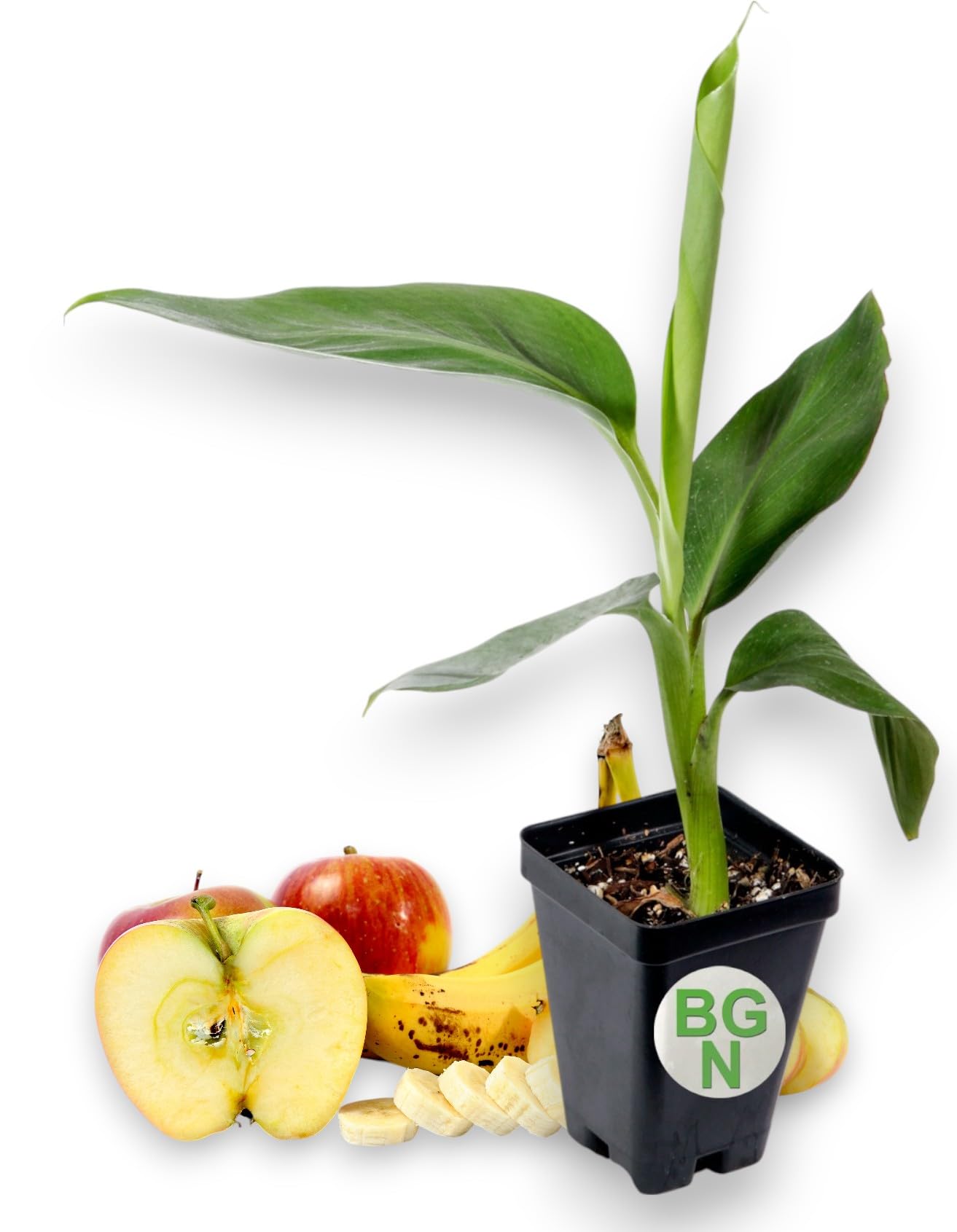
4. Banana Trees Grand Nain (4 Pack)

Four self-fruitful starters that let you hedge your bets on survival
Here’s the smart logic of buying a 4-pack: even if one starter sulks, three more are growing. The Grand Nain is a high-yield, self-fruitful variety — it doesn’t need cross-pollination, so a single plant can still produce fruit. That’s a meaningful spec for anyone who only has room for one pot, and the maker touts rapid maturity and disease resistance.
Buyers confirm the quality with fast arrival, clear instructions, and healthy root systems — one owner potted three in 1-gallon terracotta pots and one in a 20-gallon pond liner, and noted three of the four already had pups (baby offshoots) alongside the main stem. The larger pot was clearly the happiest, which tells you these plants reward generous root space.
The durability is the mixed story here, and it’s the most-discussed point in the reviews. Some owners lost all four within days despite following instructions, while others saw theirs thrive. Fragility is the trade-off of a young starter plant — treat these gently, pot them quickly, and don’t shock them.
The strong points
- Quality and health earn the most praise — green, growing, well-rooted arrivals
- High-yield, self-fruitful, and disease-resistant for easier fruit
- Four plants = four chances at success
The weak points
- Durability is genuinely mixed — some owners lost plants within days
- Starters can look tiny; growth depends heavily on pot size and care
Reach for it if: you want the best odds and the most plants per order, and you’re ready to pot up immediately.
Look elsewhere if: you need a single guaranteed survivor — these young starters demand care.
5. Ice Cream Banana Tree – Musa Acuminata Balbisiana
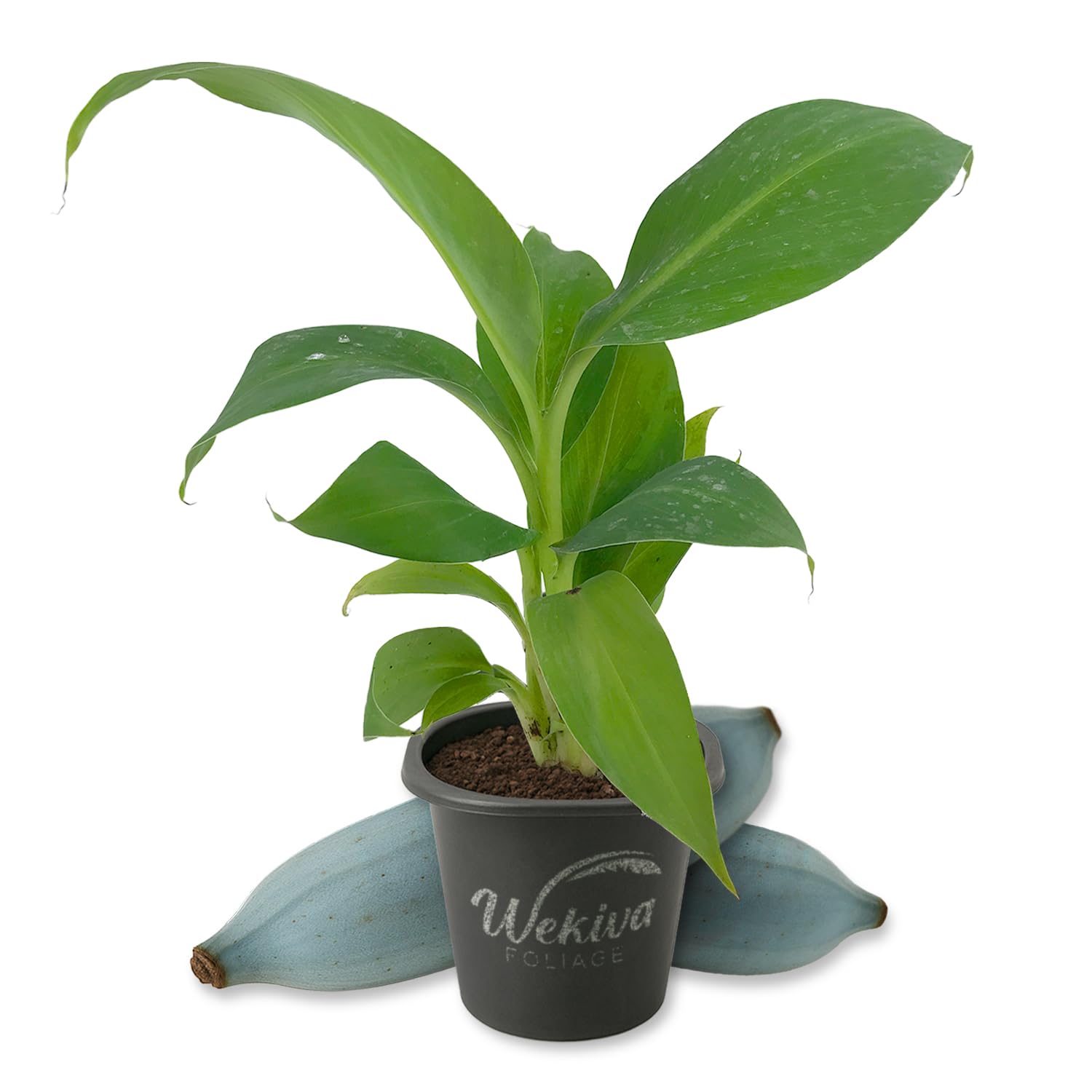
The Blue Java lookalike with blue-undertone foliage and a tall, arching silhouette
This is the pick for pure visual drama. The maker describes long, smooth leaves with green hues blended with blue undertones, and a tall, arching form with pseudostems that stack in subtle rings. It’s essentially the ornamental showpiece of this list — the kind of plant that draws the eye even before it fruits, and it’s flagged for air purification as a bonus.
Buyers who got a healthy one were delighted: one called it a “fantastic buy,” praising the lovely quality and packaging and noting the tall size for the next pot. Another was “so excited” that it arrived ahead of schedule, well-packaged, and green. The Blue Java nickname even shows up in the review headers, which tells you what people are hoping to grow.
The honest reality is that a weaker starter can struggle — one reviewer noted a “very weak plant” that died within a month. Given the 16-ounce shipping weight and starter size, this one rewards gentle handling and immediate potting. It wants full sun and evenly distributed moisture.
Pure eye candy: the blue-tinted foliage and arching form make it the most ornamental of the group.
A fragile start: survival is a coin flip on shipping stress, so buy it ready to nurture.
Your pick if: you want the most striking foliage and are confident in your plant-nursing skills.
Think twice if: you’re a first-time plant owner — the weak-starter reports are real.
6. Dwarf Cavendish Banana Tree (2-Pack) by Wellspring Gardens
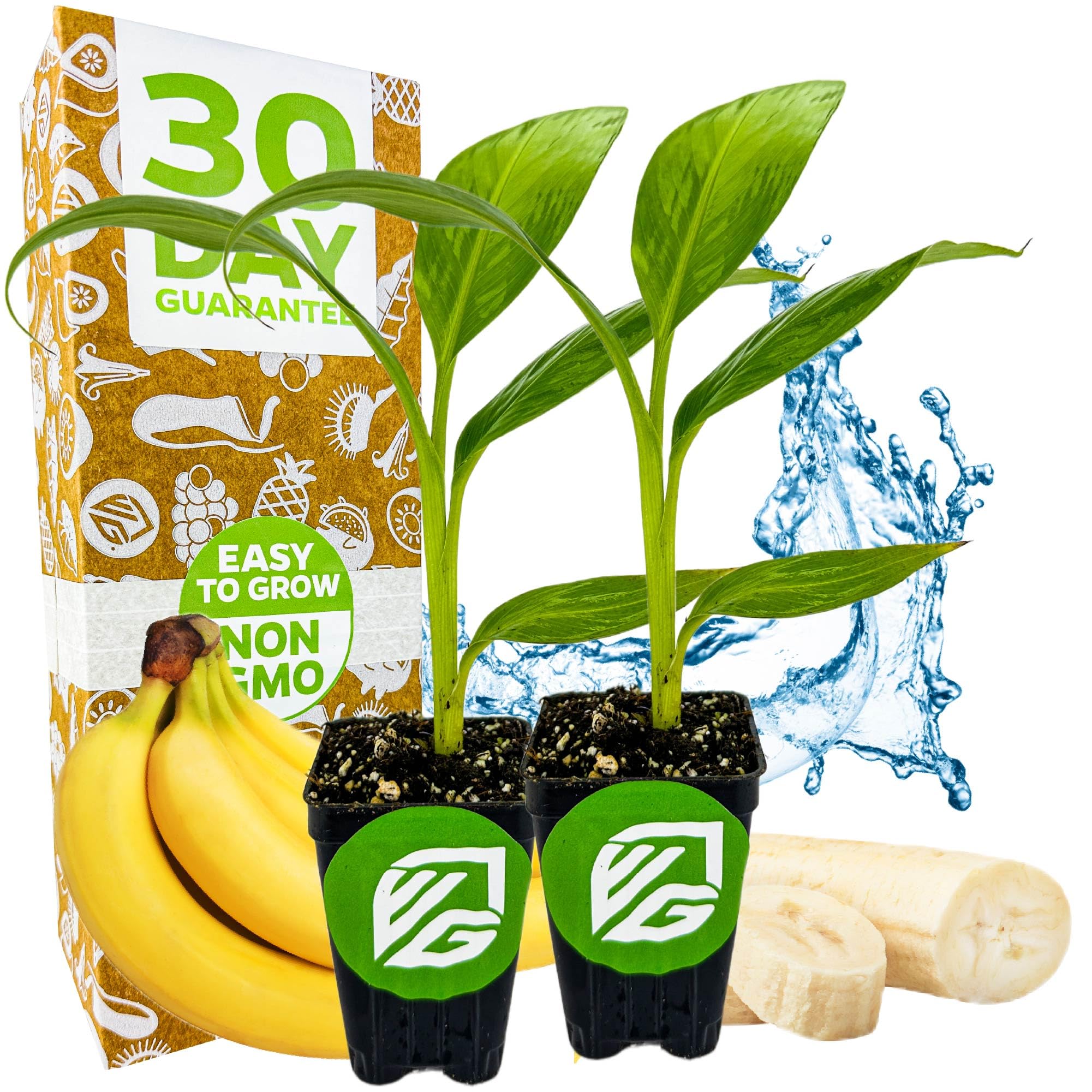
The classic edible dwarf — the one gardeners buy twice
This is the banana everyone pictures: the classic Dwarf Cavendish, sold as a 2-pack, with a mature height of 8-10 feet and a dense feeding schedule spelled out in the specs. The maker details a 3:1:6 N/P/K fertilizer ratio and weekly doses, which tells you this plant responds aggressively to feeding. It’s GMO-free and low-maintenance, sized for both indoor and outdoor life.
The growth reports are the headline. One owner says the plant tripled in size in 2 months with good soil and banana fertilizer, and another calls it a “great banana plant. Buying again.” A Kansas grower describes a slow start that exploded into a big healthy plant after moving to the porch with daily misting — a reminder that patience and light matter more than anything else.
The honest catch is that plant health is the most-discussed topic, and it’s split. Some owners lost theirs within two weeks despite proper care, while others saw weekly new leaves. This 2-pack is the single most-reviewed option here, and the lesson is consistent: give it light, give it fertilizer, and be patient through the slow start.
Why it’s the classic
- Growing is the top praise — owners mention new leaves every few days
- Tripled in size in 2 months for one gardener
- 2-pack doubles your odds and your foliage
The patience test
- Health is mixed — some plants die within weeks despite good care
- Needs regular feeding and full sun to perform
Reach for it if: you’re ready to feed, water, and wait — the growth payoff is real.
Look elsewhere if: you want a zero-effort plant; this one asks for fertilizer and sun.
7. American Plant Exchange Dwarf Banana Plant

The big arrival — a 5-pound potted plant that shows up already substantial
Most banana starters arrive as tiny slips in 2-inch pots, but this one is different: it ships as a live plant in a 6-inch pot weighing 5 pounds. That’s a real head start. Buyers repeatedly describe it as beautiful, larger than expected, with one noting it came about two feet tall with another sprout already forming. For instant indoor jungle impact, this is the pick.
It’s a Super Dwarf Cavendish, good for bright, indirect to full sunlight, and rated for both indoor and outdoor use. The 5-pound arrival weight means you’re getting a plant with an established root system, not a cutting that might or might not take. One buyer who’d wanted one “for many years” called it beautiful and larger than expected, well-packaged even in cold weather.
The honest concern is that the biggest arrivals also have the biggest risk of transit stress. A few plants arrived wilted with dry soil and dark, crinkled leaves, and plant health is the most-mentioned negative. Check the forecast before ordering in winter, and be ready to give a stressed plant recovery time.
Instant impact: appearance and generous size are the top positives — this looks like a real plant, not a starter.
Shipping gamble: the larger the plant, the harder the journey; some arrived distressed and wilted.
Your pick if: you want a substantial, show-ready plant that fills a corner immediately.
Think twice if: you’re ordering in freezing weather — transit stress is the biggest risk.
8. Truly Tiny Banana Tree (2-Pack) by Wellspring Gardens
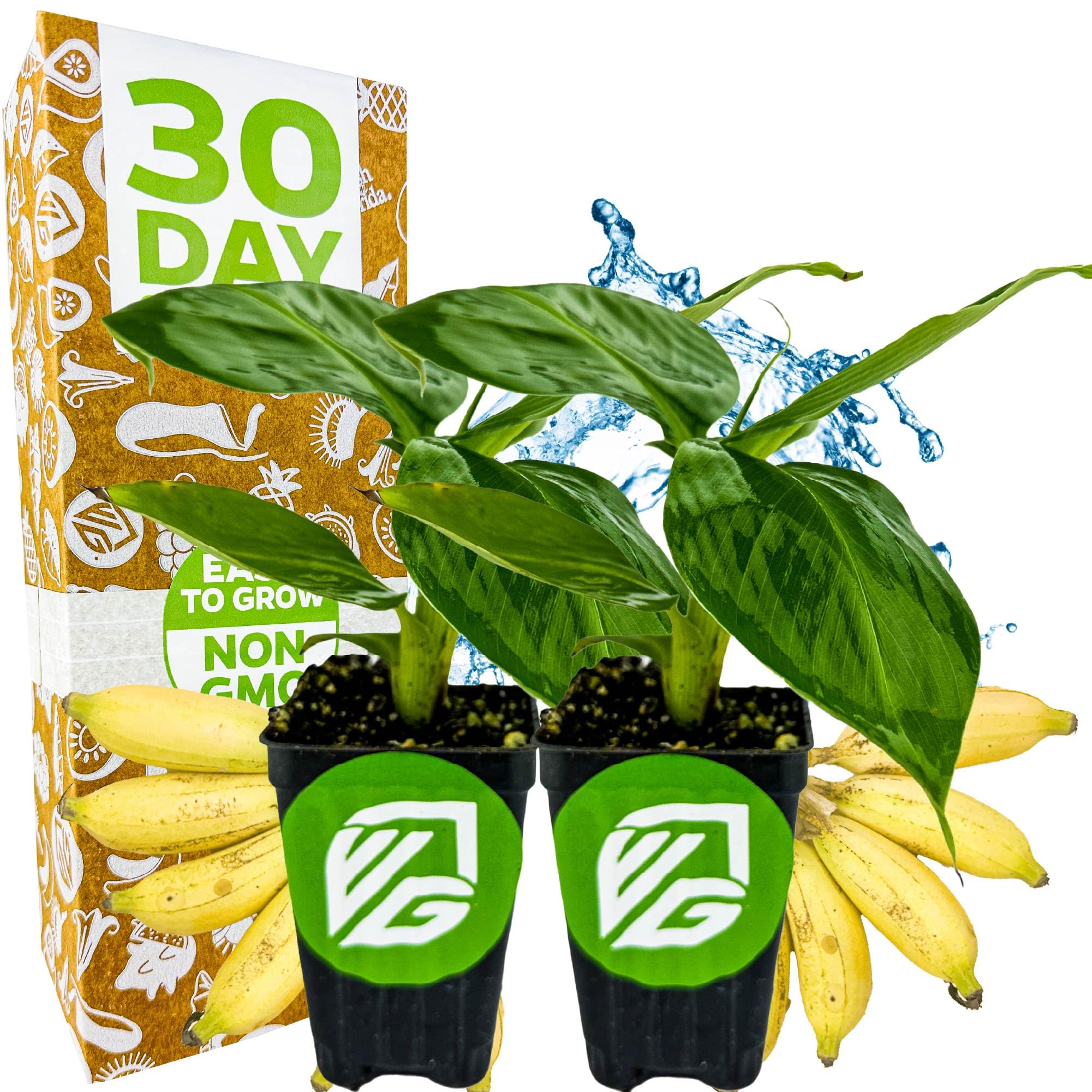
The maroon-leaved super dwarf that tops out at a table-friendly 3-6 feet
If ceiling height is your problem, this is the answer. The Truly Tiny Tropicana is a super dwarf that matures to just 3-6 feet, making it a genuine container plant rather than a future tree. It’s the only variety here that won’t outgrow a bright room, and the leaves develop captivating maroon and purple coloration as they age — a unique look no other pick matches.
It wants bright, indirect light to partial shade, loamy soil, and regular heavy watering, with a Zone 8-11 range. The 2-pack arrives as 3-8 inch plants in 3-inch pots. Quality is the top praise, and one buyer’s story captures the arc perfectly: initially disappointed with just two leaves and no growth, then thrilled after transplanting three times — the plant became lush and produced a new plant, earning a revised 5-star verdict.
The honest trade-off is that growth is genuinely mixed. Some plants wilted and died quickly, and a few buyers felt the tiny size didn’t match the value. The company won loyalty for replacing a dead plant quickly, which matters when you’re buying living things sight unseen.
Why it fits small homes
- Only 3-6 feet mature height — stays a tabletop plant
- Striking maroon/purple leaf color
- Quality and health are the top positives
The small print
- Growth is split — some plants thrive, some wilt fast
- Arrival size can feel tiny for the money
Reach for it if: you’re short on space and want a colored-leaf super dwarf you can keep on a plant stand.
Look elsewhere if: you want a fast, guaranteed grower — this one tests your patience.
9. Gran Nain Banana Tree (2-Pack) by Wellspring Gardens
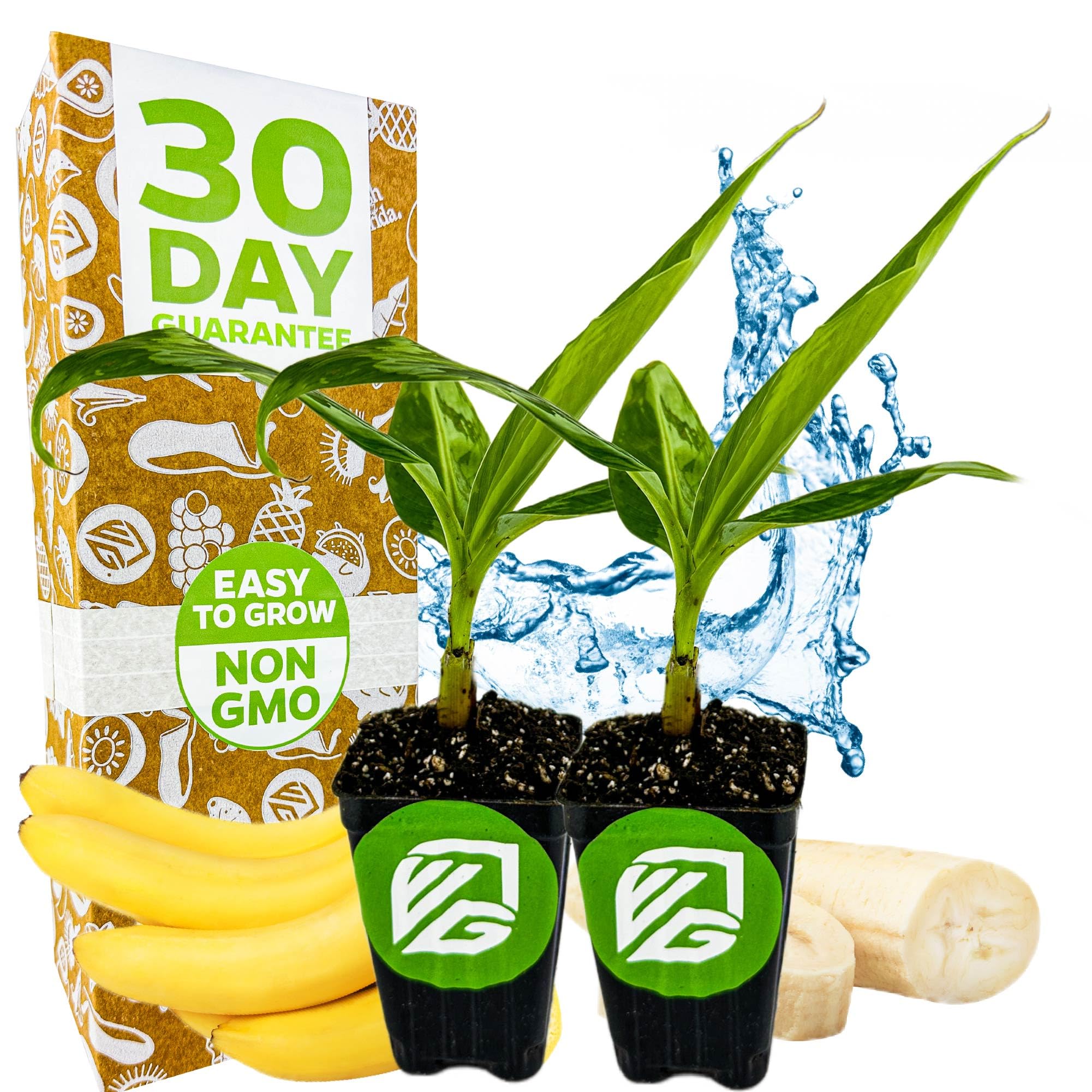
The heavy fruiter that went from 8 inches to a 10-foot tree in 18 months
This is the grower’s banana, with the most spectacular success story in the whole list: a Central Florida owner watched a well-packaged 8-inch plant with three leaves grow into a 10-foot and an 8-foot tree in just 1.5 years, fruiting about 120 bananas on each. It’s a GMO-free Grand Nain with an 8-10 foot mature height, the same one that dominates supermarket shelves.
Growing speed is the top praise, with multiple buyers reporting new leaves sprouting every week. The specs back it up: it wants full sun, regular watering, and a 3:1:6 fertilizer ratio, with 1/4 to 1 teaspoon weekly depending on pot size. Another owner called it a “great investment” after it grew from a small plant to a large tree in one year and produced its first bunch.
The honest caveat is identical to the Cavendish: plant health is split, with some seeing theirs die within two weeks. Cold snaps below 35°F can damage fall fruit, and indoor zone 6 growers will lose the top growth each winter and regrow from rhizomes in spring. It’s a plant that rewards commitment.
The headline numbers
- Fastest growth story — 8″ to 10 feet in 1.5 years
- ~120 bananas per tree for a dedicated Florida grower
- Growing speed is the most-praised aspect
The commitment
- Health is mixed — some plants die within two weeks
- Cold-sensitive; bring indoors or expect winter die-back
Your pick if: you want a serious fruiting project with the best per-plant growth genetics here.
Think twice if: you lack full sun or a warm zone — this one is a commitment.
Understanding the Specs
Mature Height
The single most important spec for a banana plant houseplant. A super dwarf like the Tropicana stays around 3-6 feet and suits a table or small corner, while standards like the Dwarf Cavendish and Grand Nain reach 8-10 feet and need real floor space and high ceilings. Match the mature height to your room, not the cute baby plant in the pot.
USDA Hardiness Zones & Cold
Banana plants are tropical and freeze-sensitive. Most picks here are rated for zones 8-11, and the Wellspring plants explicitly warn against freezing temperatures below 35°F. Indoors this matters less, but for outdoor summers or patio stays, knowing your zone tells you whether the plant lives year-round or regrows each spring.
FAQ
Which banana plant stays small enough for an apartment?
How much light does an indoor banana plant need?
Will my banana plant actually produce fruit indoors?
How big will the plant be when it arrives?
What is the difference between a dwarf and a super dwarf banana?
How often should I water and fertilize my banana plant?
Why did my banana plant die within a few weeks?
Can I keep a banana plant outside in summer?
Final Thoughts: The Verdict
The best Banana Plant Houseplant winner is the Goldfinger Dwarf because it proves it can live indoors for a full year while also handling outdoor wind and cold. If you want the classic edible dwarf that pays off with fertilizer and patience, grab the Dwarf Cavendish 2-Pack. And for small spaces, the Truly Tiny Tropicana is the compact, colored-leaf pick to reach for.
How We Picked
We do not accept paid placement. Every pick is matched to a real buyer and a real use-case; we do not hands-on test units.
Sources & Methodology
Specifications: manufacturer listings and product documentation. Review insights: verified customer reviews, as of August 2026. Pricing: not shown on this page (it changes often); check the current price via the retailer link.
As an Amazon Associate, Gadgets Feed earns from qualifying purchases. This does not affect which products we feature.