
A bandsaw blade is the single most critical component determining whether your cuts are straight, smooth, and safe or wandering, burning, and frustrating. The wrong TPI for your material or a blade that dulls after a dozen cuts turns a precise tool into an unreliable one. Choosing the right blade means understanding the interplay between tooth geometry, material composition, and blade length specific to your machine.
I’m Min — the co-founder and writer behind Gadgets Feed. I’ve spent countless hours analyzing tooth profiles, steel grades, and weld quality across dozens of bandsaw blade options to separate the real performers from the ones that just look sharp on paper.
This guide distills that research into actionable advice, helping you match the right blade to your saw and material. I’ve focused on the specs that matter most: TPI, blade thickness, and steel type to identify the best bandsaw blade for every cutting scenario.
How To Choose The Best Bandsaw Blade
Selecting a bandsaw blade requires matching three core variables to your saw model and the materials you cut most often. Ignore any single variable and you risk poor cut quality, premature dulling, or even a broken blade mid-operation.
Match Blade Length and Width to Your Saw
The length must match your machine’s wheel circumference exactly — a 44-7/8-inch blade will not fit a saw designed for a 93-inch blade, and vice versa. Width determines the minimum radius you can cut: wider blades (1/2-inch and above) track straighter for resawing and straight cuts, while narrower blades (1/4-inch and under) allow tighter curves but are more prone to wander under heavy feed pressure.
Select the Right TPI for Your Material
Tooth density dictates cut finish and chip clearance. For thin metal or plastic, you need 14 to 18 TPI to prevent tooth strippage. For thick hardwoods or resawing, 3 to 6 TPI provides faster material removal and less clogging. Variable-tooth blades (like 10/14 TPI) bridge both worlds, handling thin-walled tubing and solid bar stock without excessive vibration.
Choose the Steel Grade for Durability
High-carbon steel blades are affordable and work well for wood and non-ferrous metals, but dull quickly on ferrous metals. Bi-metal M42 blades combine a flexible spring-steel back with a high-speed steel tooth edge, resisting heat and wear much longer. For production metal cutting or abrasive materials, bi-metal is the only reliable choice.
Quick Comparison
On smaller screens, swipe sideways to see the full table.
| Model | Category | Best For | Key Spec | Amazon |
|---|---|---|---|---|
| Imachinist S933414 | Premium Bi-Metal | Metal cutting & high-volume fab | 93″ x 3/4″ x 10/14 TPI, M42 | Amazon |
| LENOX 5-Pack | Premium Porta-Band | Portable band saw, metal cutting | 44-7/8″ x 1/2″ x 14 TPI, 5-pack | Amazon |
| Timber Wolf 1/2″ x 93-1/2″ | Premium Resaw | Thick stock resawing, hardwoods | 93-1/2″ x 1/2″ x 4 TPI, alloy steel | Amazon |
| Timber Wolf 1/4″ x 93-1/2″ | Premium Detail | Tight radius curves, intricate work | 93-1/2″ x 1/4″ x 6 TPI, alloy steel | Amazon |
| POWERTEC 3PK | Mid-Range Wood | General woodworking assortment | 59-1/2″ assortment, 1/8″ to 3/8″ | Amazon |
| FOXBC 3-Pack | Value Porta-Band | Portable band, pipe & structural | 44-7/8″ x 1/2″ x 18 TPI, M42 3-pack | Amazon |
| AYAO 2PK | Budget Wood | Entry-level, wood & plastic cutting | 80″ x 1/2″ x 4 TPI, 2-pack | Amazon |
In‑Depth Reviews
1. Imachinist S933414 M42 93″ x 3/4″ x 10/14 TPI Bi-Metal Blade
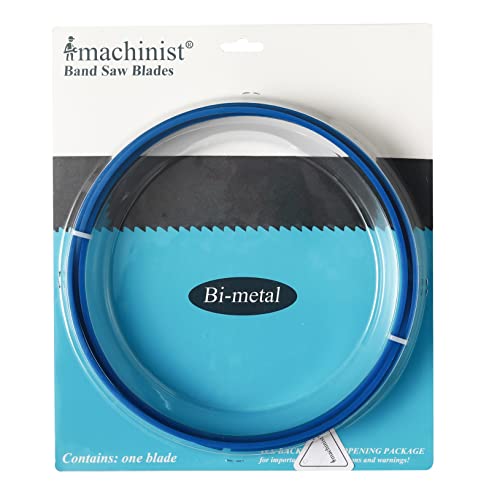
The Imachinist S933414 is a 93-inch bi-metal blade built for serious metal-cutting duty. Its M42 high-speed steel tooth edge resists heat deformation far better than carbon steel, and the 10/14 variable-tooth pattern reduces vibration when cutting thin-wall tubing, pipe, and solid bar stock in a single pass. At 0.035 inches thick, the blade offers enough body stiffness to maintain a straight kerf even under aggressive feed pressure.
Real-world reports from welders and fabricators show this blade lasting one to three years of regular use cutting stainless, mild steel, and DOM tubing — often without coolant. The weld joint is consistently smooth, and the blade tracks true on 7×12 horizontal bandsaws and similar machines. Users cutting 2-inch DOM with 0.250-inch wall thickness report over 400 straight, accurate cuts before noticeable dulling.
For the price of a single premium-brand blade, the Imachinist delivers M42-grade longevity that rivals blades costing twice as much. The variable TPI design is the standout feature, letting you switch between thin profiles and solid stock without changing blades mid-job. It is not the best choice for strictly wood resawing, but for metal fabrication, it is a remarkably durable workhorse.
Why it’s great
- M42 bi-metal construction handles ferrous metals and stainless with ease
- 10/14 variable TPI eliminates vibration on thin-wall materials
- Exceptional longevity — users report years of service without coolant
Good to know
- Not optimized for wood cutting or resawing thick lumber
- Some users report occasional weld-quality inconsistency; vendor support is responsive
2. LENOX Portable Band Saw Blades 44-7/8″ x 1/2″ x 14 TPI 5-Pack

The LENOX 5-pack is engineered for portable band saws, delivering a 44-7/8-inch blade length with a 1/2-inch width and 0.020-inch thickness. The bi-material blend uses high-speed steel teeth fused to a flexible backing, which resists shattering even when the blade twists during tight-radius cuts through metal studs, rebar, or thick pressure-treated lumber. The 14 TPI fixed-tooth pattern provides a smooth finish on materials up to about 1/2-inch thick.
LENOX’s Tuff Tooth design reinforces the tooth face, reducing chipping when cutting abrasive materials like cast iron or stainless steel. Users cutting 4×4 pressure-treated posts report the blades run straight and smooth without drift. The 5-pack format brings the per-blade cost down significantly, making it an economical choice for professionals who burn through blades regularly on job sites.
These blades are purpose-built for the Milwaukee M12/M18 Fuel and corded portable band saws, as well as Dewalt and Bosch models using the same 44-7/8-inch length. The weld quality is consistently reliable, and the shatter-resistant construction adds an important safety margin when cutting hardened materials. For continuous metal cutting in a portable format, this pack offers the best balance of durability and value.
Why it’s great
- Shatter-resistant bi-metal construction handles tough job-site conditions
- Tuff Tooth edge reduces chipping and extends useful blade life
- 5-pack provides excellent per-blade value for high-volume users
Good to know
- Fixed 14 TPI limits effectiveness on very thin sheet metal or thick structural steel
- Not designed for wood or non-ferrous cutting at high speeds
3. Timber Wolf 1/2″ x 93-1/2″ 4 TPI Bandsaw Blade

Timber Wolf’s 1/2-inch-wide, 4 TPI blade is a specialist for resawing thick hardwood stock on 14-inch band saws. The low-tension alloy steel formulation requires less spring tension to track straight, which reduces bearing wear and allows the saw to cut cooler over long sessions. Users resawing 3-inch walnut and hard maple into 1/8-inch slices report perfectly straight, smooth cuts with minimal sanding afterward.
At 0.025 inches thick, the blade creates a narrow kerf that wastes less material — critical when breaking down expensive lumber. The raker tooth set clears chips efficiently, preventing clogging during deep resaw passes. Owners of Delta 14-inch saws and Ridgid 14-inch saws consistently report that this blade transformed their machine from a frustrating, wandering cutter into a predictable, production-capable resaw tool.
Timber Wolf includes detailed tension and lubrication instructions (they recommend a light spray of cooking oil like Pam on the blade before use). Following these guidelines is essential to unlock the blade’s full performance. While the 4 TPI is too coarse for smooth crosscuts or thin materials, for resawing thick lumber, this is a category-defining performer that justifies its premium price point entirely through the quality of cut.
Why it’s great
- Low-tension alloy steel tracks straight without high spring force
- Thin kerf design maximizes yield from expensive hardwood stock
- Eliminates blade wander on properly set up 14-inch band saws
Good to know
- 4 TPI is too aggressive for thin stock or smooth finish cuts
- Requires careful tension setup and lubrication for optimal results
4. Timber Wolf 1/4″ x 93-1/2″ 6 TPI Bandsaw Blade

The 1/4-inch Timber Wolf blade is designed for intricate curve cutting and detailed woodworking where tight radius control is essential. Timber Wolf uses milled teeth that they claim are 50% sharper than stamped or crush-ground alternatives, and precision induction hardening that keeps the edge sharp significantly longer than flame-hardened blades. Users cutting 3-inch thick oak for ornaments report clean, drift-free cuts with a 1-inch radius achievable, and even tighter curves possible with back-and-forth feeding.
The 6 TPI raker pattern provides a smooth finish on hardwoods while still clearing chips effectively at moderate feed rates. The thin kerf reduces the force needed to steer the work through tight turns, and the more ductile steel alloy means the blade flexes repeatedly without work-hardening or snapping. Customers who have used Timber Wolf blades for years in widths from 1/8 to 1/2 inch consistently note they maintain sharpness across multiple projects and have never experienced a breakage.
This blade excels on 14-inch band saws for scrollwork, pattern cutting, and joinery. It is not the fastest option for ripping thick stock — the narrow width limits tracking stability on deep cuts. But for anyone who values cut quality and blade longevity in curve cutting, the Timber Wolf 1/4-inch is the benchmark. The included setup guide helps dial in tension and tracking to get the best performance on the first install.
Why it’s great
- Milled teeth deliver a sharper edge that stays sharp longer than stamped blades
- 6 TPI provides a clean finish while still cutting efficiently in hardwoods
- Alloy steel flexes well for tight radius cuts without breaking
Good to know
- 1/4-inch width limits straight-line resawing capability in thick stock
- Higher cost than entry-level carbon steel alternatives
5. POWERTEC 59-1/2″ Bandsaw Blade Assortment (3PK)

The POWERTEC assortment gives you three different blade widths in one pack — 1/8-inch by 14 TPI, 1/4-inch by 6 TPI, and 3/8-inch by 6 TPI — all at a 59-1/2-inch length. This range covers the most common woodworking tasks on 9-inch band saws from Craftsman, Ryobi, Delta, and Skil. The 1/8-inch blade handles fine scrollwork and tight curves, the 1/4-inch serves general curve cutting, and the 3/8-inch works for straight ripping and light resawing of softwoods.
The high-carbon steel construction delivers solid performance in wood, plastic, and non-ferrous metals. Users report the blades run cool, track straight, and produce clean cuts with minimal vibration. The welded joint is ground smooth and does not cause wobble or tracking issues. The 14 TPI blade is particularly effective for thin plywood and laminate where a fine finish matters and tear-out must be minimized.
One limitation: the blades are relatively thick at 0.025 inches, which can make them too rigid for some lightweight saws like the WEN 3959 or Skil BW9501 where proper tensioning is difficult without risking frame damage. These blades are best matched to heavier cast-iron or steel-frame band saws that can handle the required tension. For the price of a single premium blade, you get a versatile starter set that covers a wide range of cuts.
Why it’s great
- Three blade widths and TPI options in one convenient pack
- Cuts cleanly in hard and soft woods, plastic, and non-ferrous metals
- Well-ground weld joint runs smooth without vibration
Good to know
- Blade thickness may be too high for lightweight saws with limited tension capacity
- Carbon steel edge dulls faster than bi-metal when cutting abrasive materials
6. FOXBC 44-7/8″ x 1/2″ x 18 TPI Bandsaw Blade 3-Pack

The FOXBC 3-pack delivers M42 bi-metal construction at a price point that undercuts most competitors by a significant margin. Each blade measures 44-7/8 inches long, 1/2 inch wide, and 0.020 inches thick with an 18 TPI fixed-tooth pattern — designed specifically for portable band saws used to cut pipe, tubing, and structural steel. Users cutting 2-3/8-inch well pipe report over 30 clean, straight cuts with no visible wear, outperforming blades that dulled after 20 cuts.
The M42 high-speed steel edge provides the heat resistance needed for dry cutting ferrous metals. The 18 TPI is ideal for materials between 5/16 inch and 1/2 inch thick — the sweet spot for EMT conduit, threaded rod, and thin-wall steel tubing. Compatibility covers virtually every major porta-band model: Milwaukee M18 Fuel, Dewalt DCS374B, Bosch GCB10-5, Makita XBP02Z, and Wen 94396.
While the blades cut well initially, some users note that the longevity does not match premium brands like Lenox in demanding production environments — the M42 edge is genuine but the weld consistency can vary between blades in the pack. For the home workshop or light commercial use, this pack offers exceptional value. For daily heavy production cutting of hardened materials, the premium alternatives may still justify their higher cost through extended blade life.
Why it’s great
- M42 bi-metal at a fraction of the cost of premium brands
- 18 TPI delivers fast, clean cuts in thin-wall metal and pipe
- Fits nearly every major portable band saw on the market
Good to know
- Weld and edge consistency may vary more than premium offerings
- Not suitable for thick structural steel or hardened alloys in high-volume use
7. AYAO Hardened Teeth 80″ x 1/2″ x 4 TPI Band Saw Blade 2-Pack
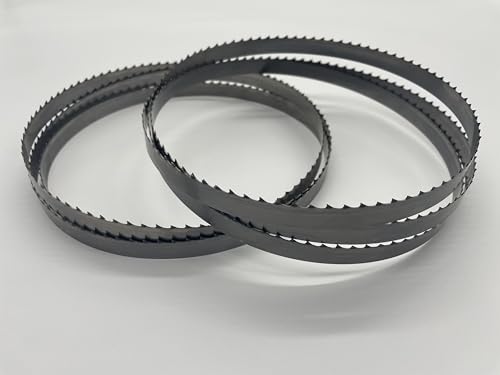
The AYAO 2-pack is an entry-level option priced for occasional users who need an 80-inch blade for 12-inch Craftsman and compatible vertical band saws. The high-carbon steel construction with hardened teeth is adequate for cutting soft and hard woods, as well as plastic and non-laminated materials. The 4 TPI raker tooth geometry provides aggressive chip removal suitable for resawing and straight ripping of stock up to several inches thick.
Users confirm the blades fit correctly, cut straight, and hold an edge reasonably well for intermittent use. One customer reported using the first blade for about six years of regular workshop duty without issues — though at a low frequency of use. The raker tooth set clears sawdust effectively, and the hardened teeth resist dulling better than plain carbon steel when used exclusively on wood and plastic.
The limitations become apparent when cutting abrasive or dense hardwoods for extended periods — the edge will dull faster than bi-metal or alloy steel alternatives. The included blades are 0.020 inches thick, which is standard for this length, but some users note they require careful tensioning to avoid blade flutter during aggressive resaw passes. For the price of a single mid-range blade, you get two functional blades that will serve the casual woodworker well for years of light to moderate use.
Why it’s great
- Two blades included at a very accessible price point
- Hardened teeth provide decent edge retention for wood and plastic
- Cuts straight and fits standard 12-inch Craftsman band saws
Good to know
- High-carbon steel will not hold up to ferrous metal or abrasive materials
- 4 TPI is too coarse for smooth finish cuts on thin stock
FAQ
How do I know which blade length fits my band saw?
Can I use a wood blade to cut metal?
What does variable TPI mean and when should I use it?
Final Thoughts: The Verdict
For most users, the best bandsaw blade winner is the Imachinist S933414 because its M42 bi-metal construction and 10/14 variable TPI handle the widest range of metal-cutting jobs with exceptional durability. If you need a dedicated porta-band blade for job-site metal cutting, grab the LENOX 5-Pack. And for resawing thick hardwood stock on a 14-inch stationary saw, nothing beats the Timber Wolf 1/2-inch 4 TPI.