
Finding a 4K TV that delivers flagship-level picture quality without the flagship price tag is the real challenge in today’s market. You want deep blacks, vibrant colors, and smooth motion for gaming and movies, but every dollar saved matters — the trick is knowing which specs to prioritize and where manufacturers cut corners that actually hurt the experience.
I’m Min — the co-founder and writer behind Gadgets Feed. I’ve spent hundreds of hours analyzing panel technologies, refresh rates, HDR formats, and real-world brightness measurements across dozens of models to identify the TVs that genuinely punch above their sticker price.
This guide breaks down the eleven best models that deliver premium picture performance without demanding a premium investment. If you want a display that feels like you stole it for the price, you’re looking for the best bang for buck 4k tv on the market right now.
How To Choose The Best Bang For Buck 4K TV
Not every 4K TV is built the same, especially in the value tier. The cheapest models often strip out local dimming, use edge-lit LED arrays, and cap refresh rates at 60Hz — changes that directly impact picture depth, motion handling, and HDR performance. Knowing where to invest your budget and where you can compromise is the key to avoiding buyer’s remorse.
Panel Technology: QLED vs Standard LED vs Mini-LED
Standard LED-backlit LCD panels dominate the entry-level space, but they struggle with color volume and black levels. QLED (quantum dot) layers a phosphor film that boosts color gamut to near 100% of DCI-P3, delivering richer reds and greens without added cost to the backlight. Mini-LED takes this further by shrinking the LED size, allowing hundreds or thousands of local dimming zones — this yields deeper blacks and higher peak brightness for Dolby Vision content without the burn-in risk of OLED.
Refresh Rate and HDMI 2.1 for Gaming
If you plan to connect a PlayStation 5, Xbox Series X, or gaming PC, a 120Hz native panel with HDMI 2.1 bandwidth is non-negotiable for smooth 4K gaming. Many budget TVs advertise “Motion Rate” or “effective” refresh rates that are actually 60Hz panels with frame interpolation — true 120Hz native panels (like TCL’s T7 series or Hisense’ U7 series) provide real 4K 120Hz input without added latency. Variable refresh rate (VRR) and Auto Low Latency Mode (ALLM) further eliminate screen tearing and input lag.
HDR Format Support and Peak Brightness
HDR is only as good as the TV’s ability to produce brightness. A budget TV that peaks at 300 nits will wash out Dolby Vision content, making dark scenes look gray. Look for models that hit at least 600 nits peak brightness and support Dolby Vision alongside HDR10+ — this ensures compatibility with the widest range of streaming services (Netflix, Disney+, Apple TV+) and 4K Blu-rays. Local dimming, even in a basic implementation, dramatically improves perceived contrast in HDR.
Quick Comparison
On smaller screens, swipe sideways to see the full table.
| Model | Category | Best For | Key Spec | Amazon |
|---|---|---|---|---|
| Hisense 65U7SG | Premium | High-end gaming & HDR | Native 165Hz, Mini-LED, 3000 nits | Amazon |
| TCL T7 55″ | Premium | 120Hz gaming & movies | 120Hz native, QLED, Google TV | Amazon |
| Samsung 65M70H | Premium | Bright room & sports | Mini-LED, Pure Color Spectrum | Amazon |
| Sony BRAVIA 2 II 50″ | Mid-Range | PS5 gaming & upscaling | 4K X1 Processor, PS5 features | Amazon |
| TCL Q65 55″ | Mid-Range | QLED color & Fire TV | Dolby Vision, Game Accelerator 120 | Amazon |
| Panasonic W70 65″ | Mid-Range | Fire TV integration | HDR10+, HDMI 2.1, MEMC | Amazon |
| Sony BRAVIA 2 II 43″ | Mid-Range | Compact PS5 gaming | Motionflow XR, Google TV | Amazon |
| Roku Plus Series 55″ | Mid-Range | Roku OS & Mini-LED | Mini-LED, Dolby Vision, Atmos | Amazon |
| Vizio M55Q6L4 55″ | Budget | Wide-angle viewing & WiFi 6 | QLED, FreeSync Premium, 120fps | Amazon |
| Roku Select Series 65″ | Budget | Large screen, simple OS | QLED, HDR10, Roku Voice | Amazon |
| Insignia F50 75″ | Budget | Massive screen, Alexa | 75″, Fire TV, DTS Virtual-X | Amazon |
In‑Depth Reviews
1. Hisense 65U7SG 65″ Mini-LED ULED 4K Smart Google TV
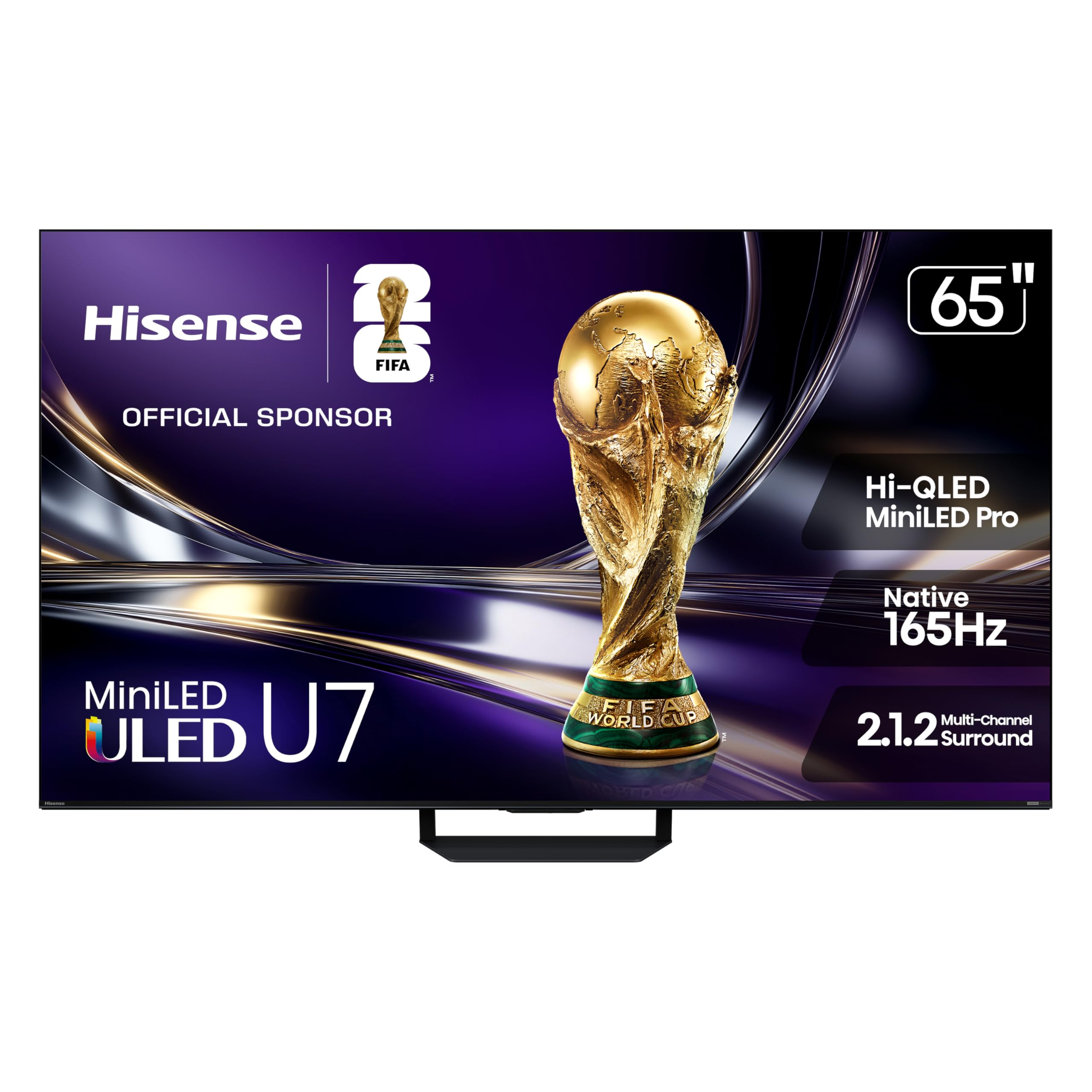
The Hisense U7SG is the definition of peak value in the premium tier, packing thousands of Mini-LED dimming zones and a native 165Hz refresh rate — a spec combination typically reserved for panels costing twice as much. The Hi-View AI Engine Pro constantly analyzes on-screen content, adjusting contrast and saturation in real time, so HDR highlights hit up to 3000 nits without crushing shadow detail. Dolby Vision IQ and IMAX Enhanced certification mean this TV handles the most demanding HDR content natively.
Gamers benefit from a 330Hz VRR ceiling (via HDMI 2.1) that eliminates tearing during fast-paced shooters, while the anti-reflection layer keeps daytime viewing usable even with direct sunlight hitting the screen. The Google TV interface is snappy, and Bluetooth 5.4 support ensures low-latency wireless audio. Built-in 2.1.2 channel speakers deliver genuine Atmos height effects, reducing the need for an external soundbar in smaller rooms.
This set pushes the price boundary further than any other on this list, but the raw spec sheet — native 165Hz, 3000-nit peak brightness, thousands of dimming zones — justifies every penny for anyone who wants true high-end performance without stepping into OLED or QD-OLED territory. It’s the definitive pick for the enthusiast who refuses to overspend.
Why it’s great
- Native 165Hz panel with 330Hz VRR for elite gaming fluidity
- Thousands of Mini-LED zones deliver OLED-like black levels
- Exceptional anti-glare coating for bright-room HDR viewing
Good to know
- Built-in sound is good but lacks deep bass — a soundbar elevates it further
- Premium pricing still exceeds the ultra-budget category
2. TCL 55″ Class T7 Series 4K QLED Google TV (2025)
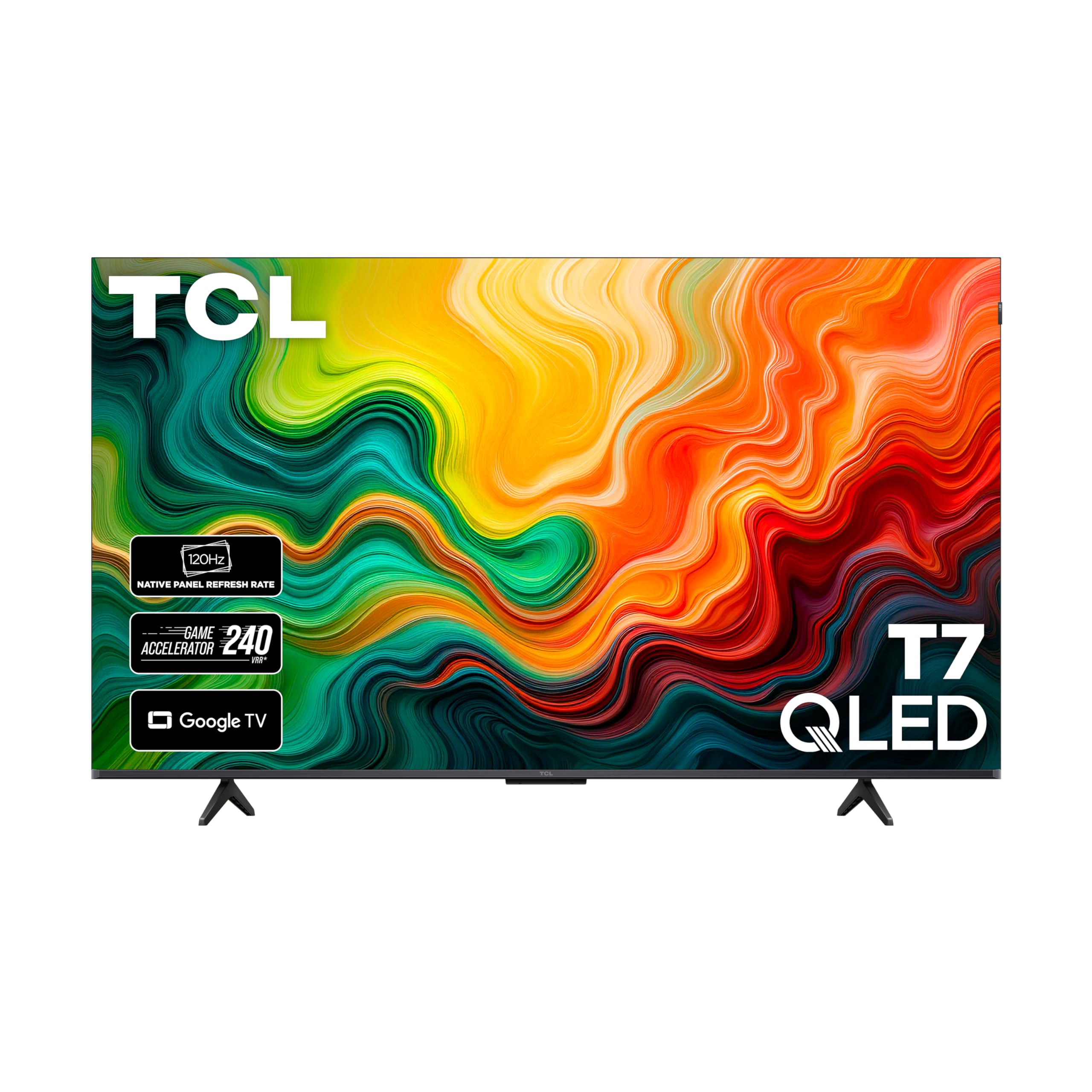
TCL’s T7 series bridges the gap between mid-range pricing and true 120Hz native performance better than any competitor in this class. The 55-inch variant uses a QLED panel with full DCI-P3 color coverage, paired with TCL’s AIPQ Pro processor that upscales 1080p content convincingly to 4K. HDR PRO+ supports Dolby Vision, HDR10+, and HLG, so streaming libraries from Netflix to Apple TV+ all trigger the correct HDR mode automatically.
The four HDMI inputs include one with eARC and full HDMI 2.1 bandwidth, enabling 4K 120Hz VRR from a PS5 or Xbox Series X without chroma subsampling. Motion Rate 480 with MEMC frame insertion smooths fast panning shots in sports and action movies, though purists can disable it in Filmmaker Mode. Google TV integration with built-in Chromecast and Apple AirPlay 2 covers every casting scenario.
Considering the feature set — genuine 120Hz, QLED color, Dolby Vision, and a responsive smart platform — this TV undercuts most competitors by a significant margin. It’s the sensible recommendation for anyone building a gaming setup on a mid-range budget who refuses to accept 60Hz compromises.
Why it’s great
- True 120Hz native panel with HDMI 2.1 for next-gen console gaming
- QLED quantum dot layer produces vibrant, accurate colors
- Google TV interface is fast and integrates Chromecast natively
Good to know
- Peak brightness is adequate but not reference-level for Dolby Vision highlights
- Speakers are average — an external sound system is recommended for Atmos
3. Samsung 65″ Mini LED M70H Series (2026)
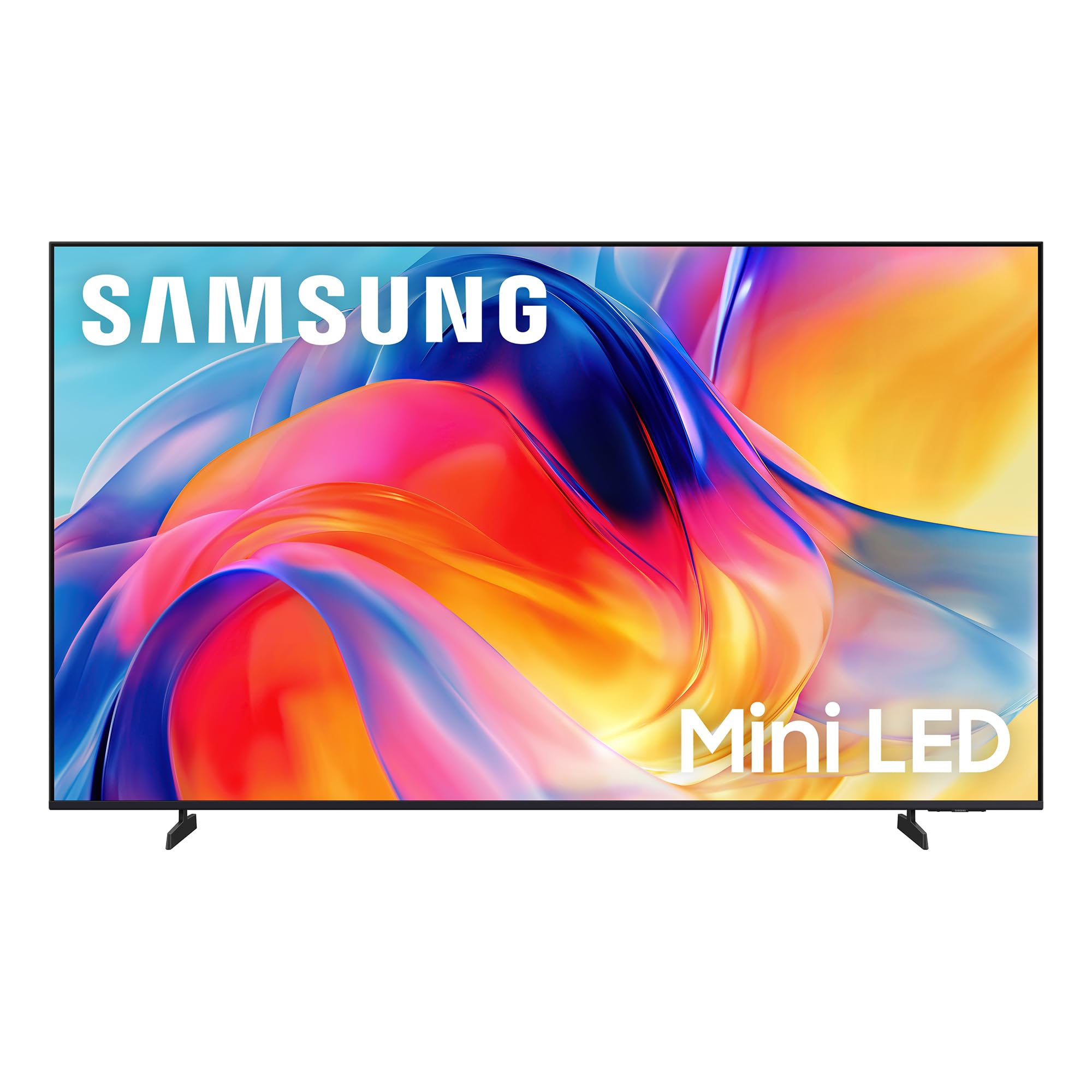
Samsung’s Mini-LED M70H series delivers the brand’s signature bright-room performance at a price point that competes directly with TCL and Hisense. The Mini-LED Processor 4K drives Supreme Mini LED Dimming, creating deep blacks with minimal blooming around bright objects — impressive for a panel at this level. Pure Color Spectrum pushes over one billion color shades, making skin tones and nature documentaries look natural without oversaturation.
Motion Xcelerator + DLG 120Hz ensures that sports and fast-paced content remain clear, and Soccer Mode specifically boosts green saturation and motion clarity for football matches. Samsung TV Plus offers over 2,700 free channels, reducing subscription dependency. The Gaming Hub consolidates Xbox Cloud Gaming, NVIDIA GeForce NOW, and console inputs into one interface, though the 60Hz panel refresh rate (with DLG interpolation to 120Hz) means it’s not a true 120Hz native set.
For buyers who prioritize Samsung’s bright, punchy picture processing and an ecosystem that includes free live TV, this 65-inch Mini-LED is a well-rounded high-end choice. It only loses points for the 60Hz native panel — gamers chasing true 120Hz should look at the T7 or U7SG instead.
Why it’s great
- Superior Mini-LED dimming with minimal blooming and deep blacks
- Excellent bright-room visibility with vibrant color reproduction
- Built-in Samsung TV Plus offers huge free content library
Good to know
- Panel refresh rate is 60Hz native — DLG 120Hz is interpolated, not native
- Remote design and interface navigation can be confusing initially
4. Sony BRAVIA 2 II 50″ 4K LED Smart TV (K-50S20M2)
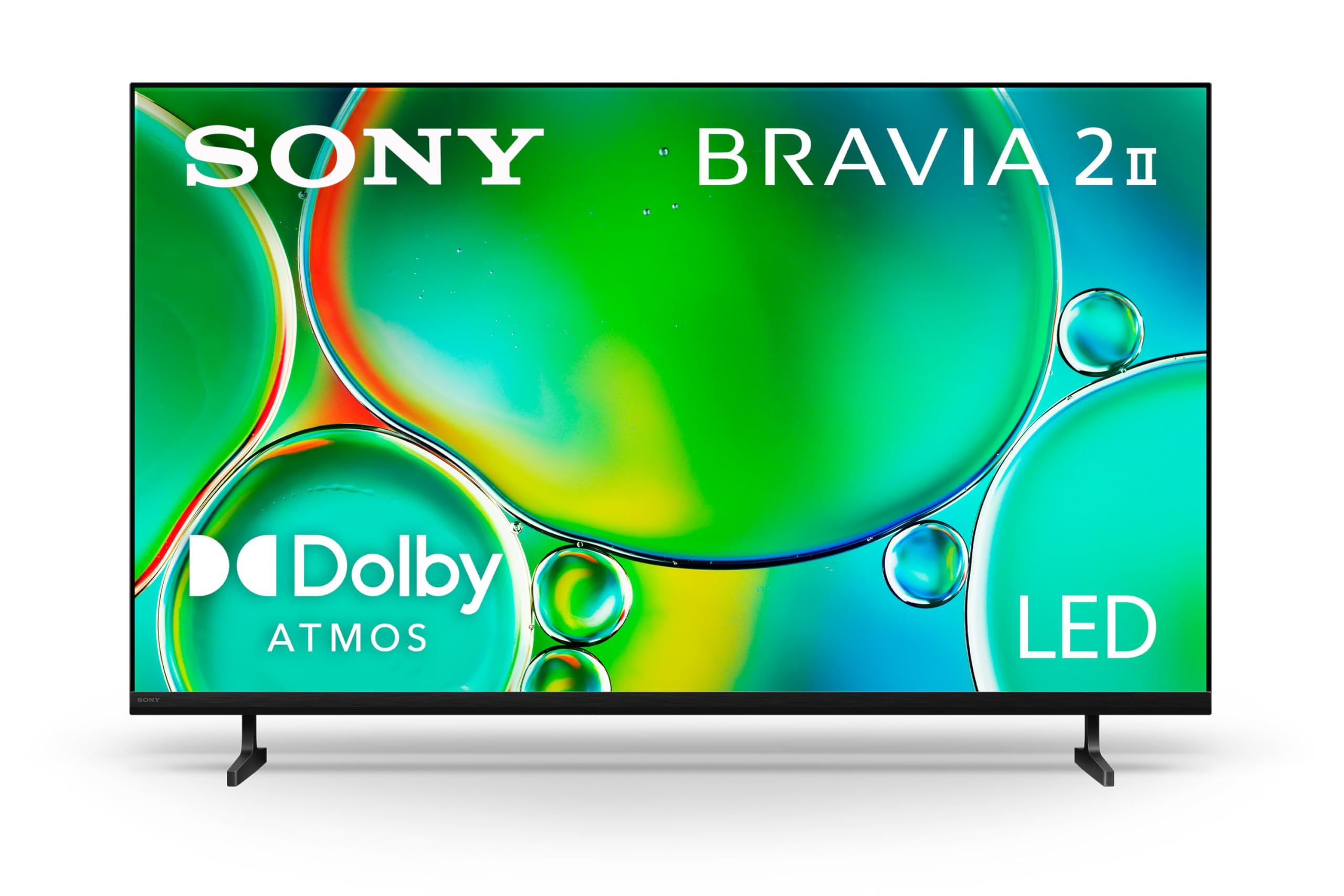
Sony’s BRAVIA 2 II line brings the company’s superior image processing into a more accessible price bracket. The 4K Processor X1 handles real-time noise reduction and upscaling with the same algorithm used in higher-end Sony sets — 1080p and 720p content looks noticeably cleaner than on most budget TVs due to Sony’s proprietary database-driven upscaling. The 50-inch model is a sweet spot for smaller living rooms or dedicated gaming setups.
Exclusive PS5 features set this TV apart: Auto HDR Tone Mapping and Auto Genre Picture Mode communicate directly with the console, adjusting HDR brightness and picture mode automatically when you launch a game or switch to streaming. The Game Menu centralizes all gaming picture settings, including VRR toggles and black equalizer, in a single overlay. Motionflow XR keeps fast camera pans in racing games and action sequences blur-free.
It’s not a QLED or Mini-LED panel, so peak brightness and color volume fall short of the higher-tier competitors, but the processing magic and PS5 integration make it a compelling choice for dedicated PlayStation owners who value motion handling and upscaling over raw specs.
Why it’s great
- Superior 4K upscaling via the X1 processor — cleaner picture from lower-res content
- Exclusive PS5 features auto-optimize HDR and picture mode
- Bluetooth 5.3 for low-latency wireless headphone audio
Good to know
- Standard LED backlight — no local dimming, blacks are grayish in dark rooms
- 43-inch size may feel small for dedicated home theater setups
5. TCL 55″ Class Q65 QLED 4K Smart Fire TV (55Q651F, 2024)

TCL’s Q65 series delivers QLED quantum dot color at a price point that undercuts many standard LED sets, making it one of the strongest pure color-value propositions on the market. The High Brightness+ LED backlight pushes enough luminance for Dolby Vision content to look punchy, and HDR PRO+ covers Dolby Vision, HDR10+, and HLG across the board. The bezel-less design gives the 55-inch model a sleek, modern appearance that blends into any room.
The Game Accelerator 120 feature enables up to 120Hz VRR at 1080p or 1440p, though the native panel is 60Hz — a compromise that still benefits competitive gamers on PC who play at lower resolutions. Auto Game Mode (ALLM) reduces input lag to around 10ms when a console is detected. Fire TV OS with Alexa built-in offers hands-free voice control and integrates seamlessly with Amazon’s ecosystem, including live TV from Prime Video Channels.
For buyers who want QLED color accuracy and Dolby Vision HDR without paying for a 120Hz native panel they may never use, the Q65 is a smart mid-range pick. The AI upscaling is decent but not Sony-level, and the 60Hz panel limits future-proofing for next-gen console owners.
Why it’s great
- QLED panel delivers wide color gamut at a very affordable price
- Dolby Vision and HDR10+ support for all major streaming HDR formats
- Fire TV OS with Alexa is intuitive for Amazon ecosystem users
Good to know
- Native 60Hz panel — 120Hz mode only available at 1080p/1440p
- Onboard speakers lack bass and clarity for immersive Atmos audio
6. Panasonic W70 65″ LED 4K Smart Fire TV (2025)

Panasonic re-enters the North American smart TV space with the W70 series, pairing Fire TV OS with a capable 4K LED panel processed through the 4K Studio Color Engine. The HDR Bright Panel supports HDR10+, HDR10, and HLG, while MEMC (motion estimation, motion compensation) keeps fast-paced sports and action sequences fluid. Four HDMI ports, including one HDMI 2.1 input, provide ample connectivity for modern consoles and soundbars.
Alexa voice control is baked into the Fire TV remote, allowing hands-free searching across apps, input switching, and smart home device control. The built-in media includes a sturdy chassis with metal stands, giving the 65-inch model a premium physical feel that belies its mid-range price. Bluetooth 5.0 support enables private listening via wireless headphones without waking the household.
While the panel lacks local dimming zones, the combination of Fire TV’s mature app ecosystem, HDMI 2.1, and Panasonic’s reliable build quality makes this a solid all-rounder for someone who wants a large TV with good motion handling and voice control. The processor isn’t the snappiest for multitasking, so app switching can feel slightly slower than competitors.
Why it’s great
- HDMI 2.1 port with eARC for modern console and soundbar connectivity
- MEMC motion smoothing effectively reduces judder in sports and action
- Sturdy build with metal stands feels more premium than price suggests
Good to know
- No local dimming — black levels are mediocre in dark room viewing
- Fire TV processor can feel sluggish during app switching and boot times
7. Sony BRAVIA 2 II 43″ 4K LED Smart TV (K-43S20M2)
This 43-inch BRAVIA 2 II shares the same X1 processor and PS5-exclusive features as the larger 50-inch variant, making it the ideal compact gaming TV for desks, bedrooms, or secondary setups. The 4K XR-Reality PRO upscaling engine analyzes each pixel and references a Sony-trained database to reconstruct lost texture and detail from lower-resolution sources — 1080p YouTube content looks almost native 4K on this panel.
Motionflow XR handles fast-paced PS5 titles like Ratchet & Clank: Rift Apart and Call of Duty with minimal motion blur, and the Game Menu overlay gives quick access to VRR, black equalizer, and motion blur reduction without leaving the game. Eco Dashboard centralizes energy-saving settings, keeping power consumption to just 95 watts annually — notably efficient for a 43-inch 4K panel.
The compact size and Sony’s superior processing make this a specialist choice rather than a living room centerpiece. Color volume and brightness are limited compared to QLED or Mini-LED alternatives, and the 60Hz panel lacks the high-refresh potential that competitive gamers might want. It’s best for PS5 owners who game in a smaller space and prioritize image processing over raw panel specs.
Why it’s great
- Excellent 4K upscaling makes lower-resolution content look sharp and detailed
- PS5-specific features auto-tune HDR and picture mode seamlessly
- Low power consumption at 95W — very efficient for a 4K TV
Good to know
- 43-inch size limits immersion for movie watching or large living rooms
- Standard LED panel lacks the color volume of QLED or Mini-LED alternatives
8. Roku Plus Series 55″ Mini-LED 4K QLED TV
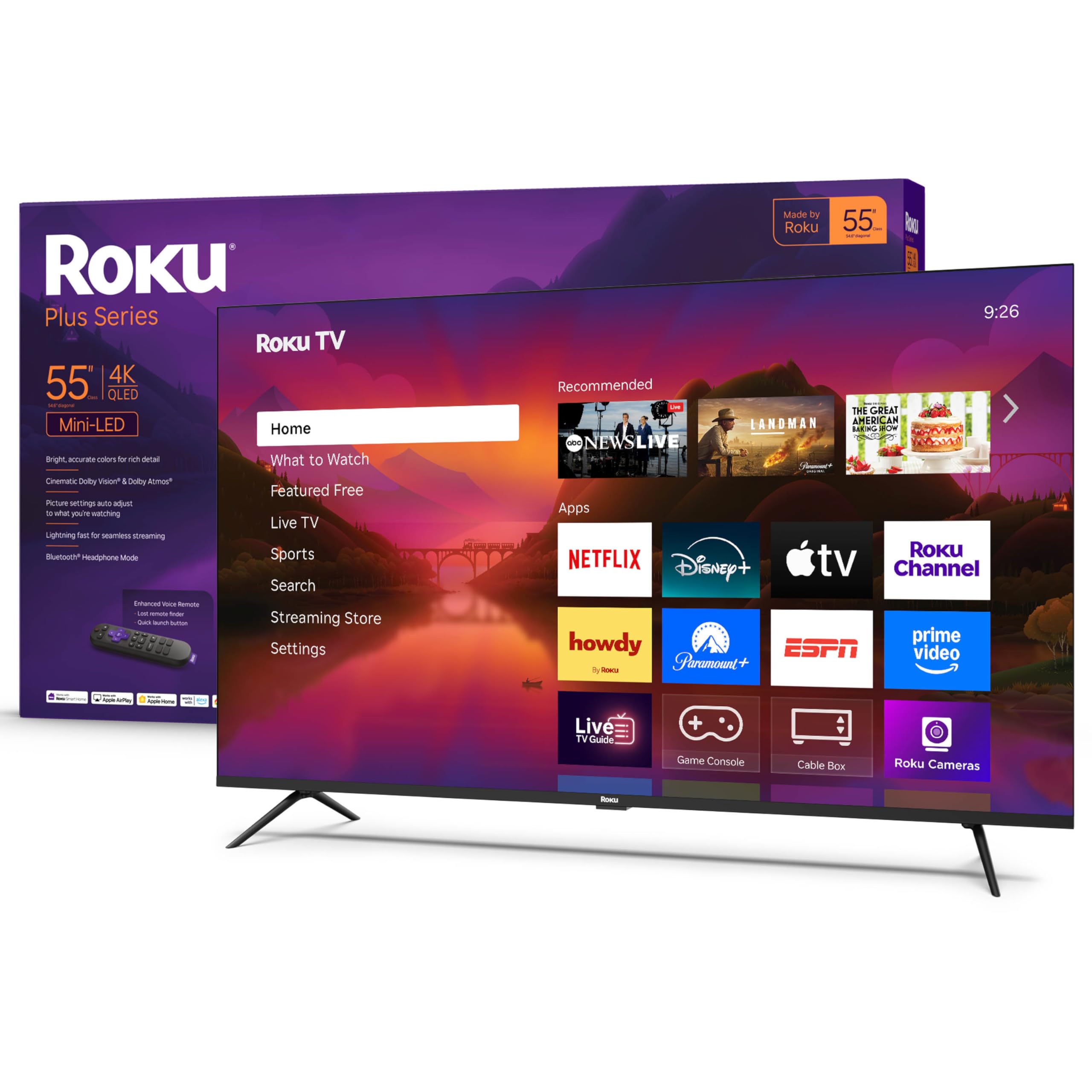
Roku’s Plus Series marks the brand’s push into Mini-LED territory, and the results are impressive for a TV that integrates the best streaming OS on the market. The Mini-LED backlight array provides superior contrast and local dimming compared to edge-lit alternatives, giving Dolby Vision content noticeable depth in bright highlights and shadow detail. The QLED layer boosts color gamut to produce vibrant, accurate reds and greens that standard LED panels struggle to match.
Roku’s operating system remains the gold standard for simplicity — the home screen is clutter-free, app launch times are snappy thanks to optimized Wi-Fi, and the Enhanced Voice Remote includes a lost remote finder and programmable shortcut buttons. Dolby Atmos audio processing with a built-in subwoofer means the TV’s own speakers produce fuller sound than most competitors, reducing the immediate need for a soundbar. Bluetooth headphone mode allows private listening without adapters.
The 55-inch size and Mini-LED capabilities make this a strong mid-range living room TV, but the 60Hz panel limits its appeal for high-refresh-rate gamers. Roku’s ad-supported home screen and limited customization options may frustrate power users who prefer Google TV’s flexibility.
Why it’s great
- Mini-LED backlight delivers excellent contrast and local dimming for HDR
- Roku OS is the fastest, most intuitive streaming platform available
- Built-in subwoofer produces genuinely better sound than typical TV speakers
Good to know
- 60Hz panel — no native 120Hz support for high-end console gaming
- No USB port — limited local media playback options
9. VIZIO 55″ M55Q6L4 Quantum 4K QLED HDR Smart TV

VIZIO’s M55Q6L4 brings QLED quantum dot color and WiFi 6 connectivity to the budget segment, two features usually reserved for mid-range sets. The Wide Viewing Angle layer ensures color and contrast remain consistent when sitting off-center — a practical advantage for families or open-floor-plan layouts where seating isn’t directly in front of the screen. Dolby Vision support is included, and the QLED panel produces over a billion colors that look noticeably richer than standard LED screens at this price tier.
AMD FreeSync Premium certification enables variable refresh rate up to 120fps at 1080p, making it a viable option for PC gaming on a tight budget. The integrated gaming menu provides quick access to VRR toggles, dark detail enhancement, and input lag stats. WiFi 6 improves streaming stability in homes with many connected devices, reducing buffering during 4K streams on Netflix and Prime Video.
Where VIZIO cuts corners is in build quality and software polish — the legs are positioned close together, blocking soundbar placement, and the SmartCast interface is less refined than Roku or Google TV. Some users have reported dead pixels and power-on input bugs, so thorough inspection during the return window is advised.
Why it’s great
- QLED panel delivers billion-color gamut at an entry-level price
- WiFi 6 ensures smooth 4K streaming in crowded network environments
- FreeSync Premium with 120fps support for budget PC gaming
Good to know
- Leg placement is too close together, complicating soundbar positioning
- SmartCast OS is sluggish and less intuitive than Roku or Google TV
10. Roku Select Series 65″ 4K QLED TV (2026)
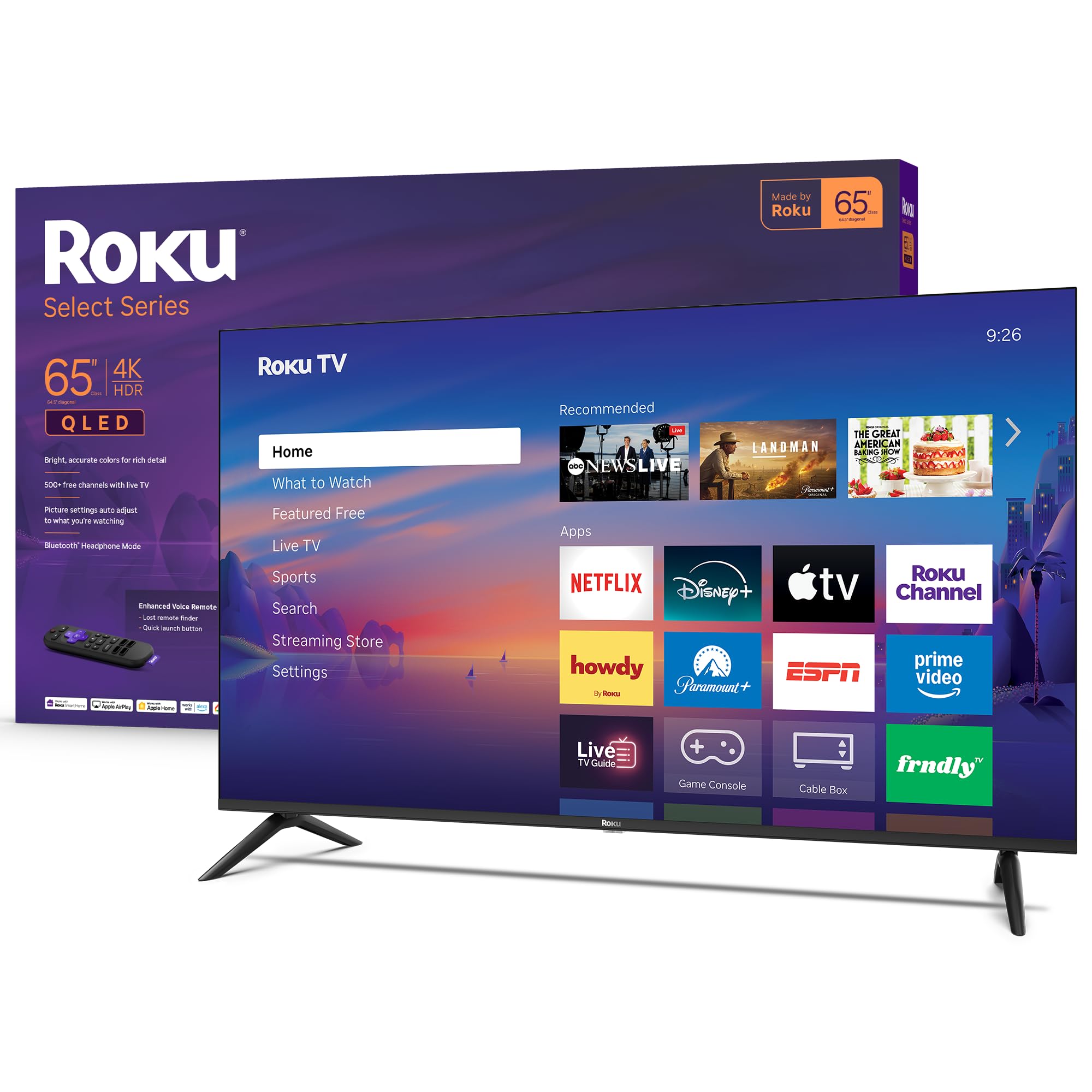
The Roku Select Series 65-inch QLED TV is engineered for buyers who want the largest screen size possible without sacrificing picture quality fundamentals. The QLED panel combined with HDR10 support produces bright, accurate colors that are a clear step above the washed-out look of entry-level LED TVs at this size. Roku Smart Picture uses AI to analyze incoming signals and adjust contrast, sharpness, and color temperature automatically, making setup essentially plug-and-play.
The frameless design gives the 65-inch model a sleek, modern appearance that minimizes bezel distraction — the screen truly is the star. The Enhanced Voice Remote with lost remote finder is a practical addition, and the Roku OS remains the most friction-free smart platform for streaming. Bluetooth headphone mode allows late-night viewing without disturbing others, and the TV’s own speakers are tuned for clear dialogue rather than bass-heavy audio.
This is a budget QLED TV, so don’t expect deep blacks from local dimming (there’s none) or high brightness for Dolby Vision highlights. The 60Hz panel is fine for casual movie and TV watching but won’t impress gamers. It excels as a massive, easy-to-use living room TV for the price.
Why it’s great
- 65-inch QLED panel at a budget price — huge screen with good color
- Roku OS is simple, fast, and receives automatic software updates
- Frameless design looks more premium than the price suggests
Good to know
- No local dimming — black levels are mediocre in dark rooms
- 60Hz panel limits suitability for high-refresh-rate gaming
11. INSIGNIA 75″ F50 Series LED 4K UHD Smart Fire TV

INSIGNIA’s F50 series targets the screen-size-obsessed buyer who wants a 75-inch panel without a four-figure receipt. The 4K UHD resolution (2160p) with HDR10 support upscales 1080p content adequately, though the standard LED backlight lacks the contrast and brightness of QLED or Mini-LED alternatives. DTS Virtual-X processing creates a three-dimensional soundstage from the built-in speakers, adding some immersion without needing external audio.
Fire TV OS with the Alexa Voice Remote gives access to over 1.5 million streaming movies and TV episodes through Prime Video, Netflix, Hulu, HBO Max, and more. The Alexa remote supports voice search for content and smart home device control. Apple AirPlay compatibility rounds out wireless streaming options for iOS users.
The compromises are significant: the panel has no local dimming, resulting in gray blacks in dark scenes, and the processor powering Fire TV can feel sluggish compared to the dedicated Fire Stick experience. Some users report remote pairing issues and interface lag. It’s the pure size-first option — adequate for bright living rooms with casual viewing habits, but not for HDR enthusiasts or gamers.
Why it’s great
- 75-inch screen at a price that undercuts most 65-inch competitors
- Fire TV OS with Alexa offers massive streaming library and voice control
- DTS Virtual-X provides simulated surround sound from built-in speakers
Good to know
- No local dimming — poor black levels and low contrast in dark environments
- Fire TV interface can be sluggish and occasionally buggy
FAQ
Is QLED really better than standard LED for budget 4K TVs?
Can a 60Hz TV really do 120Hz for gaming?
What is the minimum peak brightness I should accept for HDR?
Final Thoughts: The Verdict
For most users, the best bang for buck 4k tv winner is the TCL 55″ T7 Series because it delivers a genuine 120Hz native panel, QLED color, and Dolby Vision at a price that undercuts any competitor offering the same feature set. If you want the highest possible peak brightness and thousands of Mini-LED dimming zones for serious home theater, grab the Hisense 65U7SG. And for the simplest, fastest smart TV experience with Mini-LED contrast, nothing beats the Roku Plus Series 55″.