
Baobab powder is the fruit pulp of the African baobab tree, dehydrated into a fine, tangy powder that packs a serious nutritional punch. A single serving delivers a potent dose of prebiotic fiber, more vitamin C by weight than an orange, and a mineral profile including potassium, magnesium, and calcium — all with a pleasant citrusy tartness that blends easily into water, smoothies, or yogurt. It’s not a fad; it’s a whole-food complex that has supported traditional diets for centuries.
I’m Min — the co-founder and writer behind Gadgets Feed. I’ve spent countless hours cross-referencing third-party lab reports, customer reviews, and nutritional data to identify which baobab powders actually deliver on their fiber and vitamin C claims without loading in fillers or artificial additives.
Whether you want better digestive regularity, steady energy during intermittent fasting, or a natural vitamin C boost, the right powder makes all the difference. The goal of this guide is to help you find the very best baobab powder for your specific wellness routine and budget.
How To Choose The Best Baobab Powder
Not all baobab powders are created equal. The difference between a daily staple and a jar that sits untouched in your cupboard comes down to three factors: the ingredient list, the fiber and vitamin C specs per serving, and the sourcing method. Here’s exactly what to check before you buy.
Single-Ingredient vs. Blended Formulas
Pure baobab powder should list only one ingredient on the label: organic baobab fruit powder. Some brands sneak in maltodextrin, silicon dioxide (anti-caking agents), or added sugars to improve texture or shelf stability. A single-ingredient product guarantees you’re getting the full prebiotic fiber profile — typically 4 to 5 grams per serving — without unnecessary fillers that dilute the nutritional density. Always scan the back panel before adding to your cart.
Fiber Content and Solubility
The primary reason people add baobab to their routine is digestive support. A serving with at least 4 grams of dietary fiber, split between soluble and insoluble types, provides the prebiotic effect that feeds beneficial gut bacteria. Solubility also matters: fine-milled powders disperse more easily in cold water or smoothies without clumping, while coarser grinds may require a frother or shaker bottle. Read user feedback on mixing ease before committing to a larger bag.
Wild-Harvested vs. Farmed Sourcing
Baobab trees grow naturally across sub-Saharan Africa. Wild-harvested fruit (collected from naturally occurring trees rather than cultivated orchards) typically contains a broader spectrum of polyphenols and micronutrients because the trees face more variable environmental stress. Ethically wild-harvested baobab also supports local community cooperatives and biodiversity. If fair-trade and sustainability matter to you, look for brands that explicitly state wild-harvested and direct community partnerships on the packaging or product description.
Quick Comparison
On smaller screens, swipe sideways to see the full table.
| Model | Category | Best For | Key Spec | Amazon |
|---|---|---|---|---|
| KAIBAE Premium Organic (8 oz) | Mid-Range | Daily Gut Health & Fasting | 4+ g fiber per serving | Amazon |
| Terrasoul Superfoods Organic (24 oz) | Premium | Best Bulk Value | 24 oz (2-pack) | Amazon |
| KAIBAE Premium Organic (16 oz) | Premium | Best Overall | 4+ g fiber per serving | Amazon |
| MRM Organic Baobab Powder | Mid-Range | Budget-Conscious Quality | 40 servings per bag | Amazon |
| NAKED Fiber Organic Baobab | Mid-Range | Highest Fiber Per Serving | 5 g fiber per serving | Amazon |
| Nutricost Organic Baobab Fruit Powder | Mid-Range | Unflavored & Versatile | 1 lb (16 oz) container | Amazon |
| Yupik Organic Baobab Powder (2-Pack) | Mid-Range | Best for Baking & Cooking | 17.6 oz total (2-pack) | Amazon |
In‑Depth Reviews
1. KAIBAE Premium Organic Baobab Powder (16 oz)
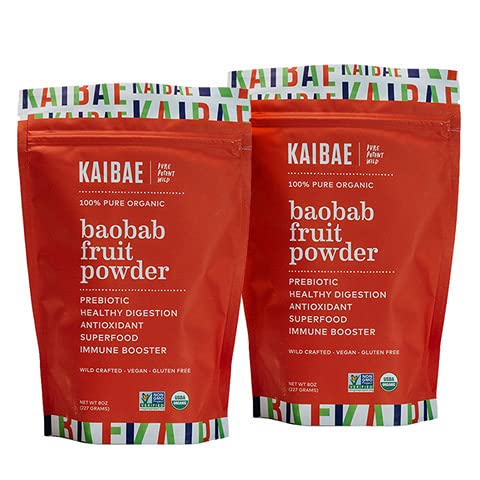
KAIBAE’s 16-ounce tub is the full-size version of their wildly popular 8-ounce offering, delivering over 4 grams of prebiotic fiber per serving from wild-harvested, certified organic baobab fruit. It’s also OU Kosher, Non-GMO, Low-FODMAP, and contains zero added sugar or artificial ingredients — just pure baobab pulp dried at low temperature.
The fiber profile here is split between soluble and insoluble types, which means it supports both regularity and the feeding of beneficial gut bacteria in one scoop. Users consistently report reliable morning digestive rhythm — one reviewer called it “Nature’s Amazing Alarm Clock” — and the tangy citrus flavor mixes well into water, smoothies, and even warm tea without becoming cloying. The powder is slightly finer than some competitors, which reduces clumping when stirred with a fork or frother.
At this price point per ounce, it’s the best intersection of ethical sourcing (direct community partnerships in Ghana), certified purity, and daily usability. The 16-ounce bag lasts roughly 75 servings, making it a long-term staple for anyone serious about gut health and immune support through whole-food nutrition.
Why it’s great
- Certified organic, wild-harvested, and Low-FODMAP
- Fine grind mixes with minimal clumping
- Excellent for intermittent fasting and steady energy
Good to know
- Requires a bit of stirring to fully dissolve
- Some may find the tartness strong in water alone
2. Terrasoul Superfoods Organic Baobab Fruit Powder (24 oz)
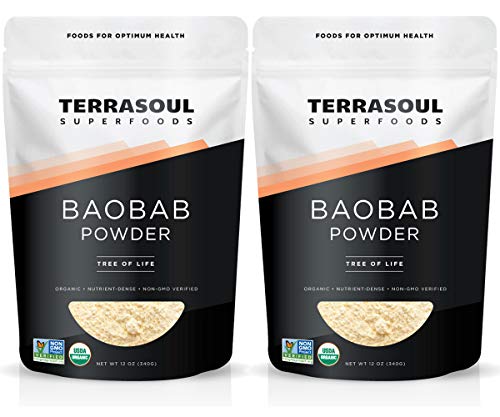
Terrasoul delivers one of the largest single-purchase volumes of organic baobab powder on the market with this 24-ounce twin-pack (two 12-ounce bags). The fruit pulp is low-temperature dehydrated to preserve the naturally occurring antioxidants, including a strong vitamin C content that rivals many citrus fruits gram-for-gram.
Users report that the powder mixes easily into liquids — one reviewer noted it blended “without lumps” and another mentioned “improved gut comfort” after switching from psyllium husk. The flavor is described as mild and slightly tangy, not overpowering, which makes it a safe choice for adding to oatmeal, yogurt, or baked goods without dominating the taste. The resealable bags are serviceable, though a few customers wished the seal was more robust for long-term storage.
At this volume, the per-ounce cost is competitive, making it a smart buy for households that go through baobab powder daily or for anyone who wants to stock up without frequent reordering. The 30-day satisfaction guarantee adds a layer of confidence for first-time buyers.
Why it’s great
- Excellent per-ounce value with 24 oz total
- Low-temperature processing preserves nutrients
- Pleasant mild flavor works in many recipes
Good to know
- Bag seal may weaken over time
- Some users found flavor bland rather than tangy
3. KAIBAE Premium Organic Baobab Powder (8 oz)
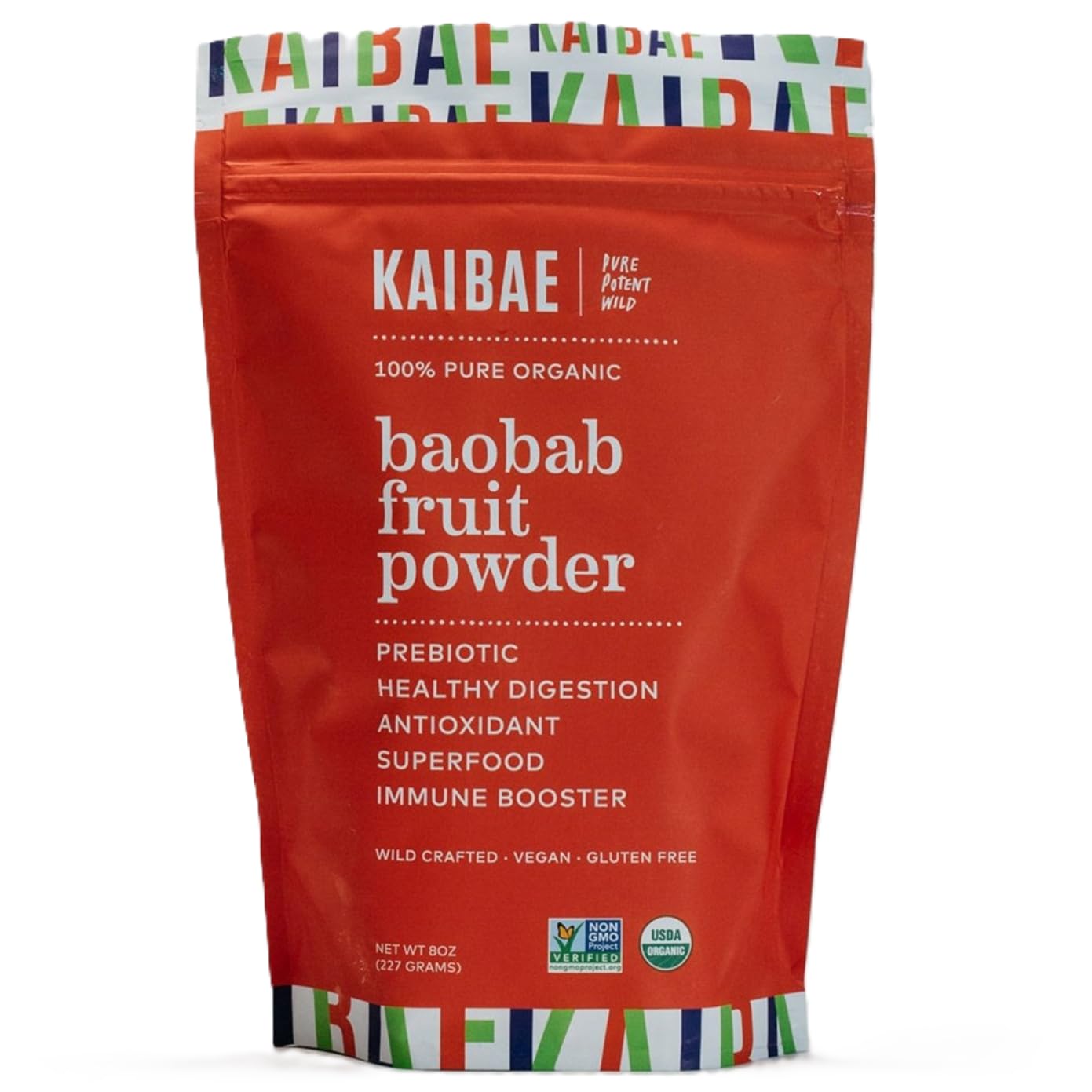
KAIBAE’s 8-ounce container is the entry-point version of their premium line, offering the same wild-harvested, certified organic baobab with over 4 grams of fiber per serving in a smaller, more travel-friendly package. It’s an ideal size for someone who wants to test the waters before committing to a larger bag.
Reviews consistently highlight digestive regularity and natural energy — one long-time user said they’ve been using it for over four years and also buy KAIBAE’s skincare line. The powder mixes reasonably well with a spoon but benefits from a quick shake in a bottle or a minute with a milk frother for a smooth texture. The tangy flavor is described as citrusy and pleasant, and several users incorporate it into sugar-free “quick jam” recipes with berries or dates.
The ethical sourcing story is strong: KAIBAE sources from Ghana through community partnerships that support biodiversity and fair wages. For the buyer who values both personal health and supply-chain transparency, this is a standout option at a mid-range price point.
Why it’s great
- Wild-harvested with ethical sourcing in Ghana
- High prebiotic fiber content per serving
- Versatile for jams, smoothies, and tea
Good to know
- Smaller size means more frequent reordering
- Mixing takes a bit more effort in cold liquids
4. MRM Organic Baobab Powder (40 Servings)
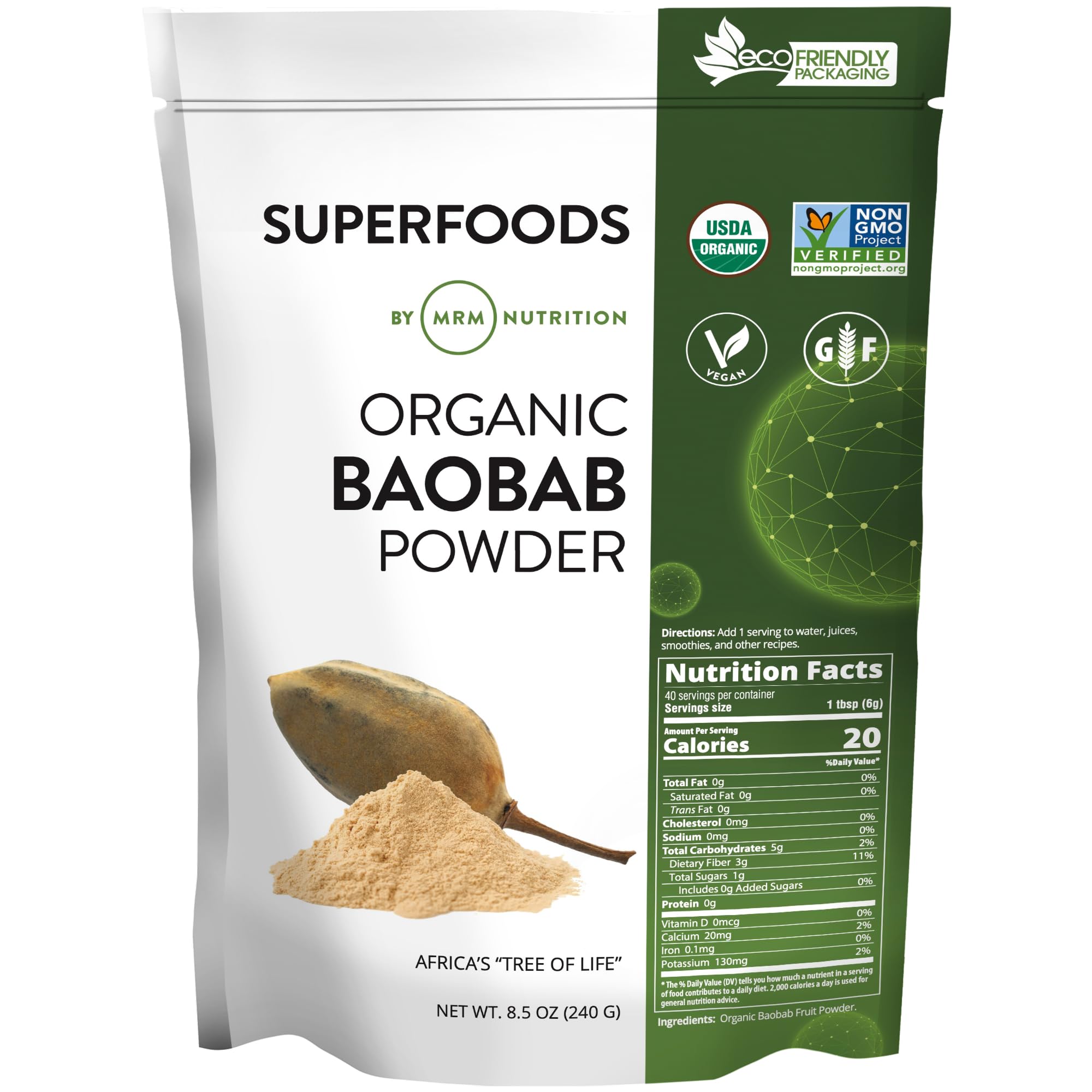
MRM has been in the supplement game since 1996, and their organic baobab powder shows the maturity of a brand that prioritizes purity. Each 8.5-ounce bag provides 40 servings of USDA Organic baobab fruit powder with naturally occurring fiber, antioxidants, and electrolytes like calcium, magnesium, and potassium. The company is owned by a clinical dietitian and biochemist, which adds credibility to the formulation.
User feedback is overwhelmingly positive — one reviewer described it as a “fantastic addition to my daily smoothie” and another noted they’ve been adding it to their morning coffee for a year as a fiber and nutrient boost. The taste is tangy and similar to Tang in appearance, though less sweet, which makes it a natural pairing with tart juices or citrus-forward recipes. It mixes smoothly without lumps, an advantage over coarser powders.
At this per-serving cost, it’s one of the most affordable organic options in the lineup. The 40-serving count also makes it easier to track your daily intake without guessing how many scoops remain in the bag.
Why it’s great
- Very affordable per-serving cost
- Smooth mixing with no lumps
- Trusted brand owned by a dietitian/biochemist
Good to know
- Only 8.5 oz bag — smaller total volume
- Taste may require adjustment for some palates
5. NAKED Fiber Organic Baobab Powder

NAKED Fiber stands out because it delivers 5 grams of dietary fiber per serving — the highest fiber density among all the products in this comparison. With only one ingredient (organic baobab fruit powder from Southern Africa), it’s a bare-bones approach that appeals to purists who want maximum digestive support without any additives, sweeteners, or flow agents.
The taste is where opinions diverge sharply. Some users enjoy the tangy citrus flavor and find it works well in smoothies or mixed with a milk frother for a smooth drink. Others describe the taste as “horrible” or even “vomit flavor” — the most polarizing feedback in this entire review set. If flavor sensitivity is a concern, this powder is best hidden in a strongly flavored smoothie with berries, banana, or cacao rather than drunk plain with water.
On the positive side, it works quickly for digestive regularity, contains only 30 calories per serving, and is USDA Organic, vegan, soy-free, and gluten-free. The 10.6-ounce container provides roughly 50 servings when using the recommended scoop size.
Why it’s great
- Highest fiber content: 5g per serving
- Single-ingredient purity with no additives
- Low calorie count (30 per serving)
Good to know
- Very polarizing taste — some find it unpleasant
- Best mixed with a frother for smooth texture
6. Nutricost Organic Baobab Fruit Powder (1 LB)
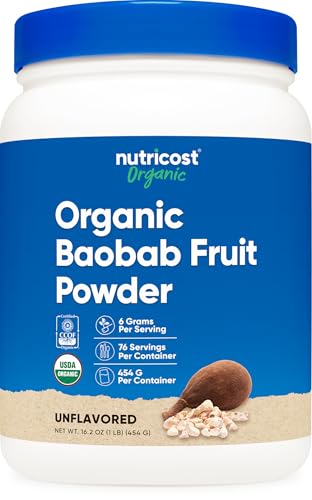
Nutricost brings a straightforward, unflavored organic baobab powder that prioritizes simplicity and value. The 1-pound container provides 16 ounces of product with each 6-gram serving delivering a consistent, measurable dose. It’s USDA Organic, gluten-free, GMO-free, and vegan, and it’s manufactured in an NSF Certified, GMP Compliant, FDA Registered facility — a strong quality assurance signal.
User reviews describe a “nice sweet and sour flavour” that works well in smoothies and morning drinks. The low carb and calorie profile (no added fillers) makes it a fit for keto and low-sugar diets. One reviewer calculated the per-serving cost at roughly , highlighting its exceptional value for an organic product. The only minor complaint is that the 6-gram scoop feels a bit small for those who want a higher fiber dose per drink.
If you want a no-nonsense organic baobab powder that blends into recipes without altering flavor, Nutricost delivers at a very competitive price. It’s also packaged in a sturdy container that reseals well, unlike some bag-based options.
Why it’s great
- Excellent per-serving cost (~)
- Manufactured in certified facility (NSF, GMP)
- Unflavored profile blends into any recipe
Good to know
- 6g serving may be small for high-fiber needs
- Limited flavor makes it less enjoyable in water alone
7. Yupik Organic Baobab Powder (2-Pack)
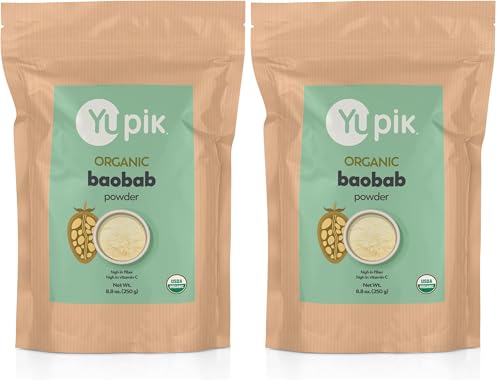
Yupik’s 2-pack delivers 17.6 ounces of organic, non-GMO, vegan, and kosher-certified baobab powder at a mid-range price. The brand describes it as a “rich and tasty substitute for cocoa powder,” which signals a slightly different flavor profile — more earthy and tangy rather than purely citrusy. This makes it a versatile ingredient for baking, smoothie bowls, and even traditional African recipes like bouye (baobab drink) or pain de singe.
Customer feedback highlights the tangy and unusual flavor as a positive — one reviewer made a delicious bouye with water, sugar, and orange flower water, while another uses it regularly in cereal and oat milk. A few users found the unique taste hard to adjust to, describing it as “distinctive” and overpowering in some applications. If you’re planning to use baobab primarily in cooking and baking rather than drinking straight, Yupik’s flavor profile works beautifully.
The single-pack size (8.8 oz) is manageable, and the two-pack format ensures you have backup without taking up excessive pantry space. It’s also one of the few baobab powders with explicit kosher certification.
Why it’s great
- Kosher certified, organic, and non-GMO
- Distinctive flavor works well in cooking and baking
- Two-pack format offers convenience
Good to know
- Unique taste may not suit all palates
- Smaller per-pack size (8.8 oz) requires more frequent reordering
FAQ
How much baobab powder should I take per day for digestive benefits?
Does baobab powder expire or lose potency over time?
Can baobab powder help with bloating or IBS symptoms?
Final Thoughts: The Verdict
For most users, the best baobab powder winner is the KAIBAE Premium Organic Baobab Powder (16 oz) because it combines wild-harvested ethical sourcing, certified organic purity, over 4g of prebiotic fiber per serving, and a fine grind that mixes with minimal clumping. If you want the highest fiber density per scoop, grab the NAKED Fiber Organic Baobab Powder. And for the best bulk value without sacrificing quality, nothing beats the Terrasoul Superfoods Organic Baobab 24 oz.