
For cyclists who value mechanical simplicity over finicky electronics, bar end shifters offer a tactile, reliable interface that keeps your hands comfortably on the drops. Whether you’re rebuilding a vintage touring bike or setting up a dedicated time-trial machine, choosing the right unit means considering indexing precision, ergonomic lever sweep, and long-term durability.
I’m Min — the co-founder and writer behind Gadgets Feed. I’ve spent countless hours combing through technical specifications, customer reliability data, and compatibility charts to find which bar end shifters actually perform under real-world conditions.
This guide covers the top contenders for the best bar end shifters, examining lever feel, installation complexity, and drivetrain compatibility across both budget-friendly and premium options.
How To Choose The Best Bar End Shifters
Selecting the right bar end shifters goes beyond brand preference. You must match the shifter’s speed count and indexing system to your derailleur, decide between friction and indexed operation, and verify the mounting diameter fits your handlebars.
Speed Compatibility
Bar end shifters are designed for a specific number of rear speeds — 8, 9, 10, or 11. A 10-speed indexed shifter will not correctly actuate a 9-speed derailleur. If you plan to run a mixed drivetrain, friction mode gives you the freedom to use any rear cassette, but you lose the precise click that tells you exactly which gear you are in.
Indexed vs. Friction Shifting
Indexed shifting delivers a positive click for each gear, making shifting predictable and quick — ideal for race scenarios. Friction shifting offers infinite micro‑adjustment and fewer moving parts to break, which is why many touring cyclists and off‑grid mechanics prefer it. Some shifters offer a convertible right lever that lets you toggle between both modes.
Mounting System and Handlebar Fit
Most bar end shifters use an expander wedge or a conical nut to clamp inside the handlebar end. The internal diameter of your drop bars must fall within the manufacturer’s specified range — typically 19 to 22 millimeters. Aero or TT bars often have different internal profiles, so double‑check the fit before ordering a set.
Quick Comparison
On smaller screens, swipe sideways to see the full table.
| Model | Category | Best For | Key Spec | Amazon |
|---|---|---|---|---|
| Shimano SL-BSR1 | Premium | Convertible index/friction, 11‑speed | 11‑speed with friction conversion | Amazon |
| Shimano SL-BS79 Dura Ace | Premium | Double cranks, 10‑speed indexed rear | 10‑speed indexed, aluminum lever | Amazon |
| SRAM SL-500 | Premium | Aero/TT bars, 10‑speed SRAM Exact Actuation | 10‑speed indexed, aluminum body | Amazon |
| SRAM Red eTap Clic | Premium | Wireless drivetrains, aero cockpit | Push‑button, wired to Blip Box | Amazon |
| microSHIFT 8‑Speed Set | Mid-Range | Convertible right lever, touring/gravel | 8‑speed, stainless steel components | Amazon |
| microSHIFT 9‑Speed Right | Mid-Range | Advent rear derailleurs, friction mode | 9‑speed, index/friction convertible | Amazon |
| Sunrace SL-R96 | Budget | 9‑speed, SRAM compatible, high-polish alloy | 9‑speed, aluminum, 210g | Amazon |
In‑Depth Reviews
1. Shimano SL-BSR1 Dura-Ace Bar End Shifters

The Shimano SL-BSR1 sit at the top of the bar-end hierarchy for good reason: they support 11‑speed drivetrains while giving you the option to convert the rear shifter from indexed to friction mode. This flexibility means you can run a modern wide‑range cassette yet still have a fallback if indexing drifts mid‑ride. The front lever is friction‑only, making it compatible with both double and triple cranksets without any adjustment.
Machined from aluminum alloy, the levers feel solid and give a satisfying click during indexed shifts. The kit includes cables, housing, and braze‑on cable stops, which simplifies installation — though some owners note the lack of printed instructions can be frustrating the first time. Once assembled, the expander wedge fits securely into standard drop bars ranging from 19 to 21 millimeters internal diameter.
The trade‑off is the price point, which lands in premium territory. If you are not running an 11‑speed drivetrain or do not need the friction safety net, you might save money with a 10‑speed alternative. But for those building a no‑compromise touring or race bike, the SL-BSR1 is the gold standard for mechanical bar end shifting.
Why it’s great
- 11-speed indexing with friction conversion on the rear
- Includes cables, housing, and stops
- Front lever works with double or triple cranks
Good to know
- No printed installation instructions included
- Premium price relative to 8‑ or 9‑speed options
2. Shimano SL-BS79 Dura Ace Double Bar End Shifters
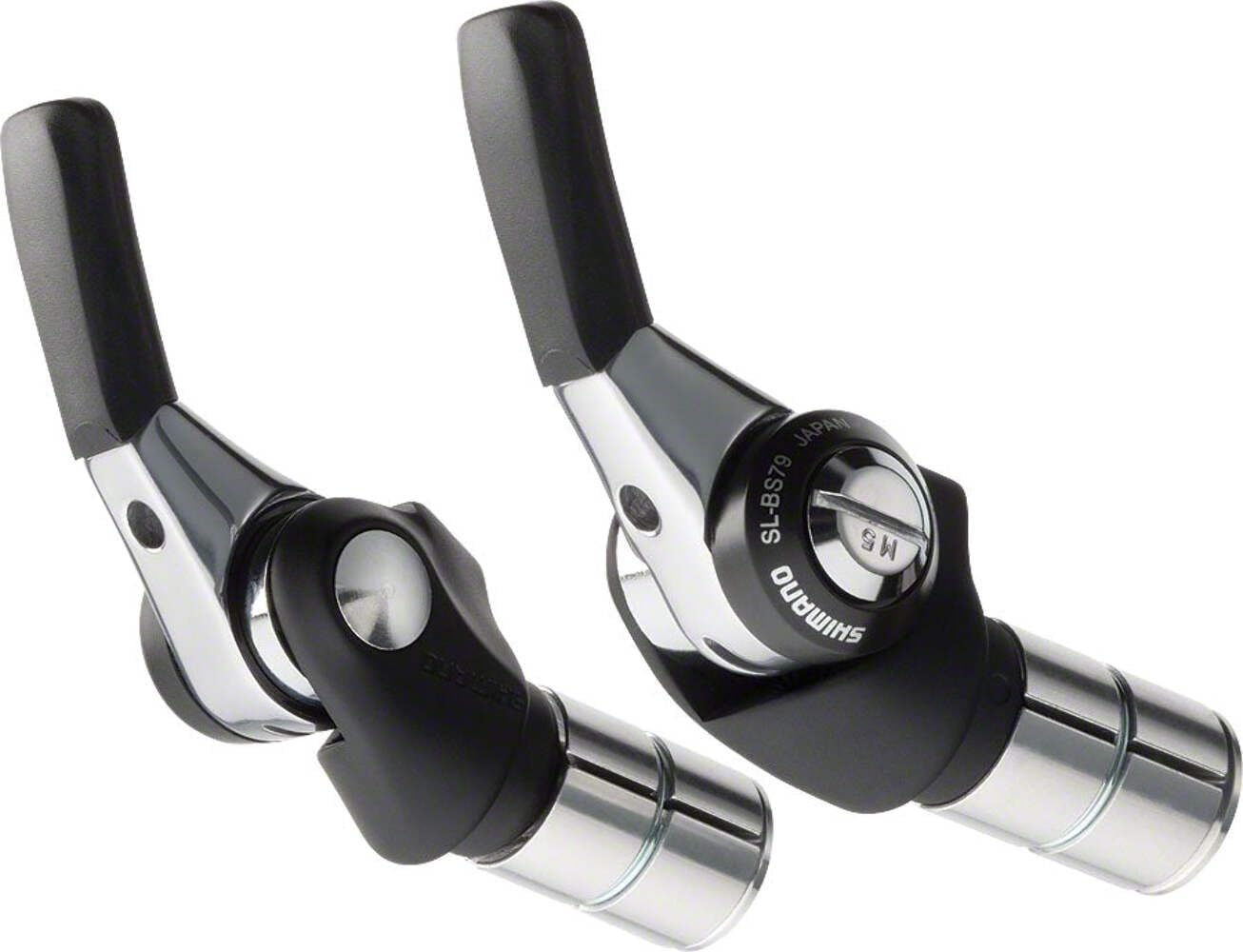
The SL-BS79 is a dedicated 10‑speed indexed rear shifter paired with a friction front lever designed for Shimano/SRAM road double cranksets. Unlike the convertible SL-BSR1, the rear shifter here is indexed‑only, which delivers extremely crisp clicks but leaves no room for manual trimming if the cable stretches or if you swap in a non‑Shimano derailleur.
Build quality is typical of Shimano’s top tier: an aluminum lever body with a satin black finish that resists scratching, smooth internal ratcheting, and a straightforward expander wedge mounting system. At roughly 0.5 pounds (230 grams) for the pair, they add negligible weight to a road or triathlon build. The kit comes as a set that includes both left and right shifters.
A few owners mention that the assembly can come partially disassembled in the box, requiring you to follow online guides to put the internals together. Once installed, shifting is precise and durable — many users report trouble‑free operation well past 10,000 miles. If you are locked into an 10‑speed drivetrain and want that unmistakable Dura‑Ace feel, the SL-BS79 is a strong choice.
Why it’s great
- High‑precision indexed rear shifting
- Lightweight aluminum construction
- Trusted Dura‑Ace reliability
Good to know
- Indexed‑only rear — no friction conversion
- Some units arrive unassembled in loose parts
3. SRAM SL-500 Aero TT/Tri Bar End Shifter Set
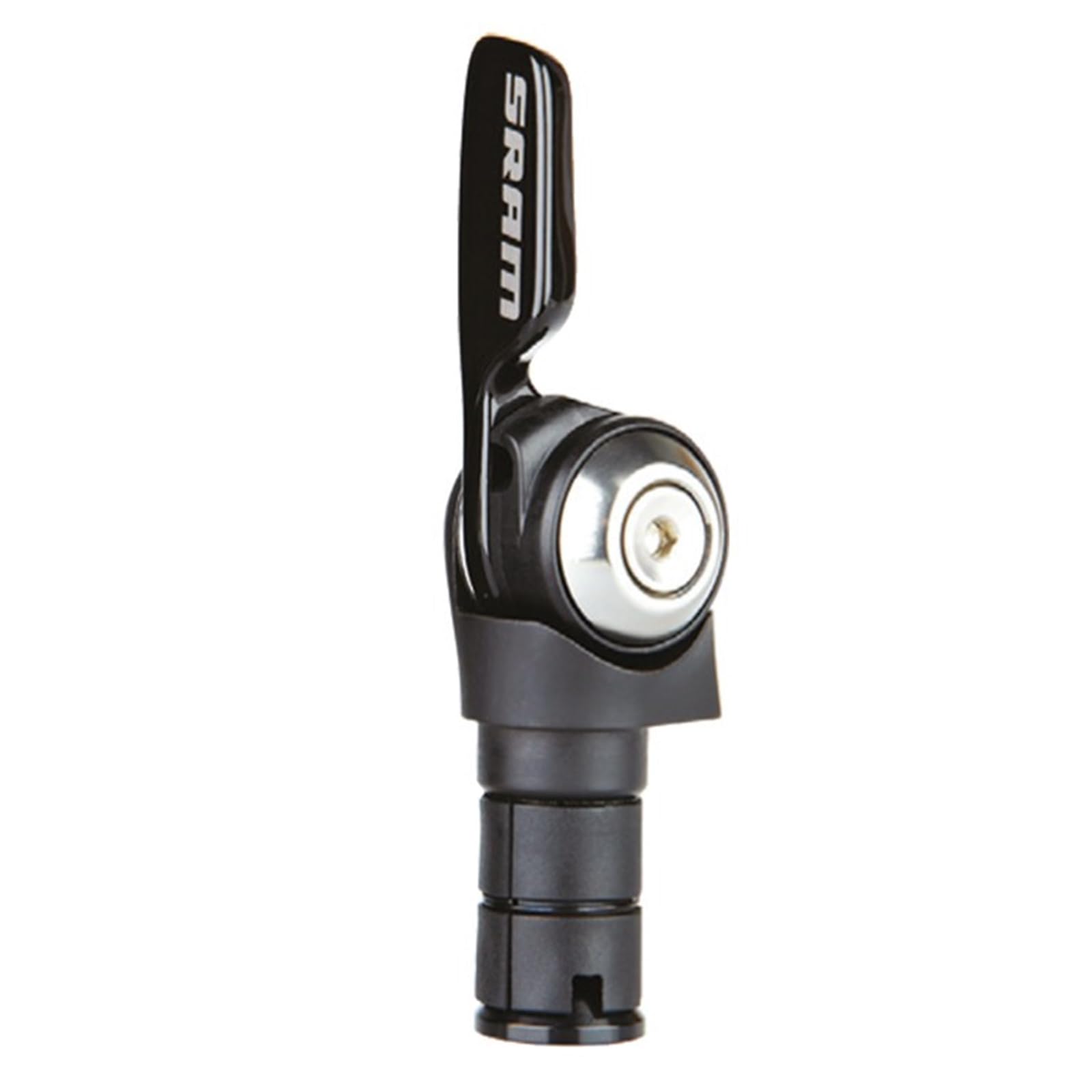
The SRAM SL-500 is purpose‑built for aero time‑trial and triathlon bars. It uses an internal conical expander mounting system that fits handlebar internal diameters from 19.2 to 22.5 millimeters and requires a minimum bar depth of 35 millimeters — making it one of the most versatile options for deep‑section aero bars.
External cable routing with a bottom‑exit design keeps the lines clean and reduces drag compared to internal routing that can snag or rattle. The rear shifter is indexed for SRAM Exact Actuation 10‑speed derailleurs, delivering a firm, positive click with each gear change. The aluminum body feels dense and reassuring, and the levers have a slightly longer sweep than Shimano’s, which some riders prefer when wearing thick gloves during cold‑weather TTs.
Downsides include limited drivetrain compatibility — this set is really only optimized for SRAM 10‑speed systems. Trying to make it work with Shimano or Campagnolo requires careful indexing adjustments and may never feel perfect. Also, replacement parts can be hard to source if the indexed mechanism wears out after a few seasons of heavy use.
Why it’s great
- Conical expander fits 19.2‑22.5mm bar IDs
- External bottom‑exit cable routing for low drag
- Crisp indexing with SRAM Exact Actuation
Good to know
- Optimized for SRAM 10‑speed only
- Longer lever sweep may feel stiff to some riders
4. SRAM Red eTap Clic Bar-End Shift Buttons

If you are building around SRAM’s eTap wireless groupset, the Red eTap Clic buttons are the only bar‑end option that integrates directly into the system. Each unit is a wired push‑button that connects to a Blip Box via a 650‑millimeter cable, allowing you to shift both front and rear derailleurs without removing your hands from the aero extensions.
The buttons are machined from lightweight materials and have a low‑profile design that fits neatly into bar ends with internal diameters from 19 to 20.5 millimeters. The tactile click is positive and requires minimal force, making them easy to use even during a time‑trial sprint. Because they are just buttons — not mechanical levers — there are no cables to stretch or indexing to drift, which eliminates a whole class of maintenance issues.
The catch is reliability: some owners report the button switches failing after two or three months of use, which renders the shifter completely inoperable. Additionally, these are buttons only — they do not include any bar end extensions or plugs, despite the product images sometimes suggesting otherwise. If you are committed to eTap and want the cleanest aero cockpit, the Clic buttons are the obvious choice, but have a backup plan for race day.
Why it’s great
- Seamless integration with SRAM eTap
- Low‑profile, aerodynamic design
- No mechanical cables to stretch or break
Good to know
- Button switches can fail prematurely
- Buttons only — bar end extensions not included
5. microSHIFT Bar End Shifter Set 8‑Speed
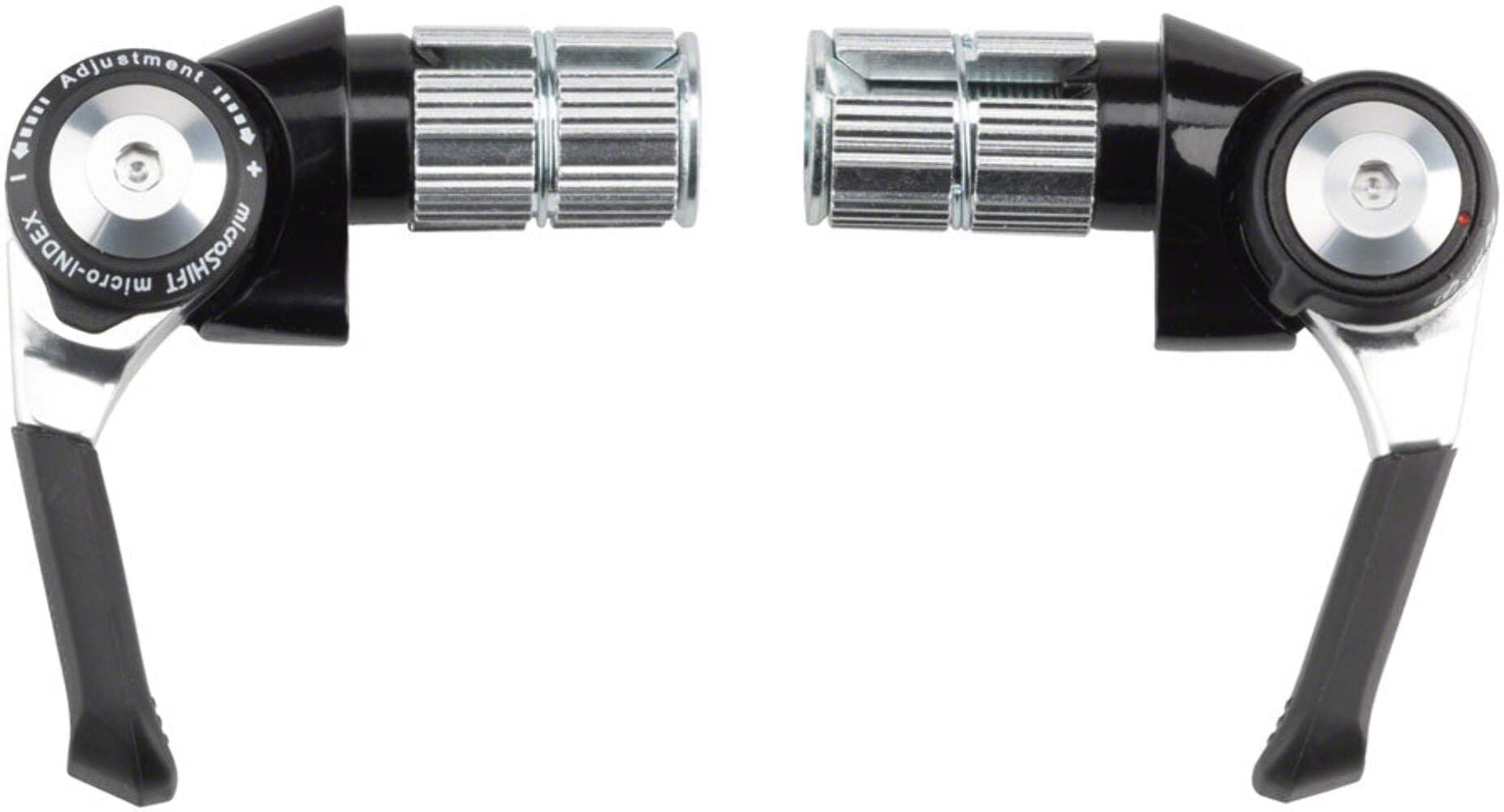
The microSHIFT 8‑speed set delivers bar‑end performance at a price that undercuts nearly every competitor. Designed for Shimano‑compatible 8‑speed drivetrains, the right shifter can be switched between indexed and friction mode, giving you the flexibility to run a variety of cassettes or to limp home if the indexing goes out of tune mid‑tour.
Construction uses a blend of lightweight materials with stainless steel internals for corrosion resistance — important for riders who encounter rain or gravel dust. The set includes installation hardware and an instruction manual, which is a welcome change from the Shimano premium options that often skip the paperwork. The expander wedge fits drop bars with internal diameters from 19 to 21 millimeters.
The main sacrifice here is the 8‑speed limit. If your drivetrain has more rear cogs, you will need to step up to a 9‑ or 10‑speed model. Additionally, the lever finish is a matte multicolor that feels slightly less premium than the polished Dura‑Ace units. But for the price, you get reliable shifting, a convertible friction option, and enough durability to handle daily commuting or a cross‑country tour.
Why it’s great
- Convertible right lever — index or friction
- Stainless steel internals resist corrosion
- Includes hardware and instructions
Good to know
- Limited to 8‑speed drivetrains
- Lever finish feels less premium than polished alloy
6. microSHIFT Right Bar End Shifter 9‑Speed

This microSHIFT right‑side lever is specifically designed for Advent 9‑speed derailleurs, though it also works well with standard Shimano 9‑speed systems. It offers both indexed and friction modes, allowing you to fine‑tune the shifting feel. In practice, the friction mode is smooth and precise — several users on recumbent bikes and under‑seat steering setups praise its consistent action.
The lever itself is a thumb‑operated design made from molded composite and aluminum, giving it a respectable feel without the sticker shock of Dura‑Ace. Installation is straightforward: the expander wedge clamps into bar ends with internal diameters between 19 and 21 millimeters. Because it is a single right‑side unit, you will need to purchase a separate left shifter if you want both front and rear control.
One downside is that the left shifter for this series can be hard to find in stock, which may force you into buying a full set from a competitor. Also, the indexing clicks are slightly less defined than the Shimano SL-BS79 — noticeable during fast shifts under load. But for Advent users or anyone looking for a reliable 9‑speed friction shifter at a reasonable price, this microSHIFT is hard to beat.
Why it’s great
- Specifically compatible with Advent derailleurs
- Convertible index/friction mode
- Smooth friction action for recumbent setups
Good to know
- Right side only — left sold separately
- Index clicks less crisp than premium Shimano
7. Sunrace SL-R96 Bar End Right Shifter 9‑Speed
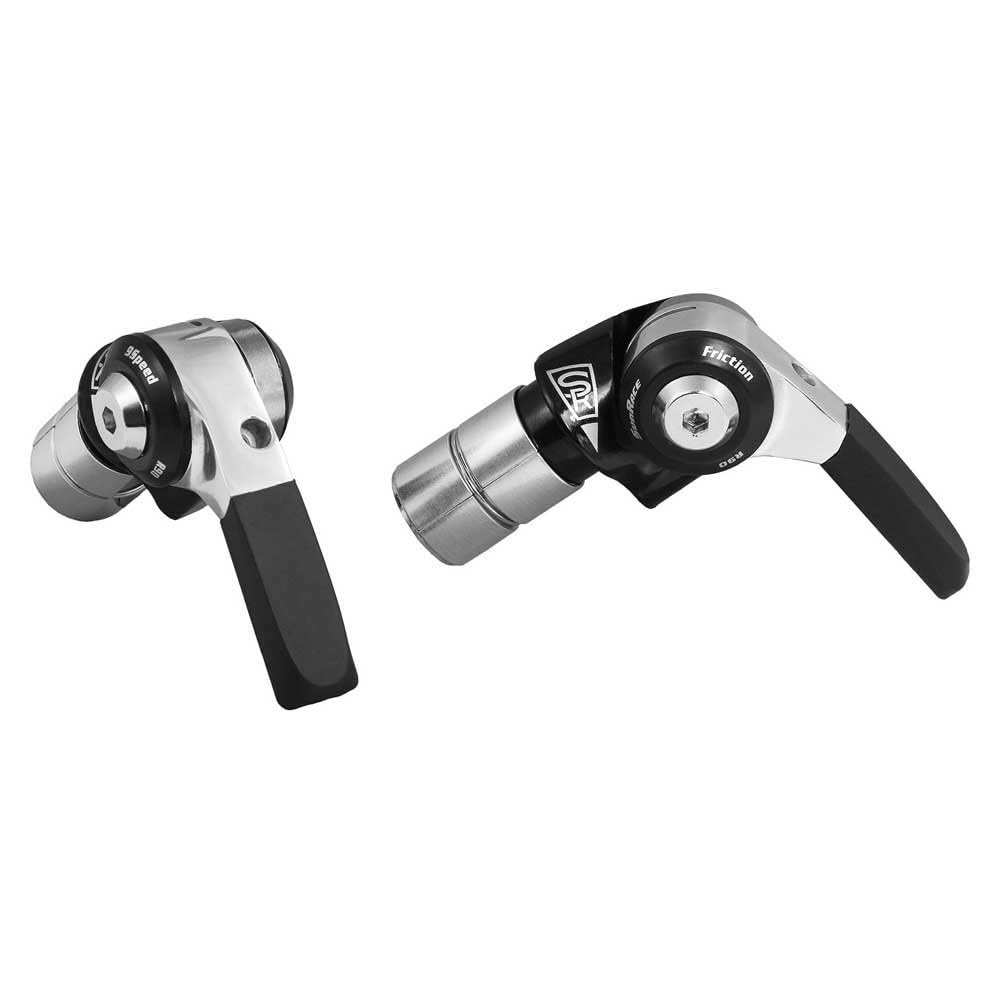
The Sunrace SL-R96 punches well above its price bracket thanks to a high‑polished aluminum lever that looks and feels more expensive than it is. Weighing just 210 grams, this right‑side shifter is compatible with SRAM systems and uses a friction front mechanism with an indexed rear. The indexed clicks are positive enough for road riding, though they lack the bank‑vault solidity of Shimano’s Dura‑Ace line.
Installation is unusual: rather than a traditional expander wedge, the SL-R96 uses a screw‑driven expander that can be fiddly to center inside the handlebar. Some users report it took them over an hour to get the tension right because the shifter does not have built‑in cable tensioners — you adjust tension at the derailleur instead. Once dialed in, the shifting holds accurately and the lever action is smooth.
The biggest limitation is the lack of a friction‑only mode on the rear — it is indexed only, which means you are locked into a 9‑speed cassette unless you modify the internals. Also, this is a single right shifter, so you will need a separate unit for the front if your build requires one. For budget‑minded riders running a 1×9 setup or converting an old downtube shifter bike, the Sunrace SL-R96 offers the best price‑to‑polish ratio in the category.
Why it’s great
- High‑polish aluminum lever looks premium
- Lightweight at 210 grams
- Great option for budget 1×9 builds
Good to know
- Rear is indexed only — no friction mode
- No built‑in cable tensioners; adjust at derailleur
FAQ
Can I use a 10-speed bar end shifter with an 11-speed cassette?
Why is my bar end shifter slipping inside the handlebar?
Are bar end shifters better than brifters for touring?
Final Thoughts: The Verdict
For most users, the best bar end shifters winner is the Shimano SL-BSR1 because it combines the highest speed support (11‑speed) with a convertible rear shifter that gives you both indexed precision and friction flexibility. If you run a 10‑speed SRAM drivetrain and want the most secure aero fit, grab the SRAM SL-500. And for an entry‑level build without sacrificing mechanical feel, nothing beats the Sunrace SL-R96 for its polished alloy construction at a budget‑friendly price.