
What you do in the first 48 hours determines whether that stick transforms into a productive fruit tree or a dried-up disappointment. The success of a home orchard hinges on root mass, node count, and the treatment those roots get before the first leaf breaks dormancy.
I’m Min — the co-founder and writer behind Gadgets Feed. I’ve spent hundreds of hours analyzing customer reports, survival rates, and nursery practices across dozens of bare root cherry tree listings to separate the viable starters from the overpriced twigs.
The goal is to find the best bare root cherry tree for your yard, balancing root quality, tree age, and proven grower satisfaction from the moment the package lands on your doorstep.
How To Choose The Best Bare Root Cherry Tree
A bare root cherry tree is sold while dormant — no leaves, no soil, just roots wrapped in damp material. The critical difference between a tree that thrives and one that stalls is root quality and the age of the seedling when shipped. Younger seedlings under 12 inches with thin roots take years to establish, while a 2-year-old tree with a fibrous root network can produce fruit in a fraction of the time.
Root Mass and Caliper Thickness
Look for a central stem with a caliper at least as thick as a pencil, and a root system that fills a 6-inch depth rather than one or two wispy strands. A thick root mass stores more energy for the first growing season, reducing transplant shock and accelerating leaf production.
Dormant Shipping and Handling
The window between arrival and planting is tight. Roots that arrive in dry paper or loose packing have already lost moisture. The best sellers wrap roots in wet media and secure them inside the box so the crown isn’t snapped during transit. Inspect for broken stems or desiccated roots the moment the package opens.
USDA Zone Compatibility and Pollination
Black cherry (Prunus serotina) is self-pollinating and tolerates zones 3 through 10, making it the most flexible option for home growers. Sweet cherry varieties often require a second pollinator. Always confirm that the tree’s recommended zone matches your region before planting.
Quick Comparison
On smaller screens, swipe sideways to see the full table.
| Model | Category | Best For | Key Spec | Amazon |
|---|---|---|---|---|
| AKTRD Black Cherry (2 Trees) | Premium | 2-year head start growers | 1-1.5 ft tall bareroot | Amazon |
| Mightyoak Black Mulberry | Premium | Large 2-3 ft tall starter | 2-3 years old / 3 ft height | Amazon |
| AKTRD Black Cherry (2 Trees) | Premium | Cold-hardy zone 3 grower | 2 trees, 1-1.5 ft tall | Amazon |
| CZ Grain Black Cherry (3 Trees) | Mid-Range | Multi-tree orchard value | 3 rooted plants, zone 3-10 | Amazon |
| CZ Grain Black Cherry (2 Plants) | Mid-Range | Partial shade tolerance | 1-2 ft starter tree | Amazon |
| CZ Grain Dwarf Bonsai Black Cherry | Budget | Bonsai or potted trial | 1 seedling, full sun | Amazon |
| CZ Grain Black Cherry Bonsai | Budget | Partial sun indoor start | 1 seedling, partial sun | Amazon |
In‑Depth Reviews
1. AKTRD 2 Black Cherry Trees Live Plant, Bareroots Dormant 1-1.5 Feet Height
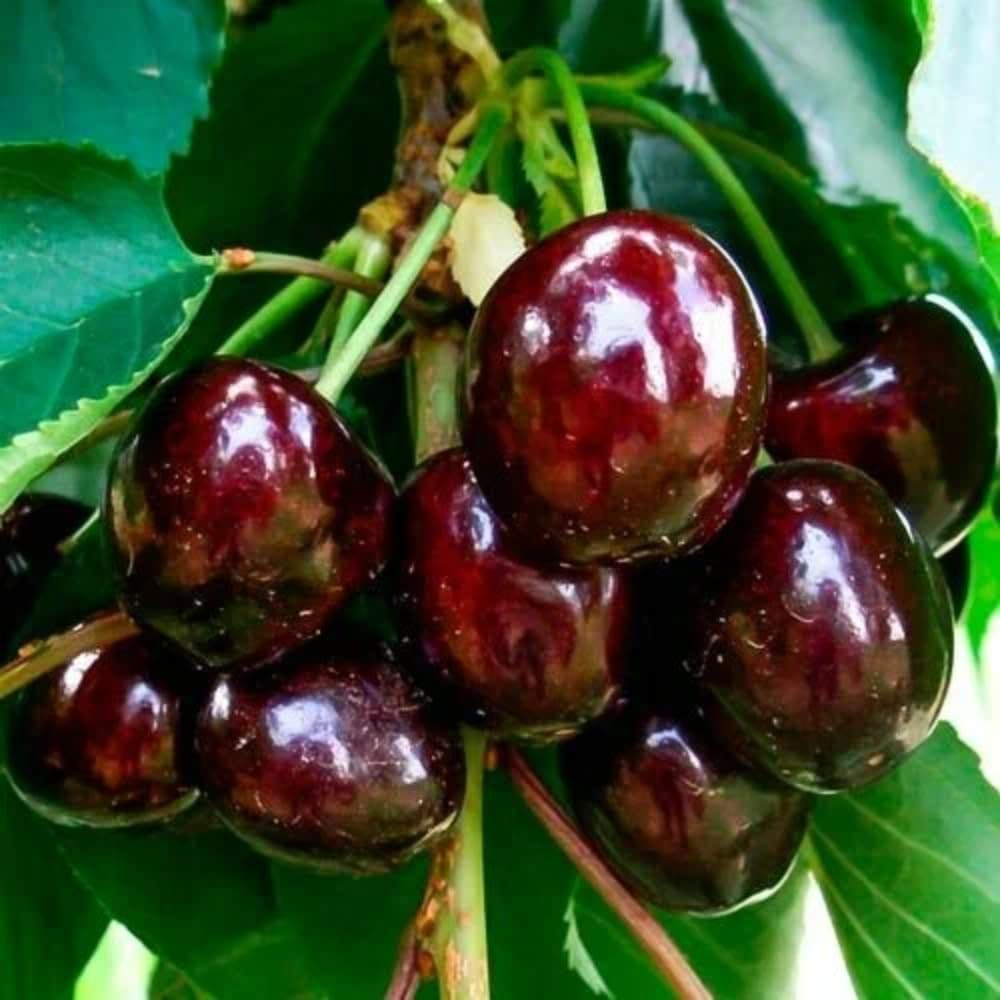
These bareroot trees arrive at 1 to 1.5 feet tall, which places them among the older, more established starters in this category. Multiple verified buyers report quick growth after planting, with one noting the trees were “growing quickly” within weeks. The root systems are wrapped and moist upon arrival, reducing the transplant shock that kills weaker seedlings.
The sweet cherry variety (Prunus avium type) ripens in late June, making it a good fit for growers in zones 4 through 8 who want a defined harvest window. Two trees per order give you the option to plant a backup or space them for potential cross-pollination, though the listing’s cross-pollination guidance is minimal.
A few units arrived with dried roots in isolated shipping issues, but the majority of recent reviews describe healthy bareroots that leafed out within weeks. For the height and the two-tree count, this is the most reliable middle-ground option for growers who want a tangible head start over a single-season seedling.
Why it’s great
- Established 1-1.5 ft height with strong root mass
- Sweet cherry variety with defined June ripening window
Good to know
- Some units arrived with dry roots; inspect immediately
- Limited pollination guidance included in packaging
2. Mightyoak Black Mulberry (Morus nigra) 2-3 ft Tall

This plant arrives at 2 to 3 feet tall with a 2- to 3-year-old root system, which is significantly more developed than the typical 12-inch seedling. The packaging uses wet media during dormancy and switches to a container in summer, a thoughtful approach that keeps roots hydrated through transit. Buyers consistently describe the plant as “well wrapped in wet paper” and report leaf growth within a month.
Black mulberry is self-pollinating, so a single tree will produce fruit. The ripe berries are deep black, sweet, and harvestable over a month-long window in early summer. The mature tree can reach 50 to 70 feet, so it demands space, but the rapid growth rate delivers fruit faster than many cherry seedlings.
The main trade-off is fruit size variability — these are seedling-grown rather than grafted, so berry size may differ from the parent. A few reviewers received a “twig” under 12 inches, which suggests shipping quality varies by seasonal timing. Still, for the height and root age, this offers the most advanced start in the list.
Why it’s great
- Advanced 2-3 ft height with older root system
- Self-pollinating with rapid growth rate
Good to know
- Seedling-grown so fruit size may vary
- Mature height requires significant yard space
3. AKTRD 2 Black Cherry Trees Live Plant, Bareroots Dormant 1-1.5 Feet Height (Zone 3-6)
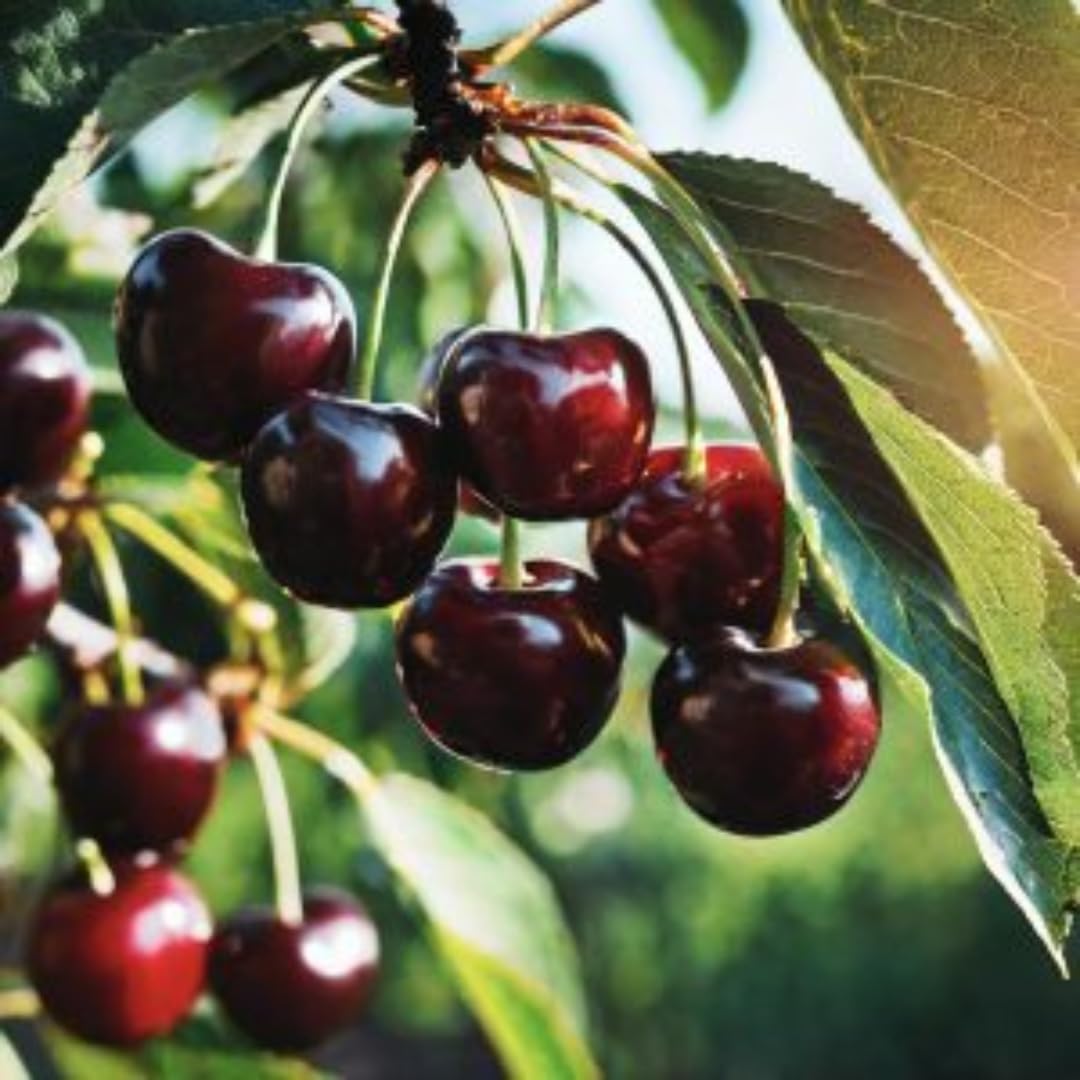
This set of two black cherry bareroots is specifically recommended for zones 3 through 6, making it the best fit for northern growers who face harsh winters. The trees ship at 1 to 1.5 feet tall in dormant bareroot form, and several buyers have reported that what initially looked like “hopeless stems” leafed out after potting with good soil and consistent watering.
The dark purple-black fruit typical of Prunus serotina is well-suited for jams and pies, and the trees are self-pollinating, so you don’t need a second variety. The two-tree count allows for a backup or a small grove planting, which is useful given that some units arrived with dry roots in ziplock bags — a packaging inconsistency that affected a minority of deliveries.
The replacement policy handled dead-on-arrival cases for at least one buyer, which signals that the seller backs the product, but the initial packaging could be more consistent. If you live in a colder zone and want two trees for the price of one premium starter, this is a strong candidate.
Why it’s great
- Rated for zones 3-6, ideal for cold climates
- Two trees per order for backup planting
Good to know
- Some units arrived with dry roots in ziplock bags
- Slow initial growth reported by several buyers
4. CZ Grain 3 Black Cherry Fruit Tree Live Plants
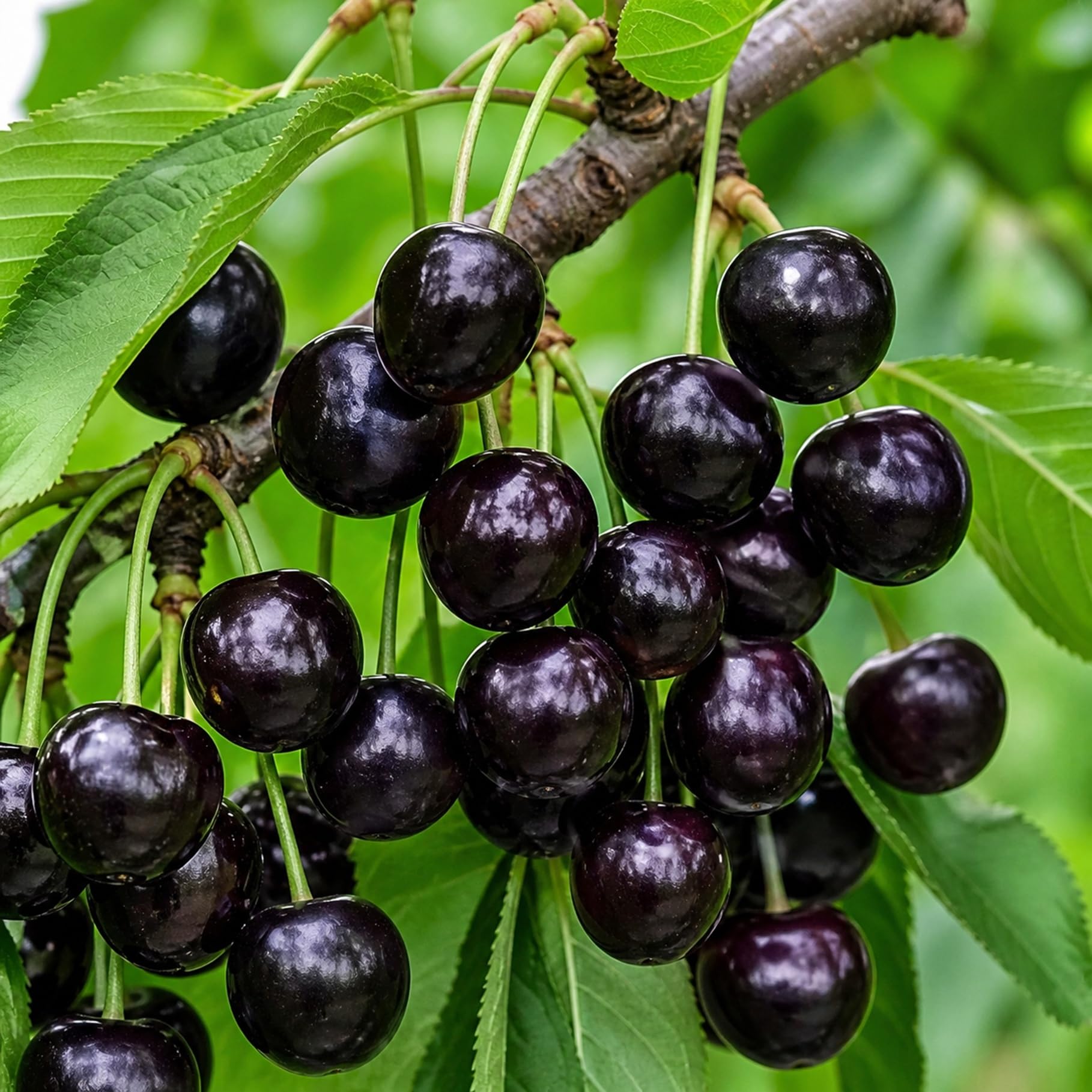
Three rooted black cherry plants for the nursery price of a single tree — the value proposition is clear. The trees ship dormant and are suited to zones 3 through 10, covering nearly every U.S. growing region. The species reaches 50 to 80 feet at maturity and produces white spring blossoms that support pollinators.
The problem, as reported by multiple buyers, is that the plants are often thin “sticks with barely rooted” systems that are less developed than the product images suggest. Several reviewers reported that all three trees died despite careful watering, which indicates the root mass may be insufficient for reliable transplant survival.
For the price, you get three chances, but the success rate appears lower than with more mature single-tree purchases. If you have space to plant all three and are willing to nurse them through the first season, the potential payoff is a small grove. If you want a guaranteed single survivor, a bigger individual tree may be safer.
Why it’s great
- Three trees for budget-conscious multi-planting
- Broad zone compatibility from 3 to 10
Good to know
- Thin, barely rooted sticks reported by many buyers
- High mortality rate in first growing season
5. CZ Grain Black Cherry Tree Live Plants 1–2 Ft Tall (2 Plants)

This starter offers 1 to 2 feet of height and tolerates partial shade, which is unusual for a fruit tree — most cherry varieties demand full sun for optimal production. The Prunus serotina variety is fast-growing and adaptable to different soil types, and the product care instructions recommend well-draining soil with regular watering.
The main downside is that the fruit size tops out under half an inch, which is typical for wild black cherry but may surprise buyers expecting supermarket-sized sweet cherries. The product images are misleading in this regard — the cherries shown are larger than what this species produces. A few buyers also reported that the tree died quickly after planting.
If you have a partially shaded spot where a full-sun tree would struggle, this is one of the few options that can handle it. Just set your fruit size expectations appropriately and give it well-draining soil from day one.
Why it’s great
- Tolerates partial shade unlike most cherry trees
- Fast-growing with strong soil adaptability
Good to know
- Fruit size is under 0.5 inches, smaller than expected
- Product images overstate cherry size
6. CZ Grain Dwarf Bonsai Black Cherry Fruit Tree Live Plant Seedling
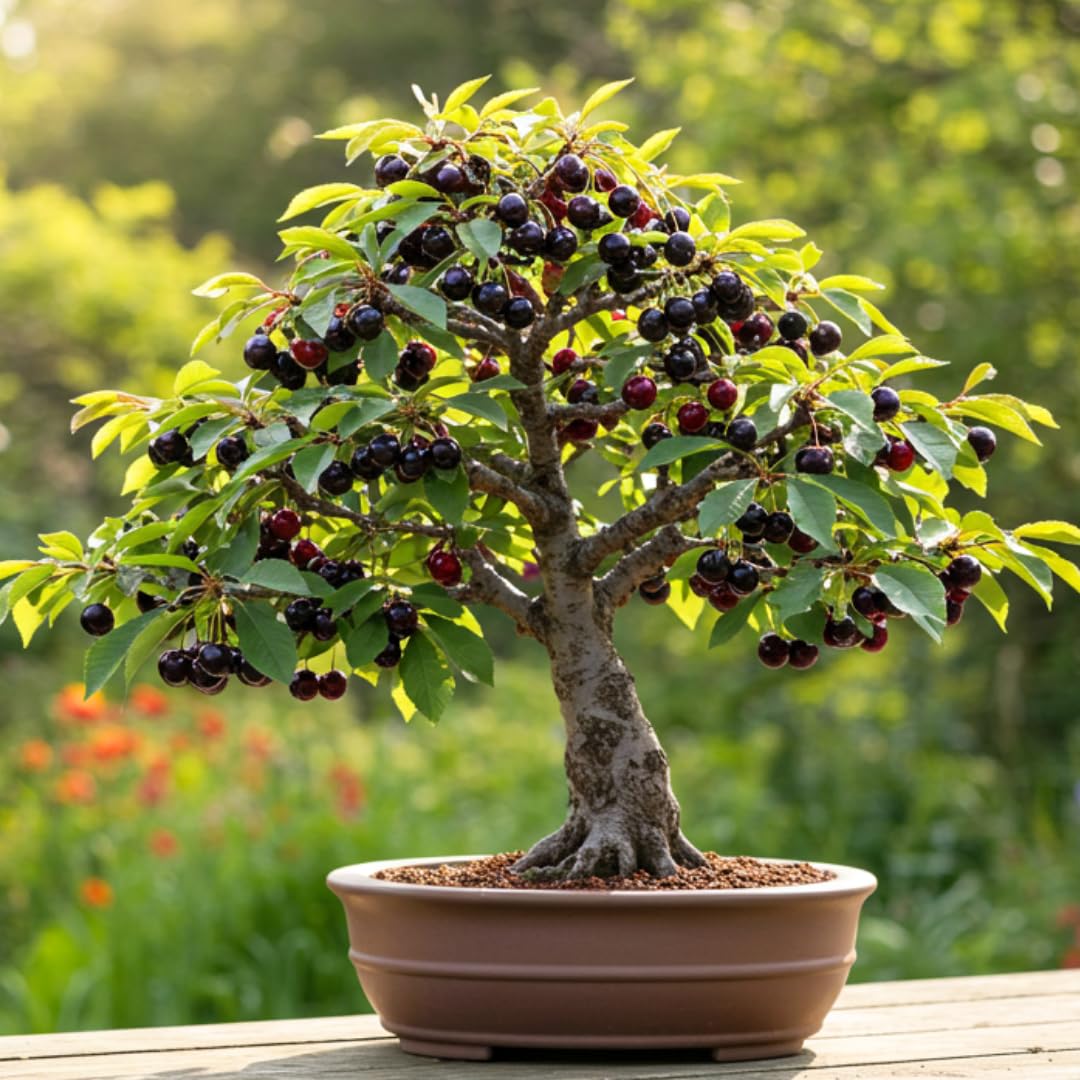
This black cherry seedling is marketed for both outdoor fruit production and bonsai cultivation, giving it a dual-purpose appeal. The seedling ships without leaves or pots and arrives as a bare-root starter that buyers describe as “small but healthy” with plenty of root mass for its size. Several reviewers noted new leaf growth within weeks of planting.
The tree requires full sun and nutrient-rich soil for best results. A few buyers reported that after two years, the tree had not produced any fruit, which is consistent with seedling-grown cherries that can take 5 to 7 years to reach fruiting age. The description does not specify the tree’s age at shipping.
If your goal is a manageable potted tree or a bonsai project, this seedling’s smaller stature works in your favor. If you want fruit quickly, the multi-year wait before first harvest is a real limitation.
Why it’s great
- Works as both fruit tree and bonsai material
- Healthy root mass reported by most buyers
Good to know
- May take 5-7 years to produce fruit
- No pot or soil included — bare root only
7. CZ Grain Black Cherry Bonsai Tree for Growing – 1 Year Seedling
This is a 1-year-old black cherry seedling, which is the youngest option in the list. The tree ships as a dormant bare root and prefers partial sun rather than full sun, which makes it more forgiving for a windowsill or shaded patio start. One buyer reported the tree “took a while but alive and budding,” while another noted it was no larger than a 6-month-old cutting.
The bonsai framing is appropriate because the tree’s young age makes it highly trainable from the first season. The CZ Grain brand includes soil recommendations and growing tips, which helps beginners avoid the most common watering and soil mistakes. Multiple buyers described the tree as very easy to maintain, requiring only regular watering and minimal attention.
The trade-off is that a 1-year-old seedling has the longest wait before fruit production — potentially 6 to 8 years. For a grower who wants the satisfaction of shaping a tree from its earliest stage and isn’t in a rush for cherries, this is the most affordable entry point.
Why it’s great
- Lowest cost entry point for bare root cherry growing
- Tolerates partial sun, flexible positioning
Good to know
- Only 1 year old, longest wait for fruit
- Some units very small, like 6-month cutting
FAQ
How long does a bare root cherry tree take to produce fruit?
Can I plant a bare root cherry tree in a container?
What is the difference between Prunus serotina and sweet cherry?
Final Thoughts: The Verdict
For most users, the best bare root cherry tree winner is the AKTRD 2 Black Cherry Trees because its 1-1.5 ft height and two-tree count provide the best balance of advanced growth and value for money. If you want a massive head start with a 2-3 ft tall plant, grab the Mightyoak Black Mulberry. And for cold-climate growers who need zone 3 hardiness, nothing beats the AKTRD Zone 3-6 Black Cherry.