
Planting bare-root trees is an entirely different game than transplanting a potted specimen. The roots are exposed, fragile, and need a perfectly prepared slit or hole to spread without air pockets. A standard shovel designed for scooping soil will fight you, crush the roots, or leave a cavity that kills the tree. The tools in this guide are purpose-built for creating that ideal, deep opening in a single motion—whether you are setting out a dozen saplings or a single heritage apple tree.
I’m Min — the co-founder and writer behind Gadgets Feed. I’ve spent countless hours analyzing the steel gauges, blade geometries, handle ergonomics, and real-world user reports across the full spectrum of planting tools to find which designs actually survive rocky clay without bending and which features genuinely speed up the work.
After evaluating dozens of models on metrics like blade sharpness, shaft durability, weight distribution, and root-cutting ability, I’ve narrowed the field to the seven most effective bare root tree planting tools available right now, each chosen for a specific planting scenario and soil condition.
How To Choose The Best Bare Root Tree Planting Tools
A bare root tree has no soil ball to protect the roots. The tool you use must create a deep, narrow slit or hole that allows the roots to dangle freely without being folded, crushed, or left in an air pocket. The wrong tool forces you to dig an oversized hole, damaging roots and wasting energy. Here are the key factors that separate a tree-planting tool from a general-purpose shovel.
Blade Shape and Tip Design
Look for a narrow blade (3 to 4 inches wide) with a sharp, pointed or beveled tip. A dibble bar’s arrow-shaped or wedge point is ideal for slicing through soil and creating a V-shaped opening. A planting spade with a sharpened edge and a pointed tip works well for deeper holes. Avoid wide, flat spades that push soil sideways rather than cutting through it.
Steel Gauge and Shaft Strength
Thicker steel (11-gauge or thicker) resists bending when you encounter roots or compacted clay. A full-steel shaft or a resin-encased steel shaft prevents twisting or snapping at the blade-to-handle junction. This is the most common failure point in cheaper tools, especially when prying or levering out soil.
Handle Style and Length
For bulk planting (50+ trees), a T-handle or D-grip with a 35-to-44-inch shaft lets you drive the blade with your foot and use your body weight without bending over excessively. For smaller jobs or tighter spaces, a shorter D-handle (around 31 inches) offers more control. The handle material should cushion vibration—rubber grips on steel or a fiberglass shaft reduce hand fatigue significantly.
Quick Comparison
On smaller screens, swipe sideways to see the full table.
| Model | Category | Best For | Key Spec | Amazon |
|---|---|---|---|---|
| Fiskars 44″ Pro Digging Shovel | Spade | Tough clay & rocky soil | Sharpened 13″ blade, 44″ aluminum D-handle | Amazon |
| Bully Tools 11-Gauge Dibble Bar | Dibble Bar | Bulk seedling planting | 11-gauge steel blade, 38″ T-handle | Amazon |
| Root Slayer 22011 Garden Shovel | Serrated Spade | Root-filled garden beds | 13″ serrated blade, resin-encased steel shaft | Amazon |
| Jim-Gem Speedy Dibble Tree Planting Bar | Lightweight Dibble | High-volume reforestation | 35-7/8″ bar, 2 lbs lighter than standard | Amazon |
| A.M. Leonard All Steel Nursery Spade | Nursery Spade | Heavy-duty professional use | 13″ blade, 50″ handle, 8 lbs weight | Amazon |
| Seymour AUA2 Adjustable Auger | Manual Auger | Consistent-depth post holes | Adjustable 4-8″ diameter, 7.48 lbs | Amazon |
| Spear Head Spade SHFD3 | Fiberglass Spade | Reduced back strain, dense clay | 10.75″ spear head blade, 41.5″ D-grip handle | Amazon |
In‑Depth Reviews
1. Fiskars 44″ Pro Garden Shovel

This is the shovel that keeps showing up in the hands of contractors and serious gardeners who need one tool for everything—digging, prying, slicing roots, and moving soil. The teardrop-shaped shaft provides a more natural grip, and the aluminum D-handle transfers force straight through the blade without flex, which means you can stomp down hard on the tread and drive through tough clay without worrying about the handle snapping.
The sharpened steel blade is the standout feature here. The edge is ground at the factory to penetrate compacted soil, but it’s thick enough that it stays sharp after hundreds of holes. Users report using this shovel to cut through 3/4-inch river rock and heavy roots without the blade separating from the shaft—a failure point that plagues cheaper tools. At 5.6 pounds, it is heavy enough to provide momentum but not so heavy that it fatigues you during a long planting session.
For bare root tree planting, the 44-inch length lets you stand upright while digging, reducing back strain. The blade’s moderate width (roughly 9 inches at the widest) is wide enough to create a planting hole quickly but narrow enough to avoid disturbing too much soil around neighboring roots. If you need a single shovel that can handle everything from a single bare-root apple tree to a full garden bed, this is the choice.
Why it’s great
- Sharpened edge cuts roots and tough soil immediately
- Lifetime warranty backs the build quality
- Teardrop shaft offers excellent control and leverage
Good to know
- Heavier than a standard garden spade
- Not ideal for lifting or tossing soil sideways
2. Bully Tools 11-Gauge Dibble Bar
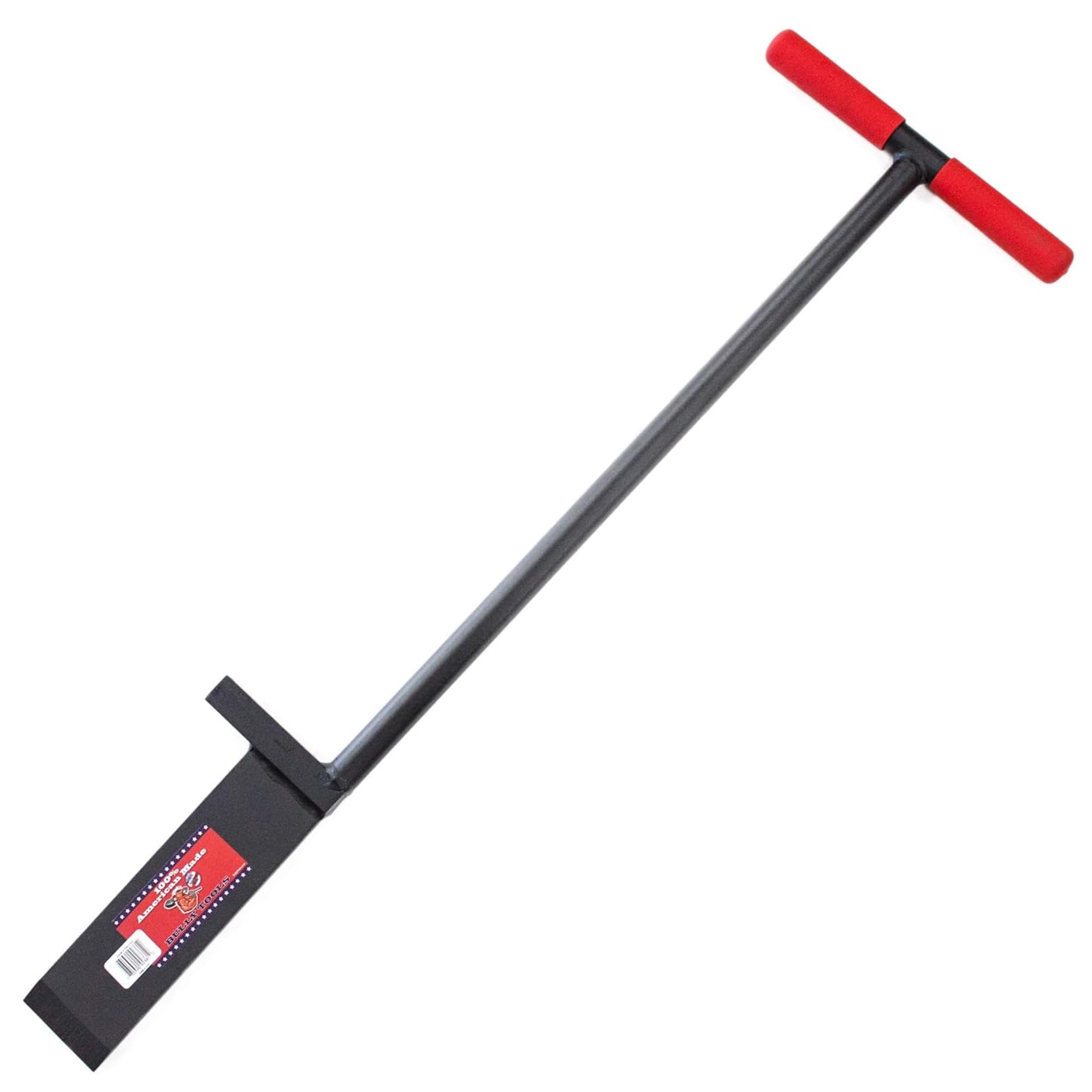
The dibble bar is the fastest way to plant bare-root seedlings and saplings in bulk, and this Bully Tools model is built exactly for that purpose. Its 11-gauge steel blade is 30 percent thicker than most imported competitors, meaning you can drive it into rocky or root-filled ground without the blade edge rolling over. The single-sided sharpened edge cuts a clean slit, and the 5-inch-wide foot step lets you apply full body weight to penetrate soft or medium soil in one motion.
The 38-inch T-style handle with rubber grips is crucial for high-volume planting. The T-shape distributes force evenly across both palms, reducing the strain on a single arm or shoulder. The rubber grips prevent slipping even when your hands are sweaty or muddy. Users who planted hundreds of seedlings in heavy clay soils report that the bar creates a deep pocket for roots without bending or flexing, and the narrow profile (3-inch blade width) leaves surrounding soil undisturbed.
Beyond planting, this tool doubles as a trenching bar for creating furrows or a root cutter for slicing through shallow root systems. The all-steel construction means there are no plastic parts to crack, and the powder-coat finish resists rust. If you are planting more than 50 bare-root trees at a time, this tool will cut your planting time in half compared to using a shovel.
Why it’s great
- Extra-thick 11-gauge steel resists bending
- Rubber T-grip reduces hand fatigue
- Designed specifically for fast, efficient planting
Good to know
- Weighs 8 pounds—feels substantial
- Blade could be wider for larger root systems
3. Root Slayer 22011 Garden Shovel

Planting bare-root trees in an established garden bed means you are almost certainly going to encounter existing roots from nearby plants or trees. The Root Slayer 22011 is engineered specifically for this battlefield. The V-shaped inverted cutting tip at the blade’s point acts like a serrated knife, sawing through roots as you drive the blade downward. This is not a gimmick—the serrations are deep enough to grab and cut through roots up to 1 inch thick without needing a separate pruning saw.
The blade is made from heavy-duty carbon steel with a resin-encased steel shaft that runs all the way through the handle. This design eliminates the common failure point where the blade joins the handle—there is no socket to break. The raised tread on the foot step provides excellent grip, even on wet clay or muddy ground, allowing you to stomp with confidence. At 5 pounds, it feels solid but not back-breaking, and the 45-inch overall length keeps you upright.
Users with heavy clay soil and dense root mats report that this shovel cuts through the combination far faster than a standard spade. The blade width of 4 to 5 inches at the tip is narrow enough to dig a precise planting slit but wide enough to open the hole quickly. One caveat: the manufacturer explicitly warns against using it for prying or excessive leverage, as the resin-encased shaft is strong but not indestructible. For its intended purpose—digging and root cutting—it is exceptional.
Why it’s great
- Serrated V-tip cuts through roots on contact
- Resin-encased shaft prevents handle breakage
- Excellent traction on the foot step
Good to know
- Not designed for heavy prying or leverage
- Blade is slightly narrower than a standard spade
4. Jim-Gem Speedy Dibble Tree Planting Bar

When you are planting hundreds or even thousands of bare-root seedlings, every ounce of weight you save per lift translates directly into less fatigue at the end of the day. The 35-7/8-inch length is optimized for fast, repetitive motion without needing to adjust your stance.
The beveled arrow point is its defining feature. The arrow shape creates a clean, V-shaped slit in the soil with minimal disturbance to the surrounding ground, which is ideal for inserting a small bare-root seedling. The blade measures 3 inches wide and 11-7/8 inches long with a 3/8-inch thickness—thin enough to penetrate easily but thick enough to resist bending in anything except the hardest, rockiest soils. The orange powder-coated finish resists rust and makes the tool easy to spot in tall grass or brush.
Users consistently report planting 100 to 200 trees in a single afternoon with this tool, even in heavy clay. The lightweight design means you can maintain a steady rhythm without needing to stop and rest your arms. The main trade-off is that the thinner blade is less effective in extremely rocky or dry, compacted soils where a heavier bar would be needed to break through. For medium, moist, or loamy soils, this is the fastest option available.
Why it’s great
- Significantly lighter than standard dibble bars
- Beveled arrow point creates a clean slit
- High-speed design for bulk planting
Good to know
- Thinner blade struggles with rocky soil
- Orange color may fade with extended UV exposure
5. A.M. Leonard All Steel Nursery Spade

This is the tool that professional nursery workers and landscapers reach for when they need to move heavy soil, dig deep planting holes, or sever thick roots with brute force. The entire spade is forged from alloy steel, from the blade through the shaft to the handle—there is no wood or plastic to crack. The 13-inch blade tapers from 7-3/8 inches at the top to 6-3/8 inches at the tip, providing a broad surface for moving soil while still being narrow enough to dig precise holes.
The turned steps on the top edges of the blade are a small but critical detail. These allow you to place your foot comfortably on the blade even in thick mud, giving you superior downward force without your foot slipping off. The 50-inch handle length means you can use the spade almost like a pry bar when extracting soil from a deep hole, and the full steel construction means it will not bend or snap even under extreme leverage. The powder-coat finish protects against rust, but the steel will last a lifetime even if the coating scratches off.
Weighing in at 8 pounds, this spade is not for the faint of heart. The weight works in your favor when digging—the momentum of the heavy blade helps drive through dense soil. However, it is not a tool you want to carry across a large property all day. For planting a few large bare-root trees with deep root systems, this spade provides the power and durability needed for the job. It is an investment in a tool that will outlast you.
Why it’s great
- All-steel construction, no weak points
- Very long handle for excellent leverage
- Turned steps prevent foot slippage
Good to know
- Heavy at 8 pounds, not for all-day carry
- Powder-coat may chip with heavy use
6. Seymour AUA2 Adjustable Auger

When your bare-root tree has a particularly large or spreading root system, a dibble bar or spade may not create a wide enough hole. The Seymour AUA2 Adjustable Auger is a manual post-hole digger that bores a consistent, clean hole of your chosen diameter—from 4 inches up to 8 inches—which is especially useful for larger saplings or when you need to plant multiple trees in a straight row with uniform spacing. The steel blades are riveted to a tough malleable iron yoke that withstands twisting forces.
The adjustable mechanism is simple and reliable: you loosen a bolt, slide the blades to the desired width, and tighten. The blades are sharpened to cut through soil, and the welded steel T-handle gives you leverage to twist and pull the auger out. Users in heavy clay report digging uniform holes to depths of 3 to 4 feet in about 15 minutes each. The auger compacts the dirt as it cuts, which actually makes removal easier than a standard clamshell digger.
The main limitation is that the auger stops dead at rocks larger than 3 inches or thick roots. If your soil is full of stones or heavy root mats, you will need a digging bar or pick to break through first. For clean, loamy, or clay soils without major obstructions, this tool produces the most consistently sized planting holes of any manual option. It is also the most back-friendly tool for deep holes, as you are twisting rather than stomping.
Why it’s great
- Adjustable diameter for different root sizes
- Produces uniform, clean holes
- Excellent for deep planting in softer soils
Good to know
- Struggles with rocks and dense root mats
- Requires some assembly and periodic bolt tightening
7. Spear Head Spade SHFD3

The Spear Head Spade uses a unique angled blade that tapers to a sharp point, allowing it to penetrate hard-packed soil with significantly less downward force than a traditional flat-edge spade. The 10.75-inch blade is made from high-carbon manganese steel, which is heat-treated for wear resistance. The fiberglass handle measures 31 inches with a cushioned D-grip at the top, making this a shorter, more maneuverable tool ideal for planting in tight spaces or for shorter users who do not want a 44-inch handle.
The D-grip is the standout ergonomic feature here. It allows you to generate torque with your wrist and forearm, which reduces the amount of bending and twisting required from your lower back. Users with chronic back pain report that this spade lets them garden and plant for hours without the usual strain. The spear head shape is also excellent for cutting through tough weeds and shallow roots, making it a versatile tool for preparing a planting site.
At 3.8 pounds, this is the lightest full-size spade on this list. The fiberglass handle absorbs vibration and will not rot, splinter, or corrode. The main trade-off is that the shorter handle reduces leverage for deep digging. If you are planting trees with exceptionally long taproots, you may need a longer tool to reach the necessary depth. For most bare-root planting scenarios, particularly in raised beds or prepared soil, the Spear Head Spade offers a level of comfort and efficiency that is hard to beat.
Why it’s great
- Spear tip reduces force needed to penetrate
- D-grip minimizes back strain
- Lightweight and durable fiberglass handle
Good to know
- Short handle limits deep digging leverage
- May struggle in extremely rocky soil
FAQ
Can I use a regular shovel for planting bare-root trees?
What is the difference between a dibble bar and a planting spade?
How do I maintain my tree planting tools to prevent rust?
Final Thoughts: The Verdict
For most users, the best bare root tree planting tools winner is the Fiskars 44″ Pro Garden Shovel because it combines a sharpened, durable blade with a comfortable, long-reach handle that works across all soil types and tree sizes. If you are bulk planting seedlings and want maximum speed, grab the Bully Tools 11-Gauge Dibble Bar. And for planting in root-filled garden beds, nothing beats the cutting power of the Root Slayer 22011.