
The modern man’s boot rotation has a gap: a silhouette polished enough for the office yet built on a zero-drop, wide-toe platform that lets your feet function naturally. Most Chelsea boots pinch your toes, elevate your heel, and deaden the ground feel. The barefoot minimalist alternative fixes all of that by merging a classic elastic-side profile with a flexible, puncture-resistant sole and a toe box that respects the natural splay of your foot.
I’m Min — the co-founder and writer behind Gadgets Feed. I’ve spent hundreds of hours dissecting sole thickness in millimeters, measuring toe-box volume across brands, and cross-referencing real buyer reports on delamination and leather durability to separate the genuinely minimalist boots from the merely minimalist-looking.
Whether you are transitioning from conventional footwear or already own five pairs of Vibram soles, you need a boot that balances ankle coverage, ground feedback, and urban style. This guide rounds up the nine best options to help you find the right barefoot minimalist men’s chelsea boot for your daily stride.
How To Choose The Best Barefoot Minimalist Men’s Chelsea Boot
Selecting a barefoot Chelsea boot requires a shift in priorities. You are no longer looking for arch support or thick cushioning. Instead, focus on sole flexibility, toe-box geometry, and upper material. A boot that looks minimalist but fails on these three pillars will compromise your foot health and ruin the barefoot experience.
Sole Thickness and Flexibility
The sole should be thin enough to transmit ground texture—typically 4 mm to 8 mm of rubber—but sturdy enough to protect against sharp rocks and cold pavement. Flex it in your hands: a truly barefoot sole bends easily at the ball of the foot, while a stiff sole will resist natural rolling motion and fatigue your calves faster.
Toe-Box Volume and Shape
A wide toe box is non-negotiable, but the shape matters equally. The best barefoot Chelsea boots offer a rounded or anatomical toe box that lets your big toe point straight forward and your pinkie toe splay outward. Avoid tapered toe boxes that squeeze the metatarsals even if they look sleek—that defeats the purpose of minimalist footwear.
Upper Material and Closure System
Full-grain leather offers durability and weather resistance but requires a break-in period. Synthetic suede and textile uppers are lighter and need almost no break-in but may wear faster. Elastic gore panels on Chelsea boots must be snug enough to hold the heel in place without creating pressure points, and a pull tab makes daily on-off significantly easier.
Quick Comparison
On smaller screens, swipe sideways to see the full table.
| Model | Category | Best For | Key Spec | Amazon |
|---|---|---|---|---|
| Vivobarefoot Tracker Textile AT | Premium Hiker | All-weather hiking with maximum ground feel | 4 mm sole + 2 mm insole | Amazon |
| JIM GREEN Barefoot African Ranger | Work/Hiking Hybrid | Rugged terrain and long shifts | Stitchdown construction, resoleable | Amazon |
| Vivobarefoot Gobi IV | Premium Casual | Smart-casual everyday wear | 4 mm Gobi outsole, Wild Hide leather | Amazon |
| Xero Shoes Ridgeway Chelsea | Mid-Range Hybrid | Urban-to-trail versatility | Lugged outsole, full-grain leather | Amazon |
| Vivobarefoot Tracker Leather AT | Premium Hiker | Leather durability with barefoot feel | Waterproof, All Terrain sole | Amazon |
| Belleville Mini-Mil TR102 Tactical | Tactical/Minimalist | EMS, military, and rugged outdoor use | 2 mm EVA midsole, Vibram Tarsus outsole | Amazon |
| Belleville Mini-Mil Barefoot Shoes | Tactical Minimalist | High-agility training and hiking | Zero drop, Vibram slip-resistant outsole | Amazon |
| Vivobarefoot Primus Lite 3.5 | Training/Casual | Gym, running, and everyday wear | Hexagonal tread, ultra-thin sole | Amazon |
| Xero Shoes Alpine Snow Boots | Winter Barefoot | Cold-weather walks and light snow | Water-resistant, insulated, flexible sole | Amazon |
In‑Depth Reviews
1. Vivobarefoot Tracker Textile AT
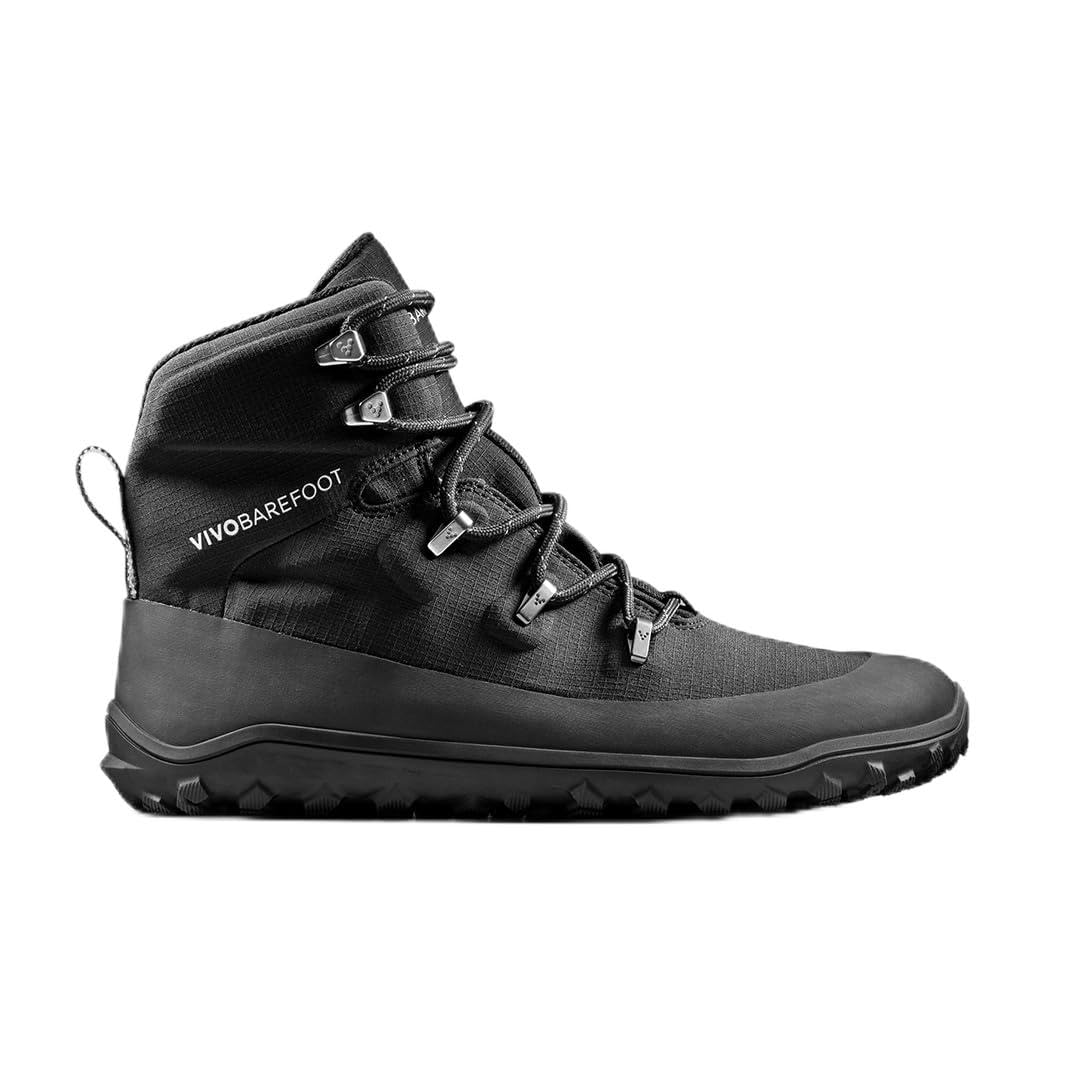
The Tracker Textile AT uses a 4 mm outsole with a 2 mm insole, delivering exceptional ground feel while maintaining puncture resistance through the textile and rubber layup. It handled knee-deep snow and slush without socks in real-user tests, which speaks to both its waterproof membrane and thermal efficiency.
The synthetic upper is lighter than leather and requires zero break-in, but the elastic gore and pull tab keep the heel locked without pressure. Sizing runs slightly large—users report that going down half a size from your standard US measurement yields a snug fit.
Traction on wet ice and polished stone is mediocre, but on mud, dirt, loose gravel, and snow the grip is excellent. If you need a single boot for variable trail conditions and daily commuting, this is the most versatile pick in the premium tier.
Why it’s great
- Waterproof yet breathable
- Excellent ground feedback through 4 mm sole
- Works well in deep snow and slush
Good to know
- Traction lacking on wet icy stone
- Some units had durability issues with upper delamination
- Sizing runs large—size down half step
2. JIM GREEN Men’s Barefoot African Ranger Boots
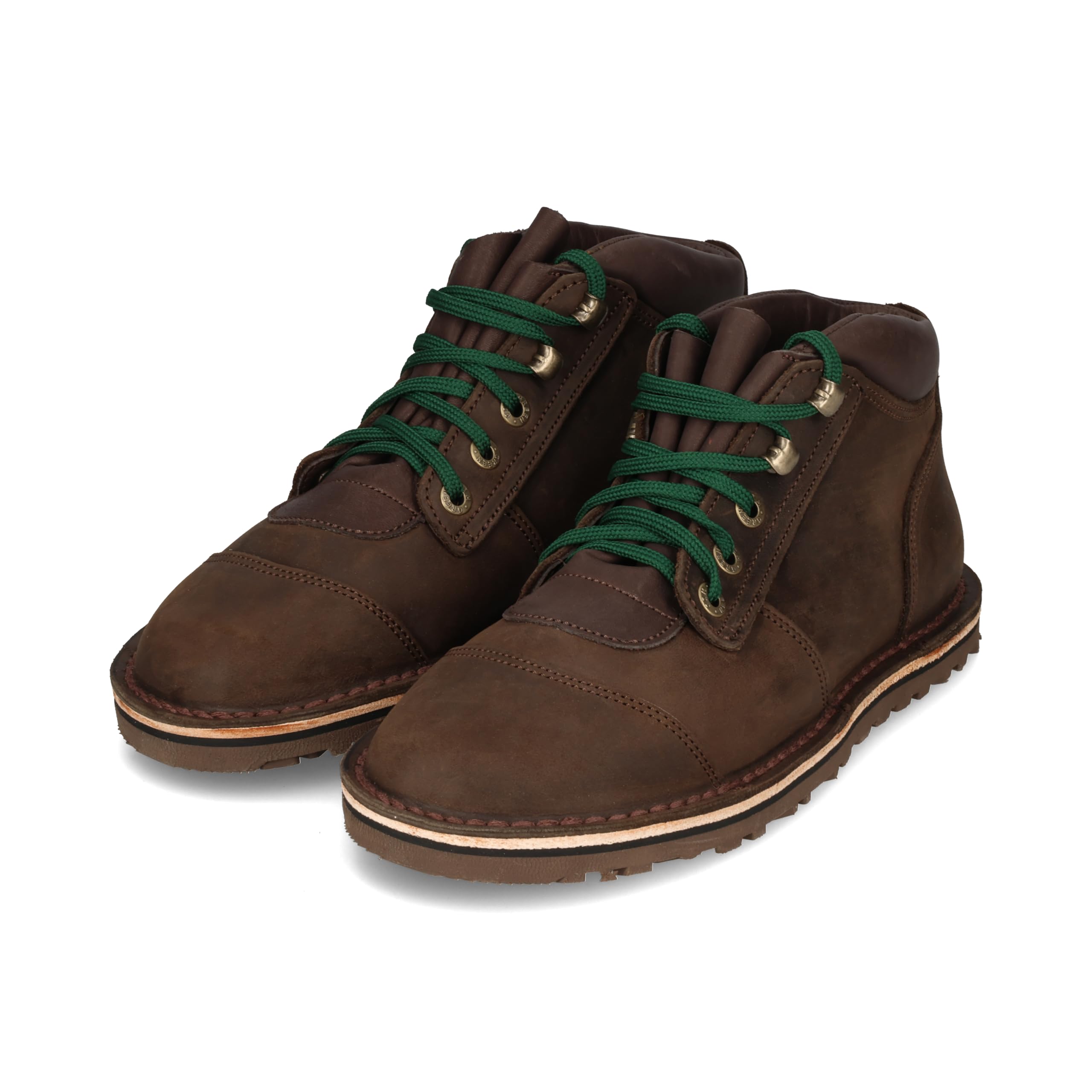
Stitchdown construction means these boots can be resoled, giving them a lifespan that far exceeds cemented or glued alternatives. The full-grain leather upper is thick and rugged, and the toe box is extremely wide—round in shape rather than anatomical, which accommodates high-volume feet and 4E widths comfortably.
The flexible outsole is soft and grippy, but the boot requires a notable break-in period. Several users reported blisters during the first week, especially around the ankle collar, until the leather softened. Removing the included insole is essential to preserve the barefoot experience—leaving it in causes squeezing and ankle pain.
The lace system is fiddly and the boots ride higher on the ankle than most Chelsea silhouettes, but the payoff is a work-boot level of durability rarely seen in minimalist footwear. They are not cushioned, so rough terrain transmits directly, but the leather interior prevents foot odor even after long days.
Why it’s great
- Stitchdown construction for resoling
- Extremely wide toe box fits 4E feet
- Durable full-grain leather with clean stitching
Good to know
- Long break-in period with potential blisters
- Not insulated—unsuitable for winter
- Lace system is finicky to adjust
3. Vivobarefoot Gobi IV
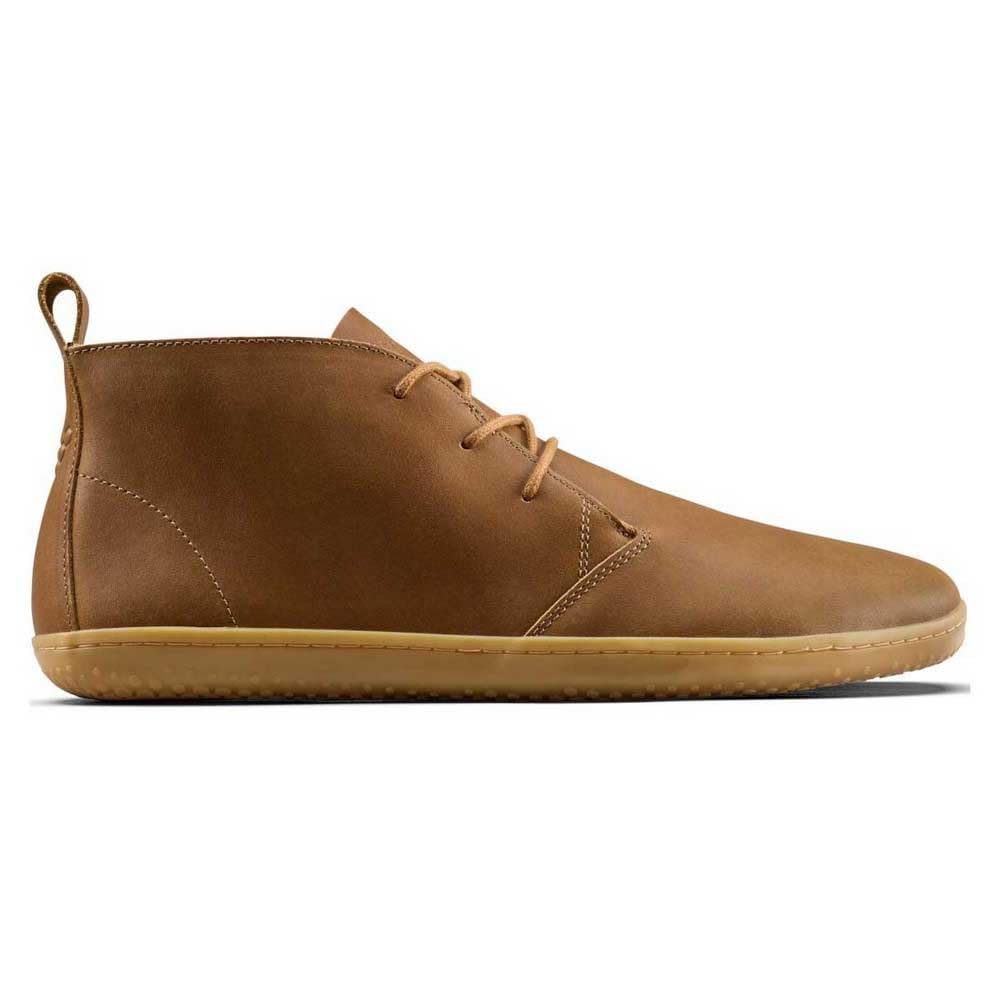
The Gobi IV is the desert boot silhouette reimagined for barefoot living. The 4 mm Gobi outsole is thin enough to feel pebbles but tough enough for city pavement, while the Wild Hide leather upper develops a rich patina with wear. The cork insole adds a touch of natural moisture management and conforms to the foot over time.
Fit is true to size for most users, though those with very wide feet may find the toe box less generous than the African Ranger. The ankle collar is lower than a traditional Chelsea boot, which improves freedom of movement but offers less weather protection. The elastic gore panels are stiffer than some competitors, requiring a bit more effort to slip on.
Users report zero break-in discomfort if the size is correct, and the boots work well for all-day wear at the office or on casual weekends. The lack of a waterproof membrane means damp conditions will soak through eventually, but the leather can be treated for light water resistance.
Why it’s great
- Premium Wild Hide leather ages beautifully
- Comfortable out of the box with no break-in
- Smart-casual styling fits dress code settings
Good to know
- Not waterproof—treat leather for rain
- Toe box less generous than dedicated wide brands
- Higher price point
4. Xero Shoes Men’s Ridgeway Barefoot Chelsea Boots
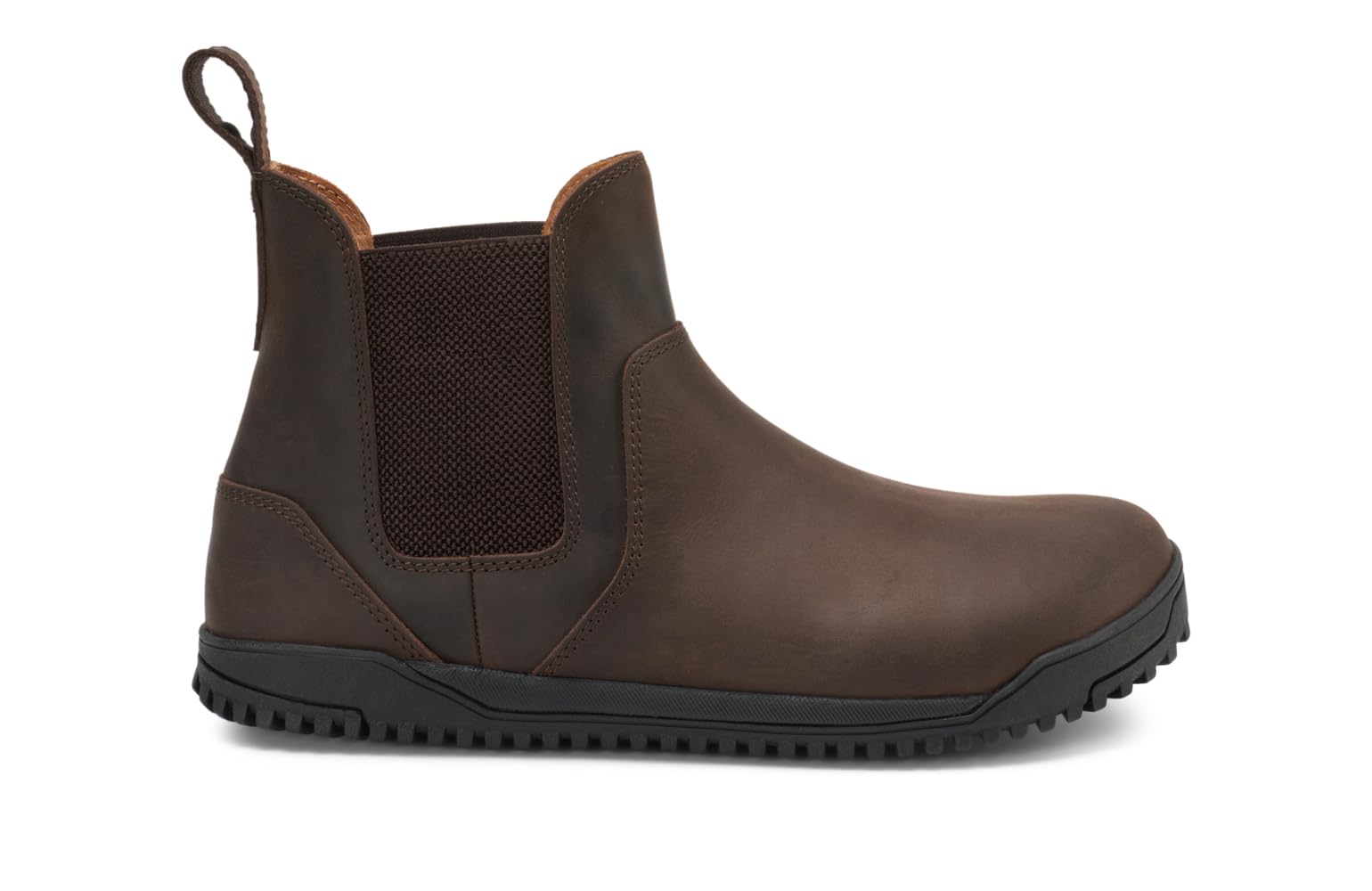
The Ridgeway Chelsea is Xero Shoes’ answer to the barefoot boot that looks good in town and performs on light trails. The full-grain leather upper is supple and looks better as it develops creases, and the lugged outsole provides noticeably better traction on loose dirt than smooth-soled Chelsea boots.
Sizing is the weakest link here—multiple verified buyers report that the Ridgeway runs a full size small. If you normally wear a US 9, order a US 10. Even then, the toe box is less wide than some barefoot purists expect, sitting closer to a wide conventional boot than a true anatomical shape. The leather arrived dry for several users and required conditioning.
The elastic gore holds the foot securely, and the pull tab is large enough for thick socks. For mixed use—desk job, weekend hike, errands—the Ridgeway is a solid mid-range option, but verify your size carefully before purchasing.
Why it’s great
- Lugged outsole for off-road grip
- Full-grain leather develops character
- Classic Chelsea look for urban wear
Good to know
- Runs one full size small—size up
- Toe box not as wide as true barefoot standards
- Some reports of delamination
5. Vivobarefoot Men’s Tracker Leather All Terrain
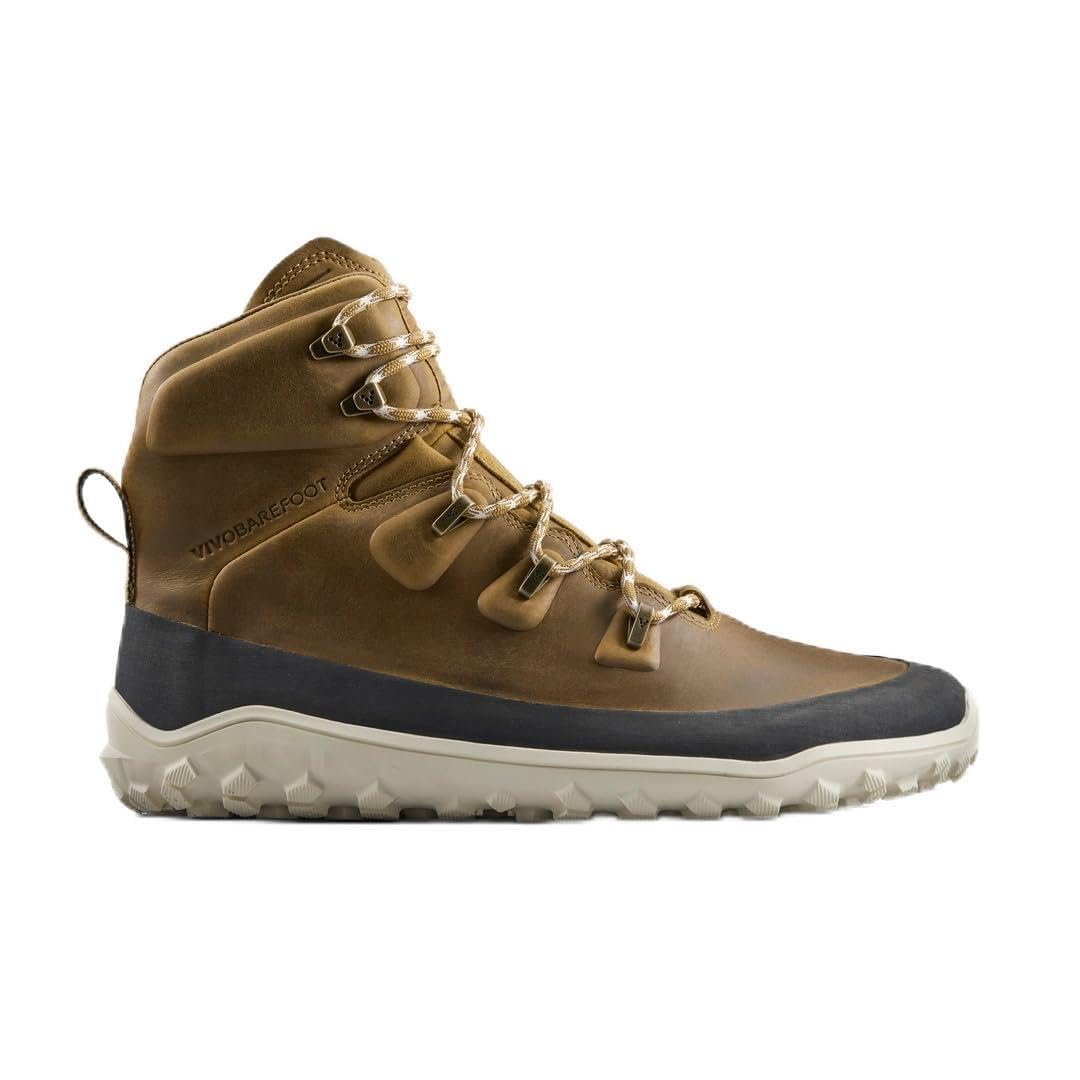
The Tracker Leather AT strips out the waterproof membrane for better breathability while retaining a DWR coating that sheds light rain. The result is a boot that breathes better on warm climbs but still keeps feet dry in puddles and wet grass. The new All Terrain sole uses deeper lugs than the previous iteration, improving grip on loose dirt and wet rock.
The leather requires a short break-in period—typically two to three walks—after which it molds to the foot. The wide toe box is generous enough for natural toe splay, and the heel pocket is secure without being restrictive. Users report zero foot pain or knee aggravation even on five- to six-mile hikes.
Durability concerns exist: at least one review documented an eyelet ripping off within the first week, and customer service follow-through was inconsistent. For most users, however, the boot has held up well over several months of weekly use. It is not as thermally efficient as the Textile AT version, so pair with wool socks for cold weather.
Why it’s great
- Breathable leather with good water shedding
- Wide toe box with secure heel fit
- Improved traction over previous model
Good to know
- Eyelet durability reported as inconsistent
- Requires short break-in period
- Less thermal insulation than textile version
6. Belleville Mini-Mil TR102 Tactical Boot

The TR102 is the 6-inch lace-up tactical boot that started the Belleville barefoot line. It uses a 2 mm die-cut EVA midsole over a Vibram Tarsus outsole, giving it more structure than a typical barefoot shoe but substantially more ground feel than any standard military boot. Users report excellent stability on technical terrain while carrying heavy packs.
Sizing is notoriously inconsistent—women’s 7.5 required a men’s 6.5 wide in one review, and lace loops can dig into the top of the foot. The leather coating on some versions scuffs and flakes within a month of heavy use, and the sole is on the stiffer side for true barefoot purists.
For EMS, SWAT, and long hiking days, the TR102 provides ankle coverage and durability that thin-soled trainers cannot match. The trade-off is less flexibility than purpose-built barefoot boots, but the compromise makes sense for high-intensity activities where ankle protection is non-negotiable.
Why it’s great
- Tactical-grade durability for heavy use
- Good ground feel with 2 mm EVA + Vibram outsole
- Ankle support without sacrificing mobility
Good to know
- Sizing is inconsistent—try multiple sizes
- Upper leather coating scuffs easily
- Stiffer sole than true barefoot boots
7. Belleville Mini-Mil Barefoot Shoes
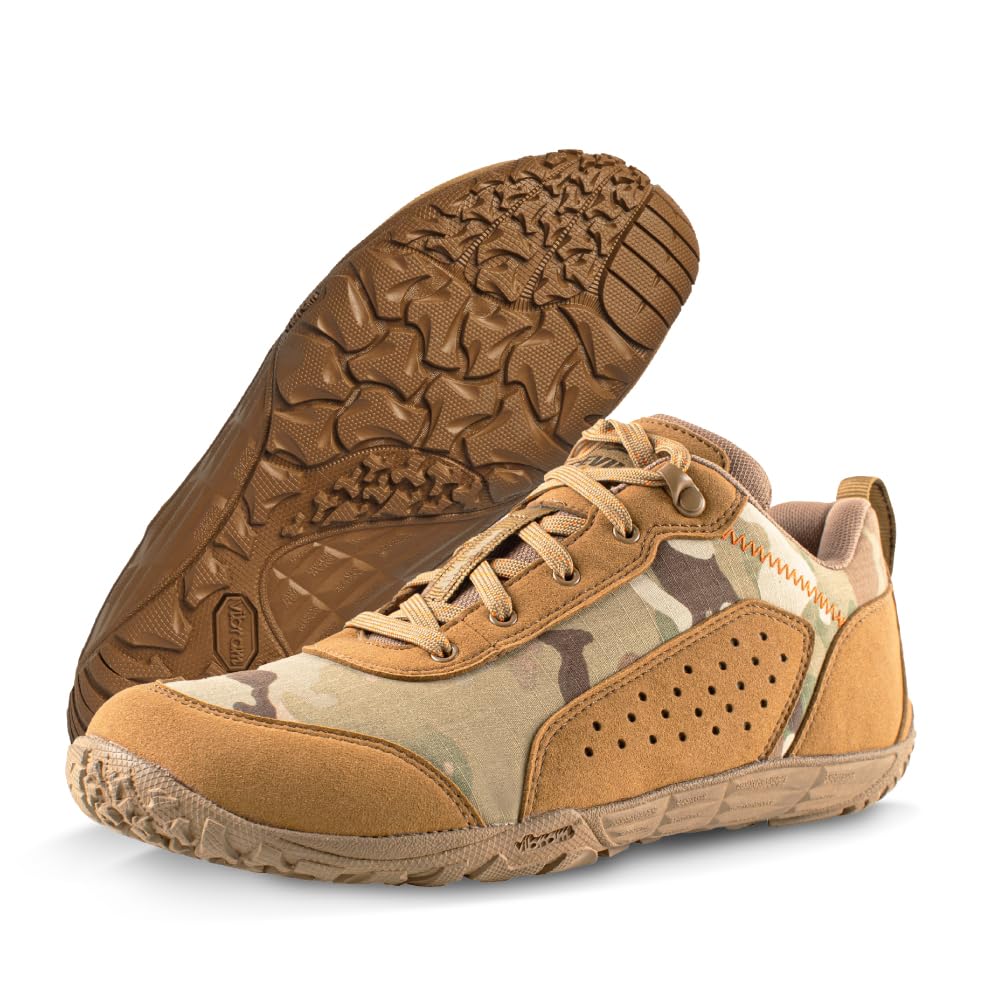
The Mini-Mil offers military-grade build quality in a lower-cut package than the TR102. The synthetic suede upper with SuperFabric panels is more breathable and lighter than full leather, making it ideal for warm-weather hiking, range work, and daily wear. The Vibram Tarsus rubber outsole is oil- and slip-resistant, tested on wet and greasy surfaces.
The wide toe box has drawn mixed feedback—some users say it accommodates natural toe splay beautifully, while others with wider feet wished for more room. The zero-drop platform is consistent across the forefoot and heel, promoting a natural midfoot strike. The 2 mm shock-dispersing midsole provides just enough padding for pavement without muffling ground feedback.
One notable complaint: a buyer who ordered half a size up found the shoes still too small and was charged a return shipping fee. Confirm your Brannock size and consider ordering wide if you fall between widths.
Why it’s great
- Military construction at a mid-range price
- Slip-resistant Vibram outsole
- Breathable for warm weather use
Good to know
- Runs narrow—order wide if needed
- Return shipping fee charged
- Toe box could be wider for true barefoot
8. Vivobarefoot Primus Lite 3.5

The Primus Lite 3.5 is not a Chelsea boot, but it earns its place here as the go-to training companion for barefoot enthusiasts who also need a Chelsea boot in their rotation. The ultra-thin sole with hexagonal tread delivers exceptional ground feel for CrossFit, HIIT, and short runs, while the mesh upper is breathable and odor-resistant.
Sizing is the primary headache—most users report needing to size down a full step from their US Brannock measurement. A US 13 buyer went to a 12 for a proper fit. The toe box is wide enough for natural splay but some reviewers note it remains narrower than older Vivobarefoot models.
For the price, the build quality is solid: after 10,000+ steps daily the sole shows minimal wear and the upper holds shape. If you want a true barefoot shoe that transitions from the gym to the street, this is it. Just be meticulous with sizing.
Why it’s great
- Excellent ground feel for training
- Breathable, odor-resistant mesh upper
- Durable after heavy daily use
Good to know
- Runs large—size down one full size
- Toe box could be wider for some
- Not designed for cold or wet conditions
9. Xero Shoes Men’s Alpine Barefoot Snow Boots
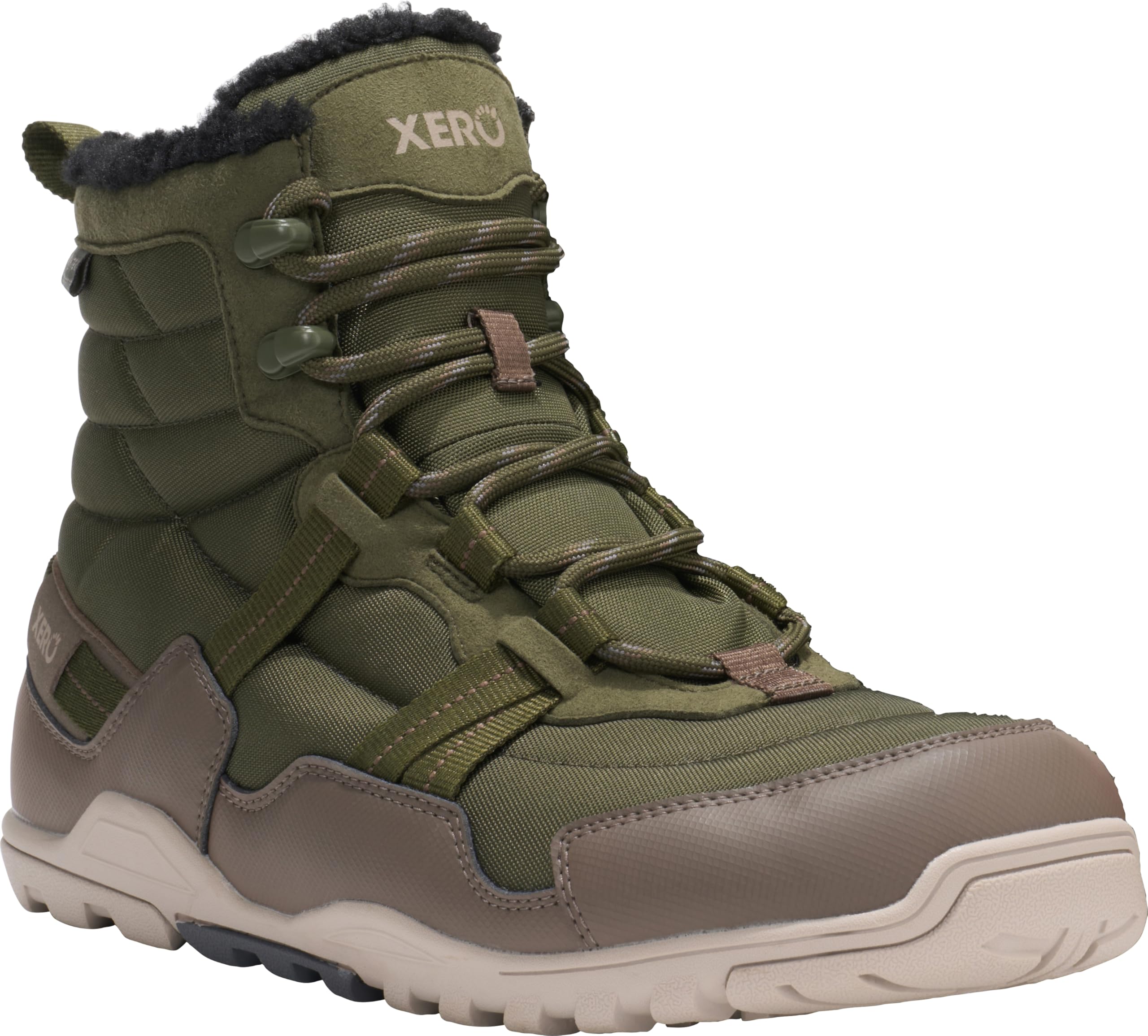
The Alpine is Xero Shoes’ take on a cold-weather barefoot boot. It is water-resistant rather than fully waterproof, meaning it handles snow and light rain well but will wet through in standing puddles. The insulation is adequate for moderate cold with wool socks, but extreme cold will require thicker layering.
The wide toe box is a genuine highlight for the price tier—your toes can splay freely inside. The zero-drop, flexible sole provides excellent traction on snow and light ice. Testers reported no slipping on packed snow during a full winter of daily use. The hook lacing system is easy to operate with gloves on.
Critical feedback centers on the toe box width: three users found it narrower than expected for a barefoot shoe, and those with genuinely wide feet may need to look elsewhere. The sole is also less flexible than premium alternatives, leaning slightly toward the “minimalist” end of the barefoot spectrum rather than the “ultra-thin” end.
Why it’s great
- Affordable barefoot winter boot
- Good snow traction on packed surfaces
- Hook lacing system works with gloves
Good to know
- Toe box not as wide as true barefoot standards
- Water-resistant, not waterproof
- Sole is less flexible than premium options
FAQ
Can I wear a barefoot Chelsea boot to the office every day?
How long does it take to transition from regular boots to barefoot boots?
Are barefoot Chelsea boots safe for hiking on rocky terrain?
Final Thoughts: The Verdict
For most users, the barefoot minimalist men’s chelsea boot winner is the Vivobarefoot Tracker Textile AT because it merges waterproof capability, a wide toe box, and a thin yet puncture-resistant sole into a single package that works from trail to pavement. If you want a resoleable leather boot with exceptional durability for work and rugged hikes, grab the JIM GREEN African Ranger. And for smart-casual settings where style matters as much as ground feel, nothing beats the Vivobarefoot Gobi IV.