
Our readers keep the lights on and my morning glass full of iced black tea. As an Amazon Associate, I earn from qualifying purchases.
Specs are compiled from manufacturer listings and verified buyer reviews and can change over time — please confirm the key details on the product page before buying.
A barefoot shoe that slips on wet tile or a frosty doorstep is a foot injury waiting to happen. What you actually want is a flat, flexible shoe with a rubber outsole that bites into the ground, plus a toe box wide enough that your toes can spread and push off. Get both right and your foot moves the way it was built to.
I’m Min — the founder and writer behind Gadgets Feed. This guide is built by comparing the manufacturers’ published specifications and the patterns across verified customer reviews, so you get each pick’s real strengths and trade-offs instead of marketing spin.
The picks below run from a supremely grippy winter boot to a foot-shaped running shoe, and a few trade-offs separate them. In the end, your best barefoot non slip shoes are the pair whose sole grips your actual terrain and whose toe box matches the width of your feet.
Our Picks at a Glance

How To Choose The Best Barefoot Non Slip Shoes
The whole point of a barefoot shoe is that your foot does the work — it flexes over stones, spreads for balance, and pushes off under its own power. That only works when two features line up: a flat, flexible sole, and an outsole with rubber grip that actually holds on slick ground. Miss the second one and the first one turns into a slip hazard.
Start with the outsole grip
The box will say “non-slip” on almost every pair. What matters is the rubber compound and the tread pattern. Look for a named rubber outsole, because a barefoot shoe’s thin platform has very little material between you and the ground. On wet pavement, frost, or smooth indoor floors, cheap rubber skates. A grippy vulcanized or rubber outsole is what keeps you upright.
Then check the toe box width
A wide toe box is the whole reason many people switch. It keeps your toes from being squeezed together, so you get natural splay and better balance. But wide at the front does not mean loose at the heel. Look for a shoe that locks the heel snugly while still leaving room up front — the combination is what makes a barefoot fit feel secure rather than sloppy.
Read the drop and stack height
Heel-to-toe drop is the height difference between the heel and the ball of your foot. Zero drop means both sit level, so your heel and forefoot stay at an equal distance from the ground. Stack height is the total thickness under your foot. A lower stack height gives you more ground feel; a slightly higher one softens hard ground and adds warmth in winter.
Quick Comparison
| Model | Best For | Type | Drop | Outsole | Amazon |
|---|---|---|---|---|---|
| HOBIBEAR Barefoot Boots Mid Top★ Best Overall | Everyday walking in cool weather | Mid-top walking boot | Zero drop | Anti-slip, wear-resistant | Amazon |
| WHITIN S880 Wide Toe Box RunnerTop Performer | Running and all-day wear | Running shoe | Zero drop | Rubber, all-terrain | Amazon |
| Peak Frost FlowBest for Wet Weather | Wet and cold weather | Winter barefoot shoe | Zero drop | Non-slip, strong traction | Amazon |
| Hike Comforto Max | Recovery walking and indoor wear | Summer barefoot shoe | Zero drop | Non-slip | Amazon |
| HIKE Theora Pro | Hiking and long days on foot | Hiking shoe | Zero drop | Non-slip | Amazon |
| HIKE Caspar Pro | Winter walks and cold commutes | Winter boot | Zero drop | Non-slip | Amazon |
| Vibram FiveFingers Alitza Loop | Studio classes and barre | Minimalist slip-on | Barefoot platform | Vibram Ecostep | Amazon |
| Merrell Vapor Glove 6 Leather | Trail running and training | Trail running shoe | 6 mm stack | Vibram Ecostep Recycle | Amazon |
In‑Depth Reviews
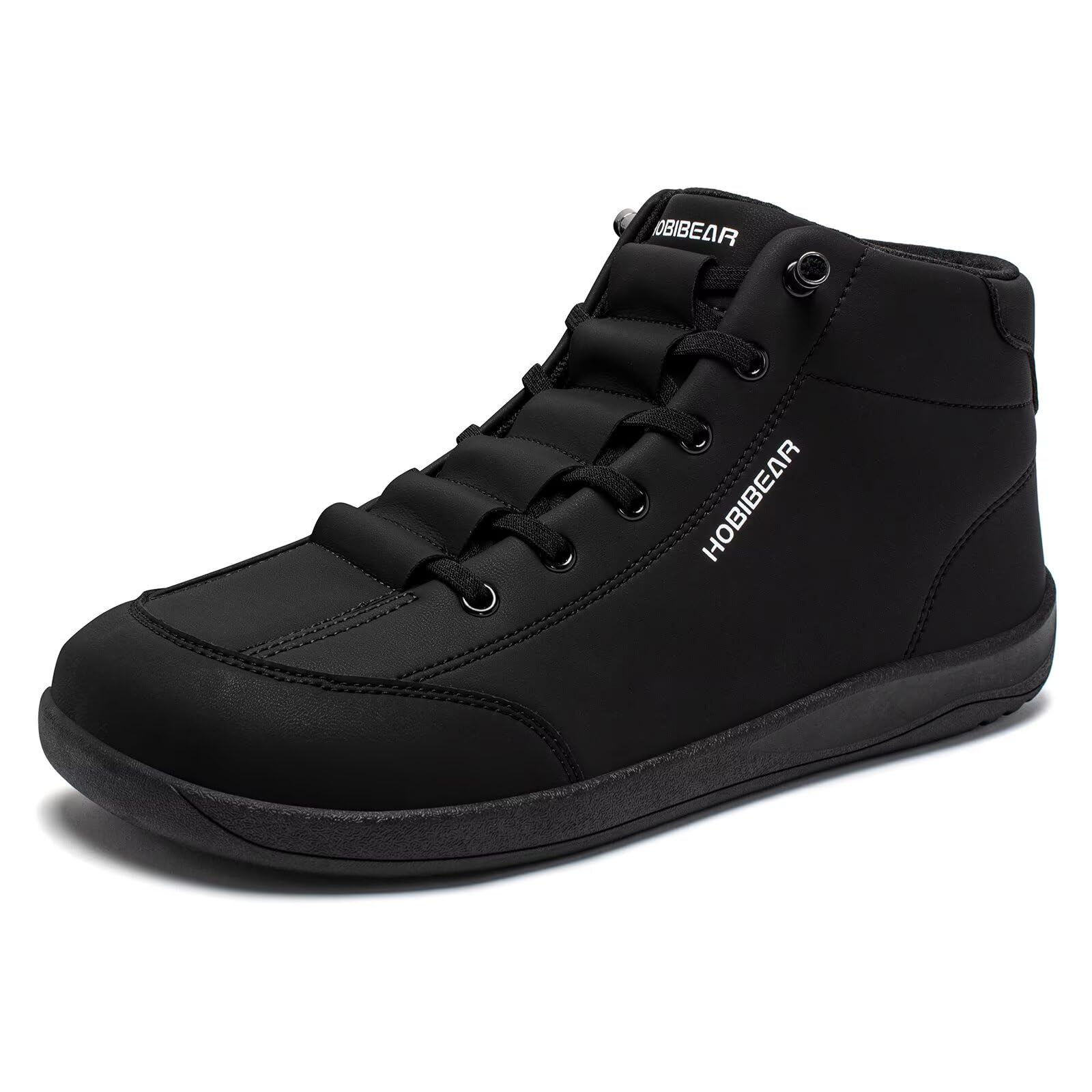
1. HOBIBEAR Barefoot Boots Zero-Drop Wide Width Minimalist Shoes Unisex Mid Top Walking Boots
Our pick — 4.0+★ from 350+ verified ratings; the strongest balance of quality and price.
A mid-top walking boot that keeps your foot low to the ground and still holds a grip.
The reason this one takes the top spot is simple: it pairs a zero-drop sole with an anti-slip, wear-resistant outsole in a shape most people can wear all day. Zero drop means your heel and the ball of your foot sit level, so your posture stays upright instead of tipping forward. The wide toe cap gives your toes a big open space to spread into on each step. If you walk to the bus, stand through a commute, or take a lunchtime loop, this is the everyday shoe that does not fight your foot.
What keeps people coming back is the look of it, with comfort a close second — the kind of shoe you reach for without thinking and then forget you are wearing. Buyers report less cramping and a snug heel that holds through push-off, thanks to the slip-on build. That matters if you are in and out of the door ten times a day.
Here is the honest catch. The fit and the laces split opinion, so order carefully and expect to adjust the lacing once you have them on. A few owners also find the material needs a break-in. The rating sits at a solid 4.0+ out of 5, which tells you most buyers are happy — this is a sizing question, not a defect.
The case for it
- Zero-drop sole keeps your heel and forefoot at the same height, so your posture stays natural on flat ground.
- Anti-slip, wear-resistant outsole gives the grip a thin barefoot platform normally loses.
- Slip-on design with a snug heel makes it quick to pull on and secure on the foot.
Where it can trip you up
- Fit is the most-debated point among buyers, so check the size chart before ordering.
- Laces need dialing in before the boot feels locked on.
- The upper may need a short break-in.
Go for it if: you want one flat, grippy pair for errands, commuting, and daily walks in cool weather.
Look elsewhere if: you need a deep-tread winter boot for ice and slush — that is the HIKE Caspar Pro or the Peak Frost Flow below.
2. WHITIN Women’s Wide Toe Box Running Shoes with Zero Drop Sole S880
The rare wide-toe runner that grips on wet asphalt without squashing your toes.
Think of this as the everyday athlete of the group. The rubber outsole is built for grip, traction, and durability across all types of terrain, so wet pavement and loose gravel do not send you sliding. Underneath, the zero-drop platform puts your heel and forefoot at an equal distance from the ground, which encourages better alignment and form as you run. The EVA foam midsole adds a little bounce back so long walks do not feel flat and dead.
If you have wider feet or flat feet, the wide toe box is the part that will win you over. It is roomier than a traditional running shoe, so your toes move freely instead of stacking on top of each other. The removable insole is a genuine bonus — swap it for your own orthotic or pull it out for a fast clean. The mesh upper keeps air moving so your feet do not cook on a warm run, and the toe has a protective application to resist scuffs.
Where it gives ground: the arch support gets the most divided feedback. If you want a firm, built-up arch, this is a flatter ride and you should feel that before you buy. Comfort is clearly the star here — it is what buyers talk about most by a wide margin — and the toe box is right behind it. For running, running errands, and everyday walking, it holds up.
Where it earns its keep: the rubber outsole is the standout. It is listed for grip and traction on all terrain, which is exactly the spec a barefoot runner needs most, since the thin sole gives you very little buffer against a slick surface.
The trade-off worth knowing: arch support is the mixed point. Treat it as a neutral, flatter platform rather than a supportive one, and bring your own insole if you need cushion under the arch.
Made for: women with wide or flat feet who want a grippy zero-drop trainer for runs and errands.
Not the pick for: anyone who wants deep arch support built in.
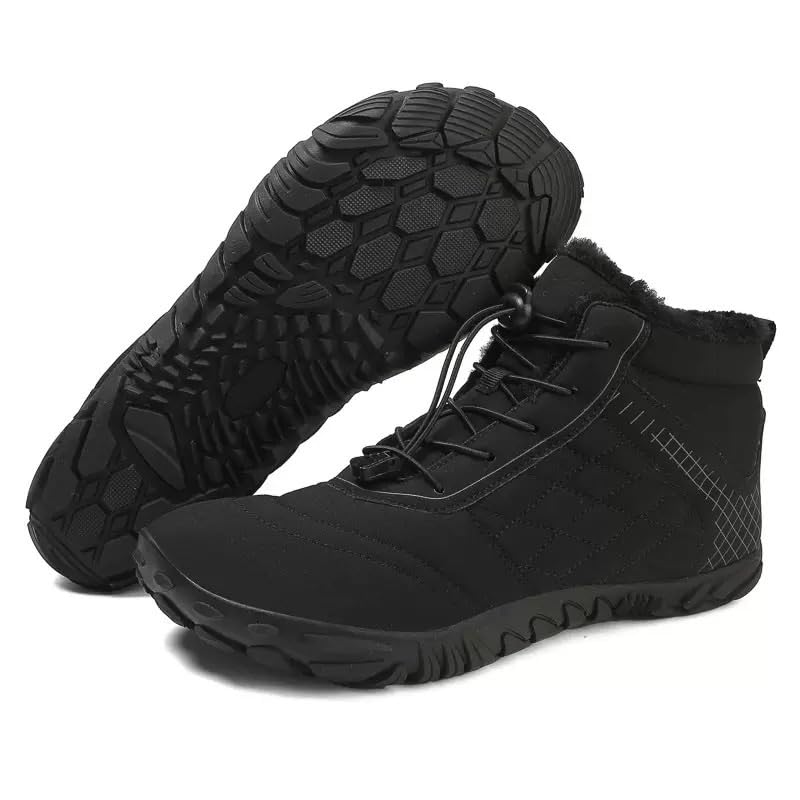
3. Peak Footwear Frost Flow Non-Slip Waterproof Winter Barefoot Shoes
Rain, slush, and wet pavement — this is the barefoot shoe that refuses to let water in.
Most barefoot shoes are open and airy, which is lovely in July and miserable in a downpour. The Frost Flow solves that with a waterproof upper that keeps feet dry while a winter lining holds warmth. The sole stays ultra-thin and flexible so you still feel the ground, and the outsole is built with non-slip traction that holds on wet surfaces. The toe box is extra-wide, giving your toes room for natural splay even as the shoe wraps them in warmth.
The fit is the thing owners cheer about most, and comfort runs a close second. It wears like a soft slipper with a secure sole rather than a stiff winter boot. If winter boots usually feel like a plaster cast, this one keeps your foot moving, warm, and dry through rain.
The caution to weigh: with a smaller pool of buyers than the mass-market picks, feedback is thinner, though the direction is positive. Sole fit is the one mixed note, so be prepared to reseat the insole after a few wears. If warmth and dryness matter more to you than a big archive of reviews, this is a strong call.
What makes it worth a look
- Waterproof upper keeps feet dry through rain and slush.
- Winter lining adds warmth without turning into a heavy boot.
- Ultra-thin, flexible sole preserves ground feel under the waterproofing.
- Extra-wide toe box keeps the natural splay barefoot fans want.
What to weigh first
- Insole can slide out of place, so it may need reseating.
- Smaller review pool means less consensus to lean on.
- Fit runs on the generous side, so check sizing.
Reach for this if: you walk through wet, cold weather and want a barefoot shoe that keeps your feet dry without going stiff.
skip it if: you want dry, grippy winter walking with the biggest possible buyer track record behind it — the HIKE Caspar Pro is the safer bet.
4. Hike Footwear Comforto Max Ultra-Stretching Soft Barefoot Shoes

A wool-knit slip-on built for days when your feet have already had enough.
This is a shoe for easy days: Hike calls it its lightest, softest barefoot shoe, and it is built for recovery walking, indoor wear, and travel. The upper is a smooth wool knit (one piece of fabric with no stitched seams), so it gently adapts to sensitive or swollen feet instead of rubbing them. A wide toe box lets your toes spread naturally, easing pressure on long days on your feet. The zero-drop sole (heel and toe sit at the same height) keeps your foot flat and your posture aligned. The flexible construction follows the shape of your foot instead of holding a rigid shape of its own.
Comfort is the clear star — it is what buyers talk about most, and by a wide stretch. Lightweight comes second. One common theme is people feeling the difference in how their feet move through a day. The balance of the shoe is the mixed point: some love the toe room and the stability it brings, others find it too wide and wanting more support.
An occasional owner notes the sizing runs generous. That is worth knowing if you are usually between sizes, because the final fit is the one caveat in an otherwise comfortable, easygoing shoe. Do not treat it as a hard support shoe. Treat it as the soft, breathable pair you reach for on a rest day.
The honest read: a 3.5+ star overall score with several hundred ratings means comfort is not the problem — fit is. If you know your width and can read a size chart accurately, the wool-knit upper will reward you with all-day ease.
Good fit for: recovery walking, indoor days, and travel when you want a soft, low-pressure shoe.
pass on it if: you need a stable, supportive platform for long hikes — you want a hike shoe, not a recovery shoe.
5. HIKE Footwear Theora Pro Hiking Shoes, Wide Toe Box, Zero Drop
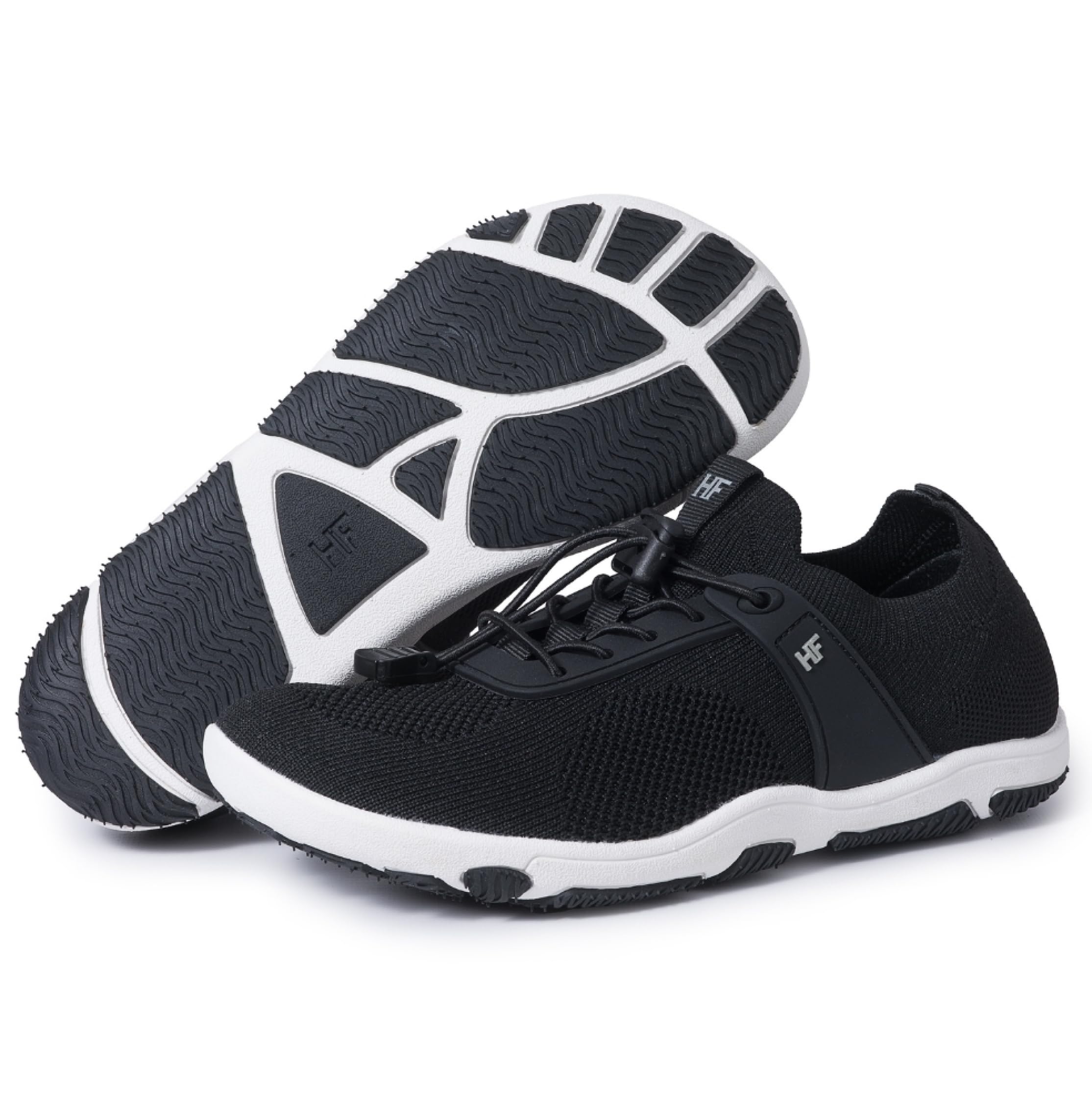
A barefoot hiking shoe that lets your feet feel the trail on long days.
The Theora Pro is built for terrain, not the pavement. The zero-drop design keeps your foot flat so your body can realign with every step, and the non-slip outsole gives you traction when the ground gets uneven. A wide toe box lets your toes spread so your foot can grip naturally on the ups and stay stable on the downs. Sole cushioning lands at just the right amount, according to the feedback, so rocks do not hammer through on long hikes.
Comfort is what gets the loudest praise, and build quality sits right behind it. Owners mention no foot or back pain after long trail days, and the shoe stays light enough to move freely. Pair that with the cushioning and you get a hiking shoe that works on trails and looks presentable on the way to them.
Durability and arch support split buyers, so don’t expect this to double as a rigid support shoe. Fit is also mixed, which means checking your size is the smart move. The upside of that caveat: you are getting a true zero-drop hike, not a hiking boot in barefoot clothing.
Why hikers keep it on: the sole cushioning is the quiet win. A barefoot shoe protects you from rocks only if it cushions just enough, and here the feedback says it does.
Pick it up if: trail days are your thing and you want barefoot ground feel underfoot with enough cushion to last the mileage.
Think twice if: you want a rugged everyday shoe — the unbuilt arch and mixed durability make it a hike-first pick.
6. HIKE Footwear Caspar Pro Winter Barefoot Boots, Non-Slip, Warm & Supportive
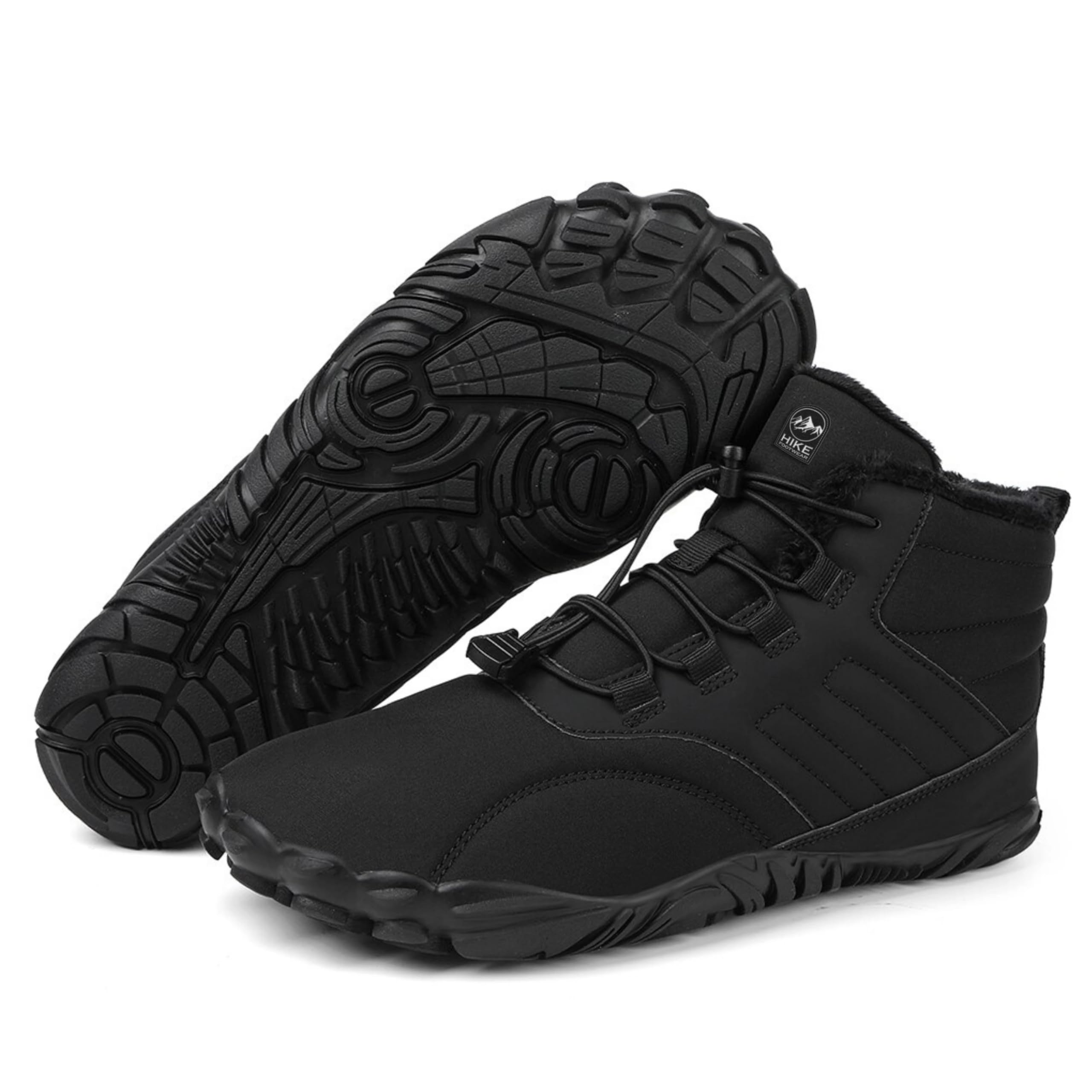
Built for cold mornings and long winter walks, with a non-slip sole underfoot.
This is the one for the frozen months. The Caspar Pro pairs a non-slip barefoot sole with a warm, insulated upper, so your toes stay comfortable without the stiff, thick sole of a traditional winter boot. It is lightweight for a winter shoe and easy to walk in, which is the point — you keep the natural posture-promoting flat footbed and still get winter warmth.
Appearance earns the most praise, with warmth next in line and walking comfort after that. Owners say they can cover long distances in very cold weather without their feet giving out. That combination of lightness, warmth, and a flat platform is why it has a loyal following.
The caveats: fit and water resistance are the split points. Some get a great fit and stay waterproof; others find it runs small or take on water they did not expect. The answer is to size with the chart and treat it as a winter walking boot rather than a fully submerged wader. With a 4.0+ star score, most buyers are on the happy side.
Hits the mark on
- Warm, insulated upper keeps feet comfortable in cold weather.
- Lightweight and easy to walk in for a winter shoe.
- Non-slip sole matched to a flat, barefoot footbed.
Worth sizing up for
- Fit runs small for some buyers, so check the chart.
- Water resistance is mixed — fine for snow and cold, not submersion.
- Slip resistance is adequate rather than exceptional on ice.
The right choice for: cold-weather commuters and winter walkers who want warmth and grip with a flat, barefoot feel.
Not your shoe if: you need fully waterproof wading or a shoe for hot climates — this one is winter-first.
7. Vibram Women’s FiveFingers Alitza Loop

The studio shoe for barre and Pilates — toes free, sole gripping, foot moving.
The defining number here is the outsole: Vibram Ecostep, a natural-rubber compound made with over 90% natural ingredients for grip, traction, and durability. That is real-world relevant because studio floors, gym mats, and polished wood are the places a thin shoe slips most. The lightweight polyamide upper is breathable and stretchy, and the elastic collar gives you a stretch-slip-on fit that is easy on and off. Underfoot, a 2mm Drilex sockliner adds a thin layer of hygiene and comfort while keeping the barefoot sensitivity intact.
Comfort and versatility are the strongest points. Owners wear them for yoga and Pilates, credit them with knee and hip comfort, and keep them on all day. The FiveFingers shape lets your toes work independently, which is the whole reason dancers and barre regulars love that feel.
Now the honest part: fit is the most-discussed subject and for good reason. These run large for some people and can be tricky to get on at first, so measure your foot rather than guessing. Do that and the fit issue disappears. With a 3.5+ star score, this is a niche pick for the right person, not a universal one.
What wins people over: the grip. A 90%+ natural rubber outsole on a barefoot platform is the combination that makes these safe in a studio — you feel the floor but the rubber still holds.
Suits you if: you take barre, yoga, or Pilates and want your toes free with real underfoot traction.
Give it a pass if: you want a padded shoe for the street or a shoe that is easy to pull on in seconds.
8. Merrell Men’s Vapor Glove 6 Leather Trail Running Shoe

The most minimal shoe Merrell builds, wrapped in leather with a Vibram grip sole.
Merrell calls this the most minimal shoe it makes, and the specs back that up. Total stack height is 6mm, with a 6-6mm stack, so you sit close enough to the ground to feel every root and rock. The outsole is Vibram Ecostep Recycle, made with 30% recycled rubber, built for durability and traction on wet and dry surfaces. A 100% leather upper gives it a dress-casual look that most trail shoes lack. Weighing 6.35 oz in a half pair at the women’s size and 9.17 oz at the men’s, the shoe is genuinely light on the foot.
What earns its keep is quality and durability — those are the two things buyers mention most, followed by fit and light weight. The recycled construction is real, from the 100% recycled laces to the 100% recycled breathable mesh lining and the mesh footbed cover. That adds up to a shoe that feels well-made from the first step.
The honest split: customers note it works on pavement but is not a trail shoe in the teeth-gripping sense, and the leather styling does not land for everyone. Treat this as a minimal everyday and light-trail shoe, not a mud-and-boulder runner. The 4.0+ star score puts it on par with the best in this list.
Why it costs more: the Vibram Ecostep Recycle outsole and the 100% leather upper are the two things you are paying for. Both are premium materials that keep the shoe durable and good-looking well past the first season.
Where it falls short: suitability for rough terrain is the divided point. It grips wet and dry pavement well, but it is not built for aggressive trail use, so pick a mud-slogging shoe instead if that is your plan.
It is for you if: you want a leather-look barefoot shoe for light trails and everyday training, with a premium rubber sole underfoot.
Choose something else if: you need an aggressive trail shoe for steep, muddy terrain or are shopping on a tight budget.
Understanding the Specs
Heel-to-Toe Drop
Drop is the height difference between your heel and the ball of your foot. Zero drop means they sit level, so your foot stays flat rather than tipped forward. That level platform is what barefoot shoes are built around — it lets your heel and forefoot work together and keeps your weight centered. If you are used to a raised heel, expect an adjustment period in your calves as your foot relearns a flat stride.
Stack Height
Stack height is the total thickness of material under your foot. Lower means more ground feel and a closer connection to the surface; higher means more cushion and warmth. The Merrell Vapor Glove 6 Leather sits at 6mm, which is low, so you will feel the ground. A thicker stack softens hard pavement but gives up some of that barefoot sensation.
Outsole Grip
A “non-slip” label on the box is not a guarantee. The real signal is a named rubber compound plus a tread pattern. Vibram Ecostep, used on the Vibram Alitza Loop and the Merrell Vapor Glove, is a natural-rubber compound built for traction. On a barefoot shoe with very little material between you and the ground, a grippy rubber outsole is what keeps you upright on wet or smooth surfaces.
Toe Box Width
A wide toe box gives your toes room to splay for balance and keeps them from being squeezed together. It is a different thing from a loose heel — a good barefoot shoe locks the heel snug while leaving space up front. The HOBIBEAR boot and the WHITIN runner both lean on this, and it is the feature that makes barefoot shoes feel natural for wide feet.
FAQ
Will barefoot non slip shoes work on wet tile or a polished studio floor?
Are zero-drop soles harder on your feet than cushioned shoes?
Do I size up or down in a wide toe box barefoot shoe?
Can a barefoot shoe survive a full winter of snow and slush?
Is a thin barefoot sole safe for trail running?
How much ground feel do you actually get from these non slip shoes?
Are these wide toe box shoes good for flat feet?
Can I wear barefoot shoes for barre, Pilates, or yoga?
Do barefoot non slip shoes need a break-in period?
Does a barefoot shoe with a wide toe box also come in a slip-on version?
Final Thoughts: The Verdict
For most people, the barefoot non slip shoes winner is the HOBIBEAR Barefoot Boots. It gets the two things that matter most right: a zero-drop sole (heel and toe at the same height) that keeps your foot flat, and an anti-slip, wear-resistant outsole that actually grips. It also slips on, so most people can wear it all day. If comfort on the run matters more to you, the WHITIN S880 earns top marks for its wide toe box and grippy rubber outsole. For winter, reach for the HIKE Caspar Pro or the Peak Frost Flow. Want the premium leather-and-Vibram version? The Merrell Vapor Glove 6 Leather is the upgrade pick. Whichever you pick, confirm the fit before you commit — that step turns a good shoe into the right one.
How We Picked
We do not accept paid placement. Every pick is matched to a real buyer and a real use-case; we do not hands-on test units.
Sources & Methodology
Specifications: manufacturer listings and product documentation. Review insights: verified customer reviews, as of November 2026. Pricing: not shown on this page (it changes often); check the current price via the retailer link.
As an Amazon Associate, Gadgets Feed earns from qualifying purchases. This does not affect which products we feature.