
Conventional running shoes compress your toes, elevate your heel, and pad your foot until you can’t feel the ground anymore. That cushion might feel soft in the store, but it weakens the natural stabilizer muscles in your feet, eventually leaving you more prone to plantar fasciitis, bunions, and knee pain. Barefoot running shoes take the opposite approach — they give your toes room to splay, keep your heel level with your forefoot, and use a thin, flexible sole that lets your foot move and feel the terrain naturally.
I’m Min — the co-founder and writer behind Gadgets Feed. I’ve spent countless hours analyzing the market and combing through thousands of verified user reviews to separate the shoes that truly deliver on the barefoot promise from those that merely look the part.
Whether you’re making the transition from thick-soled trainers or you’re already a devoted minimalist runner, this guide to the top barefoot running shoes for women will help you find a pair that fits your foot shape, your activity, and your budget.
How To Choose The Best Barefoot Running Shoes For Women
Finding the right barefoot shoe means understanding three key factors that differentiate them from standard athletic footwear. The wrong choice can stall your transition or cause discomfort, while the right one makes every step feel more natural.
Toe Box Shape and Width
Not all wide toe boxes are created equal. A genuine barefoot shoe lets your toes fully splay outward without hitting the sidewall or rubbing against the upper. Look for a “foot-shaped” last that mirrors the natural flare of the human foot, not just a boxy toecap. This is the single most critical spec for avoiding bunions and blisters.
Sole Thickness and Ground Feel
Minimalist soles typically range from 3mm to 12mm. Thinner soles give you more sensory feedback, which helps your nervous system adjust your stride in real time. Thicker soles offer a gentler landing pad for beginners. If you’re new to barefoot running, a 6mm to 10mm sole provides a solid middle ground until your foot muscles strengthen.
Closure and Entry System
Laces, toggle fasteners, and slip-on designs all affect how the shoe locks your foot in place. Toggle closures are quick to adjust, while traditional laces give you a custom fit. Slip-on models are ideal for casual wear or gym sessions but may not offer enough security for trail running. Consider your primary use case before choosing a closure type.
Quick Comparison
On smaller screens, swipe sideways to see the full table.
| Model | Category | Best For | Key Spec | Amazon |
|---|---|---|---|---|
| FLUX FOOTWEAR Adapt Runners | Premium | All-day walking and tennis | Wide toe box, thin flexible sole | Amazon |
| Xero Shoes Prio Coast Hands-Free | Mid-Range | Slip-on convenience for daily wear | Zero drop, slip-on design | Amazon |
| Vivobarefoot Motus Flex | Mid-Range | Fitness training and lifting | Flat outsole, toggle closure | Amazon |
| Hike Footwear HF Stride | Budget | Entry-level barefoot transition | Thin sole, ultra-light build | Amazon |
| Hike Footwear Theora Pro | Budget | Wide toe box for arthritic feet | Wide toe box, knit upper | Amazon |
In‑Depth Reviews
1. FLUX FOOTWEAR Adapt Runners
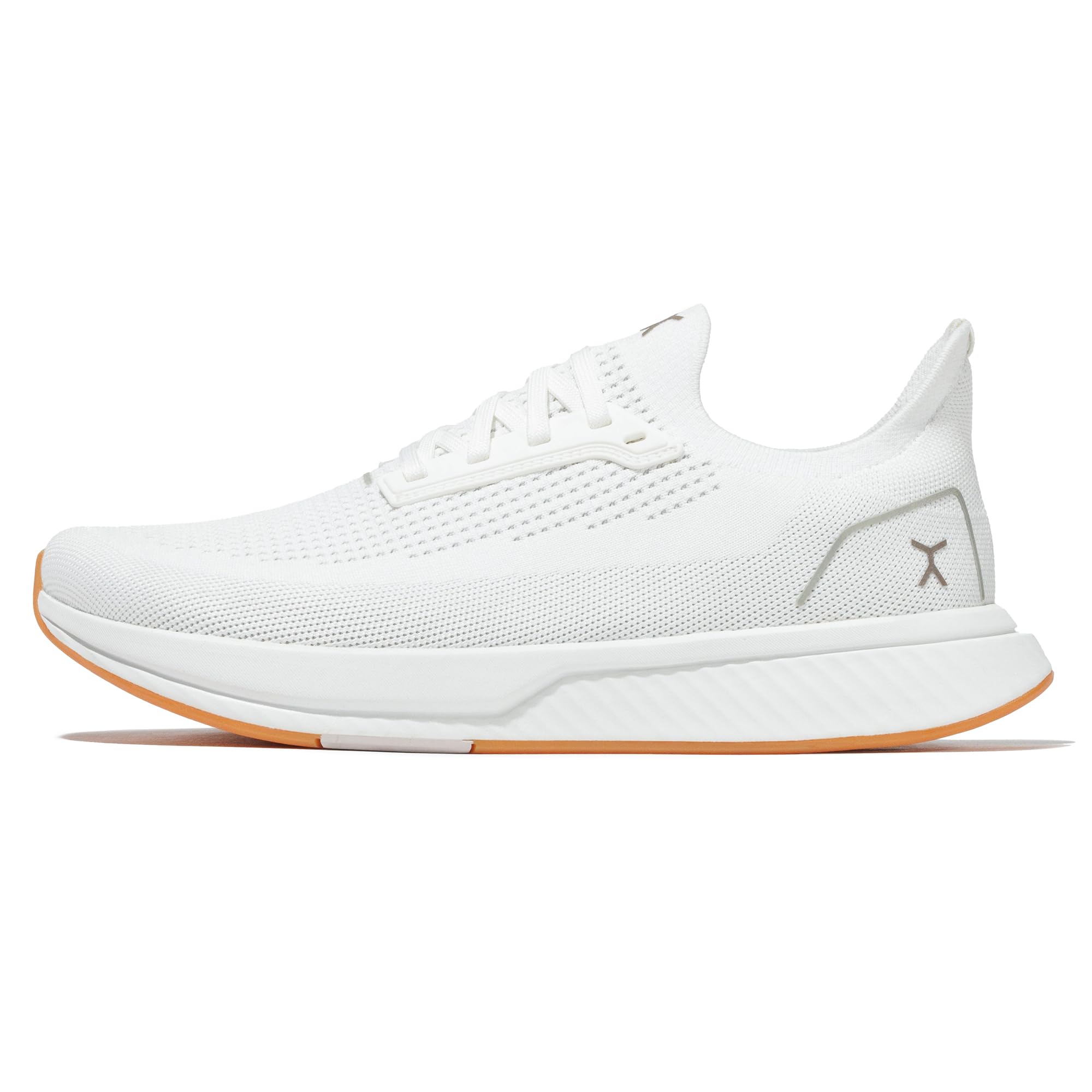
The Adapt Runners from FLUX FOOTWEAR have earned a loyal following among users who log serious miles. Multiple verified reviews confirm they hold up for 12-hour shifts on concrete, 15,000-step workdays, and even competitive tennis. The outsole provides enough grip for court sports while retaining the flexibility needed for a natural foot roll.
One user reported her first pair lasted four years through daily 5-to-6-mile walks, which speaks to the durability of the upper and outsole construction. The wide toe box receives consistent praise for eliminating toe crowding, though several reviewers note the shoe runs slightly small and recommend ordering up a half size.
The brand’s focus on long-term wear shows in the stitching and sole bonding. A few owners noted early sole separation at the heel, but the overwhelming majority report no issues during the break-in period. After a short stiffness during the first few wears, the upper loosens and molds to the foot.
Why it’s great
- Exceptional build quality that can last 3-4 years with regular use
- Highly versatile for walking, running, tennis, and all-day standing
- Wide toe box accommodates flat feet and post-surgery recovery
Good to know
- Runs small — expect to size up by half a full size
- Heel separation reported by a small number of long-term users
2. Xero Shoes Prio Coast Hands-Free Barefoot Shoe
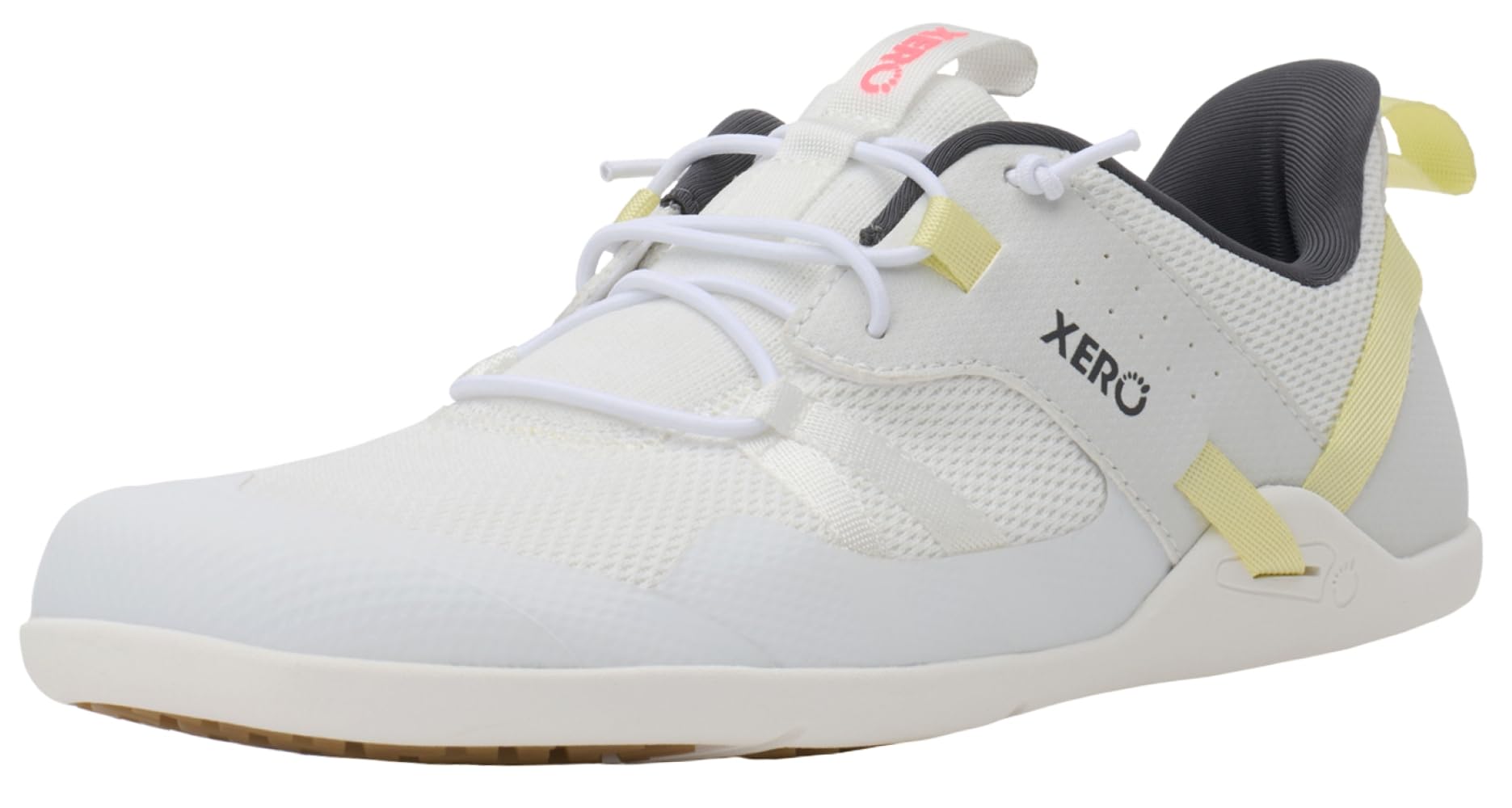
The Prio Coast is Xero’s take on a true hands-free barefoot shoe, designed for people who need to slip shoes on quickly while carrying a baby, holding groceries, or rushing between hospital shifts. Verified reviews from nurses and parents highlight how easy it is to slide into without bending down or using your hands.
Xero has a strong reputation among barefoot converts, and this model lives up to that legacy. One reviewer mentioned that transitioning to Xero shoes cured her plantar fasciitis and neuropathy after a muscle adjustment period. The shoe requires zero break-in, which is rare in the barefoot category.
The main trade-off is the inability to remove the shoe by sliding it off with your other foot — you still need your hands for removal. Also, the color options lean toward neutral tones. If you prefer more vibrant options or jewel tones, you might find the current palette limited.
Why it’s great
- Hands-free slip-on entry saves time and effort every day
- Zero break-in period — comfortable straight out of the box
- Proven track record for resolving foot issues like plantar fasciitis
Good to know
- Cannot be removed by sliding off with the other foot
- Limited color selection primarily in neutral tones
3. Vivobarefoot Women’s Motus Flex Barefoot Training Shoe

The Motus Flex targets the gym crowd with a flat, stable outsole that works well for lifting and leg day. Its toggle closure system lets you cinch the fit quickly without fiddling with laces. Verified buyers mention it’s super lightweight and provides excellent stability during squats and deadlifts.
However, several reviews note that the toe box isn’t as wide as true barefoot aficionados expect. One verified reviewer said “not wide enough to be true barefoot shoes” and recommended removing the liner or wearing thin socks to gain extra room. Sizing up makes the shoe too long, so you’re best off sticking with your normal size and working with the liner.
The sleek design has a dedicated following — one user who is 7 months pregnant with twins wears them every day and finds them remarkably comfortable. For gym sessions and short runs, this shoe delivers. For long trail runs or all-day wear, the width may become a limitation.
Why it’s great
- Excellent for weightlifting with its flat, stable outsole
- Toggle closure makes for fast, secure adjustability
- Lightweight and comfortable even for extended daily wear
Good to know
- Toe box is snug for a barefoot shoe — remove the liner for more space
- Sizing up leads to excessive length rather than width
4. Hike Footwear HF Stride
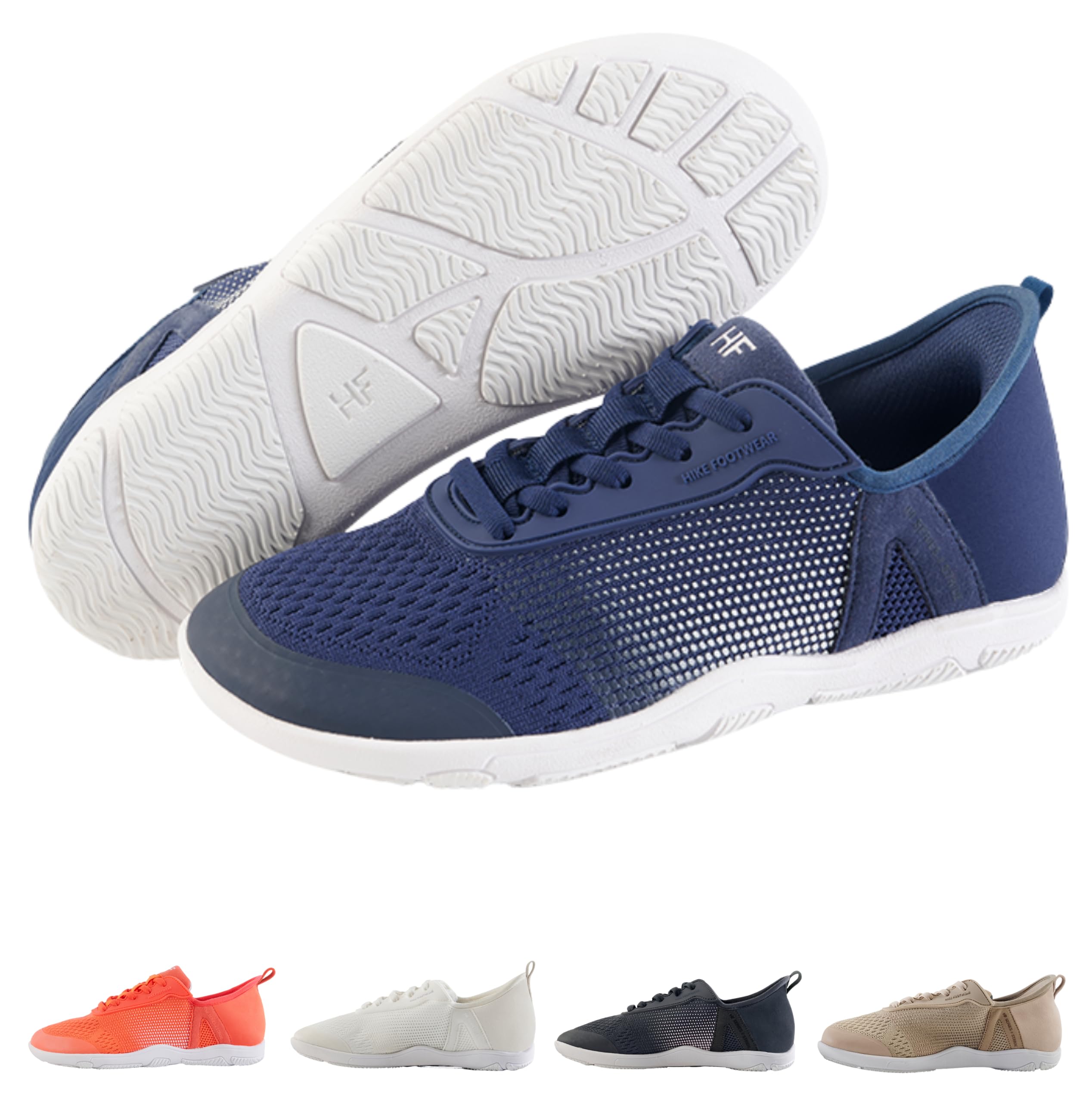
The HF Stride is Hike Footwear’s entry-level barefoot shoe that nails the essential specs — thin sole, wide toe box, and ultra-light construction — at a price that makes transitioning experiment low-risk. Verified reviews highlight dramatic improvements in balance within just a week of wear, along with positive changes in back, hip, and knee pain.
Sizing is the biggest watch-out. Several users note the shoe runs small, so if you’re a true 9.5, you’ll need to order a 10-10.5. The shoe also allows you to swap the original laces for stretch laces if you want a more secure and effortless lock-down feel. The upper is breathable and the sole provides good traction on pavement.
One reviewer mentioned the shoe is slightly big when ordered correctly, but wearing socks resolves the fit perfectly. The build quality feels solid for the price tier, with no major complaints about sole separation or stitching failures reported. If you’re just starting your barefoot journey, this is a safe place to begin.
Why it’s great
- Dramatically improves balance and reduces joint pain according to users
- Lightweight and breathable for everyday wear
- Low price point makes it a risk-free trial for barefoot newcomers
Good to know
- Runs small — order at least a half size to a full size larger
- Laces may need replacement with stretch laces for best fit
5. Hike Footwear Theora Pro

The Theora Pro prioritizes comfort for sensitive feet, particularly for users dealing with arthritis or bunions. Its stretchy knit upper accommodates swollen or misshapen joints without creating pressure points. The wide toe box is one of the roomiest in this price range, giving your toes plenty of space to spread.
The shoe has a unique design with no traditional tongue, which makes it difficult to get on for some users. One reviewer found it impossible to wear because the shoe was too tight to enter without a tongue, even when sizing up. If you have high-volume feet or difficulty bending over, this design may frustrate you.
The lack of arch support is intentional for a barefoot shoe, but several users note it’s noticeably absent. The knit upper holds the foot in place well, preventing the “flopping” sensation inside the shoe. This is a solid choice for casual walking and standing, but it may not provide enough security for higher-intensity running.
Why it’s great
- Extremely roomy toe box for toe splay and arthritis relief
- Stretchy knit upper conforms to irregular foot shapes
- Lightweight and breathable for hot weather
Good to know
- No tongue makes it very difficult to put on
- Lacks arch support for those who need it during extended standing
FAQ
How long does it take to transition to barefoot running shoes?
Will barefoot shoes help with plantar fasciitis?
How should barefoot running shoes fit compared to regular shoes?
Final Thoughts: The Verdict
For most women, the barefoot running shoes for women winner is the FLUX FOOTWEAR Adapt Runners because it combines exceptional durability, a genuinely wide toe box, and all-day comfort across multiple activities. If you prioritize hands-free convenience for daily wear, grab the Xero Shoes Prio Coast. And for gym-focused training with a flat, stable base, nothing beats the Vivobarefoot Motus Flex.