
Our readers keep the lights on and my morning glass full of iced black tea. As an Amazon Associate, I earn from qualifying purchases.
Specs are compiled from manufacturer listings and verified buyer reviews and can change over time — please confirm the key details on the product page before buying.
If you are shopping for a barefoot training shoe, you already know the drill: you want a sole that lets you feel the floor, a toe box that doesn’t crush your toes, and a heel that doesn’t lift you off your natural stance. The real question is which one actually delivers that without falling apart or forcing you to guess your size. This guide breaks down the top contenders by what matters most—ground feel, fit, durability, and the honest quirks buyers report—so you can pick the pair that matches how you actually train.
I’m Min — the founder and writer behind Gadgets Feed. This guide is built by comparing the manufacturers’ published specifications and the patterns across verified customer reviews, so you get each pick’s real strengths and trade-offs instead of marketing spin.
Whether you lift heavy, run trails, or just want healthier feet, the right barefoot training shoe changes how your body moves, and this guide shows you which one deserves your money.
Our Picks at a Glance


How To Choose The Best Barefoot Training Shoe
Buying your first pair of barefoot trainers is different from buying regular sneakers. You are not looking for cushioning or arch support—you are looking for the opposite. The entire point is a thin, flexible sole that lets your foot do the work nature intended. Here is what actually separates a great pair from a frustrating one.
Zero Drop Is Non-Negotiable
Zero drop means the heel sits at the exact same height as your toes, so your foot rests flat like it would barefoot. This keeps your posture aligned and your calves engaged. Every pick in this list meets that standard, but how they deliver it varies—some feel ultra-thin, while others add a bit of structure for lifting.
Toe Box Width Is the Real Test
A wide toe box lets your toes splay out naturally instead of being squeezed together. But “wide” is not a regulated term—one brand’s wide can feel like another brand’s narrow. If you have wide feet or bunions, check reviews from people with similar foot shapes before committing, and be ready to size up.
Match the Sole to Your Activity
A pure minimalist sole gives you maximum ground feel but can leave your feet sore on hard surfaces. A slightly thicker sole (like 2 mm of shock-dispersing midsole) protects you on trails while keeping the barefoot feel. Think about where you train—gym floor, pavement, or dirt—and pick the sole thickness that matches.
Quick Comparison
| Model | Best For | Weight | Drop | Toe Box | Amazon |
|---|---|---|---|---|---|
| Vivobarefoot Motus Flex★ Best Overall | All-around barefoot purists | 2.13 lb | Zero | Wide (runs large) | Amazon |
| New Balance Minimus TR V2Best Value | HIIT and gym goers on a budget | 1.28 lb | Low | Narrow (size up) | Amazon |
| Xero Shoes HFS IIRoad Runner’s Pick | Road runners and commuters | — | Zero | Wide (snug fit) | Amazon |
| Vibram FiveFingers KSO ECO | Toe-splay enthusiasts on trails | — | Zero | Individual toe slots | Amazon |
| Xero Shoes Prio Neo | Versatile gym and everyday wear | 8.7 oz (M9) | Zero | Wide, foot-shaped | Amazon |
| Belleville Mini-Mil | Hiking, rucking, tactical use | — | Zero | Wide (order wide) | Amazon |
| TYR DropZero | Powerlifting and squats | — | Zero | Wide | Amazon |
| Vivobarefoot Motus Strength | Heavy lifting and wide feet | — | Zero | Wide (runs big) | Amazon |
| Flux Adapt Graphene XT | CrossFit and lateral movement | 10.2 oz | Zero | Wide (size up) | Amazon |
In‑Depth Reviews
1. Vivobarefoot Men’s Motus Flex Barefoot Training Shoe
Our pick — 4.5★ from 150+ verified ratings; the strongest balance of quality and price.
The barefoot purist’s trainer that makes every rep feel grounded
Vivobarefoot calls the Motus Flex its “most barefoot-feeling performance trainer,” and the name fits—this is the pair that disappears on your foot so you feel every surface. It is built for calisthenics, primal movement, and bodyweight work, where ground feel matters more than cushion. At 2.13 pounds, it is not the lightest trainer here, but that weight buys a sturdier build that holds up to daily wear.
The standout feedback is quality, which owners praise more than any other trait. The fit is the catch: buyers consistently report these run large, so sizing down is the smart move. The crowd favorite line—”they run big so I would size down”—is backed by real experience: a buyer who selected a size 10 for a husband who wears 10.5 to 11 found they fit perfectly. If you wear a wide size (like 12.5 EE), know that some owners find the toe box less roomy than advertised, so this is not the pair for very wide feet.
One honest note: the white colorway gets dirty fast, and an occasional unit has arrived used-looking. But for someone on their feet all day, these are described as “extremely comfortable” and barely looking worn after heavy use. This is the crowd favorite here—4.8 stars across 190 owners—and the quality-first reputation is why it tops this list.
What Wins People Over
- Consistent barefoot feel with real ground feedback
- Durable build that survives daily training
- Holds up for everything from runs to gym sessions
The Fit Reality
- Runs large—most owners size down
- Not truly wide despite the “wide toe box” claim
- White colorway shows dirt quickly
The pick for: barefoot purists who want maximum ground feel and are willing to size down for the right fit.
Think twice if: you have very wide feet—the toe box may feel snug despite the marketing.
2. New Balance Men’s Minimus TR V2
A budget-friendly gym shoe that feels barefoot without the barefoot price
New Balance built the Minimus TR V2 to feel “like barefoot, but better,” and for gym work it delivers. It is a low-drop, minimally cushioned trainer that excels at non-impact workouts—lifting, machines, and HIIT—where you want stability without a bulky sole. At just 1.28 pounds, it is one of the lightest picks here, which makes it easy to forget you are wearing it.
Quality is the most-praised aspect, with comfort close behind, and owners specifically call out its suitability for HIIT workouts and weightlifting. The catch is sizing, and it is a big one: the universal advice is to size up. Owners mention “you must get a whole size bigger,” and even going half a size up can still feel snug. The fit is the most-discussed topic, and it is mixed—some find it excellent, others find it runs too narrow. If you are used to wide toe boxes from brands like Vivo or Xero, opt for the Wide version.
The tongue can bunch up when tying, and a rare owner finds the support lacking, but the consensus is a comfortable, lightweight, stable trainer with good grip at a price that undercuts most of the competition. This is the smart buy for gym-goers who want barefoot benefits without spending premium dollars.
The smart money pick: a genuinely light, comfortable trainer for HIIT and weights—if you order a full size up, the fit complaint disappears.
The one catch: the narrow fit is the most common gripe, so wide-footed buyers should choose the Wide option from the start.
3. Xero Shoes Men’s HFS II Barefoot Running Shoes
The pavement-crusher that outlasts four pairs of normal runners
Xero’s HFS II is built for runners who want the barefoot feel on the road, not just in the gym. The new version adds a thicker upper and ankle cushioning plus a more supportive sole, which makes pavement running noticeably more comfortable than the original. The lugged tread replaces the older tire-style design, trading a bit of treadmill durability for real grip on varied surfaces.
The durability story here is the stuff of legend: customers note these lasting two years and roughly 2000 pavement miles with the soles still going strong, outlasting four pairs of typical running shoes. Quality is the most-praised aspect by a wide margin, and versatility is second—these do pavement, trails, and gym work alike. The fit, however, is the recurring friction point: some say they fit “like a sock,” while others find them a bit tight width-wise for a brand that advertises a wide toe box.
Sizing is genuinely inconsistent here—one owner in a size 10 found toes jammed against the front, while another in 9.5 EE found the length good but the width snug. A rare few report toe bruising, which points to the snug fit. If you are new to barefoot, expect some initial foot fatigue as your feet adapt to the zero-drop style, but the long-term payoff is real.
The durability king: a versatile barefoot runner that genuinely outlasts conventional shoes—the 2000-mile reports speak for themselves.
Know before you buy: the fit runs snug width-wise, so consider sizing up or half a size, especially for wide feet.
4. Vibram Men’s FiveFingers KSO ECO
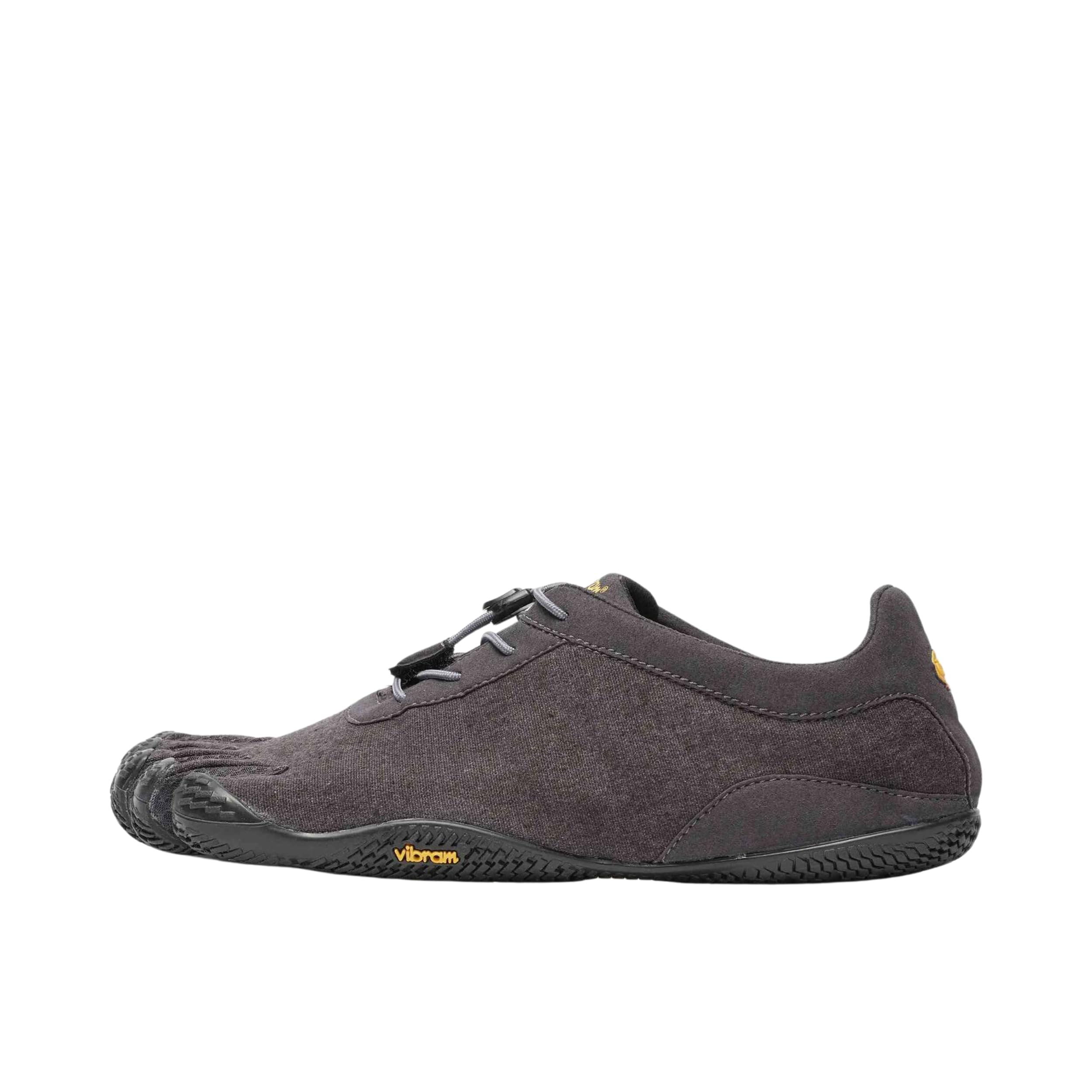
The five-toe original that cradles each digit like a glove
Vibram’s FiveFingers are the icons of the barefoot movement, and the KSO ECO is the eco-conscious version. Instead of a wide toe box, each toe gets its own slot, which gives the ultimate in toe splay and ground feel. The stretch polyester upper is breathable and flexible, while the Vibram Ecostep Natural outsole uses over 90% natural ingredients for grip on grass, dirt, and rock. A soft wool sockliner adds a touch of comfort.
Comfort is the most-praised aspect, and the eco hemp material gets special love—it is described as cradling the foot in a “cozy cocoon” without restricting it. Owners have worn a decade of FiveFingers and call this the most comfortable pair yet. The grip is “insane,” and it shines on trails and light hikes where you need to feel the terrain. But this is not a hard-surface shoe: it struggles on asphalt and rough terrain, and thorns can puncture the thin upper.
Durability is the honest trade-off. The consensus is that a pair lasts about a year of daily wear before fabric holes appear—one owner got 11 months and roughly 400 miles of intense use. Sizing is also a moving target: some report it runs big and advise sizing down, while others need to size up. Measure your foot and check the size chart carefully, because getting the size right “is everything.”
Why Owners Love It
- Life-changing comfort with a cozy, non-restrictive fit
- Amazing grip on natural surfaces
- Breathable and light for warm weather
The Honest Trade-offs
- Lasts about a year of daily wear
- Poor on hard pavement and rough terrain
- Sizing is inconsistent—measure carefully
Reach for these if: you want maximum toe splay and train mostly on grass, dirt, or trails where the grip shines.
Look elsewhere if: you primarily run on pavement—the thin sole and fabric upper wear fast on hard surfaces.
5. Xero Shoes Men’s Prio Neo Barefoot Training Shoes
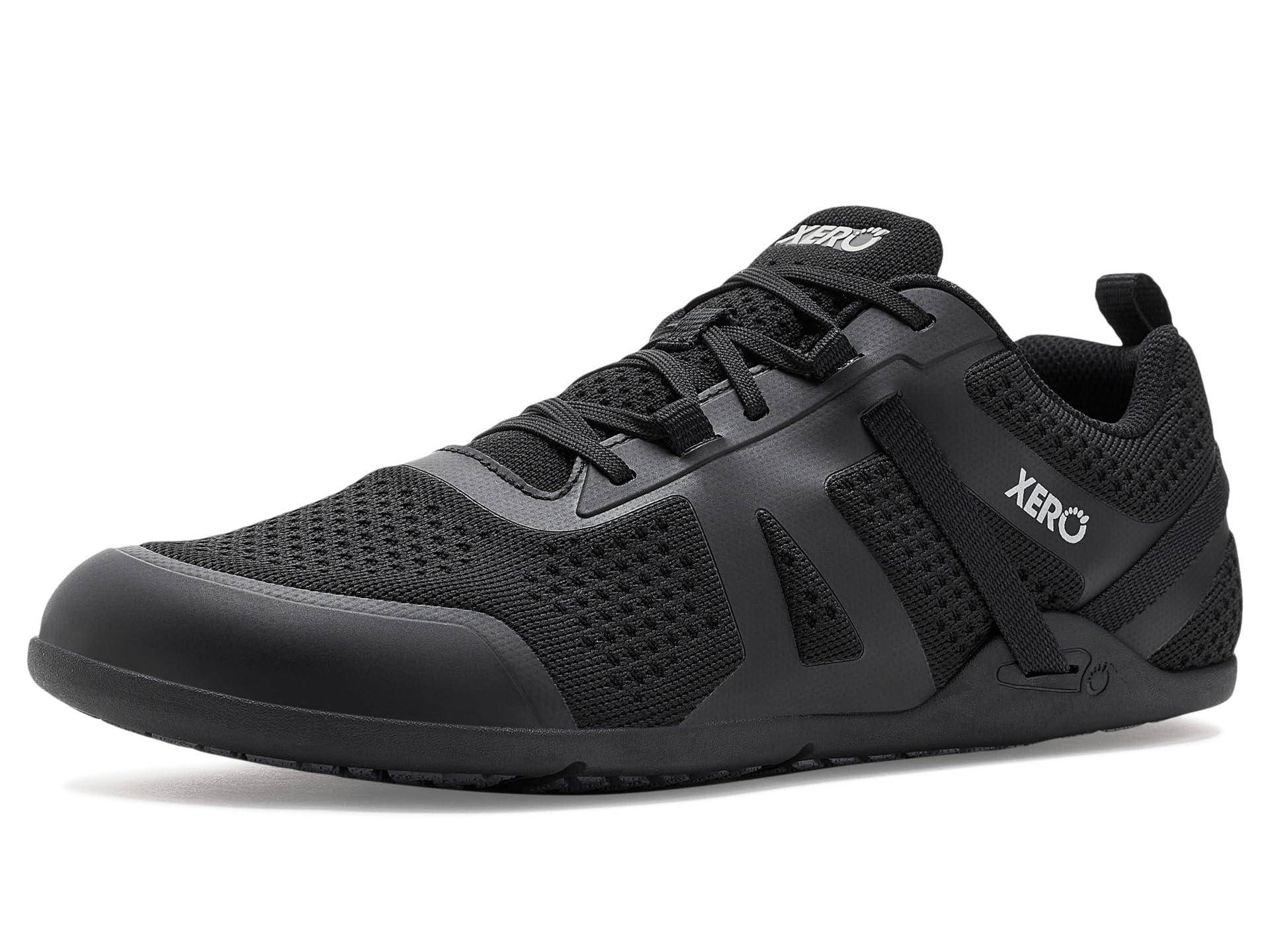
The do-everything trainer that feels like an extension of your foot
Xero took its best-selling Prio and gave it a sleek makeover, and the result is the most versatile shoe in this lineup. At just 8.7 ounces (M9), it is featherlight, with a flexible FeelTrue sole that delivers ground feedback so you can “move efficiently, effectively, and enjoyably.” The adjustable midfoot and heel straps let you lock in the fit, while the breathable mesh and moisture-wicking lining keep feet cool.
Quality is the most-praised aspect, and the true-to-size fit is the second most-loved feature—a rare win in this category. Owners with wide feet report it fits perfectly without sizing up, with one buyer calling it the “first properly fitting shoes in 40+ years.” The ground feel is “almost indistinguishable from true barefoot,” and some report it helps with back pain. It is backed by a 5,000-mile sole warranty, which signals the maker’s confidence.
The honest trade-off is the thin sole. There is no padding, so you will feel every crack and pebble, and long periods of standing can leave feet sore as they adapt. Foot muscles typically need about two months to adjust. If you want zero rise with some impact absorption, this may not be it—but for gym, casual wear, and general training, it is a standout.
The do-it-all pick: a true-to-size, wide-toe-box trainer that handles gym, daily wear, and travel—backed by a 5,000-mile sole warranty.
The catch: there is zero padding, so expect foot soreness during the adaptation period and feel every pebble on trails.
6. Belleville Mini-Mil Hiking Barefoot Shoes
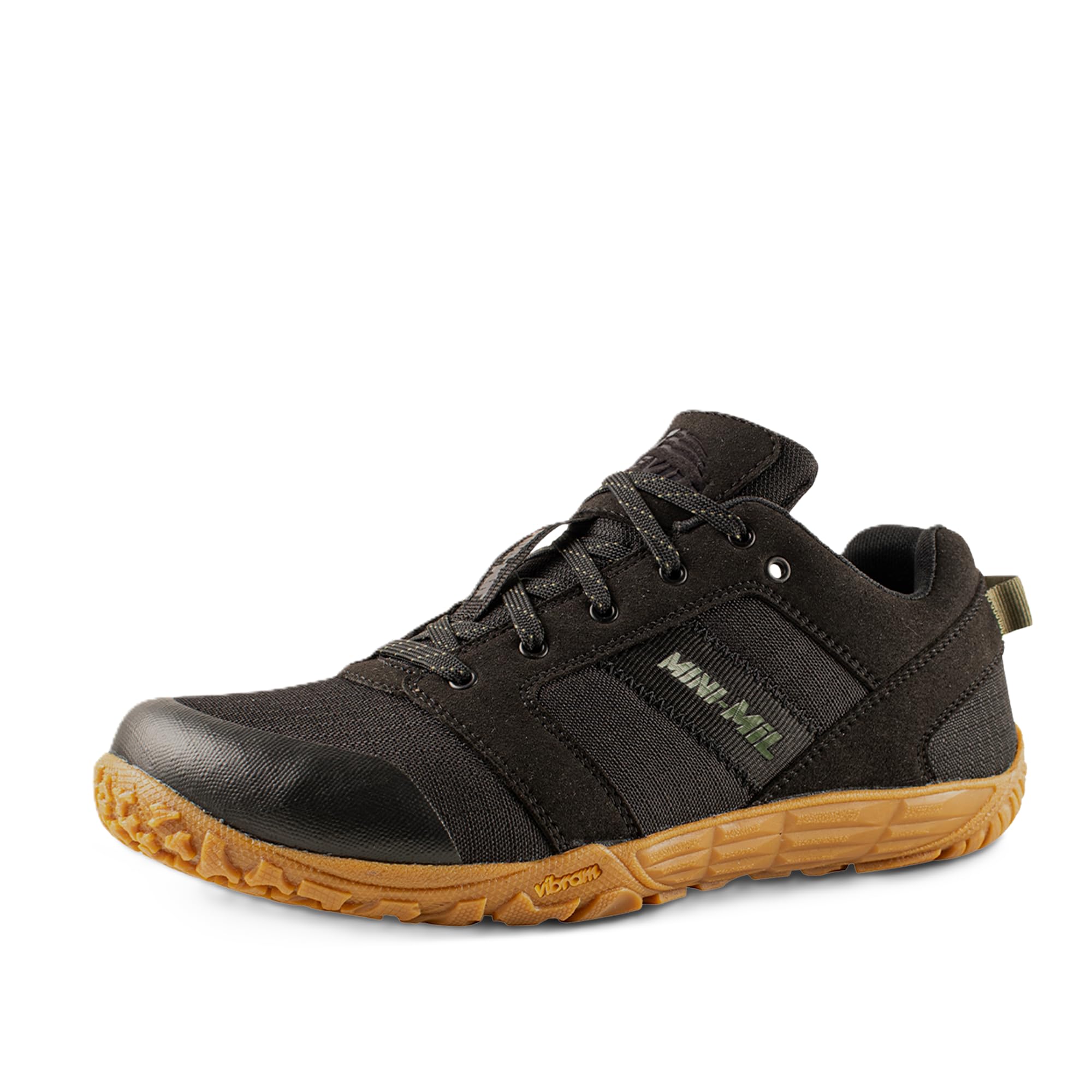
Military-grade minimalism for hikers who refuse to sacrifice durability
Belleville is a name trusted by the military, and the Mini-Mil brings that rugged DNA to barefoot footwear. It is built for extended outdoor activities—hiking, climbing, rucking—with a zero-drop construction that supports a natural gait. The oil- and slip-resistant rubber outsole provides stability on slick, varied terrain, which is a real advantage over the basic tread on most hiking shoes. A 2 mm shock-dispersing midsole offers impact absorption without killing the minimalist feel.
Appearance is the most-praised aspect, and comfort is close behind, with owners reporting they can stand or walk all day without fatigue. The durability is a highlight—one owner put 30 miles of rough terrain on them and they still look new. The breathable mesh upper and moisture-wicking lining keep feet dry in warm weather, and the Strobel stitch construction adds flexibility for natural movement.
The recurring gripe is fit: despite the “wide toe box” claim, some owners find even the wide size feels narrow. One owner who loves Belleville boots noted the wide size in the shoes did not feel wide like the boots. Sizing also runs inconsistent—some say true to size, others recommend sizing down half. And despite claims, these are not waterproof—feet get wet just walking through wet grass.
The Rugged Strengths
- Excellent traction on slick and varied terrain
- Durable build that handles rough miles
- Comfortable for all-day wear
Fit & Water Reality
- Wide size may still feel narrow
- Not waterproof despite claims
- Sizing runs inconsistent
The hiker’s pick: a rugged, durable barefoot trainer for trail, ruck, and tactical use where grip and build quality matter most.
skip it if: you need a true wide fit or expect waterproofing—this runs narrow and lets water in.
7. TYR Dropzero Barefoot Trainer
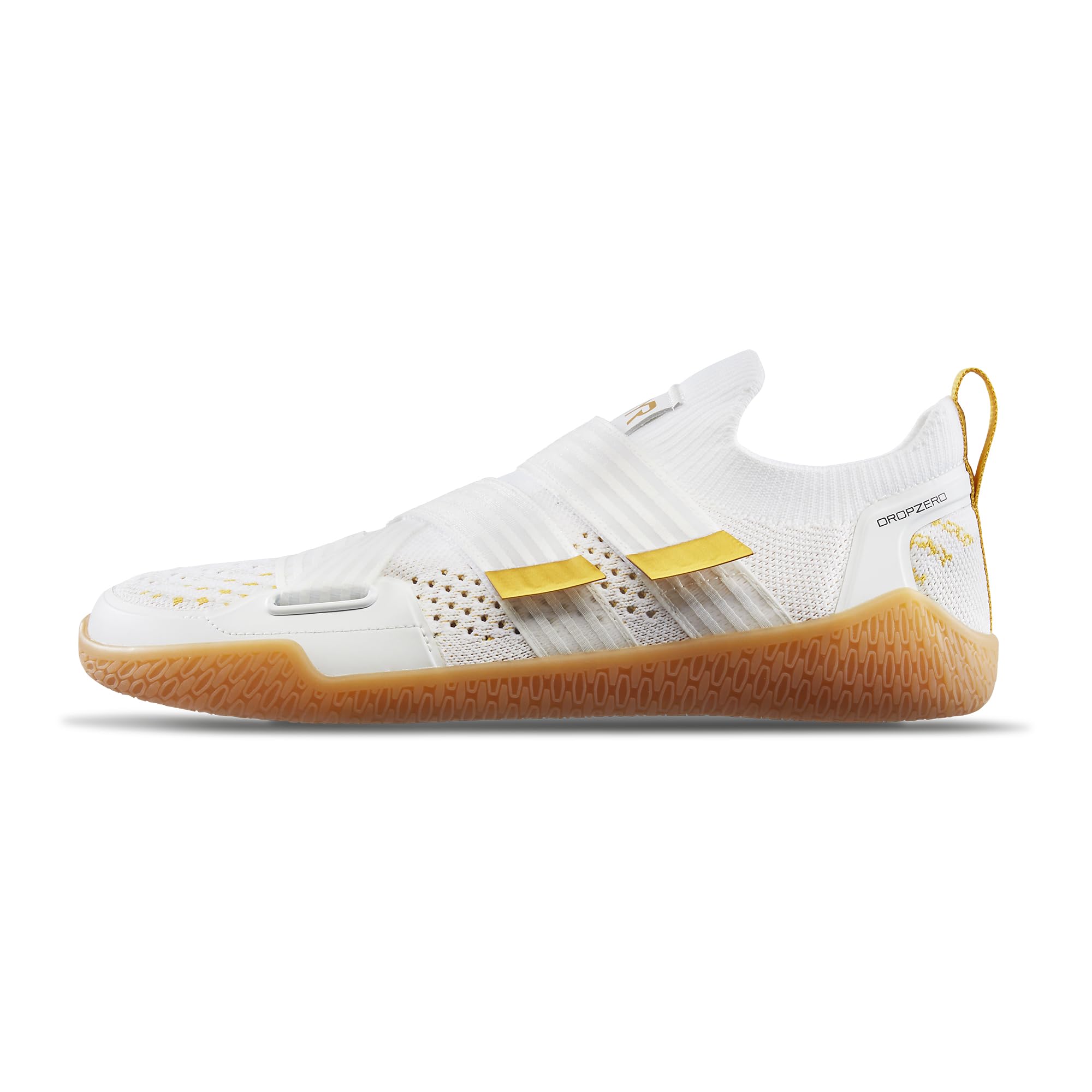
A flat, planted base built specifically for heavy pulls and squats
TYR built the DropZero for one job: keeping your feet planted under heavy weight. The ultra-thin TYRTac rubber outsole delivers superior traction and ground feedback, while the built-in stability strap adds support for lifting and dynamic workouts. The barefoot-inspired design enhances your connection to the floor, making it a strong choice for strength training, HIIT, and weightlifting.
The feedback is clear: this is an “absolutely amazing deadlifting shoe.” Owners praise the flat, stable platform and great grip for deadlifts and squats, and the Velcro closure with wide toe box keeps things adjustable. The hard bottoms are a nice touch—one owner notes walking over a penny won’t hurt. There is a slight break-in period of 3-4 wears around the heel and collar, and a hot spot by the pinky toe from the strap system, but leaving that part loose solves it.
Sizing is the challenge here. The general advice is to go half a size smaller, and there is real confusion around gender sizing—the listing says “women” but ships men’s sizes. A buyer in Men’s 5.5/Women’s 7 found that works for no-sock wear. If you can nail the fit, this is a purpose-built lifting shoe that punches above its weight.
The powerlifter’s pick: a flat, stable platform with genuine grip for deadlifts, squats, and bench work.
The sizing maze: plan to size down and bring thin socks—and verify the men’s/women’s sizing before ordering.
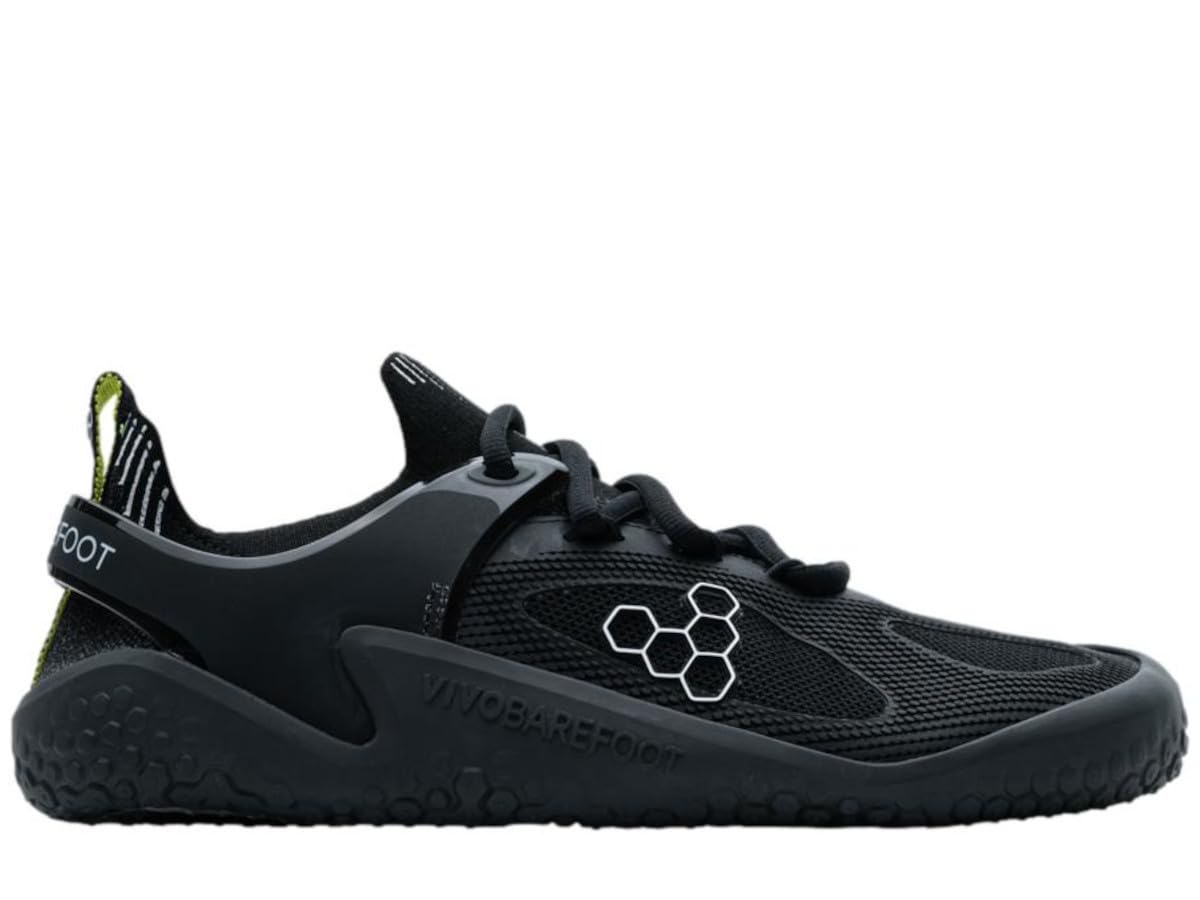
8. Vivobarefoot Men’s Motus Strength Zero-Drop Training Shoe
The squat-and-clean specialist that wide-footed lifters swear by
Vivobarefoot’s Motus Strength is the heavier sibling to the Motus Flex, built specifically for the gym floor. Where the Flex leans into pure barefoot feel, the Strength adds stability for heavy compound lifts—squats, deadlifts, power cleans—without sacrificing the zero-drop, wide-toe-box philosophy. It is the “ultimate training shoe” for owners who bench, row, and move under load.
Quality and comfort are the most-praised aspects, tied at the top. Owners describe it as “hands down the best wide toe box shoes I’ve ever used,” noting how little their feet hurt after all-day wear. The stability under heavy weight is a recurring highlight, with one owner calling it “elite” for squats, power cleans, agility work, and box jumps. The wide toe box fits wide feet (12.5 US) well, with a snug heel and room for toe splay.
The fit runs big—one owner in a size 12 found the 12 a bit large due to the thin, minimal design, and another notes a 10 fits like a 10.5. There is very little arch support, which is by design but can be a shock for those used to structured shoes. An occasional owner finds the sock-like fit uncomfortable, so if you need arch support, this is not the pick.
The Lifting Strengths
- Extremely stable under heavy squat and deadlift loads
- Wide toe box fits wide feet comfortably
- No break-in needed—comfortable from the first wear
What to Expect
- Runs about half a size big
- Minimal arch support by design
- Sock-like fit is not for everyone
The heavy-lifter’s pick: a zero-drop, wide-toe-box trainer that holds up beautifully under heavy compound lifts.
Not for you if: you need arch support or prefer a more structured fit—this is minimalist through and through.
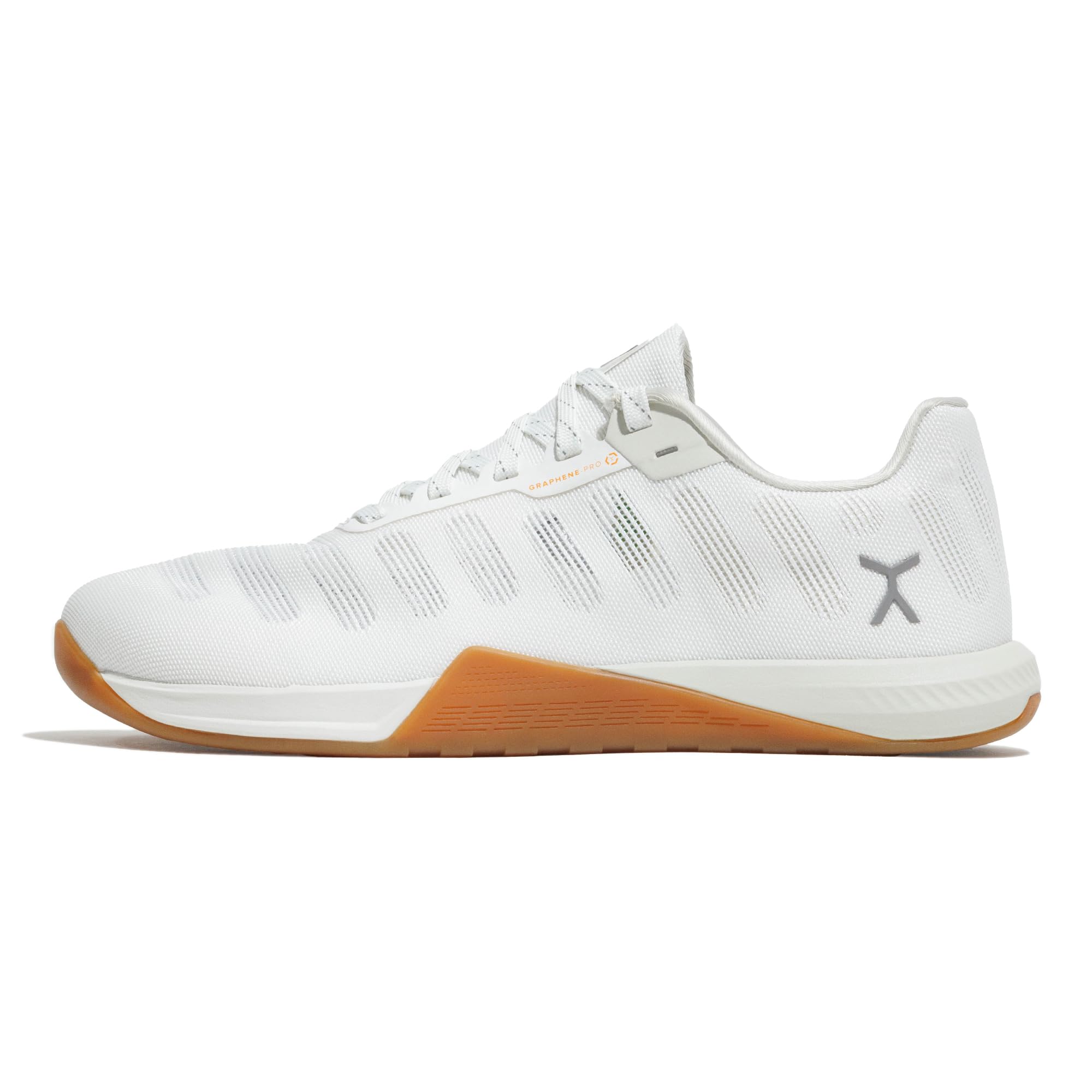
9. Flux Footwear Adapt Graphene XT Cross Training Shoes
The CrossFit favorite that swaps cushion for raw strength-building
Flux built the Adapt Graphene XT for natural movement with a futuristic twist—graphene, a material described as 200x stronger than steel yet incredibly thin and light. The wide toe box and zero-drop design let your toes align and spread naturally, while the grippy outsole handles lateral moves, sprints, and lunges. At just 10.2 ounces, it is light enough to forget you are wearing it.
Owners call it the “best gym shoe I’ve ever had,” praising the comfy, tight fit and perfect base for leg day. Quality is the most-praised aspect, with comfort close behind. It excels at CrossFit, powerlifting, and general fitness—one owner owns four pairs. The lack of traditional support is actually a feature here, since it helps strengthen feet and ankles over time. It is comparable to Hokas for some, and a clear upgrade over older Metcons for others.
The fit runs small, and the brand itself recommends sizing up half a size—owners confirm this is the move. The heel is wide and can slip for some, and the firm sole lacks cushioning for impact absorption, so this is not for distance running or split squats. Reviewers point out they would not wear these outside except maybe on turf. Durability is still unproven, but the comfort and versatility are winning people over.
The CrossFit pick: a light, grippy, zero-drop trainer that handles sprints, jumps, and lifts—if you size up half a size.
The limitation: firm sole with no impact absorption, so keep it for the gym, not the road.
Understanding the Specs
Zero Drop vs. Low Drop
Zero drop means your heel and toes sit at the exact same height, so your foot rests flat like it would barefoot. This keeps your spine aligned and forces your calf muscles and Achilles tendon to work naturally. Low drop means there is a small heel elevation (usually 4mm or less), which eases the transition for beginners but does not give you the full flat-foot posture. Most barefoot purists want true zero drop.
Toe Box Width and Foot Shape
A wide toe box allows your toes to splay out naturally instead of being squeezed together, which improves balance and reduces pressure on the toes. The key is “foot-shaped”—the widest part of the shoe should match the widest part of your foot, at the toes, not the midfoot. Since “wide” is not a regulated term, check reviews from people with similar foot shapes to yours, and be ready to size up or choose a Wide option.
FAQ
Should I size up or down in a barefoot training shoe?
Will a barefoot shoe help with foot pain or back pain?
Can I run long distances in a barefoot training shoe?
What does “zero drop” actually mean for my body?
Are wide toe box shoes actually wide?
How long do barefoot training shoes last?
Can I lift heavy weights in a barefoot shoe?
Is there any cushioning in a barefoot shoe?
Are these shoes good for wide feet specifically?
Do I need to break in a barefoot training shoe?
Final Thoughts: The Verdict
For most people, the best barefoot training shoe is the Vivobarefoot Motus Flex because it delivers the purest ground feel with proven durability and a quality reputation that owners praise above all else. If you want the smart budget pick for the gym, grab the New Balance Minimus TR V2 and remember to size up a full size. And for road runners who want a shoe that outlasts conventional pairs, the Xero HFS II is the one to reach for.
How We Picked
We do not accept paid placement. Every pick is matched to a real buyer and a real use-case; we do not hands-on test units.
Sources & Methodology
Specifications: manufacturer listings and product documentation. Review insights: verified customer reviews, as of September 2026. Pricing: not shown on this page (it changes often); check the current price via the retailer link.
As an Amazon Associate, Gadgets Feed earns from qualifying purchases. This does not affect which products we feature.