
Our readers keep the lights on and my morning glass full of iced black tea. As an Amazon Associate, I earn from qualifying purchases.
Specs are compiled from manufacturer listings and verified buyer reviews and can change over time — please confirm the key details on the product page before buying.
You want your toes to spread naturally, but you also need a shoe that handles rain, slush, and puddles—usually you have to pick one. Now you don’t. The barefoot market has caught up, and your real choice is between a leather work boot, a snow-ready winter boot, or a lightweight trail trainer.
I’m Min — the founder and writer behind Gadgets Feed. This guide is built by comparing the manufacturers’ published specifications and the patterns across verified customer reviews, so you get each pick’s real strengths and trade-offs instead of marketing spin.
The six models below span everything from office-friendly leather to deep-winter insulation, and the best barefoot waterproof shoes for you depends entirely on how cold and wet your daily terrain gets.
Our Picks at a Glance

How To Choose The Best Barefoot Waterproof Shoes
Barefoot shoes exist to let your feet move and sense the ground naturally, and waterproofing exists to keep that experience dry. The trick is finding a pair that does both without turning into a stiff, sweaty brick.
Zero Drop and Ground Feel
Zero drop means the heel and toe sit at the same height, so your foot stays flat like it would barefoot. A thin, flexible sole lets you feel the terrain beneath you, which is the whole point of the style — but remember, the thinner the sole, the less cushioning you get on hard pavement.
Waterproof vs. Water-Resistant
A true waterproof membrane blocks water entirely while still letting sweat escape, which is what you want for snow and heavy rain. Water-resistant coatings repel light moisture but will soak through in a downpour, so match the claim to how wet your days actually get.
Toe Box Width and Sizing
A wide toe box lets your big toe and pinkie toe spread out naturally instead of pinching together. Fit varies wildly between brands — some run large, some run narrow — so check whether owners say to size up, size down, or stick with your normal size before you order.
Quick Comparison
| Model | Best For | Waterproofing | Insulation | Toe Box | Amazon |
|---|---|---|---|---|---|
| Jim Green African Ranger★ Best Overall | Leather work & hiking | Water-resistant leather | None (unlined) | Very wide | Amazon |
| Peak Frost FlowBest Value | Wet cold-weather daily wear | Waterproof upper | Warm winter lining | Extra-wide | Amazon |
| Xero Alpine | Snow and ice traction | Water-resistant | Insulated | Roomy | Amazon |
| Vivobarefoot Primus Trail III | Lightweight trail running | All-weather resistant | None | Wide fit | Amazon |
| Vivobarefoot Magna Forest ESG | Leather & wool hiking | Waterproof | Wool lining | Wide | Amazon |
| Merrell Frost Glove | Wet snow & puddles | Waterproof membrane | PrimaLoft + fleece | Standard (narrow) | Amazon |
In‑Depth Reviews
1. JIM GREEN Men’s Barefoot African Ranger Boots
Our pick — over 4.5★ from 300+ verified ratings; the strongest balance of quality and price.
The sturdy leather work boot that gives your toes room to breathe
The African Ranger is the pick for anyone who wants a real, build-to-last leather boot that still respects barefoot principles. It leads with a generous toe box — the thing owners praise most, with quality being the single most-discussed aspect — so your big toe and pinkie can spread out naturally instead of squishing against the sides. The thin soles let you feel the ground beneath you, and the boots bend and twist the way your foot does.
Because it is built from thick full-grain leather and is resoleable, this is a boot you can wear for years rather than seasons. One reviewer noted the oil nubuck patinas well without water staining, which speaks to the leather quality. Keep in mind this is a water-resistant leather boot, not a fully waterproof membrane boot, so it handles rain and damp grass better than standing water.
The catch is the break-in. While some buyers report no break-in needed, others say the ankle padding takes about two weeks to soften, and a few hit blisters early on. It is also a high-volume, very wide fit — one owner with a 4E width found it true to the Brannock length. If you add insoles, you will squeeze your toes and invite ankle pain; these are designed to be worn barefoot inside.
Why It Wins
- Wide toe box relieved one owner’s bunion, now improving
- Resoleable full-grain leather with clean stitching
- Great ground feel with thin, flexible soles
Real Trade-offs
- Ankle padding needs about two weeks to break in
- Not built for winter or standing water
- Remove insoles — they cause squeezing and ankle pain
Reach for this if: you want a handsome, resoleable leather boot for work, grass, and dirt trails that will outlast fast-fashion footwear.
The honest limit: one owner reported the soles delaminated after four office wears with no seller response — a durability risk worth knowing, though most owners mention solid construction.
2. Peak Footwear Frost Flow
The budget-friendly winter shoe that feels like a warm slipper
The Frost Flow is the entry-level answer for cold, wet commutes where you want warmth without the bulk. It pairs an extra-wide toe box with a warm winter lining and a waterproof upper, so your feet stay dry in rain and light snow. The comfort is the aspect owners mention most, and one buyer sums it up: “They keep my feet warm and dry. I love these shoes.”
Unlike the stiffer leather boots on this list, the Frost Flow has an ultra-thin, flexible barefoot sole that bends with your foot, and a non-slip outsole with strong traction for slick surfaces. The furry interior makes it feel like a slipper, which is exactly why one owner says these are “the only things I wear on a regular basis now.”
The trade-off is fit inconsistency. One buyer needed to size up, another found the wide toe box fine but the bungee-style lace too long and flopping underfoot, and one owner reported a squeak after a few wears that persisted even after an exchange. There is also no arch support by design, so if you want that, look elsewhere. Feet feel better in these than in regular shoes, per one owner, which is the whole point.
Comfort-first pick: If you want a warm, soft, flexible winter shoe that won’t break the bank, this is the one — just be ready to size up and expect a possible squeak.
Who should skip it: Anyone who needs arch support or a boot that laces snugly; this is a slip-on style with a looser fit.
Best if: you spend rainy, lightly snowy days on your feet and want slipper-level comfort with waterproof coverage.
Look elsewhere if: a snug, structured fit or arch support matters more than plush warmth.
3. Xero Shoes Men’s Alpine Barefoot Snow Boots
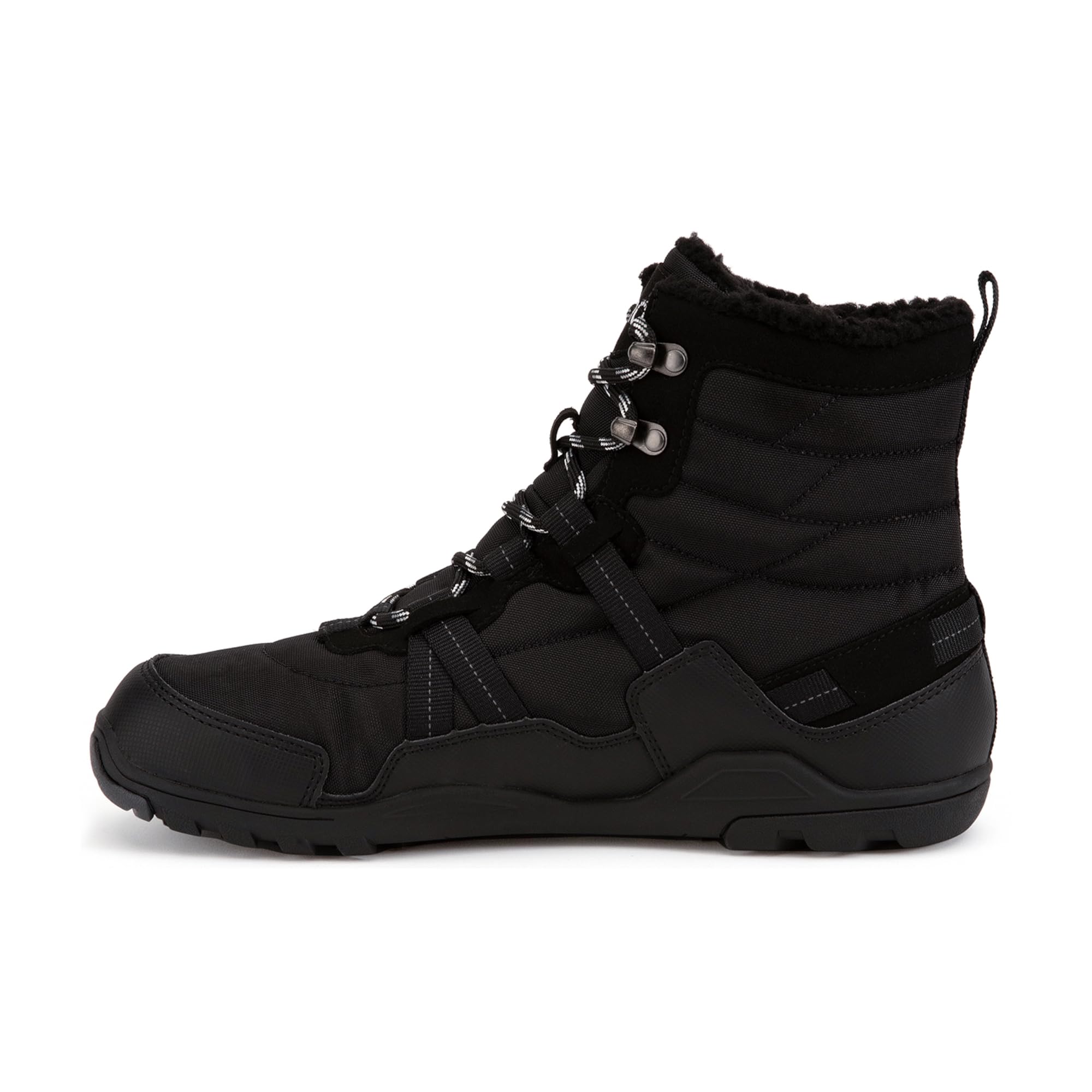
The flexible snow boot that keeps feet dry through 10-hour winter days
The Alpine is built for the snow-heavy crowd, and it delivers where it counts: warmth, traction, and a flexible sole. Customers note keeping feet dry through ten-hour days in the snow, with a spacious wide fit that means no need to size up. The zero-drop, flexible thick sole keeps your foot moving naturally, and the quality earns the most positive mentions of any aspect.
Compared to the Peak Frost Flow, this boot focuses more on insulation and grip. It handles ice and snow well, and the hook lacing plus ankle support let you pull it on and off quickly. One owner reports trekking through eight-foot snow drifts and staying warm and dry, calling it a great pick for a snow-heavy region.
The honest limits: this is water-resistant, not fully waterproof in standing water, and one owner found the toe box not wide enough for true barefoot needs. Durability is still unproven past a month and a half of use for some, and a few owners note the round laces untie easily — though the hook lacing helps. For dry, cool hikes in the 30–45°F range, it shines; for wet grass, it can soak through.
What Wins Owners Over
- Kept feet dry and warm in snow for 10-hour days
- Easy hook lacing with real ankle support
- Excellent grip on ice and snow
The Fit Notes
- Water-resistant, not submersible — deep snow or wet grass can soak through
- Toe box may not be wide enough for strict barefoot fans
- Round laces untie easily
Choose this for: snowy winters and icy sidewalks where traction and warmth outrank office style.
Think twice if: you need a truly wide anatomical toe box or plan to stand in deep puddles all day.
4. Vivobarefoot Primus Trail III All Weather

The featherweight trail trainer that disappears on your foot
The Primus Trail III is the lightest, most athletic option here — a zero-drop, ultra-lightweight trainer built for running and trail work rather than winter lounging. It delivers all-weather protection without the weight of a boot, and owners specifically praise it for disc golf, where the water resistance and flexibility shine. One runner took them a solid 30km on the trail without complaint.
The wide fit is the standout here, with one owner saying it fits their wide foot better than any of the four other Vivobarefoot pairs they have owned. The sole is flexible but slightly more rigid than a trail glove, which is fine for daily wear; the minimalist design is meant to build strength, balance, and mobility with every step.
The recurring concern is durability. One owner had the upper tear after five months of daily use, and a second pair wore even faster, with a hole in the upper and quicker sole wear after four months. Another reviewer felt the build quality was cheap and worried it would break. The fit also runs slightly big for some, while others find it true to size — so this is a shoe to try on before committing.
Lightweight versatility: The go-to for trail running and active outdoor days where a heavy boot would slow you down, pairing strong grip with a wide fit.
The durability question: Several reviewers point out the upper wearing through within months of daily use, so this suits lighter rotation rather than a single do-everything shoe.
Grab it if: you want a breathable, flexible trail shoe that handles light rain and muddy paths without weighing you down.
skip it if: you need winter insulation or expect a year of heavy daily wear from one pair.
5. Vivobarefoot Magna Forest ESG

The premium leather-and-wool hiker that feels like a trail runner
The Magna Forest ESG is the most premium-feeling boot on this list, combining a waterproof leather upper with a wool lining and a thin, flexible barefoot sole. Owners describe it as performing like a heavy boot while feeling like a trail runner — light, flexible, and grippy. The quality stands out as the most positively mentioned aspect, with the deep-lug Michelin sole earning praise for soft ground in the Pacific Northwest.
The wool lining keeps things warm without bulk, and the leather breaks in well over time. One owner called it their favorite among about ten Vivobarefoot pairs, and another noted it needed no break-in period and offered ankle support that is supportive without being restrictive. It handles a full day of mountain hiking comfortably from the start.
The catch is sizing and fit. The brand is notorious for inconsistent sizing — one owner found a size 8 perfect and a size 9 too big, while others had to size up for toe room or size down for a snug fit. Ankle fit is divisive too: one owner found the ankles far too tight despite not having thick ankles, while another loved the support. Durability concerns exist as well, with one owner reporting the soles peeling away from the upper.
Why It’s Worth The Premium
- Waterproof leather with a warm wool lining
- Deep-lug sole with excellent grip on soft ground
- No break-in period for most — comfortable from the start
Where It Gets Tricky
- Sizing runs inconsistent — research your size carefully
- Ankles run tight for some, even without thick ankles
- Occasional reports of soles peeling from the upper
Worth it for: hikers who want a waterproof, wool-lined, flexible boot that looks sharp on the trail and in town.
Not for: anyone who dislikes fiddly sizing or has wide ankles that need extra room.
6. Merrell Women’s Barefoot Frost Glove Waterproof
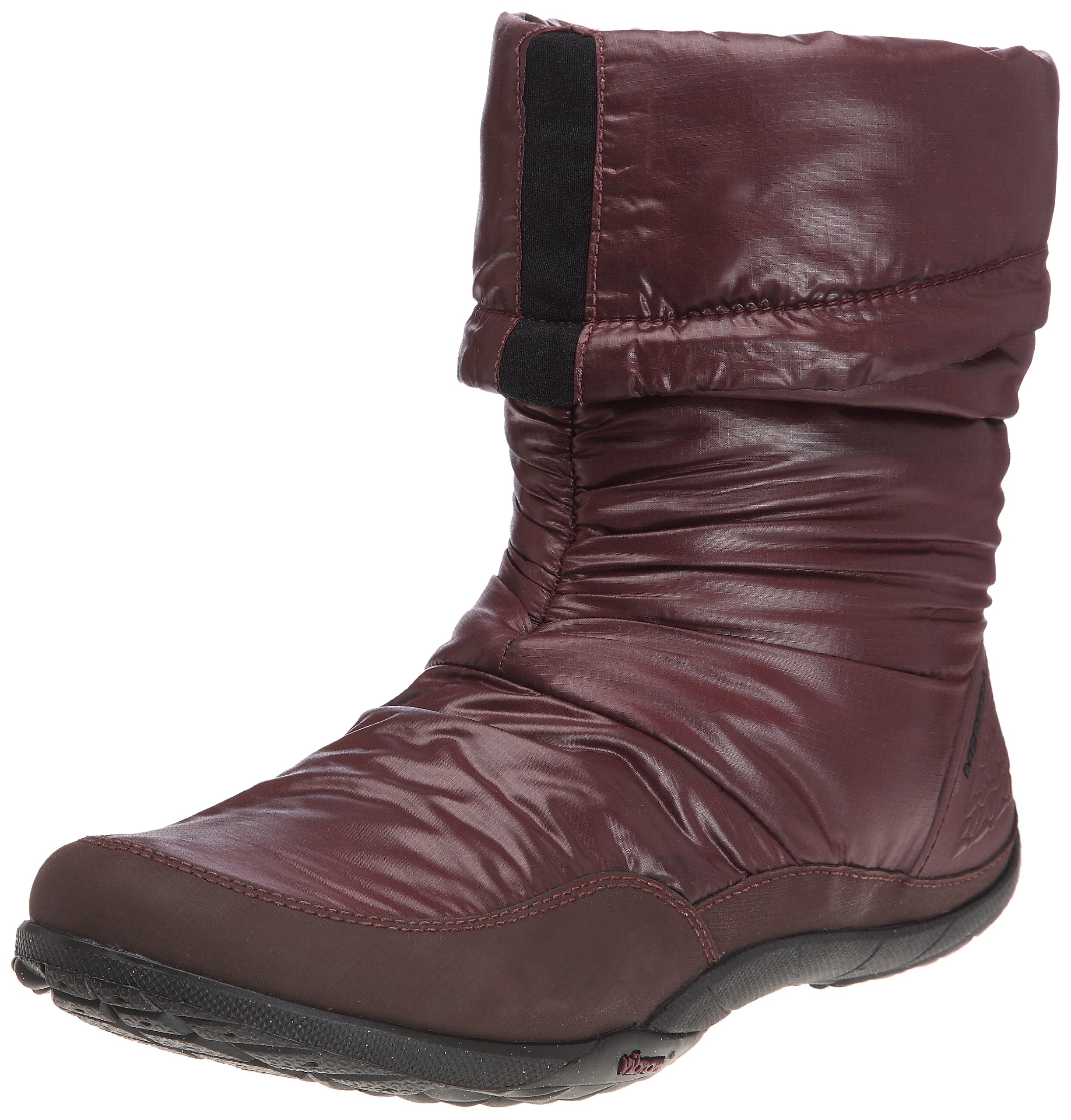
The cozy wet-weather boot you can live in all winter
The Frost Glove is the warmest, coziest option here — a waterproof membrane boot with PrimaLoft insulation and a Merrell Conductor Fleece lining treated for heat retention. Owners describe it as nearly as warm as Uggs while staying light, and the fit earns the most positive mentions of any aspect. One owner wore them in a foot of snow at 5°F and stayed warm and dry, calling them the most comfortable boots they own.
The waterproofing is the real deal. The Vibram Snow Glove Sole and TC1 Rubber outsole deliver long-lasting durability, and owners confidently splash through puddles. One buyer wore a pair for close to ten years before needing a wider toe box, which says a lot about build quality. It is also vegan-friendly footwear, which matters if you avoid animal products.
If you’re a barefoot purist, be cautious. The sole is stiffer than true barefoot shoes and includes some arch support, which goes against strict barefoot principles—one owner called it “pretty far from being barefoot.” It also runs narrow, so wide-footed buyers will find it too tight, and the drawstring top can loosen as you move, letting in cold or snow. Think of it as a minimalist winter boot, not a pure barefoot shoe.
The Warmth Factor
- Near-Ugg warmth in a light, low-bulk boot
- Excellent waterproofing — owners splash through puddles confidently
- One owner wore a pair for close to ten years
Barefoot Caveats
- Sole is stiffer with some arch support — not pure barefoot
- Runs narrow; wide feet will find it too tight
- Drawstring top can loosen and let in cold or snow
Choose it for: wet, freezing winters where warmth and waterproofing beat strict barefoot feel.
Pass on it if: you need a truly wide toe box or a zero-drop, zero-support sole.
Understanding the Specs
Waterproof vs. Water-Resistant
Waterproof means a membrane blocks water entirely while letting sweat escape — that is what you want for snow, slush, and puddles. Water-resistant means a coating repels light rain and damp grass but will soak through in a downpour or standing water. Match the claim to how wet your days really get.
Zero Drop and Sole Thickness
Zero drop means the heel and toe sit level, keeping your foot flat like it would be barefoot. A thinner sole gives you more ground feel but less cushioning on hard pavement, while a thicker sole offers more protection but less sensation. The trade-off is personal — decide what your terrain demands.
FAQ
What does waterproof actually mean on barefoot shoes?
Do barefoot waterproof shoes need a break-in period?
Will these shoes keep my feet warm in snow?
How should I size barefoot waterproof shoes?
Can I wear these shoes for running?
Are barefoot shoes bad for people with wide feet?
What is the difference between zero drop and barefoot?
How long do barefoot waterproof shoes last?
Final Thoughts: The Verdict
The barefoot waterproof shoes winner is the Jim Green African Ranger because it pairs genuine barefoot comfort with resoleable full-grain leather that owners consistently praise for build quality. If you want winter warmth on a budget, grab the Peak Frost Flow with its plush lining and waterproof upper. And for deep snow and icy traction, the Xero Alpine is the one to reach for.
How We Picked
We do not accept paid placement. Every pick is matched to a real buyer and a real use-case; we do not hands-on test units.
Sources & Methodology
Specifications: manufacturer listings and product documentation. Review insights: verified customer reviews, as of August 2026. Pricing: not shown on this page (it changes often); check the current price via the retailer link.
As an Amazon Associate, Gadgets Feed earns from qualifying purchases. This does not affect which products we feature.