
Our readers keep the lights on and my morning glass full of iced black tea. As an Amazon Associate, I earn from qualifying purchases.
Specs are compiled from manufacturer listings and verified buyer reviews and can change over time — please confirm the key details on the product page before buying.
Your jeans need hemming and the price of a new pair makes you wince — so you want a sewing machine that works without draining your wallet. The truth is most bargain machines do the same handful of jobs: straight seams, zigzag edges, buttonholes, and the occasional denim hem. Where they split apart is the threading system, the feed mechanism, and how much metal sits inside a plastic shell. This guide sorts the mid-range workhorses from the entry-level toys so you buy once and not twice.
I’m Min — the founder and writer behind Gadgets Feed. This guide is built by comparing the manufacturers’ published specifications and the patterns across verified customer reviews, so you get each pick’s real strengths and trade-offs instead of marketing spin.
Some machines here thread themselves and some fight you, and that difference decides whether a beginner sticks with the hobby or stuffs the box in a closet. Below you’ll find the honest breakdown of the bargain sewing machine worth your money this year.
Our Picks at a Glance


How To Choose The Best Bargain Sewing Machine
A bargain sewing machine is not a lesser machine — it’s a simpler one. The mechanism doing the actual stitching is astonishingly similar across price tiers, so your money buys convenience, not stitch beauty. What separates a good budget pick from a frustrating one depends on three things: how the thread gets to the needle, how the fabric feeds under the presser foot (the part that holds fabric down), and how much metal surrounds the moving parts.
Threading: The Real Skill Barrier
Every beginner underestimates threading. A machine with an automatic needle threader lets you skip the squinting and the nimble fingers entirely — you press a lever and the machine pushes the thread through the needle’s eye for you. Without one, you’re threading by eye with the machine’s built-in light doing most of the work. If your eyesight or hand steadiness is a concern, pay attention to this feature first.
The bobbin system matters just as much. A drop-in top bobbin sits under a clear plastic cover on the bed of the machine — you drop it in, and a jam-resistant design makes it almost impossible to load wrong. A front-loading bobbin requires reaching into a metal case and threading it through tension springs before inserting the whole assembly. Both work, but one is far gentler on a first-timer.
Stitch Count: More Isn’t Automatically Better
A machine with 12 stitches and a machine with 57 stitch applications both cover the same core ground: straight stitch, zigzag, blind hem, stretch stitch, and a four-step buttonhole. The extras are decorative patterns you might touch once a year. Don’t pay a premium for 50 patterns when you need five.
What you do need is a buttonhole function and adjustable stitch length. Length adjustment is what lets you sew a long basting stitch or a tight reinforcement seam on the same machine — it’s the single most useful dial on the panel.
Fabric Capability: Be Honest About What You’ll Sew
An entry-level machine rated for light fabric only will struggle with denim, canvas, or multiple layers. If your plan includes hemming jeans or repairing a backpack, look for a machine with a metal frame and reinforced needle piercing power.
On the other hand, if you’re doing simple mending, hemming lightweight trousers, and practicing on cotton scraps, a compact lightweight machine with 12 stitches handles the work without complaint.
Quick Comparison
| Model | Best For | Built-In Stitches | Weight | Bobbin Type | Amazon |
|---|---|---|---|---|---|
| Brother XM3700★ Best Overall | Best overall for beginners | 37 | 12.5 lb | Drop-in top loading | Amazon |
| Brother SM1400Most Versatile | Simple everyday projects | 14 | 12.8 lb | Drop-in top loading | Amazon |
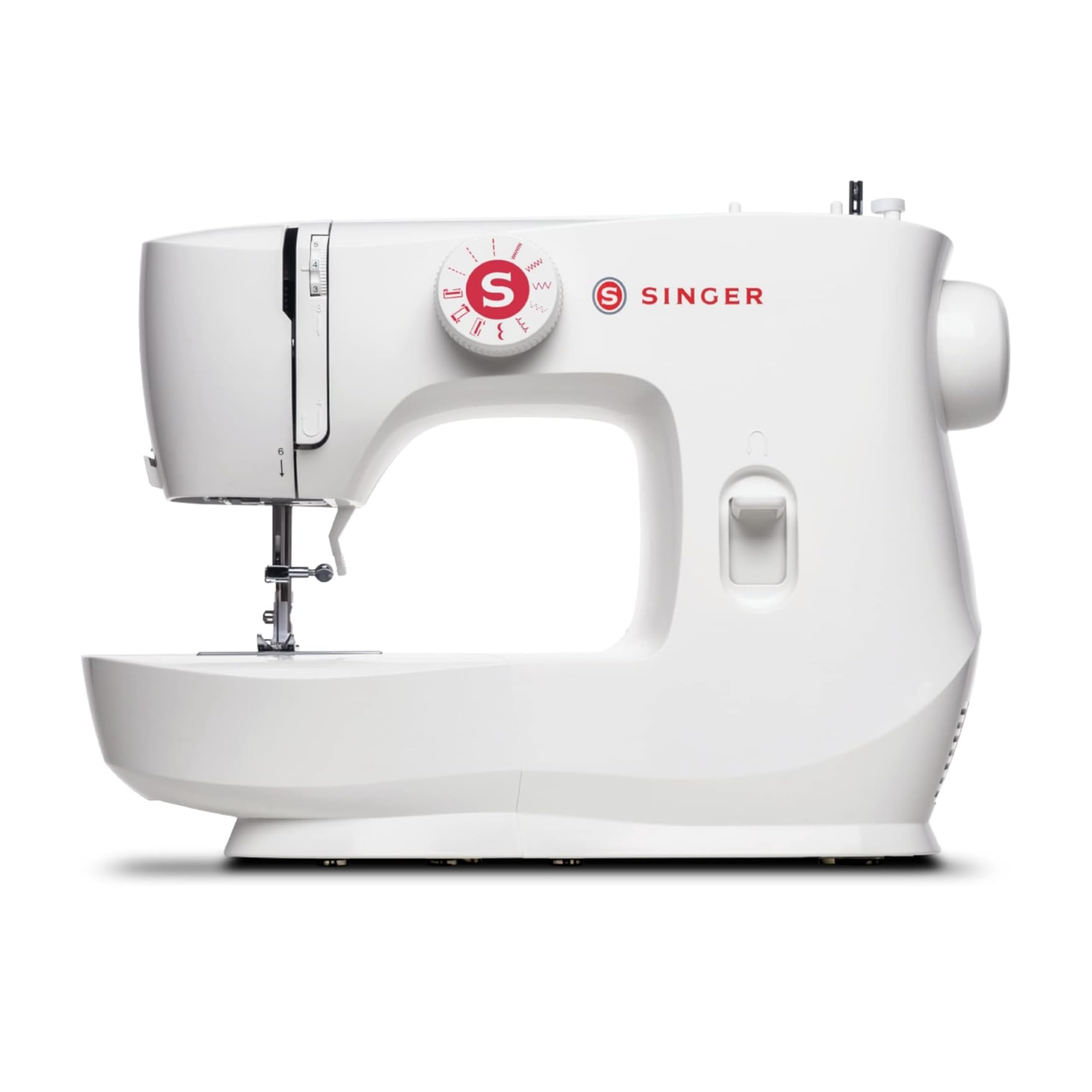
| SINGER MX60Compact Pick | Compact portable sewing | 57 stitch applications | 5 kg | Class 15 | Amazon |
| Janome MOD-15 | Quiet, easy threading | 15 | 11.7 lb | Top loading with clear cover | Amazon |
| American Home Believe AH600 | Family-friendly crafting | 12 | 12.8 lb | Front loading | Amazon |
| Janome 2212 | Heavy fabric and tough jobs | 12 | 14 lb | Drop-in top loading | Amazon |
| SINGER 4411 PRISMA | Fast sewing on thick fabric | 11 (69 applications) | 14 lb | Class 15 transparent | Amazon |
| Stoigeld SM-725 | Budget starter with full kit | 12 | 5 lb | Drop-in top loading | Amazon |
| Javinos Beginner 16-Stitch | Tiny spaces and small repairs | 16 | 3 lb | Drop-in top loading | Amazon |
In‑Depth Reviews
1. Brother XM3700 Sewing Machine 37 Built-in Stitches
Our pick — over 4.5★ from 950+ verified ratings; the strongest balance of quality and price.
The beginner machine that threads itself and still powers through canvas
If you are learning to sew and want one machine that covers every project you haven’t imagined yet, the Brother XM3700 earns its keep with 37 built-in stitches — three times the 12 stitches on the Stoigeld SM-725. That range means you get a straight stitch for basic seams, a zigzag for finishing raw edges, a blind hem for trousers, and a one-step auto-size buttonhole without changing machines. There’s an automatic needle threader that pushes the thread through the needle for you, so you skip the most frustrating step for a beginner.
A jam-resistant drop-in top bobbin sits under a clear cover — you drop the bobbin in and the machine practically aligns it itself. The free arm is a section of the machine bed that slides out to reveal a narrow post, which is what lets you sew cuffs, sleeves, and baby clothes without fighting the fabric around a flat bed. The 5 included sewing feet cover zigzag, zipper, blind stitch, buttonhole, and button sewing applications.
What wins people over is how it performs under real load. One owner ran 30,000 masks through it before burnout, sustained production work that kept stitching. Some users note the self-threading feature takes practice before it works smoothly, and it’s worth threading manually until you get the hang of the lever’s timing. The metal-and-plastic build weighs 12.5 pounds, which is heavy enough to sit still when you push fabric through but light enough to lift with one hand. The Brother At Your Side support line offers free technical help via chat or phone for the life of the machine.
What You’re Actually Getting
- 37 built-in stitches plus a one-step auto-size buttonhole covers everything from mending to quilting
- Automatic needle threader and drop-in top bobbin make setup forgiving for first-timers
- 5 sewing feet included: zigzag, zipper, blind stitch, buttonhole, and button sewing
- Free arm handles cuffs, sleeves, and cylindrical projects a flat bed can’t reach
- Free lifetime technical support via chat or phone
Where It Falls Short
- Self-threading lever needs practice before it clicks smoothly for some users
- Durability is the touchiest point — a handful of units fail early, though most run for years
- 12.5 lb is heavier than ultra-portable budget machines
Pick this if: you want one machine that grows with you from first hem to quilting without replacing it in six months
Think twice if: you need something that slides into a backpack or sews in a shared space where extra weight matters
2. Brother SM1400 14-Stitch Sewing Machine
Full-sized stability that lightens the load on older hands and first machines alike
The Brother SM1400 solves a specific problem: you want a full-sized machine but can’t lift your old cast-iron tank anymore. At 12.8 pounds, it is rated lightweight yet full-sized, and it comes with 14 built-in stitches including a 4-step auto-size buttonhole and 35 stitch functions. The brightly lit LED work area shines directly on the needle plate so you can see exactly where the fabric feeds — that matters more than beginners expect, especially for dark fabric or tired eyes.
Threading is where this machine shines. It has a tension control dial and pre-set stitch width and length, so you don’t need to fiddle with multiple settings before your first seam. Owners consistently call it easy to thread and easy to use. An 85-plus daily user chose it over a heavier machine because they could lift it, and notes the upper and lower threading follows a unique path worth studying before your first run.
The 4 sewing feet — zigzag, zipper, buttonhole, and button sewing — cover the standard range of home projects. The catch is durability: some units develop needle-breakage issues over time, and the tension guide before the needle frustrates a few users because it’s tucked behind the light housing. That said, it’s a solid pick for anyone who sews in short bursts. If you’re doing daily production or thick upholstery fabric by the yard, the Janome 2212 handles heavier material better.
Real-world fit: Ideal for small alterations, curtain hemming, cushion covers, and children’s clothing. The full-sized bed gives fabric room to move without feeling cramped.
Reach for this if: you want full-sized sewing surface in a machine light enough to move from closet to table without help
Look elsewhere if: you plan to sew denim or canvas every weekend — this one is built for lighter everyday fabric
3. SINGER® MX60 Lightweight & Portable Sewing Machine with Accessory Kit
The portable machine that tucks into a class bag and still sews through layers
If you sew in a small apartment, need to carry your machine to a class, or want to stash it in a hall closet between projects, the SINGER MX60 is built for exactly that life. It’s compact and portable, and it slides away easily without sacrificing the stitch quality you actually need. Inside, a heavy-duty metal frame keeps the needle aligned and resists skipping when you feed multiple layers through — that internal frame is the reason you can tackle a quilted tote with a few stacked layers instead of a single flat sheet.
The 57 stitch applications come from 6 base stitches that can be varied in length and width. This is a smarter design than it sounds — instead of scrolling through 50 one-trick stitch presets, you get 6 fundamental stitches you can adjust for different uses. Preset stitch length and width keep it simple for beginners, while the included accessory kit (all-purpose foot, zipper foot, buttonhole foot, darning plate, L-screwdriver, seam ripper/brush, 2 spool pin felts, 3-pack of needles, and 4 SINGER Class 15 bobbins) means you can start your first project without a trip to the craft store.
The trade-off gets real the longer you use it. A few units develop problems quickly — jamming, thread bunching, or a bobbin winder that never worked from day one. That pattern shows up in a tiny slice of a very large review pool, but it’s worth asking a seller about the return window before you commit. For most buyers, though, this is a dependable machine that stores easily and sews well from the start.
The Case For It
- Compact enough for small spaces, dorms, and sewing classes
- Heavy-duty metal frame resists skipping on multiple fabric layers
- 57 stitch applications from 6 base stitches give broad flexibility without overwhelming menus
- Accessory kit includes everything to start first projects immediately
- Preset stitch length and width make it forgiving for beginners
The Honest Catch
- A small share of units jam or fail early — worth checking the return policy
- Bobbin winder has been reported as DOA on a few machines
- Not suited for heavy upholstery or daily production work
Best for: apartment sewers, class-takers, and anyone who needs portability without giving up metal-frame stability
Not for: quilters pushing full-size quilt sandwiches or sewers who want computerized features
4. Janome MOD-15 Easy-to-Use Sewing Machine with 15 Stitches

The quiet workhorse that threads easily and runs smooth enough for late-night sewing
Janome built this machine around one idea: make every step of setup obvious. Automatic tension means you don’t have to dial in pressure for different thread weights, and a top-loading bobbin under a clear cover lets you see the thread path at a glance. The 5-piece feed dog system uses five toothed bars underneath the fabric — more contact points than a standard four-piece setup — to grip and advance material evenly instead of letting thin cotton slip or thick seams bunch up.
Fifteen stitches including one 4-step buttonhole cover the important ground: straight stitch, zigzag, blind hem, stretch stitch for knits, and decorative patterns for crafts. Adjustable stitch length and zigzag width let you tune each one for your fabric. The four included presser feet — plus free arm and drop feed functions — mean you can handle zippers, hems, and free-motion sewing without buying extra parts.
What owners consistently praise is how quiet it runs and how smoothly it stitches. Noise level is among the most-noted positives, which matters if you sew at night in a shared home or a thin-walled apartment. The 25-year limited warranty gives unusual long-term coverage for a machine at this tier. The main thing to know: Janome’s styling here is deliberately plain, and advanced sewers who want dozens of decorative stitches will eventually outgrow 15. For beginners and casual home sewists, it’s an excellent long-term companion.
what separates it: The 5-piece feed dog system gives you more fabric grip than most machines at this tier — a genuine advantage when sewing lightweight or slippery fabrics.
Worth it for: beginners and casual sewers who value quiet operation and set-and-forget threading convenience
skip it if: you want decorative embroidery patterns or heavy-duty capabilities for leather and upholstery
5. The Believe Beginner Sewing Machine by American Home (AH600)

The kid-friendly starter with a metal bobbin case and a genuine 25-year warranty
Here’s what makes the American Home Believe different from most beginner machines: it’s built on a metal frame with a metal bobbin case, not a plastic one. That single detail means the bobbin doesn’t wobble out of alignment after a few months of regular use, which is among the most common failure points on cheap machines. The 12 pre-set stitches and 4-step buttonhole cover mending, hemming, and decorative crafts, and an automatic bobbin winder stops itself when the bobbin fills — you don’t have to watch it or guess when it’s done.
The automatic stitch control manages width and length for straight stitch, blind hem, zigzag, and decorative stitches, so you get consistent results without dialing in settings for each pattern. A free arm opens up for hemming pants and sleeves, and the tension dial lets you fine-tune quickly when you switch fabric weights. Two snap-on presser feet — the buttonhole foot and zigzag foot — are included, along with a darning plate, 2 bobbins, a seam ripper, and a needle set.
Owners love how confidently kids can learn on it — a 9-year-old reportedly learned threading and bobbin winding within hours. The illustrated booklet is clear once you find the right page, though its order doesn’t always match the task sequence for a beginner. That’s the recurring note: the included manual is organized by part, not by project, so you may find YouTube walkthroughs easier to follow step-by-step.
Why It’s Worth Having
- Metal bobbin case and metal frame add durability most plastic-framed budget machines lack
- Automatic bobbin winder stops when full — no more over-winding guesswork
- 12 stitches and 4-step buttonhole cover the full standard beginner range
- 25-year limited warranty backs the build
- Kids as young as 9 have learned to thread and wind with it independently
What You’ll Notice
- Manual is organized by parts, not by task, so beginners may want video guides
- Built-in light isn’t as bright as some users prefer for dark fabric
- Front-loading bobbin case takes practice to thread correctly
Ideal for: families teaching kids to sew and adults who want an honest beginner machine with real warranty coverage
Consider another option if: you need heavy-duty piercing power for denim — this one is tuned for everyday home fabric
6. Janome 2212 Sewing Machine Includes Exclusive Bonus Bundle

A mechanical machine that treats canvas and military gear like cotton bedsheets
Most entry-level machines quietly give up when you feed them canvas or multiple layers of denim. The Janome 2212 does the opposite. Its mechanical design delivers consistent power to the needle without the lag you sometimes feel on low-end machines, and the result is straightforward — one user pushed military gear, backpacks, and sunshades through it with no tangling, work lighter machines can’t handle. At 14 pounds and rated lightweight by Janome, it’s stable without being unmanageable.
The 12 built-in stitches cover a straight seam, zigzag, blind hem, and a 4-step buttonhole, with dial pattern selection and adjustable zigzag width and stitch length. There’s no automatic needle threader, so if threading by eye is a dealbreaker for you, this isn’t the machine. But everything else about the setup is simple — matching stitch length dials to fabric and dialing tension are direct, mechanical, and instructive. No menu diving, no learning curve to a touchscreen.
One owner preferred its stitch quality to a machine costing many times more. The free arm and drop feed expand the machine into quilting and sleeve work. The bonus bundle includes 13 bobbins, 2 packs of needles, presser feet, and a metal 4-step buttonhole foot — worthwhile additions you’d otherwise buy separately. It’s lightweight enough that one owner noted it fits under an airplane seat.
What owners rave about: The mechanical reliability at this price tier — no computerized boards to fail, no menu confusion, just direct control over stitch and tension.
Built for: beginners who want to grow into tough materials and anyone who prefers a mechanical machine over a computerized interface
Not ideal if: you need automatic threading, decorative stitch presets, or a brightly lit work area — this one keeps things stripped down by design
7. SINGER® 4411 PRISMA High Speed Heavy Duty Sewing Machine
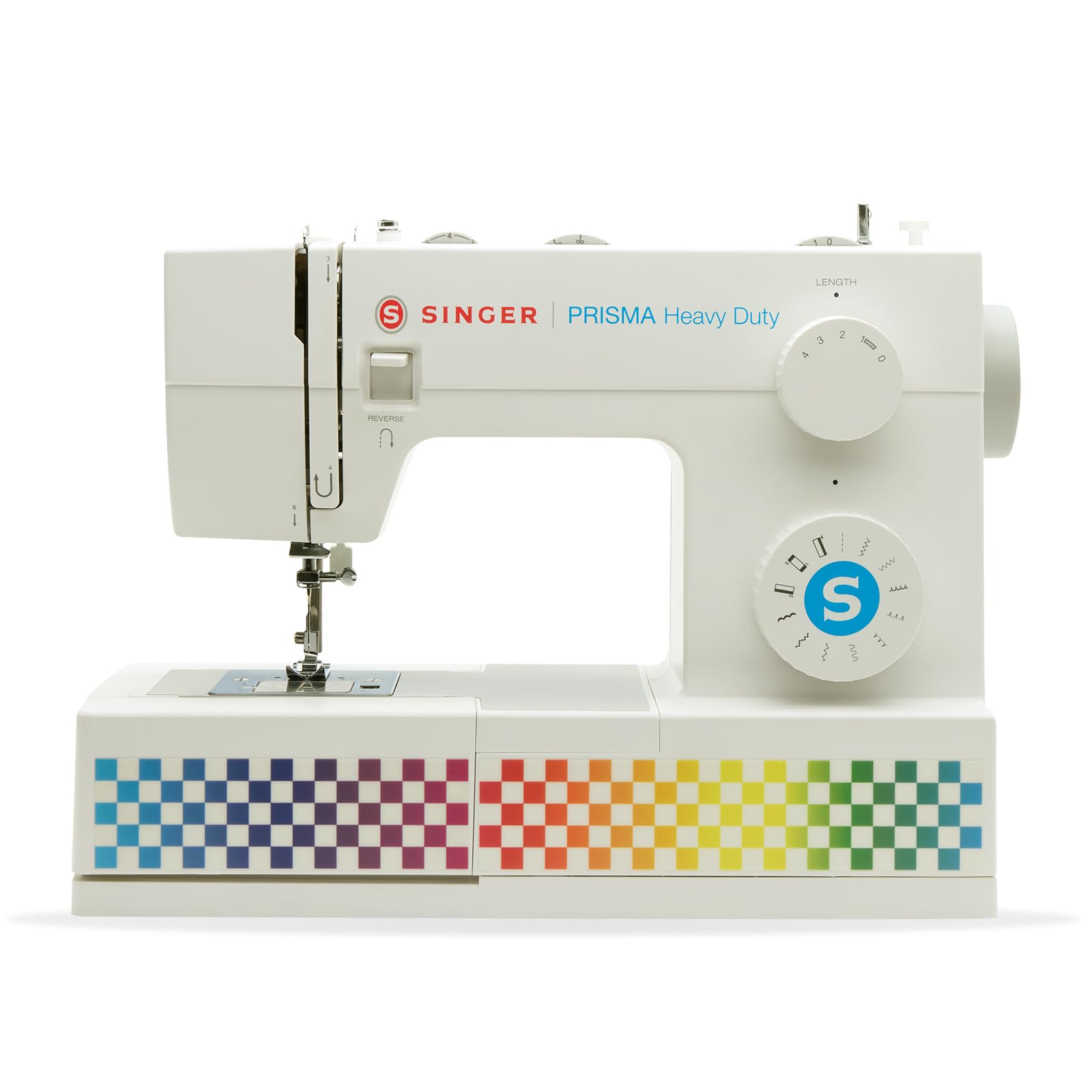
A bold-looking machine that races through denim at 1,100 stitches per minute
For anyone hemming curtains or finishing a quilting project, that speed translates directly to a shorter session at the machine. The 11 built-in stitches deliver 69 stitch applications, and the metal frame holds everything steady while you push heavy material through. Denim, canvas, and stacked layers that bog down lighter machines move through without complaint.
The design language splits it from every other machine on this list. Rather than a plain white console, this one wears a vibrant rainbow checkered finish that looks great in a dedicated craft room and gives the machine real personality. Functionally, it’s set up for daily projects — adjustable stitch length and width, free arm, drop feed, and a 4-step buttonhole round out the essentials. You also get a substantial accessory kit: presser feet, bobbins, needles, seam ripper, quilting guide, spool pins, and a soft dust cover.
The trade-off sits in reliability. Some machines in this family work smoothly for years, while others develop needle-alignment or stitching issues early. This is a case where buying from a seller with a clear return policy really matters. If you get a good unit, you’ve got a speed machine built for heavy fabric — and the color alone makes it one people actually want to keep out on the table.
Where It Excels
- 1,100 stitches per minute speeds through long runs of hemming and quilting
- 50% more piercing power handles denim, canvas, and multiple layers with ease
- 11 stitches expand to 69 applications through length and width adjustment
- Metal frame keeps skip rates low on heavy fabric
- Standout rainbow checkered finish makes it a conversation piece
Worth Knowing
- Reliability varies — some units arrive with alignment issues
- Manual has been reported as non-English by some buyers
- No hard case included despite the heavy-duty positioning
Made for: sewers who regularly tackle denim, canvas, and long hemming runs and want speed on their side
Steer clear if: you’re after pure simplicity and quiet operation — this machine’s strong point is power, not silence
8. Stoigeld Sewing Machine for Beginners with 20Pcs Fabric & 32Pcs Sewing Threads Kit (SM-725)
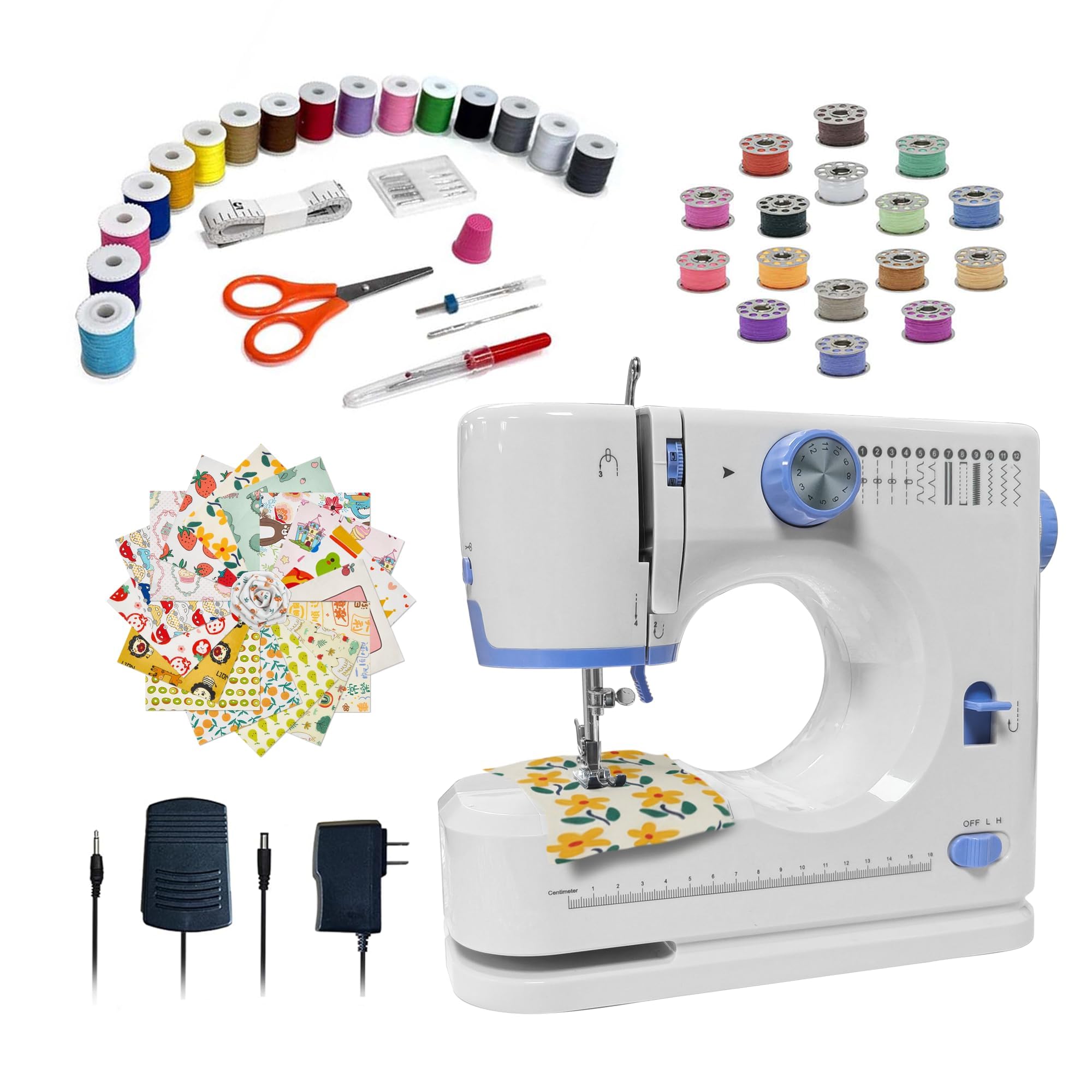
A lightweight starter kit that arrives ready with practice fabric and threads included
The Stoigeld SM-725 is what most people picture when they think of a budget starter machine — and it delivers the things a beginner actually needs on day one. It weighs 5 pounds and measures 10″ x 6″ x 10″, so it stores in a cabinet or under a desk with room to spare. Two speed settings let you work slowly while learning and speed up once you’re comfortable.
The kit is genuinely complete: 32 pieces of sewing thread and 20 pieces of practice fabric arrive with the machine, plus a standard pedal, power cord, bobbins, needles, and a threader. You don’t buy anything extra for your first several projects. A little drawer holds the needles and accessories so they don’t scatter across your sewing table. The 12-stitch range, drop-in top loading bobbin, and compact footprint make it an approachable first machine.
Be realistic about the limits. This is a light-fabric machine rated for thin cotton, linen, and light woven up to 4-6 layers, with denim and thick fabric only manageable at 2-4 layers. On longer runs, some machines strain, heat up, and start to smell if you don’t let them rest. Follow the threading instructions closely and it’ll serve basic mending, hemming, and craft projects well.
The honest take: This is a machine for lightweight mending and crafts, not for upholstery or daily production. Treated as a starter kit rather than a workhorse, it does its job well.
Right for you if: you want everything you need for beginner sewing in one package without buying accessories separately
Look past it if: your projects regularly involve denim, canvas, or multiple dense layers — light fabric only is the hard limit here
9. Sewing Machine for Beginners, 16 Stitches, Portable for Home Use
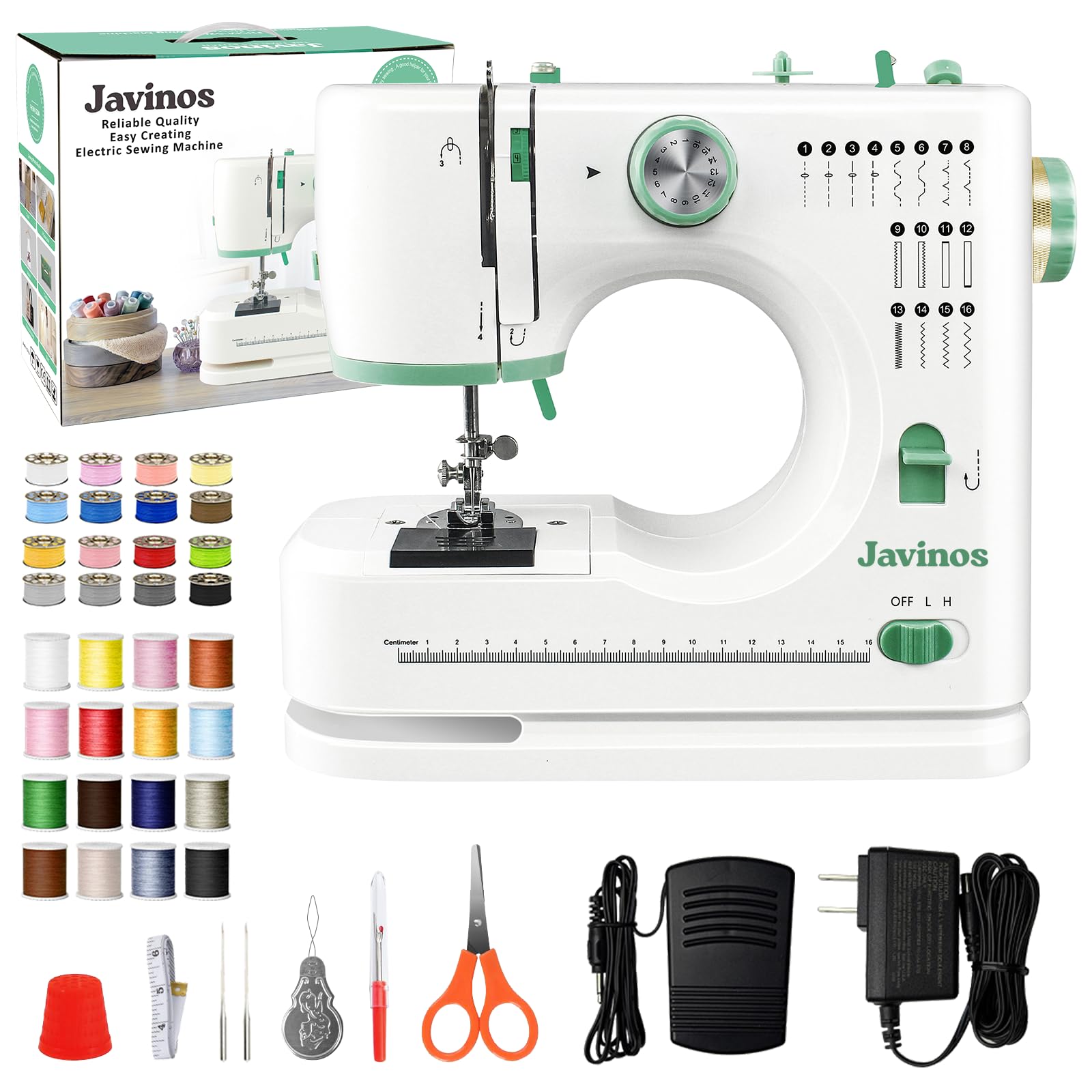
A three-pound machine that lives in a drawer and handles the mending pile
If your sewing is occasional repairs rather than a full weekend project, that weight difference decides whether the machine stays within reach or gets stuffed in the closet. Sixteen stitches include straight and zigzag plus decorative patterns for both single and twin needle modes. A built-in threading guide plus quick-start steps and video tutorials mean you can be sewing within minutes of unboxing.
The standout feature is dual control. You can run the machine with a speed control button or the included foot pedal — whichever feels natural as you learn. That matters for anyone with mobility concerns or anyone who’d rather use a button than a floor pedal. A storage drawer holds the included sewing kit (needles, bobbins, threads, scissors, and more), and reinforced metal components inside let it stitch multiple denim layers when you set the correct needle, thread tension, and sewing technique.
The realistic use case is exactly what one buyer described: fixing a son’s torn clothes, hemming jeans that are too long, and patching everyday items. It handles these repairs well. As a full-time garment-maker’s machine, it will feel limited — one person called it a toy, and it isn’t built for daily heavy projects. Shopping smart here means knowing that going in.
What Makes It Smart
- At 3 pounds, it’s the easiest machine to store and move on this list
- Dual control (button or foot pedal) suits a range of users and abilities
- 16 stitches including decorative patterns and twin needle mode
- Comes with a full starter kit — needles, bobbins, threads, scissors
- Includes a built-in threading guide and video tutorials for first-timers
Before You Buy
- Not built for daily or heavy-duty sewing — a small share of units fail early
- Sewing rate is slower than full-sized machines
- Denim only works with proper needle, tension, and technique dialed in
Buy this when: you want a compact repair machine that handles hems, tears, and small mending without demanding a dedicated sewing table
Choose something bigger when: you plan to sew clothing from scratch or work with heavy fabric regularly
Understanding the Specs
Built-In Stitches vs. Stitch Applications
A built-in stitch is a specific pattern the machine can form — a straight stitch, a zigzag, a blind hem. Stitch applications refers to how many different ways those patterns can be used when you adjust length and width. For example, the SINGER MX60 has 57 stitch applications from 6 base stitches, while the Brother XM3700 lists 37 unique built-in stitches directly. Both approaches work — more stitches are not automatically better if most of them are decorative patterns you’ll never use. What matters most is whether the machine has the core stitches: straight, zigzag, blind hem, stretch stitch, and a buttonhole function.
Bobbin Type and Why It Matters
The bobbin is the small spool that sits underneath the needle plate and feeds the bottom thread. There are two main ways to load one. A drop-in top bobbin sits under a clear plastic cover on the machine bed — you drop it in, and a jam-resistant design keeps it aligned. A front-loading bobbin requires threading through a metal case and inserting the whole assembly. The SINGER MX60 and SINGER 4411 PRISMA use Class 15 bobbins, a widely available standard size. The Janome 2212 and Brother XM3700 use drop-in top loading. Both systems work well; drop-in is easier for first-timers, front-load is more traditional and easier to service.
Feed Dog Systems and Fabric Handling
Feed dogs are the tooth-edged bars under the presser foot that grip and pull fabric forward as you sew. A standard machine has four feed dogs; the Janome MOD-15 uses a 5-piece feed dog system for extra grip. More feed dogs generally mean better control on slippery or lightweight fabric, and less slipping when you’re trying to sew a perfectly straight seam. If you work mostly with cotton or blend fabrics, four feed dogs are perfectly adequate. If you struggle with puckering, slipping, or uneven advancement, a 5-piece system is worth seeking out.
Free Arm and Drop Feed
The free arm is a section of the machine bed that slides out to expose a narrow post, letting you sew closed cylindrical shapes like trouser legs, cuffs, and sleeves. Drop feed lets you lower the feed dogs so you can do free-motion quilting or sew on buttons without the machine pulling the fabric underneath. Both features appear on most machines at this tier, but check before you buy — losing the free arm makes hemming pants unnecessarily difficult, and losing drop feed closes off quilting and button-sewing projects.
FAQ
Can a bargain sewing machine handle denim and thick fabric?
Is a drop-in bobbin easier to use than a front-loading bobbin for beginners?
How many stitches does a beginner actually need?
What does the free arm feature let you sew?
How long does a bargain sewing machine typically last?
Do I need a computerized sewing machine as a beginner?
Can a portable sewing machine sew multiple layers of fabric?
Is a heavy sewing machine better than a lightweight one?
What accessories come with budget sewing machines?
Can kids and teens use a bargain sewing machine safely?
Final Thoughts: The Verdict
For a beginner who wants one machine that handles everything from a first hem to a quilted project, the Brother XM3700 is the smartest buy — 37 stitches, five included presser feet, an automatic needle threader, and a drop-in bobbin that forgives first-timer mistakes. At 4.6 stars across 900+ ratings, it offers the widest stitch range here while staying simple enough for beginners.
If you want the money-saving entry point and your projects are lightweight mending and crafts, the Stoigeld SM-725 arrives with 32 threads and 20 pieces of practice fabric — everything you need to start sewing the day it arrives. And if denim, canvas, or automotive leather is on your project list, the Janome 2212 has the mechanical muscle to walk through materials that bog down lighter machines, with a 25-year limited warranty backing the build.
How We Picked
We do not accept paid placement. Every pick is matched to a real buyer and a real use-case; we do not hands-on test units.
Sources & Methodology
Specifications: manufacturer listings and product documentation. Review insights: verified customer reviews, as of September 2026. Pricing: not shown on this page (it changes often); check the current price via the retailer link.
As an Amazon Associate, Gadgets Feed earns from qualifying purchases. This does not affect which products we feature.