
The tiny speakers crammed into modern flatscreens are engineered for thinness at the expense of everything else, leaving you cranking the volume just to catch a whisper while a bass-heavy action scene rattles the chassis. A dedicated audio system solves this, but sorting through channel counts, connection standards, and subwoofer sizes often trips up buyers who simply want their favorite shows to sound alive again.
I’m Min — the co-founder and writer behind Gadgets Feed. I spend my days dissecting spec sheets and cross-referencing real-world performance data to separate genuine upgrades from marketing hype in the home audio space. This guide cuts through the noise to help you pick a setup that actually works for your room, your sources, and your ears.
Whether you prioritize thunderous bass for movie marathons or crystal-clear dialogue for evening dramas, finding the right barra de sonido para tv involves knowing which specs translate to real performance.
How To Choose The Best Barra De Sonido Para TV
Not all soundbars deliver the same experience. The number of channels, the presence of a dedicated subwoofer, and the types of connections available will determine whether your setup feels like a real upgrade or just a louder version of your TV speakers. Focus on these three areas first.
Channel Count: 2.1 vs. 3.1 vs. 5.1
The first number indicates the main channels. A 2.1 system, with left and right channels plus a subwoofer, offers a wide stereo stage and deep bass. A 3.1 bar adds a dedicated center channel that anchors dialogue to the screen — critical for news, dramas, and sports where vocal clarity matters most. A 5.1 system introduces rear speakers to create true surround sound, letting you hear effects pan from front to back, which transforms action movies and gaming into an immersive event. Your choice depends on room size and whether you are willing to run cables to the back of the room.
Connectivity: HDMI ARC vs. Optical vs. Bluetooth
HDMI ARC or the newer eARC standard carries high-resolution audio formats like Dolby Atmos and DTS:X over a single cable, plus it lets your TV remote control the soundbar volume seamlessly. Optical connections cap out at compressed 5.1 and lack the bandwidth for object-based audio, but they are perfectly functional for basic setups. Bluetooth is a welcome convenience for streaming music or podcasts from your phone, though it introduces slight latency that matters less for music than for video content, where lip-sync can drift.
Subwoofer Design: Wired vs. Wireless and Driver Size
A subwoofer handles the lowest frequencies — explosions, kick drums, rumbling scores. Wireless subs offer placement flexibility because you can tuck them in a corner without running a long cable from the soundbar. Pay attention to the driver size: an 8-inch woofer moves more air and delivers tighter, deeper bass than a 5.25-inch unit, which is better suited for small apartments where you want impact without rattling the neighbor’s walls. Room size dictates how much bass you can actually enjoy before it overwhelms the space.
Quick Comparison
On smaller screens, swipe sideways to see the full table.
| Model | Category | Best For | Key Spec | Amazon |
|---|---|---|---|---|
| Bose Smart Dolby Atmos | Premium | All-in-one audio quality | TrueSpace upmixing, 5 transducers | Amazon |
| Amazon Fire TV Plus | Premium Mid | Seamless Fire TV integration | 3.1 channels, Dolby Atmos, DTS:X | Amazon |
| Samsung HW-B550F | Mid | 2.1 performance, Adaptive Sound | DTS Virtual:X, wireless sub, Bass Boost | Amazon |
| LG S40TR | Mid | True 4.1 with rear speakers | 4.1 ch, wireless rears, Clear Voice Plus | Amazon |
| ULTIMEA Poseidon D50 | Mid Value | Budget 5.1 surround | 5.1 ch, wired rears, 320W peak | Amazon |
| TCL S55H | Value | 2.1 with AI room calibration | Dolby Atmos, DTS:X, AI Sonic, 220W | Amazon |
| Samsung HW-B400F | Entry | Basic upgrade, small rooms | 2.0 ch, built-in woofer, Voice Enhance | Amazon |
In‑Depth Reviews
1. Bose Smart Dolby Atmos Soundbar

Bose packs five transducers including two upward-firing drivers into a chassis barely wider than a 55-inch TV, using proprietary TrueSpace technology to upmix stereo and 5.1 signals into a convincing Atmos height layer. The result is a wide, three-dimensional soundstage that feels much larger than the physical footprint suggests, with instrument separation and spatial cues that rival systems twice its size. The acoustic architecture avoids the need for a separate subwoofer for most content, though the bass module option remains for those chasing chest-thumping lows.
A.I. Dialogue Mode actively analyzes the audio stream to balance vocal frequencies against background effects, producing ultra-crisp speech without the hollow, processed effect some virtualizers introduce. The setup leverages Bose Voice4Video so you can tell Alexa to switch inputs or change channels, and the included remote controls everything out of the box. Bluetooth, AirPlay 2, Spotify Connect, and Chromecast built-in make it the most versatile streaming hub in this guide.
The single-bar design means no rear speakers and no subwoofer cable to hide, but purists should note that physical surround channels are absent — the immersion relies entirely on psychoacoustic processing. Some users reported a periodic picture loss on specific TV models, which appears to be a compatibility edge case rather than a widespread flaw. For buyers who want premium sound without a multi-component clutter, this is the benchmark.
Why it’s great
- Stunning Atmos virtualization from a single bar
- A.I. Dialogue Mode keeps speech crystal clear
- Broad streaming support (AirPlay, Chromecast, Bluetooth)
Good to know
- No physical surround speakers included
- Premium pricing reflects the brand and build
- Occasional compatibility glitch with specific TV models
2. Amazon Fire TV Soundbar Plus with Subwoofer
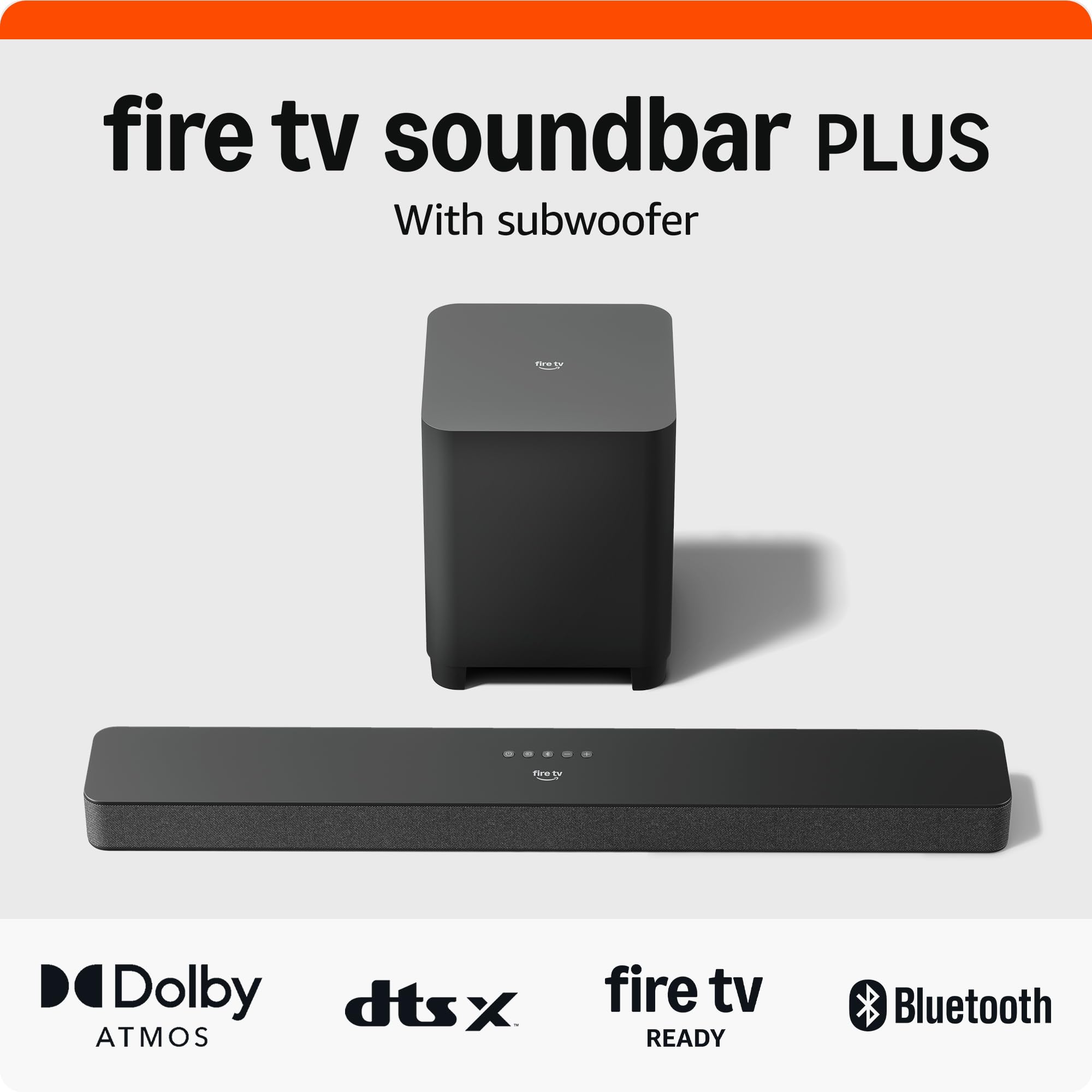
The Fire TV Soundbar Plus steps up from the standard 2.1 formula by adding a dedicated center channel, which anchors dialogue firmly to the middle of the screen. Combine that with the separate wireless subwoofer, and you get a 3.1 system that handles everything from whispered dialogue in a quiet drama to the low-end thump of a Marvel battle without the sub overwhelming the mids. The subwoofer pairs automatically after power-on, and the whole system integrates with Fire TV so deeply that your TV remote handles volume, power, and sound modes without any programming.
Dolby Atmos and DTS:X support unlocks object-based audio from streaming services and Blu-rays, while Movie, Music, Sports, and Night modes let you tailor the profile for bedtime viewing or game-day roar. The dedicated center channel truly separates this from cheaper alternatives — voices have a presence and location that a standard stereo bar cannot match, reducing the urge to reach for subtitles. Even without rear speakers, the bar’s rear-firing drivers add a hint of width to the soundstage.
The main caveat is the physical width: the bar measures over 31 inches, which may interfere with TV legs on smaller stands unless you wall-mount or use the top-bezel shelf trick. The subwoofer lacks deep fine-tuning options out of the box, relying on a single bass level in the Fire TV menu. For anyone already invested in the Fire TV ecosystem, the seamless control and excellent vocal clarity make this a compelling mid-range flagship.
Why it’s great
- True 3.1 channel with dedicated center for dialogue
- Seamless Fire TV remote integration
- Dolby Atmos and DTS:X support at a mid-range price
Good to know
- Wide bar may conflict with some TV legs
- Subwoofer EQ adjustments are basic
- Requires HDMI ARC for full features
3. Samsung HW-B550F 2.1 ch Soundbar

The HW-B550F delivers what many consider the sweet spot of soundbar value: a dedicated wireless subwoofer combined with DTS Virtual:X processing that creates a surprisingly wide and tall soundstage from just two front channels. The 2.1 configuration is straightforward — left, right, and a powerful sub — but Adaptive Sound automatically analyzes whatever you are watching and adjusts the EQ in real time, ensuring news speech stays clear without dulling a movie’s dynamic range. The included subwoofer uses a 6.5-inch driver that punches well above its size class, producing tight, tactile bass in medium rooms without becoming boomy.
Voice Enhance Mode isolates and amplifies dialogue frequencies without affecting the rest of the mix, making it a strong choice for households where one person struggles with vocal clarity. The system is also designed to accept optional wireless rear speakers (sold separately) if you later decide to expand to a full 4.1 setup, giving you a clear upgrade path. The single HDMI ARC port handles both audio return and CEC control, so your Samsung TV remote manages volume and power without a second remote.
The bar runs 40 watts total, which is loud enough for a living room but may leave larger open-plan spaces wanting more headroom. The surround virtualization is most noticeable at higher volumes — at low to moderate listening levels, the effect is subtle. If you are looking for a compact, bass-forward upgrade that grows with you, the B550F justifies its position easily.
Why it’s great
- Excellent bass from the included wireless sub
- Adaptive Sound auto-tunes to content type
- Upgradeable to 4.1 with optional rear speakers
Good to know
- Virtual surround is subtle at low volumes
- Lacks Dolby Atmos support for object-based audio
- Subwoofer connectivity can be finicky initially
4. LG S40TR 4.1 ch Soundbar

The LG S40TR is the rare system at this tier that includes actual rear surround speakers out of the box, giving you true 4.1-channel sound without buying extra components. The rear satellites connect wirelessly to the soundbar — no separate receiver needed — and each one is powered, so the only cable you run is the skinny wire linking the two rear speakers together. The wireless subwoofer pairs automatically and delivers deep, room-filling bass that enhances movies and music without overpowering the mids, striking a balance that smaller subwoofers often miss.
Wow Orchestra technology lets the soundbar work in tandem with compatible LG TV speakers, using both systems simultaneously for a fuller, more expansive soundstage, while Wow Interface puts soundbar controls on your LG TV’s on-screen menu. Clear Voice Plus analyzes audio to boost center-channel frequencies, making dialogue intelligible even during complex action sequences. The Smart Up-Mixer converts stereo sources into multi-channel output, ensuring your entire library benefits from the rear speakers even if the content was not mixed for surround.
The setup process requires the LG Soundbar App to activate the rear speakers, which some users initially found non-obvious. The rear speakers are wired to each other with a 30-foot cable, which is generous for most rooms but requires some planning to hide neatly. For buyers who value proper rear-channel presence without stepping into high-end territory, the S40TR is a standout.
Why it’s great
- Includes real wireless rear surround speakers
- Clear Voice Plus enhances dialogue without distortion
- Wow Orchestra pairs with LG TVs for extra width
Good to know
- Rear speakers need app activation on first setup
- Rear satellite cable must be routed between them
- No Dolby Atmos height virtualization
5. ULTIMEA Poseidon D50 5.1 Soundbar

The Poseidon D50 brings a full 5.1-channel layout — soundbar, two wired rear speakers, and a wireless subwoofer — to a price point where most competitors offer only 2.1 setups. That is a big deal for movie fans who want sounds to actually move from front to back. SurroundX Technology upmixes standard 2.0 PCM signals to 5.1, so even older content benefits from the rear channels, and the wireless subwoofer delivers punchy bass that adds weight to explosions and musical kick drums without distorting at reasonable volumes.
What really sets the D50 apart is the customization depth: the ULTIMEA App gives you 121 preset equalizer matrices across Bass, Pop, Classical, and Rock styles, plus six optimized modes for Movie, Music, Voice, Sport, Game, and Night. A 10-band fully parametric EQ lets you dial in the exact tonal balance for your room and taste. The 320-watt peak power figure translates to clean output in medium rooms, and the extensive bundle includes HDMI, optical, RCA, and all mounting hardware, so nothing is left to buy separately.
The rear speakers are wired to the subwoofer via a long 19.6-foot cable, which limits placement flexibility compared to truly wireless alternatives. Some users noted that external devices like streaming sticks cannot control the volume via HDMI CEC, requiring the included remote or the app. For those willing to manage one extra remote, the D50 delivers a true surround experience that punches far above its price bracket.
Why it’s great
- Full 5.1 surround at a deeply competitive price
- Deep EQ customization via 121 presets and 10-band PEQ
- Comes with all cables and wall-mounting hardware
Good to know
- Rear speakers are wired, not truly wireless
- HDMI CEC volume control not always reliable
- Brand is less established than Samsung or LG
6. TCL S55H 2.1 Sound Bar

The TCL S55H brings AI Sonic Auto Room Calibration to the value tier — a feature typically reserved for higher-end systems. After a simple one-time setup via the TCL app, the soundbar measures your room’s acoustics and adjusts the frequency response to compensate for reflective surfaces, furniture placement, and listening position. The result is balanced sound without the guesswork of manual EQ adjustments, and the improvement in speech clarity and bass tightness is immediately noticeable compared to a standard 2.1 bar.
Dolby Atmos and DTS Virtual:X support add a layer of height virtualization that creates a believable sense of overhead effects, particularly in action movies where helicopters or rain appear to come from above. The wireless subwoofer uses a 5.25-inch driver that produces deep, room-filling bass for small to medium rooms, though it stops short of the visceral slam larger subs provide. The 220-watt total power rating gives ample headroom for dynamic swings in movie soundtracks without audible compression.
The subwoofer’s bass output is subtle compared to larger 8-inch units, which may leave bass heads wanting more impact. The TCL app, while useful for calibration, is not as polished as LG’s or Samsung’s offerings. For budget-conscious buyers who want an automated, hassle-free setup that adapts to their unique space, the S55H is an intelligent choice.
Why it’s great
- AI room calibration optimizes sound for your specific space
- Dolby Atmos and DTS:X support at a value price
- Easy plug-and-play setup with comprehensive bundle
Good to know
- Subwoofer is underwhelming for bass enthusiasts
- App experience is less refined than big-brand alternatives
- No rear speakers for true surround
7. Samsung B-Series HW-B400F 2.0 ch Soundbar

The HW-B400F is a 2.0-channel soundbar with a built-in woofer, meaning there is no separate subwoofer box to find space for. That makes it the cleanest, most space-efficient upgrade option for bedrooms, small apartments, or secondary TVs where a full subwoofer would dominate the room. The single bar design still manages to produce fuller, more balanced sound than virtually any TV speaker, with noticeable improvement in vocal clarity and midrange presence that makes dialogue-driven content much more comfortable to follow.
Voice Enhance Mode automatically amplifies dialogue frequencies, which works well for news and classic films where sound mixing can bury speech under score. Night Mode compresses the dynamic range and cuts bass to keep late-night viewing neighbor-friendly without sacrificing intelligibility. Samsung’s One Remote control lets you manage the soundbar functions directly from your Samsung TV remote, eliminating the clutter of an extra controller on the coffee table.
The 40-watt total power output is modest; it fills a small room comfortably but struggles to deliver cinematic impact in larger living spaces. The lack of a subwoofer means low-end extension is limited — you will hear bass but not feel it. For the absolute minimum spend to get off TV speakers without introducing extra components, the B400F does exactly what it promises.
Why it’s great
- Ultra-compact single-bar footprint, no subwoofer needed
- Night Mode preserves speech while keeping volume low
- One Remote control with compatible Samsung TVs
Good to know
- Limited bass output due to built-in woofer size
- 40W total power is suited only for small rooms
- No Dolby Atmos or DTS support
FAQ
Do I need Dolby Atmos for a noticeable upgrade over TV speakers?
Should I match my soundbar brand to my TV brand?
How important are rear surround speakers for a barra de sonido?
Can I use a soundbar without HDMI ARC if my TV is older?
Final Thoughts: The Verdict
For most users, the best barra de sonido para tv winner is the Bose Smart Dolby Atmos Soundbar because its single-bar design delivers shockingly immersive spatial audio and ultra-crisp dialogue without needing additional speakers cluttering your room. If you want true rear-channel surround without a high-end budget, grab the LG S40TR. And for a no-compromise value that punches well above its price, nothing beats the Samsung HW-B550F.