
Our readers keep the lights on and my morning glass full of iced black tea. As an Amazon Associate, I earn from qualifying purchases.
Specs are compiled from manufacturer listings and verified buyer reviews and can change over time — please confirm the key details on the product page before buying.
In barrel racing, a clean turn can save you those razor-thin seconds, and the bit in your horse’s mouth often decides whether you hug the barrel or knock it. The right bit helps your horse lift its shoulder, slow down smoothly, and stay soft through the pattern; the wrong one creates resistance that costs you time. Here are nine proven bits, from gentle transition tools to stronger correction models, so you can match one to your horse’s training level and mouth sensitivity.
I’m Min — the founder and writer behind Gadgets Feed. This guide is built by comparing the manufacturers’ published specifications and the patterns across verified customer reviews, so you get each pick’s real strengths and trade-offs instead of marketing spin.
Dive into the details of the best barrel racing bits to find a model that fits your horse’s stage and style. barrel racing bits range from smooth snaffles for green horses to gag-action shanks for seasoned turners.
Our Picks at a Glance
How To Choose The Best Barrel Racing Bits
The crowd favorite — the ReinsmanHorse Bit — holds a 4.8-star score across more than 300 owners, and its quality is the most-raved-about trait. But a top rating does not mean it fits every horse. Start by thinking about where your horse is in its training.
Match the bit to your horse’s training stage
Beginners and green horses often need a smooth, simple mouthpiece that encourages them to soft.”=”, while a seasoned speed horse that drops a shoulder or braces against the turn usually needs more direct leverage. Stage B bits act as a bridge, while Stage C bits suit horses that neck rein well and respond to poll pressure.
Understand mouthpiece severity
A twisted wire or square mouthpiece gives a sharper signal than a smooth one, which helps a duller horse pay attention but can upset a sensitive mouth. Copper and sweet iron encourage salivation, which keeps the mouth soft and responsive, while a dog-bone or low-port style changes how pressure lands on the tongue and bars.
Quick Comparison
| Model | Best For | Mouth Size | Action Type | Mouth Material | Amazon |
|---|---|---|---|---|---|
| ReinsmanHorse Bit★ Best Overall | Strong horses that need shoulder lift | 5 1/2″ | Gag | Copper, Sweet Iron | Amazon |
| Metalab Sliding GagValue Pick | Riders wanting added brakes | 5 1/8″ | Sliding Gag | Sweet Iron | Amazon |
| Equisential Wonder BitTop Performer | Finished horses needing refined cues | 5 1/4″ | Gag Shank | Twisted Wire | Amazon |
| Futurity 5.5″ Horse Bit | Smooth snaffle-to-shank transition | 5 3/4″ | Short Gag | Sweet Iron | Amazon |
| Circle Y Start-to-Finish | Young horses leaving basic training | 5″ | Moderate Gag | Steel Chain | Amazon |
| Reinsman Go-Around | Horses that drop their shoulder | 5″ | Combination | Brown Sweet Iron | Amazon |
| Diamond Short Shank | Sensitive mouths needing a soft touch | — | Short Shank | Square Snaffle | Amazon |
| Reinsman 776 Curb Bit | All-around use with a calm mouth | 5″ | Curb | Copper, Sweet Iron | Amazon |
| Myler HBT Shank | Broke horses needing mild holding power | 5″ | Shank | Sweet Iron Mullen | Amazon |
In‑Depth Reviews
1. ReinsmanHorse Bit
Our pick — over 4.5★ from 300+ verified ratings; the strongest balance of quality and price.
The turn-fixer for horses that lean on barrels and drop into pockets.
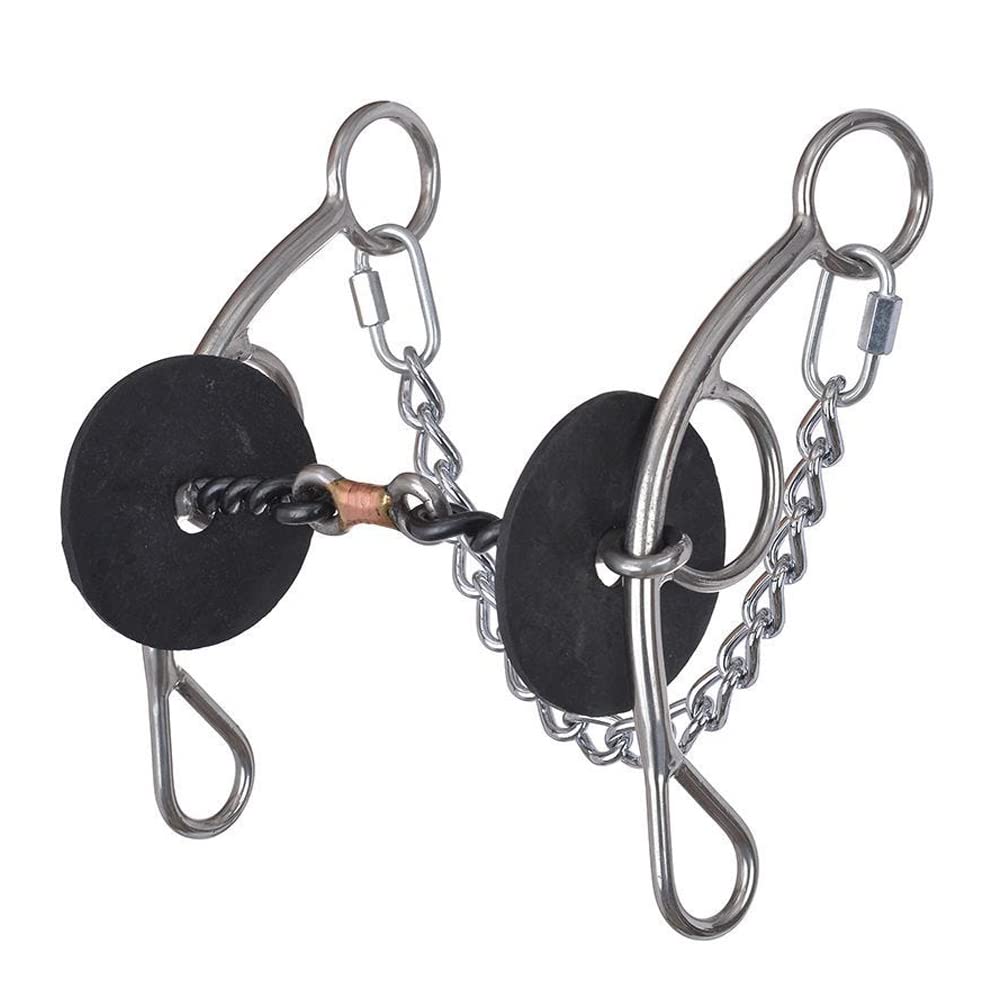
Horses that push through a turn instead of lifting their shoulder are exactly who this bit was built for. Reinsman designed it around a shorter shank that delivers a moderate “Whoa,” giving you control without a harsh, heavy pull. With a 5 1/2-inch mouth and a 5/16-inch diameter, it sits as a Stage C bit, so it suits horses that already neck rein well and answer to poll pressure.
The 3-piece twisted wire mouth with a copper dogbone keeps the horse’s attention without tipping into severe territory. That combo of copper and sweet iron creates the “sweet and sour” taste that encourages salivation, which keeps the mouth supple and responsive. Owners say the horse responds far better on it than on its old bit, and several report immediate, crisper answers on turns and stops.
What wins people over is the quality — it is the single most-praised trait. The bit also spreads pressure evenly across the nose and mouth, a detail riders notice on strong horses that need a firmer cue but shouldn’t feel punished.
Why it earns the top spot
- 3-piece twisted wire mouth keeps attention without being too severe
- Copper dogbone encourages salivation for a soft mouth
- Short shank gives moderate control for strong horses
- Built for shoulder lift and clean barrel turns
Who should think twice
- Stage C design expects a horse that already neck reins
- Twisted wire mouth can be too much for a very green or tender mouth
- Not the gentlest option for a horse that needs minimal cueing
Reach for it if: your strong or duller horse needs help lifting its shoulders and rating through turns.
Look elsewhere if: your horse is still early in training and not yet responsive to poll pressure.
2. Metalab Barrel Collection Antique Sliding Gag Square Snaffle Bit
A sliding gag that adds honest brakes when your horse gets strong.
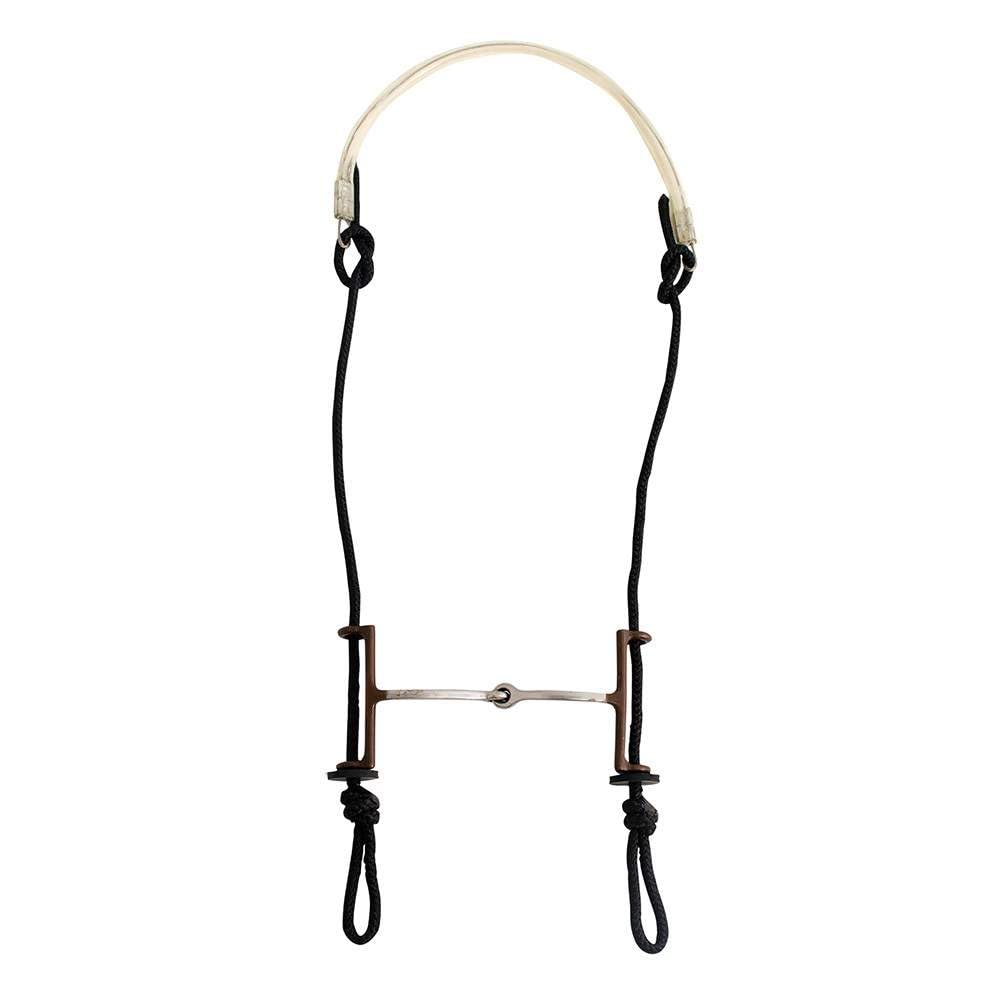
If your horse is fine on the straightaway but turns into a freight train at the barrel, this sliding gag gives you a clearer hold. The square snaffle mouthpiece at 5 1/8 inches provides a stronger signal than a smooth round mouth, helping a rider slow the pace when needed. The antique finish over sweet iron gives it a classic look while the metal encourages the salivation that keeps a horse’s mouth accepting.
Buyers are quick to describe it as a bit that “adds brakes” to a horse — useful when you need help checking speed before a tight turn. It also comes with a vinyl-covered wire headstall included, which means an all-in-one setup for the price of the bit alone.
At 9.6 ounces, it is noticeably lighter than the 11.2-ounce Futurity pick above, which can feel less bulky in a small horse’s mouth. The trade-off is sizing: one owner found the 5 1/8-inch mouth too small for a bigger horse’s head, so measure carefully before you buy.
Who it fits: riders on medium-framed horses that run too hard into turns and need a firmer cue.
Who it skips: larger horses over roughly 15 hands, where the short mouthpiece may sit pinched.
3. Professional’s Choice Equisential Wonder Bit
A versatile gag that sharpens a finished horse without harsh leverage.
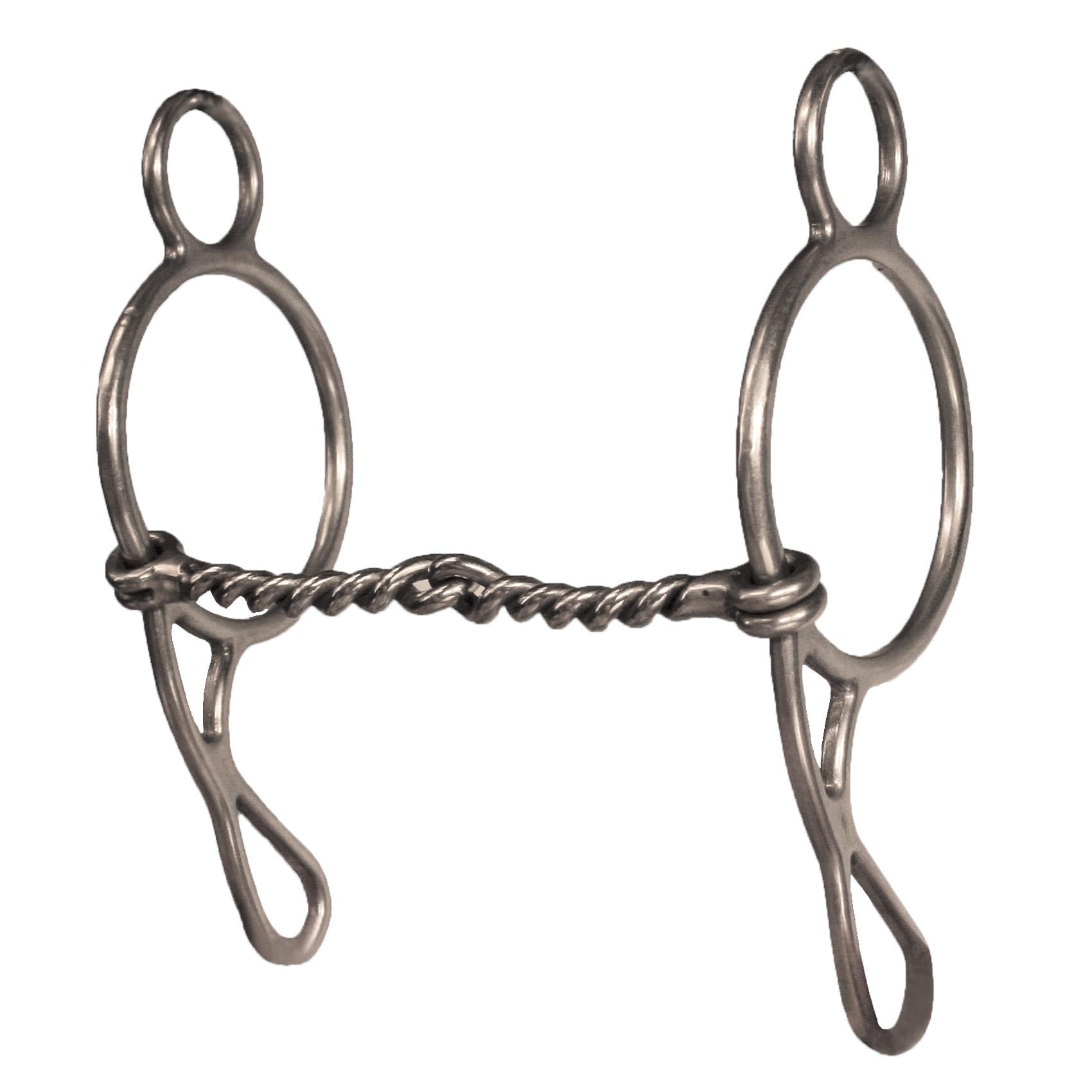
Built for the seasoned speed horse, this bit lets the mouthpiece slide upward along its 7 1/2-inch cheek, engaging poll pressure to encourage a better head position. The design promotes lateral flexion and shoulder elevation, exactly what you need to refine steering control through a tight turn. With a 5 1/4-inch mouthpiece, it fits an average horse’s mouth and works in both training and competition.
The twisted wire mouthpiece adds clearer signal definition than a smooth snaffle, giving you precise communication through the bars and tongue. It is well suited for experienced or finished horses that need refined cues rather than heavy correction. You can also use it with a martingale or double rein configuration, making it flexible as your horse advances.
Owners praise how well the horse responds on this bit, and several note the price beats their local tack shop for the same quality. The finish type lists Titanium Aluminum Nitride, which helps the metal resist wear during heavy use.
Where it shines
- Sliding shank engages poll pressure for better head position
- 7 1/2-inch cheek gives clear leverage for refined cues
- Works with martingale or double rein setups
- Twisted wire boosts signal for finished horses
Who skips it
- Twisted wire mouth is too sharp for a young or tender mouth
- Requires a rider with soft, precise hands
- Not a starting bit for green horses
Best for: competition-level horses that need quick, subtle responses through the pattern.
Not for: beginners still learning to hold a consistent contact.
4. Professional’s Choice Futurity 5.5″ Horse Bit
The smooth bridge from an O-ring snaffle to a shank bit.
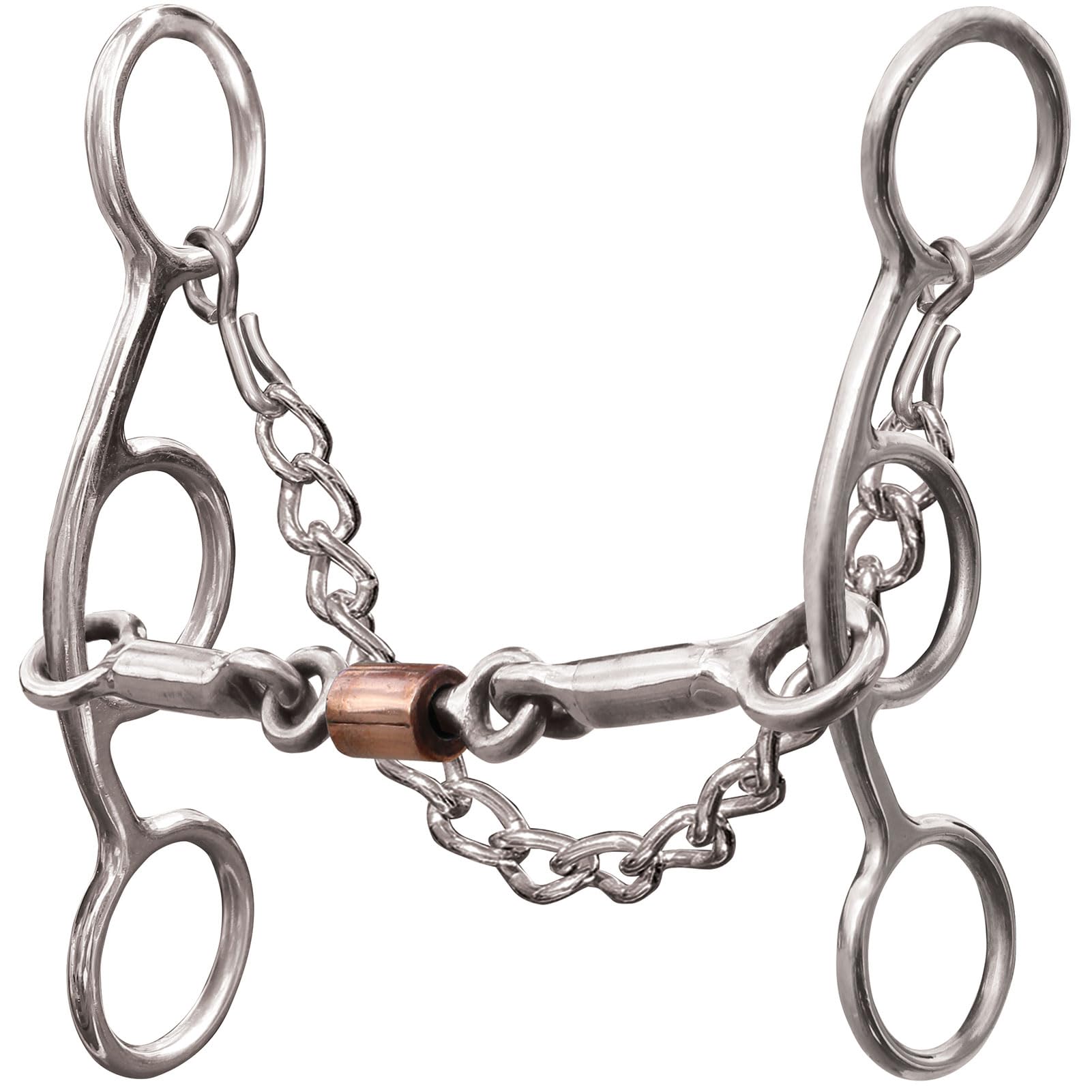
Moving a horse from a full-cheek snaffle to a leveraged shank can be a jarring jump, and this bit smooths that step. It pairs a three-piece smooth dog-bone mouthpiece with a copper roller that rests across the tongue, encouraging salivation and a relaxed jaw. Sized at a 5 3/4-inch mouth with 5 1/2-inch cheeks, it supports a confident transition without dumping a lot of leverage on an inexperienced mouth.
The short gag action lets the mouthpiece move slightly before leverage kicks in, which encourages more refined rein handling. Sweet iron construction means the metal develops a naturally sweet taste as it oxidizes with moisture, keeping the horse’s mouth soft and responsive. Owners describe it as an awesome step up from an O-ring that provides leverage without too much pressure.
At 11.2 ounces it is the heavier of the two Professional’s Choice picks here, and one buyer found the mouthpiece a bit chunky plus the overall weight on the lighter side. That same owner notes it works great as a budget-friendly option, though it may not match the build of bigger brand-name bits.
Suits: a horse leaving snaffles that needs mild gag leverage to learn collection.
Caution: the gag signal can confuse a young horse not yet familiar with conflicting cues.
5. Circle Y Martha Josey Start-to-Finish 5″ Horse Bit
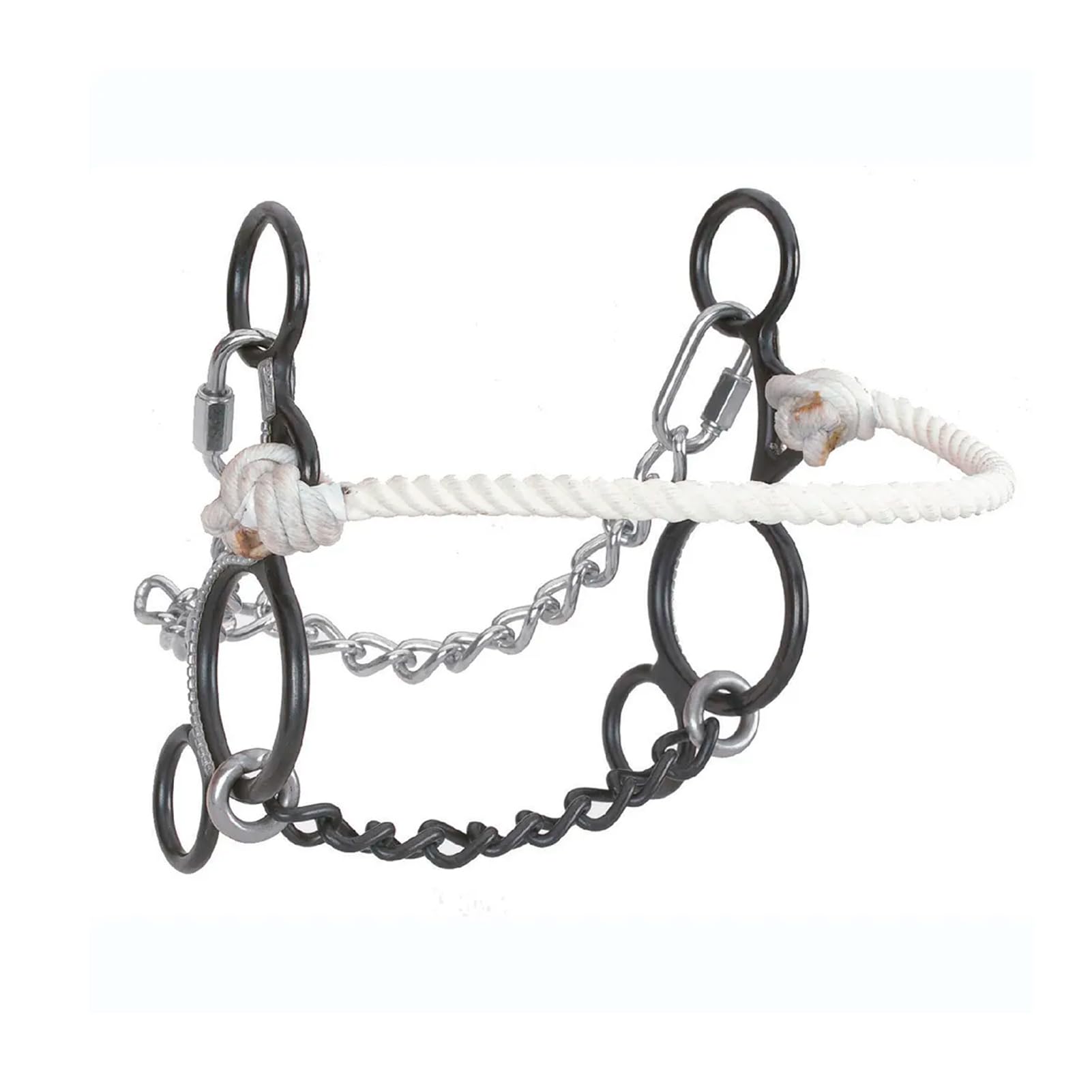
A gentle Stage B combo that starts young horses on the right path.
When your young horse is leaving basic training and moving toward direct reining, this bit introduces Stage B transitional leverage without overwhelming it. The short shank design helps horses progress from direct reining to neck reining while building confidence. A rope noseband spreads pressure evenly across the nose, helping the horse accept the bit without resistance or head-tossing.
The chain mouthpiece delivers a moderate gag action, so you can refine your cues while your horse stays comfortable. With 6 1/4-inch steel cheeks for leverage and a 5-inch mouthpiece, it is balanced for both training sessions and early competition runs. Buyers report their mares soften beautifully on it, which is exactly what you want in a horse that braces against the bit.
One honest caveat from the arena: the shanks can develop rust after the first ride, which dulls the pretty silver look even though the bit keeps working well. If a patina bothers you more than function, factor that in before you order.
Good match: young or green horses that need a clear, gentle introduction to shank leverage.
Trade-off to know: the steel shanks may rust and lose their shine during regular use.
6. REINSMAN Josey Go-Around Combination Bit

For the horse that drops its shoulder and loses its drive in the turn.
This is the bit you reach for when your horse improve its nose or drops its shoulder mid-pattern, because it encourages the horse to use its rear end and round out through a turn. The brown iron low-port mouthpiece at a 5-inch size is very comfortable for many horses while providing excellent handling qualities. Its 3/8-inch mouth diameter sits in a moderate zone between too thin and too bulky.
The “stops” on the shanks keep the mouthpiece from sliding around on the bars, so you get just the right amount of gag action on every pull. Owners mention it works wonders on a mare prone to shouldering, really helping her lift that front end into the turn. The straight shank gives it a clean profile that horses accept quickly.
It is also markedly lighter in the hand than the Circle Y Start-to-Finish above, which weighs 12 ounces to this bit’s slimmer feel. The Stage C rating means it suits a horse that already understands neck reining cues and responds well to poll pressure.
Choose it when: your horse drops its shoulder and you need help keeping it gathered and snappy.
skip it if: your horse is still learning basic neck reining responses.
7. Classic Equine Diamond Short Shank O Ring Square Snaffle Bit
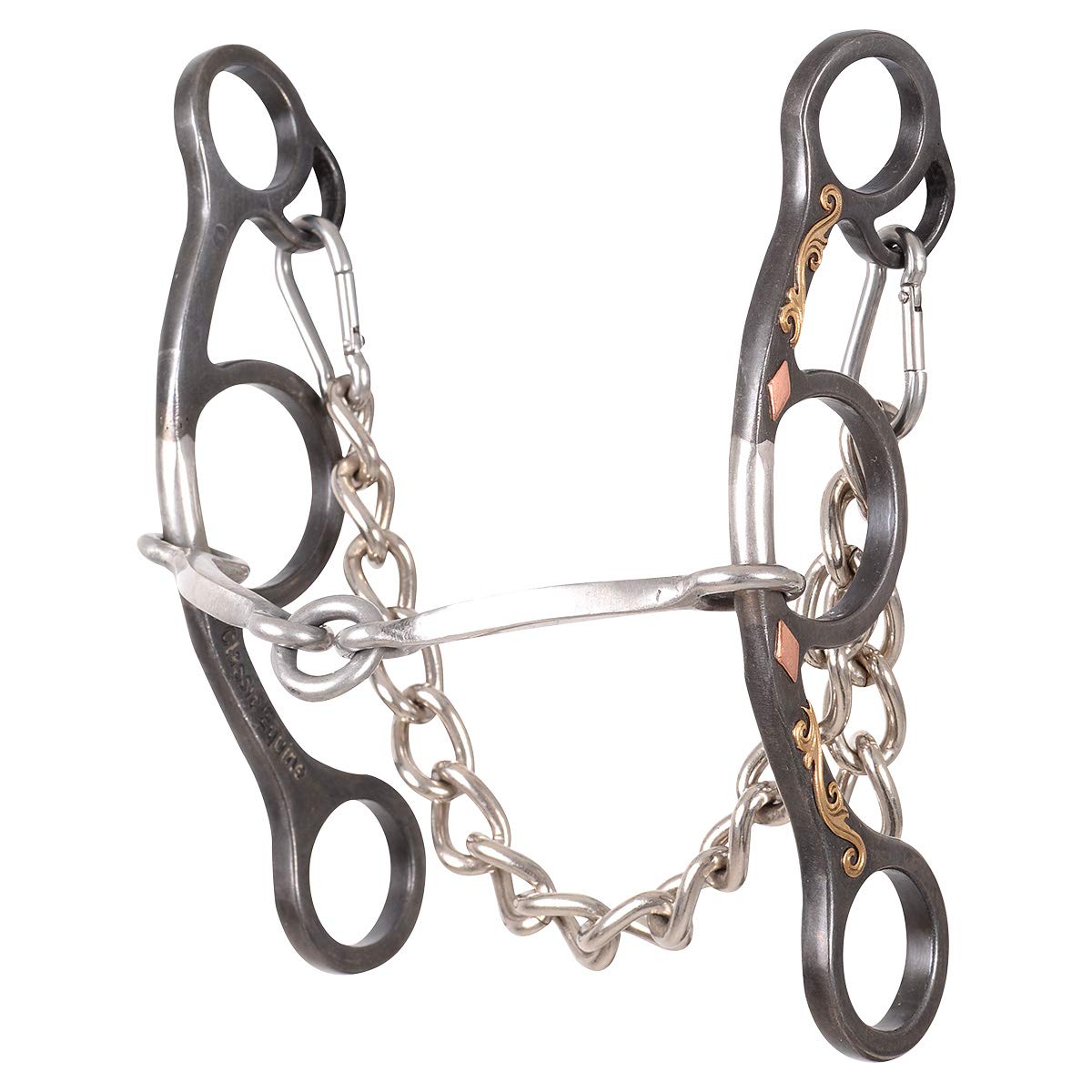
A soft square snaffle for horses that barely need a bit at all.
From the Sherry Cervi Signature Bit Collection, this short-shank square snaffle is prized for being “nice and soft,” offering complete rate and body lift for turns. It is intended for starting barrel training or for horses with a sensitive mouth that do not need much bit. The square mouthpiece gives a slightly clearer signal than a round snaffle while still reading as gentle to a soft-mouthed horse.
The short shank adds a touch of leverage without the severity of a longer shank, helping the horse lift its body through a pocket. A horse that had never carried a bit relaxed visibly in it, an encouraging sign for a green speed prospect. Owners trust it for speed events and note it functions exactly as advertised.
The recurring honesty here is about finish: the metal can tarnish or show rust quickly, with one buyer returning it after a single use. If a bit that stays shiny matters to you, budget for more careful drying and storage.
Ideal for: a horse with a tender mouth that responds to light, clear signals.
Watch out for: fast tarnishing on the metal that needs diligent drying after each ride.
8. Reinsman 776 All Around Curb Bit

A balanced curb that works across disciplines and calms nervous mouths.
This cheek style is a favorite because it gives you leverage without heavy pressure. A short purchase (the upper arm that attaches to the headstall) and a short shank (the lower arm you hold) keep the bit moderately light, yet you still get leverage when you need it. The three-piece smooth snaffle mouthpiece with a copper roller adds light tongue pressure for better control, and the roller gives nervous horses that fidget something to play with, calming them.
The sweet iron and copper mix creates that “sweet and sour” taste that boosts salivation, helping the bit glide more smoothly in the mouth. Sized at a 5-inch mouth with a 7/16-inch diameter 3-piece snaffle and 7-inch cheeks, it suits a wide range of horses. Owners call it a “forever bit,” noting it holds up for years even on a sensitive horse, and that no horse they have tried has disliked it.
It is a Stage C curb, so it pairs nicely with a horse that already understands neck reining. Reviewers also point out you can run it in a snaffle position if your setup allows, adding versatility for different training days.
What makes it a keeper
- Short shank keeps leverage moderate and balanced
- Copper roller calms nervous horses and boosts salivation
- Sweet iron and copper encourage a soft, wet mouth
- Durable build that holds up for years of rides
Consider this first
- 7-inch cheeks may feel long for a very green horse
- Curb action requires a steady, light hand
- Not a starting bit for horses new to leverage
Your pick if: you want one dependable bit for all-around riding and training across disciplines.
Step back if: your horse has never worn a curb-style mouthpiece.
9. Myler HBT Shank with Sweet Iron Mullen Barrel Low Port

A patented swivel shank that never digs into a neck-reining horse’s cheek.
Myler’s signature engineering shines here with a patented swivel purchase that moves independently of both the mouthpiece and the shank. This means the bit does not pinch or dig into the horse’s cheek when you neck rein, which is a common complaint with fixed-cheek designs. The 5-inch sweet iron mullen barrel low-port mouthpiece offers a mild degree of leverage, rated at Level 2-3 for independent side movement.
On a broke horse, this bit reads as gentle yet still able to “take hold” for training purposes. Owners describe a major change in their geldings, who find the mullen mouth much more comfortable and relax into the contact. On an Arab, the sweet iron taste was accepted well, keeping the horse soft without constant fussing. The lighter 8.8-ounce weight keeps it unobtrusive in a sensitive mouth.
This is genuinely not for novice riders. The poll and chin leverage demands light, experienced hands, and several owners stress that an untrained rider needs lessons, not a stronger bit. Use a leather chin strap and you get a refined tool for a finished speed horse.
Made for: experienced riders on broke horses that need mild holding power with maximum comfort.
Avoid if: you or your rider is still developing soft, independent hands.
Understanding the Specs
Gag Action vs. Curb Action
A gag bit slides the mouthpiece up the cheek pieces when you pull, which lifts the horse’s head and encourages it to collect its shoulders. A curb bit works off a shank that puts pressure on the poll and chin groove. Gag bits shine for shoulder lift in turns, while curbs offer steady leverage for all-around control.
Mouthpiece Material and Design
Sweet iron oxidizes to create a naturally sweet taste that boosts salivation, keeping the mouth soft. Copper does the same and adds a “sweet and sour” effect when paired with iron. A smooth mouth is gentlest, a twisted or square mouth gives a sharper signal, and a low port or mullen shape relieves tongue pressure for horses that object to a straight bar.
FAQ
How do I measure my horse for a barrel racing bit?
What is the difference between a Stage B and Stage C bit?
My horse drops its shoulder in the turn, what bit helps?
Is a twisted wire mouthpiece too severe for my horse?
Why does sweet iron rust and is that a problem?
Can I use these bits on a young horse just starting barrel training?
What does a copper roller or dogbone do in the mouthpiece?
How do I clean and care for a barrel racing bit?
Final Thoughts: The Verdict
For most riders, the top pick is the ReinsmanHorse Bit because it fixes the most common barrel pattern problem — a horse that drops its shoulder and leans into the turn — while staying moderate enough for daily use. If you are on a young horse just out of basic training, choose the Circle Y Start-to-Finish for a gentle Stage B introduction. For a finished speed horse that needs refined, comfortable signals, the Myler HBT Shank pairs patented swivel comfort with mild holding power that only light hands should use. Matching the bit stage to your horse’s training level is the single best decision you can make today, and these picks cover the range.
How We Picked
We do not accept paid placement. Every pick is matched to a real buyer and a real use-case; we do not hands-on test units.
Sources & Methodology
Specifications: manufacturer listings and product documentation. Review insights: verified customer reviews, as of September 2026. Pricing: not shown on this page (it changes often); check the current price via the retailer link.
As an Amazon Associate, Gadgets Feed earns from qualifying purchases. This does not affect which products we feature.