
You know the feeling — ten minutes into a ride and your wrists are already tingling, your lower back is tight, and you’re stretching your arms like a kid on tiptoes trying to reach the handlebars. That forward lean isn’t just uncomfortable; it actively robs you of steering control, especially when the trail gets rough or you’re navigating city traffic. A properly raised handlebar transforms the geometry of your cockpit, bringing the grips up and back into a natural neutral position where your shoulders relax and your core takes over.
I’m Min — the co-founder and writer behind Gadgets Feed. I’ve spent hundreds of hours cross-referencing CNC machining standards, alloy grades, bolt torque specs, and real-world fitment reports so you don’t waste time on risers that wobble, strip, or simply don’t bolt onto your triple tree.
This guide breaks down the best riser options by your bike’s bar diameter and riding style, from budget-friendly adjustable stacks to direct-mount stems for electric dirt bikes. Making the right call on bars for a scooter saves you from that hunched-over ache and keeps your controls exactly where your hands want them.
How To Choose The Best Bars For A Scooter
Riser clamps and replacement bars come in a handful of diameters and mounting patterns, and the wrong choice can mean wobbly bolts or a clamp that simply won’t fit your existing triple tree. Focus on fitment first, then on the correction your body actually needs.
Match The Diameter Exactly
Your handlebar clamp is machined to a specific inner diameter. The most common sizes are 7/8″ (22mm) for standard mini-bikes, pit bikes, and many older moped-style scooters, 1″ (25.4mm) for heavier cruisers, and 1-1/8″ (28mm or 28.6mm) for modern dirt bikes and dual-sport machines. Mountain bikers and some larger scooters use 31.8mm. Measure your current bar with a caliper where it passes through the clamp; a fraction of a millimeter off means the riser won’t seat properly or the bolt holes won’t align.
Choose The Right Rise And Pullback
Riser height (measured in inches or millimeters) is how much the bars move upward. Pullback is how much they move toward you. If you need to stop reaching forward, look for a riser with a rearward offset — the 4‑inch kickback risers on this list provide about 1.5 inches of pullback alongside the vertical lift. If you only need a higher grip position without cheating the bars backward, a straight block riser (like the stackable APE RACING model) gives you modular height choices from 23mm to 64mm.
Check The Stem Or Fork Type
Threadless steerer tubes (common on modern mountain bikes and hybrid scooters) can accept a stem raiser that slides over the existing quill stem. Dual-crown downhill forks and electric dirt bikes like the Surron or Talaria use a direct-mount riser stem that bolts into the fork crowns themselves — that’s a different part entirely. Cruiser-style risers usually clamp around the fork tube with a single or double bolt pattern. Know your fork geometry before clicking buy.
Quick Comparison
On smaller screens, swipe sideways to see the full table.
| Model | Category | Best For | Key Spec | Amazon |
|---|---|---|---|---|
| APE RACING Adjustable Risers | Premium | Modular height tuning | 8-step stackable rise, 23–64mm | Amazon |
| KEMIMOTO Direct Mount Riser | Premium | Surron / Talaria e-bikes | 4-inch rise, 31.8mm clamp | Amazon |
| Delta Cycle Stem Raiser Pro | Mid-Range | MTB / hybrid upright cockpit | 4.6″ rise, 1-1/8″ steerer | Amazon |
| Sresk 4″ Pullback Risers | Premium | Harley / big cruiser comfort | 4-inch rise, 1″ bar clamp | Amazon |
| PLATT 31.8mm Riser Bar | Mid-Range | Mountain / dirt trail control | 70mm rise, 780mm width | Amazon |
| HYEPIVOT 7/8″ Fat Bar Clamp | Budget | 7/8″ bar swap on pit bikes | 22mm clamp, CNC aluminum | Amazon |
| INNOGLOW 1-1/8″ Riser Blocks | Budget | ATV & dirt bike ergonomics | 38mm rise, M8 bolt pattern | Amazon |
In‑Depth Reviews
1. APE RACING 7/8″ Adjustable Handlebar Risers
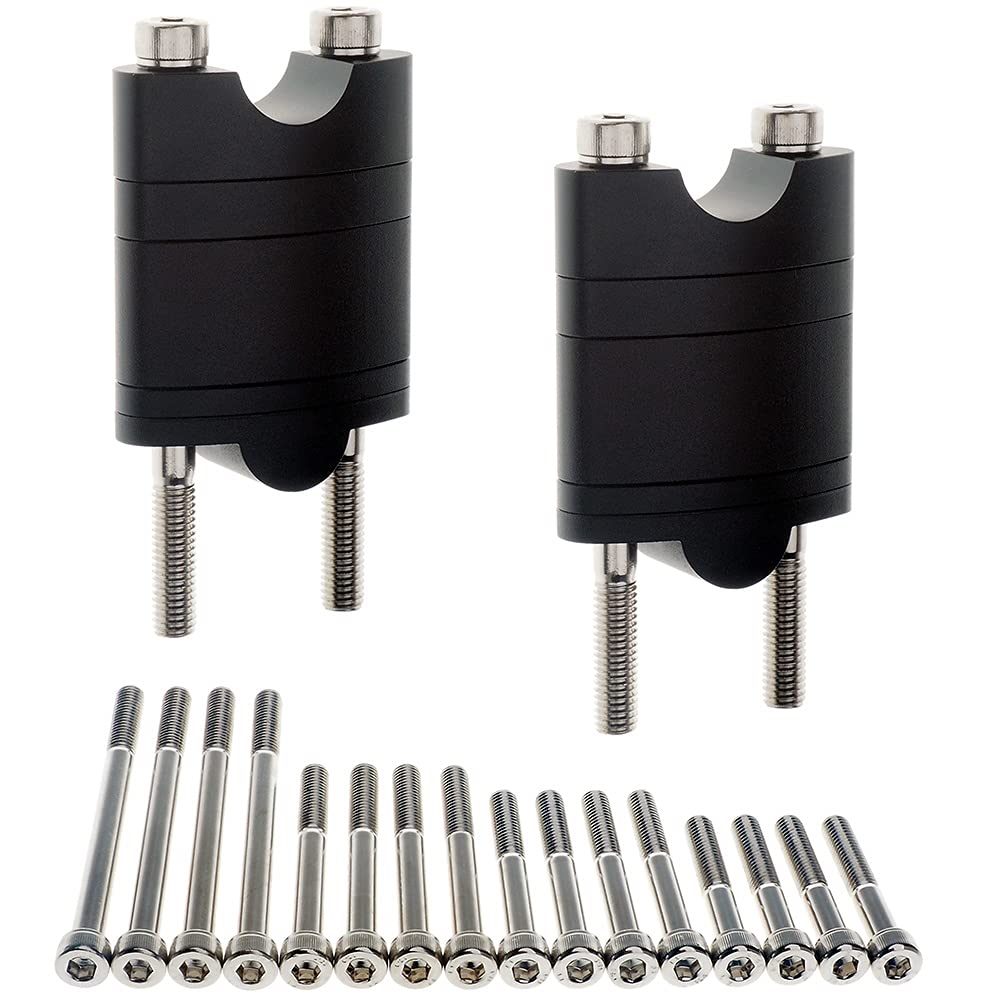
The APE RACING riser is the most versatile solution on this list because it gives you eight distinct height steps from a hair under 1 inch all the way to 2.5 inches, without requiring any cutting or welding. The five-piece stack design lets you mix spacers to dial in exactly 23.6mm, 28.6mm, 33.6mm, 38.6mm, 49mm, 54mm, 59mm, or 64mm of lift. Each riser is machined from solid 6061-T6 billet aluminum — not cast — and finished with a hard anodized surface that won’t flake or fade under UV exposure.
Fitment is limited to 7/8″ (22mm) handlebars, which covers most pit bikes, mini-motos, 50cc–110cc scooters, and smaller ATVs. The package includes sixteen M8 DIN912 bolts across four different lengths, so you won’t scramble for hardware when you reconfigure the stack. Customer feedback consistently notes that the nickel-plated 12.9-grade bolts are noticeably harder than typical hardware-store fasteners, reducing the risk of stripping in the triple-tree threads.
The only real friction point is that the stack design is slightly narrower than some OEM riser bases, so riders with unusually wide fork-top clamp spacing may need to shim or source longer bolts. But for the price of a single premium model, you effectively get eight riser heights in one box — making this the most future-proof option for anyone who plans to swap bars or change riding positions between trail and commuting.
Why it’s great
- Eight adjustable heights in one kit from 23mm to 64mm
- True CNC billet 6061-T6, no cast aluminum
- Includes 16 nickel-plated 12.9-grade M8 bolts in varying lengths
Good to know
- Only fits 7/8″ (22mm) bars — verify your diameter first
- Stack is narrower than some OEM riser bases
2. KEMIMOTO Direct Mount Riser Stem
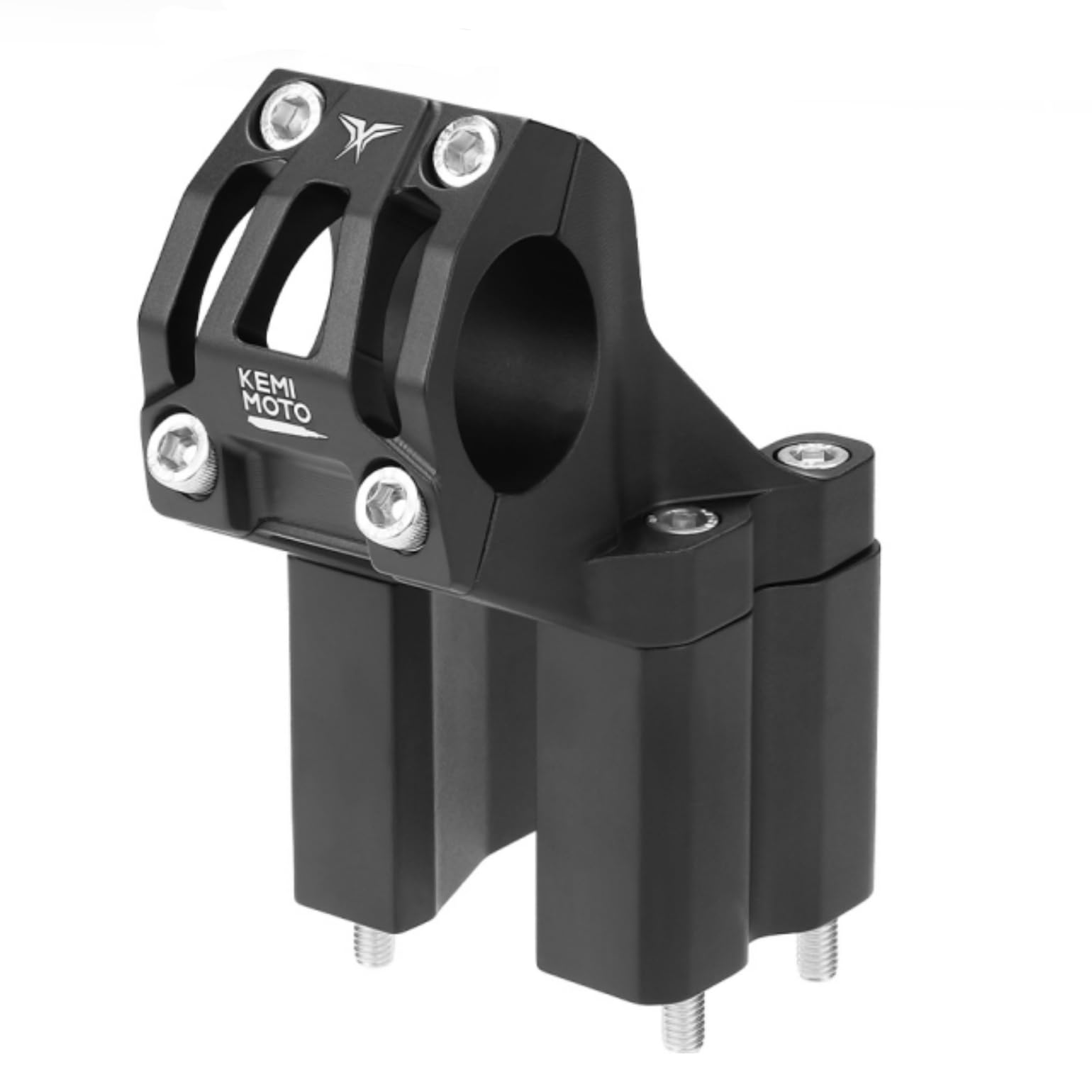
This is a purpose-built riser for the Surron Light Bee, Talaria Sting, Talaria XXX, and E-Ride Pro SS crowd — bikes that don’t use a traditional stem-and-steerer setup. The KEMIMOTO unit bolts directly into the dual-crown fork of those electric dirt bikes, eliminating the need for a separate top clamp. The 4-inch vertical lift completely transforms the crouched-over stance these bikes ship with, letting you sit upright with your elbows bent at a relaxed 90 degrees.
Construction is CNC billet aluminum with a uniform black anodized finish that matches the stock fork legs well. Six included screws secure the unit to the fork crowns; installers on the Talaria and 79bike Falcon Pro reported a clean bolt-up with no thread binding. The top clamp accepts 31.8mm handlebars, so you can pair it with an aftermarket bar if you want extra width or rise on top of the 4-inch stem lift.
The catch is compatibility: it won’t fit the stock Surron display bracket without some DIY re-routing, and it only works with 2009+ Fox 40 forks, all RockShox Boxxer forks, and 2013+ Marzocchi 888 and 380 models. If you own a dual-crown dirt e-bike and want the most solid, rattle-free way to stand up taller, this is the cleanest bolt-on solution available.
Why it’s great
- 4-inch direct-mount lift for Surron/Talaria dual-crown forks
- CNC billet aluminum with clean black finish
- Uses six mounting bolts for rock-solid stability
Good to know
- Does not work with stock Surron display without rerouting
- Limited to specific dual-crown fork models
3. Delta Cycle Stem Raiser Pro

Delta’s Stem Raiser Pro solves a different problem than the block risers above: it raises your existing handlebar stem by stacking on top of the steerer tube, adding up to 4.6 inches of height without replacing the fork or swapping the bar. The unit is machined from 6061 T6 aluminum and uses a two-bolt clamp to grip the steerer. An integrated height marker lets you dial in the exact extension before tightening the main bolt — a thoughtful touch that eliminates guesswork.
It’s designed for threadless steerer tubes with a 1-1/8″ diameter, which covers the vast majority of mountain bikes, hybrid commuters, and some larger scooters with bicycle-style headsets. Riders who installed it on 15-mile-plus rides reported a dramatic reduction in lower-back tension because the bar position shifted from a flat-back tuck to a nearly upright cruiser stance. One user with a post-surgery recovery found the riser made cycling possible again by completely eliminating the forward lean.
The main installation hiccup is that the center bolt can make pre-loading the headset tricky; applying grease to the bolt threads and using a small amount of carbon-assembly gel inside the clamp interface prevents slippage. Also, raising the bars by 4.6 inches may require longer brake and derailleur cables on some bikes, so check your slack before tightening everything down.
Why it’s great
- Up to 4.6″ of additional height on a threadless 1-1/8″ steerer
- Integrated height marker for precise adjustment
- US-designed 6061 T6 aluminum with limited lifetime warranty
Good to know
- May require longer cables for brakes and derailleur at max height
- Center bolt needs grease to properly pre-load the headset
4. Sresk 4″ Pullback Handlebar Risers
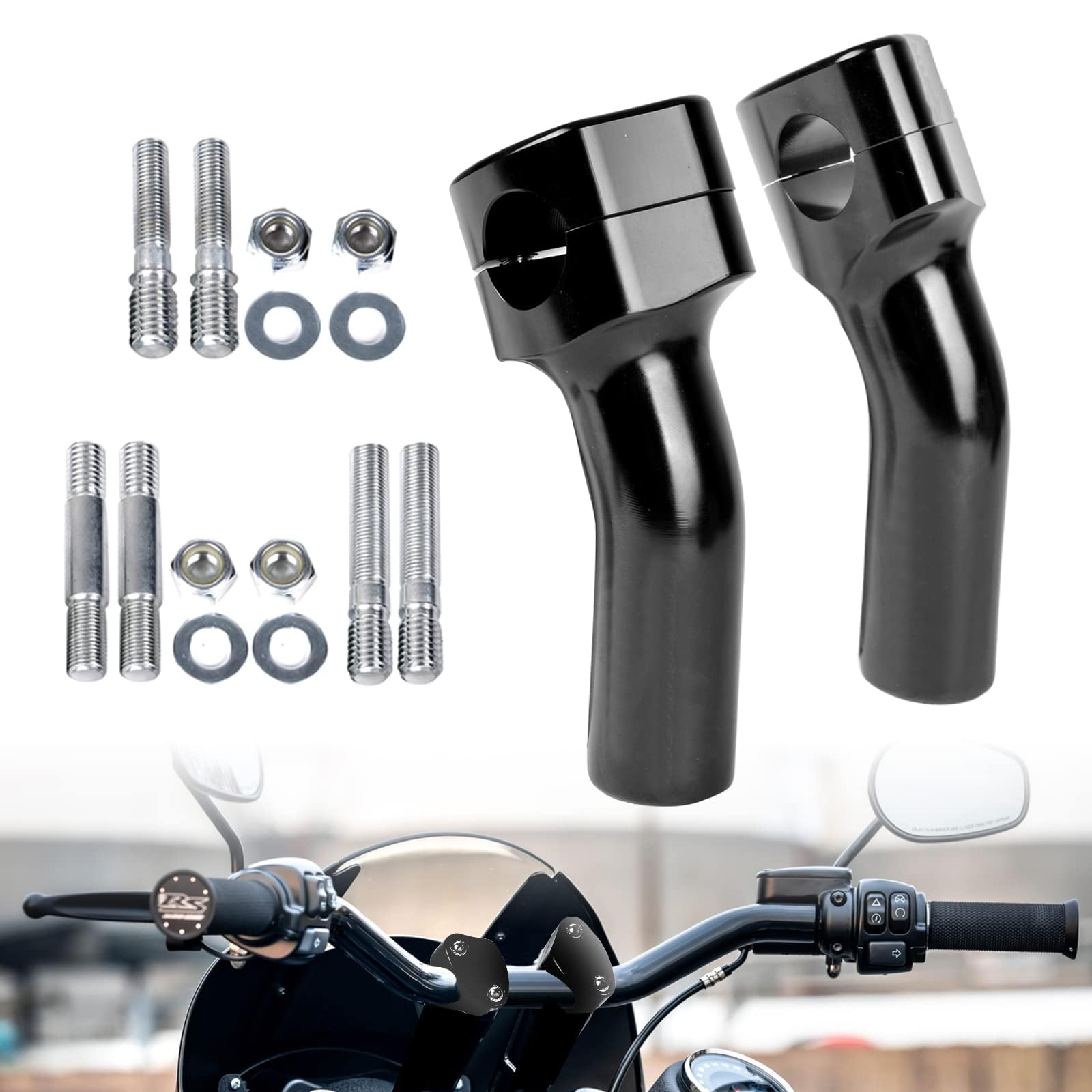
Where straight risers only lift the bar upward, the Sresk design adds a rearward kickback that pulls the grips closer to your torso — roughly 1.5 inches of pullback alongside the 4‑inch vertical rise. That combination is exactly what you need on a cruiser like a Harley Dyna, Softail, Honda Shadow, or Kawasaki Vulcan when the stock bars leave you stretching forward on longer highway rides.
The riser is a single-piece CNC-machined unit (no welds, no joints) from 6061-T6 aluminum with a glossy black paint finish that resists road grime and light rain. The inner bore of the handlebar channel includes an anti-slip machined pattern, which keeps the bar from twisting even without heavy torque. It accepts 1″ handlebars and uses M8 mounting bolts sized for most stock triple trees — some older models may need a minor drill-out of the riser mount holes, but the hardware set covers the most common spacing.
At nearly a kilogram of 6061-T6, the Sresk riser is heavier than the modular stack risers, but that mass translates to a planted, vibration-dampened feel on big twin-cylinder cruisers. It also includes a cap on top of each riser that can mount a tachometer or accessory bracket between the risers, adding practical utility beyond ergonomics.
Why it’s great
- 4-inch rise with 1.5-inch pullback for cruiser reach relief
- Single-piece CNC 6061-T6, no welds or joints
- Anti-slip inner bore pattern prevents bar rotation
Good to know
- Heavier than modular stack risers
- Some older models may need minor drilling for bolt alignment
5. PLATT 31.8mm Riser Handlebar
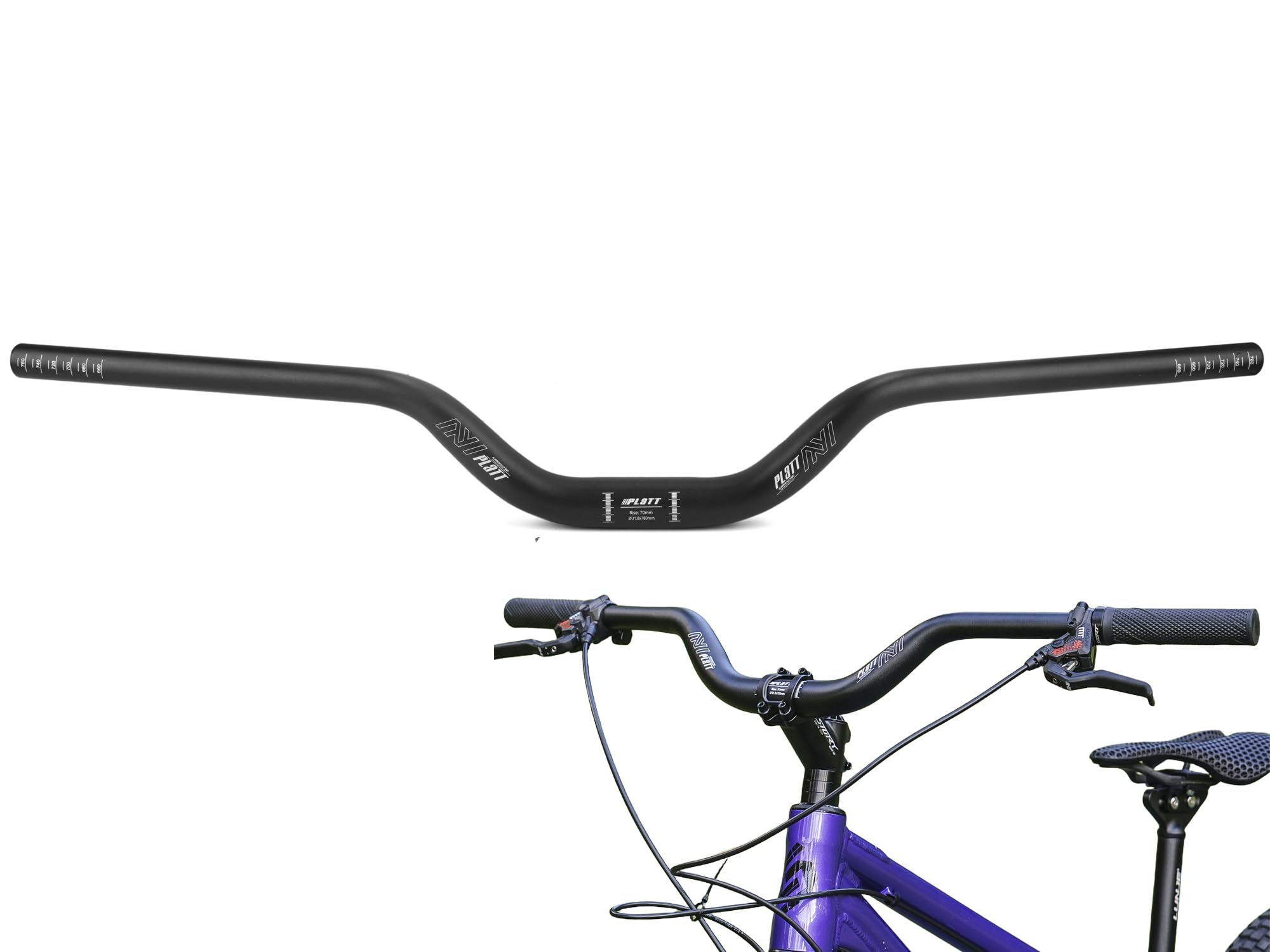
Unlike the riser blocks and stem adapters on this list, the PLATT is a full replacement handlebar that already incorporates the rise into its bend. The 70mm rise (available in 35, 50, 90, 120, and 160mm versions) comes in a 780mm-wide bar with a 9‑degree backsweep, designed to push your shoulders back into a neutral position on aggressive downhill or enduro geometry.
Installation is straightforward if you match the 31.8mm stem clamp diameter — the bar tapers to 22.2mm at the grip ends, which fits standard grips and shifters. The 9‑degree sweep spreads your wrist angle by a few degrees compared to a flat bar, reducing the need to bend at the wrists when standing on pedals over rough terrain. Riders on long off-road loops reported far less forearm pump after the swap because the natural sweep keeps blood flowing without pinching the median nerve.
The only downside reported is that the right-side bar end has a slightly larger diameter than the left on some units; a small amount of WD40 or soapy water helps push the grip over the high spot, and the tolerance evens out after a few rides. At this price point, you’re getting a full 780mm bar with 9° sweep and multiple rise options — a smarter move than stacking adapters under a stock bar if you need both height and width.
Why it’s great
- Full replacement bar with 70mm rise and 9° backsweep
- Lightweight 6061 aluminum alloy, 780mm width
- Multiple rise options available from 35mm to 160mm
Good to know
- Right-side bar end may have slightly larger diameter on some units
- Requires 31.8mm stem clamp diameter
6. HYEPIVOT 7/8″ Fat Bar Clamp Adaptor

The HYEPIVOT clamp adaptor solves a specific compatibility gap: you have a bike with 7/8″ (22mm) stock bars, and you want to upgrade to a fat bar that uses a larger clamp — but your triple tree uses detachable bar mounts that can be swapped out. This CNC-machined aluminum riser replaces your OEM clamp top halves, raising the bar position in the process. The result is an upright riding stance that relieves wrist and lower-back strain, all while using your existing triple tree without drilling.
Bolt diameter is 35x12mm with 20x8mm small bolts, and the clamp corresponds to a 22mm bar hole diameter. The anodized black finish matches most OEM black triple clamps, and the aluminum construction keeps the weight at just over 0.7 pounds for the pair. Multiple verified buyers on SV650 and 125cc pit bikes confirmed the fit is accurate for 7/8″ bars, though at least one user noted the lower mounting bolts were slightly over-long and needed to be shortened or replaced.
The primary caution is the bolt threading: the mounting bolts use a fine metric thread that can be difficult to source locally if you lose one or need a different length. A quick trip to a hardware store or a set of replacement M8 flange bolts will solve it, but it’s worth factoring in before the install. For riders on a tight budget who need a straightforward clamp swap to gain a couple inches of rise, this gets the job done without fuss.
Why it’s great
- Replaces OEM top clamps for easy 7/8″ bar rise
- Solid CNC aluminum construction at 0.7 pounds
- Affordable entry point for ergonomic adjustment
Good to know
- Mounting bolts may be over-long for some triple trees
- Fine metric threads hard to source locally
7. INNOGLOW 1-1/8″ Handlebar Bar Risers
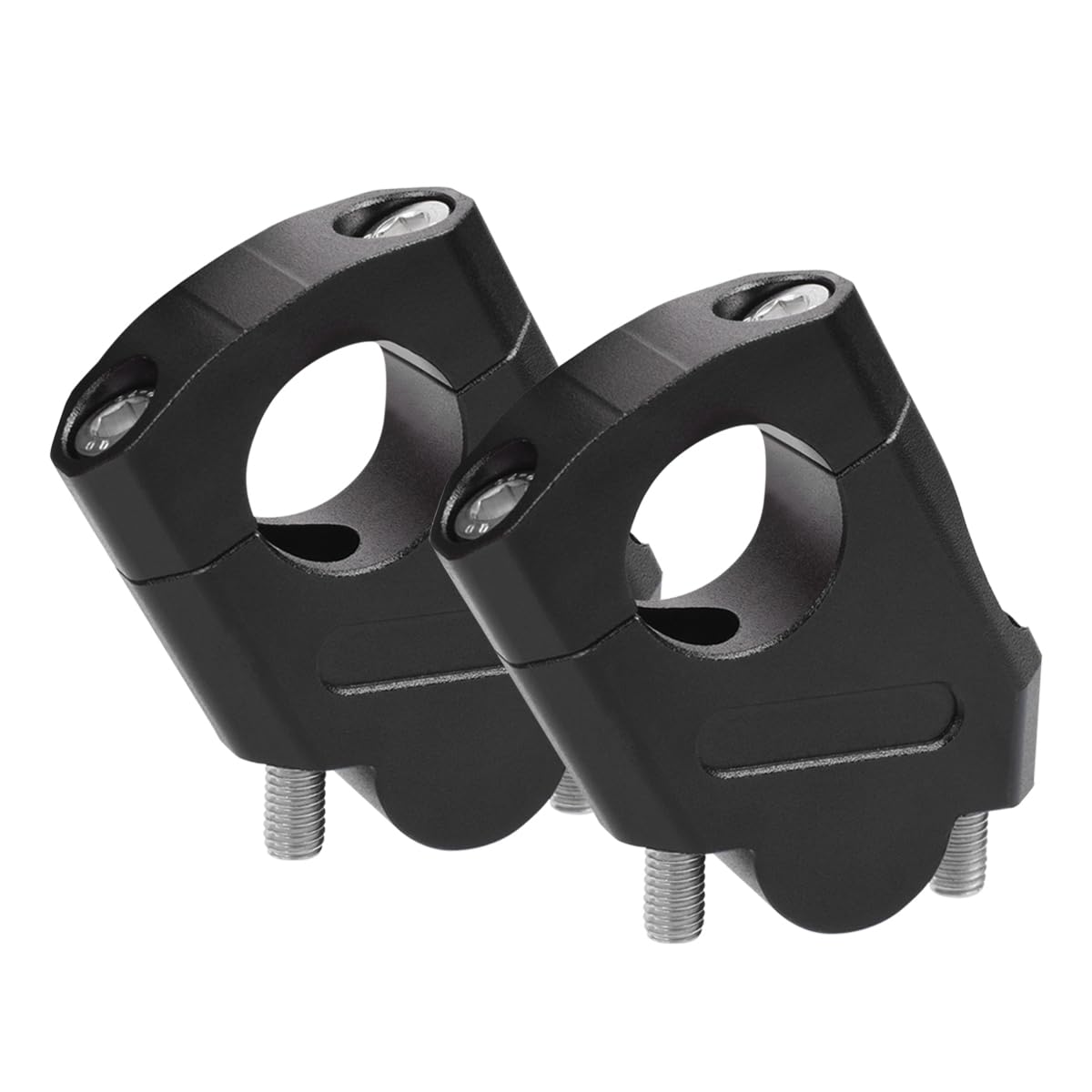
The INNOGLOW riser blocks are the simplest and most affordable way to add 1.5 inches of height to a 1-1/8″ (28mm) handlebar setup — common on full-size ATVs, dual-sport motorcycles, and mid-size dirt bikes. The blocks are machined from CNC billet aluminum with a hard anodized surface that resists scratches and corrosion. They also include a notable feature for a budget riser: backward or forward adjustability via the oblong mounting slots, letting you shift the bars up to 18mm (0.71″) rearward in addition to the 38mm vertical rise.
The package includes four M8 bolts in two lengths (20mm and 25mm) plus a portable wrench, so you can install without any additional hardware. The hole-to-hole distance is 40–41mm, which matches the common bolt spacing on most Japanese ATV and dirt bike top clamps. Installers on 250cc–450cc dual-sport bikes reported a clean fit with no interference to the throttle or clutch cables at the max height.
However, the adjustable slot design means the risers are split into two individual blocks rather than a single solid riser. This creates a small gap between the block halves under heavy torque, which some riders shim with a thin washer. The risers also lack a pin or keyway to prevent rotation under extreme fork twist, so make sure to torque the M8 bolts to the manufacturer’s spec and use thread locker for peace of mind on rough trails.
Why it’s great
- 38mm rise with 18mm forward/backward adjustability
- CNC billet aluminum with hard anodized finish
- Includes two bolt length sets and a wrench
Good to know
- Split-block design can leave a small gap under heavy torque
- Relies on bolt clamping force — use thread locker for safety
FAQ
Can I install riser blocks without replacing my cables?
What is the difference between a direct mount riser and a stem raiser?
Will risers affect my steering or handling?
Final Thoughts: The Verdict
For most users, the bars for a scooter winner is the APE RACING Adjustable Risers because the eight-height stack lets you fine-tune your cockpit geometry without buying multiple parts, and the billet 6061-T6 construction with 12.9-grade bolts gives you the confidence that it won’t fatigue over time. If you ride an e-dirt bike with dual-crown forks and want the most solid 4-inch lift possible, grab the KEMIMOTO Direct Mount Riser. And for big cruiser riders who need pullback as much as height, nothing beats the Sresk 4″ Pullback Risers.