
Our readers keep the lights on and my morning glass full of iced black tea. As an Amazon Associate, I earn from qualifying purchases.
Specs are compiled from manufacturer listings and verified buyer reviews and can change over time — please confirm the key details on the product page before buying.
You can put a nice bike shorts on and a windproof jacket, but if the layer closest to your skin traps sweat or leaves you shivering ten minutes into a descent, the whole ride is miserable. A cycling base layer’s sole job is to wick moisture and provide just enough insulation to keep you warm on descents. That is the entire job.
I’m Min — the founder and writer behind Gadgets Feed. This guide is built by comparing the manufacturers’ published specifications and the patterns across verified customer reviews, so you get each pick’s real strengths and trade-offs instead of marketing spin.
Whether you ride year-round in the North or only on crisp fall mornings, finding the right base layer for cycling depends on understanding fabric weight, fit, and how each material performs when you are actually sweating into a headwind. We break down four standout contenders based on what the data and real buyers actually say.
Quick Picks
- MERIWOOL Men’s Base Layer 100% Merino Wool Midweight 250g Half Zip — Best Overall
- Smartwool Men’s Classic Thermal Merino Base Layer Crew — Premium Pick
- Merino Wool Base Layer Mens – 100% Merino Wool Long Sleeve T-Shirt (B0CLB55D2G) — Best Value
- Merino Wool Base Layer Mens – Wool Half Zip Sweater (B0BDN1TRSV) — Most Versatile
How To Choose The Best Base Layer For Cycling
Here is what to check before clicking buy.
Fabric Weight (g/m²)
This single number tells you how warm the layer is. Lightweight (165 g/m²) works for hard efforts in 40–60°F weather — think fast group rides or climbs. Midweight (250 g/m²) is your balance for cold rides between 25–45°F. Heavyweight (320 g/m²) is for low-activity or sub-freezing conditions, but on a bike you will likely overheat in it unless the ride is pure descent.
100% Merino vs. Blends
Pure merino (like the 100% options on this list) breathes naturally and resists odor without any chemical treatment. Blends often add nylon for durability, but they lose some of the wool’s natural moisture-wicking ability. For a cycling base layer worn against the skin all day, 100% merino is the standard because it handles sweat without smelling.
Fit and Length
A cycling base layer needs a snug, not tight, fit — no loose fabric to bunch under your jersey. Look for a cut that is long enough to tuck in and stay tucked when you lean forward on the drops. Sizing down from your usual shirt size often works for a performance fit.
Quick Comparison
On smaller screens, swipe sideways to see the full table.
| Model | Best For | Material | Weight (g/m²) | Weight (oz) | Amazon |
|---|---|---|---|---|---|
| MERIWOOL Men’s Base Layer Half Zip | Cold-weather riding, layering | 100% Merino Wool | 250 | — | $70.00Amazon |
| Smartwool Classic Thermal Crew | Premium insulation, durability | 100% Merino Wool | — | 10.4 | from $118.46Amazon |
| Merino Wool Base Layer (B0CLB55D2G) | Lightweight, budget-friendly | 100% Merino Wool | 250 | 4.8 | from $45.98Amazon |
| Merino Wool Half Zip Sweater (B0BDN1TRSV) | Versatile weight options | 100% Merino Wool | 165 / 250 / 320 | 4.8 | $59.99Amazon |
In‑Depth Reviews
1. MERIWOOL Men’s Base Layer 100% Merino Wool Midweight 250g Half Zip
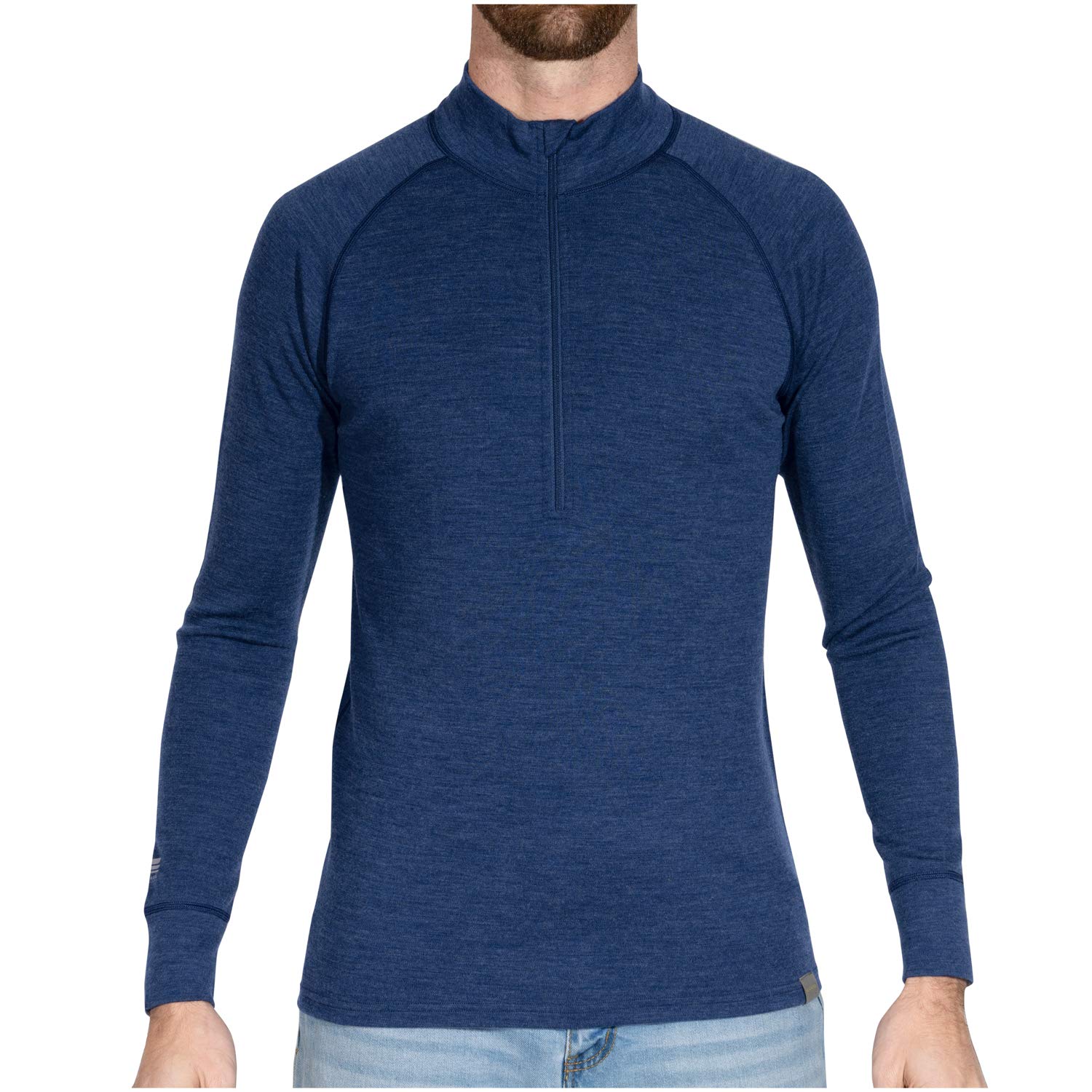
A midweight half-zip that lets you dump heat without stripping off your jersey.
The half-zip neck is the standout feature for cyclists. On a long climb, you unzip it a few inches and cold air rushes right to your collarbone — instant venting without having to take your jacket off. At the 250 g/m² weight, this MERIWOOL layer hits the balance for morning rides between 25°F and 45°F, which covers most of the cold-weather season for serious riders.
Buyers report the fabric stays itch-free even during long days in the saddle, and the natural odor resistance means you can wear it multiple days between washes without smelling. Unlike the Smartwool Classic Thermal, which comes in at 10.4 ounces for its crew-neck version, this MERIWOOL layer uses a 250 g/m² midweight fabric and is positioned for active efforts. The cut is athletic enough to tuck neatly under a jersey without bunching, and the 100% merino construction handles moisture without feeling clammy when you ease up on a descent.
The only trade-off is the price — it sits at a premium tier, but the combination of the half-zip venting and midweight warmth makes it the most versatile choice for anyone who rides year-round in cooler climates.
Why It Works on the Bike
- Half-zip lets you regulate temperature mid-ride without stopping
- 250 g/m² weight is ideal for 25°F to 45°F conditions
- 100% merino wool resists odor for multi-day wear
One Consideration
- Premium price point compared to the budget-friendly picks below
Reach for this if: you want a single base layer that works from autumn through early spring and lets you vent mid-climb.
Look elsewhere if: you only ride in warm weather or need the absolute lightest weight for fast summer efforts.
2. Smartwool Men’s Classic Thermal Merino Base Layer Crew

The heavyweight champion for sub-freezing descents and winter base-layer duty.
At 10.4 ounces, this Smartwool crew is the heaviest option on the list, while the Merino Wool Base Layer from the value picks is listed at 4.8 ounces. That extra mass is exactly what you want when the temperature drops below 25°F. Smartwool rates it for conditions from below 25°F up to 50°F, which means it is built for true winter riding, not chilly fall mornings.
Buyers with the 4.7-star rating note that the fabric holds up well to repeated washing without pilling or losing shape, which is a common complaint with lighter merino layers. The 100% merino construction gives you the same odor resistance and moisture control as the other picks, but the thermal knit traps more warm air against your skin. Think of this as your go-to for 6 AM rides in January — it keeps you warm when you are standing still at a stoplight and still breathes enough when you get moving.
The crew neck is less versatile than a half-zip for venting, but for pure cold-weather insulation, nothing else here matches its thermal rating. It is also the most expensive pick, so it is for the rider who already knows they will be riding through winter and wants the warmest option.
Built for Deep Cold
- Rated for below 25°F to 50°F — the widest temperature range
- 10.4 oz fabric provides serious insulation
- 100% merino with proven durability from a trusted brand
What to Know
- Crew neck lacks the venting flexibility of a half-zip
- Heftiest weight — not for mild-weather rides
Best for: dedicated winter cyclists who face sub-freezing starts and want maximum warmth without synthetic layers.
skip it if: you live in a moderate climate or need a base layer for high-output racing where less weight matters more.
3. Merino Wool Base Layer Mens – 100% Merino Wool Long Sleeve T-Shirt (B0CLB55D2G)

A 100% merino crew at a smart price, with the lightest packable weight on the list.
At just 4.8 ounces and a 250 g/m² midweight, this is the lightest full-coverage base layer here. It is listed at 4.8 ounces, while the Smartwool Classic Thermal is listed at 10.4 ounces, which can make a real difference when you are stuffing it into a jersey pocket for a change of clothes on a long ride. The 100% merino fabric gives you the same natural odor resistance and moisture wicking as the premium picks but at a far more accessible price.
Owners mention the fit runs true to size, but for cycling you will want to size down one for a snug layering fit under a jersey. The crew-neck design is simple and effective — no extra zippers to snag your base layer, just a clean piece that does its job. It comes in 20 color options, so you can match it under any jersey or wear it on its own post-ride.
The catch is the brand is less established than Smartwool, so long-term durability data is thinner. But for the price, you get genuine 100% merino performance at a weight that disappears under a cycling kit.
Where It Shines
- Only 4.8 ounces — ideal for packing in a jersey pocket
- 100% merino at a budget-friendly cost
- 250 g/m² weight works for cool to cold rides
Heads Up
- Crew neck does not offer mid-ride venting like a half-zip
- Less brand track record for durability compared to Smartwool
Grab this if: you want a lightweight, affordable merino layer that packs small and performs well for cool-weather rides.
Consider other options if: you need a half-zip for venting or a heavier fabric for sub-freezing temperatures.
4. Merino Wool Base Layer Mens – Wool Half Zip Sweater (B0BDN1TRSV)
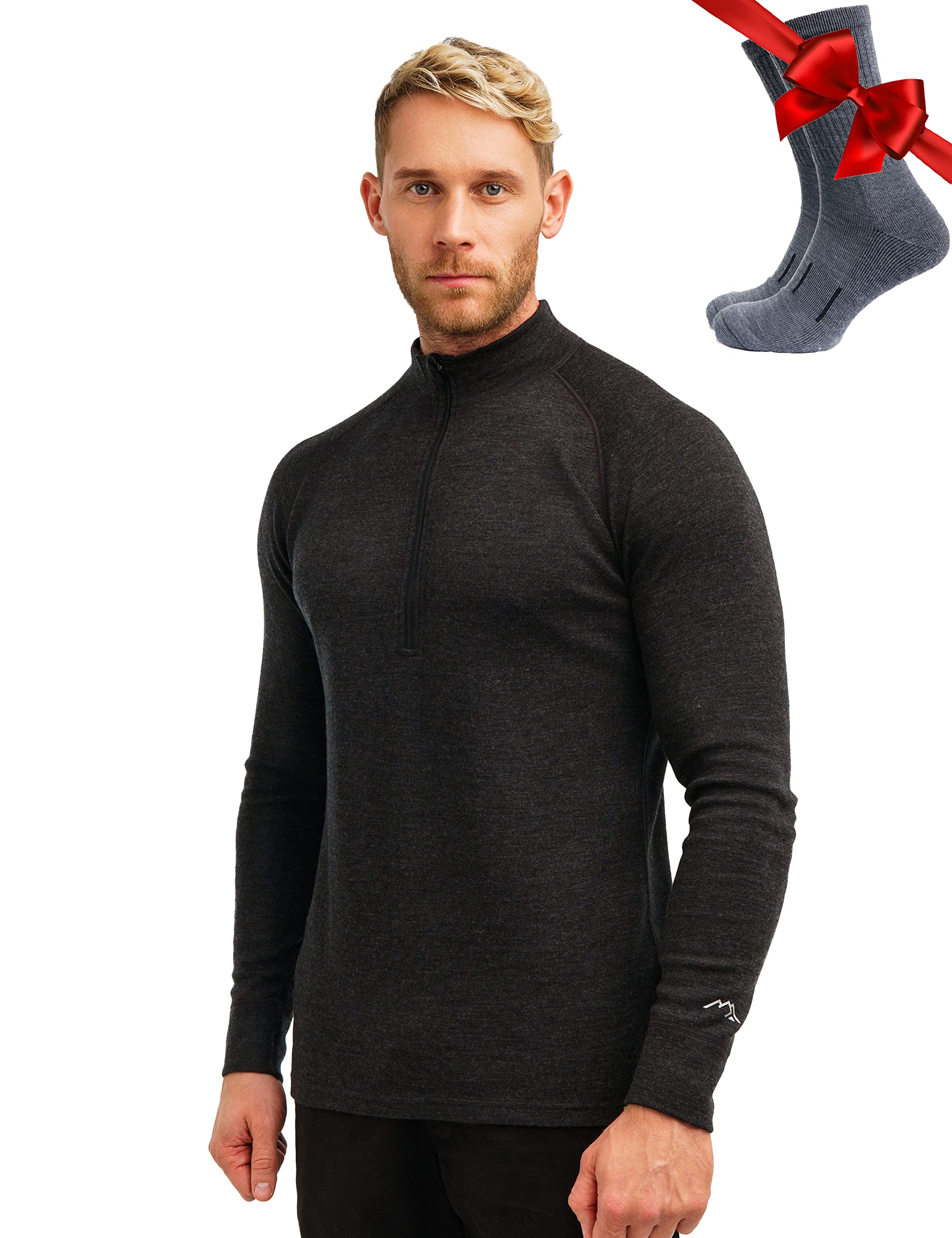
One base layer system that lets you choose your weight: 165, 250, or 320 g/m².
This half-zip from the same family as the B0CLB55D2G crew adds the key feature cyclists need — a zippered neck for temperature control. But the real differentiator is the weight options. You can pick 165 g/m² for warm-weather and high-output rides in 40–60°F, 250 g/m² for standard cold-weather duty in 25–45°F, or 320 g/m² for deep-freeze conditions in 10–35°F. That flexibility means you can buy the same brand for every season and get a consistent fit across all three.
This listing offers 165, 250, and 320 g/m² options and adds the half-zip and the wider weight range. The 17.5 micron superfine merino fibers — a micron is one-millionth of a meter, finer than a human hair (which is about 70 microns) — means buyers with sensitive skin report zero itching, unlike coarser standard wool (25+ microns). It is also OEKO-TEX certified, which means it is tested against 100+ harmful substances, and the wool is RWS certified from Australian farms with animal welfare standards.
Worth noting: the half-zip adds a bit of complexity when washing (zippers can snag on delicates), and the 320 g/m² weight is really meant for low-activity or extreme cold, not for hard pedaling.
Versatility Advantage
- Three weight options (165, 250, 320 g/m²) cover all seasons
- Half-zip for on-the-bike venting
- OEKO-TEX and RWS certified for safety and ethics
A Few Things
- 320 g/m² weight is too warm for active cycling
- Zipper requires careful washing to avoid snags
Choose this for: year-round riding where you want one brand with weight options for every season plus the venting of a half-zip.
Pass if: you only need one weight or prefer the simplicity of a crew neck for layering.
Understanding the Specs
Fabric Weight (g/m²)
This number tells you how much the fabric weighs per square meter — it is the best way to compare warmth across layers. A 165 g/m² layer is lightweight and breathable for high-effort riding in moderate temps. A 250 g/m² is the standard midweight for cold rides. A 320 g/m² is heavyweight for extreme cold, but can be too warm for active cycling. Match the weight to your typical ride temperature.
Half Zip vs. Crew Neck
A half-zip gives you an on-the-fly venting option — unzip a few inches on a climb to let heat escape, zip up for the descent. A crew neck is simpler, lighter, and has no zipper to snag or break, but you lose the ability to dump heat without stripping off a layer. For cyclists riding in varied conditions, the half-zip is a meaningful advantage. For pure simplicity and lowest weight, the crew neck wins.
FAQ
Can I wear a cotton t-shirt as a cycling base layer?
What weight should I pick for cold-weather cycling?
Is a half-zip worth it for cycling?
How often should I wash a merino base layer?
Will merino wool itch my skin?
Does a 100% merino base layer shrink?
Can I use a cycling base layer for other activities?
How should a cycling base layer fit?
Final Thoughts: The Verdict
For most cyclists, the base layer for cycling winner is the MERIWOOL Half Zip because its 250 g/m² midweight and half-zip venting cover the widest range of cold-weather riding. If you face true sub-freezing temperatures, grab the Smartwool Classic Thermal Crew. And for the best value in a lightweight merino shirt, the Merino Wool Base Layer Crew delivers everything you need at a smart price.
How We Picked
We do not accept paid placement, and we did not hands-on test every unit. Instead, we match each pick to a real buyer and use-case by comparing the manufacturers’ published specifications against the patterns in verified customer reviews — so you get each pick’s real strengths and trade-offs instead of marketing copy.
Sources & Methodology
Specifications: manufacturer listings and product documentation. Review insights: verified customer reviews, as of July 2026. Pricing: not shown on this page (it changes often); check the current price via the retailer link.
As an Amazon Associate, Gadgets Feed earns from qualifying purchases. This does not affect which products we feature.
Product prices and availability are accurate as of the date/time indicated and are subject to change. Any price and availability information displayed on Amazon at the time of purchase will apply to the purchase of this product. As an Amazon Associate I earn from qualifying purchases.
CERTAIN CONTENT THAT APPEARS ON THIS SITE COMES FROM AMAZON. THIS CONTENT IS PROVIDED "AS IS" AND IS SUBJECT TO CHANGE OR REMOVAL AT ANY TIME.
Amazon and the Amazon logo are trademarks of Amazon.com, Inc. or its affiliates.