
The difference between a productive day in sub-zero temperatures and a miserable, shivering failure often comes down to a single layer of fabric against your skin. A base layer for extreme cold is not just an extra shirt — it is your primary barrier against hypothermia, responsible for wicking moisture away from your body while trapping heat in the air pockets between fibers. Get this layer wrong, and no amount of mid-layers or outer shells will save you from the cold’s bite.
I’m Min — the co-founder and writer behind Gadgets Feed. I’ve spent countless hours analyzing the technical specifications, material science, and real-world performance data behind the top extreme cold base layers on the market to bring you a clear, data-driven buying guide.
Whether you’re headed into single-digit temperatures for a day of ice fishing, a backcountry ski tour, or a morning commute in a polar vortex, the right fabric weight and fit are non-negotiable. In this guide, I break down the top contenders for the best base layer for extreme cold, helping you stay warm, dry, and comfortable when the mercury plummets.
How To Choose The Best Base Layer For Extreme Cold
Selecting the right base layer for extreme cold is not about picking the thickest fabric available. It requires balancing fabric type, weight, fit, and durability against your specific activity level and environmental conditions. A wrong choice can lead to overheating, sweat accumulation, and ultimately, dangerous chilling.
Fabric Composition: Merino vs. Synthetic Blends
Pure merino wool (typically in 250g/m² or 400g/m² weights) offers unmatched natural odor resistance and temperature regulation. However, it can lose shape over time and feels damp when fully saturated. Merino-synthetic blends (such as merino blended with polyamide or polyester) improve durability, retain their shape better after washing, and dry faster. They are often the smarter choice for high-output activities in extreme cold where you might cycle through sweat cycles repeatedly.
Weight and Thickness (GSM)
Base layer weight is measured in grams per square meter (GSM). For extreme cold (temperatures below 20°F), you should be looking at midweight (200-250 GSM) to heavyweight (300-400+ GSM) fabrics. A 250 GSM merino layer is typically warm enough for most static or low-activity cold exposure down to around 10°F, while a 400 GSM heavyweight layer is designed for stationary use or extreme, prolonged cold below 0°F. Lighter weights fail to trap enough air for true extreme cold conditions.
Fit and Seam Placement
A base layer that is too loose creates air gaps that reduce thermal efficiency, while one that is too tight restricts movement and traps moisture. Look for a “snug athletic fit” that stays close to the skin without binding. Flatlock seams or seamless construction reduces chafing when worn under a backpack or mid-layer. Sleeve length and torso length also matter — the layer should stay tucked in during movement to prevent cold air from sneaking in at the lower back.
Quick Comparison
On smaller screens, swipe sideways to see the full table.
| Model | Category | Best For | Key Spec | Amazon |
|---|---|---|---|---|
| DANISH ENDURANCE Set | Set | Arctic conditions, all-day wear | Merino-synthetic blend set | Amazon |
| Helly-Hansen LIFA Merino | Crew | Winter sports, high-output use | Merino-synthetic hybrid | Amazon |
| Smartwool Classic Thermal | Crew | Daily wear, weekend hiking | 100% Merino 250 GSM | Amazon |
| First Lite Furnace Long John | Bottoms | Hunting, ice fishing, static use | Polartec Power Wool blend | Amazon |
| MERIWOOL Heavyweight Pants | Bottoms | Stationary or extreme cold | 400g/m² Merino wool | Amazon |
| MERIWOOL Midweight Half Zip | Top | Value, skiing, everyday cold | 250g/m² Merino wool | Amazon |
| Under Armour Base 4.0 Crew | Crew | Work, extreme cold synthetic | Heavyweight synthetic | Amazon |
In‑Depth Reviews
1. DANISH ENDURANCE Merino Wool Base Layer Set
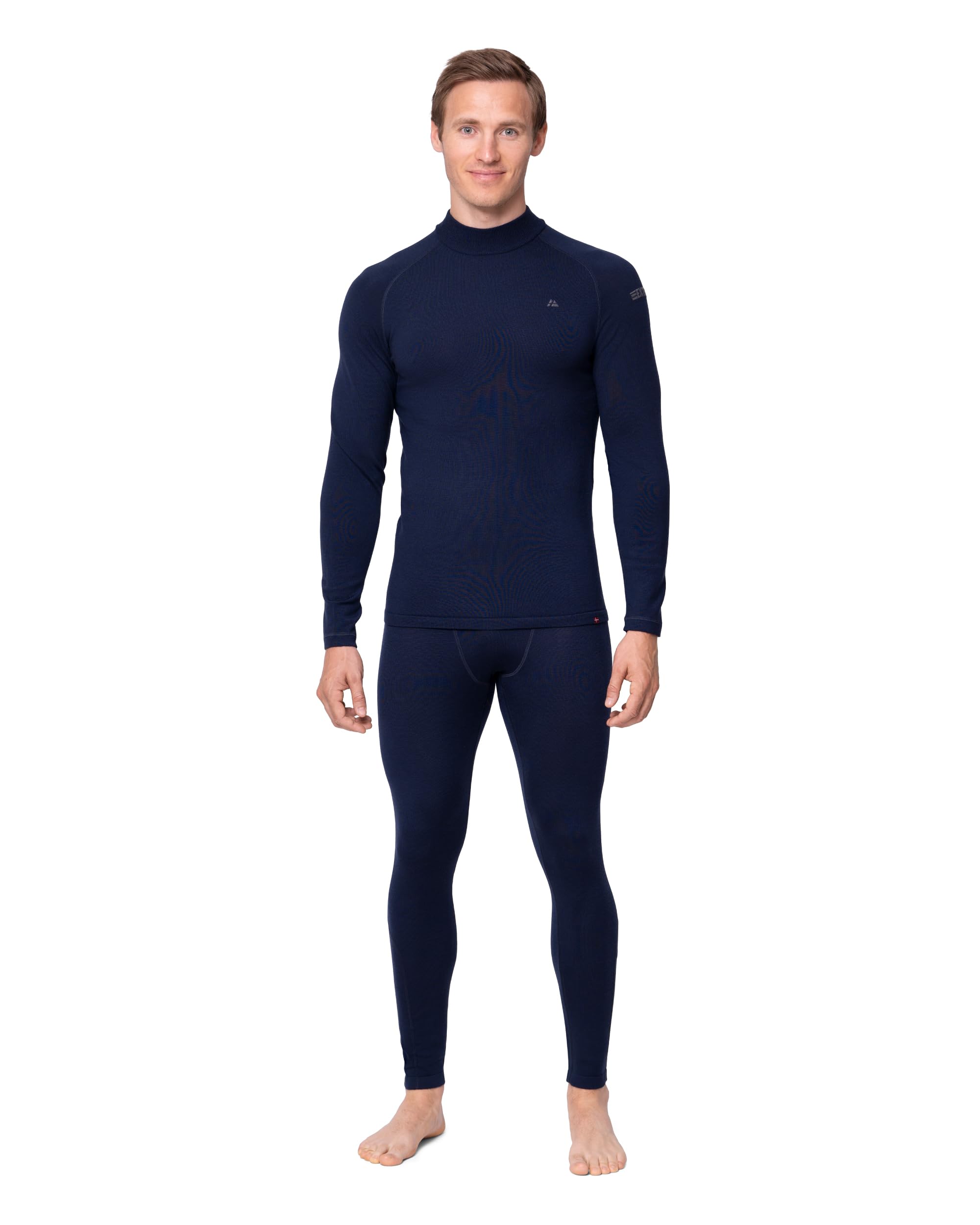
The DANISH ENDURANCE set is engineered specifically for Arctic conditions, making it the most confident pick for extreme cold. It blends merino wool with polyamide, which prevents the common 100% merino problem of losing shape after a few wears. The fabric is notably soft against the skin with no itch, and the snug fit traps heat efficiently without restricting movement.
Users report wearing this set comfortably at temperatures as low as -10°F, and the odor resistance of the merino means you can wear it multiple days in the backcountry without embarrassment. The polyamide content also accelerates drying time compared to pure wool, a critical advantage when you generate sweat during high-output winter activities.
At a mid-range price for a top-and-bottom set, it undercuts many premium single-piece competitors while delivering equivalent warmth. The build quality feels substantial, and early durability reports suggest it outlasts cheaper alternatives significantly. If you want one set that handles everything from a 10°F morning hunt to a -20°F ski tour, this is the pick.
Why it’s great
- Merino-polyamide blend resists stretching and dries faster than pure wool
- Snug fit ideal for layering under mid and outer shells
- Proven performance down to -10°F and below
Good to know
- Long-term durability is still unproven beyond a few seasons
- Fit may be too snug for those who prefer a looser feel
2. Smartwool Men’s Classic Thermal Merino Base Layer Crew

Smartwool has built a reputation around their high-quality 100% merino wool, and the Classic Thermal Crew is a flagship product. At 250 GSM, it sits at the heavy midweight threshold, offering warmth that rivals a lightweight fleece but in a much more packable form. The fabric is exceptionally soft — one of the few merino layers that feels comfortable directly against sensitive skin without any irritation.
The cut is longer than average, which keeps the shirt tucked in during active movements like bending or reaching. This design detail prevents the dreaded cold draft that sneaks up your back when you’re crouched behind a snowmobile or bending over to adjust bindings. Users consistently note it washes well with no shrinkage or pilling after multiple cycles.
It works best as a standalone top for cool winter days or as a base layer under a mid-layer for temperatures well below freezing. The main trade-off is price — it sits at the upper end of the premium bracket. But for buyers who value the pure merino experience and plan to wear it daily, the long-term cost-per-wear is excellent.
Why it’s great
- Exceptional softness with zero itch, even for sensitive skin
- Longer torso cut prevents tuck-out during activity
- Excellent washing durability with minimal shrinkage
Good to know
- 250 GSM may not be sufficient for static use below 0°F without a mid-layer
- Price is a significant step up from comparable midweight options
3. Helly-Hansen LIFA Merino Midweight Crew

Helly-Hansen’s LIFA Merino uses a unique construction: a hydrophobic LIFA synthetic inner layer bonded to a merino wool outer layer. This design moves moisture away from your skin faster than pure merino while maintaining the natural odor resistance and warmth of wool on the outside. It’s a smart solution for high-output activities like backcountry skiing or running in cold weather.
The fit is true to size and the fabric has a smooth, athletic feel against the skin. The midweight designation (lower 200 GSM range) means it layers exceptionally well under tight-fitting mid-layers without adding bulk. Temperature regulation is a standout feature — users report feeling warm during static moments but not overheating during strenuous climbs.
For winter sports enthusiasts who need a base layer that can handle both a morning cardio session and an afternoon of standing around, this is an ideal choice. The hybrid construction also means it’s more durable at the contact points (shoulders, neck) than a pure merino layer would be. The price is premium, but the technology justifies it for active users.
Why it’s great
- LIFA synthetic inner layer wicks moisture faster than pure wool
- Hybrid design balances warmth with breathability for active use
- Smooth, non-itchy feel ideal for sensitive skin
Good to know
- Midweight may not be warm enough for static extreme cold below 10°F
- Limited color and design options available
4. MERIWOOL Mens Base Layer 100% Merino Wool Midweight 250g Half Zip

The MERIWOOL 250g Half Zip is a pure merino midweight layer that punches well above its price point. At 250 GSM, it offers warmth comparable to the Smartwool Classic Thermal but at a significantly lower cost — making it the most accessible entry into premium merino for extreme cold. The half-zip design allows for quick venting when you start to overheat, a simple but valuable feature when transitioning between active and static states.
Fit is described as snug but comfortable, with the S size accommodating a 5’6″, 145 lb build perfectly and the XL fitting a 6’2″, 215 lb athletic frame with generous length. The merino has a slight tingle characteristic of natural wool, but most users report it softens noticeably after a few washes. Construction quality appears solid with no loose threads or seam unraveling reported.
It works well for skiing, hiking, and general winter wear. The primary limitation for extreme cold is that 250 GSM merino alone will not cut it below about 0°F during low activity — you will need to pair it with a mid-layer. But for the price, this is the most cost-effective way to get a genuine 100% merino midweight top into your layering system.
Why it’s great
- Authentic 100% merino wool at a budget-friendly price point
- Half-zip design provides useful temperature regulation
- Snug athletic fit that layers well without bunching
Good to know
- Initial wool tingle/itch may bother extremely sensitive skin
- Requires mid-layer for true extreme cold below 0°F
5. First Lite Men’s Furnace Long John
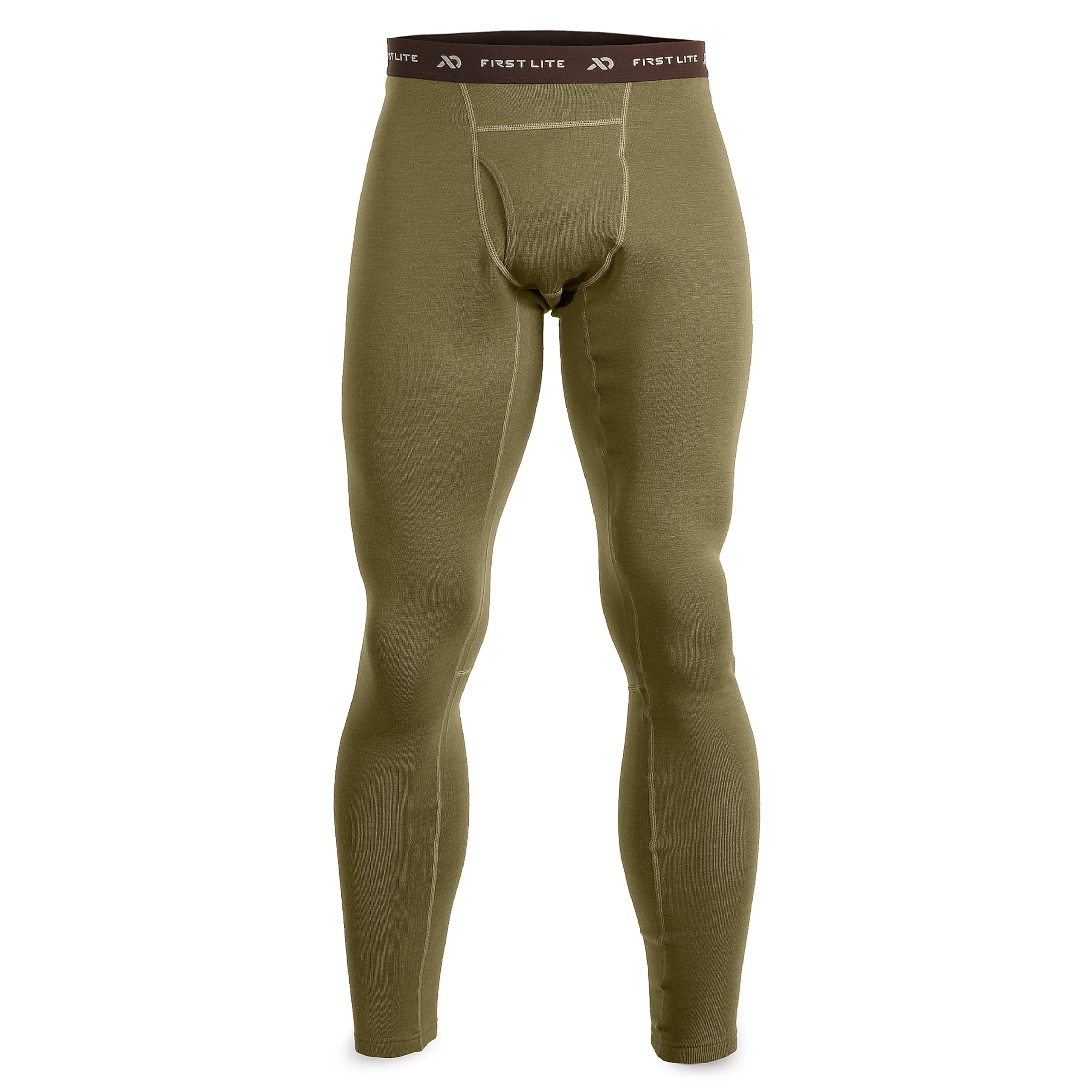
First Lite’s Furnace Long John is a dedicated bottom base layer built specifically for extreme cold conditions like ice fishing, deer hunting, and winter camping. It uses a Polartec Power Wool blend — a proprietary mix of merino and synthetic that provides exceptional stretch, warmth, and durability. The fabric is noticeably soft and comfortable, with no bunching or restriction during movement.
Users report wearing these bottoms in temperatures ranging from 23°F down to 19°F with outstanding results. One reviewer noted they were warm enough to almost feel too warm in direct sunlight, and held up perfectly during an entire day in rain and 30 mph wind at 49°F. The fit runs slightly large — a 5’10”, 180 lb athletic build may need to size down from medium to small for an optimal snug fit.
The standout feature is the combination of warmth and minimal bulk. The fabric’s stretch allows it to move with you without sagging, which is critical when you’re crouching in a deer stand or kneeling to drill an ice hole. The price is high, but for hunters and ice anglers who need uncompromising performance from a bottom layer, it’s considered the gold standard.
Why it’s great
- Polartec Power Wool blend offers superior stretch and durability
- Exceptional warmth-to-bulk ratio for active hunting
- Comfortable in both dry extreme cold and wet cold conditions
Good to know
- Runs slightly large; consider sizing down for a true base layer fit
- Premium price point that may exceed casual user budgets
6. MERIWOOL Mens Base Layer 100% Merino Wool Heavyweight 400g Thermal Pants

At 400 grams per square meter, these MERIWOOL thermal pants represent the highest weight merino available in the consumer market. They are designed for one specific purpose: keeping you warm when you are not moving enough to generate your own heat. Ice fishing, sitting in a deer blind, or a long cold commute — this is where 400g merino earns its keep.
Users confirm that at 16°F, legs remained comfortable under lightweight jeans with almost no cold sensation. The fabric is thick and warm without feeling stiff or brittle, though it does add noticeable bulk compared to 250g layers. Durability is a mixed report — one user experienced crotch thinning after extended use, while others report no issues after a full season.
The most significant practical limitation is the lack of a waist drawstring. During active hiking or walking with layers, the pants can slide down, requiring adjustment. This makes them better suited for static or low-movement use. But for anyone who genuinely needs maximum passive warmth at the lowest skin level, the 400g merino fabric is unmatched in its category for pure insulation.
Why it’s great
- Unmatched 400g/m² merino weight for maximum passive warmth
- Soft and non-itchy despite the high wool density
- Excellent temperature regulation for static cold exposure
Good to know
- No waist drawstring can cause slippage during active movement
- Bulky compared to midweight layers; less ideal for high-output use
7. Under Armour Men’s Packaged Base 4.0 Crew
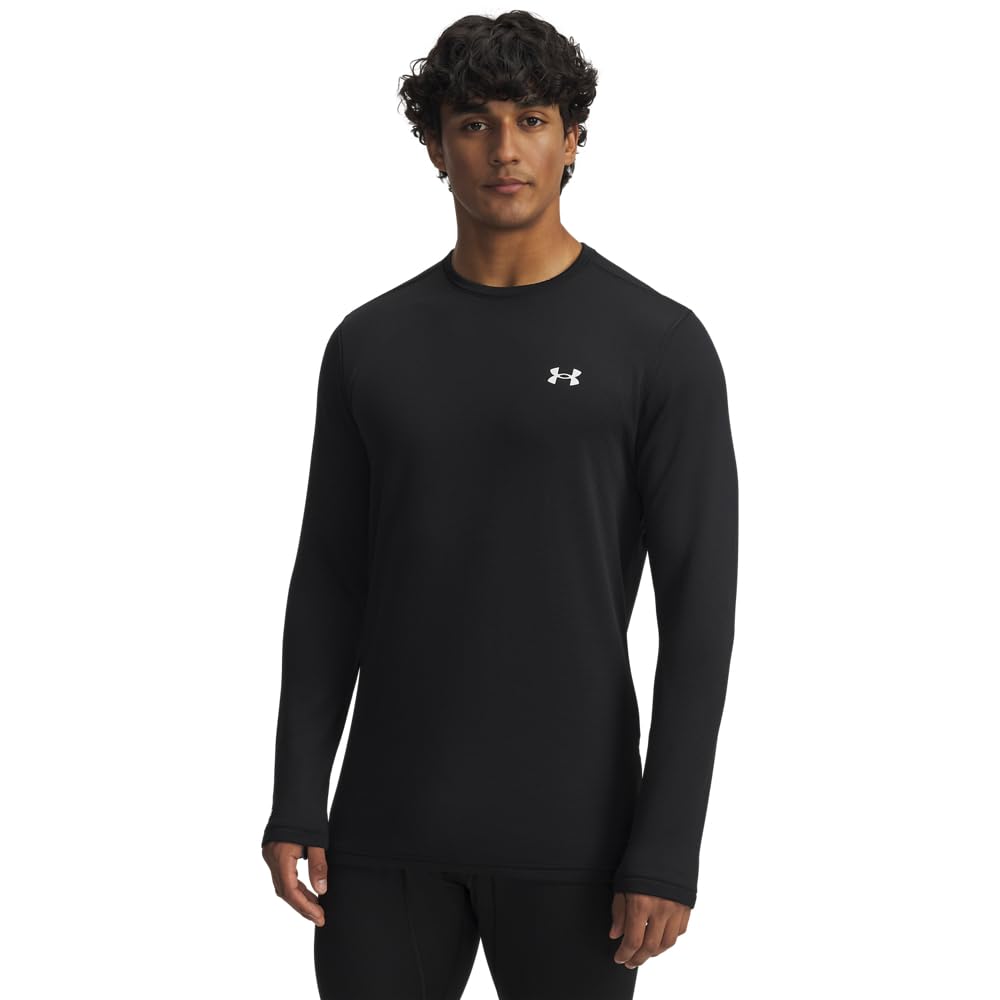
Under Armour’s Base 4.0 is the heavyweight synthetic entry in this list, designed for users who prioritize durability and affordability over natural fiber properties. It is exceptionally thick for a synthetic base layer, providing substantial warmth through a brushed interior that traps air effectively. Users working outdoors in sub-20°F conditions consistently call this layer a “life saver.”
The fabric stretches with your movements, avoiding the restriction sometimes associated with thick layers. It uses Under Armour’s moisture transport system to wick sweat away, though synthetic fabrics will develop odor faster than merino over multiple days of use. The crew neck design is preferred by many over turtlenecks for its less restrictive feel when layered under a jacket.
Durability is a highlight — one user reported wearing this base layer daily during an entire work season with only one minor seam issue. The price point is the most accessible among the heavyweight options, making it the go-to choice for budget-conscious buyers who need reliable warmth. The trade-offs are reduced breathability and no natural odor resistance, but for day-long use in extreme cold where ventilation is limited, it performs admirably.
Why it’s great
- Heavyweight synthetic construction provides excellent warmth at a low price
- Stretchy fabric allows full range of motion during work
- Proven durability for daily outdoor labor
Good to know
- Synthetic fabric retains odor faster than merino with extended wear
- Less breathable than merino alternatives for high-output activity
FAQ
Is 100% merino wool better than a merino-synthetic blend for extreme cold?
What GSM weight should I choose for temperatures below 0°F?
Can I wear a synthetic base layer for extreme cold, or do I need merino?
Final Thoughts: The Verdict
For most users, the base layer for extreme cold that offers the best all-around balance of warmth, durability, and value is the DANISH ENDURANCE Merino Wool Set thanks to its merino-synthetic blend that resists stretching and dries quickly. If you want pure, soft merino with a proven fit and excellent washing durability, grab the Smartwool Classic Thermal Crew. And for static extreme cold conditions like ice fishing or hunting where maximum passive warmth is non-negotiable, nothing beats the MERIWOOL 400g Thermal Pants.