
Choosing the right base molding wood means the difference between a room that looks professionally finished and one where every joint and gap screams “DIY mistake.” The grain, the density, the way it takes paint or stain — these properties determine whether your baseboards will last through seasonal humidity swings without warping, splitting, or revealing unsightly nail pops.
I’m Min — the co-founder and writer behind Gadgets Feed. I’ve spent hundreds of hours cross-referencing wood species, dimensional tolerances, and customer feedback to identify the base molding products that actually deliver on their promises of straightness, workability, and durability.
After analyzing dozens of options across wood types and price tiers, this guide cuts through the noise to present only the most reliable choices for your next project. Here is my deep-dive into the best base molding wood you can buy right now.
How To Choose The Best Base Molding Wood
Base molding wood isn’t just a decorative afterthought — it protects walls from kicks, vacuum bumps, and moisture wicking. The wrong choice means gaps, splits, and a finish that never looks quite right. Focus on these three factors.
Wood Species and Density
Pine is soft and budget-friendly, easy to cut but prone to dents. Poplar strikes a better balance — harder than pine, takes paint uniformly, and resists warping. Beech offers even higher density and a tight grain ideal for staining. For painted baseboards, poplar is the gold standard; for natural stain, look for beech or poplar with consistent color.
Profile and Dimension Accuracy
Standard baseboard heights range from 3.25 inches to 5.5 inches, with thickness around 0.5 to 0.75 inches. The exact profile — colonial, ranch, ogee, or bullnose — must match your existing trim or door casing. Measure your current baseboard height and thickness before ordering; slight mismatches become obvious at every corner joint.
Material Beyond Solid Wood
MDF (medium-density fiberboard) offers a smooth, warp-resistant surface perfect for painted finishes in dry areas, but it swells irreversibly when wet. Polyurethane flexible molding solves curved walls but requires multiple coats of primer to look like wood. Solid wood remains the best choice for durability and refinishing potential, especially in older homes with settling walls.
Quick Comparison
On smaller screens, swipe sideways to see the full table.
| Model | Category | Best For | Key Spec | Amazon |
|---|---|---|---|---|
| DoubleFill 2 Pack Cabinet Light Rail Molding | Poplar Premium | Under-cabinet light rail & cabinet trim | 47″ x 1.375″ x 0.875″ with dado | Amazon |
| Art3d Baseboard Molding Trim | MDF Premium | Large rooms needing long seamless runs | 4 x 8-ft boards, 3.27″ tall | Amazon |
| Flexible Moulding WM623 | Polyurethane | Curved walls and circular features | 3.25″ x 8-ft, bends to 6″ radius | Amazon |
| ReliThick Bullnose Corner Blocks | Pine Corner | Seamless bullnose outside corners | 5.5″ x 0.75″ pre-cut pine blocks | Amazon |
| Goldblatt Trim Removal Tool | Tool | Removing old baseboard without damage | 3″ carbon steel pry bar | Amazon |
| Cinnvoice 12-Piece Split Wood Slats | Pine Slats | Decorative wall paneling & fluted trim | 15.75″ x 1.6″ x 0.6″ pine | Amazon |
| Dylrauoza Beaded Wood Trim | Beech Beaded | Antique restoration & furniture detail | 15.75″ x 0.94″ x 0.47″ beech | Amazon |
In‑Depth Reviews
1. DoubleFill 2 Pack 47″ Kitchen Cabinet Light Rail Molding
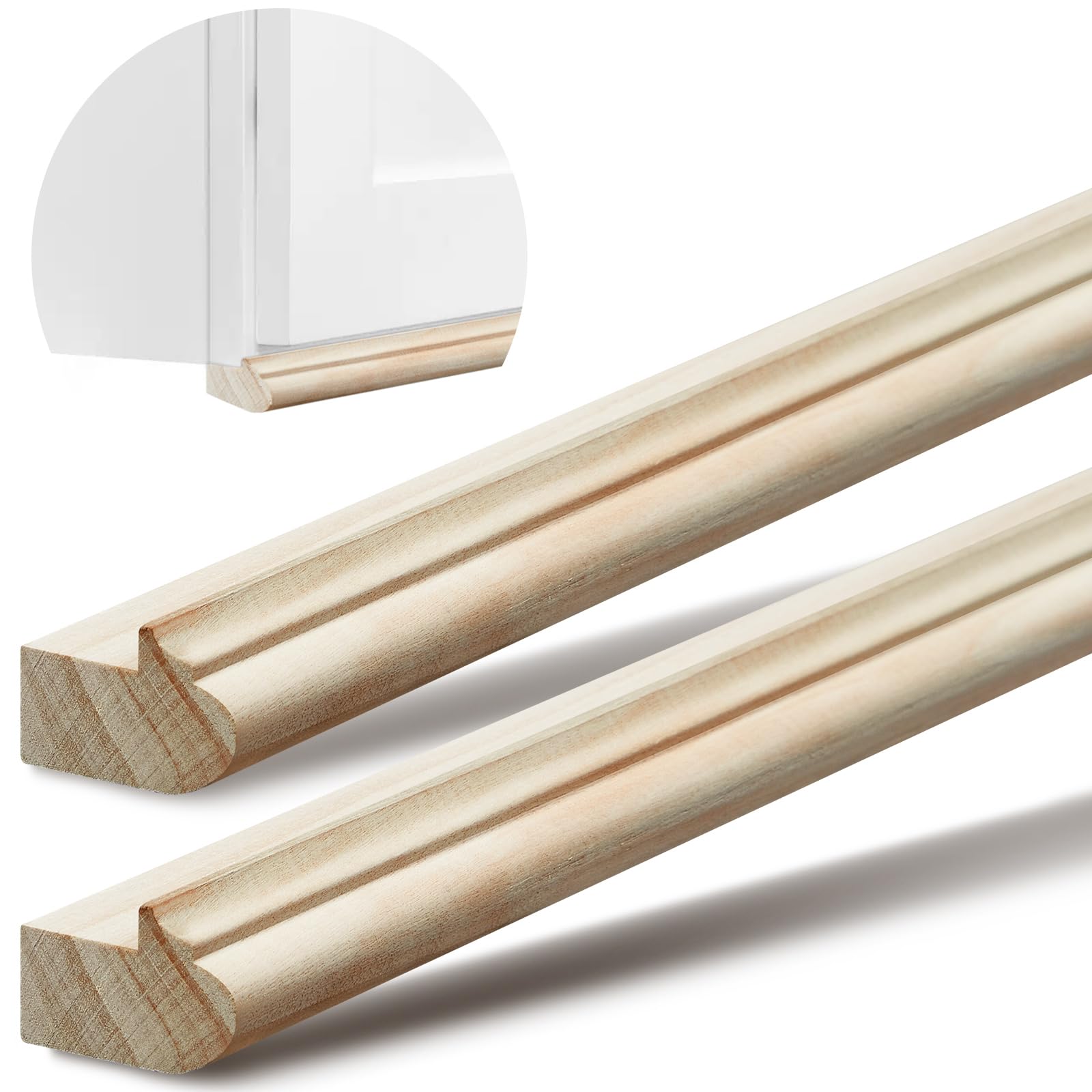
This poplar light rail molding from DoubleFill delivers commercial-grade material quality at a price that undercuts big-box lumber yards. Each piece measures 47 inches long, 1.375 inches wide, and 0.875 inches thick, with a pre-cut 0.25-inch by 0.75-inch dado that perfectly accommodates standard LED strip lighting under kitchen cabinets. Poplar is the ideal species for painted trim because its closed grain accepts primer evenly without the blotchy absorption common to pine.
The unfinished surface lets you apply any paint or stain to match your existing cabinetry, and the 94-inch total coverage from the two-pack is enough for most standard kitchen runs. Reviewers consistently note how well the wood accepts stain without sanding prep, and the straightness of each piece eliminates the bowing frustration typical of lower-grade molding. For cabinet light rails, wainscoting caps, or picture-rail applications, this is the most reliable poplar option available online.
One minor caveat: the factory surface has a whitish film that some buyers mistake for primer — it is not primer, so budget for a proper primer coat before your finish paint. Still, for the dimensional consistency and material purity, this is an exceptional value in solid wood molding.
Why it’s great
- Commercial-grade poplar with minimal knots and straight grain
- Precision-milled dado for seamless LED strip installation
- Cuts and machines cleanly without chipping
Good to know
- Whitish film is not primer — must sand and prime before painting
- Only two pieces per pack; verify total linear footage needed
2. Art3d Wall Baseboard Molding Trim – 4 Pack Premium MDF
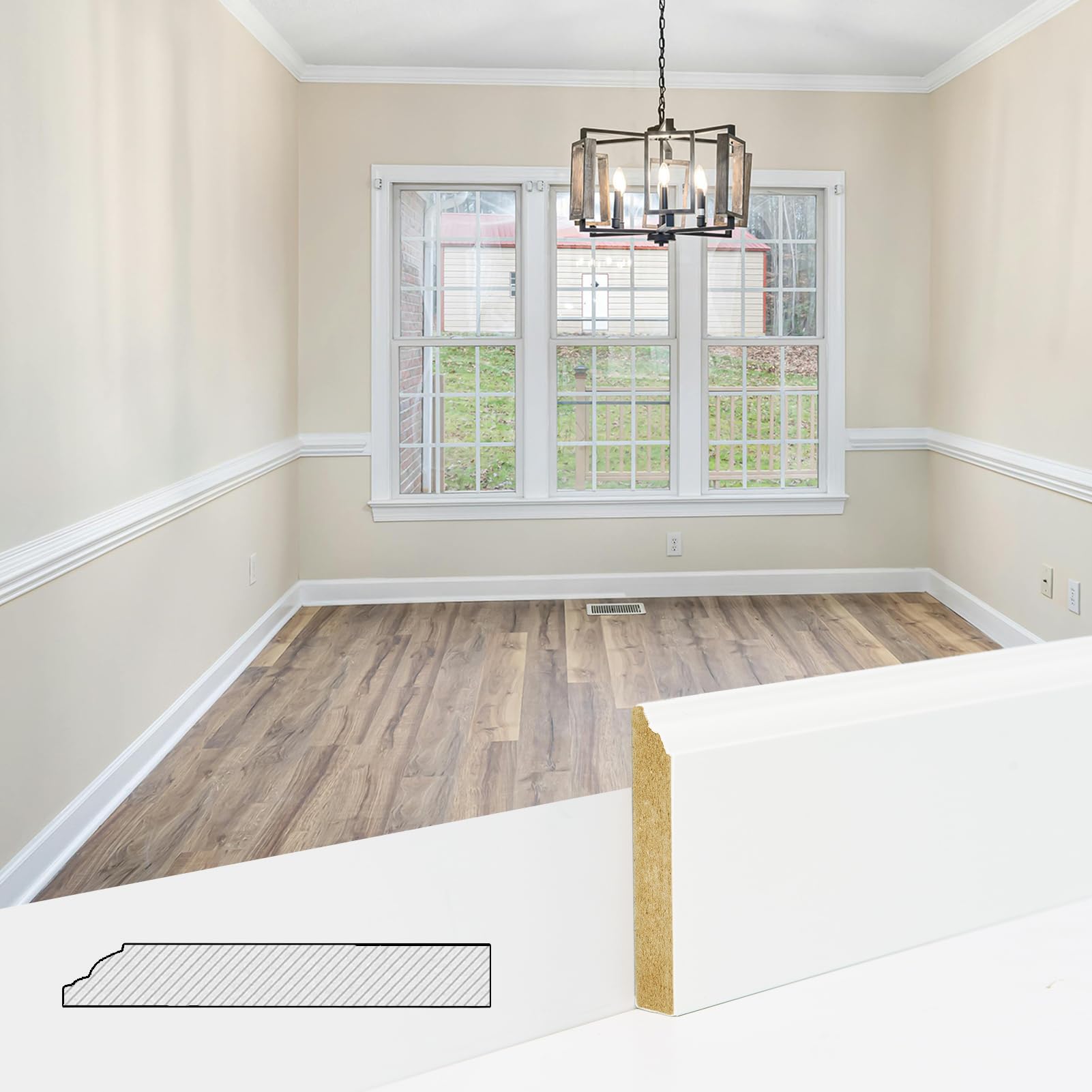
Art3d’s MDF baseboard molding solves two common problems that solid wood cannot: warping and knot-holes. Each of the four 8-foot boards is machined from high-density MDF that resists the seasonal cupping that plagues pine and even poplar in humid basements or bathrooms. At 3.27 inches tall with a 0.59-inch thickness, this profile matches standard ranch-style baseboards found in most production homes built after 1990.
The pre-primed white surface is ready for a single topcoat of latex or alkyd paint, saving you at least one coat compared to raw wood. Users report that the material cuts cleanly with a track saw or miter saw, and the dense fiber core holds brad nails without splitting — a major advantage over cheap pine that often cracks near ends. The 32 total linear feet per box covers a typical 12-foot by 12-foot room with a bit left over for waste.
The only catch is coverage planning: a 12×12 room needs 48 feet of baseboard, meaning you’ll require two boxes. Each box runs at a mid-range price point, so factor that into your total project cost. But the material quality — smooth, warp-resistant, and paintable — makes this the best MDF option for homeowners who want professional results without fighting wood defects.
Why it’s great
- Warp-resistant MDF stays straight in humid environments
- Pre-primed surface saves time and paint
- Dense core holds nails without splitting
Good to know
- Each box covers only 32 ft — buy 2 boxes for a standard bedroom
- MDF swells if exposed to standing water; not for wet areas
3. Flexible Moulding WM623 – 9/16″ x 3-1/4″ x 8′

When your project involves curved walls, circular archways, or custom kitchen islands, solid wood simply refuses to bend without steaming or kerf-cutting. The Flexible Moulding WM623 solves this with a polyurethane compound that bends like a belt down to a 6-inch radius while maintaining the exact profile of standard 3.25-inch baseboard from Home Depot. Once installed and painted, even experienced carpenters cannot tell it from wood.
The material cuts with standard woodworking tools — miter saws, sandpaper, even hand planes — and accepts primer and paint just like wood. Buyers report that it withstands extreme temperature swings and direct moisture exposure without warping, cracking, or delaminating, making it suitable for exterior use as well. For curved entry walls and rounded closet openings, this product eliminates the need for custom millwork or ugly corner block transitions.
The trade-off is cost and painting effort: the polyurethane comes in a yellowish tint that requires three to four coats of quality trim paint to achieve a uniform white finish. Over-bending before installation can cause paint to crack later, so install it carefully. For the unique ability to match standard trim profiles on any curved wall, this flexible molding is worth every extra dollar and coat of paint.
Why it’s great
- Bends to a 6-inch radius without kinking or cracking
- Matches standard Home Depot baseboard profile perfectly
- Moisture-proof and stable in extreme temperatures
Good to know
- Requires 3-4 coats of paint to hide the yellowish base color
- Premium price compared to solid wood or MDF per linear foot
4. ReliThick 8 Pcs 5.5″ x 3/4″ Rounded Outside Bullnose Corner Blocks
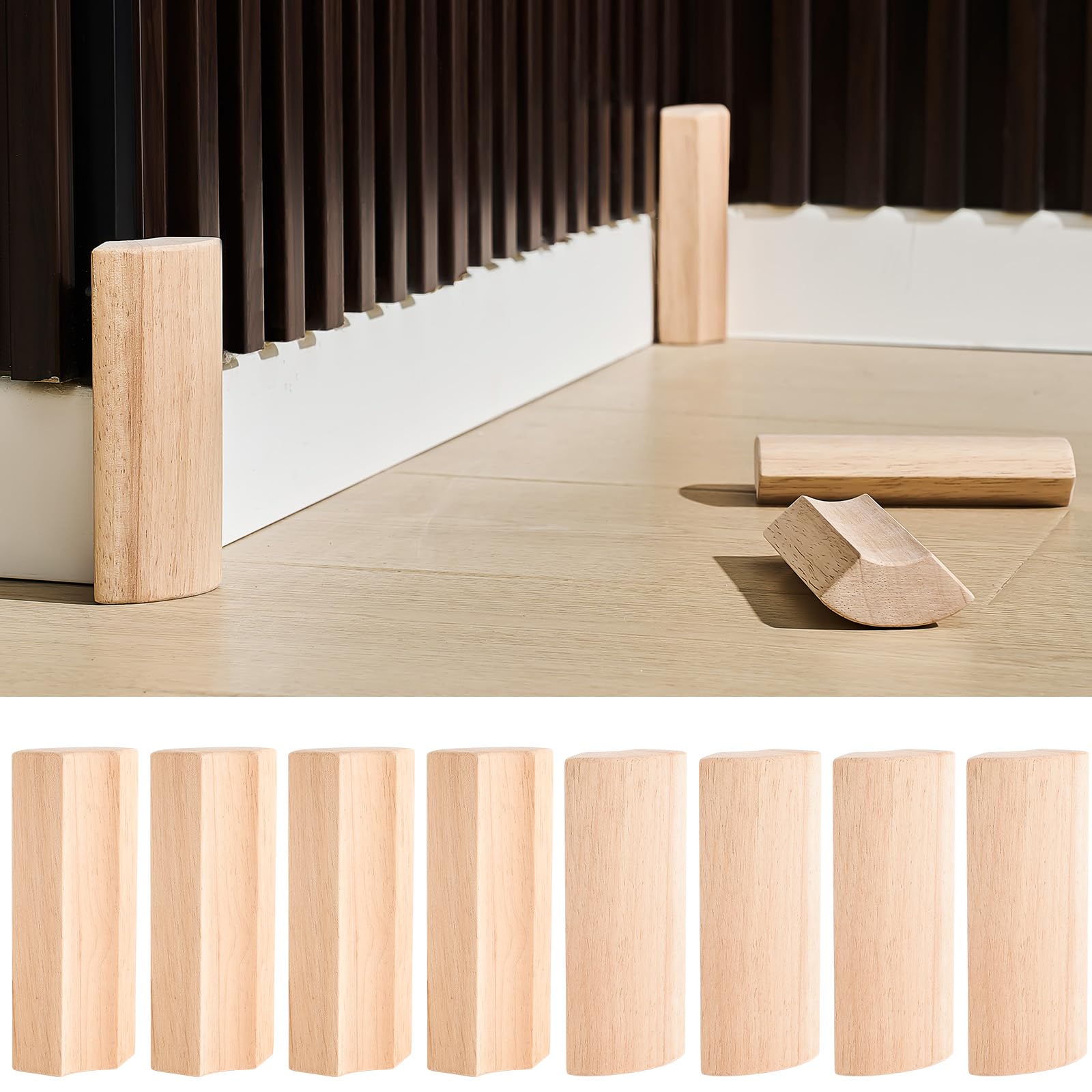
Bullnose corners are the most common headache in baseboard installation — the miter cut never quite lines up, and gaps appear after the first season of expansion. ReliThick solves this with pre-shaped pine corner blocks that slide onto any 0.75-inch-thick baseboard up to 5.5 inches tall. Each block is radiused to match standard 0.75-inch bullnose drywall corners, creating a seamless transition that requires zero miter saw skill.
The pine construction is smooth, knot-free, and ready for primer and paint. Installation is simple: measure, cut the block height if needed (some users trimmed from 5.5 inches down to 4.75 inches for shorter baseboards), apply construction adhesive, and nail into place. No coping, no compound miter angles, no filler. The eight-pack covers four outside corners with two blocks per corner — enough for most small to medium rooms.
A few pieces may contain small surface knots that require filler before painting, and the blocks are designed specifically for baseboards 0.75 inches thick — thinner baseboards will leave a visible gap. But for anyone who has ever struggled with bullnose corners, these blocks turn a 45-minute headache into a 5-minute job. At this price, they are the best problem-solver in baseboard installation.
Why it’s great
- Eliminates difficult miter cuts on bullnose corners
- Precision radius matches standard drywall corner beads
- Smooth, knot-free pine surface paints easily
Good to know
- Designed for 0.75-inch thick baseboards only
- Some blocks may have small knots needing filler
5. Goldblatt Trim Removal Tool, 3-Inch Baseboard Removal Tool
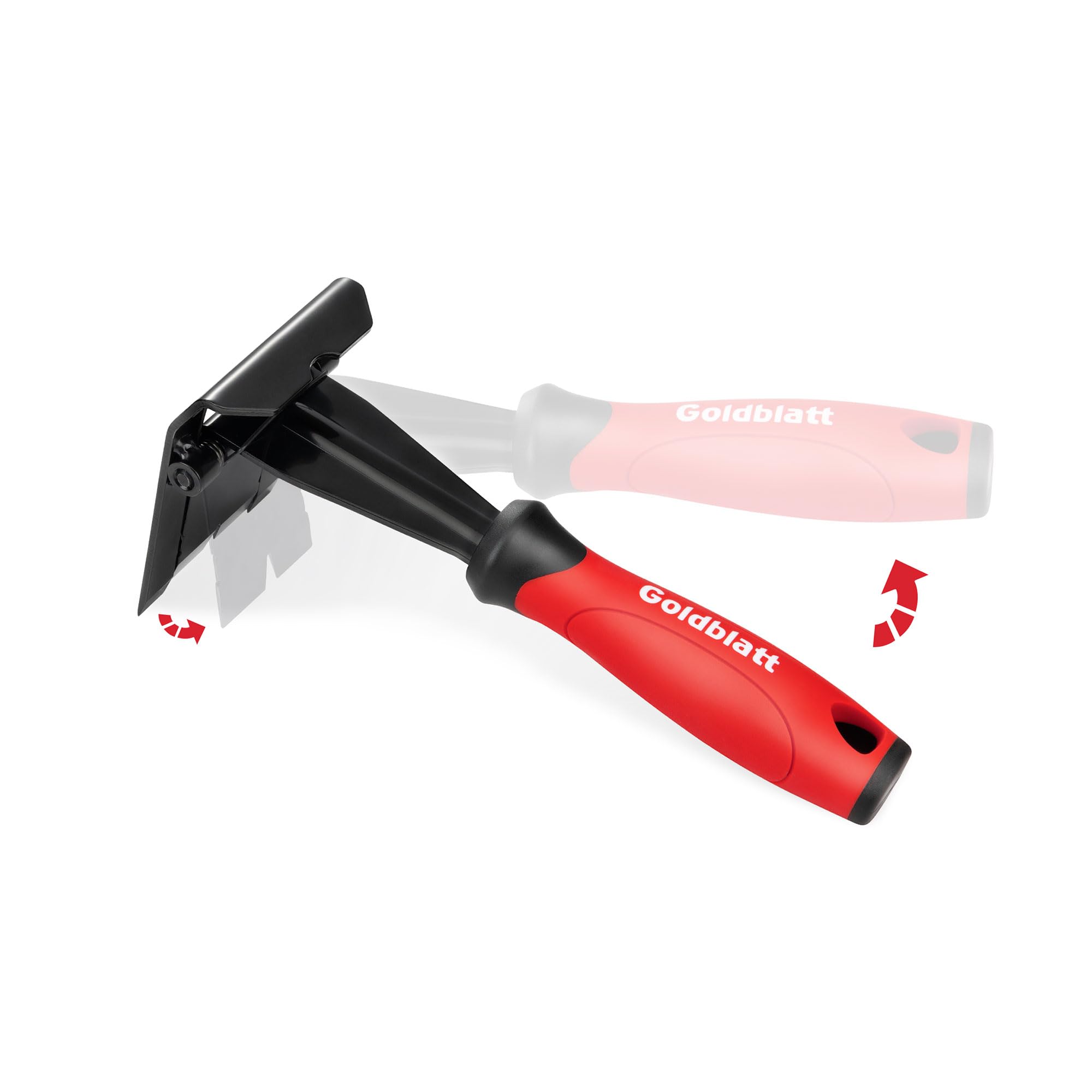
Before you install new base molding wood, you have to remove the old stuff without destroying the drywall. The Goldblatt Trim Removal Tool uses a patented wedge-center design with a wider, flatter contact area than traditional pry bars or cat’s paw tools. The 15-degree angled nose slides under the trim and lifts it away from the wall without crushing the drywall paper or gouging the wood — meaning you can actually salvage and reuse the original trim if it’s in good shape.
The tool body is forged from 65Mn spring steel with a black electrophoretic coating that resists rust, while the handle is a textured TPR+PP polymer that absorbs impact from hammer strikes. Users consistently report that this tool saves 80 percent of the time compared to a standard flat bar, and the built-in spring automatically separates the trim from the wall as you pry. It works equally well on door casing, carpet tack strips, and floor molding.
The 3-inch size is compact enough to fit into tight gaps but provides enough leverage for stubborn painted trim. It won’t replace a full demolition bar for large jobs, but for careful trim removal that minimizes wall repair, this is the best-designed tool available. No batteries, no moving parts — just pure mechanical advantage.
Why it’s great
- Wider contact area prevents drywall and trim damage
- Patented spring-assisted wedge for quick separation
- Rust-resistant steel with impact-absorbing handle
Good to know
- Best for trim removal, not for demolition or heavy prying
- Compact 3-inch size limits leverage on thick baseboard
6. Dylrauoza Beaded Wood Trim Molding, 15 Pack Unfinished Half-Round
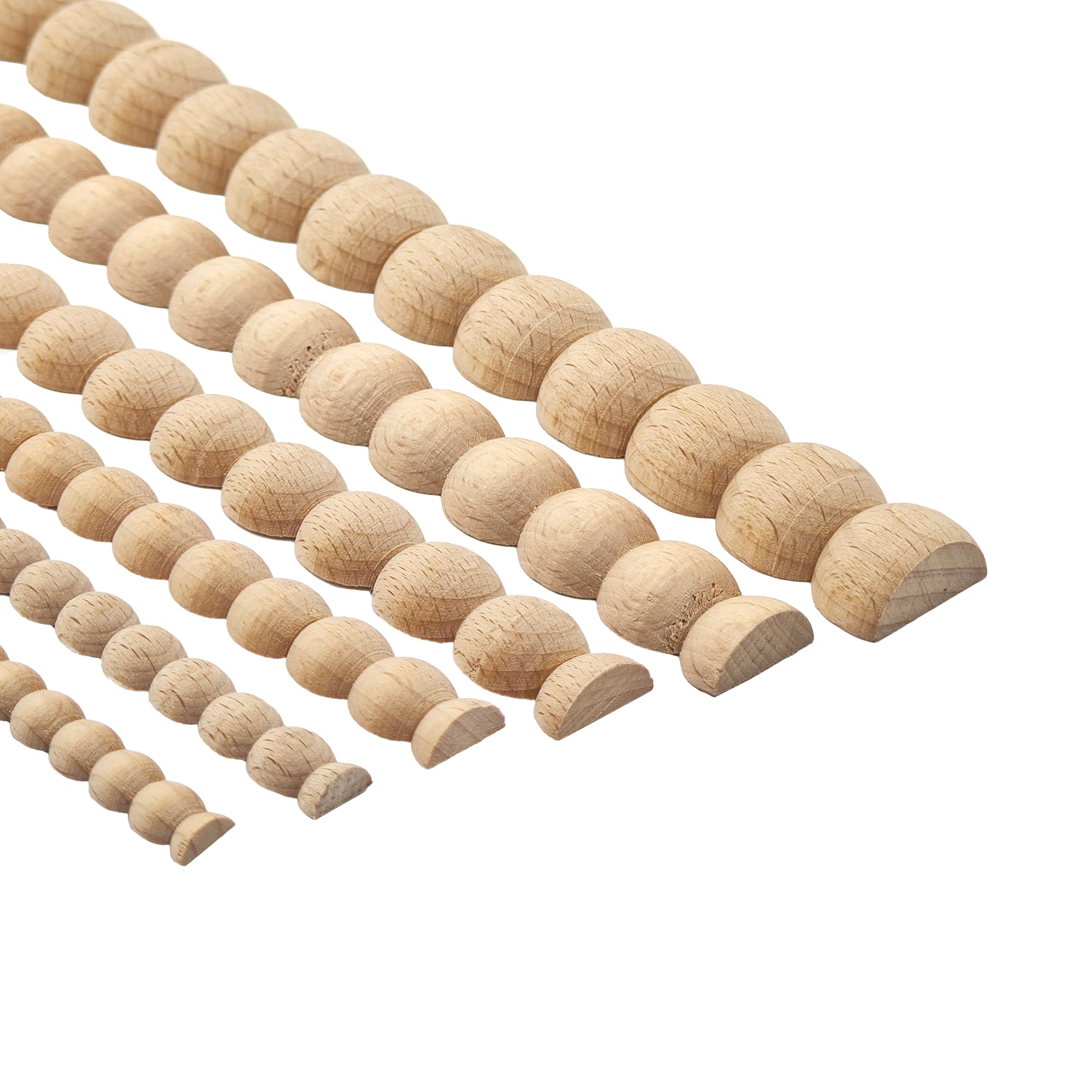
Beaded wood trim adds a layer of architectural detail that flat baseboard cannot achieve, and this 15-piece set from Dylrauoza delivers that texture in solid beech — a hardwood significantly denser than the pine found in most budget trim packs. Each piece measures 15.75 inches long, 0.94 inches wide, and 0.47 inches thick, with a consistent half-round beaded profile that creates a handcrafted look when installed side by side or used as accent strips.
Beech is an excellent choice for detailed molding because its tight grain accepts stain uniformly without blotching, and the wood is hard enough to resist denting from furniture bumps. Users have successfully used these strips for antique furniture restoration, mirror frame detailing, and even 1:6 scale Barbie dioramas — the short length makes them ideal for small-scale projects where 8-foot sticks are unwieldy. The unfinished surface sands easily and takes paint or stain without issue.
The 15-pack provides 19.7 linear feet total, which limits large wall projects but works perfectly for cabinet door panels, picture frames, or trimming bookshelves. Some pieces may have slightly splintery edges that require light sanding before finishing. For restoration work or accent details where beech’s hardness and grain matter, this beaded trim is a specialized value that big-box stores rarely stock.
Why it’s great
- Solid beech is much harder and denser than pine trim
- Consistent beaded profile ideal for restoration projects
- Easy to cut, sand, stain, or paint
Good to know
- Short 15.75-inch lengths create many joints on large walls
- Some edges may need light sanding due to splintering
7. Cinnvoice 12 Pcs Wall Molding Trim, Split Wood Slats Mouldings
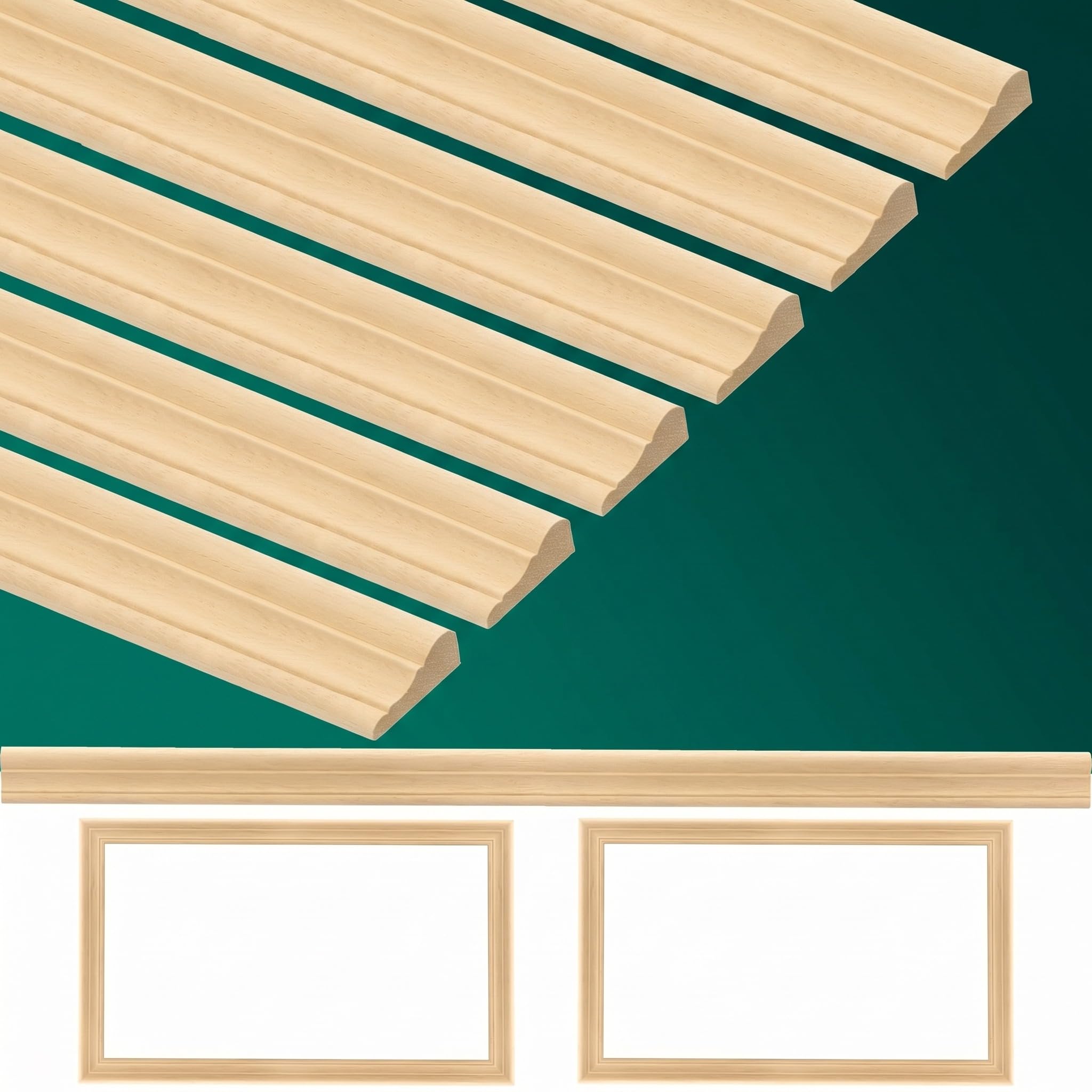
For DIY wall paneling projects on a tight budget, the Cinnvoice 12-pack of pine slats offers an accessible entry point into decorative fluted-trim walls. Each slat measures 15.75 inches by 1.6 inches by 0.6 inches — a proportion that mimics expensive fluted panel molding at a fraction of the cost. The pine is lightweight and soft, making it easy to cut with a simple miter saw or even a fine-tooth hand saw for small projects.
The unfinished surface is ready for paint or stain, and the 12-piece count gives you enough material to experiment with layout patterns on a single accent wall or furniture piece. Reviewers have used these slats on dresser fronts, living room feature walls, and even bathroom backdrops. The wood is straight and free of major knots, though being soft pine, it will dent under impact and may swell slightly if exposed to moisture.
The short length is the main limitation — creating a full wall of vertical fluted trim requires many pieces and careful joint alignment. The softness of the pine also means nails can be driven without pre-drilling, but the wood may compress around the nail head. For the price, this is a fantastic starter set for anyone wanting to test a fluted-trim look before committing to more expensive materials.
Why it’s great
- Budget-friendly pine slats for DIY fluted wall projects
- Lightweight and easy to cut without power tools
- Smooth surface accepts paint and stain evenly
Good to know
- Short 15.75-inch length requires many pieces for wall coverage
- Soft pine is prone to denting and moisture swelling
FAQ
Can I use pine baseboard in a basement or bathroom?
How do I match new baseboard profile to my existing trim?
Final Thoughts: The Verdict
For most users, the best base molding wood winner is the DoubleFill Poplar Light Rail Molding because it combines commercial-grade poplar with precision milling at a price that beats local lumber yards. If you need long, seamless runs with zero warping, grab the Art3d MDF Baseboard Trim. And for curved walls where nothing else fits, nothing beats the Flexible Moulding WM623.