
The biggest waste of batting practice is chasing errant throws and picking up loose balls. A dedicated trainer puts the target exactly where you need it, building muscle memory through high-repetition, controlled swings that translate directly to better plate performance without the inefficiency of live toss drills.
I’m Min — the co-founder and writer behind Gadgets Feed. I’ve spent countless hours analyzing product specifications, scouring verified buyer experiences, and cross-referencing design materials to separate the trainers that actually correct swing flaws from those that simply take up space in your garage.
Whether you are coaching a youth team or refining your own mechanics, the best baseball batting trainer delivers consistent, targeted reps that build real confidence at the plate without needing a pitcher or a full field setup.
How To Choose The Best Baseball Batting Trainer
The right trainer depends entirely on where your swing breaks down. Some devices focus on path correction, others on contact timing, and a few on building explosive bat speed through variable resistance. Matching the trainer type to your specific flaw is what produces real game-day improvement.
Visual vs. Physical Feedback
A trainer that forces you to see the ball’s trajectory after contact teaches your eyes and hands to work together — this is essential for fixing casting and looping. Physical feedback, like a padded target that absorbs impact or a rope that tugs on your hands if you drag the barrel, builds muscle memory through feel. The best trainers combine both.
Durability Under Repetition
Youth and travel-ball players swing hard. Look for construction that uses carbon-fiber shafts, double-braided rope, or steel components rated for tens of thousands of hits. Plastic joints and thin foam heads will crack or fray within a single season, making them a false economy even at a lower price point.
Adjustability for All Strike Zones
An effective trainer must allow you to change target height and placement — low and away, middle-in, high heat. If the device only works in one static position, you will ingrain a limited swing that struggles against real pitchers who attack every corner of the zone.
Quick Comparison
On smaller screens, swipe sideways to see the full table.
| Model | Category | Best For | Key Spec | Amazon |
|---|---|---|---|---|
| SKLZ Hitting Stick | Swing Trainer | One-on-one coaching | 52″ length, two-piece shaft | Amazon |
| Line Drive Pro | Path Corrector | Eliminating casting | Attaches directly to bat | Amazon |
| GoSports FLO BAT | Rope Trainer | Full-swing mechanics | Adjustable grip 25–34″ | Amazon |
| ZivPlay Adjustable Trainer | Station Trainer | Variable speed practice | 28″–43″ height range | Amazon |
| Tomaki Hitting Stick | Swing Trainer | Entry-level coaching | 54″ length, non-slip grip | Amazon |
| Asyxstar Hitting Trainer | Swing Trainer | Budget-friendly drills | 53″ carbon-fiber shaft | Amazon |
In‑Depth Reviews
1. SKLZ Hitting Stick Batting Swing Trainer

The SKLZ Hitting Stick is the gold standard for on-demand one-on-one hitting drills. At 52 inches with a handle that absorbs impact without transferring sting to the coach’s hands, this trainer lets you adjust the ball position inside, outside, high, or low in seconds. The two-piece shaft collapses for quick transport — a huge advantage for coaches moving between fields.
User reviews consistently note the rugged material blend — 40% TPR and 38% PU over a fiberglass and steel core — holds up to constant abuse from high-school and travel-ball swings. One review highlighted how a player who struck out three times in a game connected for three hits immediately after a pre-game session with this stick. That real-world transfer speaks louder than any spec sheet.
The split-shaft design does sometimes separate during aggressive swings, but the portability benefit far outweighs this rare nuisance. If you need a durable, ergonomic, travel-friendly tool for coaching individual hitters and correcting their bat path in real time, this is the most complete option available.
Why it’s great
- Impact-absorbing handle protects coach’s hands during reps
- Collapsible two-piece shaft for easy transport
Good to know
- Split shaft can separate if hit with excessive torque
2. Line Drive Pro Baseball & Softball Batting Swing Trainer

The Line Drive Pro takes a completely different approach — instead of a stick held by a coach, this device attaches directly to the bat barrel. When you swing, the ball launches off the trainer and reveals your swing path by its trajectory. If the ball goes to the pull side, you casted. If it launches toward the open side, you dropped your barrel. Only a correct path sends it up the middle.
Parents of 7u to 12u players report massive improvements in staying inside the ball after just a few sessions. The instant visual feedback trains the hitter’s brain to self-correct without needing a coach to narrate every swing. It works with any bat size and takes seconds to strap on, making it a zero-friction addition to any practice routine.
The plastic construction feels light and some users question the durability-per-dollar ratio, but the feedback mechanism is genuinely unique and effective. If fixing a casting or looping flaw is your priority, this trainer delivers targeted correction that no stick-based tool can replicate.
Why it’s great
- Teaches proper barrel path through visual ball trajectory
- Universal fit attaches to any bat in seconds
Good to know
- Plastic body feels less durable than metal alternatives
3. GoSports Baseball & Softball Rope Swing Trainer
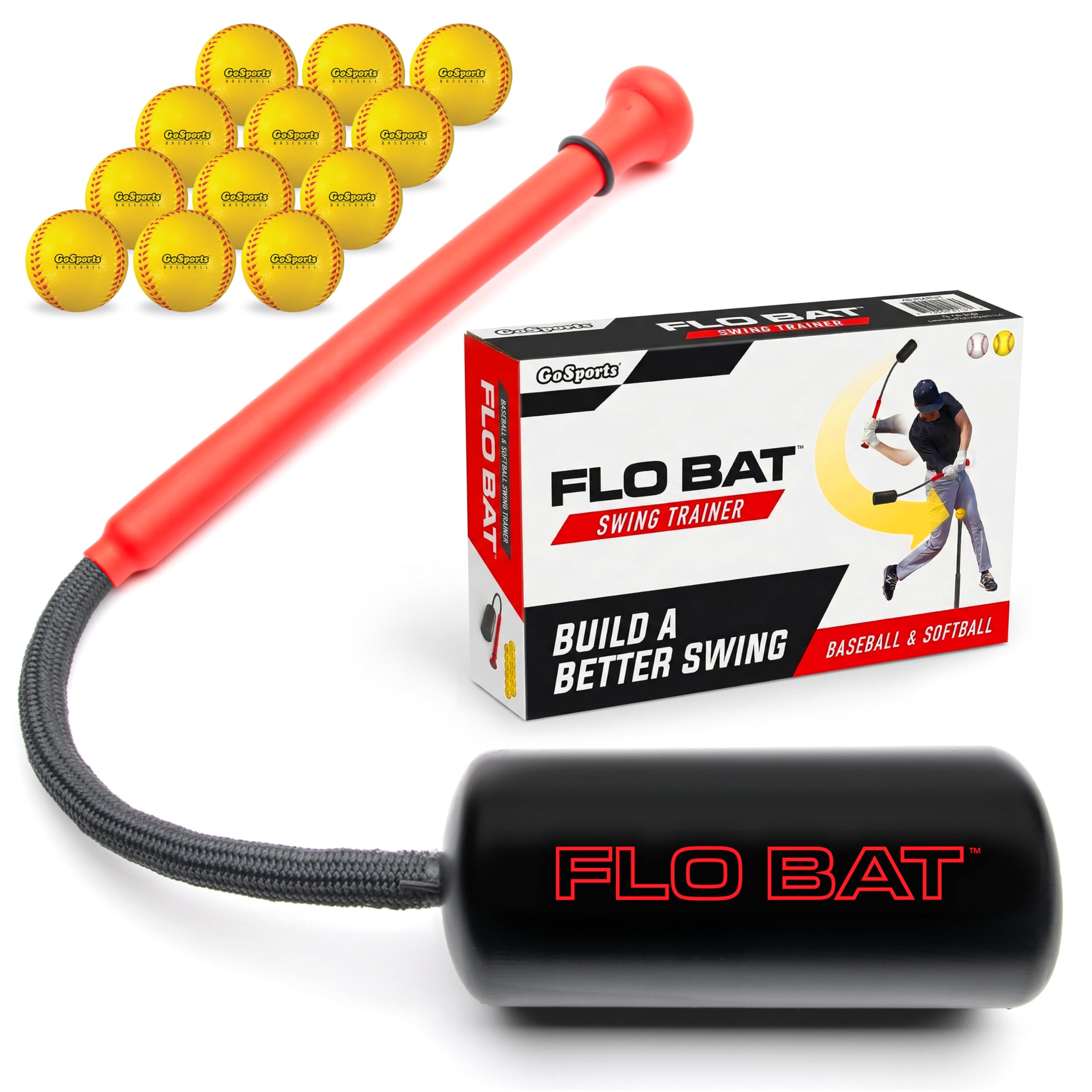
The GoSports FLO BAT is a rope-based swing trainer that forces a connected, lag-driven swing. The double-braided rope attaches to a foam bat that replicates real bat weight, while an adjustable O-ring marks the correct hand position to match your actual bat’s sweet spot. Swinging against the rope tension builds bat speed and eliminates bat drag.
Coach-designed and tested for thousands of swings, this trainer includes 12 foam baseballs and a tote bag, making it a complete practice station out of the box. Users from tee-ball parents to high-school travel coaches praise how quickly it exposes casting — the rope tugs if you push your hands forward before your hips rotate.
The foam construction is durable enough for season-long use, though older reviews mention wear on the rope after extended exposure to direct sunlight. If you want a complete system that combines resistance training with instant mechanical feedback and includes everything you need to start drilling immediately, this is the most complete package.
Why it’s great
- Rope tension forces connected swing and proper timing
- Includes instructional video guide and foam balls
Good to know
- Rope may fray if stored in direct sunlight for long periods
4. ZivPlay Baseball Hitting Trainer with Height and Speed Adjustment
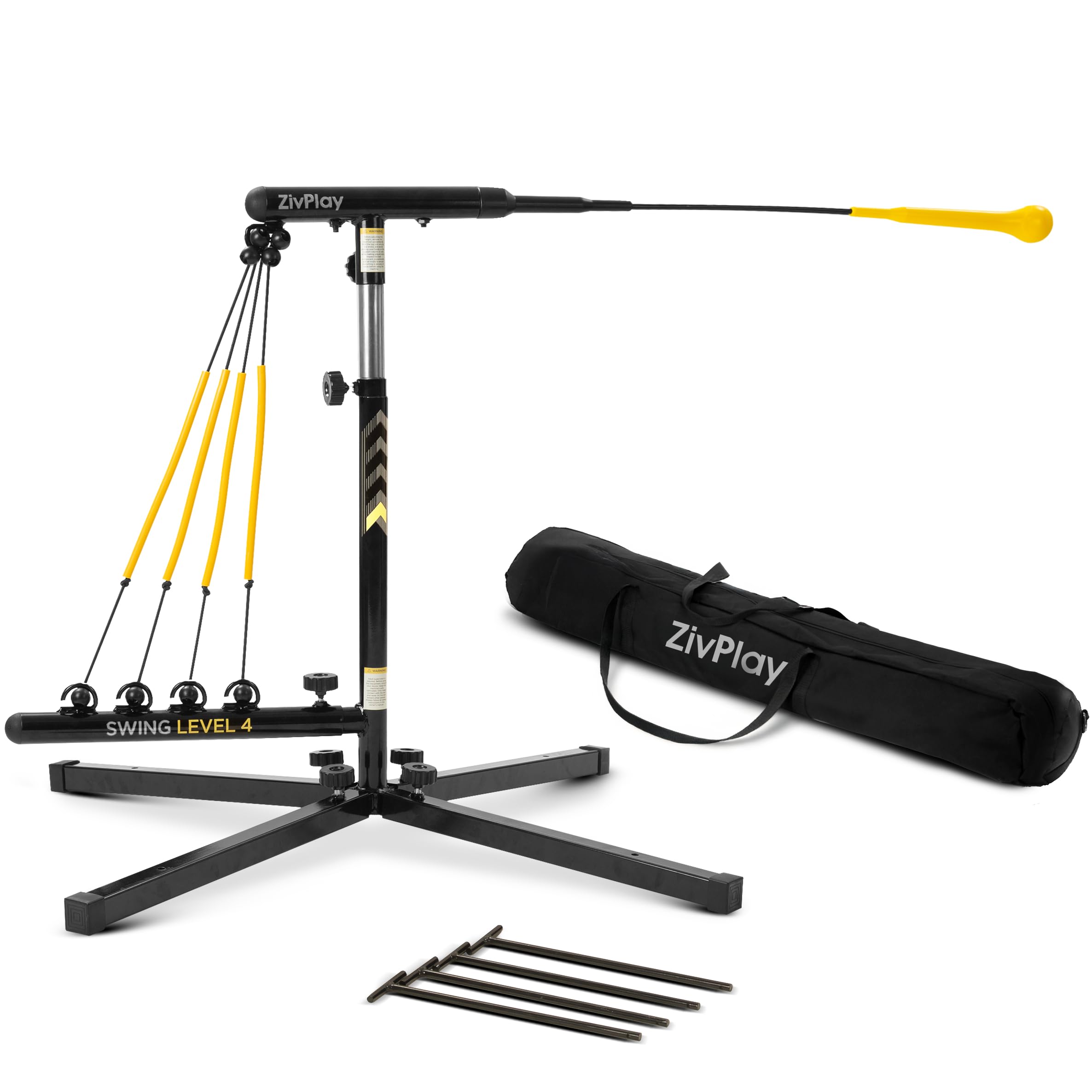
The ZivPlay trainer is a freestanding station that uses a rotating ball head and four interchangeable resistance bands to simulate pitch speed. Unlike handheld sticks that require a coach, this unit lets a player train solo — set the height between 28 and 43 inches to cover every strike zone, attach one to four bands for progressive difficulty, and practice timing against the spinning ball.
Built with a steel core and tested for over 50,000 hits, this trainer is the heaviest-duty option in the list. The included ground stakes keep the base stable on grass or dirt, and the carry bag makes storage simple. Youth players respond particularly well to the gamified element of hitting a moving target, which builds hand-eye coordination faster than static tee work.
A few users mention that the plastic ball attachment at the tip would benefit from being painted white for better visibility, but the structural integrity and adjustable resistance are excellent. If you want a self-contained training station that grows with a player from beginner to advanced, this is the most versatile pick.
Why it’s great
- Four resistance bands simulate multiple pitch speeds
- Steel construction rated for 50,000 hits
Good to know
- Ball tip is not painted white, reducing visibility for some users
5. Tomaki Hitting Stick Batting Swing Trainer

The Tomaki Hitting Stick covers the same 54-inch length as premium sticks at a significantly lower investment, making it an accessible entry point for families with young players trying organized ball for the first time. The non-slip grip design increases friction to prevent the trainer from slipping out of the coach’s hand during repetitive swings.
Customer reviews from first-time baseball parents praise how quickly this tool helped 5- and 6-year-olds maintain focus and improve contact during coach-pitch games. The yellow target head provides clear visibility, and the plastic construction is light enough for a young coach to hold for extended practice sessions without fatigue.
The main drawback reported across multiple units is that the yellow dye on the target head can transfer onto surfaces like car seats or uniform pants during transportation. If you need a functional hitting stick for occasional youth practice without paying for pro-grade branding, this delivers the core experience at the lowest cost.
Why it’s great
- Non-slip grip keeps the stick secure during fast swings
- Lightweight design reduces coach fatigue during long sessions
Good to know
- Yellow dye from the target head can transfer onto fabric surfaces
6. Asyxstar Baseball Hitting Trainer 54″

The Asyxstar trainer uses a carbon-fiber shaft with a rubber ball head and includes a wrist strap to prevent the stick from flying out of the coach’s hand after impact. At 53 inches, it offers the same one-on-one coaching utility as the Tomaki but with a mint green color that avoids the dye-transfer issue reported on the yellow model.
Reviews from team coaches note that this stick survived over a thousand hard hits from teenage players with barely any visible wear. The hand strap is a genuine differentiator — it gives the coach confidence to hold the stick in place without flinching, which keeps the ball stationary for the hitter and produces cleaner reps.
The included warranty covers a full year, which is uncommon at this tier. If you want a coach-friendly stick with a secure grip system and a worry-free warranty, the Asyxstar is the most confidence-inspiring budget option you can buy.
Why it’s great
- Wrist strap prevents the stick from being knocked loose
- Carbon-fiber shaft endures over a thousand hard hits
Good to know
- Mint green color may not appeal to traditionalists
FAQ
Can a baseball batting trainer fix a casting problem?
How much space do I need to use a batting trainer at home?
What age is appropriate for using a batting trainer?
Do rope swing trainers actually improve bat speed?
Final Thoughts: The Verdict
For most players and coaches, the best baseball batting trainer winner is the SKLZ Hitting Stick because its impact-absorbing handle, durable composite construction, and collapsible design make it the most coach-friendly and versatile tool for real-time swing correction. If you want a trainer that self-corrects casting through visual feedback, grab the Line Drive Pro. And for solo, variable-speed training that builds bat speed and hand-eye coordination without a coach present, nothing beats the ZivPlay Adjustable Trainer.