
Our readers keep the lights on and my morning glass full of iced black tea. As an Amazon Associate, I earn from qualifying purchases.
Your 7-year-old’s first real baseball glove can make or break how they feel about the game. Hand them a stiff, heavy mitt and practice feels like a chore; put a soft, lightweight, correctly sized glove on their hand and every catch builds confidence instead of frustration. This guide covers the gloves that actually fit small hands and close easily — no months-long break-in required.
I’m Min — the founder and writer behind Gadgets Feed. This guide is built by comparing the manufacturers’ published specifications and the patterns across verified customer reviews, so you get each pick’s real strengths and trade-offs instead of marketing spin.
After sorting through the top options on the market, these are the gloves that give your young player the best shot at loving the game from the first catch. This is the guide to the baseball glove for 7 year old that gets the fundamentals right while staying affordable.
Quick Picks
- Wilson | A450 | Youth Infield Baseball Glove — Top Performer
- Rawlings | Sure Catch Baseball & Softball Glove | Mike Trout Model — Left-Handed Pick
- Rawlings | Flex Palm Series Glove | T-Ball/Baseball/Softball — Best Value
- Easton | Moxie Youth Baseball Glove — Sting Protection
- Rawlings | MLB Players Glove Series | 10-Inch — For the Fan
- Wilson | A200 | Youth T-Ball & Baseball Glove — Premium Build
- Urby Left Handed Baseball Glove — Budget Champion
How To Choose The Best Baseball Glove For 7 Year Old
The right glove for a 7-year-old is not the biggest, flashiest, or most expensive one on the shelf. It is the one that fits their hand, closes without a struggle, and actually gets used. Here are the three specs that matter most for this age group.
Glove Size — The Inch Rule
Glove size is measured in inches from the heel of the palm to the tip of the index finger. For a typical 7-year-old, that means a glove between 9 inches and 11 inches. A 10-inch or 10.5-inch glove is the balance for most kids in that age range. Too big, and the ball rattles around in the pocket or drops out — reviewers noted that a 10-inch glove “allows confident catching without ball slipping out.” Too small, and the hand is cramped.
Break-In Level — Ready-to-Play vs. Stiff Leather
Young hands lack the strength to break in a stiff pro-style glove. Look for gloves labeled “Ready-to-Play” or ones that buyers describe as “easy to squeeze” right from the start. A glove that needs a long break-in period often ends up sitting in the bag. Several reviews confirm that parents had success softening gloves under a mattress overnight, but the ideal pick is one that is game-ready immediately.
Webbing Style — Basket Web vs. H-Web vs. I-Web
For a beginner, a Basket Web (a closed web with no open gap) is the most forgiving because it traps the ball and prevents it from slipping through. An H-Web or I-Web has an open gap that helps an infielder see the ball, but for a 7-year-old still learning to track the ball, a closed basket web offers more security and fewer frustrating misses.
Quick Comparison
On smaller screens, swipe sideways to see the full table.
| Model | Best For | Size | Weight | Webbing | Amazon |
|---|---|---|---|---|---|
| Wilson A450 | Long-term durability | 11″ | — | H-Web | Amazon |
| Rawlings Sure Catch | Left-handed throwers | 11″ | 12.16 oz | Basket Web | Amazon |
| Rawlings Flex Palm | Easiest closure | 11″ | 0.75 Pounds | — | Amazon |
| Easton Moxie | Sting reduction for coach pitch | 10.5″ | — | Basket Web | Amazon |
| Rawlings MLB Players Glove | Team fandom and fit | 10″ | — | I-Web | Amazon |
| Wilson A200 | Youth fundamentals | 9″ | — | H-Web | Amazon |
| Urby Lefty | Budget entry-level lefty | 9″ | 1.1 Pounds | Basket Web | Amazon |
In‑Depth Reviews
1. Wilson | A450 | Youth Infield Baseball Glove

A top-grain leather glove built to outlast a whole season of rec ball.
This 11-inch infield glove uses resilient top grain leather, which buyers on the higher end of the price range expect from a Wilson. The Quick Fit wrist system cinches around the hand for a custom stay-put feel, so the glove is locked in through hard tags. Because it uses rolled dual welting (two rows of leather reinforcement that keep the pocket from sagging), the pocket resists flattening over time. Buyers report that it takes a little time to break in — one buyer of an 8-year-old called it “great for 8yo rec ball” after the break-in period — and that “after breaking in the gloves my son had an easier time using it.”
It is heavier than the Urby (the Urby weighs 1.1 Pounds) and requires more initial effort to soften, but the payoff is a glove that holds its shape and feels more responsive than cheaper synthetic models. The H-Web (open webbing with two gaps) gives a clear window to track the ball, which helps an infielder making the leap from beginner to competitive play. One veteran buyer summed it up: “Recommended for youth players.”
If your 7-year-old is in coach-pitch or kid-pitch and already showing real interest, this glove rewards the patience of a short break-in with a glove that lasts. For a casual t-ball player, the break-in may be more effort than it is worth.
The case for it: Top grain leather construction and rolled dual welting give it the best shape retention of any glove on this list, so it stays game-ready season after season.
The catch: It needs a dedicated break-in period — one reviewer used “glove oil, shaping and pocket formation” over a couple days — so it is not grab-and-go for a first practice.
Best for: A 7-year-old who is already serious about the game and needs a glove that grows with them through rec ball.
Skip if: You want a glove that is playable immediately with zero break-in time.
2. Rawlings | Sure Catch Baseball & Softball Glove | Mike Trout Model

A left-handed glove with a closing mechanism that works for young beginners.
Finding a left-handed throw glove for a 7-year-old is often a challenge — many brands treat it as an afterthought. This 11-inch Rawlings Sure Catch is a dedicated left-hand-throw model, and its Sure-Catch technology (a design that makes the glove easier to close) lets a player close the glove easily the first time they put it on. The basket web keeps caught balls from slipping through, and the all-leather shell is durable without being heavy at 12.16 ounces. Owners mention its value: “My son loves this glove. He’s a lefty and it’s extremely hard to find gloves for left handed players.”
The 90% factory break-in means it arrives ready to play, not stiff. The padded finger linings add comfort for young hands, and the basket web (the most forgiving webbing for a beginner) makes it harder for a ball to pop out. Reviewers also praised the traditional leather color and look, calling it “easy for him to squeeze.”
For a young left-hander stepping onto the field for the first time, this is the most thoughtful match of function and fit available. A right-handed thrower should skip it, since this glove is left-hand-throw only.
The case for it: Dedicated left-handed design plus Sure-Catch technology and 90% factory break-in means the glove closes easily right from the start.
The downside: At 11 inches it is on the larger end for a 7-year-old, and some families noted that the picture shows two different webbing styles, which caused confusion at purchase.
Best for: A left-handed 7-year-old starting organized baseball who needs a glove that actually fits and works on day one.
Skip if: Your child is a right-handed thrower, since this glove is left-hand-throw only.
3. Rawlings | Flex Palm Series Glove | T-Ball/Baseball/Softball
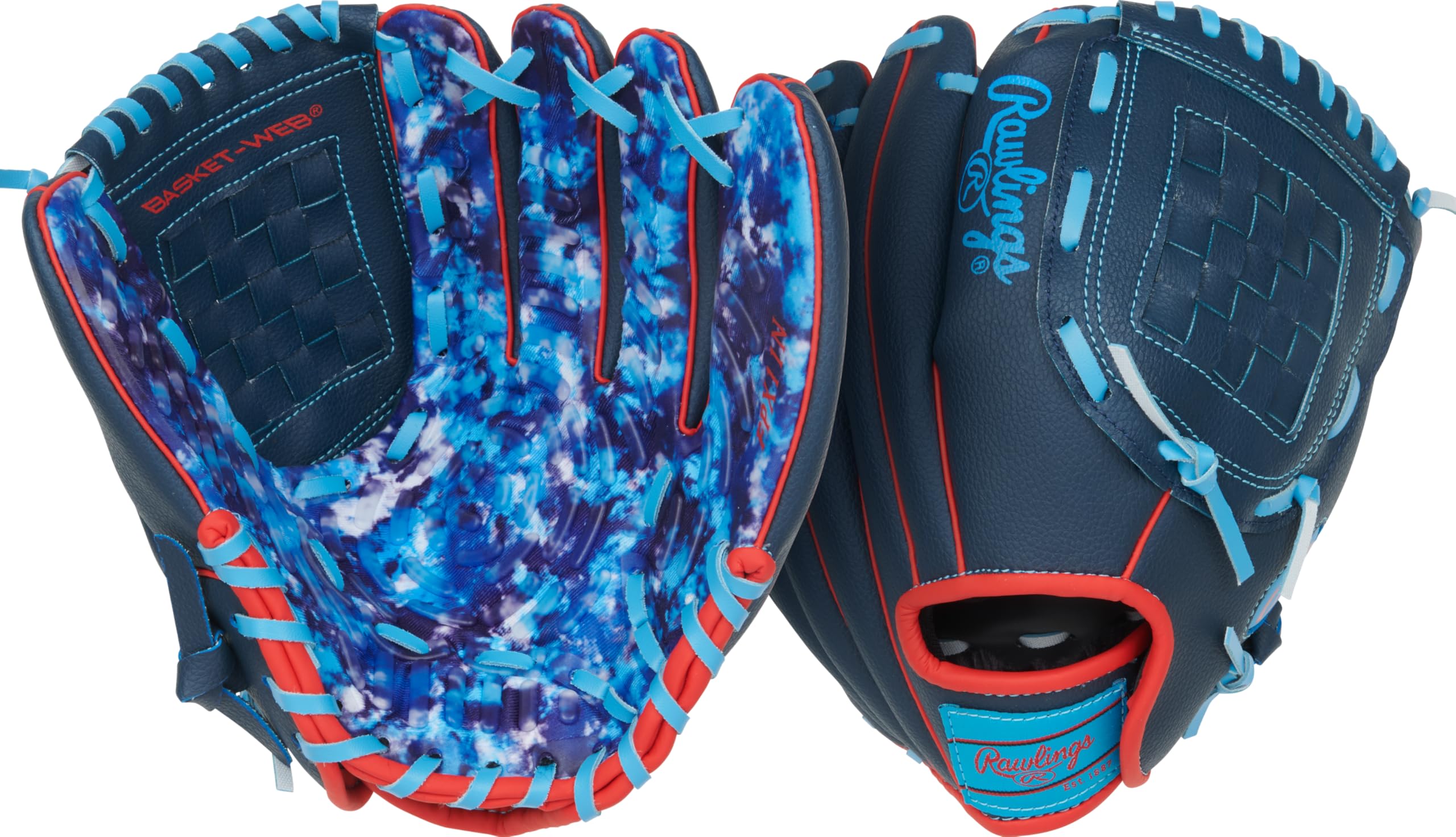
The lightest glove in the lineup, with a palm designed to close without effort.
This is the glove that brings the buy-it-and-play-it experience for a 7-year-old. It weighs 0.75 Pounds, which is lighter than the 1.1 Pounds Urby, and the Flex Palm Technology uses strategically placed TPU modules (small flexible plastic inserts) in the palm to help a young hand snap it shut. One buyer wrote: “After a few nights under her mattress she could easily squeeze it to catch. No glove oil needed!!!” That is the level of convenience a busy parent with a new t-ball player wants.
The built-in palm protection helps reduce sting from hard-thrown balls — a real advantage for a child moving from t-ball to coach pitch. The leather is soft and flexible, so there is no arm fatigue from carrying a heavy mitt. Reviewers consistently call it a “great deal on a good glove” for the price point.
It is a Utility glove type, meaning it works for any position. For a 7-year-old who is not yet locked into one spot on the field, that versatility is valuable. If you want premium leather that holds its shape for multiple seasons, the Wilson A450 is a better long-term bet; but for a first glove that works immediately, this is the one.
Why it’s great
- Flex Palm Technology makes closure almost easy for young hands
- 0.75 Pounds is the lightest weight on this list, reducing arm fatigue
- Built-in palm protection reduces sting from harder throws
Good to know
- Some reviewers mention the leather feels less premium than higher-price Wilson models
- It lacks the precise infield pocket shape of position-specific gloves
Best for: A first-time t-ball or coach-pitch player who needs a glove they can close immediately without struggle.
Skip if: You want a premium leather glove that will last more than two seasons without losing its shape.
4. Easton | Moxie Youth Baseball Glove
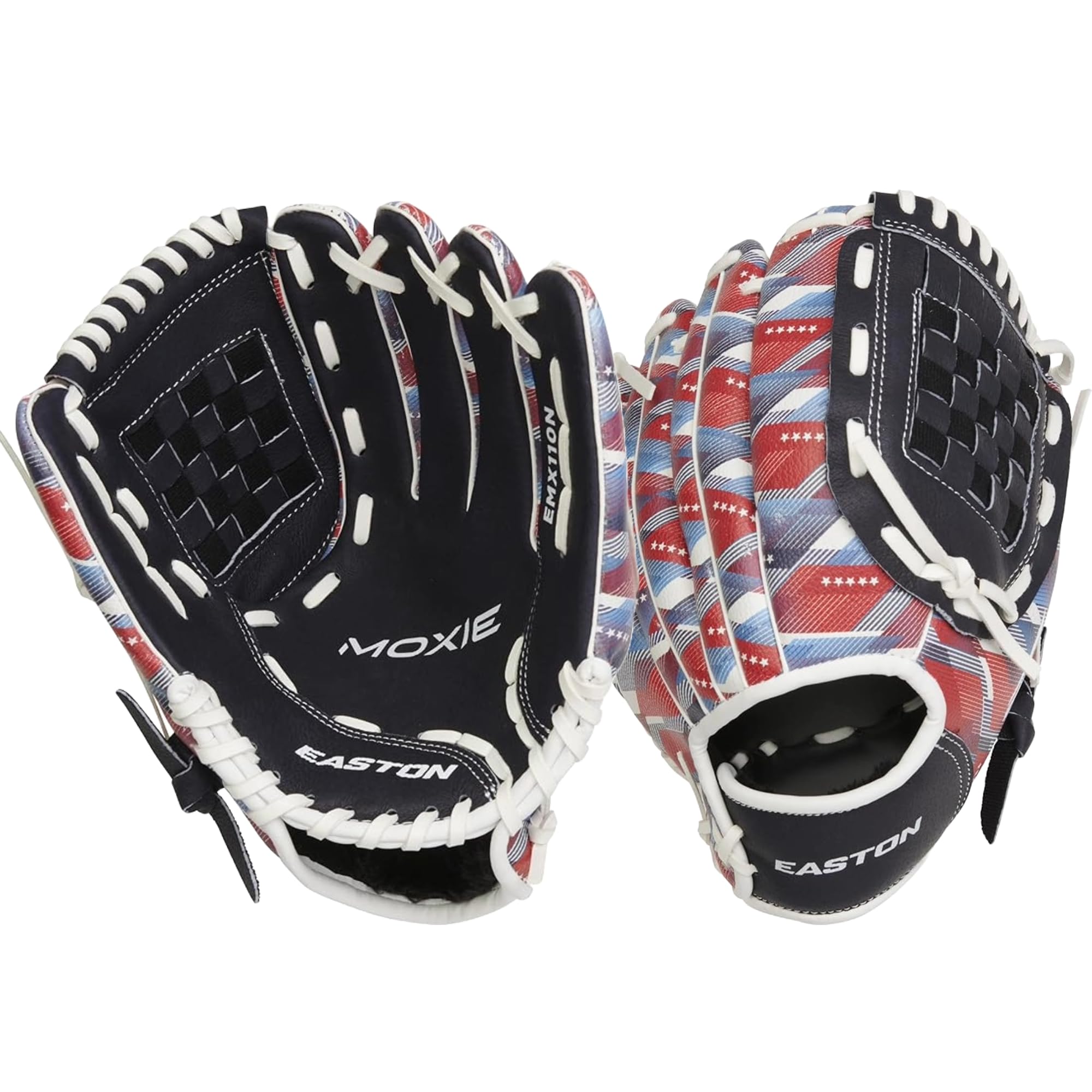
A 10.5-inch glove built for the painful transition from soft t-ball to coach pitch.
Anyone who has watched a 7-year-old catch a real baseball for the first time knows the hesitation. The Easton Moxie attacks that problem directly with Zero Shock sting reduction technology (a padded layer in the palm that absorbs impact), protecting the palm from the sting that makes kids flinch. The all-leather shell is game-ready with almost no break-in required — customers note “good quality, durable glove for 7yo. Easy to squeeze, right size.”
The basket web keeps caught balls secure, and the 10.5-inch size is right in the just-right zone for ages 6 to 9. One buyer of a 7-year-old in coach pitch noted the glove “lasted a season, likely usable for next season and hand-me-down.” The padded finger linings add extra comfort for repeated catches during practice.
It lacks the prestige branding of Wilson or Rawlings, but for pure practical function at the entry level, the Easton Moxie delivers exactly what a new player needs. Left-handed throwers need to look elsewhere, as this glove is Right Hand Throw only.
The case for it: The Zero Shock sting reduction technology makes this the most comfortable glove for a child nervous about catching a hard-thrown ball.
The trade-off: It is a Right Hand Throw model only, so left-handed throwers need to look elsewhere; also, one buyer of a petite 6-year-old needed a little extra break-in before she could squeeze it well.
Best for: A rookie in coach pitch who is still learning to catch confidently and needs protection from palm sting.
Skip if: Your child is a left-handed thrower, as this glove is not available for lefties.
5. Rawlings | MLB Players Glove Series | 10-Inch

The glove that turns practice into a chance to play for your favorite MLB team.
A 10-inch glove made from a soft synthetic leather shell that closes easily, this Rawlings model comes with an official MLB team logo, wordmark, and cap logo. For a 7-year-old who loves a specific team, that logo is a powerful motivator to get outside and throw. One reviewer noted it was “perfect for young Mets fans; fits tall 7-year-old well. 10 inch glove allows confident catching without ball slipping out.” The I-Web (an open webbing pattern with a single vertical strip) gives the child a window to track the ball, which helps an infielder learn to watch the ball into the pocket.
The synthetic leather lining is comfortable, and at this price point it is more of an introductory glove than a long-term investment. One honest reviewer pointed out that it is “not as high quality as Wilson” and likely to last only one season for size reasons. But for the cost and the emotional boost of repping your team, that is often a worthwhile trade.
If your young player outgrows this 10-inch model by next year anyway, there is no reason to overspend. For a child who needs a glove built to last multiple seasons, the Wilson A450 is a better bet with its top-grain leather construction.
Why it’s great
- Official MLB team logos create instant attachment and motivation for practice
- 10-inch size is the ideal fit for a tall 7-year-old
- Soft synthetic leather closes easily for young hands
Good to know
- Synthetic leather is less durable than the all-leather shell on the Easton or Rawlings Flex Palm models
- Likely to only last one season before the child outgrows the 10-inch size
Best for: A young fan who wants to match their favorite MLB team and needs a glove that is easy to close right away.
Skip if: You want a glove built to last multiple seasons or that uses real leather.
6. Wilson | A200 | Youth T-Ball & Baseball Glove

A tiny 9-inch glove with Pro Stock leather that would make a high-school player jealous.
This Wilson A200 is built with Pro Stock Leather and rolled dual welting — construction usually found on gloves costing far more. The rolled dual welting reinforces the pocket structure so it resists flattening on every catch. The 9-inch size is the smallest on this list, making it the best fit for a younger or smaller 7-year-old or even a 4-year-old. Reviewers point out “my 4yo LOVES this glove” and that the EZ Catch feature is a real help for beginners. The glove type is All Position, so it works anywhere on the field.
The H-Web design gives a clear window to the ball so kids can track every hop. For a child moving from the smallest t-ball gloves to a real baseball glove, this offers exceptional quality. One buyer mentioned it “lasted 2 seasons” before being outgrown, which is excellent longevity for a 9-inch glove. However, compared to the 11-inch Wilson A450, this 9-inch Wilson A200 is 22% smaller (the A450 is available in sizes starting at 10.75 inches).
It is worth the higher cost only if the child actually needs the 9-inch size. For a standard-size 7-year-old, the 10-inch or 10.5-inch picks above may offer more usable life before outgrowing. The money goes toward premium materials here, not toward longevity in size.
The case for it: Pro Stock Leather construction with rolled dual welting provides the structural quality of a premium adult glove in a 9-inch youth pattern.
One limitation: At 9 inches it is the smallest glove on the list, so a taller or average-size 7-year-old may outgrow it before the end of one season.
Best for: A younger or smaller 7-year-old (or a 4-to-6-year-old starting t-ball) who needs a quality glove that fits now.
Skip if: Your child has average or larger hands for their age and needs a glove that will last more than one season.
7. Urby Left Handed Baseball Glove
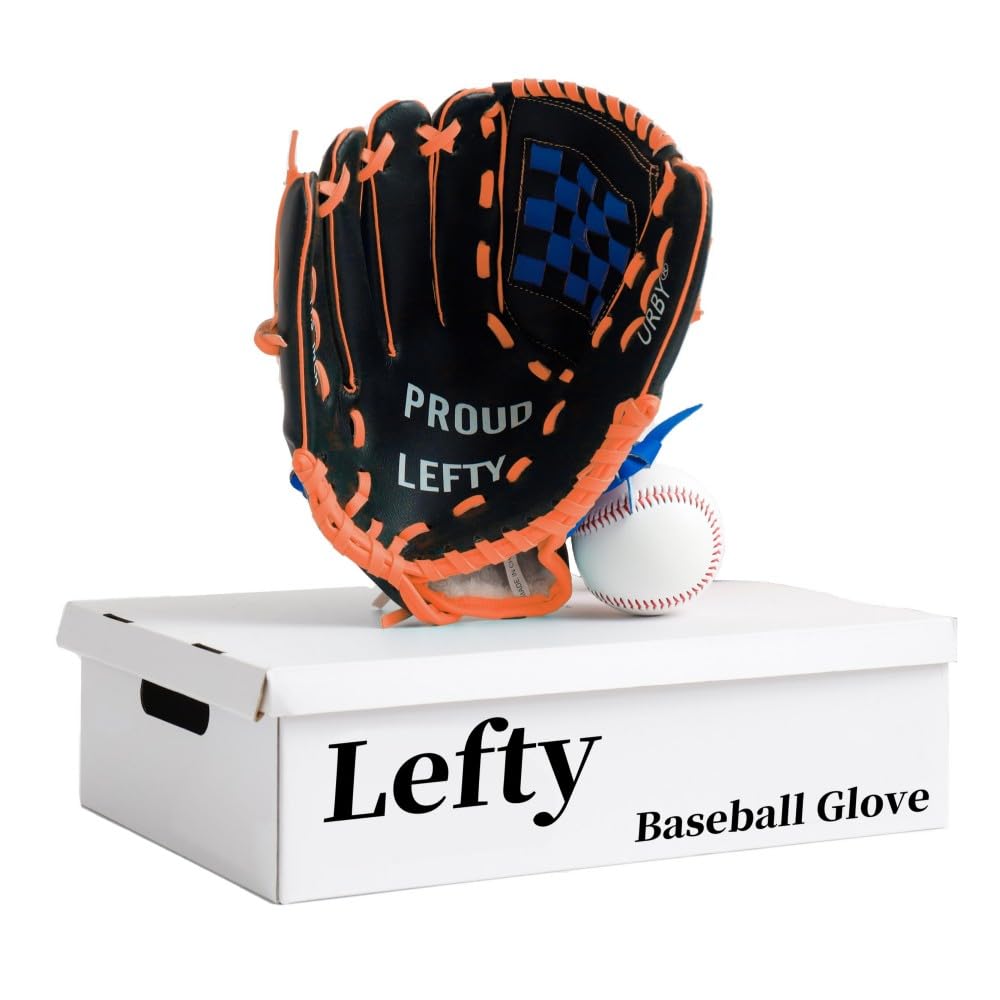
A 9-inch lefty glove made of PU leather that is soft to hands, tough to balls.
At 1.1 Pounds, the Urby is heavier than the 0.75-Pound Rawlings Flex Palm, but it is also one of the few affordable options for a left-handed thrower. It uses PU leather (a synthetic material) that is designed to be easy to close and control for entry-level players. The basket web is the best beginner-friendly webbing, keeping balls from slipping through. One buyer called it a “great glove” for the money and noted “great value for money and my niece loves the cute color!”
The compromise comes in the build. One owner reported that the “laces come undone very easily” and that the laces “may also be too short.” That same reviewer called it a “decent glove for my 7 year old” despite the lacing concern. The glove comes with a ball included, which is a nice bonus for a first-time setup. Compared to the Wilson A200 at 9 inches, the Urby is a heavier glove with a less refined construction.
For a budget-conscious parent who just wants a functional glove to see if their lefty child enjoys the game, this is a low-risk starting point. If you want a lefty glove with more reliable lacing, the Rawlings Sure Catch (at 11 inches and 12.16 ounces) is a step up in quality.
Why it’s great
- One of the few affordable left-hand-throw gloves on the market for young players
- Basket web traps balls effectively for a beginner
- Comes with a ball included in the package
Good to know
- Several reviewers report that the laces come undone very easily and may need constant retying
- At 1.1 Pounds, it is noticeably heavier than the Rawlings Flex Palm (0.75 Pounds)
Best for: A left-handed 7-year-old trying baseball for the first time without a big financial commitment.
Skip if: You want a glove with durable lacing that will not require constant retying during practice.
Understanding the Specs
Glove Size (Inches)
The size of a baseball glove is measured in inches from the heel of the palm to the tip of the index finger. For a 7-year-old, a 9-inch glove fits a smaller hand, a 10-inch glove is the typical all-around size, and an 11-inch glove is better for a taller child or one with bigger hands. A glove that is too large makes it hard for small hands to close the mitt, and the ball can rattle loose inside the pocket. Always measure from the base of your child’s palm to the tip of their index finger before picking a size.
Break-In Level
This describes how much work is needed before the glove is soft enough to close. A “Ready-to-Play” break-in means the glove arrives already soft and pliable — ideal for a 7-year-old who lacks the hand strength to work in a stiff glove. “Soft” break-in needs a few days of shaping with glove oil or a ball inside the pocket. Stiffer gloves labeled for advanced play should be avoided for this age group. The best indicator is real customer feedback: look for phrases like “easy to squeeze” or “no glove oil needed” in the reviews.
Webbing Type
The webbing is the leather panel between the thumb and index finger. A Basket Web is a closed web with no open holes — it traps the ball and stops it from slipping out, making it the best choice for a beginner. An H-Web has a horizontal and vertical strip creating two open gaps — it lets the fielder see the ball better, which helps an infielder. An I-Web is a single vertical strip with open sides — it is also good for seeing the ball but provides less ball security than a basket web. For a 7-year-old learning the game, the basket web offers the most forgiveness on missed catches.
Weight (Pounds)
A lighter glove means less arm fatigue during practice or a game. For a 7-year-old, a glove under 1.0 pound is ideal. The Rawlings Flex Palm weighs 0.75 Pounds, and the Urby weighs 1.1 Pounds. The extra 0.35 pounds may not sound like much, but over a full season of catching, it can make a noticeable difference in how tired a young arm feels. Check the product weight in the specs before buying, and remember that heavier synthetic leather gloves are often less comfortable for small hands than lighter leather ones.
FAQ
How do I measure my 7-year-old for a baseball glove?
What size glove does a 7-year-old typically need?
Should I get a right-handed or left-handed glove?
How long does a youth baseball glove last?
Is a basket web or H-Web better for a beginner?
My child is a lefty — is it harder to find a glove?
Do I need to break in a youth baseball glove?
What is the difference between synthetic leather and real leather?
My child is 7 but small for their age — should I buy a 9-inch glove?
What is Zero Shock sting reduction technology?
Final Thoughts: The Verdict
For most families, the best baseball glove for 7 year old is the Rawlings Flex Palm Series because it is the lightest (0.75 Pounds), closes immediately with Flex Palm Technology, and includes built-in sting protection — all at a reasonable investment for a growing player. If your child is already serious about the game and you want a glove that will hold its shape for years, grab the Wilson A450 with its top grain leather and rolled dual welting. And for a left-handed thrower who needs a glove that actually fits from day one, the standout is the Rawlings Sure Catch Mike Trout Model with its dedicated lefty design and Sure-Catch closure.
How We Picked
We do not accept paid placement, and we did not hands-on test every unit. Instead, we match each pick to a real buyer and use-case by comparing the manufacturers’ published specifications against the patterns in verified customer reviews — so you get each pick’s real strengths and trade-offs instead of marketing copy.
Sources & Methodology
Specifications: manufacturer listings and product documentation. Review insights: verified customer reviews, as of July 2026. Pricing: not shown on this page (it changes often); check the current price via the retailer link.
As an Amazon Associate, Gadgets Feed earns from qualifying purchases. This does not affect which products we feature.