
The single most frustrating moment in baseball isn’t striking out — it’s making weak contact on a pitch you knew was coming. A baseball hit stick fixes that by forcing your eyes and hands to track a target smaller than a regulation ball, building muscle memory that translates directly to better at-bats.
I’m Min — the co-founder and writer behind Gadgets Feed. I’ve spent hundreds of hours analyzing swing trainers, measuring shaft flex, grip density, and impact absorption across every major brand to find the tools that actually produce measurable improvement in contact rate and bat control.
Whether you are a coach running drills, a parent helping a young hitter, or a player looking to sharpen your mechanics, the right best baseball hit stick delivers a compact training solution that builds precision without requiring a full cage or pitcher.
How To Choose The Best Baseball Hit Stick
A hit stick is not a fungo bat and it is not a regular practice bat — it is a precision training tool designed to isolate the swing path. The right one depends on the specific weakness you want to address.
Target Size and Barrel Shape
The most important spec is the diameter of the hitting surface. A stick with a narrow barrel forces the hitter to track the ball all the way to contact, shrinking the sweet spot on a real bat by comparison. Sticks that use a standard baseball-size head offer less of a challenge but give a more realistic visual cue.
Shaft Flex and Feedback
Carbon fiber shafts transmit less vibration to the hands on mishits, which makes them more comfortable for repeated swings but also reduces the sting that tells you when you missed the center. Fiberglass and metal shafts provide more tactile feedback, which can be useful for advanced hitters who need to feel the difference between a barrel hit and a glancing blow.
Length and Portability
Most hit sticks run between 30 and 54 inches. Shorter sticks (30 inches) function as overload trainers, building strength with a smaller barrel. Longer sticks (52 to 54 inches) are designed for one-on-one coaching, allowing the coach to position the ball head in multiple zones without bending over. If you travel to fields, look for a two-piece design that breaks down for easy packing.
Grip and Handle Construction
The handle must provide a non-slip surface during sweaty practice sessions. PU foam grips offer the best shock absorption, while rubber-wrapped handles provide a firmer connection to the shaft. A strap at the base of the grip adds security against the stick slipping out of your hand during aggressive swings.
Quick Comparison
On smaller screens, swipe sideways to see the full table.
| Model | Category | Best For | Key Spec | Amazon |
|---|---|---|---|---|
| SKLZ Power Stick | Strength Trainer | Overload swing training | 30 oz weight, 30″ length | Amazon |
| SKLZ Hitting Stick | Coaching Stick | One-on-one instruction | 52″ length, splits in half | Amazon |
| PLAYAPUT Hitting Trainer | All-Purpose Stick | Beginner development | 52″ fibreglass pole | Amazon |
| Tomaki Hitting Stick | Budget Stick | Entry-level practice | 54″ plastic shaft | Amazon |
| DeeHai Carbon Fiber Stick | Value Stick | Vibration dampening | 52″ carbon fiber shaft | Amazon |
| Champro Pro Contact Trainer | Contact Trainer | Hand-eye coordination | 30″ iron construction | Amazon |
| Jikbeed Fungo Racket | Coach Tool | Fielding practice | 21″ racket head | Amazon |
In‑Depth Reviews
1. SKLZ Power Stick Baseball and Softball Training Bat

The SKLZ Power Stick is not trying to simulate a real swing feel — it is an overload training bat that weighs 30 ounces but measures only 30 inches, forcing your hands to work through the zone against a heavier load. The alloy steel handle and composite barrel stand up to thousands of swings without bending, and the included three practice balls let you start training immediately. The weight distribution feels balanced enough to swing freely but heavy enough that your game bat will feel noticeably lighter in the box.
I recommend this stick specifically for hitters who already have sound mechanics but lack bat speed through the zone. The skinny barrel challenges your hand-eye coordination on every swing, while the extra weight builds forearm and wrist strength over time. Parents of younger players should note that this stick works best for ages 12 and up because the weight can encourage improper casting in developing swings if used without supervision.
The synthetic grip holds up well during extended cage sessions, though heavier use may require a replacement after a full season. For a dedicated strength trainer that doubles as a contact drill tool, this is the most versatile heavy stick on the market.
Why it’s great
- Noticeably increases bat speed after consistent use
- Durable steel construction survives hard practice balls
- Small barrel forces precise contact training
Good to know
- 30-ounce weight is heavy for younger or smaller hitters
- Grip may wear down faster than the rest of the bat
2. SKLZ Hitting Stick Batting Swing Trainer

The SKLZ Hitting Stick is a dedicated one-on-one coaching tool that measures 52 inches with a standard baseball-size head, giving coaches the reach to place the ball in any zone — inside, outside, high, or low — without breaking their stance. The two-piece shaft twists apart for storage, which makes it easy to throw in a team bag between the field and the car. The composite construction with a 40% TPR and 38% PU blend provides enough flex to absorb hard swings without snapping.
What sets this stick apart is the handle grip. The rubberized surface with a secure end cap gives the coach confidence that the stick will not rotate on you mid-swing, which is critical when you are working on a specific plate coverage drill. The standard ball size head provides a realistic visual target, making it easier for younger hitters to transition from stick work to live pitching.
The only minor frustration is that the twist-lock joint can separate during aggressive two-handed swings if not fully tightened. Most users find that a quick re-tighten solves the issue, and the portability trade-off is worth it. For any coach who runs regular batting practice, this is the stick to grab.
Why it’s great
- Full 52-inch reach covers the entire strike zone
- Breaks down into two pieces for easy transport
- Durable composite build withstands daily use
Good to know
- Shaft can separate during hard swings if not tightened fully
- Standard ball head offers less challenge than skinny barrel sticks
3. PLAYAPUT Hitting Trainer
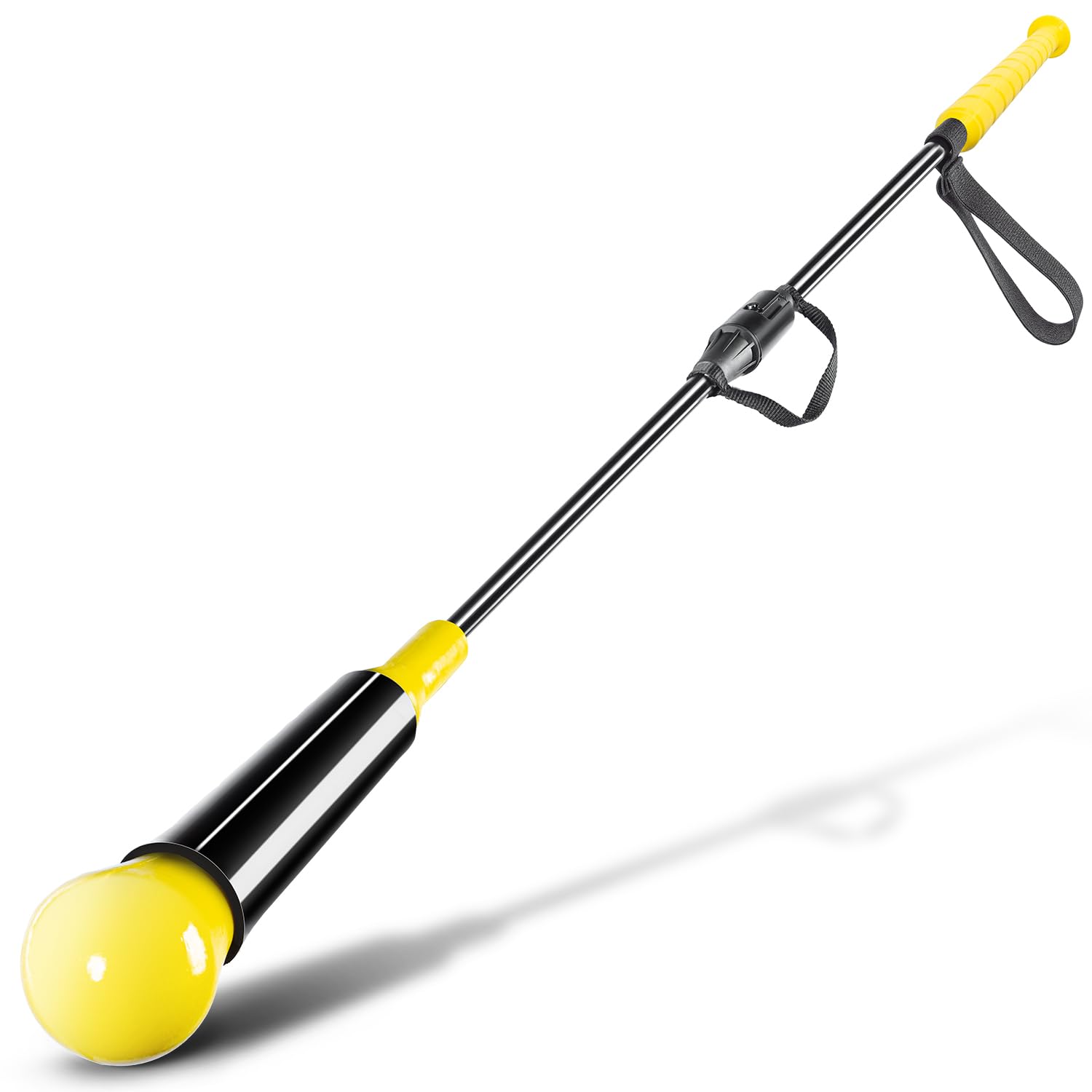
The PLAYAPUT Hitting Trainer wraps a PU foam grip around a flexible fiberglass pole with an industrial-grade PU plastic head, creating a stick that absorbs impact without transferring harsh vibration to the hitter’s hands. At 52 inches, it offers the same reach as premium options but at a lower entry point, making it a smart choice for families or teams buying multiple sticks for group drills. The yellow and black color scheme provides high visibility against grass and dirt backgrounds.
The fiberglass shaft flexes noticeably on contact, which provides immediate feedback when the hitter misses the center of the head. This is helpful for beginner hitters learning to track the ball, as the flex tells them exactly where they made contact. The grip stays non-slip even in humid conditions, and the foam material helps prevent blisters during extended practice sessions.
One consideration is that the fiberglass pole, while durable against normal use, can crack if subjected to extreme cold or direct hits against metal surfaces. The one-year customer support covers manufacturing defects, so store it indoors between sessions. For a well-rounded entry-level stick that does everything a basic hit stick should, this is the best value in the lineup.
Why it’s great
- Flexible fiberglass shaft gives clear feedback on contact location
- Comfortable PU foam grip reduces hand fatigue
- Ideal length for coaching multiple strike zones
Good to know
- Not designed for use in freezing temperatures
- Heavier than carbon fiber alternatives
4. Jikbeed Fungo Racket

The Jikbeed Fungo Racket is structurally different from a traditional hit stick — it uses a 21-inch racket-shaped head with a mesh sweet spot rather than a solid ball target. This design allows coaches to launch ground balls, pop flies, and line drives with pinpoint accuracy, making it a fielding practice tool rather than a swing trainer. The 1.1-pound weight and 6.5-inch straight grip handle provide the leverage needed to slap consistent repetitions without arm fatigue.
The mesh face produces predictable ball flight, which is essential when you are running infield or outfield drills and need to place the ball in a specific spot every time. The non-slip PU grip stays secure even during rapid swings, and the included storage bag keeps the racket protected when not in use. The metal frame with PU outer layer feels solid in the hands and does not flex during contact, giving you total control over where the ball goes.
Some users report that the shorter length requires a slightly different swing mechanic compared to a traditional fungo bat, and the racket design can cause more stress on the elbow if you try to muscle the ball instead of using proper form. For coaches who prioritize precise ball placement over raw distance, this racket delivers consistent results without breaking the bank.
Why it’s great
- Predictable ball flight for accurate fielding drills
- Lightweight construction reduces coach fatigue
- Comes with storage bag for protection
Good to know
- Short length requires adjusted swing mechanics
- Racket design can strain elbow if used incorrectly
5. DeeHai Hitting Stick

The DeeHai Hitting Stick uses a carbon fiber shaft paired with a rubber extended grip that includes a wrist strap, creating a stick that dampens vibration almost entirely while keeping the ball head secure in your hand during the swing. The 52-inch length matches the premium coaching sticks, and the carbon fiber construction makes it noticeably lighter than fiberglass alternatives. The yellow ball head is smaller than a regulation baseball, which increases the difficulty of each drill and forces sharper focus on the contact point.
The wrist strap is the standout feature here — it prevents the stick from flying out of your hand during a missed swing, which is a common frustration with budget sticks that lack secure grips. The rubber handle material provides excellent traction even when wet, and the carbon fiber shaft does not transfer the cold shock you get from metal sticks on chilly mornings. This is a solid mid-range option for hitters who want premium feel without paying premium prices.
The carbon fiber shaft is strong but not indestructible — sharp impacts against metal poles or hard ground at high speed can cause stress fractures over time. For standard batting practice on grass or soft turf, the durability is more than adequate. If you prioritize comfort and reduced hand sting during long sessions, this stick delivers.
Why it’s great
- Carbon fiber shaft minimizes vibration transfer
- Wrist strap prevents accidental drops during swings
- Lightweight design reduces fatigue for coach and hitter
Good to know
- Carbon fiber can crack under extreme impact
- Ball head is smaller than standard baseball size
6. Champro Pro Contact Trainer
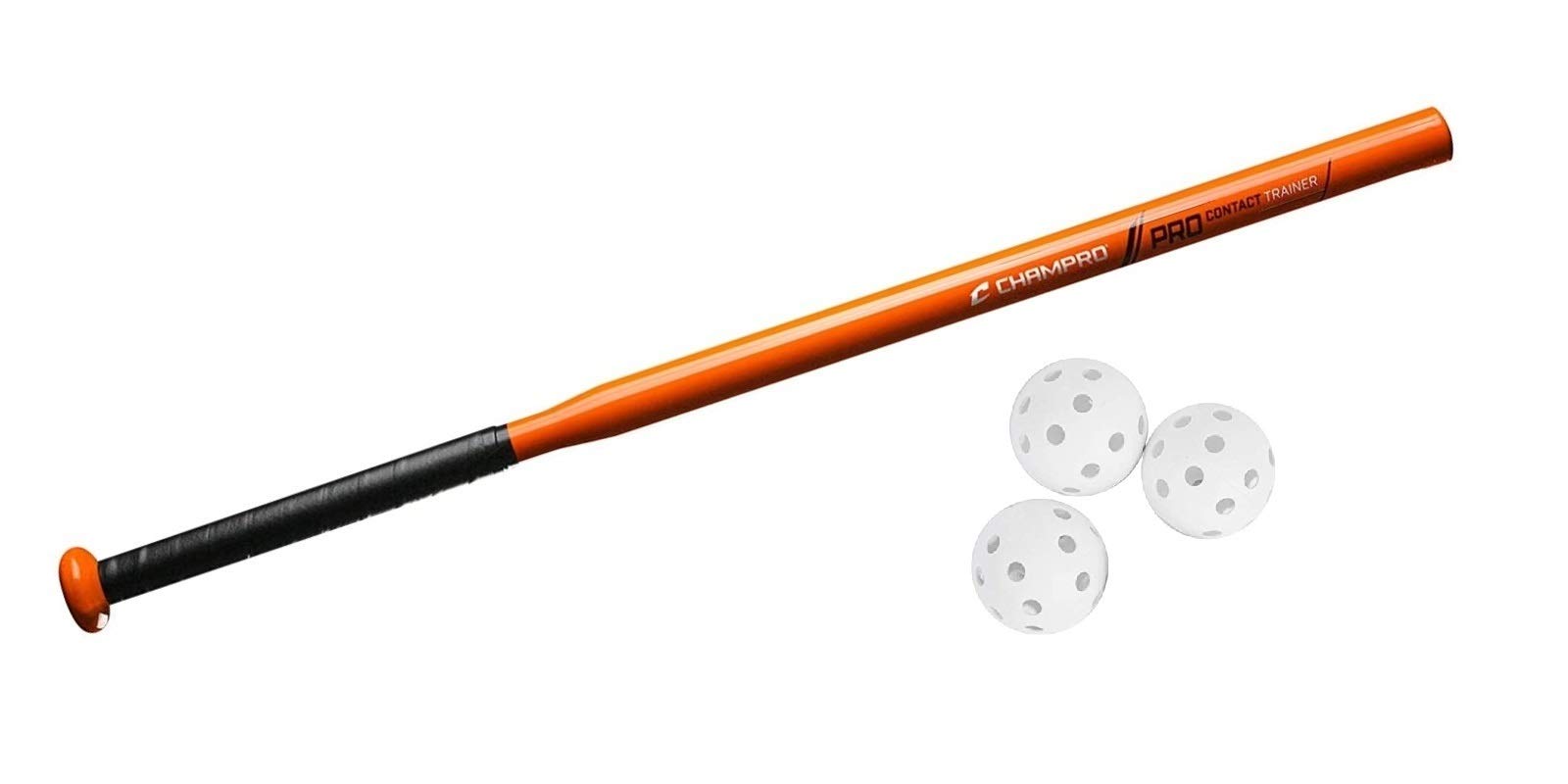
The Champro Pro Contact Trainer uses heavy-duty iron construction in a compact 30-inch frame with a skinny barrel that is dramatically narrower than a standard bat. This design forces the hitter to make contact with an extremely small sweet spot, creating a training effect where hitting a regulation baseball feels easy by comparison. The 22-ounce weight is manageable for youth players aged 8 to 12, and the included three plastic golf-ball-size training balls let you start practicing immediately.
The iron handle provides a solid, dense feel that teaches young hitters to swing through the ball rather than slap at it. The flared knob keeps the bat secure in the hands, and the standard grip size fits most youth batting gloves. Multiple verified reviews from parents report noticeable improvement in game performance after regular use, with one user documenting a jump to three hits and two RBIs in a single game after training with this stick.
The iron construction makes this the heaviest stick in its price range, which can be fatiguing for younger children with less developed arm strength. Parents should monitor swing volume to prevent bad habits from fatigue. For youth players who need to build hand-eye coordination and contact confidence, this is the most effective entry-level trainer available.
Why it’s great
- Extremely narrow barrel forces precise contact
- Heavy iron build teaches proper swing mechanics
- Includes three training balls for immediate use
Good to know
- Iron construction is heavy for very young players
- Training balls are small, easy to lose in grass
7. Tomaki Hitting Stick

The Tomaki Hitting Stick stretches to 54 inches — the longest in this comparison — using a plastic shaft with a non-slip grip design that increases friction to prevent the stick from slipping during swings. The yellow ball head is positioned at the end of the shaft, giving coaches maximum reach for placing the ball in high or low zones without crouching. The two-year warranty provides peace of mind for a product at this level.
The plastic construction keeps the weight low, which is helpful for younger players just learning swing mechanics. The non-slip grip uses a textured rubber surface that holds up well against sweat and light moisture. The 54-inch length also makes this a good option for taller coaches who need the extra extension to reach the full strike zone without bending their back over repeated reps.
The most common complaint is that the yellow dye on the ball head transfers onto hands and clothing during use. This is a surface-level issue that does not affect performance, but it is worth noting if you plan to use the stick indoors on light-colored surfaces. For a budget-friendly stick that covers all the basic needs of a one-on-one hitting trainer, the Tomaki delivers acceptable performance at a very accessible price.
Why it’s great
- Longest shaft at 54 inches for maximum coach reach
- Two-year warranty covers manufacturing defects
- Lightweight construction suitable for young hitters
Good to know
- Yellow dye transfers onto hands and gear
- Plastic shaft offers less durability than metal or carbon fiber
FAQ
Is a baseball hit stick the same as a fungo bat?
What length baseball hit stick should I buy for a youth player?
Can I use a baseball hit stick for softball practice?
Final Thoughts: The Verdict
For most users, the best baseball hit stick winner is the SKLZ Power Stick because the combination of overload weight and skinny barrel builds both bat speed and contact precision in a single tool. If you want a dedicated one-on-one coaching stick with full strike zone reach, grab the SKLZ Hitting Stick. And for entry-level practice on a budget, nothing beats the PLAYAPUT Hitting Trainer for value and beginner-friendly feedback.