
A room that never feels truly warm, even with the central furnace running, is a classic winter frustration. A dedicated baseboard electric heater solves that by delivering localized, silent heat directly where you need it, eliminating cold spots without the noise of a portable space fan. Whether you are adding supplemental warmth to a chilly basement, an addition, or a bedroom, choosing the right wattage and thermostat setup is the single most important decision you will make for comfort and energy bills.
I’m Min — the co-founder and writer behind Gadgets Feed. I’ve spent countless hours dissecting the technical specifications, customer feedback, and installation requirements of dozens of electric heating units to find the models that truly deliver on their BTU ratings and long-term reliability.
After analyzing everything from aluminum ribbon elements to Matter-compatible smart thermostats, here is the definitive guide to finding the best baseboard electric heater for your home.
How To Choose The Best Baseboard Electric Heater
Not all electric heaters are created equal, and baseboard units have specific requirements that portable space heaters do not. Getting the voltage, mounting style, and thermostat setup right is the difference between a cozy winter and a frustrating, expensive mistake.
Match Wattage to Room Volume
The golden rule for electric resistance heat is roughly 10 watts per square foot. A 1500W heater covers up to 200 sq. ft., while a 750W unit handles smaller spaces like bathrooms or compact bedrooms. Oversizing leads to short cycling, and undersizing means the heater runs constantly without ever reaching the set temperature. Check the product’s BTU rating (3.41 BTUs per watt) for a secondary verification of its heating capacity.
Choose Between Convection and Fan-Forced
Convection baseboard heaters rely on natural air currents — warm air rises, cool air falls — creating silent, dust-free heat that is ideal for bedrooms and living areas. Fan-forced wall heaters use a blower to push warm air into the room, providing faster warm-up times but generating noticeable noise. For a primary heat source you want quiet, convection is the standard. For a quick blast of warmth in a workshop or basement, a fan-forced unit wins.
Don’t Forget the Thermostat
Many baseboard heaters ship without a built-in thermostat, requiring a separate wall-mounted unit. Smart thermostats from brands like Meross add power monitoring, scheduling, and voice control, which can reduce heating costs by up to 20% by automatically lowering temperatures when you are asleep or away. If you want the most basic operation, look for a heater with a built-in adjustable dial. If you want precision, plan for a programmable or Wi-Fi thermostat.
Quick Comparison
On smaller screens, swipe sideways to see the full table.
| Model | Category | Best For | Key Spec | Amazon |
|---|---|---|---|---|
| King Electric 6K1215BW | Premium Convection | Permanent room heating | 1500W, 6-Foot, Crushproof Element | Amazon |
| Cadet Com-Pak CSC202TW | Fan-Forced Wall Heater | Fast warm-up in small rooms | 2000W, Built-in Thermostat | Amazon |
| meross Smart Thermostat | Smart Thermostat Only | Wi-Fi control and energy savings | Up to 3840W @ 240V, Matter | Amazon |
| Air Choice 33″ | Portable Fireplace | Portable use plus ambiance | 1500W, 3D Flame Effect | Amazon |
| Cadet F Series 3F750-1W | Entry-Level Hardwired | Budget-friendly permanent install | 750W, 36-Inch, 2560 BTU | Amazon |
| meross Smart Thermostat (B0C4YDRHBS) | Smart Thermostat Only | Budget smart upgrade | Up to 1920W @ 120V, 4-Wire | Amazon |
| King Electric W2415-W | Fan-Forced Wall Heater | Basement and workshop use | 1500W, 240V, Compact | Amazon |
In‑Depth Reviews
1. King Electric 6K1215BW

King Electric has built a reputation for commercial-grade reliability, and the 6K1215BW embodies that with its dent-resistant die-formed cover and crushproof aluminum ribbon fin element. This is a pure convection heater — no fan, no noise — just a steady, natural warmth that circulates silently across the room. It is a 6-foot long unit producing 1500W at 120V, enough to heat a standard 150 to 200 sq. ft. room beautifully without the hum of a forced-air system.
The full-length safety cutout provides critical overheat protection, and the cover is designed to resist the dents and dings that thinner metal panels suffer during shipping or installation. A separate thermostat is required, which lets you choose your preferred control method, from a basic mechanical dial to a smart thermostat, giving you full flexibility. At nearly 15 pounds, this unit feels substantial and durable compared to lighter, flimsier alternatives.
Some customers have reported damage during transit due to minimal packaging, so inspect the cover immediately upon arrival. The build quality is excellent, but the thin metal edges can bend if not handled carefully during mounting. Once installed on a dedicated circuit, this heater is set-and-forget — a long-term investment in quiet, reliable baseboard heat.
Why it’s great
- Crushproof aluminum element resists sagging and burnout
- Dent-resistant cover holds up to bumps during install
- Full-length safety cutout for reliable overheat protection
Good to know
- Requires a separate thermostat (not included)
- Thin metal edges can bend if packaging is rough
2. Cadet Com-Pak CSC202TW
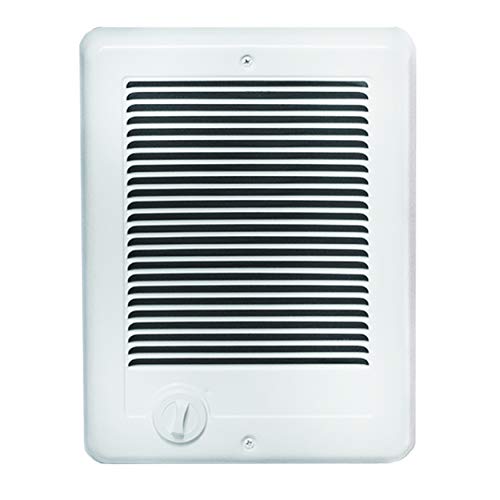
When you need heat now, not in an hour, the Cadet Com-Pak CSC202TW delivers. This fan-forced wall heater packs 2000W of power at 240V (or 1500W at 208V) into a compact recessed design that fits between standard wall studs. The built-in fan circulates warm air rapidly, making this unit feel much more responsive than a passive convection baseboard of similar wattage. It is rated for rooms up to 200 sq. ft., but many users report it easily handles spaces up to 250 sq. ft.
Unlike bare baseboard heaters, the Com-Pak comes as a complete unit with the wall can, heater assembly, grille, and a built-in adjustable thermostat — everything you need for a hardwired installation. The high-gloss enamel paint resists yellowing, and the safety thermal cutout ensures it shuts off if internal temperatures exceed safe limits. It operates quietly for a fan heater, though you will hear the gentle hum of the blower, which many find preferable to dead silence for a bedroom.
Installation requires cutting a hole in the drywall, but the recessed design is far more discreet than a protruding baseboard. The fan can blow dust if the unit is not kept clean, so periodic vacuuming of the intake grille is recommended. For anyone with a small room wired for 240V who wants fast, assertive heat, this Cadet is the gold standard among fan-forced wall heaters.
Why it’s great
- Built-in thermostat means no extra purchase needed
- Fan-forced design heats the room in minutes, not hours
- Complete unit includes can, grille, and heater
Good to know
- Fan noise is noticeable but not loud
- Recessed install requires cutting into drywall
3. meross Matter Smart Thermostat (B0FCY3Z1S5)
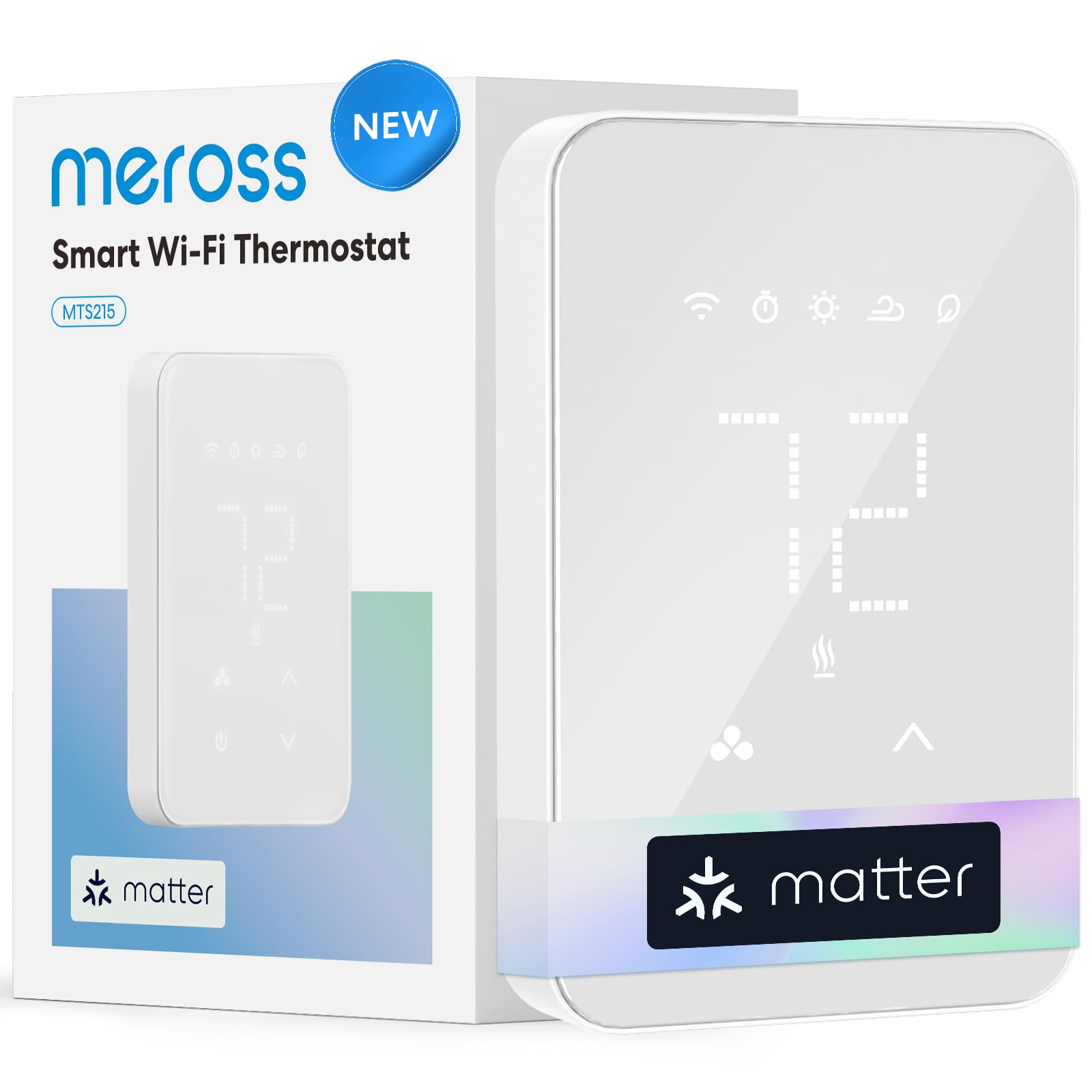
This meross thermostat is not a heater itself, but it is the single best accessory you can buy for any hardwired baseboard electric heater. It supports the new Matter protocol, meaning it works natively with Apple Home, Alexa, Google Home, and SmartThings simultaneously — no ecosystem lock-in. It handles high-voltage systems up to 3840W at 240V, making it compatible with almost any residential baseboard heater on the market.
The energy monitoring feature is a genuine standout. The Meross app graphs daily, weekly, and monthly power consumption, letting you see exactly how much electricity each room is using and even calculate cost if you enter your local kWh rate. Open window detection automatically pauses heating when a temperature drop suggests a door or window is open, and the 24/7 scheduling engine lets you set different temperatures for every hour of the week to maximize energy savings without sacrificing comfort.
Installation requires a neutral wire, which older homes may lack. The physical pins on the back are easy to bend during install, so care is needed. For anyone wanting to modernize a dumb baseboard heater with app control and real usage data, this is a far better value than the comparable Mysa Lite, offering the same functionality at a lower price point.
Why it’s great
- Matter support works with every major smart home platform
- Real-time energy monitoring with historical cost data
- Open window detection and 7×24 scheduling save money
Good to know
- Requires a neutral wire for installation
- Back pins are delicate and easy to bend
4. meross Smart Thermostat (B0C4YDRHBS)
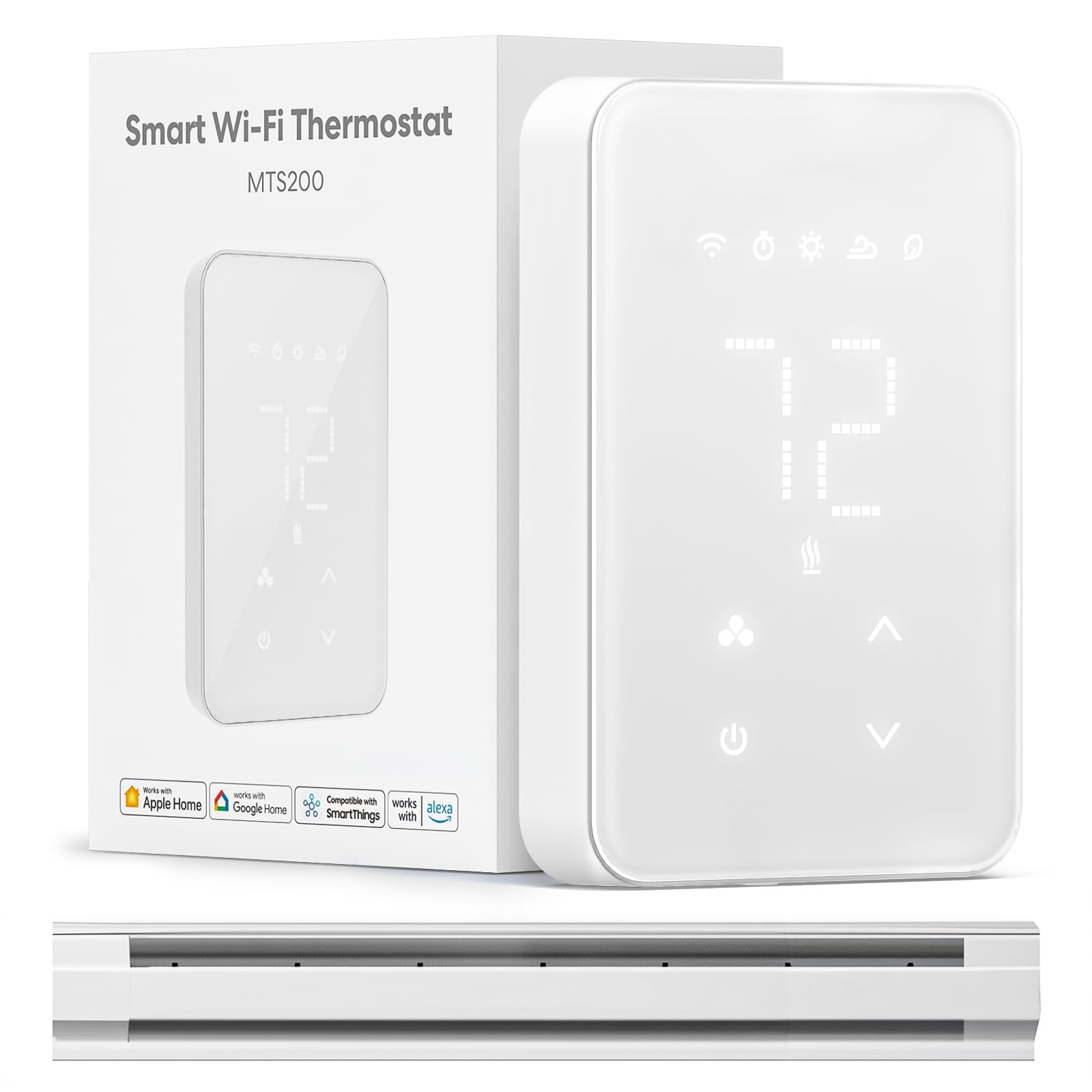
If you do not need Matter compatibility and primarily use Alexa or Google Home, this earlier meross model delivers the same smart functionality at a slightly lower price point. It is designed for high-voltage electric baseboard heaters with a maximum load of 1920W at 120V or 3840W at 240V — more than enough for a single heater. The crisp LCD display looks clean against any wall and shows the current temperature, set point, and status clearly.
The meross app provides the same excellent scheduling engine, energy monitoring dashboard, and open window detection as the Matter version. Users report that the installation is straightforward with the included video guide, taking around 30 minutes for most setups. The thermostat supports Summer Mode for systems that also handle cooling, and the power-off memory ensures settings are not lost during a power outage.
The major catch is that this unit requires 4 or more wires in the electrical box, including a neutral. Many older baseboard circuits only have 2 wires (hot and load), so check your wiring before buying. For those with the correct wiring, this is an unbeatable value that brings voice control and energy tracking to any standard baseboard heater.
Why it’s great
- Excellent value compared to Mysa and Honeywell
- 1°F accuracy and bright LCD display
- App includes energy monitoring and 7×24 schedule
Good to know
- Requires a neutral wire and 4+ wires in the box
- No Matter support for universal ecosystem control
5. King Electric W2415-W

King Electric’s W2415-W is a no-nonsense fan-forced wall heater designed for spaces where a long baseboard simply does not fit. At just 10.38 inches wide and 4 inches deep, this compact unit recesses neatly into a wall cavity and outputs 1500W of forced hot air at 240V. It is a fantastic solution for basements, workshops, or small additions where you want quick heat without the floor footprint of a baseboard.
The build quality is typical King — sturdy, reliable, and straightforward. The heater includes a built-in adjustable thermostat, so you get full control without buying an additional wall component. Users consistently praise how quietly this unit operates for a fan heater, with many noting it is barely audible over normal background noise. The 6.25 amp draw at 240V means it is efficient to run on a dedicated 15-amp circuit.
Some users find the built-in thermostat dial to be less precise than a separate wall-mounted unit, and the fan can circulate a slight amount of dust if the element has not been cleaned. For anyone needing a compact, fast-heating solution that integrates cleanly into drywall, the W2415-W is a proven performer that has maintained strong reviews for years. It is also available in a 120V version for homes without 240V wiring.
Why it’s great
- Very compact design fits into tight wall spaces
- Operates quietly for a forced-air heater
- Built-in thermostat for simple control
Good to know
- Built-in thermostat is basic and less precise
- Fan may need occasional dust cleaning
6. Air Choice 33″ Baseboard Fireplace Heater
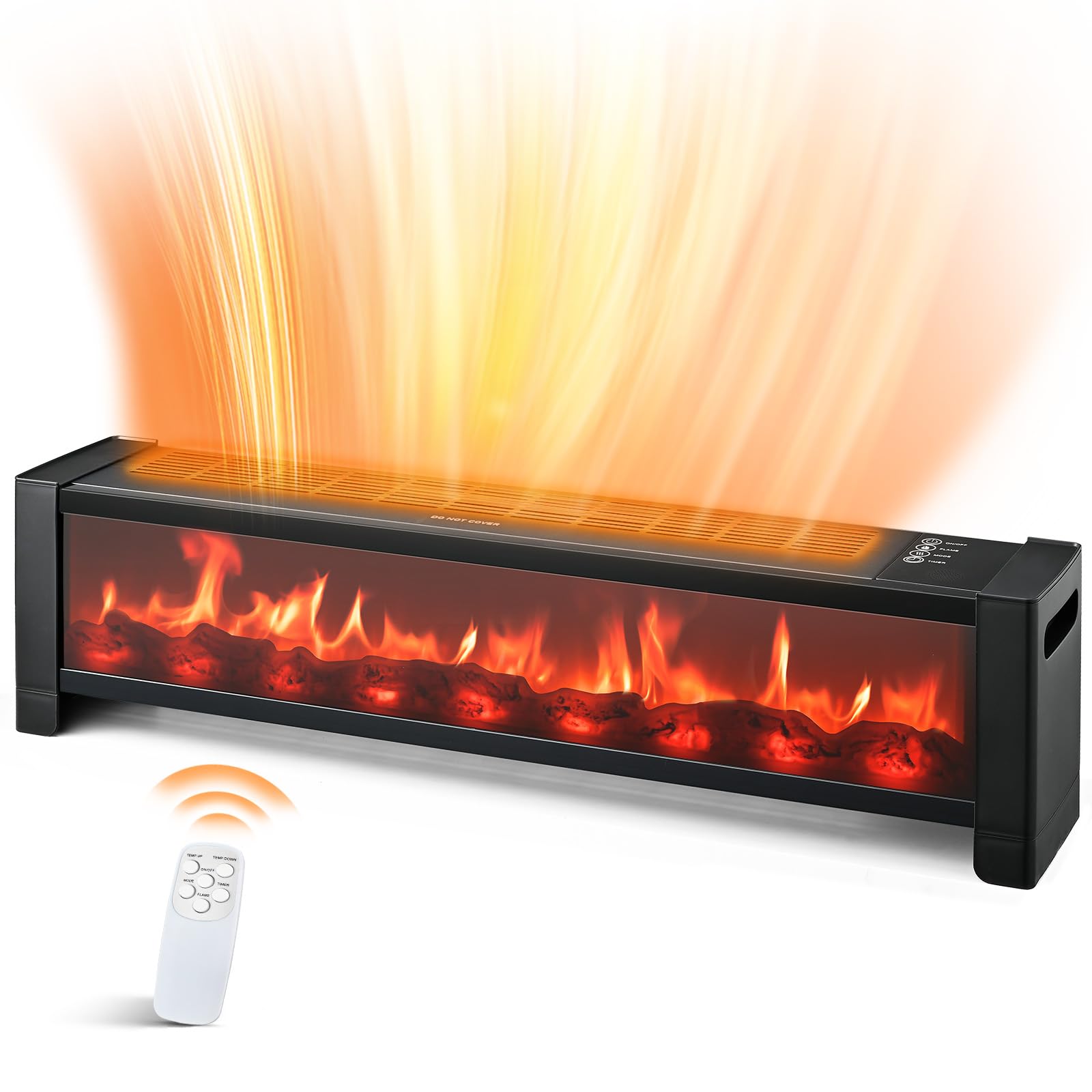
The Air Choice 33″ is a different beast from the rest of this list — it is a freestanding portable unit, not a hardwired permanent heater. It mimics the look of a traditional baseboard but adds a realistic 3D dancing flame effect that can be operated with or without heat, making it a year-round decor piece. At 1500W with two power settings (Low 700W, High 1500W), it can heat rooms up to 270 sq. ft. using a no-fan design that is silent in operation.
Safety features are comprehensive: V0 flame-retardant materials, overheat protection, and automatic tip-over shutoff. The top air outlet delivers heat outwards without a blower, so it is completely silent — no fan hum, no clicking. The included remote control and LED touch panel make it easy to adjust temperature (59°F to 99°F) from across the room, and the 12-hour timer is perfect for setting it before bed.
The plastic legs are notably fragile — multiple customers report breakage if bumped by a pet or during movement. This heater also gets very hot at the top outlet, so it must be kept away from children and curtains. It is not a replacement for a permanent hardwired baseboard heater but is an excellent supplemental option for renters or anyone wanting a portable solution with visual ambiance.
Why it’s great
- Realistic 3D flame effect with or without heat
- Totally silent operation with no fan noise
- Remote control and 12-hour timer included
Good to know
- Plastic legs are weak and prone to breaking
- Top vent becomes very hot during operation
7. Cadet F Series 3F750-1W

The Cadet F Series is the workhorse of budget-friendly permanent baseboard heating. This 36-inch, 750W unit (2560 BTU) is designed for small spaces like powder rooms, laundry rooms, or compact bedrooms up to 187.5 sq. ft. The 25-gauge steel construction and all-metal junction box give it a solid, industrial feel that will last for decades when installed correctly. It mounts directly to the wall with no need for recessing.
This heater requires a separate thermostat, which adds to the total cost — factor in at least another to for a compatible Cadet thermostat. The radiant convection heating element is passive and silent, providing steady warmth without any moving parts to fail. The powder-coated white finish matches standard wall paint well and resists yellowing over time.
Installation requires basic electrical knowledge to wire the thermostat, and some users report receiving units with cosmetic dents from shipping. A small number of reliability complaints mention heating elements failing after a few months on dedicated circuits. For the price, however, this remains the most affordable way to add a permanent electric baseboard heater to a single small room, especially if you already have a compatible thermostat on hand.
Why it’s great
- Very affordable entry point for permanent heat
- All-metal construction with powder-coated finish
- Silent convection operation with no fan
Good to know
- Requires a separate thermostat purchase
- Some reports of element failure on early units
FAQ
Can I install a baseboard heater myself?
What size baseboard heater do I need for a 200 sq ft room?
Do all baseboard heaters need a thermostat?
Final Thoughts: The Verdict
For most users, the best baseboard electric heater winner is the King Electric 6K1215BW because it offers premium build quality, silent convection heat, and a dent-resistant cover that will last longer than cheaper alternatives. If you need fast heat in a small room, grab the Cadet Com-Pak CSC202TW with its built-in fan and thermostat. And for anyone wanting to modernize their existing heater with app control and energy tracking, nothing beats the meross Matter Smart Thermostat.