
The rusted, dented, or mismatched baseboard heater cover is one of the first things guests see and one of the last things homeowners replace. Beyond the eyesore, a failing cover can restrict airflow, reduce heating efficiency, and expose sharp metal edges that are a genuine safety hazard for children and pets. Upgrading to a properly fitted cover restores both the look and the thermal performance of your hydronic or forced-air system.
I’m Min — the co-founder and writer behind Gadgets Feed. For this guide, I analyzed over thirty models, cross-referencing steel gauge thickness, plastic polymer durability, damper mechanisms, and customer longevity reports to find the covers that truly solve the rust and fit problems plaguing older homes.
Whether you need a seamless slip-on retrofit for a hot-water system or a heavy-duty floor register that can handle foot traffic, this analysis of the best baseboard heater covers will direct you to the option that matches your heater type and aesthetic standards.
How To Choose The Best Baseboard Heater Covers
Choosing the right cover begins with identifying your heating system type — hydronic (hot water) or forced-air — because the two are not interchangeable. Hydronic covers slip over the existing metal heating element and require side clearance for convection, while forced-air registers are duct-mounted and often include dampers to control airflow. Measure the length, height, and projection of your current unit before purchasing, and always confirm whether the listed dimensions refer to the duct opening or the overall cover size.
Material: Steel Gauge vs. Plastic Polymer
For hydronic systems, galvanized steel in the 22–24 gauge range offers the best balance of dent resistance and heat conduction. Plastic polymer covers like those from NeatHeat are lightweight, rust-proof, and easy to cut with tin snips, but they can warp over time if exposed to high-output systems and may slightly reduce heat transfer compared to metal. For floor registers that will be walked on, look for steel thickness of at least 1.5 mm — the SANYCASA models use a 2 mm thick panel that supports up to 300 pounds.
Damper Control and Airflow Direction
A built-in damper gives you seasonal control over how much heated or cooled air enters the room. Plastic dampers resist rust better than stamped metal versions, but the actuation mechanism must feel solid — flimsy levers snap off within a year. Directional vanes that can be angled let you push warm air away from drafty windows or toward the center of the room, a feature that matters most in forced-air systems.
Quick Comparison
On smaller screens, swipe sideways to see the full table.
| Model | Category | Best For | Key Spec | Amazon |
|---|---|---|---|---|
| Baseboarders Basic Series 3 ft | Hydronic Steel | Permanent rust protection | 22–24 gauge galvanized steel | Amazon |
| NeatHeat 6ft Front Cover | Hydronic Plastic | Easy DIY retrofit | 6 ft x 6.25 in plastic polymer | Amazon |
| TruAire 48 Inch Register | Forced-Air | Large forced-air openings | 48 in steel with damper | Amazon |
| Yaocom 2 Pack 18 Inch | Forced-Air Steel | Multi-panel value pack | 18 in steel, adjustable airflow | Amazon |
| TALL NeatHeat 6ft | Hydronic Plastic | Oversized hydronic heaters | Tall profile plastic polymer | Amazon |
| SANYCASA 2 Pack 4×10 | Floor Register Steel | Walkable floor vents | 2 mm steel, 300 lb capacity | Amazon |
| Imperial 2-1/2″ x 18″ | Diffuser Register | Budget-friendly replacement | All-steel, sunburst pattern | Amazon |
In‑Depth Reviews
1. Baseboarders Basic Series 3 ft (36 in) Galvanized Steel Slip-On Cover + Endcaps
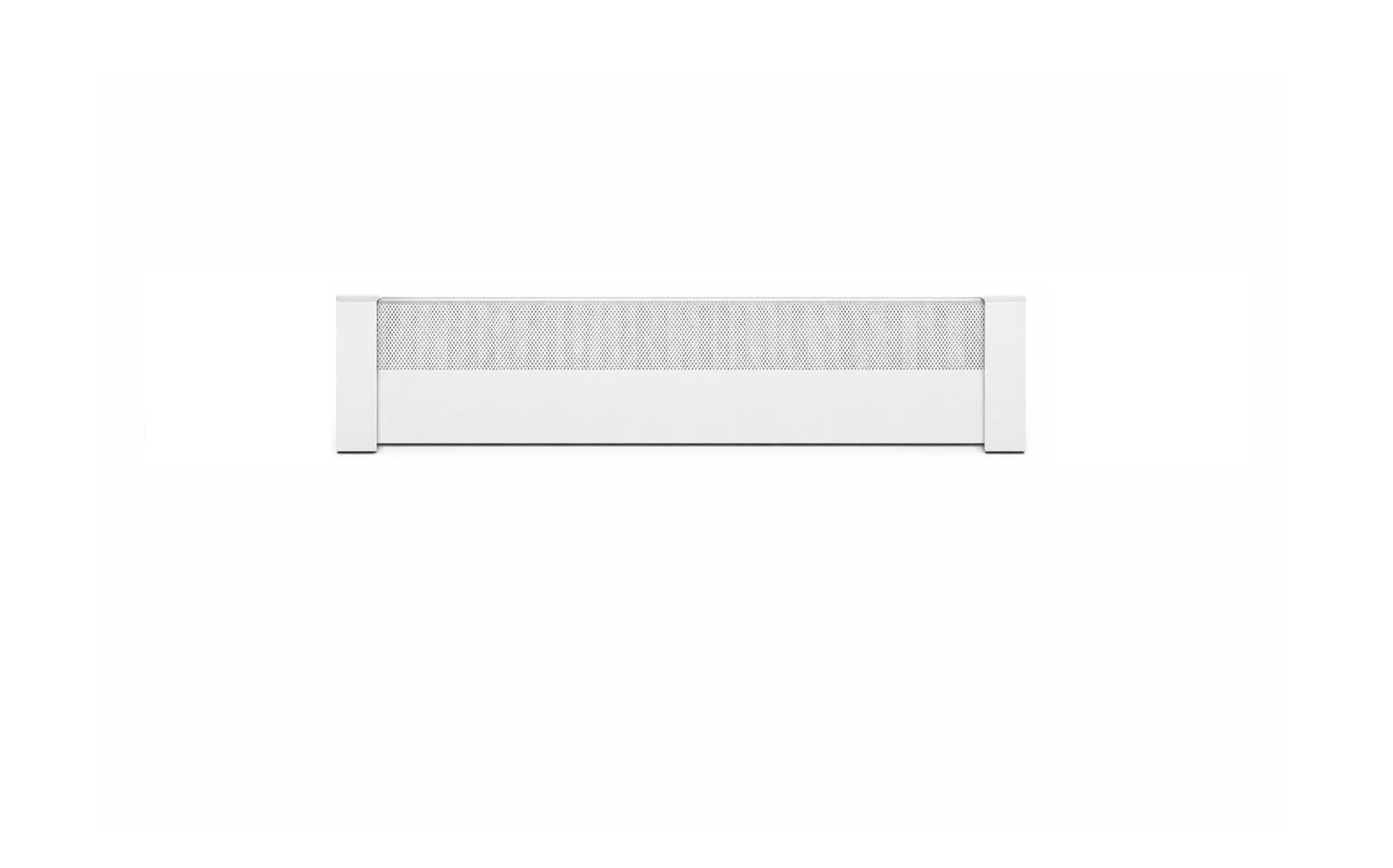
This is the gold standard for hydronic hot-water systems. The 22–24 gauge galvanized steel construction is noticeably thicker and more dent-resistant than the flimsy 26-gauge covers found at big-box retailers. The conductive metal surface actually improves heat transfer compared to plastic alternatives, so you won’t lose warmth after the upgrade. It ships with both the front panel and matching left/right endcaps, giving a finished, built-in look that increases perceived home value.
Installation is genuinely tool-free — you slip the cover over the existing backplate and snap on the endcaps. The included Lifetime Rust Protection Guarantee backs up the corrosion-resistant white finish, making this a true one-time purchase. Users report that bathrooms where urine damage had rusted through original covers in under two years look pristine after switching to this galvanized unit.
The 3-foot size is ideal for standard bath and small-bedroom heaters, but Baseboarders offers up to 7-foot lengths. If you are replacing a damaged cover and want it to be the last one you ever buy, this is the pick.
Why it’s great
- Thick galvanized steel resists dents and rust
- Lifetime rust protection guarantee
- Slip-on install in under 3 minutes with no tools
Good to know
- Higher upfront cost than plastic rivals
- Only compatible with hydronic systems, not forced-air
2. NeatHeat 6ft Baseboard Heat Front Cover

NeatHeat’s 6-foot front cover solves rust permanently because the material itself is non-metallic. The white polymer is thick enough to resist cracking under normal household contact, and it snaps over existing support brackets without requiring any disassembly of the heater. If you have a run of baseboard spanning 6 feet, this single panel covers the whole length without a seam.
Cutting the cover to a custom length is straightforward with a pair of metal snips (utility knives will not work on this material, as users report). The polymer is non-absorbent, so moisture from mopping, splashing, or bathroom humidity will never cause orange drip stains on your baseboards. The heat output is excellent because the material does not insulate — it radiates warmth freely while hiding sharp fins.
End caps and corner accessories are sold separately, so factor that into your budget if you want a fully finished look. For homeowners with old metal covers that are beyond painting, this is the fastest path to a uniform white appearance across an entire floor.
Why it’s great
- Zero rust risk — no metal to corrode
- Easy to cut and click into place
- Excellent airflow and heat radiation
Good to know
- End caps sold separately add to total cost
- Requires tin snips for cutting, not a utility knife
3. TruAire 48 Inch Baseboard Register (White)

For homes with forced-air systems, the TruAire 48-inch register is a rare find — most forced-air registers top out at 30 inches, but TruAire produces a true 48-inch all-steel unit with an integrated damper. The overall height is 4.5 inches with a 2.75-inch projection from the wall, matching the proportions of mid-century and 1950s ranch homes where long continuous baseboard runs are common.
The damper mechanism uses plastic handles, but the body is fully steel, so the structural integrity is there. Replacing a 40-to-60-year-old register with this unit gives you modern airflow control — open the vanes fully in winter for maximum heat and close them partially in summer to keep conditioned air where it belongs. Customers note that the small retaining screws on the faceplate are soft and can strip, so use a magnetic driver bit and apply light torque.
Because the overall length is 48 inches, it fits openings that standard 24-inch or 36-inch registers cannot cover without multiple seams. If you have a single long duct opening in a living room or basement, this is the most seamless option.
Why it’s great
- True 48-inch all-steel register for long runs
- Built-in damper for seasonal airflow control
- Sturdy build replaces old registers permanently
Good to know
- Faceplate screws are soft and strip easily
- Not for hydronic baseboard heaters
4. Yaocom 2 Pack 18 Inch Baseboard Register Vent, Brown

The Yaocom two-pack delivers solid value for homeowners tackling a whole-floor register refresh. Each unit is sized for an 18-inch duct opening and constructed from quality steel with a brown powder-coat finish that blends with wood floors and darker trim. The adjustable lever lets you open or close the damper without kneeling down to feel for a switch.
Installation is a drop-in affair — remove the old register, measure the duct opening (the 18-inch size refers to the opening, not the overall unit), and place the new cover. The steel is thick enough that the panel does not flex when stepped on near edges, though it is not rated for direct foot traffic the way a dedicated floor vent is. The brown color is harder to find in stock than standard white, making this a good match for homes with stained baseboard trim.
If you are replacing registers in two rooms simultaneously, buying this two-pack saves you the per-unit cost compared to single-panel purchases. The packaging includes no extra hardware, so have drywall screws or snap-in clips ready.
Why it’s great
- Two identical registers in one box saves money
- Steel construction with adjustable damper
- Brown finish matches darker trim and flooring
Good to know
- No mounting hardware included in the package
- Not designed for high-traffic floor use
5. TALL NeatHeat 6ft Baseboard Heat Cover

Standard baseboard heater covers are about 6 to 7 inches tall. High-output hydronic systems, however, use larger elements that require a taller enclosure, and the TALL NeatHeat cover fills that gap. It stands significantly higher than the standard NeatHeat panel, so measure your heater height and projection before ordering — this is for oversized units only, not standard baseboards.
The polymer construction shares the same rust-proof, easy-clean advantages as the standard NeatHeat. The tall profile is particularly useful in bathrooms where the heater sits close to a toilet or sink and the old metal cover has been permanently stained or corroded by splashback. Users report that the cover hides the tall heating element completely, and the smooth white surface wipes down in seconds.
Cutting the 6-foot panel to length requires a quality pair of tin snips (brands like Crescent Wiss 12-inch tinner snips are recommended). The polymer is dense and resists shearing with lightweight tools, but the final result is a perfect custom fit. Order end caps separately if you want the sides finished.
Why it’s great
- Unique tall sizing for oversized hydronic heaters
- Rust-proof polymer, easy to wipe clean
- Hides tall heating elements completely
Good to know
- Must measure carefully — not for standard height heaters
- Cutting requires metal snips, not a utility knife
6. SANYCASA 2 Pack Floor Register 4×10 Inches
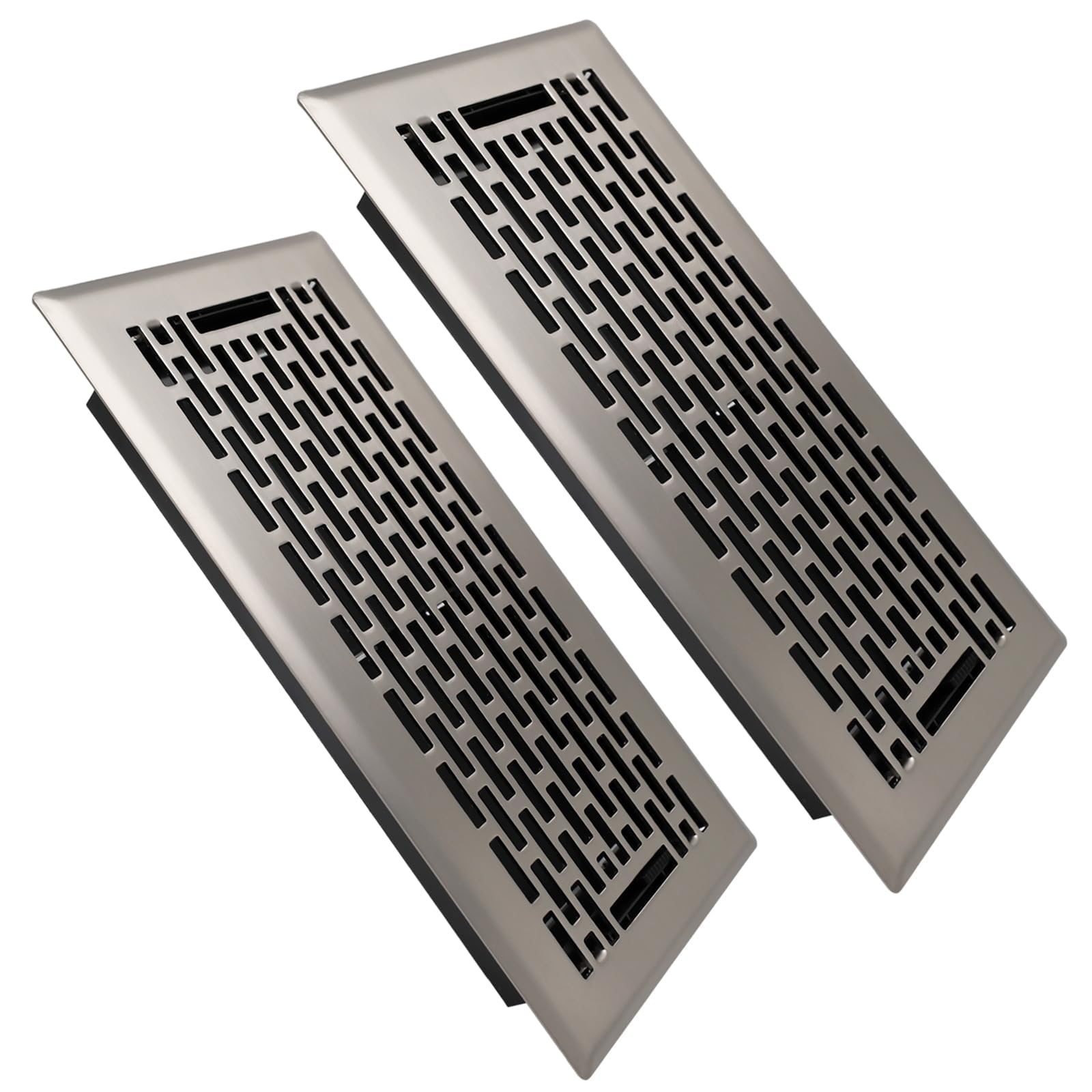
If the baseboard heater cover you need is actually a floor register — the kind you step on in hallways or living rooms — the SANYCASA two-pack is engineered for that abuse. The top panel is made from 2 mm thick steel, supporting a walking weight of 300 pounds without flexing, denting, or making noise. The Boston design pattern with adjustable fan blades gives you directional airflow control that traditional stamped grilles cannot match.
The damper box underneath is ABS plastic rather than metal, which is actually a benefit: it will never rust, and the mechanism stays smooth and quiet even in humid basements. The two-piece adjustable blades let you aim warm air toward the center of the room in winter and close them partially during summer to redirect cool air. The satin nickel finish is glossy and resists fingerprints better than matte black.
Installation is a drop-in for standard 4×10-inch duct openings. The edge folding process eliminates sharp edges and prevents tripping. For households with kids or pets, this is the safest and most durable floor register option available.
Why it’s great
- 2 mm steel panel supports 300 lb walking weight
- ABS damper box never rusts
- Adjustable louvers for directional airflow
Good to know
- Limited to 4×10 inch duct openings only
- Not for wall or ceiling applications
7. Imperial 2-1/2″ x 18″ Baseboard Diffuser Register, White
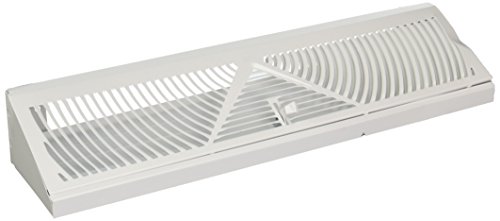
The Imperial RG1627-A is a no-frills diffuser register that works well for standard forced-air baseboard openings. The all-steel construction with a durable powder-coat finish resists yellowing and chipping better than budget plastic registers that often snap during installation. The fan-shaped sunburst pattern is designed to spread warm air over a wider area than straight-louver designs, reducing cold spots near windows.
The snap-in face removes for cleaning without tools — a convenience feature usually reserved for more expensive models. The 2.5-inch base extension matches the projection of typical mobile home and older residential baseboard ductwork. Customers report that it replaces original equipment from decades ago without requiring modifications to the duct opening.
At this price point, the Imperial register is the logical choice for landlords or homeowners refreshing multiple rooms on a tight budget. It does not have a damper, so you cannot close off airflow seasonally, but for a simple, sturdy replacement that looks clean and modern, it delivers beyond its cost.
Why it’s great
- All-steel build outlasts plastic registers
- Snap-in face for easy cleaning access
- Sunburst pattern improves air distribution
Good to know
- No adjustable damper for airflow control
- Limited to 18-inch and 15-inch size options
FAQ
Can I use a forced-air register on a hydronic hot-water baseboard heater?
How do I measure my baseboard heater for a replacement cover?
Will a plastic cover reduce my heating output?
Final Thoughts: The Verdict
For most users, the best baseboard heater covers winner is the Baseboarders Basic Series 3 ft because its thick galvanized steel and lifetime rust guarantee make it a permanent solution for hydronic systems. If you want the easiest DIY install with zero rust risk, grab the NeatHeat 6ft Front Cover. And for a walkable floor register that handles 300 pounds of foot traffic, nothing beats the SANYCASA 2 Pack 4×10.