
The gap between your floor and wall is a dust magnet and an eyesore, but nailing rigid wood trim to curved stairs or uneven subfloors often ends in cracked corners and wasted material. The latest peel-and-stick and flexible polyurethane options solve this without special tools, but choosing the wrong material means adhesion failure or trim that snaps under pressure.
I’m Min — the co-founder and writer behind Gadgets Feed. I’ve spent hours dissecting material compositions, adhesive backings, and flexibility specs across dozens of trim products to separate the long-lasting solutions from the gimmicks.
After comparing vinyl, silicone, rubber, and polyurethane formulations, these picks represent the most reliable options for any homeowner tackling a flooring refresh. This guide is your shortcut to choosing the best baseboard shoe trim that actually stays put and looks professional.
How To Choose The Best Baseboard Shoe Trim
Not all shoe trims behave the same way once unboxed. A peel-and-stick strip that works perfectly on a flat garage wall may curl off a bathroom floor within weeks. The material, the adhesive architecture, and the minimum bend radius define which trim survives real-world installation.
Material: Polyurethane vs. Vinyl vs. Silicone vs. Rubber
Polyurethane trims like the FLEXTRIM resist warping through extreme temperature swings and accept paint better than any other flexible option — expect a real wood finish after two coats. Vinyl trims offer the easiest DIY peel-and-stick install but can deform under prolonged heat near radiators. Silicone trims excel in wet zones because they repel moisture and stay flexible, while rubber trims provide the highest friction grip on rough subfloor edges but require thorough surface prep with alcohol and sometimes a heat gun for cold-weather adhesion.
Adhesive Backing: Peel-and-Stick vs. Glue-Up
Peel-and-stick work well on smooth, clean surfaces like painted drywall, tile, and glass — but one reviewer noted the sticky residue sometimes stays on the red backing film instead of the trim itself, which is a design defect to watch for. Glue-up trims require purchasing construction adhesive separately but allow repositioning. For high-moisture areas, a supplemental caulk seal along the top edge prevents water from wicking behind the trim, regardless of the backing type.
Minimum Bend Radius
If your project involves curved stairs, a circular fireplace hearth, or a bullnose corner, ignore this spec at your own peril. Most flexible trims quote a minimum radius of 6 inches — meaning the material can bend into a circle that’s 12 inches across without cracking. Trim rated for a 6-inch radius cannot handle sharp outside corners on a pedestal sink without a heat gun. Always check this number before buying for anything beyond straight runs.
Quick Comparison
On smaller screens, swipe sideways to see the full table.
| Model | Category | Best For | Key Spec | Amazon |
|---|---|---|---|---|
| Flex Trim WM105 | Polyurethane | Curved stairs & columns | 6-inch bend radius | Amazon |
| Flex Moulding WM126 | Polyurethane | Tight curves & pedestal sinks | 12-ft length | Amazon |
| Art3d Baseboard Trim | Polystyrene | Straight runs & modern look | 56 x 3.2 in per piece | Amazon |
| ESUFEIR Quarter Round | Silicone | Bathroom & kitchen sealing | 236-inch total length | Amazon |
| GAMZAU Baseboard Molding | Vinyl | Garage & easy DIY install | 4 x 20 ft coverage | Amazon |
| Risunpet Quarter Round | Rubber | Bathtub curves & uneven floors | 0.75 x 0.75 in profile | Amazon |
In‑Depth Reviews
1. Flex Trim WM105: 3/4″ x 3/4″ Flexible Quarter Round Molding

The Flex Trim WM105 is the most versatile option for curved walls and staircases. Its flexible polyurethane construction bends into a 6-inch radius — meaning it can wrap around a 12-inch diameter circle without cracking. The surface texture looks like real wood grain, and the material accepts both paint and gel-based stain equally well, giving you total control over the final finish.
At 96 inches per stick, you cover about 8 feet of linear trim per piece. Installation requires woodworking tools — a miter box and hand saw work fine, though a table saw speeds things up. The material holds nails and screws well. Reviewers consistently report success on curved fireplace hearths and airstream remodels, where rigid alternatives simply cannot follow the contour.
The WM105 is waterproof and rated for both interior and exterior use. Unlike PVC-based trims, it does not expand or contract significantly with temperature shifts. For a permanent, paint-friendly solution that handles sharp curves without heat guns, this is the top contender.
Why it’s great
- Genuine wood-grain texture that hides imperfections after painting
- Waterproof polyurethane won’t warp or crack in humid basements
Good to know
- Does not bend around sharp bullnose corners without a heat gun
- Requires contact adhesive or brad nails — no peel-and-stick backing
2. Flexible Moulding WM126: 1/2″ x 3/4″ Base Shoe Moulding

The WM126 extends to a full 12-foot length, which means fewer splices on long curved runs. Made from a wood-composite core that bends like a belt, it handles a minimum 6-inch radius without delamination. This is the go-to solution for tight bends around toilet bases and pedestal sink legs where even flexible PVC fails.
You can cut it with a standard table saw or break it by hand for rough lengths. It paints beautifully with two coats of standard latex. One reviewer noted that water-based gel stain did not adhere well, but oil-based Minwax produced excellent results. The material is moisture-proof and resists cracking through freeze-thaw cycles, making it workable for outdoor covered applications.
Installation requires a helper — the 12-foot length is unwieldy alone, and nailing it along a curved path demands one person bending while the other fastens. Once set, it holds its shape and looks indistinguishable from traditional wood molding.
Why it’s great
- Seamless 12-foot length reduces joints on long curved walls
- Handles extreme heat and cold without warping or cracking
Good to know
- Requires a helper for installation due to length
- Water-based gel stains do not bond well; stick to oil-based
3. Art3d Wall Baseboard Molding Trim 8-Pack

The Art3d kit provides eight rigid polystyrene strips measuring 56 inches long and 3.2 inches tall. This is the right choice for straight runs where you want a clean, modern profile without the flex. The material is stiffer than vinyl alternatives, so it aligns straight without bowing — a common complaint with thinner flexible trims on long walls.
Installation requires adhesive or glue since there is no peel-and-stick backing. Paintable caulk works well as a glue, and reviewers report that painting the trim before installation eliminates visible nail holes. The surface takes paint evenly and resists moisture, warping, and cracking better than MDF in high-humidity basements.
One caveat: the trim is brittle. A few reviewers described it as “painted styrofoam” that crumbles under heavy pressure. For straight walls in low-traffic areas it performs well, but avoid using it on curved surfaces or where you need to bend the material.
Why it’s great
- Pre-cut 56-inch lengths make transport and layout very manageable
- Painted surface is durable and resists scuffs from vacuum cleaners
Good to know
- Material is brittle and can crumble if over-pressured during cutting
- Not suitable for curved walls or uneven subfloors
4. ESUFEIR Flexible Quarter Round Molding Trim
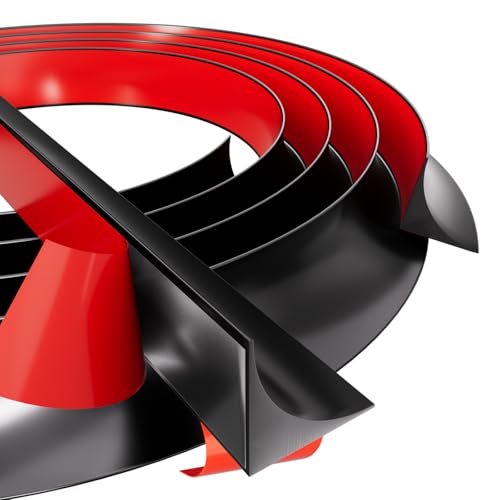
The ESUFEIR strip uses silicone rather than vinyl or rubber, giving it superior water repellency and a hydrophobic surface that wipes clean easily. Its U-shape concave design fits flush against right-angled corners without the bulging that plagues traditional round seal strips. This makes it especially effective on window sills, bathtub perimeters, and countertop edges.
The adhesive backing is 7/16 inches wide — wider than most peel-and-stick trims — and the package includes an adhesive promoter for extra grip. In cold rooms, reviewers recommend heating the strip with a hairdryer for 30 seconds to reactive the adhesive. The silicone material cuts effortlessly with scissors and stretches slightly to follow gentle curves.
One reviewer noted that after one month of daily shower exposure, the strip showed zero peeling without any supplemental caulk. The 236-inch roll covers nearly 20 feet of linear trim, enough for an average bathroom perimeter. This is the best option for wet zones where standard caulk would crack or mold over time.
Why it’s great
- Silicone construction resists mold and mildew in wet environments
- Wider adhesive backing with included promoter ensures strong hold on tile
Good to know
- Black color option may show dust more than white alternatives
- Extra sealant recommended at joints for long-term waterproofing
5. GAMZAU Flexible Baseboard Molding Trim
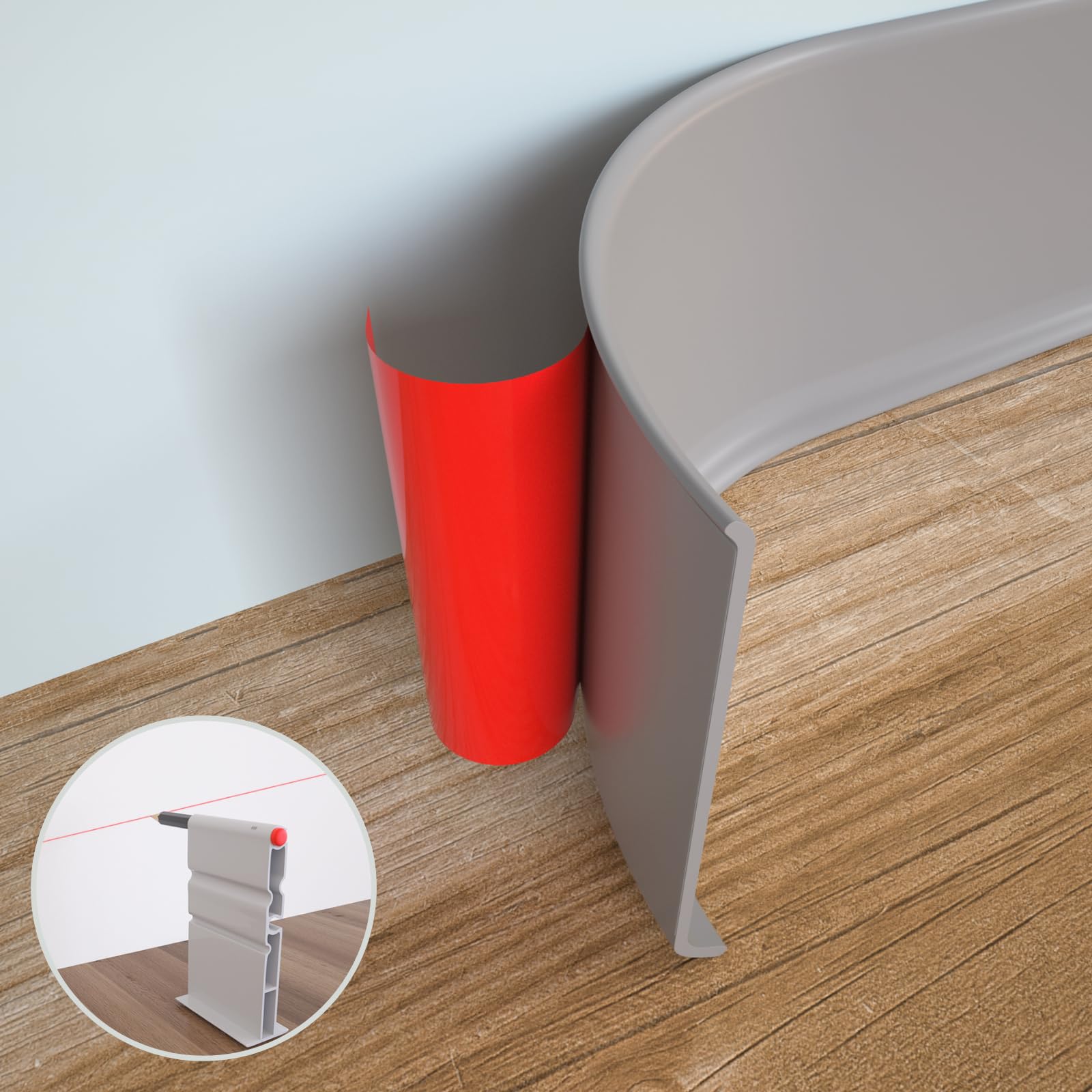
The GAMZAU roll provides 20 linear feet of 4-inch tall vinyl base molding with a peel-and-stick backing. This is the simplest trim in the lineup — clean the wall, peel the red film, and press into place. No screws, no drilling, no glue. It includes a scraper and scribing tool to help with trimming and alignment.
The vinyl material includes a toe design that bulges slightly at the bottom to cover uneven floor gaps up to 0.08 inches. A few reviewers praised its quick garage and bathroom installations, noting that the adhesive holds strongly on painted drywall and tile. The surface is treated to resist scratches from everyday kicks and vacuum bumps.
However, the adhesive system has a known flaw. One reviewer reported that the sticky residue stayed on the red backing film rather than transferring to the vinyl, rendering the trim useless. Once applied, repositioning is nearly impossible — the adhesive bonds instantly and can peel paint upon removal. For straight-forward, low-moisture applications, it delivers a fast, clean finish.
Why it’s great
- Zero-tool installation with peel-and-stick backing saves hours
- Toe design hides uneven floor gaps up to 0.08 inches
Good to know
- Adhesive quality is inconsistent between batches
- Impossible to reposition without damaging wall paint
6. Risunpet Peel and Stick Quarter Round Molding

The Risunpet quarter round is made from aviation-grade rubber, giving it exceptional flexibility and a soft, pliable feel. Its 0.75-inch profile matches standard quarter round dimensions, making it a direct substitute for wood or MDF pieces on curved tubs, sinks, and countertops. The material is waterproof, high-temperature resistant, and easy to cut with a utility knife.
Installation requires thorough surface prep. Reviewers emphasize cleaning with alcohol and sometimes using a heat gun in cold rooms to activate the adhesive. The strip has dual-sided adhesive backing, but many users recommend sealing the edges with adhesive caulk to prevent moisture from seeping behind the trim. Without this extra step, the strip may peel off in high-humidity bathrooms.
Once properly installed, the Risunpet stays flexible indefinitely without cracking. One reviewer used it on a curved staircase and reported solid adhesion after months of foot traffic. For DIYers willing to prep correctly, this is a forgiving material that handles complex curves better than rigid alternatives.
Why it’s great
- Aviation-grade rubber bends around tight curves without stress fractures
- Wheelchair-accessible 0.75-inch profile reduces tripping hazard
Good to know
- Adhesive requires alcohol prep and heat gun for best results
- Edges need caulk seal to prevent moisture infiltration
FAQ
Can I paint peel-and-stick vinyl baseboard trim?
How do I install flexible trim on a curved staircase?
Final Thoughts: The Verdict
For most users, the best baseboard shoe trim winner is the Flex Trim WM105 because its flexible polyurethane body bends around 6-inch radius curves, takes paint like real wood, and holds up against moisture without warping. If you need a quick, tool-free install for a straight garage or living room wall, grab the GAMZAU vinyl roll. And for wet bathroom corners where standard caulk fails, nothing beats the ESUFEIR silicone strip.