
Our readers keep the lights on and my morning glass full of iced black tea. As an Amazon Associate, I earn from qualifying purchases.
Specs are compiled from manufacturer listings and verified buyer reviews and can change over time — please confirm the key details on the product page before buying.
You want a room that stays warm without a huge electric bill, so the real question is which baseboard heater matches your voltage, wattage, and room size — not just the longest bar you can find. Match all three and you get steady, dust-free warmth; miss one and you’ll be cold or overspending on installation. Here are nine honest picks, from zone heaters for chilly bathrooms to hydronic units that keep radiating after they switch off.
I’m Min — the founder and writer behind Gadgets Feed. This guide is built by comparing the manufacturers’ published specifications and the patterns across verified customer reviews, so you get each pick’s real strengths and trade-offs instead of marketing spin.
When you’re shopping for a baseboard water heater, remember that the heater itself is only half the system since most units need a separate thermostat to actually control the temperature.
Our Picks at a Glance


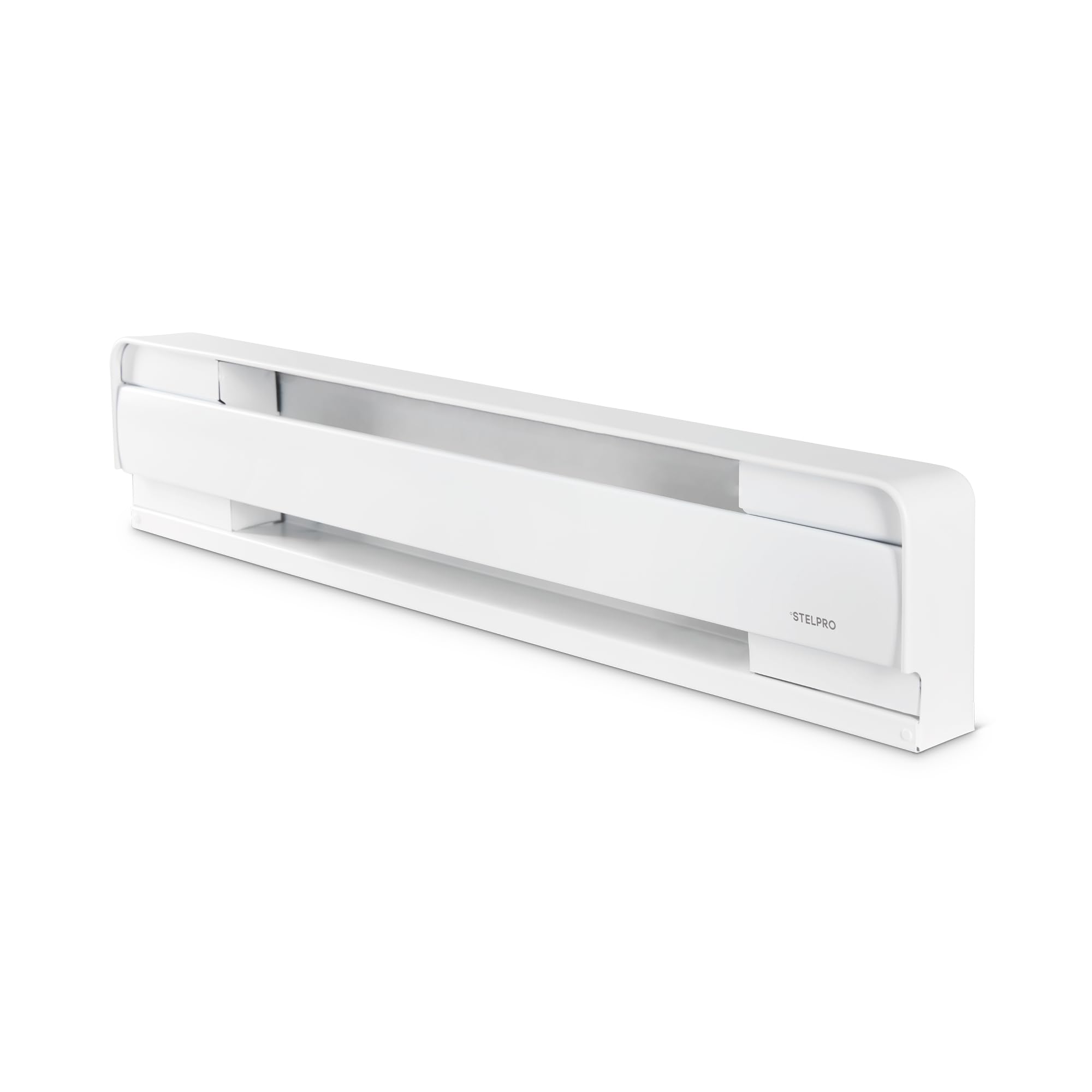
How To Choose The Best Baseboard Water Heater
Choosing a baseboard heater is mostly about matching three numbers to your home: the voltage, the wattage, and the physical length that fits your wall. The technology is simple: a metal element heats up, and air naturally rises over it to warm the room without a noisy fan.
Voltage: The Non-Negotiable First Check
The single most important spec is whether the heater runs on 120-volt or 240-volt power. 120V is the standard household circuit you can often connect to directly, while 240V is a dedicated heating circuit that delivers more power more efficiently but requires a qualified electrician to run. If you buy a 240V heater and only have 120V available, it simply won’t work, so check your breaker panel and junction box before you order anything.
Wattage: Match It to Your Room’s Size
Wattage determines how much heat the unit can actually produce, and it generally scales with the room you’re trying to warm. A compact 500-watt unit is ideal for a small bathroom or a single room, while a 1500-watt model can handle a much larger living area. Under-sized heaters run constantly without catching up, so it’s better to have a little more wattage than you think you need.
Thermostat: A Key Cost Most Buyers Forget
Many baseboard heaters do not include a thermostat — you have to buy and wire a separate wall-mounted unit, which adds both cost and installation work. Some premium models come with a built-in thermostat for direct control, which is far more convenient but typically costs more upfront. Factor the thermostat into your total budget whether you are replacing an old unit or adding heat to a new space.
Quick Comparison
| Model | Best For | Heat Output | Heating Coverage | Amperage | Amazon |
|---|---|---|---|---|---|
| Cadet F Series 36 in.★ Best Overall | Supplemental 120V rooms | 750 watts | 187.5 sq ft | 6.25 A | Amazon |
| Cadet Manufacturing 09956Best Value | Larger 240V zones | 1500 W (spec) | 250 sq ft | 6.25 A | Amazon |
| Stelpro B0502WCompact Pick | Compact bathrooms | 500 watts | 50 sq ft | 2.08 A | Amazon |
| Dimplex LC2005W31 | Tight spots, small spaces | 500 watts | 300 sq ft | — | Amazon |
| Stelpro Prima ASPRL0502W | Low-profile main heat | 500 watts | 50 sq ft | 2.1 A | Amazon |
| Dimplex LC3010W31 | Modern 240V rooms | 1000 watts | 300 sq ft | 4.8 A | Amazon |
| King 6K1215BW | 120V whole-room heat | 1500 watts | — | 12.5 A | Amazon |
| King KP1210 Portable | Portable plug-in heat | 1000 watts | — | 8.3 A | Amazon |
| Marley HBB504 Hydronic | Dust-free steady warmth | 500 watts | — | — | Amazon |
In‑Depth Reviews
1. Cadet F Series 36 in. Electric Baseboard Heater (3F750-1W)
Our pick — over 4★ from 550+ verified ratings; the strongest balance of quality and price.
The 36-inch workhorse that slides under a window and quietly erases that cold draft.
The Cadet F Series earns the top spot because it makes supplemental zone heating genuinely simple on a standard 120-volt circuit. It delivers 750 watts and 2560 BTU of steady, even warmth, and the convection design draws in cool air low and pushes warm air up and out without the noise or dust of a fan-forced heater.
Reliability is what wins people over here — owners consistently report that it heats a bathroom perfectly and that the all-steel cabinet stands up to everyday use. A full-length automatic overheat cut-out switches the unit off if it ever gets too hot, which is the safety net you want in a device that runs for hours. Buyers report that installation is easy and that these units “work well, they only draw two amps.”
The honest catch is the thermostat, which is sold separately; you will need to add a wall-mounted line voltage unit or a built-in end thermostat kit to control it. And while this is a reliable heater, an occasional unit arrives with a defective element, so a quick bench test after installation is worth the few minutes.
Why It Wins
- Quiet convection warmth with no fan noise
- Built-in overheat shutoff for safety
- Runs on standard 120V household wiring
Before You Buy
- Thermostat must be purchased separately
- Covers 187.5 sq ft, so it’s for smaller zones
Reach for this if: you want a dependable 120-volt zone heater for a bedroom, bathroom, or home office and you are fine adding a wall thermostat.
Look elsewhere if: you need to heat a large open-plan area — 187.5 sq ft is honest about its limits.
2. Cadet Manufacturing 09956 240-Volt Baseboard Heater
The long 72-inch fin that blankets a 250-square-foot room with steady 240-volt warmth.
When a single room needs real, primary heat, this 72-inch Cadet is the value pick because it packs serious output for the money. It runs on a 240-volt circuit and covers a generous 250 sq ft, which is exactly 5.0x the coverage of the compact Stelpro B0502W above — a difference you feel immediately in a drafty laundry room or basement.
What owners praise most is the build quality and the heat output, with several noting it keeps a laundry room “toasty” and that it dissipates heat quickly. The all-metal, powder-coated body with a 20-gauge junction box and ground feels solid, and it is UL Listed, which means it has passed independent safety testing. Owners mention pairing it with a digital thermostat for low heating bills over a full winter.
The trade-off is that you need to budget for the thermostat, and the durability record is mixed — a few owners have received units with dented covers or broken spot-welded brackets in shipping. One owner was blunt that the unit felt like cheap materials, though that same owner conceded the heat dissipation is fast.
Why It’s a Steal
- 1500W output covers a full 250 sq ft
- UL Listed with all-metal powder-coated body
- Radiant convection keeps rooms evenly warm
Watch Out For
- Requires a separate thermostat
- Some units arrive with dented or bent parts
Grab this if: you have a 240-volt circuit available and one large room that needs steady primary heat.
Think twice if: you’re sensitive to receiving a dinged-up box; inspect the fins and brackets on arrival.
3. Stelpro B0502W B Series Baseboard Heater
The 28-inch whisper that tucks into a bathroom and doesn’t eat floor space.
When wall space is tight, this Stelpro fits where others won’t, thanks to a 2.56-inch depth that is 14.1x slimmer than the 36-inch Cadet at the top of this list. It delivers 500 watts of heat for up to 50 sq ft, so it is the pick for a small bathroom or hallway where every inch counts.
The design details punch above the price. The 22-gauge steel casing can support 165 lb in its center, which means you can lean on it or rest items against it without denting the front. A full-length thermal protection with automatic reset guards against overheating, and the diffuser above the element spreads air more evenly into the room.
Customers note it is easy to install and “works great in bathroom and doesn’t take a lot of floor space.” One catch: this is a 240/208-volt unit, so you need a matching circuit — it is not a plug-in 120-volt heater, so check your wiring before you buy.
Best For Tight Rooms: the shallow 2.56-inch profile and 500-watt output make it the obvious choice for a bathroom or powder room, with a full-length wireway to simplify the hardwire connection.
The Catch: it only covers 50 sq ft, so do not expect it to warm a bedroom.
4. Dimplex LC2005W31 500W 20″ White Base Heater

The short, slim 20-inch unit that looks sharp and still warms 300 square feet.
This Dimplex is 42% shorter than a traditional baseboard, so it slides into spots nothing else will, like under a low window. Despite the small frame, the brand claims 300 square feet of heating coverage — a 60% larger gap than the 36-inch Cadet’s 187.5 sq ft — and reviewers point out it “fit perfectly in a small area in my bathroom and gives off a lot of heat.”
Owners love the size and heat output, noting it is quieter and more stylish than an older heat register, and one reviewer noted it “cuts their electric bill in half.” The design responds quickly to temperature changes with 40% faster heat flow, and at just 3 pounds, one person can mount it on the wall without help.
The honest limit is that a 500-watt element in a tiny package is best for small rooms kept running consistently — one owner with a very small bathroom keeps it on all the time to stay comfortable. It also needs a 240-volt connection and a thermostat, so factor in the wiring.
Why It’s a Looker: the 42% shorter profile and clean white finish make it the rare baseboard that actually improves a room’s style rather than just hiding in it.
Consider This: with 500 watts driving 300 sq ft, expect steady warmth in a compact space, not instant heat in a large one.
5. Stelpro Prima Low-Profile Baseboard Heater (ASPRL0502W)
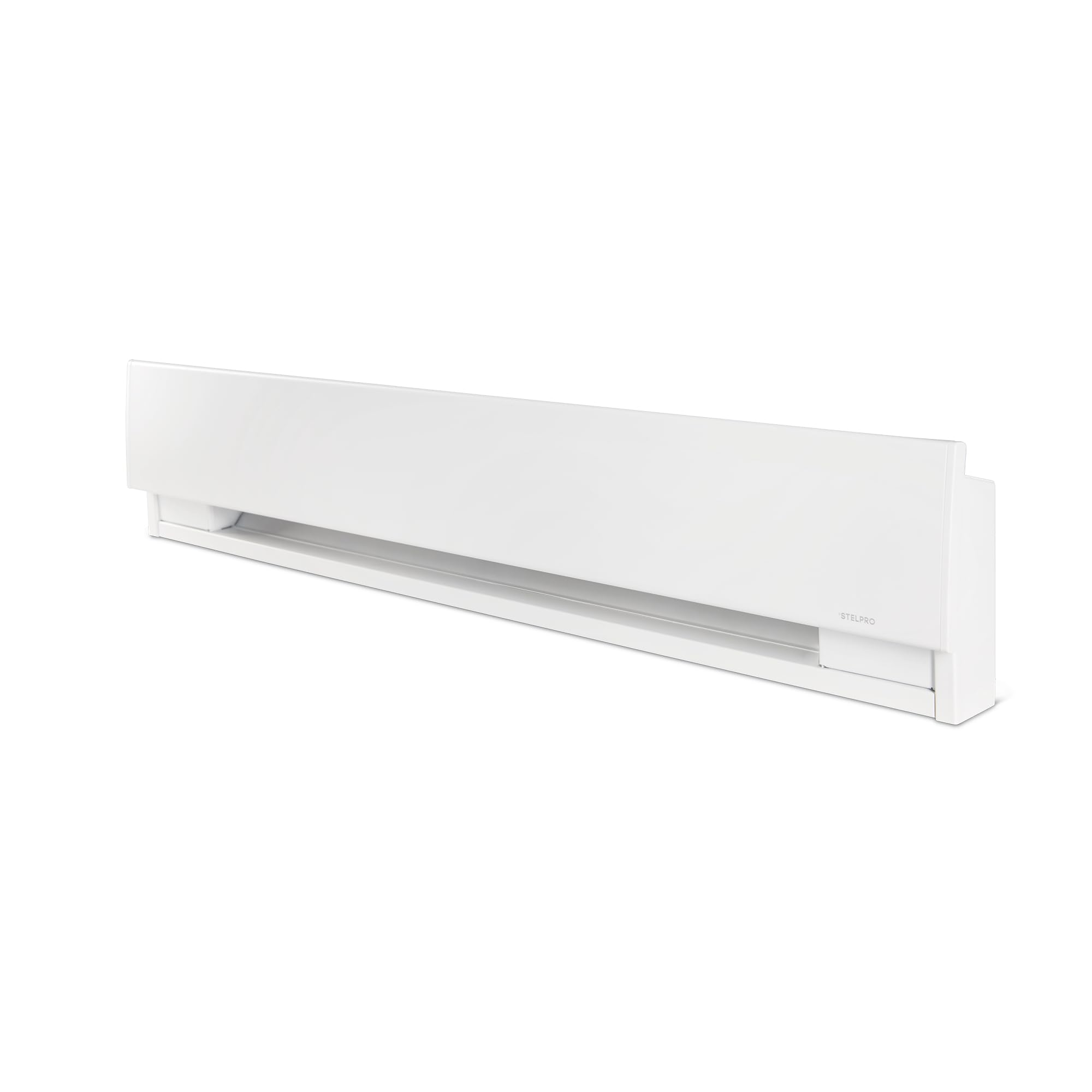
The premium low-profile unit with a 5-year warranty and a front panel that pops off to clean.
The Stelpro Prima is the premium pick because it pairs a genuinely discreet design with the strongest warranty in this lineup. The front panel sits up to 25% shorter than traditional baseboards, and it is engineered to pop off with two clicks so you can wipe down the fins without tools — a detail owners consistently rave about.
At 500 watts on a 240-volt circuit (about 375W on 208V), it covers up to 50 sq ft with quiet convection heat and no fan. The reinforced, impact-resistant front panel limits access to the heating element, which is a thoughtful safety touch. Stelpro backs it with a 5-year warranty on the baseboard and a lifetime warranty on the heating element for the original owner, which tells you how confident they are in the build.
Shoppers say it replaced 20-year-old units with zero issues, and that the full-length junction box on both ends makes wiring a breeze. The catch is that a thermostat is required and sold separately, and the instructions assume you know 240-volt wiring — so budget for an electrician if you don’t.
Premium Perks
- 5-year baseboard + lifetime element warranty
- Two-click removable front for easy cleaning
- Low-profile design sits 25% shorter than standard
Premium Price Notes
- Thermostat costs extra and is required
- Covers just 50 sq ft despite the price
Choose this for: the buyer who wants the best-built, easiest-to-clean unit and plans to keep it for decades.
skip it if: you need to heat more than a single small room — the 50 sq ft coverage is its hard ceiling.
6. Dimplex 30″ Linear Convector Baseboard Heater (LC3010W31)

The 1000-watt linear convector that speeds warm air into the center of the room, 42% smaller than old units.
Dimplex’s larger model kicks the output up to 1000 watts while keeping the same compact, modern aesthetic that makes these heaters feel like design pieces rather than utility boxes. The shark-fin blade design on a steel tubular element improves heat transfer and runs quietly, while the top discharge pushes warm air up to 40% faster into the middle of the room.
At 42% smaller than conventional baseboards, the 30-inch body still manages 300 square feet of coverage, making it a strong choice for a bedroom or living area on a 240-volt circuit. The polyester/epoxy powder coating resists fading and abrasion, and the nickel chromium element sits fully enclosed in a steel sheath to resist rust over time.
Owners replacing 50-year-old units love the modern look, and installation is straightforward. The biggest complaint is that there is no thermostatic control included and no way to add a digital controller, so you must supply your own wall thermostat — one owner returned it specifically for that reason.
Design Wins
- 42% smaller footprint with 1000W output
- 40% faster heat flow through top discharge
- Rust-resistant enclosed steel element
Design Limits
- No thermostatic control on the unit
- Cannot add a digital controller later
Buy this if: you want a modern-looking 1000-watt heater and you already have a wall thermostat wired.
Pass if: you wanted built-in temperature control — this one forces you to handle it externally.
7. King 6K1215BW 1500-Watt 6-Foot Baseboard Heater

A full 6 feet of 120-volt power that one owner used to conquer a 350-square-foot room.
The King 6K1215BW is the big gun for homes that only have 120-volt circuits but need serious heat. At 1500 watts with a 12.5-amp draw, this 6-foot unit brings near-whole-room output without requiring a dedicated 240-volt line — one owner had it installed for a 350-sqft room and confirmed it does the job.
Functionality is what owners praise most, noting it keeps rooms cozy and warm and that the installation is straightforward. The aluminum ribbon fin element provides natural convection heat, the full-length safety cutout shuts things down if it overheats, and the crushproof element and dent-resistant die-form cover are built for real-world abuse.
The mixed feedback hangs on quality — some owners found it a great little heater while a few received faulty units that failed after a season. Heat output also splits opinions, with one owner saying it only heats the area about 1.5 feet in front of it. And as with most here, the thermostat is sold separately, which buyers warned about.
Who It’s For: the 1500-watt output and 120-volt compatibility make this the pick for large rooms on standard household wiring.
Honest Caveat: quality control is inconsistent enough that you should test the unit the season you buy it, and budget for a thermostat.
8. King KP1210 1000-Watt Portable Baseboard Heater
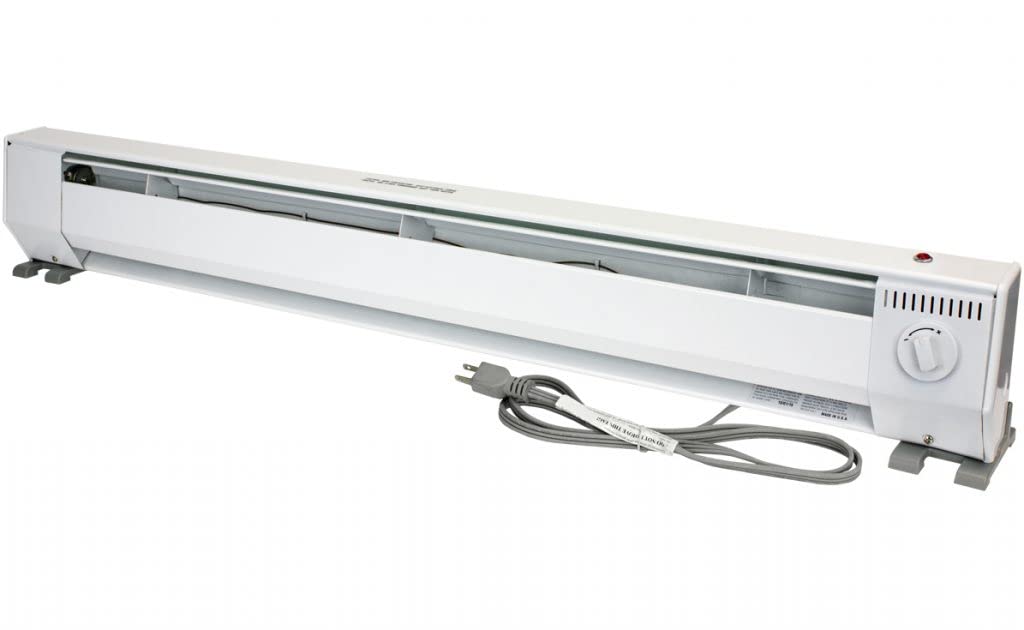
The rare plug-in baseboard with a built-in thermostat, perfect under a 70-inch window.
This King is the outlier in the lineup because it does not need hardwiring at all — it plugs into a standard outlet and includes its own built-in thermostat for direct temperature control. For renters or anyone who cannot modify their walls, that convenience is the whole ballgame, and it runs quietly on 1000 watts of 120-volt convection heat.
Owners love pairing it with a smart plug for scheduled heating and confirm it makes a cold bedroom comfortable without any initial burning smell. The all-aluminum design with a full-length safety cutout keeps things light at 11.5 pounds, and the front panels pop off for easy cleaning. The max temperature setting reaches 194 °F, which is plenty for taking the chill off a room.
The reliability record is genuinely split, though — some owners say it works like a baseboard heater should, while a few received units that arrived damaged or dead on plug-in. One detailed report noted it kept a 14×19 breezeway at 60°F in freezing temps, but also flagged that it lacks low/med/high settings and that customer service did not respond.
Great For Renters: plug-and-play operation with a built-in thermostat means no electrician and no wall modifications required.
Be Ready For: mixed reliability; the 1000W output is also slow to heat larger rooms, so keep it to a single bedroom or office.
9. Marley 500/375W Hydronic Baseboard Heater (HBB504)

The fluid-filled heater that keeps radiating warmth after the thermostat clicks off.
Marley’s hydronic design is the most thermally sophisticated pick here because the heating element is immersed in fluid inside a sealed tube. That fluid retains heat and keeps releasing it after the thermostat shuts off, which means fewer temperature swings and a room that stays cozy longer — exactly the steady, smooth warmth buyers want from a baseboard.
Because there is no blower or fan, the natural convection airflow does not kick up dust or allergens, making this a smart choice for allergy sufferers. Buyers report it “throws good heat for bathroom” and that it was an easy hookup with moderate DIY skills, and there are no disruptive popping or pinging sounds on startup.
The trade-off is that at 500 watts (375W on a 208-volt circuit), this is a modest heater meant for single rooms, not whole floors. Some buyers upgrading from older 2-foot and 6-foot units found the hydronic model worked well but noted a few minor complaints about the fit. As always, it needs a 240/208-volt circuit and a thermostat.
Why Choose Hydronic: the fluid-immersed element retains warmth and runs silently with no dust blow-off, which is a real benefit for bedrooms and allergy sufferers.
The Limitation: 500 watts is best for a bathroom or small room; it will not handle a large open area.
Understanding the Specs
Voltage: 120V vs. 240V
This is the first filter. 120-volt heaters plug into or wire to standard household circuits, making them ideal for supplemental heat. 240-volt heaters use a dedicated heating circuit and are more efficient for primary heat but require an electrician to install. Choosing the wrong voltage means the heater simply will not turn on.
Wattage and Coverage Area
Wattage tells you how much heat the element produces, and it maps directly to the square footage the unit can warm. A 500-watt unit covers roughly a small bathroom, while 1500 watts can handle a large bedroom or living area. Always size up slightly rather than down, since an under-powered heater runs constantly without ever catching up.
FAQ
Do baseboard heaters need a separate thermostat?
Is a 240-volt heater better than a 120-volt heater?
How do I know what wattage I need for a room?
Can I install a baseboard heater myself?
What is the difference between convection and hydronic baseboard heat?
Are baseboard heaters safe to leave running?
Why does my baseboard heater need a 20-gauge junction box?
Can I use a smart plug with a baseboard heater?
How do I clean the inside of a baseboard heater?
Is a longer baseboard heater always more powerful?
Final Thoughts: The Verdict
For most people, the baseboard water heater winner is the Cadet F Series 36 in. because it delivers reliable 750-watt convection heat on a standard 120-volt circuit, with a safety shutoff and a proven track record that makes it the easy first choice for supplemental zones. If your room is larger and you have a 240-volt line, the Cadet Manufacturing 09956 covers 250 sq ft with 1500 watts for serious primary heat. And for a small bathroom where space is precious, the compact Stelpro B0502W tucks in with a shallow 2.56-inch profile. Across all picks, convection heat with no fan noise is the consistent crowd favorite for its quiet, even warmth.
How We Picked
We do not accept paid placement. Every pick is matched to a real buyer and a real use-case; we do not hands-on test units.
Sources & Methodology
Specifications: manufacturer listings and product documentation. Review insights: verified customer reviews, as of August 2026. Pricing: not shown on this page (it changes often); check the current price via the retailer link.
As an Amazon Associate, Gadgets Feed earns from qualifying purchases. This does not affect which products we feature.