
That musty hit when you open the basement door is not just unpleasant — it is a signal that your mechanical room or finished basement is holding moisture and particulates that can trigger allergies, corrode stored goods, and degrade your home’s air over time. Basements are concrete boxes, often below grade, with limited natural airflow and persistent humidity swings that create a perfect breeding ground for mold spores and dust mites. Simply running a box fan or furnace filter will not solve the problem because you need targeted, high-CADR air movement combined with moisture management to break the cycle.
I’m Min — the co-founder and writer behind Gadgets Feed. I’ve spent countless hours cross-referencing independent lab tests, real-user performance logs, and manufacturer spec sheets to isolate which products actually move the needle on the unique challenges of below-grade spaces.
This guide separates the effective from the over-hyped by focusing on measurable metrics like CADR for airborne particles and pint-per-day extraction for moisture, giving you the data you need to confidently choose the best basement air filtration setup for your specific square footage and humidity profile.
How To Choose The Best Basement Air Filtration
Basements are unique environments: they are cooler, often damper, and have far less natural air exchange than the rest of your home. That means a standard bedroom air purifier will struggle, while a standalone dehumidifier without particle filtration leaves airborne allergens untouched. The winning strategy involves selecting either a high-CADR air purifier paired with a dehumidifier, or a combination unit that does both well. Here is how to evaluate your options.
Measure Your Basement’s Humidity Baseline
A hygrometer is your first purchase. Basements typically run 10–20% higher relative humidity than the main floor. If your basement consistently reads above 60% RH, you need a dehumidifier rated for at least 50 pints per day for spaces around 1,500 square feet. Larger or wetter basements require 80-pint or even 150-pint units. Ignore marketing that claims coverage for 4,000+ square feet on a small unit — check the pint-per-day spec at standard test conditions (80°F, 80% RH) to get a realistic expectation.
Prioritize CADR for Air Purifiers in Basements
Clean Air Delivery Rate (CADR) measures how quickly a purifier removes smoke, dust, and pollen from a specific room size. For a basement, you generally want a CADR of at least 200 CFM for smoke to turn the air over four times per hour in a 500-square-foot space. Units with dual-inlet airflow or 360-degree intake perform better in open basement layouts because they circulate air more evenly without leaving dead zones near walls.
Drainage Automation Is Non-Negotiable
Manually emptying a water tank every 8-12 hours in a damp basement is a chore you will abandon quickly. Look for units that support continuous gravity drainage via a standard garden hose, or better yet, an integrated pump that can push water up to a floor drain or sink. Pump-equipped dehumidifiers cost more upfront but save you from waking up to a flooded floor when the tank overflows overnight.
Quick Comparison
On smaller screens, swipe sideways to see the full table.
| Model | Category | Best For | Key Spec | Amazon |
|---|---|---|---|---|
| LEVOIT Core300-P | Air Purifier | Small dry basements | 143 CFM CADR (Smoke) | Amazon |
| Winix 5520 | Air Purifier | Smart app control | AHAM Verified 392 sq ft | Amazon |
| Coway Airmega AP-1512HH | Air Purifier | Real-time air quality display | CADR 246 Dust / 240 Pollen | Amazon |
| Arecovas 52 Pint Dehumidifier | Dehumidifier | Budget basement dehumidification | 52 Pints/Day at 95°F/90% RH | Amazon |
| AEOCKY BOREAS-001 | Dehumidifier | Quiet library-grade operation | ~40 dB noise level | Amazon |
| SIESEAN AP-400 | Air Purifier | Large open basements | 235 CFM CADR, dual-inlet | Amazon |
| Waykar 80 Pint Dehumidifier | Dehumidifier | Mid-size damp basements | 80 Pints/Day, 90° auto swing | Amazon |
| Nuwave Forever Smart Purifier | Air Purifier | Zero filter replacement cost | 7-stage washable filters | Amazon |
| Waykar 150 Pint Dehumidifier | Dehumidifier | Large commercial basements | 150 Pints/Day with pump | Amazon |
In‑Depth Reviews
1. Coway Airmega AP-1512HH(W) True HEPA Purifier
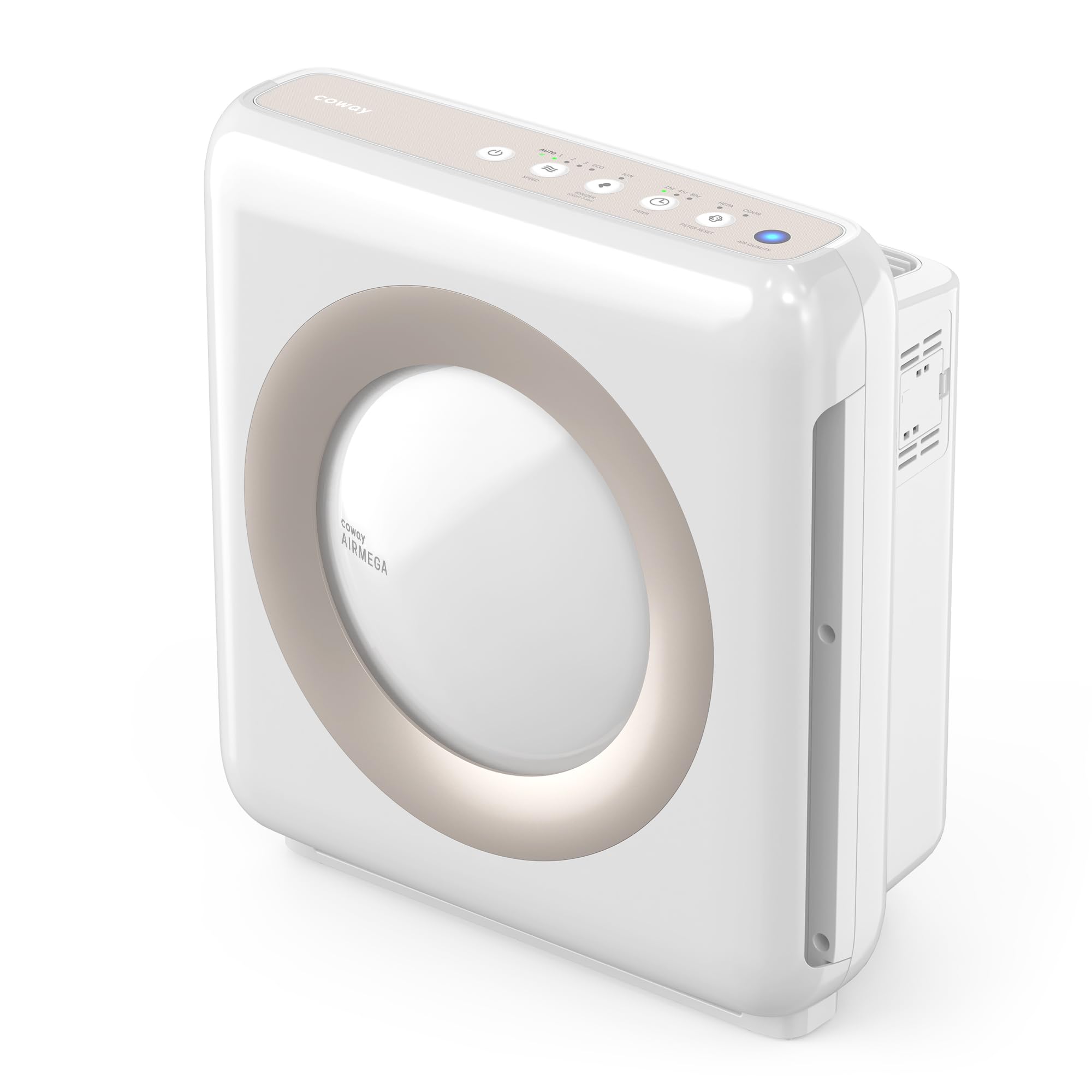
The Coway Airmega AP-1512HH is widely regarded as the gold standard for a reason — it delivers a 246 CFM CADR for dust and 240 for pollen, which means it can cycle the air in a 500-square-foot finished basement nearly five times per hour. Its upward airflow design is critical for basements because it prevents drafty cold spots near concrete walls while pulling stagnant air from floor level. The four-stage filtration system (washable pre-filter, activated carbon deodorization filter, True HEPA, and Vital Ion) handles everything from cigar smoke to musty odors without generating ozone.
The real-time pollution sensor with a brightly colored LED display gives you instant feedback, which is invaluable in a basement where you cannot smell gradual humidity buildup. The Eco mode automatically shuts the fan down when no pollution is detected for 30 minutes, saving energy when the space is unoccupied. Users consistently report that this unit eliminated carpet smell within 48 hours and kept dust levels noticeably lower on surfaces — a concrete win for basement workshops or storage areas.
Noise ranges from a near-silent 24.4 dB on the lowest setting to 53.8 dB at max speed, which sounds like a box fan on medium. That makes it acceptable for a basement office or guest room, but not distracting during sleep. The filter replacement indicator tracks both the pre-filter and HEPA separately, so you always know when to wash the pre-filter or order a new HEPA. This unit’s Wirecutter pedigree is backed by a 3-year warranty on motor and electronic parts, giving you peace of mind for basement conditions that vary seasonally.
Why it’s great
- Top-tier CADR for smoke (233 CFM) and dust (246 CFM) outperforms nearly all competitors at its size
- Eco mode auto-shuts the fan after 30 minutes of clean air, saving power in unoccupied basements
- Upward airflow design prevents cold drafts against concrete walls and warms the air slightly as it circulates
Good to know
- Auto mode defaults to low speed a lot — you cannot set a minimum medium speed for continuous basement circulation
- Filter replacements (pre-filter washable, HEPA every 12 months) run around – per year
2. Winix 5520 Air Purifier
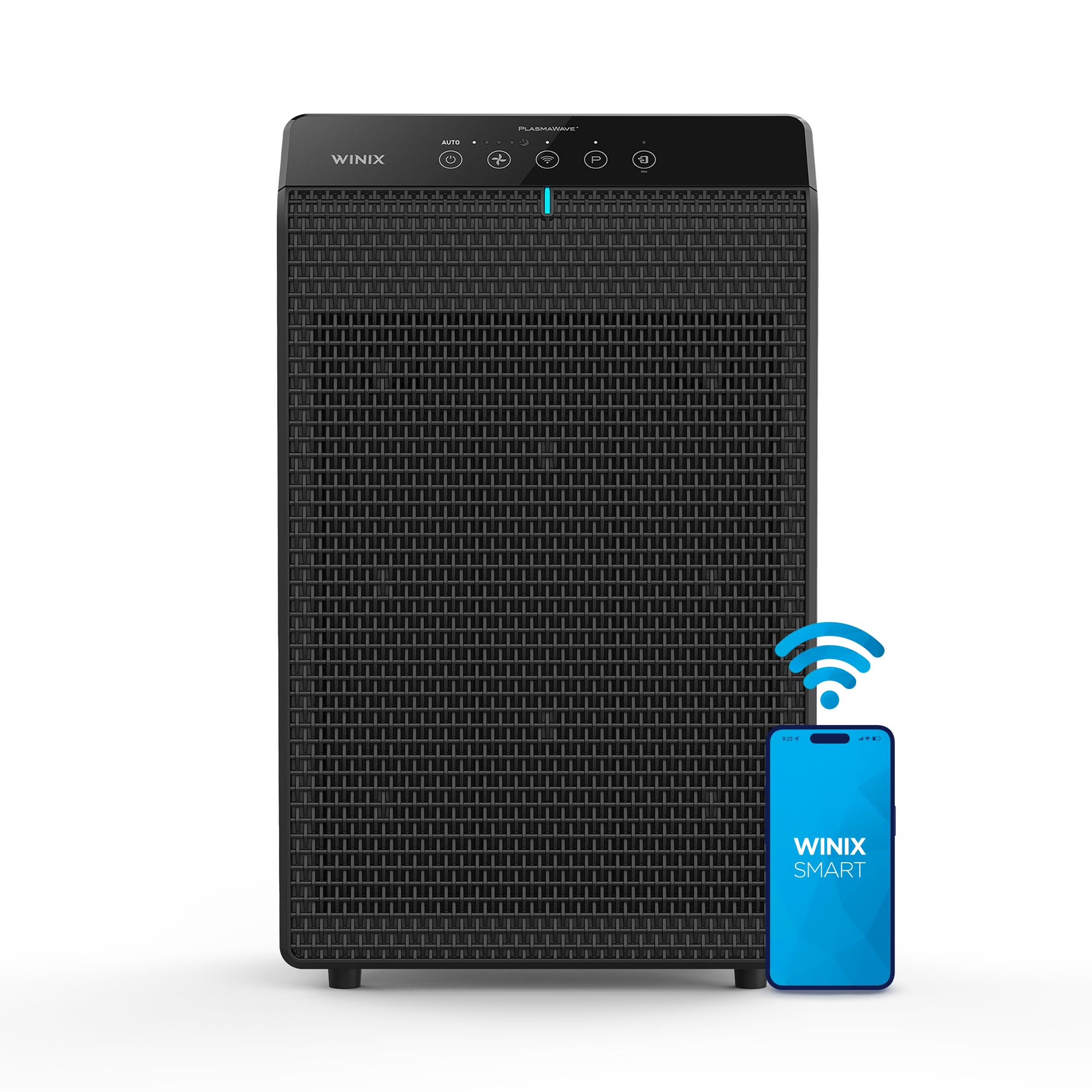
The Winix 5520 is a heavy hitter for basement air filtration, covering up to 1,882 square feet in one hour per its AHAM verification. That is a massive overhead for a unit that stands just 22.7 inches tall and draws minimal power. Its four-layer filtration stack — washable fine mesh pre-filter, AOC carbon filter for VOCs and odors, True HEPA capturing 99.99% of particles as small as 0.01 microns, and Plasmawave ionizer — attacks the two biggest basement problems at once: heavy dust and pet or mold odors.
The built-in air quality sensor with color-coded LED (blue/orange/red) is responsive enough to detect cooking odors from an upstairs kitchen finding its way into the basement, which is a common issue in townhouses and split-level homes. Auto Mode adjusts fan speed in real-time, and the Light Automated Sleep Mode activates when the room darkens, dimming the lights and dropping to a near-silent 23.5 dB. Users report this unit eliminates that “carpety smell” from old basement carpeting within 1–2 days of continuous operation, which is a strong indicator of its carbon filter’s effectiveness.
The washable pre-filter is a practical touch for basements, where coarse dust from concrete floors or workshop debris would otherwise clog a standard HEPA quickly. The AOC carbon filter is replaceable separately, keeping ongoing costs lower than all-in-one cartridges. The only hiccup reported by users concerns the smart app — Alexa integration requires a separate QR code process that does not always work, but the unit works perfectly standalone without the app. At this price point for a unit with a verified large-room CADR, the Winix 5520 is a smart choice for basements with persistent odor issues.
Why it’s great
- AHAM verified for 1,882 sq ft in 1 hour — genuine large-room CADR with no inflated claims
- Light Automated Sleep Mode automatically dims and quietens at 23.5 dB when the room goes dark
- Washable fine mesh pre-filter extends HEPA life significantly in dusty basement environments
Good to know
- Alexa integration is not straightforward and may not recognize the device reliably
- Plasmawave ionizer produces trace ozone — fine for unoccupied basements but worth noting for continuous bedroom use
3. LEVOIT Core300-P Air Purifier

The LEVOIT Core300-P punches well above its price tier with a 56W high-torque motor that delivers 143 CFM CADR for smoke, 153 CFM for dust, and 167 CFM for pollen. That is enough to cycle a standard 222-square-foot finished basement room 4.8 times per hour, or a 1,073-square-foot open basement once per hour. Its AHAM Verifide seal guarantees that the CADR numbers are independently tested, not marketing math — a rare transparency in the budget-friendly segment.
The 3-in-1 filter system (pre-filter, True HEPA, and activated carbon) is supported by a range of specialized replacement filters: the Toxin Absorber for VOCs and smog, the Smoke Remover for wildfire smoke, and the Pet Allergy filter for dander and odors. This modularity is especially useful in basements that have specific challenges — a workshop basement with paint fumes benefits from the Toxin Absorber, while a basement with a litter box or dog bed needs the Pet filter. Sleep Mode drops the noise to a near-silent 24 dB, making this viable for a basement guest room.
Users consistently praise the ultra-quiet operation and the noticeable improvement in air freshness within 20 minutes on high speed. The 2/4/6/8-hour timer and the ability to turn off all display lights are minor but welcome features for a bedroom or media room. The main trade-off is that the CADR is not sufficient for very large open basements exceeding 500 square feet — you would need two units or a more powerful option. Replacement filters are relatively affordable compared to premium brands, but using a non-genuine filter risks damage to the motor, so stick with official LEVOIT replacements.
Why it’s great
- AHAM Verifide certification guarantees independent CADR testing — no inflated claims
- Multiple specialized filter types (Toxin Absorber, Smoke Remover, Pet Allergy) let you tailor performance
- Sleep Mode at 24 dB is genuinely silent — barely audible in a quiet basement bedroom
Good to know
- Best for basements under 500 sq ft — larger spaces will need additional units or a higher-CADR model
- Official replacement filters are required to maintain performance and avoid motor damage
4. SIESEAN AP-400 Air Purifier
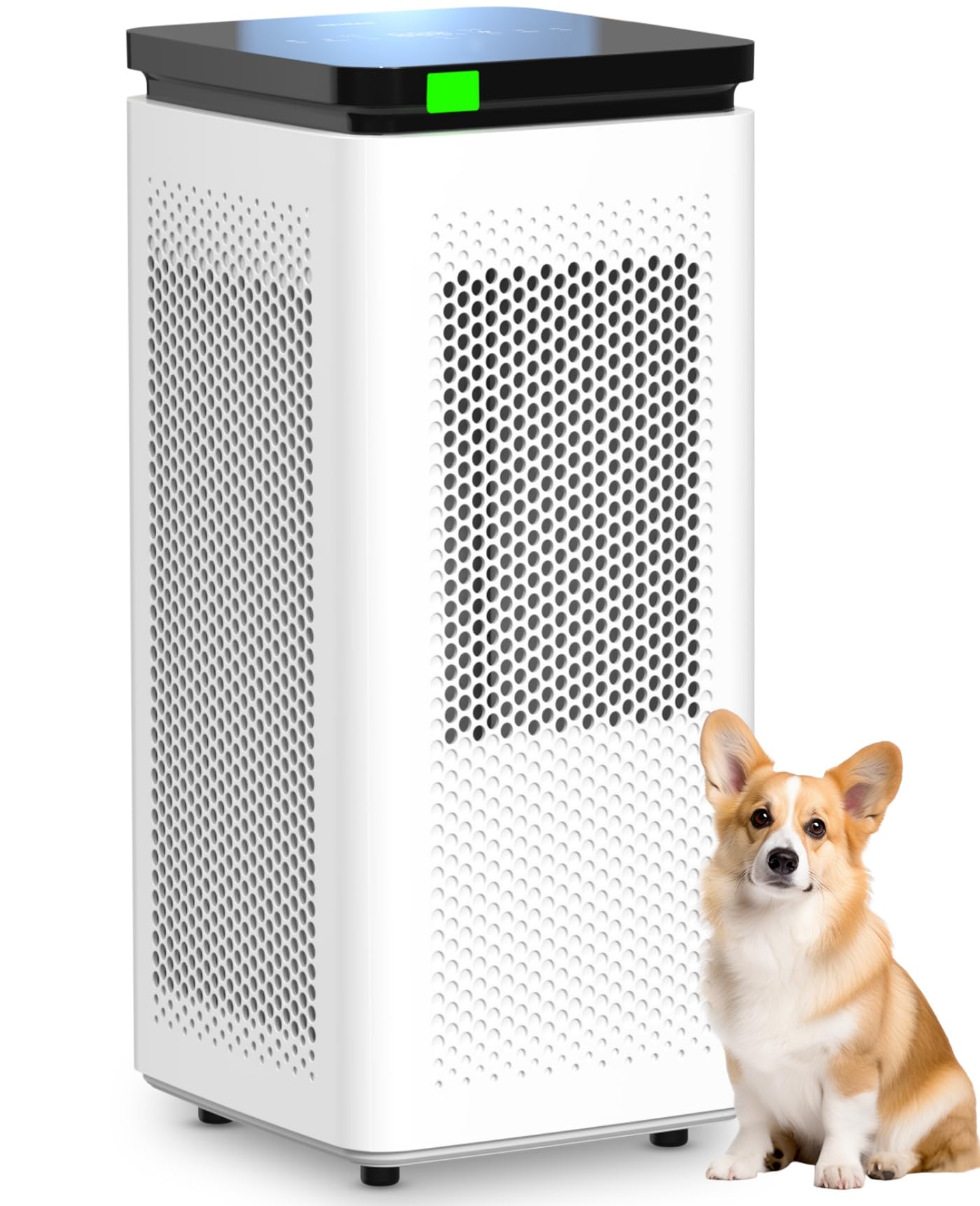
The SIESEAN AP-400 is a true air-mover for large basements, with a 235 CFM CADR and dual-sided inlet airflow that circulates air twice as fast as single-intake units. It claims to clean a 500-square-foot room in just 15 minutes and can handle up to 3,500 square feet at a single pass per hour. That makes it one of the fastest air changes in this guide — ideal for open basements, finished walk-out basements, or spaces where you need rapid smoke or odor removal after a workshop session or party.
The H13 True HEPA filter captures 99.97% of particles down to 0.1 microns, including mold spores, pet dander, and smoke. The built-in PM2.5 digital display gives you real-time particle count feedback, which is particularly useful for basements where you cannot always see or smell the problem. Auto Mode adjusts fan speed based on the PM2.5 reading, and Sleep Mode drops to 30 dB with a dimmer control for the panel lights — a solid choice for a basement bedroom or home theater. Users note that the auto mode is responsive enough to detect deodorant spray or cooking odors from an open kitchen above the basement.
Certifications from CARB, DOE, EPA, and UL mean this unit is safe for continuous use, even in occupied basements. The floor-standing design with child lock and timer makes it practical for family-oriented basement spaces. The main consideration is filter maintenance: the manufacturer recommends replacing the filter every 3–4 months under heavy use, which can add up over a year. But given the 235 CFM CADR at this price point, the AP-400 delivers premium air turnover without the premium price tag, making it a strong contender for anyone serious about basement air quality.
Why it’s great
- Dual-inlet airflow with 235 CFM CADR provides some of the fastest air turnover in its class
- Built-in PM2.5 digital display gives real-time particle counts — ideal for monitoring basement conditions
- CARB, DOE, EPA, and UL certified for safe continuous operation in occupied spaces
Good to know
- Filter replacement recommended every 3–4 months, which is more frequent than some competitors
- Unit measures 10 x 10 x 18.9 inches — compact for its CADR, but verify your basement shelf clearance
5. Arecovas 52 Pint Dehumidifier

The Arecovas 52 Pint Dehumidifier is an entry-level solution for basements that need moisture removal without the bells and whistles. It removes up to 52 pints per day at 95°F and 90% humidity, covering up to 4,500 square feet. That is sufficient for a moderately damp basement in the 1,000–1,500 square foot range, though the coverage rating assumes open-plan spaces — finished basements with multiple rooms will need additional units.
Three custom modes (DEHU for maintaining ideal humidity, DRY for accelerating laundry drying, and CONT for continuous dehumidification) give you flexibility. The 0.66-gallon water tank is small for the capacity — you will likely need to empty it multiple times per day in a truly damp basement. The included 6-foot drain hose for continuous gravity drainage is essential; attach it to a floor drain or sink and you can set the unit to run indefinitely. The auto-defrost sensor is critical for basements that stay below 65°F, preventing the coils from icing up during cooler months.
Users report that this unit eliminates musty smells within a day and reduces visible condensation on basement windows. The 2025 Energy Star certification means it uses roughly 45% less power than non-certified units, which matters for a device that may run 12–18 hours daily. The build quality feels solid for the price, though a few users experienced unit failure after 8 months. The responsive customer service that replaced units under warranty is a mitigating factor, but longer-term reliability remains a question for budget-tier dehumidifiers.
Why it’s great
- 2025 Energy Star certified, using up to 45% less power than non-certified alternatives
- Three operating modes (DEHU, DRY, CONT) allow tailored moisture management for different basement conditions
- Auto-defrost sensor prevents coil icing in cooler basements below 65°F
Good to know
- 0.66-gallon tank is small — continuous drain hose is almost mandatory for daily use
- Some users report unit failure within the first year, though customer service is responsive
6. AEOCKY BOREAS-001 Dehumidifier
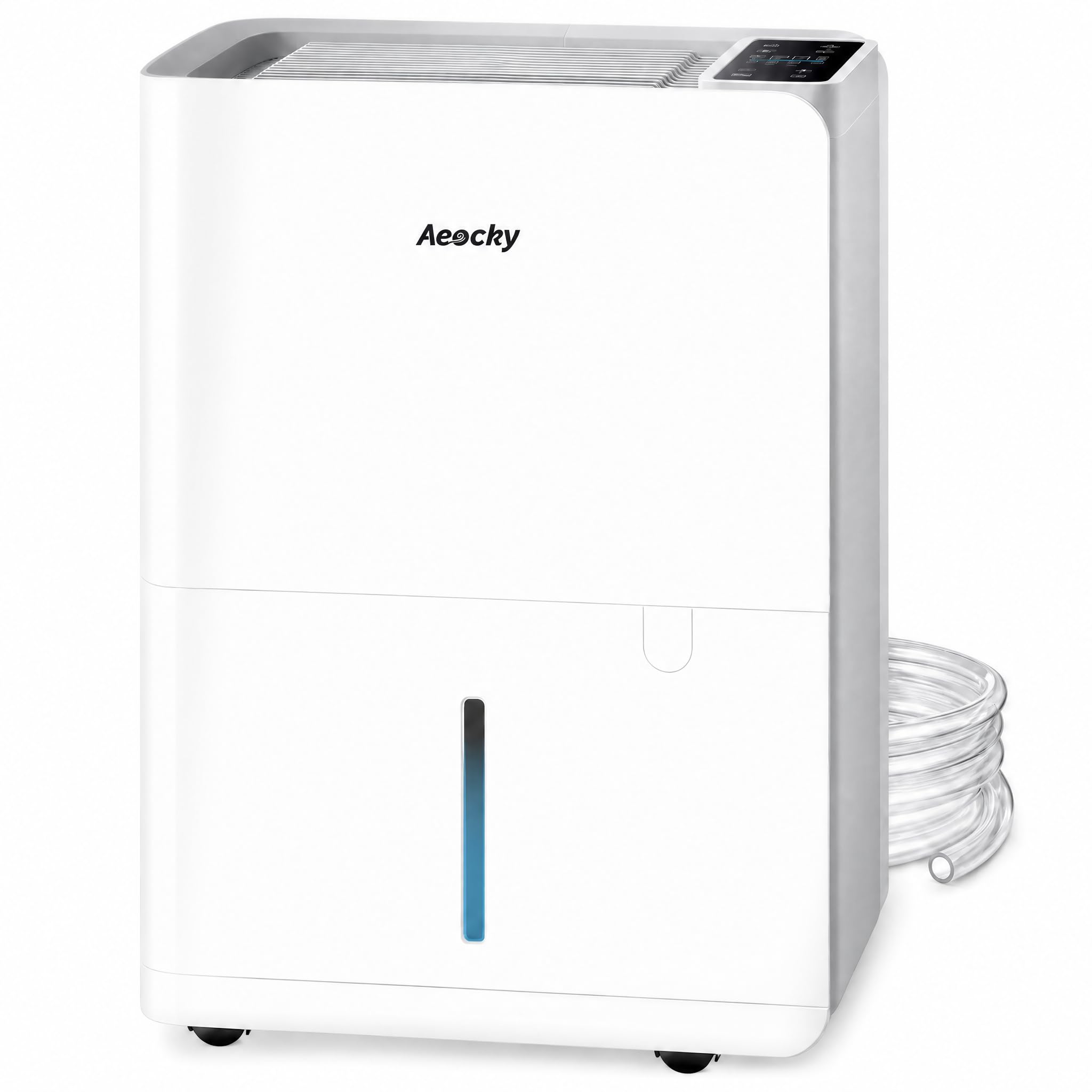
The AEOCKY BOREAS-001 sets a new noise benchmark for compressor dehumidifiers with its proprietary dual-chamber acoustic structure, running at roughly 40 dB — the equivalent of a quiet library. That is remarkable for a unit that extracts 50 pints per day (at 95°F/95% RH) and covers up to 3,500 square feet. In a basement used as a home theater, gym, or office, the noise level alone justifies the premium over cheaper alternatives that sound like a small refrigerator compressor.
The industrial-grade build quality includes 7mm high-tooth inner-threaded pure copper tubing and blue hydrophilic fins in the evaporator, which resist corrosion better than standard aluminum coils — a real advantage in damp basement conditions where cheaper units fail after one season. The auto-defrost system is intelligent enough to detect frost buildup and cycle into defrost without stopping dehumidification entirely, maintaining continuous moisture removal even in cooler basements down to 65°F. The 24-hour timer and 40–80% adjustable humidity control give you precise set-and-forget operation.
The 0.8-gallon water tank is undersized for the extraction rate — the unit will fill the tank in 3–4 hours in a genuinely damp basement. AEOCKY acknowledges this and strongly recommends using the included 2-meter drain hose with the 3/4-inch garden hose adapter for continuous gravity drainage. The color-coded ambient humidity light provides an at-a-glance reading of room dampness levels, which is a thoughtful touch for basements that do not have a separate hygrometer. With a 3-year warranty and ETL/RoHS/REACH certifications, the BOREAS-001 is built to last, making it a smart long-term investment for moisture-prone basements.
Why it’s great
- Library-grade ~40 dB operation is dramatically quieter than typical compressor dehumidifiers
- Pure copper tubing with hydrophilic fins resists corrosion in damp basement environments
- Intelligent auto-defrost system maintains continuous operation in cooler basements without shutdowns
Good to know
- 0.8-gallon tank fills quickly — continuous drain setup is strongly recommended from day one
- Unit weight is 25.3 lbs with wheels, but the handle is unibody — no carry strap for stairs
7. Waykar 80 Pint Dehumidifier
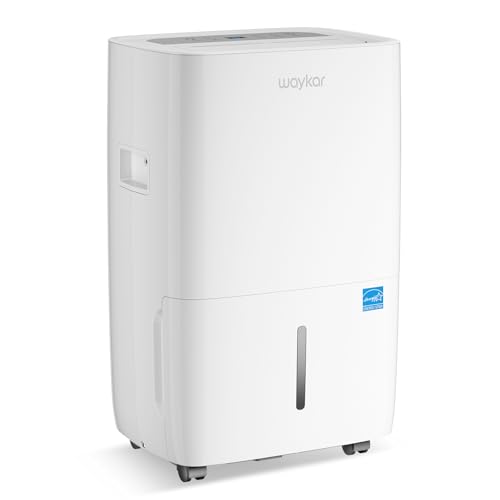
The Waykar 80 Pint Dehumidifier is a step up in capacity for mid-to-large basements, handling spaces up to 5,000 square feet with 80 pints per day extraction at standard test conditions. Its standout feature is the 90° auto swing louver that distributes dry air evenly across the room — particularly useful in basements with uneven humidity pockets near sump pumps, exposed dirt crawl spaces, or concrete walls. The louver ensures no single corner gets over-dried while another stays damp.
The smart humidity control can reach as low as 30% RH, which is rarer than the standard 40% minimum found on many units. That is critical for basements used as wine cellars, storage for sensitive documents, or home gyms where you need very low humidity to prevent rust on equipment. The Energy Star certification and AI-smart protection system (auto-defrost, overload protection, memory restart) mean you can run it continuously without worrying about overheating or power outages resetting your settings. The 1.14-gallon tank is larger than the AEOCKY’s but still fills quickly — the included 3.3-foot drain hose is the practical way to use this unit.
Users consistently praise its quiet operation at roughly 42 dB, which is competitive with the AEOCKY despite the higher pint capacity. The wheels and top handle make it manageable to move between basement rooms, though at 31 pounds it is not a lightweight. The humidity readout on the display tends to read incorrectly — users report setting the target 10% lower than actual to maintain the correct level. Waykar’s customer service earns high marks for resolving issues, including sending replacement units for units that malfunction after one season. For the capacity-to-price ratio, the Waykar 80-pint is a strong mid-range option for seriously damp basements.
Why it’s great
- 90° auto swing louver ensures even moisture removal across the entire basement floor
- Adjustable humidity down to 30% RH — lower than most competitors for specialized storage needs
- Energy Star certified with AI-smart auto-defrost and overload protection for worry-free operation
Good to know
- Humidity readout on the display is inaccurate — you may need to adjust the target setting to compensate
- Drain hose connection is a standard 3/4-inch garden thread, but the included hose is only 3.3 feet
8. Nuwave Forever Smart Air Purifier

The Nuwave Forever Smart Air Purifier takes a fundamentally different approach: its patented 7-stage filtration system uses washable and reusable filters that eliminate the recurring cost of paper-like HEPA replacements. For basement owners who hate the annual subscription trap of filter replacements, this is a compelling value proposition. The unit is Intertek lab certified to capture 100% of particles down to 0.1 microns, including smoke, dust, pollen, and pet hair, and it can clean up to 2,002 square feet in one hour.
The filtration stages include stainless-steel prefilters for large particles, Bio-Guard filters for airborne micropollutants, an ozone removal filter that reduces ozone levels to 1 ppb (CARB compliant), and a Bio-Guard 360 filter for microparticles. The ozone reduction feature is especially relevant for basements that may have off-gassing from stored chemicals, paints, or pressure-treated wood. The WiFi app integration allows you to monitor air quality and adjust fan speed remotely, which is useful when the basement is inaccessible.
Users report that the air feels noticeably crisper within a few hours and that pet odors are significantly reduced. The fan noise at levels above 3 is noticeable, comparable to a vent fan, but auto mode generally stays at lower speeds. The washable filters require thorough drying for up to 24 hours after cleaning, which means you need a backup plan during the drying cycle. The upfront cost is higher than most standalone purifiers, but over a 3-year period, the zero replacement filter cost offsets the initial investment. For environmentally conscious buyers who want to eliminate disposable filter waste, this is the strongest option in the guide.
Why it’s great
- Zero replacement filter cost — washable 7-stage system saves hundreds over the unit’s lifetime
- Ozone removal filter reduces ozone to 1 ppb, making it CARB compliant and safe for occupied spaces
- WiFi app integration enables remote monitoring and control of basement air quality
Good to know
- Washable filters require 24-hour drying time, so you will need a second set or a backup plan
- Fan noise above speed 3 is noticeable and may be disruptive in a quiet basement media room
9. Waykar 150 Pint Dehumidifier with Pump
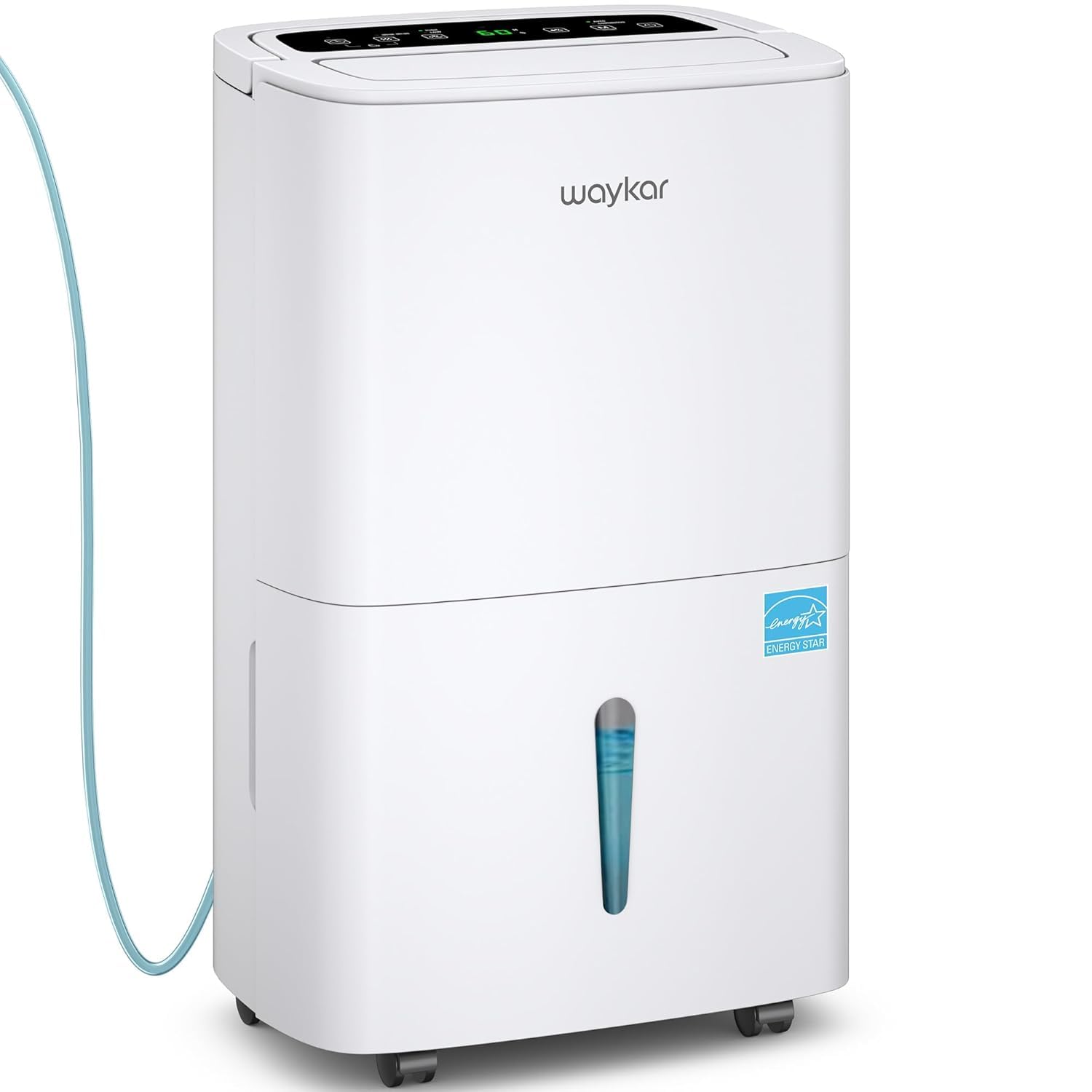
The Waykar 150 Pint Dehumidifier is the heavy artillery for basement air filtration — designed for spaces up to 7,000 square feet with a 150-pint daily extraction capacity. This is not a consumer appliance; it is built for commercial basements, warehouses, wine cellars, and industrial spaces where moisture is a structural threat. The built-in pump can push water upward up to 9.84 feet, meaning you can discharge into a floor drain, utility sink, or even an upstairs window well without relying on gravity alone — a game-changer for basements below the sewer line where gravity drainage is impossible.
The 2025 Energy Star certification and self-drying function ensure the unit does not become a mold reservoir itself. The auto-defrost system is tailored for low-temperature basements, and the intelligent touch control panel with humidity display lets you set the target between 30% and 80% in 5% increments. The 1.85-gallon water tank is larger than most, but with a 150-pint extraction rate, it will still fill quickly — the continuous drainage options (gravity hose, pump hose, or combination) are essential for unsupervised operation. The 24-hour timer and memory restart function mean the unit resumes its last settings after a power outage.
Users report that this unit dropped basement humidity from 80% down to 35–45% within 24 hours in spaces around 2,000 square feet, which is a dramatic improvement in air quality. The 42 dB noise level is surprisingly quiet for a unit this powerful, thanks to an optimized rotary compressor and vibration-reducing construction. Some users experienced pump failures within the first year, but Waykar’s customer service consistently replaced units under warranty, which suggests the company stands behind its product. If your basement is genuinely wet — not just humid — the 150-pint Waykar is the only tool for the job.
Why it’s great
- Built-in pump lifts water up to 9.84 feet, enabling drainage into sinks or drains above the basement floor
- 150 pints per day extraction rate can handle the wettest commercial-grade basement conditions
- Self-drying function prevents mold and mildew growth inside the unit itself
Good to know
- Unit weighs 38.6 pounds and dimensions are large (10.5 x 15 x 24.2 inches) — verify your basement space
- Some users report pump failures within the first year, though warranty replacement is responsive
FAQ
Do I need an air purifier or a dehumidifier for my basement?
How often should I replace filters in a basement air purifier?
Can I use a single large dehumidifier for a split-level basement with multiple rooms?
What is the best placement for an air purifier in a basement?
Final Thoughts: The Verdict
For most users, the best basement air filtration winner is the Coway Airmega AP-1512HH because its verified 246 CFM dust CADR, upward airflow design, and near-silent 24.4 dB sleep mode make it the most versatile foundation for any finished basement. If you need serious moisture removal for a damp space, grab the AEOCKY BOREAS-001 for its library-grade quiet operation and corrosion-resistant copper coils. And for commercial-scale humidity in a basement exceeding 3,000 square feet, nothing beats the Waykar 150 Pint Dehumidifier with Pump for its raw extraction power and above-grade drainage capability.