
Our readers keep the lights on and my morning glass full of iced black tea. As an Amazon Associate, I earn from qualifying purchases.
Specs are compiled from manufacturer listings and verified buyer reviews and can change over time — please confirm the key details on the product page before buying.
You don’t need to dig up your yard or hire a crew to fix it; the right crack sealer, applied from inside, can stop the water at its source. This guide breaks down the best options for every type of crack, from hairline floor fractures to actively leaking wall joints.
I’m Min — the founder and writer behind Gadgets Feed. This guide is built by comparing the manufacturers’ published specifications and the patterns across verified customer reviews, so you get each pick’s real strengths and trade-offs instead of marketing spin.
We’ve matched nine top sealers to their ideal basement jobs, so you can confidently choose the best basement crack sealer for your specific repair.
Our Picks at a Glance
How To Choose The Best Basement Crack Sealer
Choosing the right sealer starts with identifying your crack’s type. A thin, dry hairline crack needs a different approach than a wide, actively leaking joint. You also need to decide if you want a simple patch or a full waterproofing layer for the wall.
Match the Sealer to the Crack Type
For narrow, non-moving cracks in floors, a self-leveling liquid that flows into the gap is your best bet. For walls that shift with temperature changes, you need a flexible, elastomeric coating that can stretch without tearing. For a crack that is actively pushing water, an injection kit that forces expanding foam deep into the void is the only true solution.
Decide Between a Coating and an Injection Kit
You have two main ways to stop basement water: paint on a liquid rubber coating or inject material into the crack. A liquid rubber coating works like painting a waterproof membrane on the surface—ideal for sealing a large area of porous wall or a web of small cracks. An injection kit is a surgical strike; it sends material into the crack itself to physically block the water’s path. Your choice depends on whether you are coating a wall or injecting a specific seam.
Quick Comparison
| Model | Best For | Type | Size | Drying Time | Amazon |
|---|---|---|---|---|---|
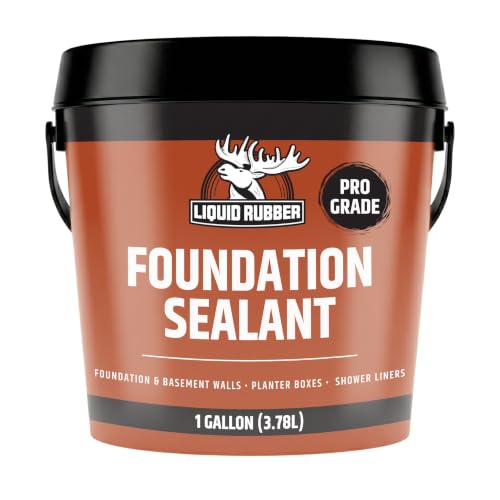
| Liquid Rubber Foundation Sealant★ Best Overall | Whole-wall waterproofing | Elastomeric Coating | 1 Gallon | — | Amazon |
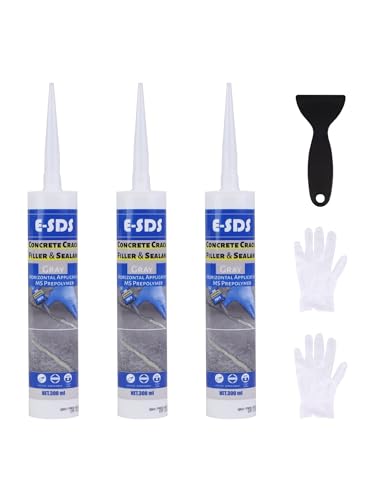
| E-SDS Cement Crack FillerBest Value | Horizontal floor cracks | Self-Leveling Paste | 10.5 fl. oz (3 Pack) | 24–48 hours | Amazon |
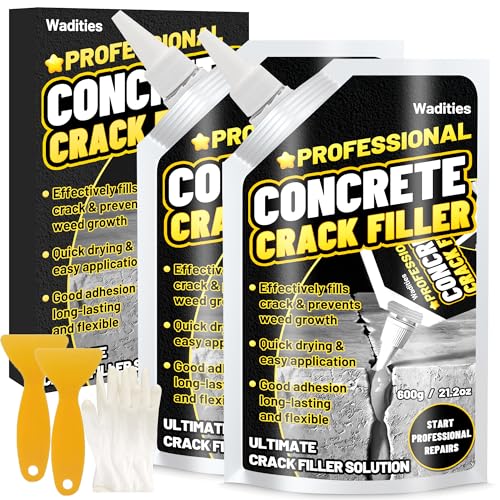
| Wadities Concrete Crack FillerBest for Traffic | General-purpose patching | Liquid Rubber | 2.65 lb | 4–6 hours surface | Amazon |
| DCP Donseal PU440 | Vertical wall joints | Non-Sag Polyurethane | 20.2 fl oz (2 Pack) | — | Amazon |
| Heelos Asphalt Crack Filler | Driveway & patio gaps | Self-Leveling Liquid | 4.4 lb (4 Pack) | 24–48 hours | Amazon |
| Tufinein Rubber Liquid Sealant | Multi-surface leaks | Elastomeric Coating | 53 oz | 2–4 hours film | Amazon |
| Hupeyna Rubber Liquid Sealant | Budget wall coating | Elastomeric Coating | 1.5 kg | 24–48 hours | Amazon |
| Simpson Strong-Tie Crack-Pac | Active leak injection | Injection Kit | 9 oz (2 Cartridges) | — | Amazon |
| Hydra Stop 300 Kit | Complete DIY injection | Injection Kit | 10 ft Coverage | — | Amazon |
In‑Depth Reviews
1. Liquid Rubber Foundation Sealant
Our pick — over 4.5★ from 3,000+ verified ratings; the strongest balance of quality and price.
The whole-wall armor that flexes with your foundation instead of cracking apart.
This is the sealer you reach for when you want to coat an entire wall, not just a single seam. It’s a water-based rubber membrane that applies like thick paint and cures into a flexible, waterproof skin. The key number here is 900% elongation—meaning the cured film can stretch nearly ten times its own length without tearing, so seasonal ground movement won’t reopen your repair. It’s also formulated with zero VOCs (volatile organic compounds, the harsh fumes you smell in many paints), making it far more tolerable for indoor basement work.
Coverage is substantial: one gallon handles about 50 square feet on interior basement surfaces with 2-3 coats, which is a major advantage over small tubes. You’ll need to let it dry between coats and work in temperatures between 50°F and 90°F. The product’s one quirk is that it’s not for walking surfaces—the fully cured rubber stays tacky, so keep it off floors you’ll be standing on.
Buyers report it has stopped water on nearly century-old foundation walls that had been leaking for years. Its effectiveness and the quality of the seal it creates win people over. The most-discussed trade-off is its slow drying time, especially between coats. But the elastic, rubber-tar finish that results is exactly what you want blocking groundwater.
What makes it the top pick
- High elasticity handles foundation movement without cracking
- Large 1-gallon size coats entire walls efficiently
- Zero VOCs for safer indoor application
The honest caveats
- Cured surface remains tacky and not walkable
- Drying time is slow, especially between coats
Your wall-wide waterproofing: Pick this if you have damp, porous walls or a web of small cracks to seal in one go.
skip it if: You have a single, wide, actively gushing crack—you need an injection kit instead.
2. E-SDS Cement Crack Filler
This self-leveling pour fills horizontal cracks and turns them into a smooth, watertight surface—so you don’t have to worry about water seeping through your garage floor.
If your problem is a crack running across your basement floor slab, this is the product that eliminates the guesswork. It’s a self-leveling paste that you squeeze from a standard caulking gun directly into the gap; it flows to fill the void evenly without you having to fuss with a trowel. The formulation is a silane-terminated polymer, a modern adhesive chemistry that excels at bonding to concrete. Priced well for what you get, it’s a budget-friendly path to a durable repair.
This three-pack of 10.5 fl. oz tubes gives you enough material for thin horizontal cracks, and buyers confirm the consistency is ideal for that job. It cures within 24–48 hours to form a smooth, waterproof barrier that resists rain, snow, and UV rays—so your garage floor stays dry through harsh weather. The main thing to know is that clean-up is not with soap and water; you’ll need a solvent for tools and clothes, so wear protection you don’t mind ruining.
Reviews highlight how effectively it seals expansion joints, keeping ants, bugs, and weeds from finding their way inside. The recurring gripe is that a tube doesn’t go very far, so measure your crack length before committing. But for a clean, hard, fast-drying fix on floors, it delivers exactly what’s promised.
Why it works for floors
- Self-leveling formula spreads evenly in horizontal gaps
- Cures hard and fast within 24–48 hours
- Resists weather extremes for long-term performance
Watch out for
- Clean-up requires solvent, not soap and water
- Tubes are small, so coverage per pack is limited
Best for slab seams: This is your pick for sealing joints in garage floors and basement slabs where you need a smooth, level finish.
Consider another if: You’re trying to patch a vertical wall crack—this formula is designed for horizontal use.
3. Wadities Concrete Crack Filler
A high-elasticity filler that shrugs off foot traffic and temperature swings.
This 2.65 lb tub of grey sealant is built for areas that take a beating, like driveways, walkways, and patios—places where concrete expands and contracts with the seasons. Its high-elasticity formula is designed to maintain adhesion through that building movement, preventing the seal from tearing away. You get a complete kit right in the box: the filler, a plastic scraper, and a pair of gloves, so you don’t have to run out for tools.
Application is straightforward: ensure the crack is dry and clean, attach the nozzle to the tub, and inject the material directly into the gap. It dries to the touch in 4 to 6 hours and fully cures in 24–48 hours, creating a smooth waterproof membrane. Reviewers report excellent results on garage floors, noting the importance of smoothing it out with the included trowel before it sets—so you get a flat, even finish that lasts.
There is a bit of a knack to getting all the product out of the package, as it’s quite thick and requires a firm squeeze. Despite that, it performs its core job beautifully, with owners praising its ease of application and how well it holds up on patio holes and driveway cracks. This is the middle-of-the-road hero for general concrete patching.
Built for busy concrete: Choose this when you need a tough, elastic patch that stands up to daily use and weather.
Plan for the squeeze: The thick paste is a workout to express from the package, so have some patience (or a strong grip) ready.
4. DCP Donseal PU440
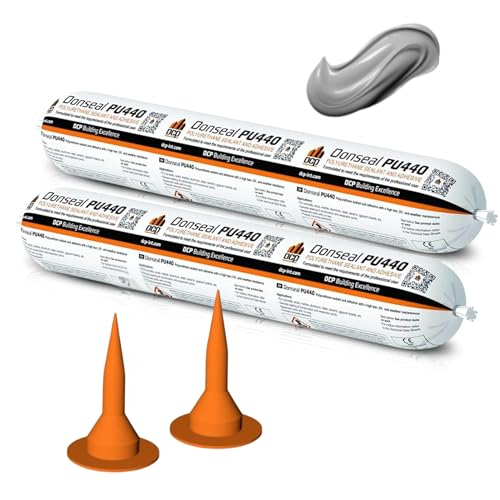
The non-sag polyurethane that stays put on vertical walls and doesn’t drip.
Sealing a crack on a vertical basement wall is a different challenge than a floor, because gravity is working against you. This non-sag polyurethane sealant from DCP is engineered to stay exactly where you put it, making it ideal for that vertical application. It cures by reacting with air humidity to form a highly elastic joint that can handle a wide service temperature range from -22°F to 175°F, so it won’t become brittle in the cold basement.
The 2-pack of 20.2 fl. oz sausage caulks is a professional-grade solution that adheres well to concrete, wood, gypsum boards, and even aluminum and steel. It’s versatile enough for both horizontal construction joints and vertical cracks in foundation walls. As a nice bonus, this caulk can be painted over to match your interior design, and it even contributes to acoustic and hygienic properties in the room.
The seal holds up impressively on stem walls and foundations, with users noting the elasticity exceeds expectations. There’s a significant learning curve, though: it’s very sticky and hard to tool for a perfectly smooth finish, and it requires a special caulk gun that isn’t standard. If you’re a DIY purist looking for a clean, professional look, be prepared to work for it.
Vertical crack specialist: Reach for this when you have a wall crack that needs a heavy-duty seal that won’t sag or slide.
Practice makes perfect: The sticky texture is tough to tool, and you’ll need to source a compatible caulk gun before you start.
5. Heelos Asphalt Crack Filler

The four-pack workhorse that levels fast and covers a lot of driveway ground.
This kit gives you four 500g pouches of self-leveling, black sealant—a total of 4.4 lb—which is a smart value if you have a long driveway crack or multiple spots to repair. The self-leveling design is the star here: it spreads evenly with minimal effort and dries to a clean, consistent finish in 24–48 hours. You even get a brush and gloves in the box, so it’s a ready-to-go DIY kit.
It’s formulated to adapt to shifting surfaces and ground movement, maintaining a strong bond with concrete, cement, and asphalt even under heavy loads and foot traffic. Owners have used it effectively to seal stone patio holes and large asphalt driveway cracks, noting it dries fast on a warm day and holds up well. Its best-known trick is acting as a tidy border for landscape areas, showing off its versatility.
The biggest pain point is the packaging: the bag is a bit clumsy to handle and appears to separate if not mixed first, which isn’t clearly stated in the instructions. It also takes some serious hand strength to squeeze every last drop out. But if you can work around that, it’s a highly effective, budget-friendly option that covers a lot of ground for the price.
Great value, great coverage
- 4-pack provides ample material for multiple repairs
- Self-leveling formula spreads fast and even
- Works well on patio, driveway, and landscape edges
Handling quirks
- Bags are clumsy to hold and require strong squeezing
- Contents may need manual mixing before use
For the long driveway: This is your pick when you have a lot of linear feet of crack to fill on a budget.
Not for you if: You’d rather use a tube in a caulk gun than wrestle with a squeeze bag.
6. Tufinein Rubber Liquid Sealant

A thick rubber paint that bridges gaps and seals everything from basements to fountains.
This 53 oz tub of neutral gray sealant is a versatile liquid rubber that forms a flexible membrane over any surface you brush, roll, or pour it onto. It’s engineered to remain stable in extreme temperatures from -40°F to 176°F, so the cured coating won’t crack or age prematurely in harsh conditions. The initial film forms in just 2-4 hours, giving you a fast-working shield against moisture, gas, and humidity.
Coverage is clearly defined: on vertical foundation surfaces, a 0.6 mm thickness covers about 21.4 square feet, while a thicker 1 mm coat on flat roofs covers about 10.7 square feet. The formula is self-leveling and incredibly adhesive, even bonding well to old concrete, metal, and masonry. It’s proven itself in unusual spots too, like sealing an outdoor fountain bowl and coating the interior of a bay boat floor without being slippery.
Users consistently praise its durability and waterproof nature, noting it turns into a tough, rubber-like membrane. The main caution is that it dries extremely fast—so fast that some find it tricky to work with, as it thickens quickly once exposed to air. Keep the container sealed when not in use, and work efficiently to get a smooth, even coat.
One sealant, many jobs: This is the best choice when your project list includes gutters, planters, foundations, and perhaps a random fountain project.
Speed is key: Its quick-drying nature is a feature, but it means you need to work fast and reseal the tub immediately.
7. Hupeyna Rubber Liquid Sealant
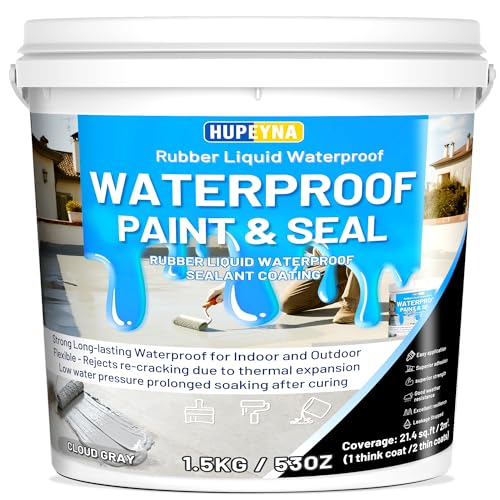
A cloud-gray coating for quick interior crack sealing that won’t break the bank.
If you’re looking for an economical way to seal a handful of cracks on an interior wall, this 1.5 kg tub of liquid rubber is a solid starting point. It’s designed to self-level and smoothly cover small gaps, forming a dense, elastic rubber coating that seals out water and humidity. The kit comes with polyester fabric to reinforce joints and larger cracks, plus a scraper for application.
It’s a versatile formula that adheres to a huge list of materials—ceramic, concrete, wood, metal, glass, vinyl, and more—making it a true multi-surface leak repair. The full cure takes 24-48 hours, though drying time depends heavily on temperature, humidity, and airflow in your basement. It’s best applied with the included plastic trowel or a brush, and it won’t re-crack from thermal expansion.
The crowd is divided on this one. When it works—like stopping serious basement flooding through a crack—the results are surprisingly effective. However, some owners found it never fully dried, remaining sticky, and others noted it’s more transparent than expected unless applied very thick. Success seems to hinge on meticulous surface prep and allowing plenty of curing time, ideally with a dehumidifier running.
Easy on the wallet
- Low-cost entry point for interior patching
- Adheres to a wide range of building materials
- Includes fabric and scraper for reinforcement
Frustrating variables
- Color can dry more transparent than expected
- Requires long, careful curing to avoid stickiness
For the cautious DIYer: Choose this for small, dry hairline cracks where you can afford a longer cure time.
Look elsewhere if: You need a guaranteed, heavy-duty seal on an actively leaking wall—this is too inconsistent for that.
8. Simpson Strong-Tie Crack-Pac Flex-H2O
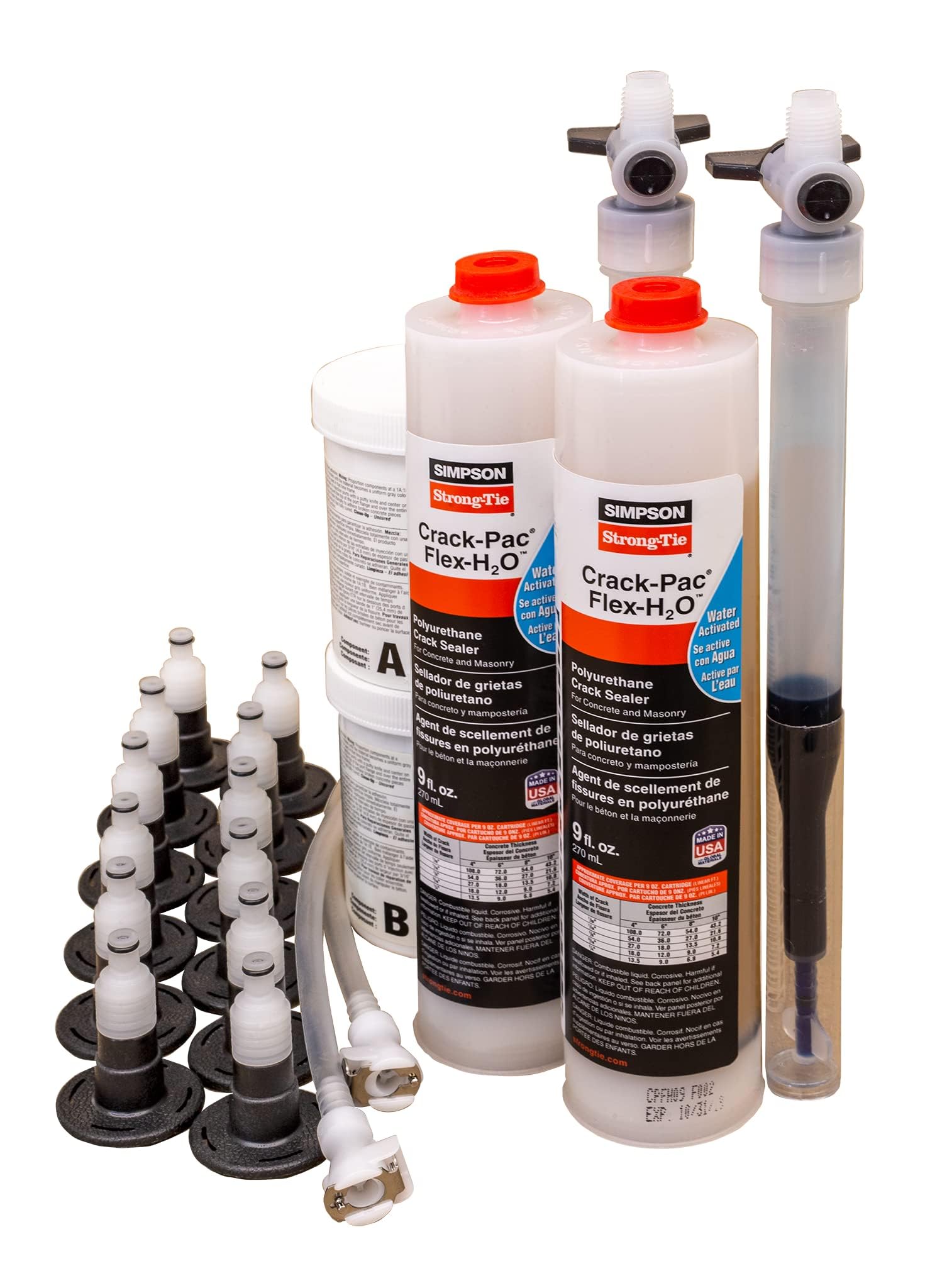
The professional-grade injectable that seeks out voids and expands to fill them solid.
When water is actively seeping through a crack in your foundation, a surface coating just won’t cut it. This 9 oz. polyurethane injection kit from Simpson Strong-Tie is the real fix, designed to seal seeping or mildly leaking cracks from the inside. The idea is simple: you inject the liquid into the crack, it reacts with the water to expand into a dense foam, filling every void and physically blocking the water’s path.
What’s great about this kit is its flexibility. It can be dispensed with a standard caulking tool, and it works on dry cracks just as well—you just introduce water to the area first. You can even use less accelerator to slow the reaction time down, giving you more working time on a tricky crack. It’s a surgical, focused approach for a single problem area, not a whole-wall treatment.
This is a favorite among owners who’ve fixed their own basement leaks, with many reporting the crack stayed completely dry a full year after the repair. The application process requires some patience—port placement, water injection, and watching for the foam to appear at the top port—but the results are professional. It’s a premium-priced solution that earns its keep by saving you a contractor’s bill.
Targeted leak-stopper: This is the definitive tool for a single, leaking crack where you need the water to stop, period.
Technical application: Be prepared for a multi-step process with ports and water injection; this is a project, not a quick patch.
9. Hydra Stop 300 Fast Set Kit
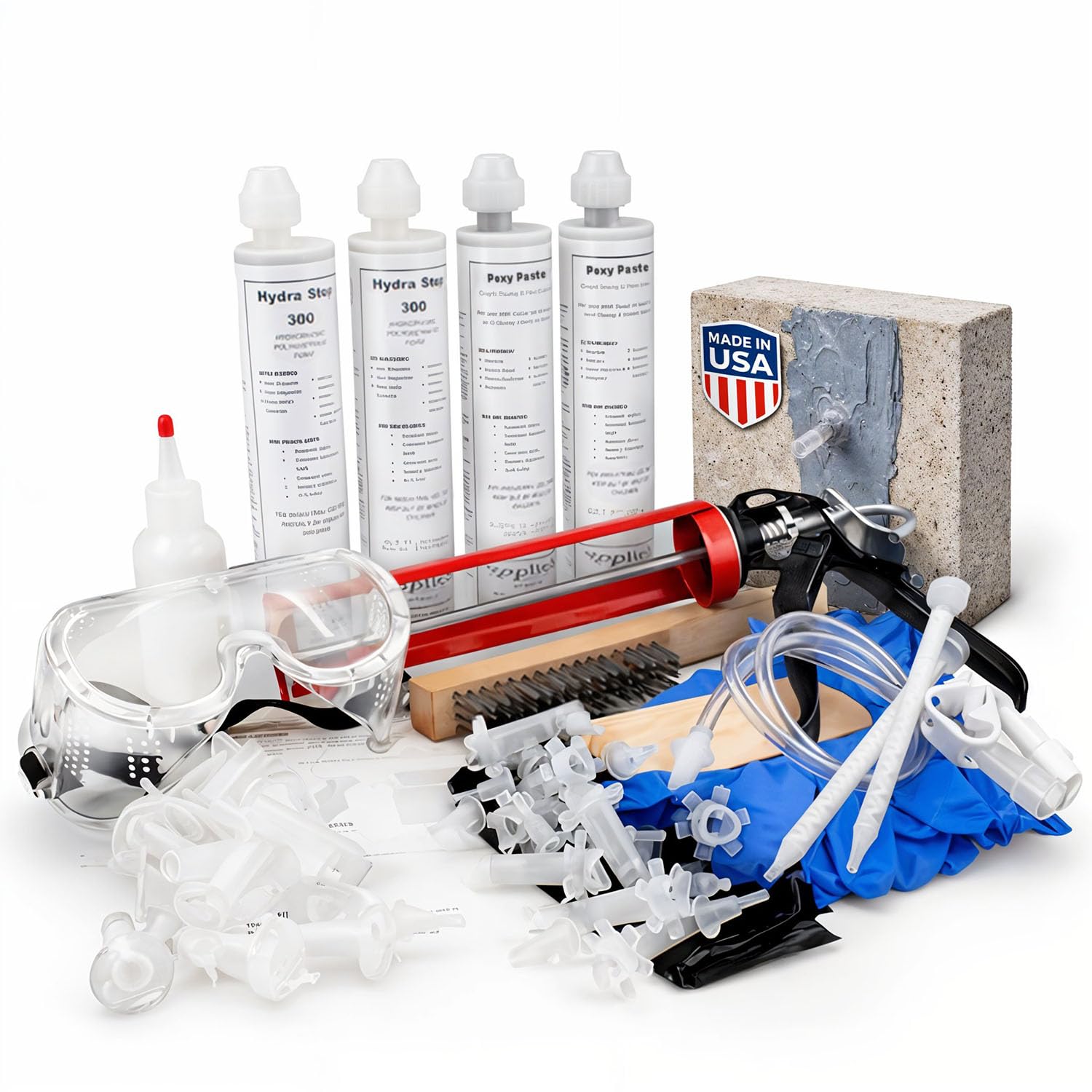
The all-in-one injection kit that gives you every tool to tackle foundation cracks solo.
This is the complete package for the homeowner who wants to permanently fix a foundation wall crack without hiring out the job. The Hydra Stop 300 kit comes with absolutely everything you need: two tubes of expanding polyurethane foam, a crack sealant, 15 surface ports, a caulk gun, nitrile gloves, safety glasses, a drop cloth, wooden sticks, corner ports, a wire brush, and the injection hose. It’s designed to cover roughly 10 feet of cracking, making it ideal for a serious, multi-crack project—so you can tackle the whole wall in one go.
the kit’s resins are quick-reacting, designed to expand through narrow concrete voids to manage damp entry. The included instructions are clear, and owners consistently report professional-grade DIY results. It’s a favorite for stopping persistent leaks, with some owners noting their basement has stayed “bone dry” through heavy rains after a single application. For many, it has saved thousands of dollars versus the cost of excavation and professional waterproofing.
The trade-off is in the details: the included caulk gun is widely considered useless, so plan to use your own. The process is also messy and slow—foam injection can take about five minutes per port—and the foam itself expands significantly, so thin cracks need careful pressure management. But if you have the patience, this kit is a proven, complete solution that works without exterior grading.
Everything in one box
- Comprehensive kit with all tools and safety gear included
- Fast-set foam stops leaks effectively
- Clear instructions make DIY repair achievable
DIY logistics
- Included caulk gun is ineffective; use your own
- Injection process is messy and time-consuming per port
The all-in-one fixer: Choose this if you have a serious, multi-crack foundation issue and want a kit that includes every necessary tool.
Think twice if: You only have one tiny hairline crack—this is more material and effort than you’ll need.
Understanding the Specs
Elongation & Flexibility
This is the sealer’s ability to stretch without tearing. Foundations shift and settle, so a rigid filler will crack right along with the concrete. A high elongation percentage—like the 900% you see on some rubber coatings—means the seal can stretch significantly, ensuring it remains watertight as your house moves.
Self-Leveling vs. Non-Sag
These describe how the material behaves after you apply it. A self-leveling formula is liquid enough to flow into a horizontal crack on a floor and create a smooth, even surface. A non-sag formula is thicker, designed to stay put on a vertical wall without dripping or sliding down before it cures.
FAQ
What is the difference between a crack filler and a waterproofing coating?
Can I seal a basement crack from the inside?
How long does a basement crack sealer take to dry?
Will a crack sealer work if the wall is still wet?
What is the difference between polyurethane and liquid rubber sealants?
Can I paint over a basement crack sealer?
Why does my basement crack sealer remain sticky after drying?
Is it safe to apply a crack sealer indoors?
Final Thoughts: The Verdict
If you want one dependable pick, the basement crack sealer winner is the Liquid Rubber Foundation Sealant because it offers whole-wall coverage, high flexibility, and indoor-safe application in one bucket. If you have a single, actively leaking crack, the Simpson Strong-Tie Crack-Pac is the definitive surgical fix. And for a budget-conscious repair on horizontal floor seams, the E-SDS Cement Crack Filler delivers excellent value.
How We Picked
We do not accept paid placement. Every pick is matched to a real buyer and a real use-case; we do not hands-on test units.
Sources & Methodology
Specifications: manufacturer listings and product documentation. Review insights: verified customer reviews, as of August 2026. Pricing: not shown on this page (it changes often); check the current price via the retailer link.
As an Amazon Associate, Gadgets Feed earns from qualifying purchases. This does not affect which products we feature.