
Our readers keep the lights on and my morning glass full of iced black tea. As an Amazon Associate, I earn from qualifying purchases.
Specs are compiled from manufacturer listings and verified buyer reviews and can change over time — please confirm the key details on the product page before buying.
Your basement floor is cold, hard concrete that will wreck your knees and crack your dumbbells if you drop them. The right Basement Gym Flooring cushions your joints for bodyweight moves and absorbs the shock of dropped iron.
I’m Min — the founder and writer behind Gadgets Feed. This guide is built by comparing the manufacturers’ published specifications and the patterns across verified customer reviews, so you get each pick’s real strengths and trade-offs instead of marketing spin.
We compared rubber rolls, interlocking foam tiles, and hybrid mats to find the toughest, most comfortable basement gym flooring for every type of home workout.
Our Picks at a Glance
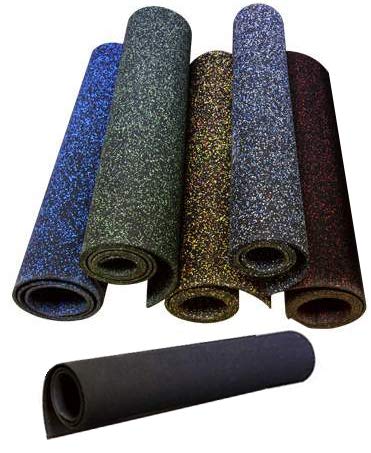
How To Choose The Best Basement Gym Flooring
Basement gyms live on concrete slabs that are damp, uneven, and unforgiving. The flooring you pick has to do three jobs: protect your joints, protect the concrete from dropped weights, and stay put through sweaty, high-intensity sessions.
Match the Material to What You Lift
Rubber rolls and rubber-topped tiles handle heavy free weights, racks, and sleds without tearing. All-foam EVA tiles are softer for yoga, stretching, and bodyweight circuits but can dent permanently under a loaded squat rack. Hybrid mats — a foam core under a rubber top — sit in the middle, giving cushion plus durability.
Thickness Is a Trade-Off, Not a Contest
A 0.12-inch rubber roll lying flat against the slab is dense and stable but gives almost no softness underfoot. A 1-inch foam tile feels plush and absorbs impact well, yet heavy machines can leave permanent dents. Choose the thinnest thickness that still protects your equipment and your knees.
Seams, Curls, and Flatness
Interlocking tiles need a good puzzle edge to avoid gaps that collect dirt and catch toes. Rolls arrive flat or curled — a mat that won’t lie flat needs weight on it for days or returns the whole project. Read the flatness feedback before committing to a roll.
Quick Comparison
| Model | Best For | Thickness | Material | Coverage | Amazon |
|---|---|---|---|---|---|
| American Floor Mats 3/8″ Roll★ Best Overall | Dense, commercial-grade protection | 0.38 in | Rubber | 4′ x 5′ | Amazon |
| VEVOR Rubber Flooring RollBudget Champion | Budget-friendly rolled coverage | 0.12 in | SBR Rubber | 4′ x 15′ | Amazon |
| Art3d EVA Puzzle MatsComfort Pick | Plush, budget-friendly tiles | 0.5 in | EVA Foam | 96 sq ft | Amazon |
| Sivan Fitness 1/2″ Tiles | Balanced foam-plus-rubber feel | 0.3 in | Rubber Top EVA | 48 sq ft | Amazon |
| HAPBEAR Large Exercise Mat | Multi-purpose large-format mat | 0.32 in | PVC | 7′ x 5′ | Amazon |
| Xspec 1″ EVA Gym Tiles | Extra-thick cushioned training | 1 in | EVA Foam | 48 sq ft | Amazon |
| Flooring Inc 1/4″ Rubber Roll | Serious heavy-lifting rubber | 0.25 in | Rubber | 10′ x 4′ | Amazon |
| GymCope Large Exercise Mat | Large, stable equipment zone | 0.27 in | PVC | 8′ x 6′ | Amazon |
| SUPERJARE 0.4″ Rubber Top Mats | Premium hybrid tile system | 0.4 in | EPDM Rubber + EVA | 96 sq ft | Amazon |
In‑Depth Reviews
1. American Floor Mats 3/8″ Heavy-Duty Rubber Rolls
Our pick — over 4.5★ from 600+ verified ratings; the strongest balance of quality and price.
The dense 0.38-inch rubber slab that shrugs off dropped barbells while lying perfectly flat
This dense 0.38-inch rubber roll delivers commercial-grade protection at home. The 3/8-inch thick, 100% vulcanized, non-porous rubber is reassuringly heavy and stiff underfoot, so a loaded rack or treadmill won’t wobble. The manufacturer backs it with a 5-year warranty, and buyers report it as “heavy solid rubber mats” that protect floors well.
Quality is what wins people over here — it’s the single most-praised trait by a wide margin, followed by durability. Owners repeatedly say it stays in place with zero curling, lies flat almost instantly, and one notes it has that condensed, dense feel like a 1/2-inch mat. It rolls out to a 4′ x 5′ footprint, which suits a dedicated zone rather than wall-to-wall coverage.
The material brings real trade-offs: a strong rubber smell and visible dust. A strong rubber smell needs a few days of airing out before you’ll want to train on top of it, and the black top shows dust and dirt quickly, so expect frequent vacuuming if your basement gets grimy. Some rolls arrive slightly oversized to spec, so measure your space and be ready with a fresh razor blade for trimming.
The crowd-pleasers
- Dense 0.38″ rubber that deadens noise and impact
- Lays flat immediately with no curled corners
- 5-year warranty and PVC-free construction
- Secure non-slip textured surface for equipment
What to plan around
- Strong initial rubber odor that needs airing out
- Black material shows dust and needs regular vacuuming
- Rolls can run slightly large and need trimming
Reach for this if: you want commercial-grade density and don’t mind a thick, heavy roll that will outlast your workout habits.
Look elsewhere if: you need soft cushioning for floor stretches — this is firm, protective rubber, not a yoga cloud.
2. VEVOR Rubber Flooring Roll
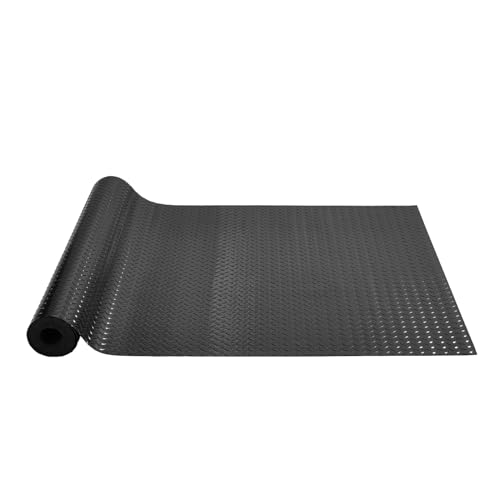
A 15-foot roll of diamond-plate rubber that guards your slab against cars, dogs, and dropped plates
VEVOR’s claim to fame is the sheer amount of coverage for the money — one 4 x 15-foot roll with a diamond-plate pattern that looks professionally installed. The SBR rubber gets genuinely positive durability feedback, with owners noting it handles whatever they throw at it. As owners mention, “we bought this for our new Ford Explorer to protect the cargo area mainly from our dog,” and one converted their “dirt-floor shed” with it.
At 0.12 inches thick, this is a thin membrane rather than a shock pad, so it excels at protecting the floor itself, not cushioning your joints. That thinness is the top tension point in reviews — some find it very thin and even tear-prone under heavy abuse. The built-in TPE anti-permeable backing resists oils and brake fluids, making it a smart pick for a garage-gym crossover or a workspace next to the rack.
The big recurring gripe is the smell — owners describe a strong, unpleasant odor that needs outdoor airing for a good two weeks before indoor use. The diamond-plate texture looks sharp and adds grip, and the roll cuts easily with a blade, but plan for the off-gassing window before your first session.
Best value play: The most square footage per dollar in this list, and the anti-leak backing makes it uniquely spill-proof.
The catch: It’s thin and needs diligent airing out first; this is floor protection, not joint cushioning.
3. Art3d 96 Sq.Ft EVA Puzzle Exercise Mats
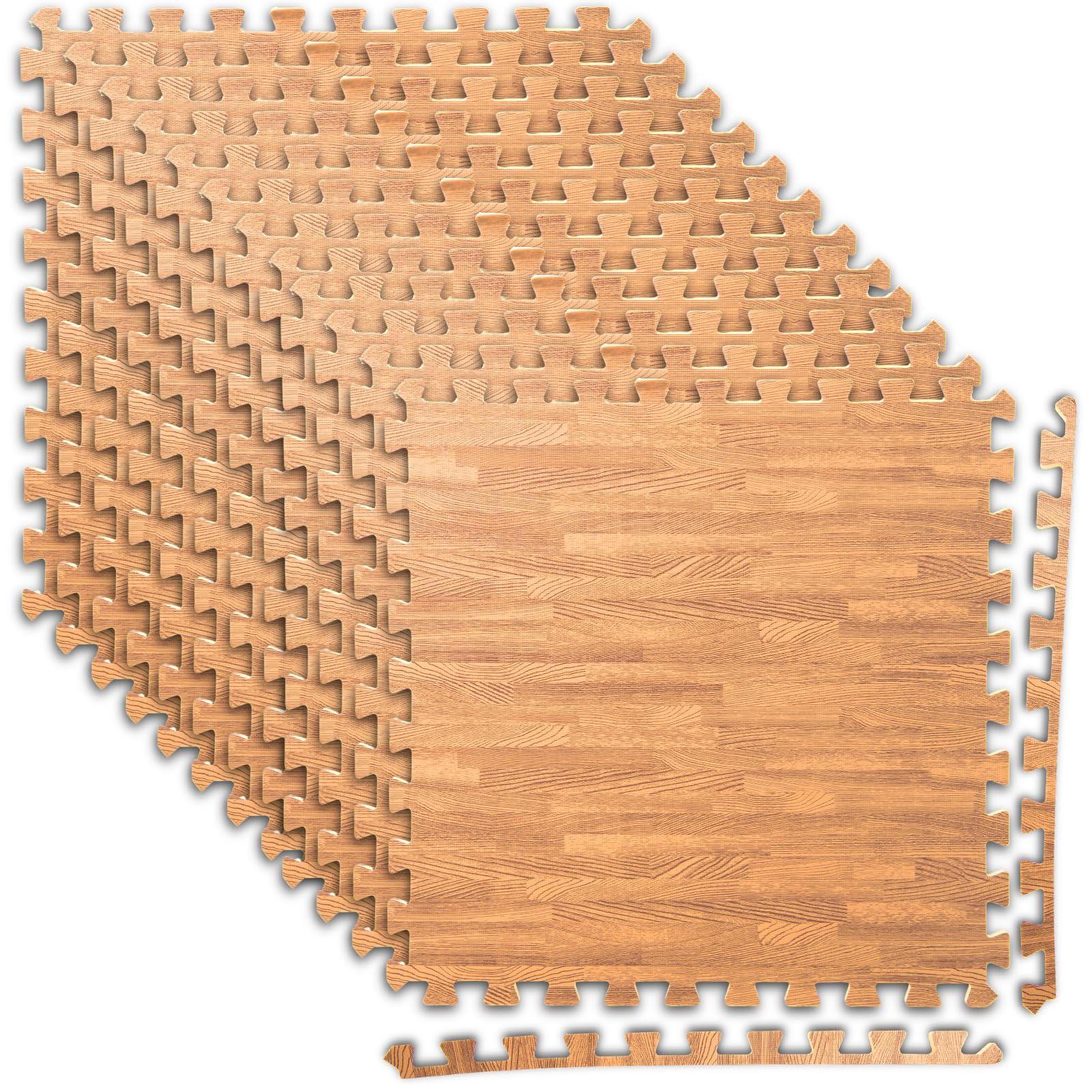
24 interlocking foam tiles that turn a cold slab into a cushioned home-gym surface
This 24-tile set blankets 96 square feet in plush EVA foam at a half-inch thick, and the comfort is what buyers rave about — quality is the top praised trait, with ease of assembly close behind. It’s the kind of soft, forgiving surface that makes bodyweight circuits and stretching genuinely pleasant on concrete. As owners put it, “so far these mats have been great for our at-home gym.”
The 0.5-inch thickness sits 4.2 times thicker than the VEVOR roll, and that added depth translates directly to joint relief. They fit together with a simple puzzle edge, lay flat, and make the space feel cleaner instantly. The teak finish looks far more expensive than budget foam, and the BPA-free construction is a bonus for anyone worried about chemicals.
Switch to these if your workouts are bodyweight, yoga, or light dumbbells — this is the surface you want under your back. Pure foam dents permanently under a heavy squat rack. Traction gets mixed feedback, with some finding the top a little slippery in socks, so consider footwear for intense sessions.
Why it wins: Maximum cushioning and coverage for the price, with a finish that looks premium.
Not for: Heavy barbell drops or racked iron — foam compresses where rubber wouldn’t.
4. Sivan Fitness 1/2″ Rubber Top EVA Foam Gym Flooring

A rubber-topped hybrid that bridges the gap between soft foam and hard commercial rubber
This is the smart middle-ground pick for basement gyms that do a bit of everything. The rubber top handles equipment and provides stability, while the EVA base underneath adds cushion for plyometrics and floor work. Owners specifically call out that it’s “better than cheap foam alternatives” and holds up to heavy daily use without separating at the seams.
Home gym suitability is the most-discussed strength here — it’s built for exactly the mixed routine a basement sees: yoga one day, free weights the next, kids bouncing around after. The tiles stay firmly in place without sliding, and each of the 12 pieces has detachable edges so any tile can serve as a corner, border, or centerpiece. That flexibility lets you expand outward if you grab extra packs.
Some owners find the per-tile cost high, and detachable edges leave unused pieces. If your basement work is intense plyometric training, the cushioning gets genuinely positive reviews — but for heavy deadlifts on bare concrete, you’d want extra mats underneath.
What it nails
- Rubber top + foam core balances firmness and cushion
- Stays put through plyometrics with no sliding
- Flexible tile layout for awkward basement shapes
Consider this
- Some find the price per tile steep
- Detachable edges create leftover waste
- Heavy deadlifts need extra mat reinforcement
Best for the all-rounder: the basement gym mixing cardio, strength, and yoga into one session — this adapts to all of it.
Skip it for: pure weightlifting zones, where a single dense rubber roll is the tougher answer.
5. HAPBEAR Large Exercise Mat

You get one smooth 7 x 5-foot mat, so there are no seams to trip on, and the grippy top keeps you stable during HIIT workouts.
For high-intensity interval and cardio work, this single-piece mat removes the biggest annoyance of tiles — the seams. The 7′ x 5′ slab of high-density PVC has 120% more exercise space than an ordinary mat, so burpees and jumping jacks stay fully on the surface. The size is what owners praise most, with traction close behind.
The double anti-slip design uses a corrugated top and suction-cup bottom, which keeps it planted on concrete through even the most frantic routine. At 0.32 inches thick, it offers real cushioning for knees and wrists during lunges and push-ups, and buyers consistently note it’s thick enough to absorb workout impact while staying firm.
At 15.6 pounds, this smooth mat is heavy to move, so most owners leave it down permanently. You get resistance bands and a storage bag, and the waterproof surface wipes clean easily. This suits a cardio corner of the basement far better than it suits racked barbells.
The best fit: HIIT, dance, jump rope, and bodyweight training where a smooth, non-slip surface matters most.
Know the limit: it’s one large mat, not wall-to-wall coverage, and it’s too heavy to move around daily.
6. Xspec 1″ Extra Thick Reversible EVA Gym Foam Tiles

A full inch of shock-absorbing foam that makes ground work feel indulgently soft
At 1 inch thick, these are the plushest tiles in this lineup, and that thickness is exactly what reviewers highlight — one describes laying flat on their back as feeling great. The 12 pieces cover 48 square feet with a reversible dual-color steel grip pattern on both sides, so you can flip tiles to refresh the look of your basement gym. Quality is the top praised trait by far.
The cushioning does real work: they hold up “perfectly under the weight of my cable machine, no sinking at all” and survive years of family use. The steel pattern provides noticeably better traction than flat foam, and the lightweight pieces connect fast. The water-resistant, noise-resistant foam also works in garages, kitchens, or as a kid’s play zone — not just the gym.
Two things keep this from top billing: EVA foam will indent under excessive point loads, and a few owners note the surface scratches faster than true rubber. It’s also indoor-only, so skip it for a damp or unfinished basement prone to moisture. For pure comfort-focused floor training, this is the pick.
Standout strengths
- Generous 1-inch thickness for serious shock absorption
- Reversible design doubles the useful life
- Steel pattern improves grip over flat foam
Watch out for
- Foam indents under heavy concentrated weight
- Surface can scratch faster than rubber
- Indoor use only — moisture will damage it
Buy it for: stretching, yoga, wrestling, and family workouts where comfort outranks sheer durability.
Think twice if: you’re parking a heavy squat rack here — the foam will give way where rubber wouldn’t.
7. Flooring Inc 1/4″ Tough Rubber Flooring Roll
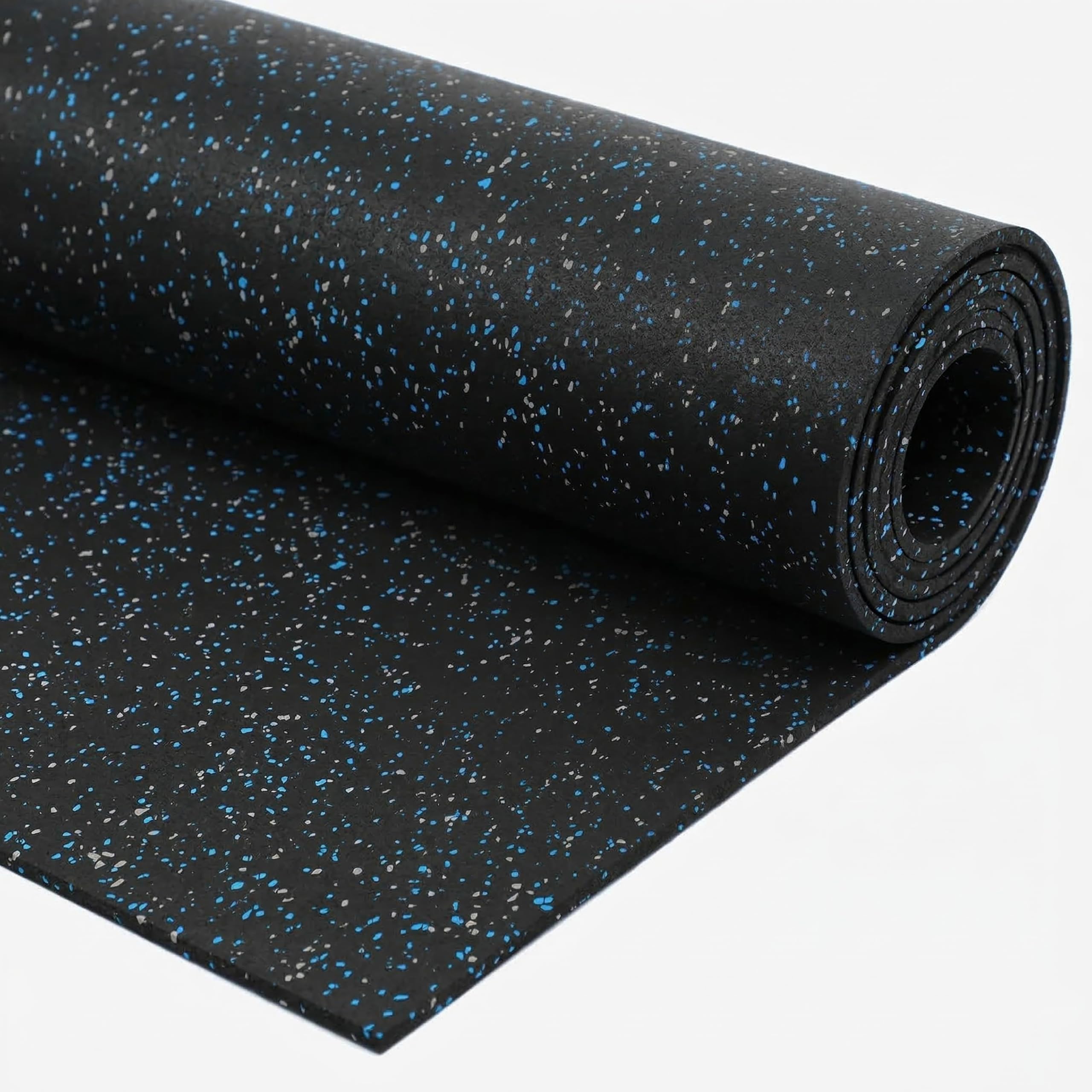
The commercial-grade recycled rubber roll that serious lifters trust under their racks
If your basement houses a barbell, this is the roll to beat. The 1/4-inch recycled rubber is dense, moisture-resistant, and built exactly for “toolbox to treadmill, spin class to deadlift,” as the maker puts it. Durability is the dominant theme across owner feedback by a huge margin — it’s the single most-mentioned trait — with value for money and quality right behind.
At 0.25 inches, it’s twice the thickness of the VEVOR economy roll, which makes it noticeably more resistant to tearing and better at dampening weight drops. Owners rate it “nicer than professional gym floors” and note it stays flat even in heat, unlike foam tiles that bubble in humid conditions. The 10′ x 4′ roll gives solid coverage for a rack zone, and the slip-resistant surface handles a loaded bench without shifting.
The price lands at the premium end of this list, which is fair given the lifespan. Plan for a short break-in: a strong initial rubber smell that fades to a mild basketball odor, and some rolls arrive slightly oversized with imperfect straight cuts. It’s heavy at 60 pounds, so install with a friend, and avoid direct sun exposure which can cause expansion.
The serious-lifter’s answer: dense rubber that shrugs off dropped iron and keeps your concrete slab pristine.
The honest cost: premium pricing, a heavy roll to wrestle into place, and a smell that takes weeks to fully fade.
8. GymCope Large Exercise Mat

A broad 8 x 6-foot PVC mat that sits stable under heavy machines without any chemical smell
Owners consistently highlight the lack of odor here — “no rubber or chemical smell” is a standout in a category where that’s the #1 complaint. The 0.27-inch high-density PVC gives reliable cushioning without the spongy instability that plagues softer mats, making it a confident base for a bench, dumbbells, or a vintage Soloflex machine. Quality is the most-praised trait, with durability and size close behind.
The double-sided anti-slip surfaces stay firmly planted on tile, carpet, concrete, and hardwood, which is exactly what a basement needs. It arrives with a carrying bag, 3 hook-and-loop straps, and a 27″ x 16″ microfiber towel, so it rolls up for storage if you share the space. The waterproof surface blocks sweat and moisture from seeping through.
At 0.27 inches, it offers moderate cushioning, and some buyers wanted more. It’s a single mat, not room-wide coverage, so plan it as a dedicated equipment zone rather than a full floor. For a clean, stable, and genuinely odor-free workout surface, this delivers.
Why it stands out: the best odor profile in the category and a stable base that won’t shift under machines.
The limitation: it’s a defined workout zone, not full-floor coverage, and the cushioning is moderate.
9. SUPERJARE 0.4″ Rubber Top Exercise Equipment Mats

A dual-layer tile that fuses a durable rubber top with a cushioned foam base for the best of both
This is the refined take on hybrid flooring. Each of the 24 tiles stacks a high-density EVA foam base under a sturdy EPDM rubber top, so you get the grippy, scrape-proof surface of rubber with the joint comfort of foam. Durability is the runaway top praise, followed by ease of assembly, and one owner notes the “2-day rebound” — weights sink in briefly, then the foam recovers with no permanent marks.
The full 96 square feet of coverage and the 0.4-inch thickness sit between budget foam and dense commercial rubber, and the black-and-grey finish looks clean and professional. Owners say it evens out “uneven garage concrete,” sits flat, and handles a squat rack, chest press, and landmine presses without slipping. The interlocking edges make expansion easy if you buy a second set.
This tops the price chart, and the value is real for anyone equipping a full basement gym. Grip gets mixed feedback after extended use, and the thickness sits thinner than the 1-inch Xspec tiles, so it’s a firm surface rather than a plush one. If you want a full-room, do-everything floor that won’t tear or permanently dent, this is the premium choice.
What earns the price
- EPDM rubber top resists tears and scratches
- Foam base rebounds from heavy weight with no dents
- 96 sq ft coverage transforms a whole basement
- Easy assembly and clean, professional look
Before you commit
- Premium cost is the steepest of the list
- Grip gets mixed feedback over time
- Firmer feel than thick foam alternatives
Pick this for: a complete basement transformation — full-room hybrid coverage that handles anything from yoga to a loaded rack.
Pass if: you only need a small zone or want the absolute plushness of pure foam tiles.
Understanding the Specs
Thickness vs. Density
Thickness alone doesn’t tell you how well a mat performs. A thick, soft foam gives great joint cushioning but dents under heavy equipment. A thin, dense rubber protects your concrete and holds a rack steady but offers little underfoot comfort. Decide what your basement gym does most, then match the thickness to that.
Material Matters
Rubber tops resist tearing and shrug off dropped iron. Foam cores add softness and shock absorption. PVC sheets give a smooth, easy-roll surface that’s great for cardio zones. EPDM rubber on an EVA base is the hybrid balance — grippy on top, cushioned underneath.
FAQ
What thickness do I need to protect a concrete basement floor?
Will these mats work on damp or uneven basement concrete?
How do I get rid of the rubber smell from new flooring?
Is foam or rubber better for a home gym?
Can I put these mats under a treadmill or heavy cable machine?
How much coverage do I actually need for a basement gym?
Do interlocking tiles stay connected during intense workouts?
How do I cut rubber flooring to fit awkward spaces?
Is Basement Gym Flooring easy to clean day to day?
What’s the difference between a rubber roll and interlocking tiles?
Final Thoughts: The Verdict
For most basements, the basement gym flooring winner is the American Floor Mats 3/8″ Roll because it delivers commercial-grade density that stays flat and outlasts everything else. If you want a hybrid that cushions and protects, grab the SUPERJARE 0.4″ Mats. And for budget-friendly full-room coverage, the Art3d 96 Sq.Ft Tiles are the smart reach-for.
How We Picked
We do not accept paid placement. Every pick is matched to a real buyer and a real use-case; we do not hands-on test units.
Sources & Methodology
Specifications: manufacturer listings and product documentation. Review insights: verified customer reviews, as of August 2026. Pricing: not shown on this page (it changes often); check the current price via the retailer link.
As an Amazon Associate, Gadgets Feed earns from qualifying purchases. This does not affect which products we feature.