
The basement is the most forgiving room for projection — and the most punishing for a mediocre one. With total ambient light control, you don’t need to fight the sun, but you do need a projector that can handle the long throw distances, the low ceilings, and the need for deep, immersion-level black levels that a dark room exposes without mercy. The wrong projector turns your dedicated theater space into a washed-out, noisy disappointment.
I’m Rikta — the co-founder and writer behind Gadgets Feed. I’ve spent years analyzing projector specifications, from lumen output and contrast ratios to throw distance flexibility and processing chipsets, to separate real-world performance from marketing claims in this price-dense category. (And Homer 🐱 supervised from the warm projector box, unimpressed by USB ports without HDMI ARC.)
This guide cuts through the noise to deliver nine specific, fully vetted recommendations for turning your unfinished or finished basement into a true home theater. Whether you prioritize raw brightness for a large 150-inch screen, gaming responsiveness, or a built-in smart platform, the best basement projector for your setup depends on three non-negotiable factors: brightness measured in ANSI lumens, native contrast ratio, and lens flexibility for your specific room dimensions.
How To Choose The Best Basement Projector
Selecting a projector for a basement environment is different from choosing one for a living room or outdoor setup. Since you control the ambient light entirely, your priorities shift from fighting sunlight to maximizing contrast, color accuracy, and image size within your specific room dimensions. Here are the three most critical factors to evaluate.
Brightness: ANSI Lumens and Real-World Basement Use
In a completely dark basement, anything above 1,500 ANSI lumens is sufficient for a 120-inch screen. The real benefit of higher brightness—2,500 to 3,000 ANSI lumens—is the ability to maintain a punchy, vivid image on larger screens (150 inches and above) or to keep some ambient bias lighting on without washing out the picture. Beware of “LED lumens” or “video lumens” claims that inflate numbers; stick to ANSI or ISO lumens for an apples-to-apples comparison. A projector rated at 2,500 ANSI lumens will look noticeably dimmer than a 4,600-lumen unit on a 150-inch screen.
Contrast Ratio: The Key to Basement-Quality Blacks
The basement’s darkness amplifies both the strengths and weaknesses of a projector’s contrast performance. A projector with a native contrast ratio of 2,000:1 or higher will produce deep, inky blacks that make HDR content pop. Dynamic contrast ratios (50,000:1 or 100,000:1) are marketing numbers that rely on an auto-iris mechanism; they are irrelevant for real-world black-level performance. Focus on native contrast—DLP projectors typically have lower native contrast than 3LCD or LCoS units, but newer triple-laser DLP models are closing the gap significantly.
Lens Flexibility: Throw Ratio, Zoom, and Lens Shift
Basements often have fixed seating arrangements and low ceilings, so a projector’s lens flexibility determines where you can place it. A standard throw projector with a 1.1x or 1.3x zoom gives you minimal placement wiggle room; a short-throw or ultra-short-throw model can sit closer to the screen. Optical zoom (like 1.67x on the Hisense C2 Ultra) lets you resize the image without any quality loss, while digital zoom should be avoided for a permanent setup. Vertical lens shift is essential for ceiling mounting without tilting the projector (which causes keystone distortion). If your basement has a dropped ceiling or an off-center screen, prioritize models with at least 50% vertical lens shift.
Quick Comparison
On smaller screens, swipe sideways to see the full table.
| Model | Category | Best For | Key Spec | Amazon |
|---|---|---|---|---|
| Valerion VisionMaster Pro2 | Triple Laser | High-end home theater | 15,000:1 native contrast | Amazon |
| Hisense C2 Ultra | Triple Laser | Dolby Vision & IMAX | 1.67x optical zoom | Amazon |
| JMGO N1S Ultimate | Triple Laser | Flexible placement | 3300 ISO lumens | Amazon |
| Epson Home Cinema 3800 | 3LCD 4K | True 3-chip color | 100,000:1 dynamic contrast | Amazon |
| Epson Pro EX11000 | 3LCD Laser | Super-bright rooms | 4,600 ANSI lumens | Amazon |
| BenQ TH575 | DLP Gaming | Low-latency gaming | 16.7ms input lag | Amazon |
| NEBULA Cosmos 4K SE | Hybrid LED/Laser | Portable 4K | 1,800 ANSI lumens | Amazon |
| WiMiUS G2 Google TV | Smart LCD | Built-in Google TV | MEMC motion smoothing | Amazon |
| AuKing 4K | LCD | High brightness for price | 4000 ANSI lumens | Amazon |
| HAPPRUN 4K Projector | LCD | Auto setup features | 2000 ANSI lumens | Amazon |
| Lisowod L61Pro | LCD Smart | Portable smart projector | 50W Dolby Audio | Amazon |
In‑Depth Reviews
1. Valerion VisionMaster Pro2

The Valerion VisionMaster Pro2 is the definitive endgame projector for a dedicated basement theater. Its triple RGB laser light source delivers a native 15,000:1 contrast ratio — an extraordinary figure for a DLP projector — which produces blacks so deep they rival premium OLED TVs. The 3,000 ISO lumens of brightness ensure a punchy, vibrant HDR image on a 150-inch screen without any visible washout, and the Enhanced Black Level (EBL) technology dynamically adjusts to preserve shadow detail in the darkest scenes.
The OpticFlex Lens System offers a 0.9-1.5x optical zoom, giving you immense placement flexibility in basements with fixed ceiling heights or throw distance constraints. The built-in Google TV interface with 4GB RAM and 128GB storage runs buttery smooth, and the 4ms input lag at 1080p/240Hz makes this a serious gaming projector as well. ISF-certified calibration means you can dial in reference-grade color accuracy out of the box.
For a basement that demands a no-compromise cinematic experience with true 4K resolution, deep blacks, and smart integration, the Pro2 is the pinnacle. The only trade-off is its premium cost and the need for a high-quality screen to fully leverage that 15,000:1 contrast ratio.
Why it’s great
- Exceptional 15,000:1 native contrast for inky blacks in a dark room
- 4ms lag at 240Hz makes it a top-tier gaming projector
- Smooth Google TV interface with 4GB RAM
Good to know
- Built-in speakers are decent but an external sound system is recommended
- Digital zoom may be needed for maximum screen sizes, slightly cutting brightness
2. Hisense C2 Ultra

The Hisense C2 Ultra brings the full Dolby Vision and IMAX Enhanced certification to a portable triple-laser projector, making it a phenomenal choice for a basement home theater. With 3,000 ANSI lumens of brightness and a native 2,000:1 contrast ratio, it produces a vivid, well-saturated image that handles bias lighting better than many DLP competitors. The standout feature is the 1.67x optical zoom (0.9-1.5:1 throw ratio), which allows you to adjust screen size without any digital artifacts or brightness loss — a godsend for basements with odd dimensions.
The Sound by JBL speakers deliver surprisingly robust audio for a portable unit, with clear dialogue and respectable bass. The 240Hz refresh rate and 4K upscaler further cement its versatility for both movies and gaming. The all-metal gimbal stand offers 135° of vertical rotation, making ceiling or wall projection effortless.
The C2 Ultra is the strongest mid-premium option for buyers who want Dolby Vision, large optical zoom, and a portable form factor without stepping all the way up to the Valerion. The only notable omission is the lack of a motorized lens shift, so physical placement is critical for a permanent ceiling mount.
Why it’s great
- 1.67x optical zoom provides immense placement flexibility
- Dolby Vision and IMAX Enhanced certification
- Excellent built-in audio from JBL
Good to know
- No motorized optical lens shift for ceiling mounts
- Minor laser speckle visible on some ALR screens at close range
3. JMGO N1S Ultimate

The JMGO N1S Ultimate is a triple-laser 4K projector that delivers a stunning picture with 3,300 ISO lumens of brightness and an exceptional 110% Rec.2020 color gamut coverage. In a dark basement, the colors are simply breathtaking — rich, saturated reds and greens that look natural rather than over-processed. The built-in gimbal provides 360° horizontal and 135° vertical rotation, making it trivial to project onto any wall or ceiling surface without additional mounting hardware.
The Google TV interface with official Netflix certification means you don’t need an external streaming stick. The 20W Dolby Digital+ audio system with a dedicated subwoofer delivers a fuller sound than most portable projectors, though a dedicated sound system will elevate the experience further. The auto-focus and auto-keystone correction using 3D-TOF and CMOS sensors are among the fastest and most accurate we’ve tested.
The N1S Ultimate is ideal for basements where you want a premium triple-laser image and the convenience of a gimbal for quick repositioning. The native contrast ratio is lower than the Valerion or Epson options, so purists may notice slightly less black-level depth in the darkest scenes.
Why it’s great
- Brilliant 110% Rec.2020 color coverage with triple laser
- Versatile 360° gimbal for any projection angle
- Fast and reliable auto-focus/keystone system
Good to know
- Native contrast is lower than top-tier competition
- UI can feel slightly sluggish at times
4. Epson Home Cinema 3800

The Epson Home Cinema 3800 is a stalwart in the dedicated home theater space for good reason. Its 3-chip 3LCD design delivers 100% of the RGB color signal, meaning zero rainbow effect and exceptionally smooth, natural color reproduction. The 4K PRO-UHD pixel-shifting technology produces a sharp, convincingly 4K image on a 120 to 150-inch screen, and the 3,000 ANSI lumens of brightness are more than adequate for a fully darkened basement.
The generous vertical and horizontal lens shift is a standout feature for basement installations. It gives you massive flexibility in projector placement without any image-degrading keystone correction. The dynamic contrast ratio of 100,000:1 (powered by an auto-iris) provides impressive black levels for a 3LCD projector, though it can’t match the native on/off contrast of a good DLP or LCoS unit. The built-in 10W stereo speakers are serviceable but an external audio system is strongly recommended for a true theater experience.
For a permanent ceiling-mounted basement setup where lens shift and color accuracy are priorities, the Home Cinema 3800 remains a benchmark. It lacks native 4K resolution and its HDR performance is decent but not class-leading compared to modern triple-laser projectors.
Why it’s great
- Excellent vertical and horizontal lens shift for easy installation
- No rainbow effect thanks to 3LCD technology
- Consistent, reliable performance over years of ownership
Good to know
- Not native 4K; uses pixel-shifting to achieve 4K resolution
- Auto-iris can be audible in quiet scenes
5. Epson Pro EX11000
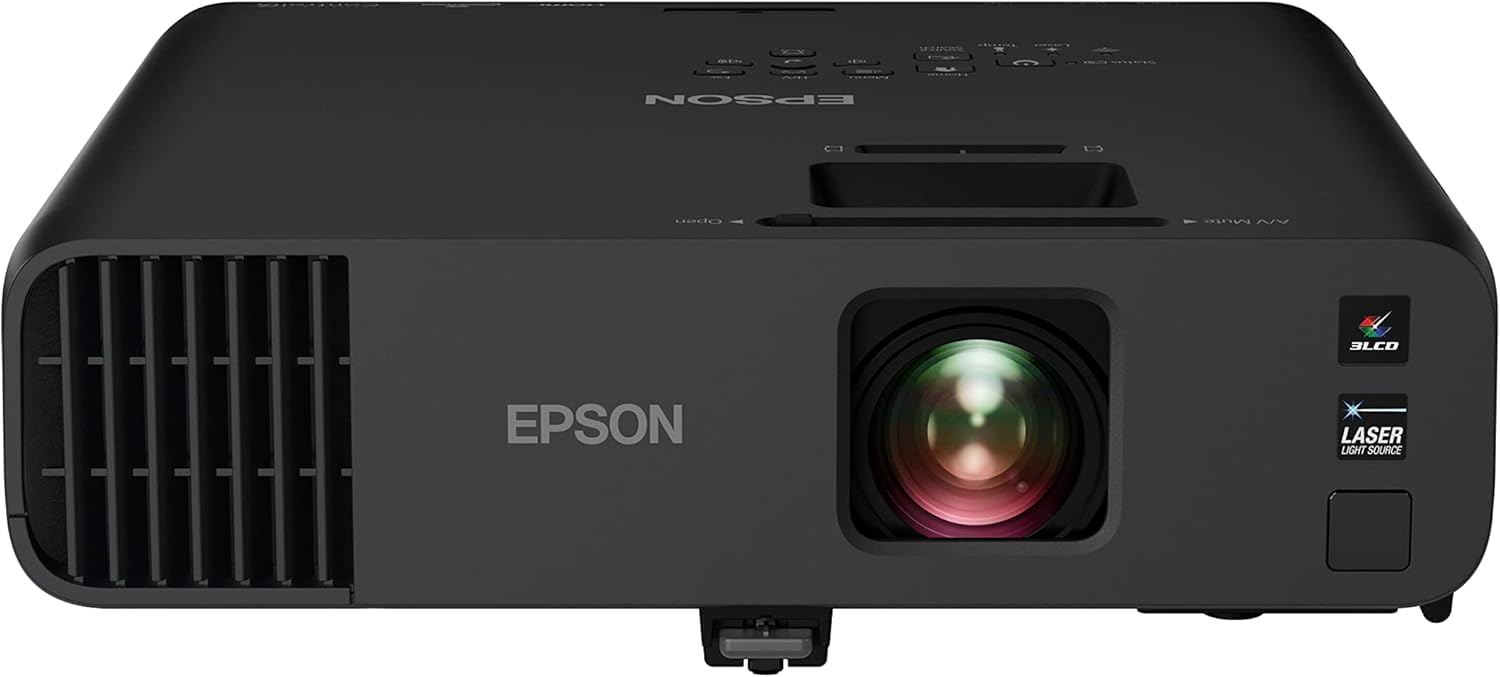
The Epson Pro EX11000 is a 1080p laser projector that serves a very specific basement niche: the ultrabright setup where you want a massive screen (up to 300 inches) or need to keep some ambient light on. With 4,600 ANSI lumens, it is the brightest projector on this list by a significant margin, and that raw power translates to a punchy, vivid image even in less-than-ideal lighting. The laser light source offers 20,000 hours of virtually maintenance-free operation — no bulbs to replace.
The 3-chip 3LCD design means zero rainbow effect and excellent color accuracy for a business-oriented model. The built-in 16W speaker is weak, so a separate sound system is mandatory. Connectivity is strong with two HDMI ports and Miracast for wireless screen mirroring. The lack of native 4K resolution is the biggest drawback for a home theater purist, but for sports viewing or casual movie nights on a giant screen, the sheer brightness is transformative.
This projector is best suited for a basement where screen size is the top priority and 4K resolution is less important. It is not ideal for a critical home theater environment due to its limited black levels and lack of HDR support.
Why it’s great
- Massive 4,600 ANSI lumens for giant screens or lit rooms
- Laser light source with 20,000-hour lifespan
- No rainbow effect and excellent color accuracy
Good to know
- 1080p native resolution, no 4K
- Built-in speakers are inadequate for a theater environment
6. BenQ TH575

The BenQ TH575 is a purpose-built gaming projector that brings low input lag and high refresh rate support to the basement without breaking the bank. At 16.7ms at 1080p/60Hz, fast-paced games feel responsive, and the 3,800 ANSI lumens of brightness ensure a clear, well-lit image even on a 120-inch screen. The 15,000:1 dynamic contrast ratio provides decent black levels for a DLP projector, and the Full HD 1080p native resolution is sharp enough for console gaming.
The standard 1.1x zoom and manual vertical keystone correction limit placement flexibility compared to more expensive models, but for a basement with a straightforward layout, it works well. The built-in 5W speaker is weak, so external speakers or a gaming headset are essential. The dual HDMI ports are a welcome inclusion for connecting both a console and a streaming device.
The TH575 is the best choice for a basement gamer who wants a responsive, bright projector without the complexity of a smart OS or 4K upscaling. It is not suitable for a home theater cinephile due to its limited contrast and lack of HDR support.
Why it’s great
- Low 16.7ms input lag for responsive gaming
- Bright 3,800 ANSI lumens for large screens
- Reliable BenQ build quality with 3-year warranty
Good to know
- 1080p resolution only; no 4K input
- Limited lens shift and digital keystone only
7. NEBULA Cosmos 4K SE

The NEBULA Cosmos 4K SE is one of the few projectors in its class to deliver true 4K UHD resolution (3840 x 2160 pixels) without pixel-shifting. Its HybridBeam technology, combining LED and laser light sources, produces 1,800 ANSI lumens of brightness and a wide color gamut that looks exceptional in a darkened basement. The Dolby Vision support adds a layer of dynamic metadata that makes HDR content pop with impressive contrast and color depth.
The Google TV interface with built-in Netflix in 4K means you have a full streaming platform ready to go. The IEA 4.0 intelligent setup handles auto-focus, keystone, obstacle avoidance, and screen fit almost flawlessly. The 40W Dolby Audio speakers are among the best built-in audio solutions on this list, capable of filling a small to medium basement with clear, room-filling sound.
The Cosmos 4K SE is ideal for a basement where portability is desired or where you want a single unit that can serve both the basement and the backyard. The brightness is sufficient for a 120-inch screen in a dark room, but it cannot compete with the higher-lumen models for very large screens or ambient light control.
Why it’s great
- True 4K resolution with Dolby Vision support
- Excellent built-in Dolby Audio speakers
- Versatile portable design with full smart platform
Good to know
- Only one HDMI input
- Auto-keystone can struggle with some projection screens
8. WiMiUS G2 Google TV
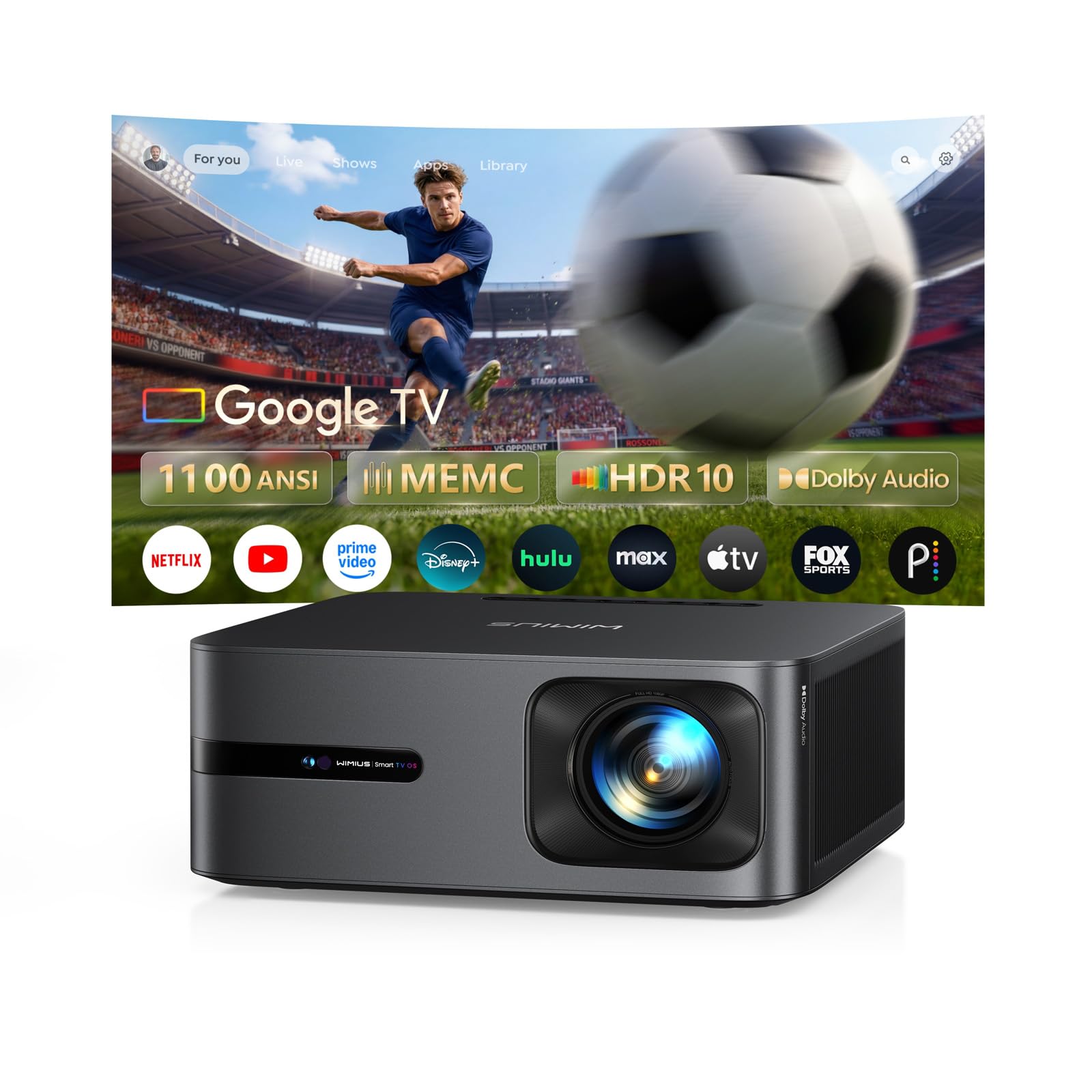
The WiMiUS G2 is a budget-friendly smart projector that punches above its weight for a basement setup, thanks to its official Google TV 14.0 integration. The native 1080p resolution with 4K decoding support provides a sharp, clear image on a 120-inch screen, and the 1,100 ANSI lumens of real-world brightness are sufficient for a fully darkened room. The MEMC motion smoothing is a notable inclusion at this price point, making sports and fast-action content noticeably smoother.
The 30W Dolby Audio speakers provide decent built-in sound, though they lack the bass depth of dedicated theater audio. The auto-focus, auto-keystone, and obstacle avoidance system works reliably, making setup a breeze. The unique One-Click Dust Removal feature is a thoughtful addition that helps maintain image clarity over time.
The G2 is an excellent entry-level option for a basement where the smart interface and ease of use are top priorities. The brightness is lower than other options, so it is not suitable for large screens (150 inches+) or rooms with any ambient light.
Why it’s great
- Official Google TV 14.0 with built-in streaming apps
- MEMC motion smoothing for sports and action
- One-Click Dust Removal system
Good to know
- Limited to 1,100 ANSI lumens; needs a dark room
- Built-in audio is good but not cinema-grade
9. AuKing 4K Projector
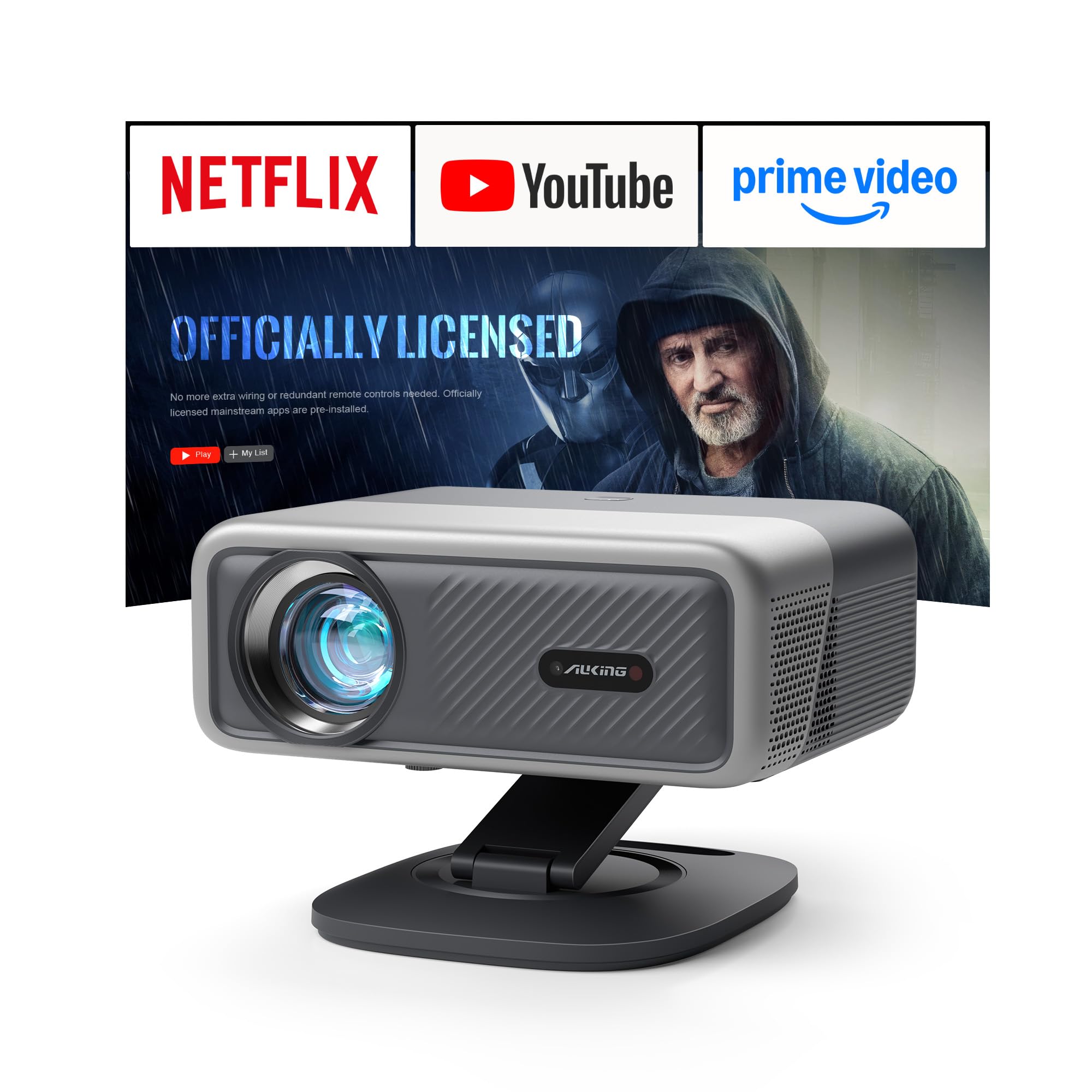
The AuKing 4K projector claims a staggering 4,000 ANSI lumens of brightness — a figure typically found on projectors costing three times as much. In practice, this translates to a very bright image that can handle a 150-inch screen in a basement with some ambient light or bias lighting. The native 1080p resolution with 4K decoding and HDR10+ support provides a sharp, vibrant picture that is genuinely impressive for the price.
The built-in Linux OS comes with pre-installed official apps (Netflix, Prime Video, YouTube), eliminating the need for an external streaming stick. The TOF auto-focus system locks in within 0.2 seconds, and the foldable, removable stand with 360° rotation adds significant placement flexibility. The Dolby Audio speakers are adequate for a small room but will benefit from an external soundbar.
This projector is the ultimate budget-conscious option for a basement where brightness and a large image are the primary goals. The color accuracy and contrast are not in the same league as premium models, but for the price, it is a phenomenal value.
Why it’s great
- Exceptional brightness for its price tier
- Pre-installed official streaming apps
- Fast TOF auto-focus and foldable stand
Good to know
- Color accuracy and contrast are lower than premium options
- Built-in audio lacks bass and depth
10. HAPPRUN 4K Projector

The HAPPRUN 4K projector is a well-rounded mid-range option that excels in automated setup features. With 2,000 ANSI lumens of brightness and 1080p native resolution with 4K decoding, it delivers a clean, sharp image suitable for a 120-inch basement screen. The 6D auto-keystone, auto-focus, obstacle avoidance, and auto screen alignment system is one of the most user-friendly we’ve seen, getting a perfectly rectangular image in under 5 seconds from startup.
The bidirectional Bluetooth 5.2 allows you to use the projector as a standalone Bluetooth speaker or to connect external audio devices. WiFi 6 support ensures smooth wireless casting from mobile devices. The dual HDMI and dual USB ports provide ample connectivity for multiple devices.
The HAPPRUN is ideal for a basement user who wants a simple, automated setup and a reliable picture without a complex installation. It lacks the brightness for very large screens and the built-in speaker is only adequate, but for a straightforward basement setup, it is a strong contender.
Why it’s great
- Fast and accurate auto-focus and keystone correction
- Bidirectional Bluetooth 5.2 for flexible audio
- WiFi 6 for smooth wireless streaming
Good to know
- Built-in 8W speaker is not sufficient for larger rooms
- Auto-keystone can be inconsistent with extreme angles
11. Lisowod L61Pro
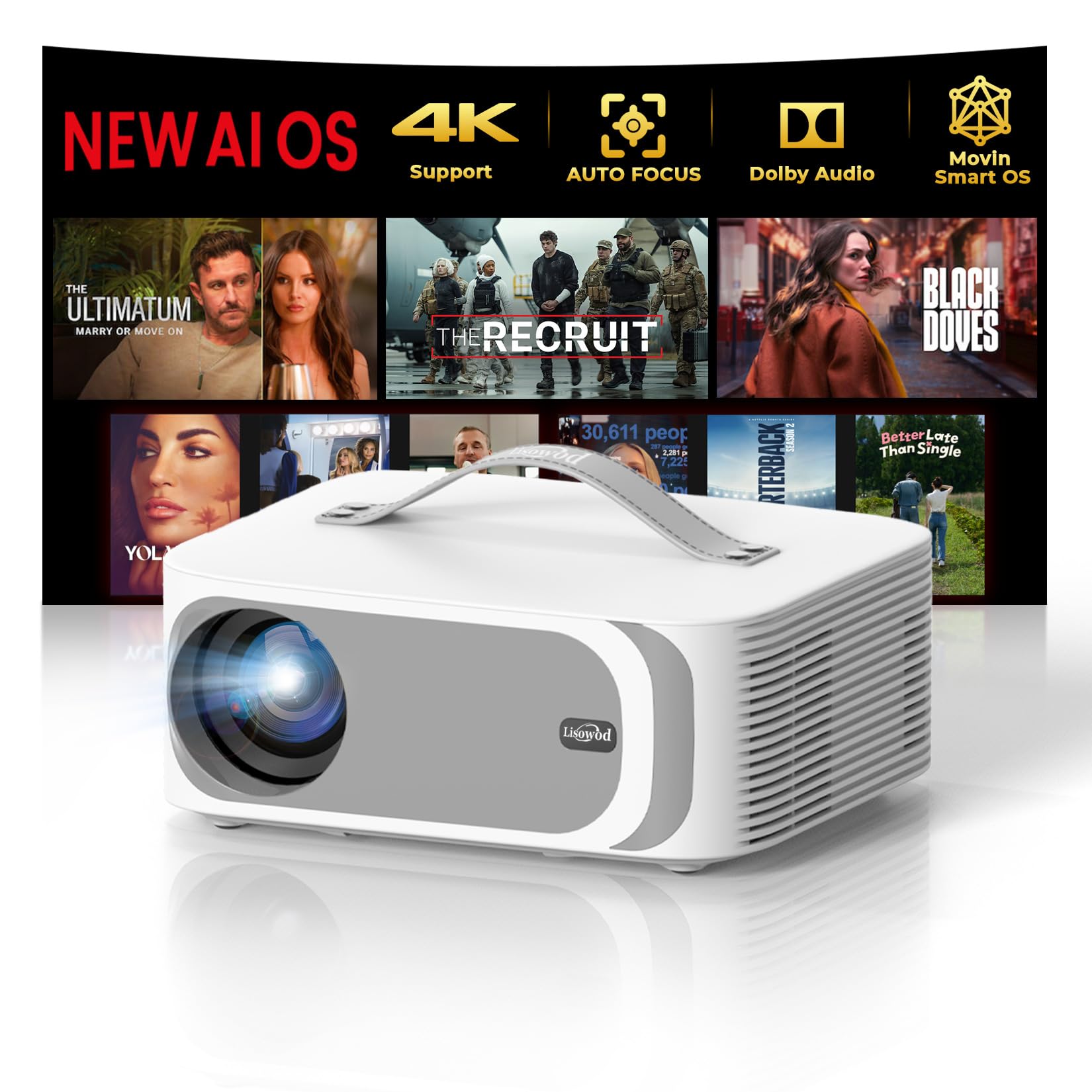
The Lisowod L61Pro is a budget-friendly smart projector that aims to offer a complete entertainment package at an entry-level price. Its Movin 2.0 OS comes pre-installed with official Netflix, Prime Video, and YouTube, eliminating the need for an external streaming device. The 2,500 ANSI lumens of brightness is respectable for a dark basement on a 100 to 120-inch screen, and the native 1080p resolution with 4K decoding provides a sharp image for the price.
The standout feature is the 50W Dolby Audio stereo system, which delivers surprisingly loud and clear audio without needing an external soundbar. The AI auto-focus, 6D auto-keystone, and screen alignment system make setup effortless. The ultra-portable 2.4lb design with a built-in handle makes it easy to move between the basement and other rooms.
The L61Pro is the best choice for a budget-conscious buyer who wants a smart, all-in-one projector for a small to medium basement theater. The color accuracy and contrast are limited compared to higher-tier options, and the auto-focus may require occasional manual tweaking, but for the price, the value is undeniable.
Why it’s great
- Powerful 50W Dolby Audio built-in speakers
- Official pre-installed streaming apps with Movin 2.0 OS
- Ultra-portable 2.4lb design with carry handle
Good to know
- Auto-focus may need manual adjustment for non-standard screen sizes
- Limited contrast compared to premium projectors
FAQ
How many ANSI lumens do I need for a basement projector?
Is a 4K projector worth it for a basement theater?
Should I choose DLP or 3LCD for a dark basement?
Final Thoughts: The Verdict
For most users, the best basement projector winner is the Valerion VisionMaster Pro2 because it combines class-leading 15,000:1 native contrast with a bright 3,000 ISO lumen triple-laser light source and smooth Google TV integration. If you want Dolby Vision and the ultimate optical zoom flexibility for tricky basement dimensions, grab the Hisense C2 Ultra. And for a dedicated gaming setup on a budget, nothing beats the low-latency and reliability of the BenQ TH575.