
A flooded basement does not announce itself politely. It seeps through cracks, rises after a thunderstorm, or appears as a puddle that was not there an hour ago. That moment—when you realize water is winning—is exactly when the quality of your sump pump matters most. Choosing the wrong one means weeks of drywall repair, ruined storage, and a lingering musty smell no dehumidifier can fix.
I’m Min — the co-founder and writer behind Gadgets Feed. After combing through hundreds of hours of technical specs, customer durability reports, and real-world failure patterns across seven distinctly different models, I have narrowed down which sump pumps actually keep basements dry through sustained abuse.
This guide breaks down the essential horsepower, material, and automation features that separate a reliable water removal system from a disaster waiting to happen, helping you confidently select the best basement sump pump for your home.
How To Choose The Best Basement Sump Pump
Selecting a sump pump feels overwhelming because the consequences of a bad choice are so expensive. The key is to focus on four decision points that directly correlate with long-term reliability and flood prevention. Ignore marketing fluff and look at the motor, the housing, the switch mechanism, and the discharge capacity.
Horsepower and Flow Rate (GPM)
A 1/3 HP pump handles light seepage and small basement pits. For homes with heavy rainfall, a high water table, or larger drainage areas, 1/2 HP is the baseline. The flow rate in gallons per minute (GPM) tells you how fast water moves — 40 GPM drains a standard pit quickly, while 60+ GPM handles heavy inflow without the pump running constantly. Oversizing is rarely a problem; undersizing guarantees failure during the worst storm.
Housing Material and Longevity
Cast iron pumps are heavier, run quieter, and dissipate motor heat much better than plastic or thermoplastic models. They cost more upfront but typically last 10 years or longer in continuous use. Thermoplastic pumps are lighter and cheaper but more likely to crack in freezing conditions or under sustained thermal load. If your pump runs seasonally or just during storms, thermoplastic works. For round-the-clock duty, cast iron is the safer bet.
Float Switch Type and Pit Dimensions
Vertical float switches take up less lateral space and fit narrow sump basins (under 14 inches in diameter) better than tethered floats that can snag on the basin wall. Snap-action switches are more reliable than mechanical mercury switches in dusty environments. If your pit is deep, a pedestal pump keeps the motor above water, avoiding corrosion entirely, but requires a larger basin opening.
Battery Backup and Power Failure Protection
A primary pump is useless when the power goes out — which is exactly when sump pumps are needed most. Battery backup systems automatically activate during outages and can run for 8 to 12 hours on a full charge, depending on battery capacity. If your area experiences frequent storms or power interruptions, a dual-pump system with automatic switchover is not a luxury—it is a flood insurance policy.
Quick Comparison
On smaller screens, swipe sideways to see the full table.
| Model | Category | Best For | Key Spec | Amazon |
|---|---|---|---|---|
| Rainbro 1/2 HP PSU051V | Mid-Range | Maximum flow for the price | 3600 GPH at 31 ft head | Amazon |
| Westinghouse WH50TP | Premium | Fastest water removal | 4100 GPH at 28 ft lift | Amazon |
| Superior Pump 92551 | Premium | Pedestal durability | 3600 GPH, cast iron body | Amazon |
| Zoeller M57 Mighty-Mate | Premium | Unmatched longevity | 2580 GPH, oil-filled cast iron | Amazon |
| Westinghouse WH50BBU | Premium | Full backup protection | 87 GPM, battery backup system | Amazon |
| BOMGIE 1/3HP AUTO | Budget | Budget-friendly spot use | 2250 GPH, 1/3 HP motor | Amazon |
| Acquaer PCP025-BLS | Budget | Electronic sensor reliability | 2450 GPH, 1/2 HP motor | Amazon |
In‑Depth Reviews
1. Rainbro 1/2 HP Thermoplastic Submersible Sump Pump PSU051V
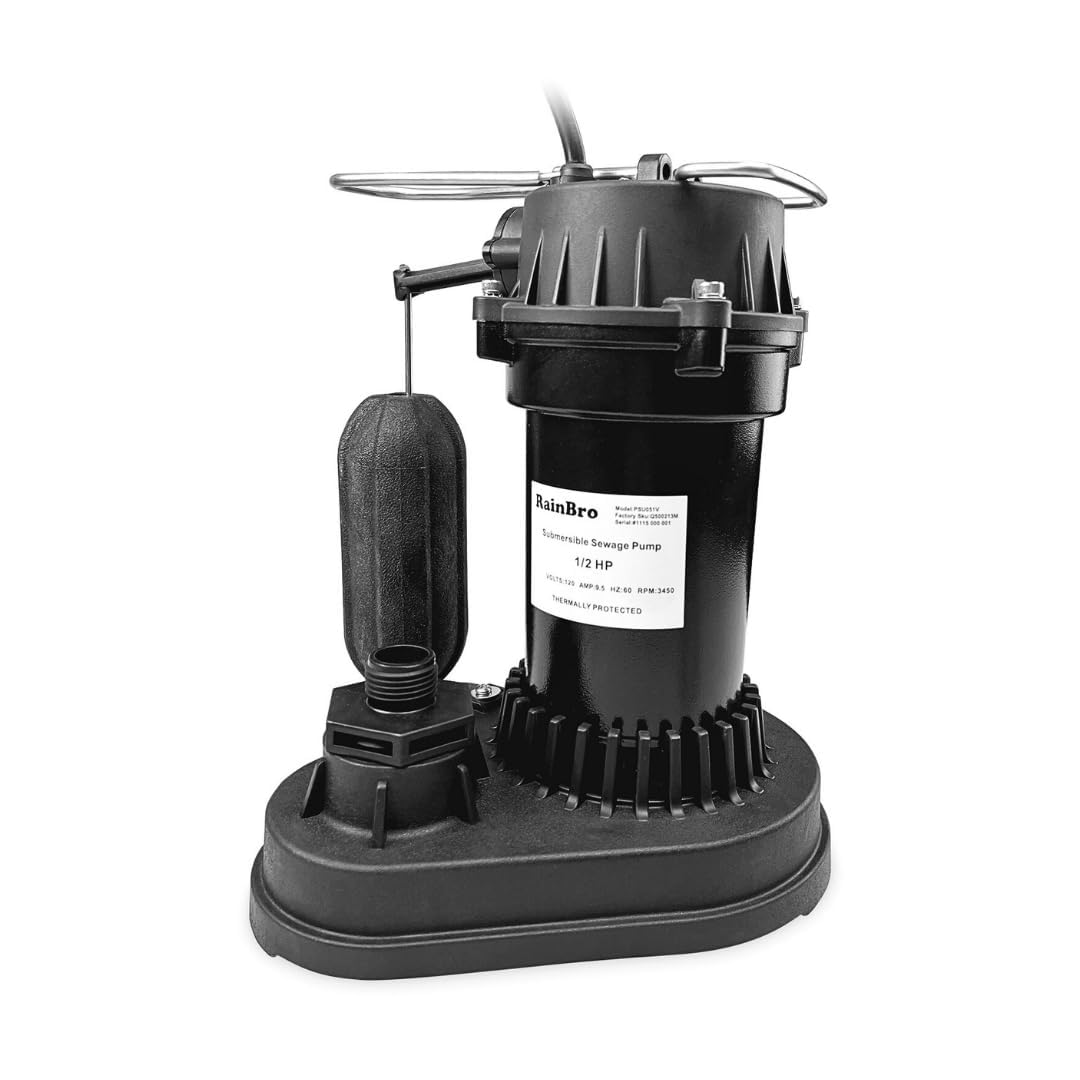
The Rainbro PSU051V hits the sweet spot of performance and value with a 1/2 HP motor that moves an impressive 3600 gallons per hour at a 31-foot maximum head. That vertical lift is genuinely class-leading at this price tier, meaning it handles deep sump pits or discharge routes that run up into a higher drainage line without losing pumping pressure. The thermoplastic housing keeps weight at a manageable 10 pounds, and the snap-action vertical float switch is designed specifically for narrow basins down to 14 inches in diameter.
Real-world owners consistently note the quiet operation compared to other submersible models in its class, with multiple verified reviews praising how silently the pump runs even during heavy cycles. The dual outlet diameters (3/4 inch and 1-1/2 inch) simplify hose connection, eliminating the need for a separate adapter in most installations. The integrated thermal overload protector adds a layer of safety that budget models often omit entirely.
The trade-off is the thermoplastic construction—it will not dissipate heat as efficiently as a cast iron housing during extended continuous run times. If your pump runs non-stop for hours during heavy storms, the motor may cycle off on thermal protection more frequently than a metal-bodied competitor. For typical residential duty with intermittent cycling, this pump delivers exceptional reliability at a compelling price.
Why it’s great
- Highest flow rate in its price class at 3600 GPH
- Very quiet operation reported by multiple owners
- Dual outlet adapters for flexible hose fitting
Good to know
- Thermoplastic housing less durable under constant use vs. cast iron
- Requires sump basin diameter of 14 inches or greater
2. Westinghouse 1/2 HP Submersible Sump Pump WH50TP
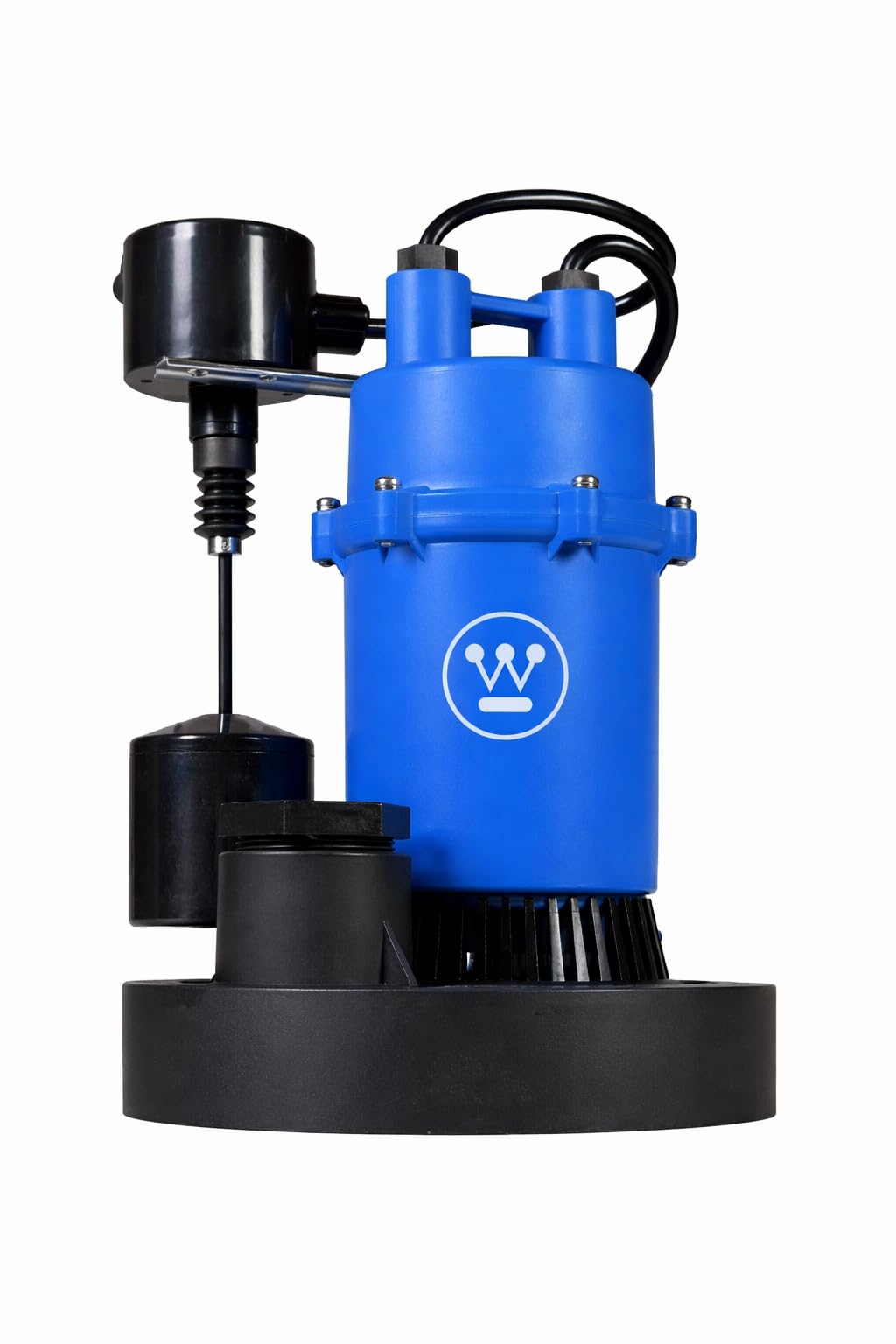
The Westinghouse WH50TP is built for raw water-moving speed. With a 1/2 HP motor rated at 4100 gallons per hour (68.3 GPM) and a 28-foot vertical lift, this pump evacuates a flooded basement faster than any other model on this list. The epoxy-coated aluminum housing provides better heat dissipation than plastic without the full weight premium of cast iron, making it a strong middle ground for homeowners who want durability without a 30-pound anchor.
The top suction anti-airlock design is a practical feature that prevents the pump from losing prime when debris or air pockets form, a common failure point on cheaper bottom-suction pumps. The vertical float switch is integrated but easily accessible, and the included thermal overload protection on the oil-filled PSC motor extends operational life significantly. Owners report easy DIY installation using standard 1-1/4 inch or 1-1/2 inch PVC discharge connections.
A few buyers note the pump is audibly louder than thermoplastic competition—one reviewer called it “a lil loud” but considered that a feature because it confirms the pump is running. The top plastic housing ring has been reported as brittle, and the unit may not survive a hard knock during installation without cracking. For homes that need maximum GPM throughput during storm season, the WH50TP delivers where it counts.
Why it’s great
- Highest flow rate on the list at 68.3 GPM
- Top suction design prevents airlock issues
- Epoxy-coated aluminum housing for thermal management
Good to know
- Audibly louder than thermoplastic models
- Top plastic ring can crack if bumped during installation
3. Superior Pump 92551 1/2 HP Cast Iron Pedestal Pump
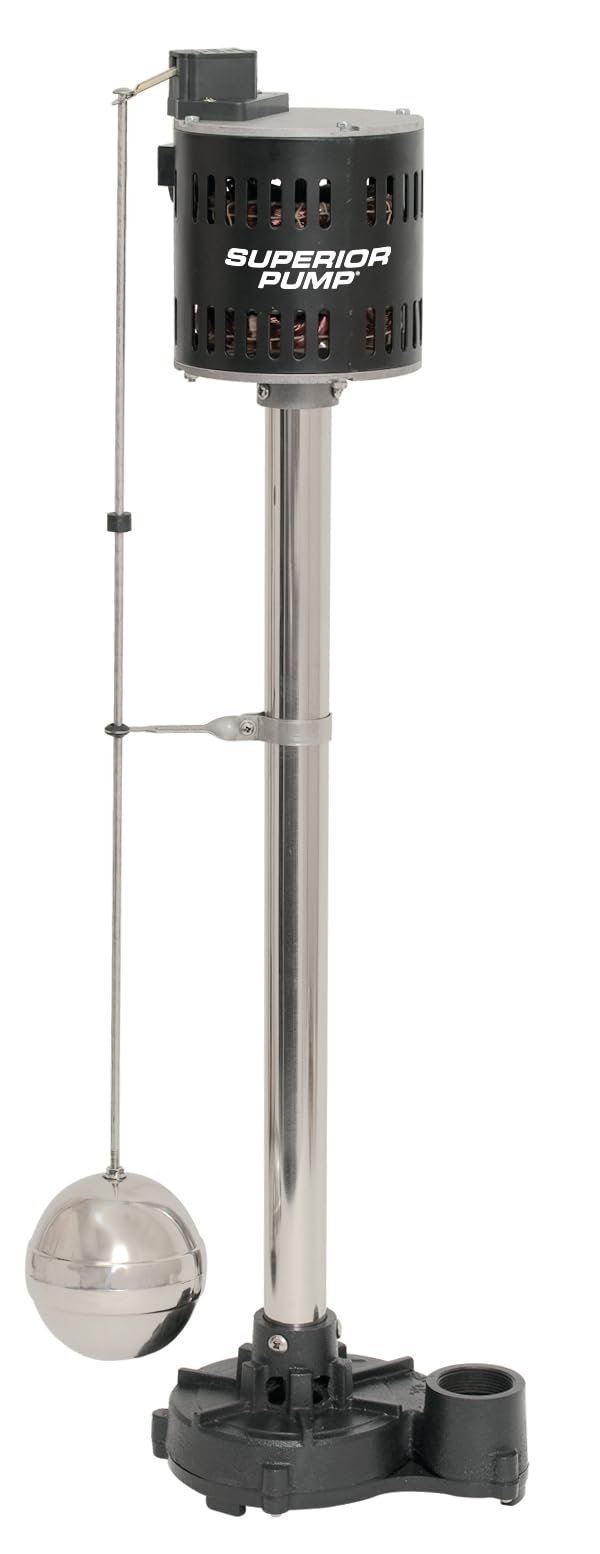
The pedestal design of the Superior Pump 92551 is a deliberate choice for longevity. By keeping the 1/2 HP motor above the water line, this pump avoids the corrosion, sediment ingestion, and thermal stress that eventually kills submersible models. The motor is fully adjustable via a metal switch arm, and the float ball mechanism can be set to trigger at higher water levels to match specific pit depths. The cast iron and stainless steel construction is immediately obvious in hand — this is a 16.5-pound piece of equipment built to last.
Owners with shallow sump pits specifically seek out pedestal pumps because the motor stays accessible and the switch never sits in stagnant water. Multiple verified reviews report this model lasting beyond the 5-year warranty period, with one user replacing a submersible unit that failed every two years. The 1-1/2 inch NPT discharge handles high flow rates cleanly, and the motor can handle liquids up to 180 degrees Fahrenheit, useful for draining water heaters or boiler overflow.
The pedestal form factor is not suitable for tight crawl spaces or sump pits with limited vertical clearance above the basin. The pump stands 36 inches tall with the motor column fully extended. If your sump basin is covered or tucked into a low joist area, the vertical design may not fit. The maximum head rating is only 10 feet — this is a volume pump, not a lift pump, so discharge runs must be mostly horizontal.
Why it’s great
- Motor stays dry above water for long lifespan
- Cast iron and stainless steel construction resists corrosion
- Fully adjustable automatic switch
Good to know
- Requires 36 inches of vertical clearance above basin
- Maximum head limited to 10 feet
4. Zoeller M57 Mighty-Mate Submersible Sump Pump
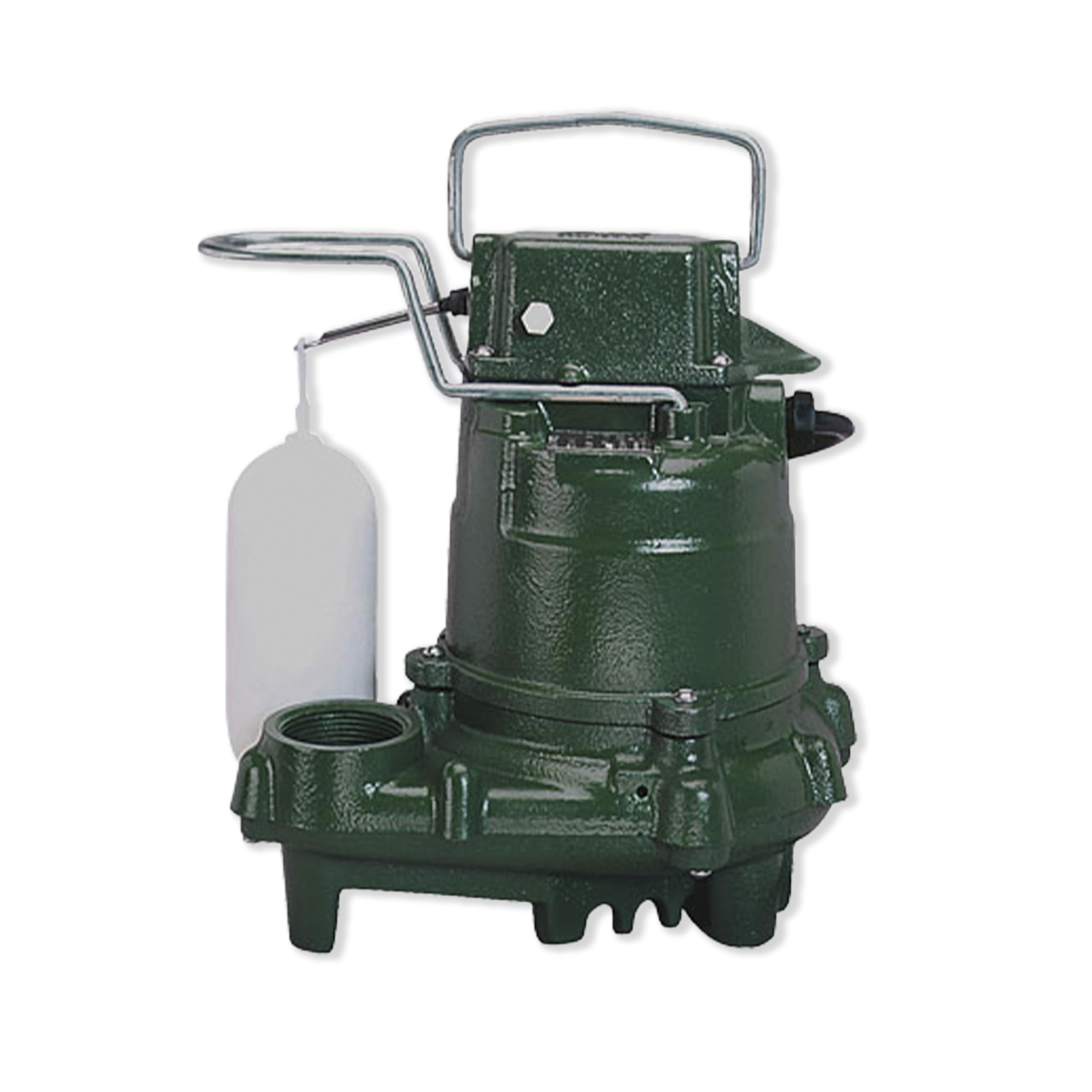
The Zoeller M57 has earned its reputation over decades, not months. The 3/10 HP oil-filled motor encased in a full cast iron housing delivers heat dissipation that thermoplastic pumps simply cannot match, allowing the M57 to run continuously through heavy storms without thermal shutdown. The non-clogging vortex impeller is made from corrosion-resistant cast iron, so small stones and debris pass through without jamming. The polypropylene float is solid — it will not become waterlogged and sink, a failure mode common on hollow switch floats.
Real-world ownership data from verified reviews tells the real story: one owner reports the M57 running every 10 minutes for 11 winters in rainy Seattle without a single service call. Another cites replacing a Wayne pump that failed in two months and switching to Zoeller permanently. The build quality is heavy — 27 pounds — and the stainless steel hardware, float guard, and switch arm are engineered for damp or dirty environments. The pump handles a 19.25-foot vertical lift and delivers 2580 GPH, more than adequate for most residential sump basins.
The M57 draws 40 amps at startup, which can trip GFCI outlets if the circuit is shared. Some units arrive with thin packaging that can snap the plastic float rod, though Zoeller customer service is known to send replacement parts quickly. The 3/10 HP rating may seem weak on paper compared to 1/2 HP competitors, but the oil-filled cast iron motor maintains its rated output without thermal derating, so effective performance is often better than higher-rated plastic pumps that throttle back when hot.
Why it’s great
- Oil-filled cast iron motor for superior heat management
- Proven 10+ year lifespan in demanding conditions
- Vortex impeller passes solids without clogging
Good to know
- High startup current may trip shared GFCI circuits
- Shipping packaging can damage float rod in transit
5. Westinghouse WH50BBU Battery Backup Sump Pump System
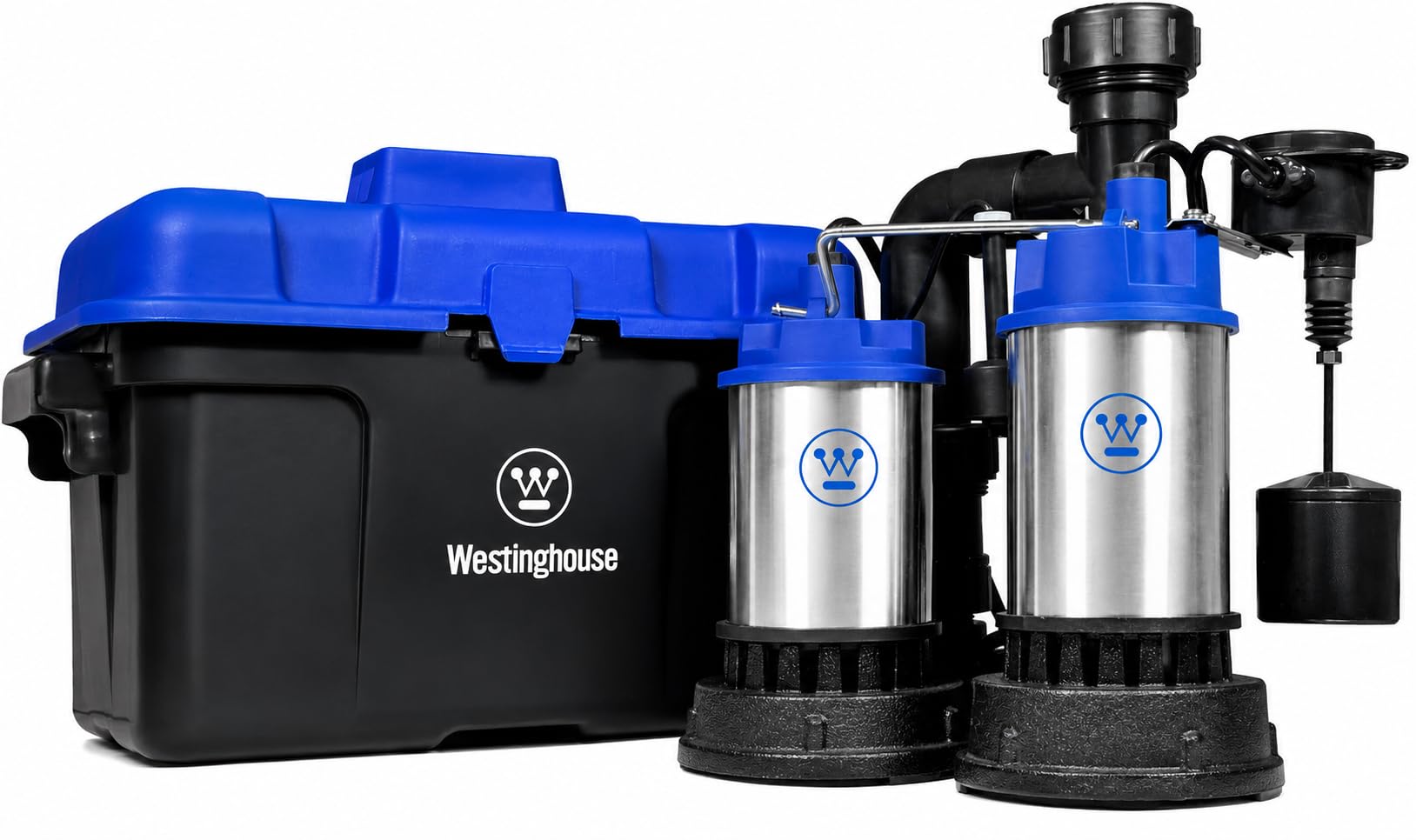
The Westinghouse WH50BBU is the only dual-pump system on this list, combining a 1/2 HP AC primary pump with a high-flow DC battery backup pump that automatically switches on when the power fails. The combined flow rate reaches 87 GPM, enough to handle the worst storm surge while the grid is down. Both pumps feature stainless steel and cast iron construction with PSC motors, sealed shafts, and lubricated ball bearings. The top suction design on both units helps prevent airlock, a critical feature for backup pumps that may sit idle for months.
Owners consistently highlight the peace of mind factor — knowing the backup activates automatically during outages without manual intervention. The system includes a battery controller, charger, and alarm (battery not included), and the 14.4-inch footprint is compact enough to fit most residential sump pits. Installation is rated as moderate DIY, with clear instructions for wiring the battery controller and setting the dual float switches.
The system requires purchasing a deep-cycle marine or AGM battery separately, which adds to the total upfront investment. The DC backup pump is not designed for continuous duty — it handles emergency intervals of a few hours to a day, depending on battery capacity and water inflow rate. The charger adapter cable is notably short, which may limit placement options near outlets. This is a premium investment that pays for itself exactly once: the first time the power goes out during a storm.
Why it’s great
- Dual-pump automatic switchover during power loss
- High combined flow rate of 87 GPM
- Stainless steel and cast iron construction
Good to know
- Battery not included — adds significant cost
- Charger cable is short, limiting placement options
6. Acquaer 1/2 HP Automatic Sump Pump PCP025-BLS

The Acquaer PCP025-BLS delivers a genuine 1/2 HP motor at a price point where most competitors offer only 1/3 HP. The built-in electronic sensor triggers automatic operation when water reaches 2 inches and runs down to 2/5 inch, then shuts off after 10 seconds — a precise cycle that reduces unnecessary running. The 2450 GPH flow rate and 25-foot vertical lift are adequate for standard residential basement protection, and the bottom suction design removes water down to 3/4 inch, leaving the basin drier than many competitors.
The 19-foot power cord is the longest on this list, giving significant flexibility for outlets placed far from the sump pit without needing an extension cord. The pump comes with three adapters — a 1-1/2 inch NPT elbow, a multi-hose adapter for 1 inch and 1.2 inch hoses, and a 3/4 inch garden hose check valve adapter — making it versatile for temporary or permanent installation. Thermoplastic construction keeps weight low at around 8 pounds, and the included thermal overload protection adds basic safety.
Long-term durability remains unproven — the thermoplastic housing and electronic sensor are less robust than mechanical float switches in dirty water conditions. Some users report the sensor tripping the GFCI after several months of outdoor use, though the manufacturer offered discounted replacements in those cases. The maximum head of 25 feet is lower than the Rainbro or Westinghouse, so if your discharge pipe runs up two stories, this pump may struggle to maintain flow rate at elevation.
Why it’s great
- True 1/2 HP motor at a budget-friendly price point
- 19-foot power cord for flexible placement
- Comes with three adapter types for versatile installation
Good to know
- Electronic sensor may trip GFCI after extended use
- Thermoplastic housing less thermally durable than metal
7. BOMGIE 1/3 HP Automatic Water Pump

The BOMGIE 1/3 HP automatic pump is the entry-level option that still delivers emergency functionality. With a 2250 GPH flow rate and 33.5-foot vertical lift, it actually matches some 1/2 HP pumps on head height, making it a viable choice for installations where the discharge runs higher than average. The copper wire motor and thermoplastic housing are standard for the price tier, and the removable suction screen catches solids up to 1/8 inch to protect the impeller.
Verified reviews frequently cite this pump as a basement flood saver — one reviewer directly credits it with preventing the same flood damage that affected their neighbor. The automatic float switch activates at 1.5 inches of water depth and runs for 60 seconds after the water drops to 1/4 inch, a longer dry-run cycle than most which helps prevent short-cycling. At 8.6 pounds, it is easy to carry for temporary setups or emergency use.
Durability concerns are real at this price point — one review documented the pump developing an internal electrical fault after 6 months of outdoor use, tripping the GFCI on startup. The thermoplastic body is more prone to cracking in freezing temperatures, and the 1/3 HP motor may struggle during sustained heavy inflow if your water table is high. This is best treated as a backup or for intermittent light-duty use, not as a primary permanent installation in a wet basement.
Why it’s great
- 33.5-foot vertical lift matches higher HP pumps
- Lightweight and portable for emergency setups
- 60-second dry-run delay prevents short cycling
Good to know
- 1/3 HP motor may lack power for heavy inflow
- Reported electrical fault after 6 months in outdoor use
FAQ
How often should a sump pump be replaced?
Why does my sump pump keep running even when it is not raining?
What size sump pump do I need for a finished basement?
Can a sump pump discharge into a garden or yard?
Does a pedestal pump or submersible pump last longer?
Final Thoughts: The Verdict
For most users, the best basement sump pump winner is the Rainbro 1/2 HP PSU051V because it delivers the highest flow rate at its price point with quiet operation and reliable automatic switching. If you want maximum water-moving speed for heavy storm inflow, grab the Westinghouse WH50TP. And for long-term durability in a finished basement, nothing beats the proven 10-year track record of the Zoeller M57 Mighty-Mate.