
A basement sump pump is the last line of defense between your finished basement and a catastrophic flood. With horsepower ratings from 1/3 HP to 1/2 HP and flow rates ranging from 2,500 to 5,100 gallons per hour, choosing the wrong pump means either constant short-cycling or a basement full of water after a heavy storm. The margin for error is measured in inches of water rise.
I’m Min — the co-founder and writer behind Gadgets Feed. I’ve spent countless hours analyzing the technical specifications, customer durability reports, and real-world performance data for the most popular sump pumps on the market to separate the workhorses from the plastic disposables.
This guide breaks down the critical specs like motor type, housing material, float switch design, and backup readiness to help you find the best basement sump pumps for your specific pit size, water volume, and peace of mind budget.
How To Choose The Best Basement Sump Pumps
Selecting a sump pump goes beyond just picking the highest horsepower. You need to consider your pit size, the volume of water ingress during storms, the pump’s construction material, and whether you need a backup system for power outages.
Match Horsepower to Your Water Load
Horsepower is the first spec to pin down. A 1/3 HP pump typically handles 2,500–3,000 GPH and works well for average residential water tables with occasional heavy rain. A 1/2 HP pump pushes 4,000–5,100 GPH and is better suited for high water tables, frequent storms, or homes with extensive drainage tile systems that can overwhelm a smaller motor.
Cast Iron vs. Thermoplastic Housing
The housing material directly impacts the pump’s longevity and noise levels. Cast iron models are heavier, dissipate motor heat more effectively, and dampen vibration for quieter operation. Thermoplastic pumps are lighter and more budget-friendly, but they are more prone to cracking and typically have shorter lifespans in continuous-duty applications. Cast iron is the standard for any installation you want to last a decade or more.
Float Switch Reliability is Critical
The float switch controls when the pump turns on and off. Vertical float switches are the most reliable in narrow pits because they operate within a strict water depth range (typically 2.75 to 7.25 inches). Tethered floats can get caught on the pit wall or the pump body, leading to failure to activate. Diaphragm switches are compact but prone to clogging over time. For long-term dependability, a vertical float or a magnetic float switch is the preferred choice.
Quick Comparison
On smaller screens, swipe sideways to see the full table.
| Model | Category | Best For | Key Spec | Amazon |
|---|---|---|---|---|
| Zoeller M57 Mighty-Mate | Premium Cast Iron | Longest lifespan, quiet operation | 3/10 HP, 2580 GPH, Cast Iron | Amazon |
| Red Lion RL-SC50V | High Capacity Cast Iron | High flow with energy efficiency | 1/2 HP, 4300 GPH, Cast Iron | Amazon |
| WAYNE WSS30VN | Backup Ready System | Power outage protection | 1/2 HP, 5100 GPH, w/ Battery Backup | Amazon |
| Liberty Pumps 257 | Quiet Workhorse | Whisper-quiet basement operation | 1/3 HP, 3000 GPH, Cast Iron | Amazon |
| Little Giant 6-CIA | Durable Classic | Simple, proven diaphragm switch design | 1/3 HP, 2760 GPH, Cast Iron | Amazon |
| Zoeller Waste-Mate 267 | Sewage & Effluent | Handling solids up to 2 inches | 1/2 HP, 7500 GPH, Cast Iron | Amazon |
| Acquaer 1/2 HP | Budget Automatic | Value-driven, automatic operation | 1/2 HP, 2450 GPH, Thermoplastic | Amazon |
In‑Depth Reviews
1. Zoeller M57 Mighty-Mate
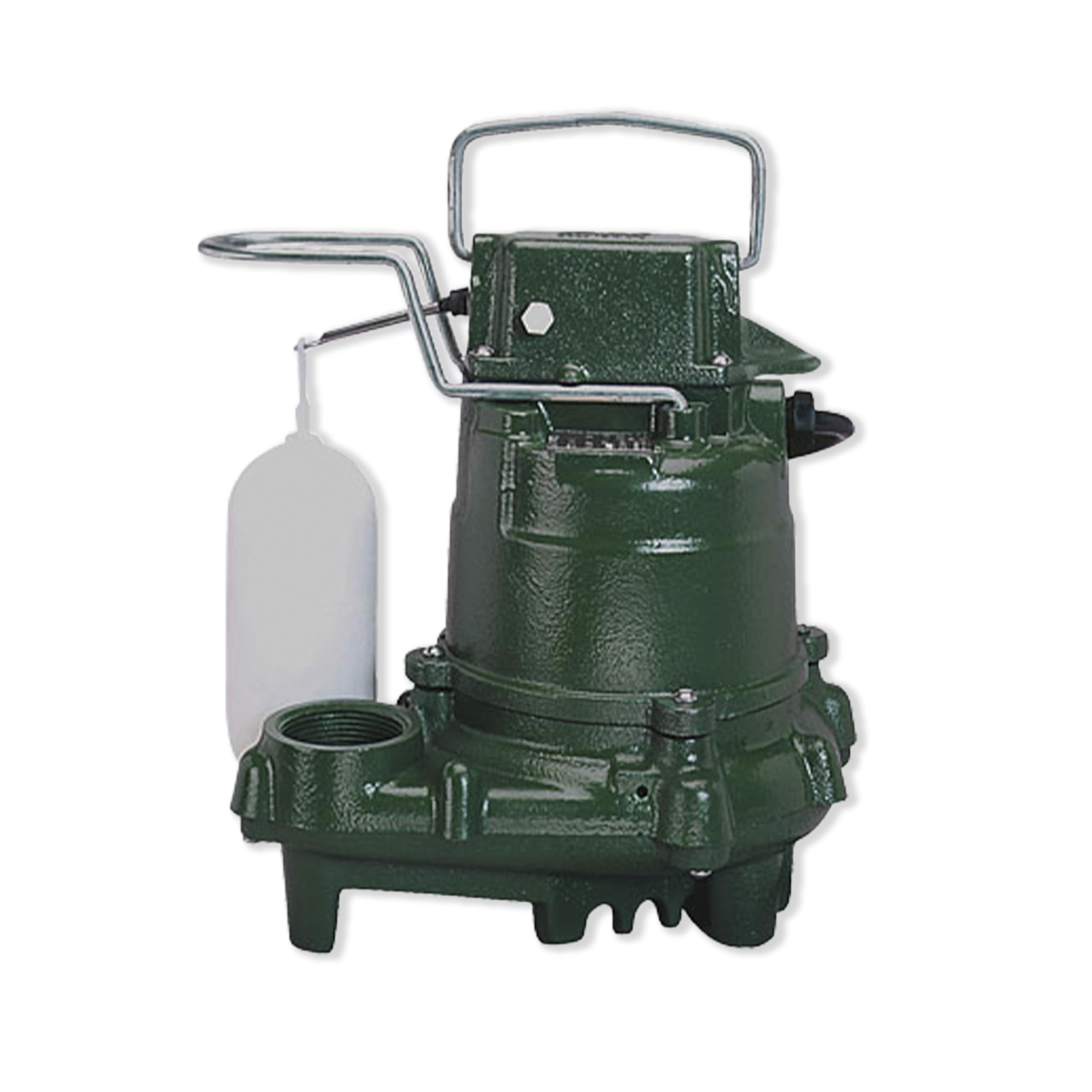
The Zoeller M57 is the benchmark for residential sump pumps, with a reputation for surviving decades of continuous use. Its oil-filled motor and cast iron housing provide superior heat dissipation, preventing the thermal shutdown common in thermoplastic models during extended storm duty cycles. The non-clogging vortex impeller passes solids without jamming, and the stainless steel float guard resists the rust that plagues lesser pumps after a few seasons.
Real-world performance is impressive — it moves roughly 40 GPM at a 10-foot lift, emptying a typical pit in under 10 seconds. The vertical snap-action float switch is mechanically simple and avoids the fouling issues associated with tethered or diaphragm switches. At 27 pounds, this pump is heavy, and that weight translates directly into vibration dampening and thermal mass.
The only consistent complaint is the packaging: the float rod can snap during shipping if the box is abused. Zoeller is known to send a free replacement part, but it is an inconvenience to deal with on delivery day. For a pump that routinely lasts 10–15 years in harsh environments like Seattle and Chicago basements, the M57 justifies its premium position.
Why it’s great
- Oil-filled motor and cast iron housing for superior heat management and longevity
- Proven reliability — multiple users report 10+ years of zero-maintenance service
- Very quiet operation due to heavy cast iron construction dampening vibration
Good to know
- Poor factory packaging can lead to a broken float rod during shipping
- Rust spots can appear on external hardware within weeks in humid pits
- Larger footprint may not fit smaller sump pits without modification
2. Red Lion RL-SC50V

The Red Lion RL-SC50V combines a 1/2 HP motor with a Permanent Split Capacitor (PSC) design that draws only 5.3 amps, making it significantly more energy-efficient than shaded-pole motors of equivalent horsepower. This translates to lower electrical load on your circuit and less heat buildup during extended operation. The cast iron housing and clog-resistant impeller handle semi-solids up to 3/8 inches, well above the standard for clean-water sump pumps.
The piggy-back vertical float switch is the standout feature here. It activates at 7.25 inches of water and shuts off at 2.75 inches, providing a wide operating range that prevents short-cycling. The float plugs directly into the outlet and the pump plugs into the float, so if the switch fails, you can replace it without touching the pump wiring. The pump is rated for 28 feet of shut-off head, enough for deep pits with long horizontal runs.
A few users have noted that the short feet on the base can suck debris into the impeller in particularly dirty pits. Adding a bottom screen is an easy fix. Despite that quirk, this pump has proven itself over the long haul — one reviewer reported over 10 years of service in a saltwater backwash environment with only occasional float switch replacements.
Why it’s great
- Energy-efficient PSC motor draws only 5.3 amps for a 1/2 HP pump
- Wide vertical float range prevents short-cycling and extends switch life
- Excellent real-world durability — 10+ year service life reported
Good to know
- Short base feet can ingest small rocks and debris; a screen is recommended
- Requires a pit diameter of at least 15 inches to accommodate the float
- External paint finish can rust over time in saltwater environments
3. WAYNE WSS30VN

The WAYNE WSS30VN is an integrated AC/DC combination pump system that eliminates the complexity of stacking two separate pumps in one pit. The primary 1/2 HP AC pump pushes 5,100 GPH, while the 12-volt DC backup pump engages automatically during a power outage, capable of moving up to 10,000 gallons on a single 75 Ah battery charge. The unit comes pre-assembled for drop-in installation in a 16-inch or larger basin, aiming for a 15-minute setup.
What sets this system apart is its tested reliability — it has been certified to 1 million cycles. The backup pump is programmed to run for approximately 20 seconds each cycle, which minimizes battery drain while still evacuating significant water volume. Real-world performance shows it can empty an 18-inch by 30-inch pit in about 30 seconds against a 7-foot head, and it ran all day on a 100 Ah AGM battery without voltage drop.
The unit is heavier than standalone pumps at 44 pounds, and the system requires a separate 12-volt battery (not included). Some users have noted that the base is quite wide, barely fitting an 18-inch round pit. Customer support responsiveness has received mixed reviews, but the pump’s whisper-quiet operation and rock-solid execution of the primary-backup concept make it the best choice for anyone who loses power during storms.
Why it’s great
- Integrated AC primary and DC backup pump in one pre-assembled unit for easy installation
- Backup pump can move 10,000 gallons on a single battery charge
- Very quiet operation — whisper quiet even during heavy cycling
Good to know
- Battery is not included and must be purchased separately
- Large base may not fit all standard sump pits
- Customer support responsiveness is inconsistent
4. Liberty Pumps 257

The Liberty Pumps 257 is consistently described by users as the quietest sump pump they have ever owned. The heavy one-piece cast iron housing, combined with an epoxy powder coat finish, eliminates the lower motor seal found on most pumps, removing a common failure point. The external vertical float switch with a magnetic reed design provides precise activation at around 4 to 7 inches of water depth without the mechanical wear of a snap-action switch.
The pump’s 1/3 HP motor provides 50 GPM at zero lift, which is more than adequate for standard residential sump pits. The built-in vent hole prevents airlock, a common problem with impeller-based pumps that can cause them to run dry and overheat. Users have reported that the pump is so quiet it is inaudible with the pit cover on; the only noise you hear is the check valve closing.
With a 15.22-pound weight, it is lighter than cast iron competitors from Zoeller and Little Giant, but still significantly heavier and more durable than thermoplastic models. The 2-year manufacturer warranty is shorter than some competitors, but the brand’s track record of 10+ year lifespans mitigates that concern. Made in the USA, this is a premium pick for homeowners who prioritize silence.
Why it’s great
- Exceptionally quiet operation — virtually inaudible with the pit cover on
- Magnetic float switch eliminates mechanical wear points for long-term reliability
- Built-in vent hole prevents airlock, a common cause of premature motor failure
Good to know
- 2-year warranty is shorter than some competitors at this price point
- 1/3 HP motor may not be sufficient for high water table homes with heavy runoff
- Requires drilling a small weep hole if installing a check valve to prevent airlock
5. Little Giant 6-CIA
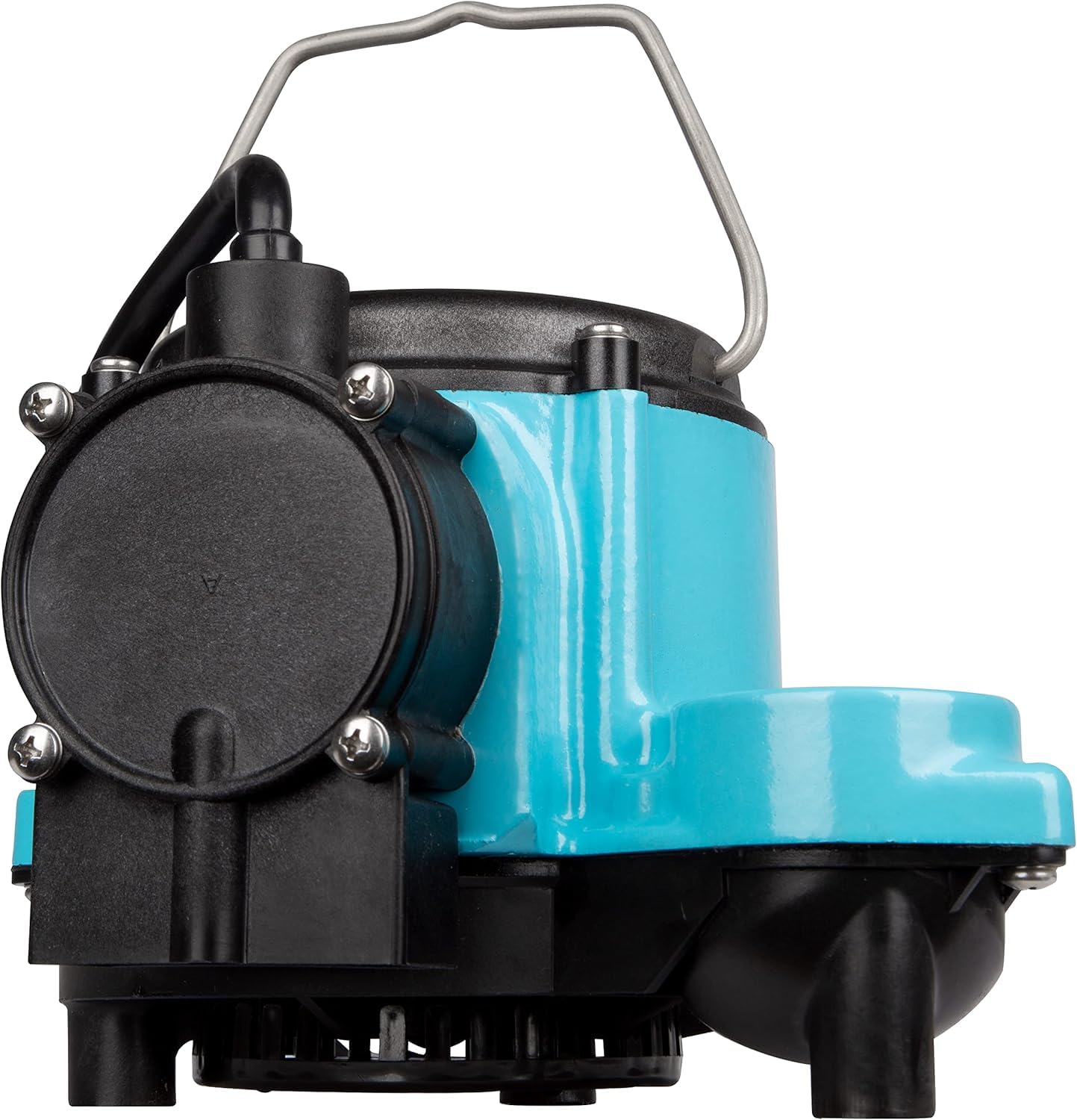
The Little Giant 6-CIA is a no-nonsense submersible sump pump built around an epoxy-coated cast iron housing and a non-clog vortex style impeller. Its shaded pole continuous-duty motor pulls 9.0 running amps and delivers 2,760 GPH at a 5-foot lift, with an 18-foot shut-off head. This is the pump you choose when you want a simple, well-understood design that has been in production for decades.
The integral diaphragm switch is pressure-activated and non-adjustable, engaging at 7–10 inches of water and disengaging at 1–4 inches. This design is more compact than a vertical float switch, making it a good fit for tighter pits. A significant number of users report 20+ year lifespans on these pumps in continuous daily service, with one reviewer noting a direct replacement of a unit that lasted 26 years without issue.
The diaphragm switch is also the primary point of contention. Some users have received units where the pump would not activate in water, requiring suction on the breather tube to trigger it. This seems to be a batch quality issue rather than a design flaw, but it introduces uncertainty. The 3-year manufacturer warranty provides some protection, but the switch reliability means this pump is best for homeowners willing to accept a small failure rate in exchange for proven long-term durability.
Why it’s great
- Proven 20+ year lifespan reported by multiple users in daily service
- Epoxy-coated cast iron housing and vortex impeller resist corrosion and clogging
- Compact diaphragm switch design fits in tight sump pits
Good to know
- Diaphragm switch can fail to activate in water; potential quality control issue
- Not recommended for emergency water removal or general dewatering by manufacturer
- Lower flow rate compared to 1/2 HP competitors at the same price point
6. Zoeller Waste-Mate 267

The Zoeller Waste-Mate 267 is a heavy-duty submersible pump built for sewage, effluent, and dewatering applications that pass solids up to 2 inches in diameter. This is not a standard sump pump — it is designed for basement bathrooms with a shower, sink, and toilet, or for any situation where you need to pump wastewater containing solid waste. The ASTM Class 25 cast iron housing and switch case with a plastic vortex impeller deliver 125 GPM at zero lift.
The integral float switch provides automatic operation, and the non-clogging vortex impeller design minimizes jams even when handling debris. The pump is completely submersible and watertight, with a 21.5-foot shut-off head that handles longer vertical runs. Users have praised its ability to handle a full basement bathroom without issues, with one reviewer noting flawless operation since 2012–2013 in a high water table home.
At 35.79 pounds, this is one of the heaviest pumps in this guide, and that weight is a direct indicator of its build quality. The pump is also notably quiet for its class, though installing a check valve with a weep hole is essential to prevent airlock. The 2-inch solid handling capability means it is overkill for clean water sump applications, but for anyone needing a sewage ejector, this pump is the gold standard.
Why it’s great
- Passes 2-inch spherical solids, suitable for basement bathroom sewage applications
- Cast iron housing with vortex impeller provides exceptional durability and clog resistance
- Flawless long-term performance — users report 10+ years of heavy use
Good to know
- Overkill and significantly more expensive for standard clear-water sump applications
- Heavy at 35.79 pounds; installation requires two people for safety
- A weep hole must be drilled above the discharge port to prevent airlock
7. Acquaer 1/2 HP Automatic Sump Pump

The Acquaer 1/2 HP provides an impressive set of specifications at a value-driven price point. The 1/2 HP motor pumps 2,450 GPH (40.8 GPM) with a 25-foot maximum lift height, which is competitive with mid-range cast iron pumps despite its thermoplastic construction. The built-in automatic sensor activates the pump at 2 inches of water and runs for an additional 10 seconds after clearing to ensure complete evacuation, a smart algorithm that prevents short-cycling.
The thermoplastic housing is corrosion-resistant, but it lacks the thermal mass and vibration dampening of cast iron. The motor includes a thermal overload protector that shuts the pump down automatically if it overheats, then resets when it cools. The package includes three adapters — a 1.5-inch NPT elbow, a multi-hose adapter for 1-inch and 1.25-inch hoses, and a 3/4-inch garden hose check valve adapter — making it versatile for temporary or semi-permanent installations.
Customer support from Acquaer has received high marks, with one user receiving a full refund for a float switch issue even after the return policy had expired. The 1-year warranty is shorter than the 3-year coverage on cast iron competitors, which is typical for budget-tier pumps. This pump is best suited for backup duty, draining a pool, or as a temporary solution — it is not built for the continuous-duty cycles a primary basement sump pump endures in a high water table home.
Why it’s great
- 1/2 HP motor at a budget-friendly price point with competitive 2,450 GPH flow rate
- Smart sensor automation algorithm extends 10-second run after clearing to prevent short-cycling
- Excellent customer support from manufacturer, including post-warranty resolutions
Good to know
- Thermoplastic construction is less durable than cast iron for continuous-duty applications
- 1-year warranty is shorter than the 3-year coverage on premium alternatives
- Best suited for backup, temporary, or light-duty applications rather than primary basement protection
FAQ
What size sump pump do I need for my basement?
How do I prevent my sump pump from getting airlocked?
Should I choose a vertical float or a tethered float switch?
Final Thoughts: The Verdict
For most users, the basement sump pumps winner is the Zoeller M57 Mighty-Mate because it offers the perfect combination of cast iron durability, quiet operation, and proven 10–15 year lifespan that makes it a set-it-and-forget-it solution for any basement. If you want integrated power outage protection, grab the WAYNE WSS30VN. And for high-flow pumping with energy efficiency, nothing beats the Red Lion RL-SC50V.