
Our readers keep the lights on and my morning glass full of iced black tea. As an Amazon Associate, I earn from qualifying purchases.
Specs are compiled from manufacturer listings and verified buyer reviews and can change over time — please confirm the key details on the product page before buying.
The wrong sealer can peel, blister, or just let water keep pushing through. This guide cuts through the confusion to show you which formulas actually keep moisture out, which ones stick to vertical block, and which one does not need a surface film at all.
I’m Min — the founder and writer behind Gadgets Feed. This guide is built by comparing the manufacturers’ published specifications and the patterns across verified customer reviews, so you get each pick’s real strengths and trade-offs instead of marketing spin.
Here you will find honest breakdowns of four different approaches to stopping basement dampness, from liquid rubber membranes to deep-penetrating silicates, to help you confidently choose the best basement wall sealer for your project.
Quick Picks
- RadonSeal Plus Concrete Sealer — Best Overall
- Flex Seal Liquid, Clear, 1 Gallon — Premium Pick
- AMES Blue Max White Liquid Rubber Waterproofer — Best Value
- Ames Block & Wall Liquid Rubber Waterproofer — Thick Coat Pick
How To Choose The Best Basement Wall Sealer
Picking the right sealer starts with knowing where your dampness is coming from. If you have a concrete block or poured wall, the sealer must either bond firmly to the surface as a thick rubber membrane or penetrate deep into the concrete to block moisture from within. This decision affects everything from coverage to how many coats you will need.
Surface Coatings vs. Penetrating Sealers
A surface coating, like a liquid rubber, creates a thick waterproof layer on the outside of your wall. These are great for blocking liquid water and can bridge hairline cracks, but they can peel if the wall has high internal moisture pressure pushing from behind. A penetrating sealer, on the other hand, soaks into the concrete and reacts chemically inside the pores. It leaves no film on the surface, so it cannot peel, but it is invisible and can require you to deal with the concrete’s exact condition.
Elongation and Crack Bridging
If your basement walls have even tiny cracks, you need a sealer that can stretch without tearing. This is measured as elongation percentage. A high elongation, like 900 percent, means the dried coating can expand and contract with the surface, resisting cracks and peeling much better than a rigid paint. For a liquid rubber product, this is the number that tells you if it will survive the natural shifting of a foundation.
Thickness and Coats
Many reviewers point out that one coat is rarely enough for full protection. Most liquid rubber sealers require at least two coats applied with a brush, roller, or sprayer. Allow 24 hours between coats as a general rule. The thickness of the sealer as you apply it also matters — if a material is too thick to brush easily, a sprayer may save your arm and give a more even coat.
Quick Comparison
On smaller screens, swipe sideways to see the full table.
| Model | Best For | Sealer Type | Elongation | Item Weight | Amazon |
|---|---|---|---|---|---|
| Ames Blue Max White | Below-grade foundations | Liquid Rubber | 900% | 5.15 kg | $46.08Amazon |
| Ames Block & Wall | Block walls & shelters | Liquid Rubber | — | 9.25 lb | $49.91Amazon |
| Flex Seal Liquid | Multi-surface & RV | Liquid Rubber | — | 9.25 lb | $109.99Amazon |
| RadonSeal Plus | Deep moisture & radon | Penetrating Silicate | — | 48 lb | $254.00Amazon |
In‑Depth Reviews
1. RadonSeal Plus Concrete Sealer
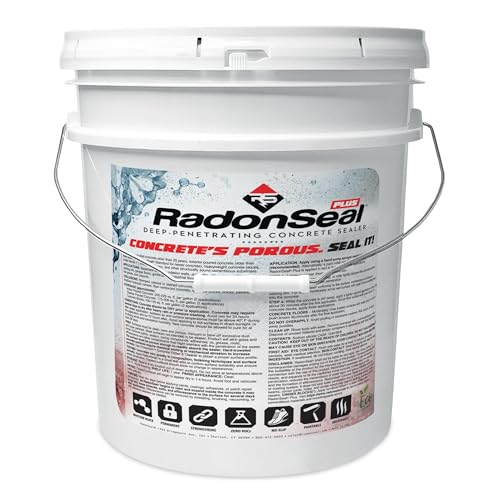
The penetrating silicate that works inside the wall, not on top of it.
This sealer is a completely different approach from the liquid rubbers above. RadonSeal Plus is a blended silicate formula that goes into the concrete as a liquid and reacts inside the pore structure to form an internal seal — there is no surface film at all. You do not have to worry about peeling, blistering, or wear from foot traffic because it is locked inside the concrete. At 48 pounds per 5-gallon bucket, this is a serious amount of material, versus 9.25 pounds for the Ames Block & Wall sealer, and it covers up to roughly 1000 square feet per 5 gallons depending on how porous your concrete is.
Buyers report that it significantly reduced humidity in their basements and hardened the concrete itself. One reviewer noted that they used it in 2006 on a 1200-square-foot basement, and it stopped historic flooding while dropping a friend’s radon reading from 40 times the safe level down to half that level. Another noted that the concrete finish remained natural and invisible, so if you plan to paint over it later, this product is specifically compatible with concrete paints and epoxy coatings. The downside? The application requires wetting the concrete first, and one buyer mentioned that their radon level returned to the original after only a month, so full results can vary.
What Makes It the Best
- Works deep inside the concrete pores so it cannot peel or blister
- Strengthens and hardens porous or weak concrete
- Compatible with paints, epoxies, and adhesives for later use
The Catch
- Requires surface prep with grinding for best results
- Some users saw inconsistent radon reduction over time
Ideal if you want: a permanent internal moisture block that strengthens your concrete rather than just coating it.
Consider others if: you need a quick, thick surface layer for visible water leaks through cracks.
2. Flex Seal Liquid, Clear, 1 Gallon

The clear liquid rubber that seals everything from concrete to fabric.
Flex Seal Liquid is a liquid rubber in a can that you can brush, roll, dip, or pour. It goes on smooth and covers fast, creating a watertight, flexible, and UV-resistant rubberized coating. It sticks to a massive list of materials — concrete, brick, stucco, wood, metal, glass, plastic, tile, EPDM, and even fabrics. At 9.25 pounds per gallon, it is the same weight as the Ames Block & Wall sealer, but the clear formula dries transparent, which owners mention is a big advantage if you want the look of the wall to remain unchanged.
One reviewer warned that this product is very thick and hard to brush, recommending a foam roller for even application. Another mentioned that it “works great but sets up fast; gallon skimmed in minutes in shade at 70°F,” so you must work quickly — some buyers use plastic wrap to slow the drying in the container. The clear finish is also noted as better than the white version because white leaves visible patches. However, the price point sits at the higher end, and one reviewer called it expensive for what you get.
Where It Excels
- Works on an enormous range of materials beyond just concrete
- Clear formula means no visible coating on your wall
- UV resistant, good for areas that get some exposure
The Downsides
- Can set up in the can within minutes if you are not fast
- Very thick consistency is hard to brush; a sprayer is better
Grab this for: a multi-surface sealer that stays invisible on the wall and can handle a wide variety of projects.
skip it if: you are on a tighter budget or want a sealer that stays workable longer.
3. AMES Blue Max White Liquid Rubber Waterproofer

The 900-percent elongation membrane that stretches with your wall.
AMS Blue Max White is a strong and highly adhesive elastomeric liquid rubber waterproofer built for below-grade concrete and insulated concrete foundations. Its key spec is a 900 percent elongation rate, which means the dried membrane can stretch to 900 percent elongation without cracking — a critical feature for a basement wall that naturally shifts over time. It is also non-toxic, VOC-compliant, and made in the USA. Packaged in a 1-gallon pail, it measures 6.75 x 6.75 x 7.75 inches.
Customers note it works really well for sealing subfloors and shower areas, and one owner reported that “one coating is great -2 would even be better.” Another applied it to a pet-stained subfloor and called it amazing and easy to clean. A more detailed review warned that brushes and rollers tend to thin the material, so a sprayer is recommended for a true membrane, and three coats applied in perpendicular strokes give the best results. It is not recommended as a final exterior coat because it can peel in direct weather exposure.
Why It Works
- 900% elongation resists cracking and peeling from foundation movement
- Non-toxic, eco-friendly, and compliant in all 50 states
- Versatile on concrete, wood, metal, and rubber surfaces
The Limitations
- Requires multiple coats for a true membrane — one coat is not enough
- Brushing or rolling can thin the material; a sprayer is better
Best for: anyone needing a high-elongation, budget-friendly liquid rubber that is safe to use indoors.
Not for: outdoor foundations or walls exposed to direct rain and sun.
4. Ames Block & Wall Liquid Rubber Waterproofer

The thick, smooth membrane that goes on like cake frosting.
This is the sealer for a concrete block wall that needs a serious, durable coating. At 9.25 pounds for a 1-gallon pail, it is the same weight as the Flex Seal, and its dimensions are 10 x 10 x 9 inches versus 6.75 x 6.75 x 7.75 inches for the AMES Blue Max. Buyers consistently describe it as very thick — one reviewer wrote that it “applies like cake frosting” and does not run on vertical surfaces, which is a huge advantage when sealing a basement wall where drips and sags are a common frustration.
One customer observed “excellent waterproofing for 10+ years; thick, smooth application, easy cleanup; bright white with slight shimmer; worth the cost.” Another used it to seal a stucco/slab interface against severe rain and said it prevented water wicking. The thick formula fills cracks well, but if you apply it too thickly in one spot, it can get messy. It feels thicker than Drylok, according to one buyer, and two coats are recommended for best results. The finish is shiny and bright white, so your wall will look visibly sealed.
What Stands Out
- Very thick consistency stays put on vertical walls without running
- Fills cracks well and dries to a tough, shiny finish
- Reviewers point out long-term performance of 10+ years
Watch Out For
- Can be hard to spread evenly without a good roller or brush
- Requires two coats; one coat is not enough for full protection
Reach for this if: you have a block wall with cracks and need a thick, durable, bright-white membrane that stays put.
Look elsewhere if: you want a clear or penetrating sealer that does not change the look of your wall.
Understanding the Specs
Sealer Type: Surface vs. Penetrating
The biggest divide in basement wall sealers is whether they sit on the surface or go into the wall. A liquid rubber coating creates a thick, flexible membrane that blocks liquid water on contact. It is easy to see and easy to inspect — if it is damaged, you can patch it right there. A penetrating sealer, like a blended silicate, soaks into the concrete and reacts with the minerals inside to fill the pores from within. It cannot peel because there is nothing on the surface to peel, but it is invisible, so you cannot tell at a glance if it is still working.
Elongation Percentage
This number tells you how much a dried sealer can stretch before it tears. It is listed as a percentage. For example, a 900 percent elongation means the dried film can stretch to nine times its original length without cracking. This matters in a basement because concrete walls can develop new hairline cracks as the house settles. A sealer with high elongation, like the AMES Blue Max, can bridge those small movements without breaking the waterproof seal.
FAQ
Can I apply a basement wall sealer over old paint?
How many coats of liquid rubber do I need on a basement wall?
Will a penetrating sealer stop a wet basement wall?
Does a basement wall sealer help with radon gas?
Can I paint over a liquid rubber sealer?
How long does a liquid rubber sealer last on a basement wall?
Is it better to spray or roll a basement wall sealer?
Does the sealer change the look of my basement wall?
How do I clean up after applying a liquid rubber sealer?
Can I use a basement wall sealer on the floor too?
Final Thoughts: The Verdict
Across the board, the best basement wall sealer winner is the RadonSeal Plus because it works inside the concrete where no peeling or blistering can ruin the seal. If you want a thick, visible rubber membrane that bridges cracks, grab the AMES Blue Max White. And for a budget-friendly, high-elongation coating that is safe to apply, the standout is the Ames Block & Wall.
How We Picked
We do not accept paid placement, and we did not hands-on test every unit. Instead, we match each pick to a real buyer and use-case by comparing the manufacturers’ published specifications against the patterns in verified customer reviews — so you get each pick’s real strengths and trade-offs instead of marketing copy.
Sources & Methodology
Specifications: manufacturer listings and product documentation. Review insights: verified customer reviews, as of July 2026. Pricing: not shown on this page (it changes often); check the current price via the retailer link.
As an Amazon Associate, Gadgets Feed earns from qualifying purchases. This does not affect which products we feature.
Product prices and availability are accurate as of the date/time indicated and are subject to change. Any price and availability information displayed on Amazon at the time of purchase will apply to the purchase of this product. As an Amazon Associate I earn from qualifying purchases.
CERTAIN CONTENT THAT APPEARS ON THIS SITE COMES FROM AMAZON. THIS CONTENT IS PROVIDED "AS IS" AND IS SUBJECT TO CHANGE OR REMOVAL AT ANY TIME.
Amazon and the Amazon logo are trademarks of Amazon.com, Inc. or its affiliates.