
That musty smell creeping up from the basement isn’t just unpleasant—it’s a warning sign that moisture is compromising your home’s foundation, fostering mold growth, and gradually degrading the structural integrity of your walls. Whether you’re dealing with a damp concrete wall, a leaking cove joint, or a perpetually humid slab, the right sealant or barrier is the only thing standing between your dry storage and a costly water damage repair bill.
I’m Min — the co-founder and writer behind Gadgets Feed. I’ve spent countless hours analyzing technical data sheets, measuring coverage rates, examining chemical compositions like silane siloxane versus acrylic, and cross-referencing real-world application feedback across dozens of basement waterproofing solutions to bring clarity to this crowded category.
The goal is straightforward: cut through the marketing and identify which products actually stop water intrusion. Whether you need a deep-penetrating sealer for porous concrete or a robust vapor barrier for a new floor install, this analysis of the best basement waterproofing products will help you make a confident, informed choice.
How To Choose The Best Basement Waterproofing Products
Selecting the right solution for your basement depends entirely on the type of moisture intrusion you are facing: is it hydrostatic pressure pushing water through porous concrete, condensation on cold surfaces, or bulk water leaking through cracks and joints? Each scenario demands a different product chemistry and application method. A penetrating sealer works below the surface to block liquid water while allowing vapor to escape, whereas a liquid rubber membrane creates a continuous physical barrier on the surface. For floors, a thick polyethylene vapor barrier is the standard defense against ground moisture migrating through a slab.
Penetrating Sealers vs. Surface Membranes
Penetrating sealers, such as those based on silane siloxane chemistry, react with the minerals in concrete to form a hydrophobic layer inside the pores. They are ideal for vertical foundation walls because they do not change the surface appearance or trap vapor. Surface membranes, including liquid-applied rubber like elastomeric coatings, create a thick, flexible film that can bridge small cracks and handle higher hydrostatic pressure, but they require a perfectly clean substrate and often need a top coat if exposed to UV light. For below-grade exterior or interior walls with active seepage, a liquid rubber membrane with high elongation—900 percent or more—provides superior crack-bridging ability.
Coverage Rate and Number of Coats
The coverage rate, typically expressed in square feet per gallon, directly impacts both cost and labor time. High-quality silane siloxane sealers often cover between 150 and 225 square feet per gallon per coat, while thicker liquid rubber membranes may only cover 50 to 80 square feet per gallon. Most penetrating sealers require two coats for optimal protection, especially on highly porous or previously untreated concrete. Always factor in drying and curing time—some water-based formulas allow recoating within 30 minutes, whereas liquid rubbers may require 24 hours between coats and up to a week before full water exposure.
VOC Content and Odor Considerations
Basements are confined spaces with limited ventilation, making low-VOC and low-odor formulations critical for safe indoor application. Water-based formulas, such as those using acrylic or waterborne silane siloxane, typically emit minimal fumes and allow cleanup with soap and water. Solvent-based sealers offer deeper penetration in some cases but produce strong odors and require respirators and extensive ventilation. For finished or occupied basement spaces, a zero-VOC, odorless water-based sealer is almost always the better choice to avoid displacing the family during application and curing.
Quick Comparison
On smaller screens, swipe sideways to see the full table.
| Model | Category | Best For | Key Spec | Amazon |
|---|---|---|---|---|
| Armor SX5000 WB | Penetrating Sealer | Long-term concrete protection | 7-10 year durability, 95% water absorption reduction | Amazon |
| MasonryDefender Silane Siloxane | Penetrating Sealer | DIY concrete & paver protection | 128 fl oz coverage, water beading action | Amazon |
| Roberts 70-117 Vapor Barrier | Vapor Barrier Film | Flooring underlayment moisture block | 6 mil thickness, 600 sq ft roll | Amazon |
| Ames Blue Max BMX1WRG | Liquid Rubber Membrane | Below-grade walls & crack bridging | 900% elongation, elastomeric rubber | Amazon |
| Laticrete Waterproofing Membrane | Reinforcement Fabric | Tile and shower assemblies | 37.5 sq ft roll, 1/8″ crack isolation | Amazon |
| Polar Dust Proof Sealer | Acrylic Sealer | Interior floor dust-proofing | 1.32 gal container, satin finish | Amazon |
| STAR BRITE Water-Based Protectant | Fabric Protectant | Basement fabric items & cushions | 1 gallon, low-odor water-based formula | Amazon |
In‑Depth Reviews
1. Armor SX5000 WB Water-Based Silane-Siloxane Sealer

The Armor SX5000 WB is a professional-grade silane siloxane sealer that chemically bonds below the concrete surface, reducing water absorption by up to 95 percent without altering the look or texture of the substrate. Its water-based formulation means zero VOCs and no odor, making it safe for basement application without respirators or extended ventilation periods. Each gallon covers 175 to 225 square feet per coat, which is competitive for this chemistry class.
Real-world users report that a single application eliminates algae and fungus growth on concrete in humid climates, and the beading effect persists through multiple seasons. The sealer has demonstrated seven-year durability on spalled driveways, slowing further deterioration even when applied to already compromised surfaces. Unlike film-forming coatings, this product works entirely below the surface, so there is no surface wear to manage—simply clean and reapply when water absorption increases.
For a homeowner dealing with damp foundation walls or a porous basement slab, this represents the highest value because it combines professional longevity with DIY-friendly application. The matte finish means no glossy patchwork, and the lack of odor means the basement remains habitable during and after curing.
Why it’s great
- Zero VOCs and completely odorless for indoor basement use
- Does not change the color or texture of treated concrete
- Protection lasts 7-10 years with proper application
Good to know
- Requires clean, dry, absorbent surface before application
- Coverage drops on highly porous or rough surfaces
2. MasonryDefender Concrete Sealer
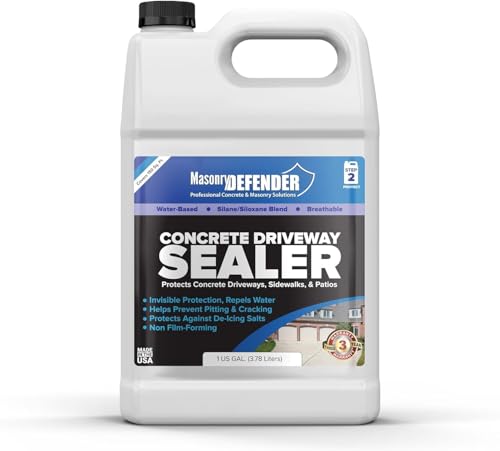
The MasonryDefender Concrete Sealer is a clear, penetrating silane siloxane formula designed to repel water without leaving a glossy residue or changing the appearance of the concrete. It bonds with the substrate to form a hydrophobic barrier that causes water to bead and roll off while allowing the concrete to breathe—critical for preventing freeze-thaw damage in basement walls subject to temperature swings. One gallon covers 90 to 150 square feet, making it suited for moderate-sized wall sections or a small basement slab.
Users in rainy climates like the Pacific Northwest report excellent water beading performance even three years after a single application, with treated concrete squares staying visibly cleaner and more mold-resistant than untreated sections. The application is straightforward using a low-pressure garden sprayer, and the sealer dries clear with no shine. Customers note that staining from overapplication can occur, so even coverage is important, but the material cleans up easily with water.
For budget-conscious homeowners who need reliable protection on basement walls or concrete pavers around a basement window well, this product punches above its class. The lack of odor and easy spray-on application make it a very approachable DIY choice.
Why it’s great
- Exceptional long-term water beading reported after 3 years
- Invisible, non-glossy finish preserves original concrete look
- Easy application with standard garden sprayer
Good to know
- Lower coverage rate limits use on very large areas per gallon
- Overapplication can create temporary wet-looking stains
3. Roberts 70-117 Moisture Barricade 6 mil Polyethylene Film
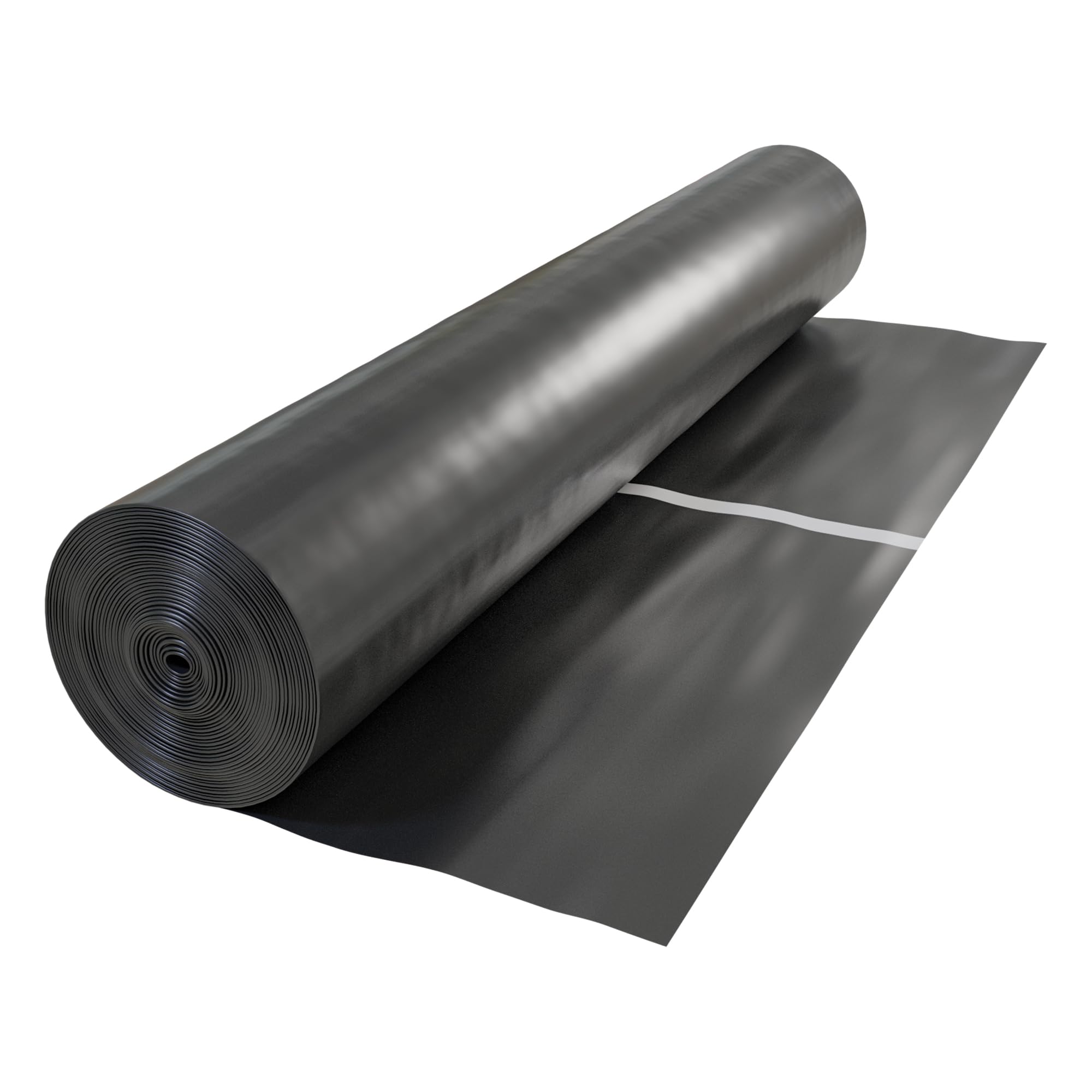
The Roberts 70-117 is a Class 1 vapor barrier made from 6 mil polyethylene film, a standard thickness that exceeds NWFA requirements for use over concrete subfloors. This roll unfolds to cover 600 square feet—12 feet wide by 50 feet long—which is enough to handle a large basement rec room or multiple smaller rooms without needing a second roll. The film lies flat without bunching and cuts easily with a utility knife, making it a straightforward solution for blocking ground moisture before installing laminate, engineered wood, or SPC flooring.
Users praise its durability compared to thinner contractor-grade films, noting that it does not tear easily during installation and provides a satisfying sound when walking over the finished floor. The film has no odor, which is important when working in a closed basement environment. Whether you are covering a concrete slab in a finished basement or preparing a subfloor for a home gym, this barrier provides the physical separation needed to protect flooring investments from long-term moisture migration.
For anyone finishing a basement floor, this is not an optional accessory—it is the minimum acceptable standard. The Roberts 70-117 delivers that standard with a generous roll size and a thickness that does not compromise on tear resistance.
Why it’s great
- Full 6 mil thickness exceeds minimum requirements for concrete subfloors
- Large 600 sq ft roll minimizes seams and material waste
- Lies flat and resists tearing during installation
Good to know
- Only addresses moisture vapor—does not seal existing cracks or leaks
- Requires careful taping at seams for full effectiveness
4. Ames Blue Max BMX1WRG Liquid Rubber Waterproofer

The Ames Blue Max BMX1WRG is a white liquid rubber waterproofer formulated to create a highly elastomeric membrane with 900 percent elongation. This extreme flexibility allows it to bridge and seal cracks up to 1/8 inch wide without tearing, making it ideal for below-grade concrete foundations, basements with active settling, and areas where hydrostatic pressure is a concern. It adheres aggressively to concrete, wood, and metal surfaces and can be applied by brush, roller, or sprayer on both vertical and horizontal surfaces.
Users find it effective for waterproofing basement walls, shower window sills, and even exterior underlayment, with multiple coats building a thick, rubbery barrier. The formula is non-toxic and VOC-compliant in all 50 states, so it is safe for interior basement application. However, customers caution that it requires full surface preparation and at least 24 hours between coats, with a full cure time of up to a week before it can be exposed to standing water.
For basements with existing hairline cracks or for sealing cove joints where the wall meets the floor, this liquid rubber provides a level of crack-bridging performance that penetrating sealers cannot match. Just note that it needs a top coat if used outdoors in direct sunlight.
Why it’s great
- Exceptional 900% elongation bridges active cracks effectively
- Adheres to a wide range of substrates including concrete, wood, and metal
- Non-toxic and VOC compliant for indoor basement use
Good to know
- Requires UV-protective top coat if applied to sun-exposed surfaces
- Full water exposure cure takes up to one week in warm weather
5. Laticrete Waterproofing Anti-Fracture Membrane Roll

The Laticrete Waterproofing Anti-Fracture Fabric Membrane is a 37.5 square foot roll of fiberglass cloth designed to reinforce liquid-applied waterproofing membranes in tile and stone installations. Its primary function is crack isolation: it prevents cracks up to 1/8 inch from transferring through the substrate to the finished tile surface. When embedded in a liquid membrane like RedGard or Laticrete Hydro Ban, the fabric creates a strong, impermeable barrier at joints, seams, and screw holes that is far more durable than liquid alone.
Professional tilers and DIY renovators alike report that this fabric is indispensable for shower pans, tub alcoves, and any tiled surface over a concrete basement slab where minor movement is expected. The fabric cuts easily with scissors, bends to fit corners, and embeds smoothly into wet membrane. Some users note that the current roll feels denser than previous versions, requiring thorough saturation to prevent dry centers, but the overall waterproof performance remains excellent.
For anyone finishing a basement bathroom or wet bar, this fabric is the standard reinforcement for liquid membranes. It transforms a good waterproofing job into a crack-resistant system that will not fail at seams.
Why it’s great
- Reinforces liquid membranes at critical joints and seams
- Prevents substrate cracks from telegraphing through tile
- Easy to cut and mold around corners and fixtures
Good to know
- Thicker fabric requires thorough saturation with liquid membrane
- Only 37.5 sq ft per roll, best for targeted reinforcement areas
6. Polar Dust Proof Concrete Sealer Clear

The Polar Dust Proof Concrete Sealer is a 100 percent acrylic liquid formulation specifically engineered to eliminate the dusting problem common on unsealed basement concrete floors. Its low viscosity allows deep penetration into concrete pores, binding loose particles and creating a durable satin finish that suppresses dust generation from foot traffic and sweeping. The 1.32 gallon container covers up to 25 square meters—roughly 270 square feet—when applied in two coats, with each coat drying to the touch in 1-2 hours.
Users report that two coats effectively stop the dusty, musty odor that plagues many basement slabs, leaving a clean, glossy surface that resists wear. The product has no strong odor, which is a significant advantage for basement application where ventilation is poor. It is suitable for concrete, blockwork, and rendered walls, making it versatile for both basement floors and lower wall sections. One caution: this is a surface treatment that may wear over time in high-traffic zones, so reapplication after a few years may be necessary.
For homeowners whose primary complaint is a dusty, perpetually dirty basement floor, this sealer delivers an immediate, visible improvement. It does not stop liquid water intrusion, but it is the right tool for dust control and enhancing the slab’s cleanability.
Why it’s great
- Effectively eliminates concrete dust from basement floors
- Fast drying between coats allows same-day project completion
- Low odor formula suitable for enclosed basement spaces
Good to know
- Does not act as a waterproofing barrier against liquid water
- May require periodic reapplication in high-traffic areas
7. STAR BRITE Water-Based Waterproofing & Fabric Protectant
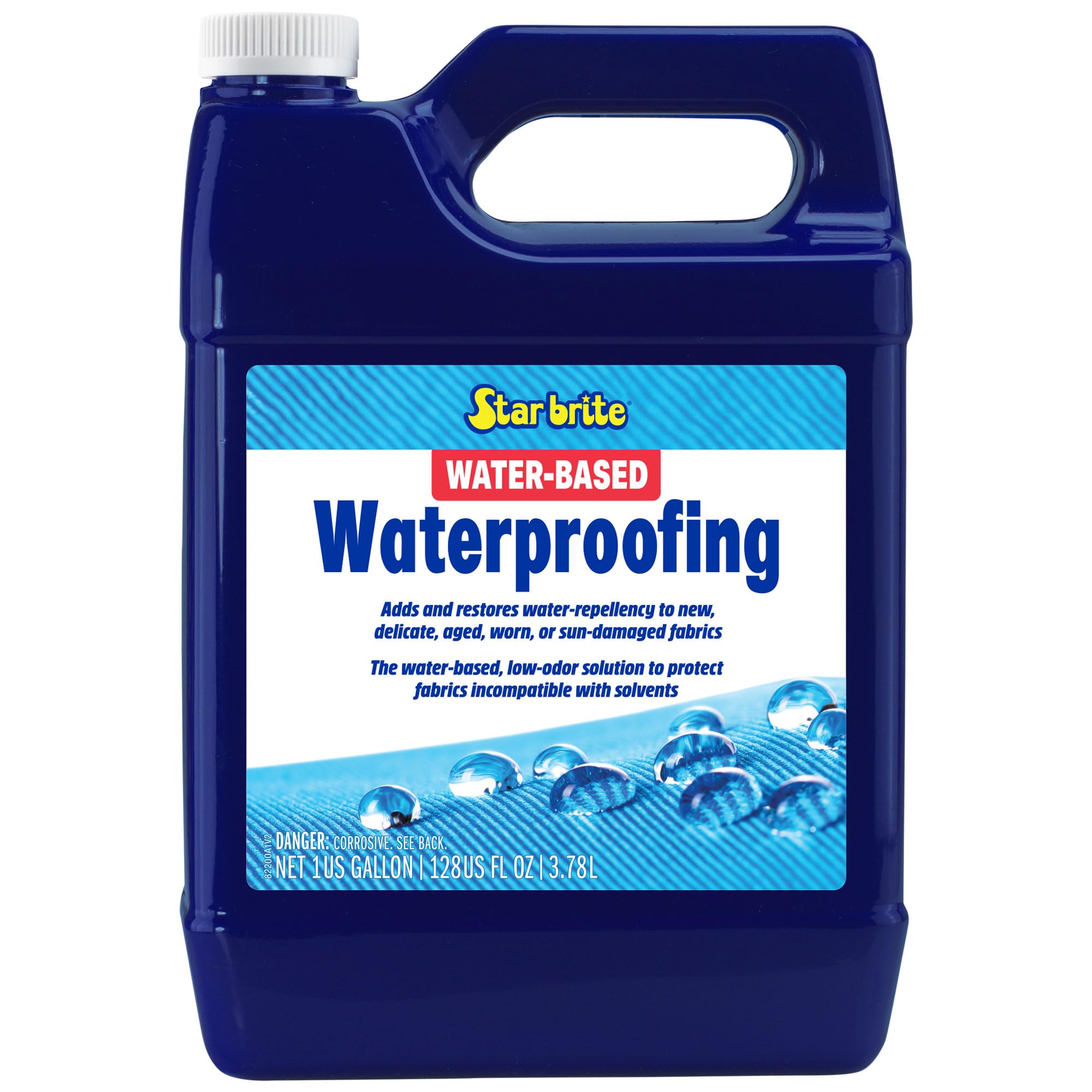
The STAR BRITE Water-Based Waterproofing & Fabric Protectant is a 1-gallon jug of low-odor, water-based formula designed to add water repellency to a wide range of fabrics without altering their appearance or breathability. While not a concrete sealer, this product fills an important niche for basement owners who need to protect upholstered furniture, area rugs, storage cushions, and camping gear stored in damp basement environments. The spray-and-spread application method provides even coverage, and the water-based formula is safe for use near sump pumps or drainage areas.
Users report that a single treatment on boat canvas, patio cushions, and fabric storage covers produces dramatic water beading that lasts multiple seasons. One commercial tent operator applied it to 16-foot canvas bell tents and found the low-odor formula critical for guest comfort—no residual smell during or after application. The protectant works on polyurethane-laminated fabrics and delicates without causing damage, making it more versatile than solvent-based alternatives.
For anyone storing fabric items in a basement prone to humidity or seepage, this is an inexpensive insurance policy against mildew and water stains. It will not seal concrete, but it will keep your stored possessions dry.
Why it’s great
- Low odor formulation is safe for indoor use near living spaces
- Works on delicate and polyurethane-laminated fabrics without damage
- Provides visible water beading that extends fabric life significantly
Good to know
- Overspray on concrete can create temporary waterproof stains
- Best performance requires reapplication every 1-2 seasons
FAQ
Can I apply a silane siloxane sealer over a previously painted basement wall?
How long should I wait before exposing the sealed surface to water?
Do I need a vapor barrier under my basement floor if I already have a concrete slab?
Final Thoughts: The Verdict
For most users, the best basement waterproofing products winner is the Armor SX5000 WB because it combines professional-grade silane siloxane chemistry with zero VOCs, no odor, and a 7-10 year lifespan that makes it the safest and longest-lasting choice for finished basement walls. If you are laying new flooring over a concrete slab, the Roberts 70-117 Moisture Barricade is the non-negotiable vapor barrier that protects your investment. And for active crack bridging on below-grade walls, nothing beats the flexibility of the Ames Blue Max Liquid Rubber with 900% elongation.