
Our readers keep the lights on and my morning glass full of iced black tea. As an Amazon Associate, I earn from qualifying purchases.
Specs are compiled from manufacturer listings and verified buyer reviews and can change over time — please confirm the key details on the product page before buying.
When you finally get around to opening a basement window, the last thing you want is a parade of moths, mosquitoes, and the occasional spider marching straight in. A properly fitted screen keeps bugs out, while a poor fit leaves gaps that invite them in. This guide compares ready-to-install frames and DIY mesh rolls to help you choose the right fit.
I’m Min — the founder and writer behind Gadgets Feed. This guide is built by comparing the manufacturers’ published specifications and the patterns across verified customer reviews, so you get each pick’s real strengths and trade-offs instead of marketing spin.
Below-the-grade windows have a nasty habit of missing screens entirely, which makes choosing the right basement window screen the difference between fresh air and a bug buffet.
Our Picks at a Glance


How To Choose The Best Basement Window Screen
Basement windows are usually small, often set low to the ground, and they rarely get the same attention as the rest of the house. That means the screen you buy needs to handle a few specific jobs: keeping bugs out, standing up to damp air, and fitting an opening that might not be perfectly square after years of settling. Start with the width of the window opening, because that is the dimension every expandable screen is built around.
Framed vs. roll mesh
You have two basic choices for a basement window screen: a ready-to-use framed screen that slides into the track, or a roll of mesh you cut and staple yourself. A framed expandable screen installs without any tools — you widen it to fit, set it in the opening, and close the window to lock it. A mesh roll lets you custom-cut for odd sizes, but you will need a spline roller (a small tool that presses the mesh into the frame groove) and some DIY patience. For a quick basement fix, the framed option wins for most people.
Frame material matters below grade
Basements are damp, so the frame’s metal matters. Powder-coated aluminum shrugs off rust far better than bare steel, and it stays rigid for years. The mesh itself is usually fiberglass — a tight weave that keeps bugs out while letting air move. If you have pets that like to push against screens, or a basement window that critters can reach from outside, a stainless steel mesh is the tougher upgrade.
Accurate width measurement is critical
An expandable screen only works if its range covers your window’s width, and you should measure the narrowest part of the opening. Most screens state a range like 21″ to 40″ wide — if your window sits outside that span, the screen will either fall out or buckle. Height is usually simpler, but a screen that is too short leaves a gap at the top that defeats the whole purpose.
Quick Comparison
| Model | Best For | Width Range | Height | Unit Count | Amazon |
|---|---|---|---|---|---|
| Fenestrelle 15″ H × 21″–40″ W★ Best Overall | All-around reliability | 21″ to 40″ | 15″ | 2 | Amazon |
| Frost King AWS1845SPWide-Fit Pick | Wide window openings | 25″ to 45″ | 18″ | 1 | Amazon |
| Frost King AWS1045Budget Champion | Classic bare-bones fix | 19″ to 33″ | 15″ | 1 | Amazon |
| RhymBar Fiberglass Mesh Roll | DIY re-screening projects | 36″ roll | 50 ft long | 1 | Amazon |
| Home Intuition 2-Pack | Multiple basement windows | 19″ to 33″ | 15″ | 2 | Amazon |
| Lengtimo Stainless Steel Roll | Pet-proof and critter-proof | 47″ roll | 200″ long | 1 | Amazon |
| paramondo 10″ H × 19.6″–36″ W | Small, tight-fitting panes | 19.6″ to 36″ | 10″ | 2 | Amazon |
| Treela 6-Pack | Covering an entire house | 19″ to 36″ | 10″ | 6 | Amazon |
In‑Depth Reviews
1. Fenestrelle Expandable Window Screen, 15″ H × 21″–40″ W, 2-Pack
Our pick — over 4.5★ from 9,000+ verified ratings; the strongest balance of quality and price.
The crowd favorite that slides into old, screenless window tracks without a single tool.
If there is one screen that nails the basement job, it is this one — it is the rare pick that tackles both width and height. Horizontally it expands from 21″ to 40″ wide, but flip it vertically and it stretches from 15″ to 28″ wide and 21″ high, which suits taller openings that shorter screens cannot reach. The powder-coated aluminum frame resists the rust that damp below-grade air loves to feed on, and the built-in fuzzy weatherstripping seals out drafts along the edges.
What wins people over here is the sheer ease of use — owners single it out more than any other feature. You slide it into the open window, expand it to fit, and close the sash to lock it in place; no screws, no tools, no fuss. The tight-weave fiberglass mesh keeps bugs and debris out while still letting a breeze through, and the construction earns consistent praise for being sturdy and holding up to full summer use. It is a genuine alternative to spending a fortune on custom-sized screens.
The trade-off is slightly reduced airflow due to the tight mesh weave. And the mesh itself is thinner than the frame, so treat it gently if you ever need to remove and store it. Buyers report a perfect real-world use case here: “The screens fit perfectly in the windows of my chicken coop.” For the price of a two-pack, this is the dependable pick the whole review crowd keeps coming back to.
Why owners stick with it
- Expands up to 40″ wide and converts to vertical for taller panes
- Powder-coated aluminum frame holds up against rust
- Weatherstripping seals edges against drafts
Where it compromises
- Mesh limits airflow slightly for some
- Screen mesh is thinner than the sturdy frame
Reach for this if: you want a tool-free, durable two-pack that handles most standard basement windows — it holds a 4.7-star score across thousands of owners.
Think twice if: your window is much wider than 40″ or you need maximum breeze, since the tight weave cuts airflow a little.
2. Frost King AWS1845SP Adjustable Window Screen, 18″ H × 25″–45″ W
The tall, old-school expandable that covers noticeably wider openings than most rivals.
This Frost King covers a span that most adjustable screens cannot touch — it stretches from 25″ to 45″ wide, which is a full 32% more reach than the smaller 19″ to 33″ model in the same family. At 18 inches high, it also stands 20% taller than the 15-inch screens, so it blocks more of a tall basement opening while still letting a solid breeze roll through. The galvanized rails and varnished wood ends give it that classic, sturdy homemade feel.
This pick is a value play. Owners mention it plainly: “Great value! Fits my window perfect, no gaps and very durable.” Its functionality and fit get consistent praise, and at a budget-friendly price it is an easy solution for a single window with no screen. The bright mesh wire is easy to see through, and the tenoned corners (interlocking joints) keep the frame square so it does not rack out of shape.
The catch is build quality — opinions split down the middle. Some owners find it sturdy and dependable, while others describe it as cheaply made and flimsy, with a few reporting it falling apart during first use. That mixed record means you should handle the frame gently when expanding it, and it is better treated as a solid-value fix rather than a forever solution. For the price of a single screen, it earns its place for wide windows that nothing else covers.
The honest take: unbeatable width coverage and a great price for one window, but the build quality is a gamble — treat the frame kindly and it should hold.
Best if: your window lands in the 25″ to 45″ range and you want the tallest, cheapest fix available.
Look elsewhere if: you need something that will survive rough handling or repeated installs, since durability feedback is genuinely mixed.
3. Frost King AWS1045 Adjustable Window Screen, 15″ H × 19″–33″ W
The no-tools classic that finally lets you open a window that never had a screen.
This is the entry point for anyone whose basement window has been screenless for years and just wants it fixed. It extends from 19″ to 33″ wide at 15 inches high, with galvanized rails and varnished wood ends that match the larger Frost King model’s old-fashioned look. The inside-mount design means it sits within the window frame, and the bright mesh keeps the view clear while blocking bugs — functionality is the thing owners praise most, with fit close behind.
It is remarkably easy to use since no tools are involved at all; you just adjust the width, drop it in, and shut the window. The value angle is strong, and plenty of owners describe it as a great deal for the money, with one literally writing that “finally being able to open my bedroom window is just… awesome.” For a first fix on a single opening, this gets the job done without overthinking it.
The durability verdict is the honest counterweight — it is the most-discussed aspect, and it lands mixed. The mesh wire and rails hold up fine for many, but some customers note the frame giving out after a few months; as one put it, they “broke after a few months had to hold it together with duct tape.” That makes this a smart budget pick for occasional use, not a permanent install you expect to last a decade. It is the right tool when you want a cheap, quick win.
The value read: low-cost, tool-free, and genuinely functional — just don’t expect heavy-duty longevity from the frame, which is the one recurring complaint.
Grab it for: a single screenless window where you want the cheapest, simplest fix that actually works.
skip it if: your window is wider than 33″ or you need a rugged frame that can take repeated installs.
4. RhymBar 36 in x 50 ft Fiberglass Window Screen Mesh Roll
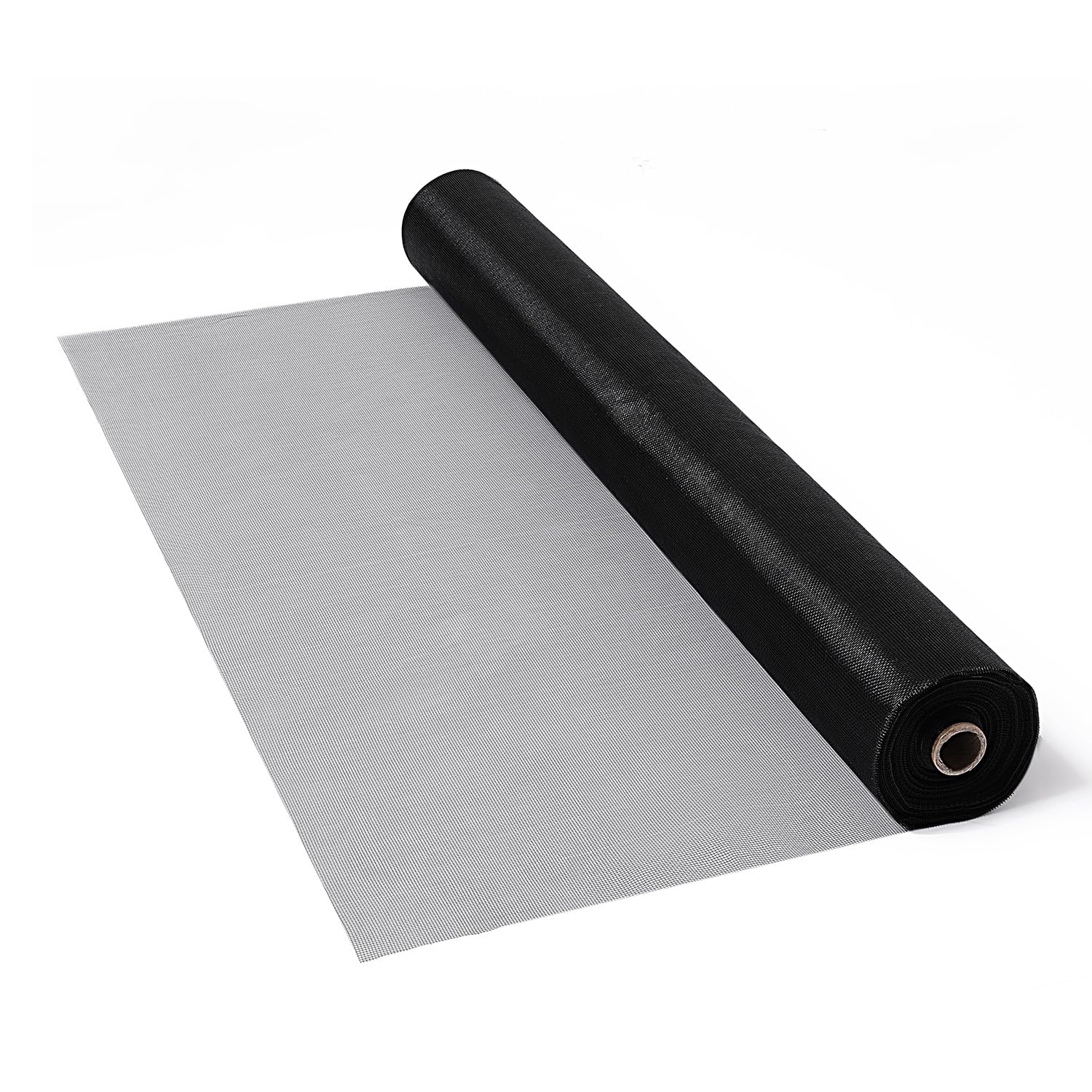
The re-screening roll that turns a weekend of frustration into a flat, perfect panel.
If you have multiple basement windows, a rotten screen already in place, or oddly sized openings, this roll is the smarter buy than any single pre-made frame. It is a 36-inch-wide, 50-foot-long sheet of fiberglass mesh engineered to be cut to size — the manufacturer rates its radial strength at over 320N per inch (a measure of tear resistance), which makes it difficult to crease or unravel. It is designed to keep its shape through washing and sunlight for at least five years.
The story owners tell is about how forgiving it is to work with. Reviewers point out re-screening around 15 windows with it and finding it “surprisingly very easy to work with” — it pulls to a flat panel without the lopsided mess that cheaper mesh causes. It has held up against multiple cats and birds, and one owner rescreened a 20×10 patio and still had material left over. That sheer volume makes it the clear winner for anyone with several windows to cover.
The trade-off is that you have to do the labor. This is not a slide-in frame; you will need to cut it, stretch it, and secure it with spline or staples in your existing frame. Quality and ease of use are the top praised aspects, so the material itself is not the problem — just be ready for the installation work. For a dedicated DIY-er, this is the most economical route to covering a whole basement full of windows.
What makes it a bargain
- 50-foot roll covers a whole house of windows
- Over 320N per inch radial strength resists tears and creases
- Wrinkle-resistant mesh pulls to a smooth, flat panel
The effort required
- You must cut and install it yourself with spline or staples
- No frame included, so you need existing tracks to mount it
Choose this when: you have several windows to fix and are comfortable with basic DIY — the per-window cost drops fast with a 50-foot roll.
Pass on it if: you want a five-minute, tool-free install and only have one window to cover.
5. Home Intuition 2-Pack Adjustable Window Screen, 15″ H × 19″–33″ W

A dependable two-pack for windows that won’t stay up or never had a screen at all.
This two-pack is built for the practical realities of older windows. Each screen expands from 19″ to 33″ wide at 15 inches high, pairing galvanized side rails with varnished wood ends for a sturdy, long-lasting feel. The bright mesh allows air circulation while keeping out seasonal pests, and the design even works as a support to hold up a window that keeps sliding down on its own. Owners note it fits aluminum casings nicely.
Its strength is usefulness across many scenarios, from RVs to dorms. Buyers describe it as the perfect economical solution for windows without permanent screens — it prevents spider webs, keeps bugs out, and installs in seconds with small brads if you want extra security. It is also a great option for an RV camper or a dorm room where you cannot modify the window permanently. The ease of use is the most-praised aspect, and the two-pack price point makes it an easy decision for covering a couple of openings at once.
Be honest about the build, though: it is a light, somewhat flimsy product. The durability feedback is the most-discussed aspect and it leans negative — owners say the screens work but break easily, and a few find them “a little pricey for the quality.” One summed it up as “do work, but flimsy.” For a seasonal screen that goes up in spring and comes down in fall, this is fine. For year-round rough-and-tumble use, look at the sturdier picks above.
The balanced call: a solid two-pack for the money that handles basic bug-blocking with ease — just know the frame is light and better treated gently.
Best suited for: renting situations, RVs, or dorms where you want an easy, removable screen for a standard-width window.
Not ideal if: you need a heavy-duty frame that will survive pets, rough weather, or constant handling.
6. Lengtimo 304 Stainless Steel Mesh Roll, 47″ x 200″

The steel mesh that stands between your basement and anything claws, paws, or gnaws.
This is the heavy artillery of window screens. It is a 47-inch-wide, 200-inch-long roll of 304 stainless steel mesh — the same corrosion-resistant grade used in marine and food-grade applications — so it laughs at the damp that ruins fiberglass and aluminum frames in basements. The small mesh spacing means cats cannot climb it and rodents cannot chew through it, and it arrives with stab-resistant gloves for safe handling during install. Quality is the top praised aspect, and it is easy to see why.
The real-world stories back up the toughness. One owner mounted it to stop aggressive squirrels from climbing the front window screen, and it worked. Another used it to enclose a catio, choosing it specifically because the small mesh stops cats from trying to climb. It has weathered major storms with no issues, and owners describe it as sturdier than any nylon or other metal mesh. If you have ever come downstairs to find a screen shredded by a determined raccoon, this is the cure.
The catches are difficult cutting and mixed durability reports. The mesh is very sturdy — almost too much so — and buyers find it difficult to cut, needing serious effort or shears even with a sharp razor blade. The durability verdict is mixed because a few report rust appearing within two months, which contradicts the stainless claim, so it may depend on the exact environment. And the roll means you are doing DIY work, not a slide-in install. But for raw protective strength, nothing else here compares.
Why it is the fortress
- 304 stainless steel resists corrosion and is essentially unchewable
- Small mesh prevents cats from climbing and critters from entering
- Stab-resistant gloves included for safe handling
The hard parts
- Very difficult to cut — needs strong shears, not a utility knife
- A few owners reported rust appearing within two months
Pick this if: pets or pests are actively destroying your screens and you need a barrier that physically cannot be clawed through.
pass on it if: you want a tool-free, pre-framed screen — this requires real cutting effort and a DIY install.
7. paramondo Expandable Window Screen, 10″ H × 19.6″–36″ W, 2-Pack
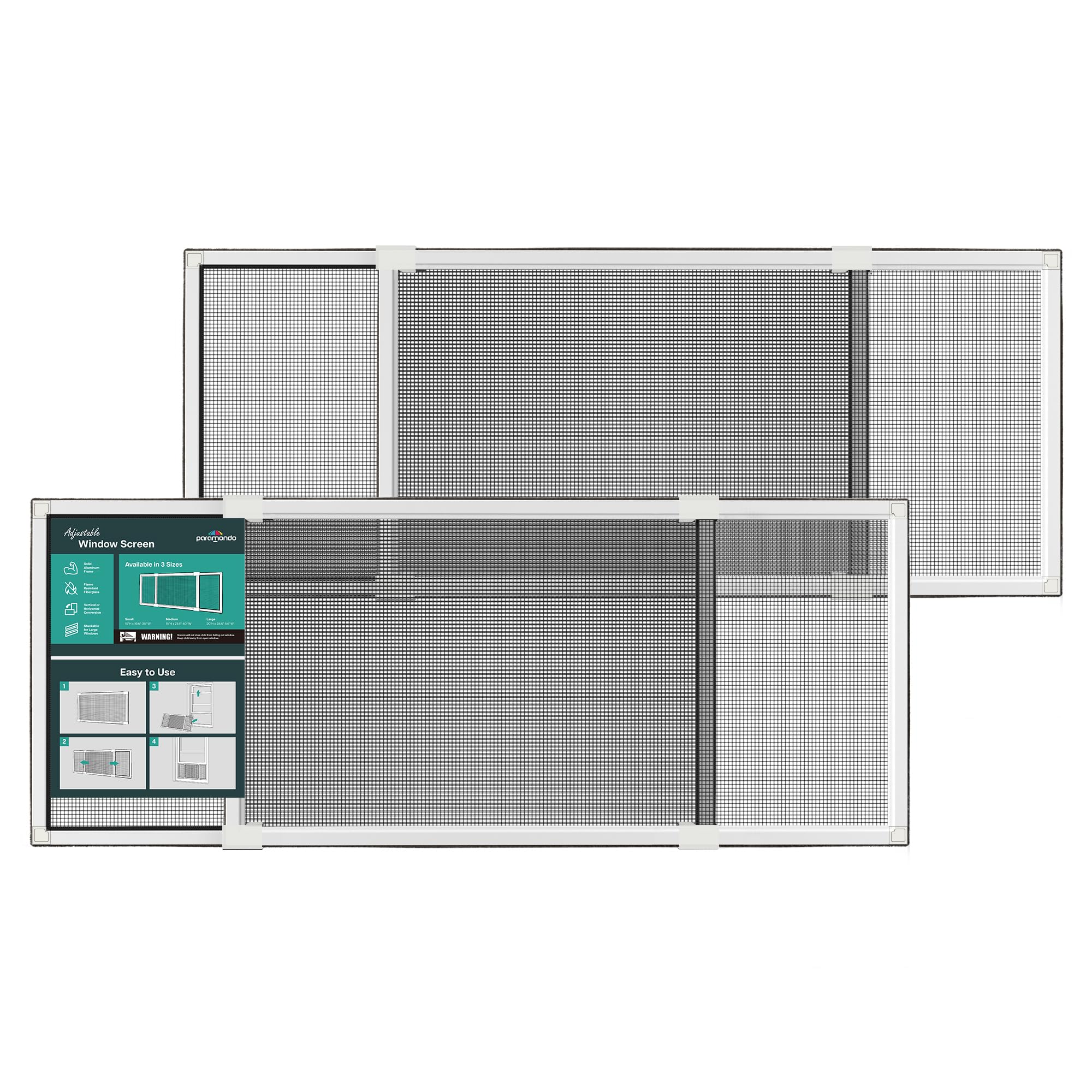
The compact screen that disappears visually while blocking bugs with real substance.
For the small, low-set windows typical of basements, this paramondo two-pack is a refined fit. It expands from 19.6″ to 36″ wide at just 10 inches high — short enough to sit neatly in a tiny pane without blocking the view. The white powder-coated aluminum frame with black fiberglass mesh looks sharp, and owners consistently praise the build quality and the fit, calling it well-built and noting how smoothly the two halves slide to the exact width.
It is engineered for double-hung windows and installs in seconds with no tools — open, insert, expand, close. The weatherstripping on the top and bottom adapts to rough surfaces while still letting air flow, and it stays firmly in place with no shaking once installed. Buyers mention it works great on porch windows and for ADUs (accessory dwelling units) that never came with screens. It also converts to a vertical orientation, though the manufacturer warns that takes strong practical skills, so most people will keep it horizontal.
The only real limitations are the 10-inch height and the fact that the conversion is not recommended for casual users. If your basement window is taller than 10 inches, this will leave a gap unless you stack two or pick a taller model. Quality and durability both get strong positive feedback here, which is rare for an adjustable screen, so the construction is the reason to pay a bit more. It is the best-looking, best-built compact option on this list.
The standout quality: premium-feeling frame and mesh with smooth adjustment and a clean look — easily the most polished small-screen option here.
Reach for it if: you want a handsome, tool-free screen for a small basement pane and you value build quality over rock-bottom price.
Measure first if: your window is taller than 10 inches — the low profile will leave a visible gap at the top.
8. Treela 6-Pack Expandable Window Screens, 10″ H × 19″–36″ W

Six adjustable screens in one box, ready to cover every basement window in one go.
When you want to stop counting individual screen purchases and just cover the whole house, this six-pack does it. Each screen is 10 inches high and expands from 19″ to 36″ wide, which matches the most common basement window sizing for most homes. The frame is aluminum alloy and the mesh is fiberglass — and notably, the gauze is flame retardant, a small safety perk you do not see on every screen. It is also explicitly marketed for basements, along with bedrooms, living rooms, and balconies.
Its standout feature is versatility, doubling as a pet barrier. Shoppers say using them as a perfect pet barrier, with one writing that they “work fabulously to block my small dogs from going through doorways into carpeted areas.” The double-layer frame is adjustable and slidable, installing in seconds without tools — place it in the opening, adjust the width, close the window. Effectiveness is the most-praised aspect, and buyers find them sturdy and well-made, with a strong build for the per-unit cost.
The weakness is an imperfect perimeter seal that may let in crawling bugs. A few owners note that gaps remain around the edges, which can let crawling bugs through — one called it a “decent short term option” rather than a permanent solution. For typical flying insects and as a pet barrier, it works great, but if you are dealing with tiny crawling pests, the seal may not be tight enough.
The volume play: unbeatable coverage per box with solid build and a flame-retardant mesh — just accept that the edge seal is not fully airtight.
Best for: households re-screening multiple windows at once or needing a flexible pet barrier that blocks doorways and window openings.
Not for: anyone fighting crawling insects at floor level, where the perimeter gaps become an entry point.
Understanding the Specs
Adjustable Width Range
This is the single most important number. An expandable screen is built to span a range — like 19″ to 33″ or 25″ to 45″ — and it only works if your window opening falls inside that span. Measure the widest and narrowest parts of the opening, then pick a screen whose range covers both comfortably. A screen that is too small falls out; one that is too big buckles and never sits flat.
Frame Material & Finish
Basements are damp, so the frame metal matters more than you think. Powder-coated aluminum fights rust far better than bare steel and keeps the frame rigid for years. Galvanized rails are the classic budget option — they resist corrosion too, but the wood ends on some models can swell or split over time. Stainless steel is the premium tier, essentially immune to rust and strong enough to resist claws and chewing.
FAQ
How do I measure my basement window for an expandable screen?
Will an adjustable screen fit a double-hung window?
Can I convert a horizontal screen to vertical use?
How long will a fiberglass window screen last?
What is the difference between a framed screen and a mesh roll?
Will a basement window screen keep out mosquitoes and other bugs?
Can a screen keep my cat or dog from getting out?
Which is better for a basement, aluminum or stainless steel mesh?
Final Thoughts: The Verdict
For most households, the basement window screen winner is the Fenestrelle 2-Pack because it pairs a rust-resistant powder-coated frame with built-in weatherstripping, and its 4.7-star crowd approval across thousands of owners proves it just works. If you are covering several windows at once and do not mind a little DIY, the RhymBar mesh roll gives you a 50-foot sheet that stretches further than any frame. And for anyone with pets or persistent critters, the Lengtimo stainless steel roll is the only screen on this list that physically cannot be clawed through.
How We Picked
We do not accept paid placement. Every pick is matched to a real buyer and a real use-case; we do not hands-on test units.
Sources & Methodology
Specifications: manufacturer listings and product documentation. Review insights: verified customer reviews, as of August 2026. Pricing: not shown on this page (it changes often); check the current price via the retailer link.
As an Amazon Associate, Gadgets Feed earns from qualifying purchases. This does not affect which products we feature.