
Our readers keep the lights on and my morning glass full of iced black tea. As an Amazon Associate, I earn from qualifying purchases.
Specs are compiled from manufacturer listings and verified buyer reviews and can change over time — please confirm the key details on the product page before buying.
If you just want to glance down and see your speed, distance, and ride time without wrestling with a phone mount or draining your battery, a dedicated handlebar computer is the answer. The best pick for most riders hands you GPS accuracy, a readable screen, and long battery life all in one small package — no wheel sensor or spoke magnet required.
I’m Min — the founder and writer behind Gadgets Feed. This guide is built by comparing the manufacturers’ published specifications and the patterns across verified customer reviews, so you get each pick’s real strengths and trade-offs instead of marketing spin.
Sorting through the specs and owner experiences, the basic bike computer that balances ease, accuracy, and value for everyday riders is the COOSPO BC26.
Our Picks at a Glance


How To Choose The Best Basic Bike Computer
Your first choice is how much setup you want and if you need GPS. A GPS computer clips onto your handlebar and works right away, but you must recharge it. A wired or sensor-based computer costs less and runs on a coin battery for a year, yet you’ll spend time attaching a magnet and zip ties to your wheel.
Decide on GPS vs. Wheel Sensor
GPS models like the top picks figure out your speed and distance from satellites, so there’s nothing to attach to your spokes. Sensor-based computers measure a magnet passing a pickup each wheel rotation, which is how classic wired units work and what keeps many budget options affordable. If you ride an e-bike where magnetic interference can confuse sensors, or you simply hate fiddly installs, GPS is the smoother path.
Match the Screen to Your Eyes
You’ll glance at this mid-ride, so the display matters more than any single spec. A 2.3-inch or 2.4-inch screen gives you room for large numbers, and an auto backlight that senses dim light means you can see it in a dark tunnel or at dawn. On the budget end, a 4-line screen that shows everything at once beats one that makes you tap a button through a single line of data.
Quick Comparison
| Model | Best For | Type | Battery Life | Screen Size | Amazon |
|---|---|---|---|---|---|
| COOSPO BC26★ Best Overall | Entry-level GPS value | GPS + Bluetooth | 25 hours | 2.3 inches | Amazon |
| Bikevee Wireless GPSMost Features | Long rides & data depth | GPS | 28 hours | 2.4 inches | Amazon |
| Planet Bike Protege 8.0Wired Champ | Wired reliability | Wired | 1 year | 4-line LCD | Amazon |
| CATEYE Urban | Backlit wireless basics | Analog Wireless | 1 year | — | Amazon |
| Sigma BC 7.16 ATS | Simple wireless tracking | Analog Wireless | 100 hours | 27 mm | Amazon |
| Prophete Wired | Budget wired basics | Wired | — | Large LCD | Amazon |
| Schwinn 11 Function | Wired value seeker | Wired | — | Large display | Amazon |
| Vdo M3.1 Wl | Wireless 17-function unit | Bluetooth | — | — | Amazon |
| Planet Bike Protege 9.0 | Data-rich wireless display | Wireless | 1 year | 5.5 cm | Amazon |
In‑Depth Reviews
1. COOSPO BC26 Cycling Computer
Our pick — over 4★ from 900+ verified ratings; the strongest balance of quality and price.
The GPS unit that gets you riding in minutes with zero wheel sensors
The COOSPO BC26 skips the spoke magnet entirely — a Dual GPS positioning sensor locks onto satellites, so your speed, distance, and altitude appear without a single cable or zip tie. Setup is genuinely entry-level, which is the point here, though you should know it won’t pair with external sensors, so indoor trainer rides are out. The screen handles the rest: a 2.3-inch segment code FSTN glass display that stays readable in direct sun and senses the light to switch on the backlight automatically.
Battery life is where this earns its keep. A single charge delivers 25 hours of continuous GPS tracking, then you sync your ride to Strava as a.fit file through the CoospoRide app over Bluetooth. What wins people over is the functionality — the way it shows current, max, and average speed, total and trip distance, cycling time, and altitude, all while staying quick to connect and easy to read. Accuracy holds up too, with riders reporting it matches dedicated computers like a Garmin on the same route.
The catch to size honestly: the battery draws mixed feedback, with some finding it excellent and others seeing a faster drain when the backlight runs. There’s also a max speed alarm you can set, but it defaults to off, and the extension mount isn’t included — plan to buy that separately. At 54 g it’s barely there on your bars, and it’s the crowd favorite for a reason, sitting at 4.3 stars with 900+ ratings behind it.
Why It’s the One
- GPS setup means no wheel magnet or cables to route
- 25-hour battery handles weekend rides and commutes alike
- Auto backlight and sunlight-readable screen keep data visible anytime
What to Weigh
- No sensor pairing means no indoor trainer support
- Battery life is excellent for some, questionable for others
- Mount sold separately
The Simple Verdict: This is the one to grab if you want GPS accuracy and app syncing without paying premium prices.
Think Twice If: You ride indoors on a trainer, where this unit can’t read your speed without sensors.
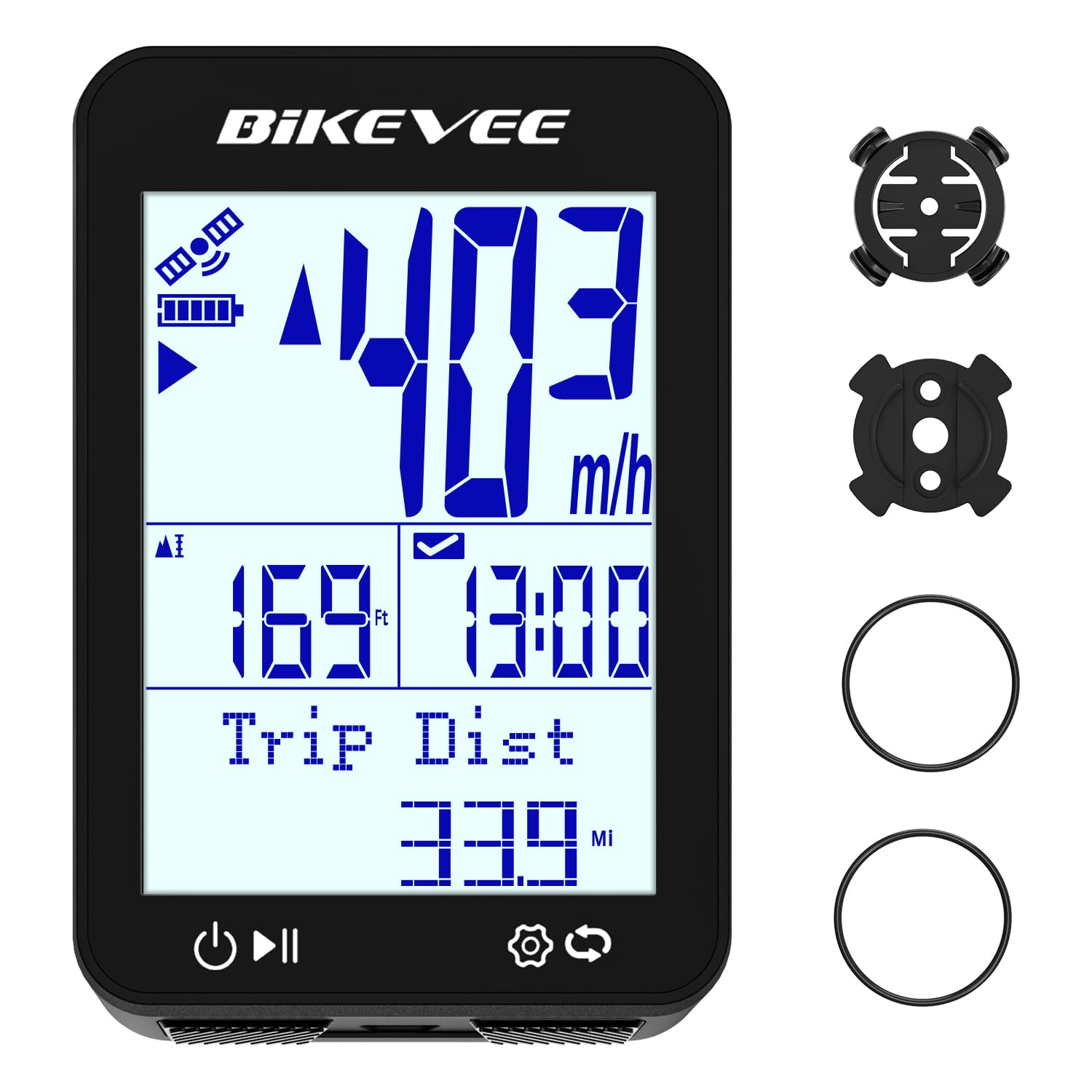
2. Bikevee Wireless GPS Bike Computer
The GPS computer with the biggest screen and longest runtime in this lineup
The Bikevee takes the GPS simplicity of the COOSPO and pushes it further. Its built-in GPS works without a wheel sensor, spoke magnet, or any connecting cables, then auto-starts recording when you roll and pauses at stoplights so you’re not tapping buttons mid-ride. The display jumps to 2.4 inches — slightly larger than the COOSPO’s 2.3 — and packs in temperature, altitude, gradient, and accumulated ascent alongside the usual speed, distance, and time stats.
That 28-hour runtime on a 650mAh rechargeable battery beats the COOSPO’s 25 hours, a real advantage if you’re on all-day adventures or forget to charge before a long weekend. Buyers report it holds a charge far better than a premium Garmin Edge 150 over a 7-hour mountain bike ride. It charges over USB-C, which is the modern standard you likely already have, and the IPX7 waterproofing means a downpour won’t kill your ride data.
The trade-off is depth, not quality. There’s no Bluetooth, phone pairing, or mapping here — this is a pure ride computer, and that’s the appeal. Accuracy gets mixed notes in the reviews, though most find it works better than expected for the price. It’s simple to operate, connects to GPS satellites in under a minute, and the scan function that scrolls through your stats is a favorite. It weighs just 50 g, lighter than the COOSPO’s 54 g.
The Big Wins
- 28-hour battery leads this list and outlasts a premium Garmin in owner tests
- 2.4-inch auto-backlit screen is the clearest here
- USB-C charging is fast and convenient
What’s Missing
- No Bluetooth, phone app, or maps
- Accuracy gets mixed feedback across owners
- No 12-hour clock option, a small gripe some note
Reach for This If: You want the most ride data on the biggest screen with the longest battery in this roundup.
Look Elsewhere If: You want to pair a heart rate monitor or follow maps — this unit is strictly standalone.
3. Planet Bike Protege 8.0 8-Function Bike Computer
The wired workhorse with a 4-line screen that owners keep for years
If you’d rather never charge a device, the Planet Bike Protege 8.0 is the reliability king. It runs on a lithium battery rated for 1 year, and that Auto start and stop feature kicks in the moment your wheel spins, so data collection is automatic. The standout is the 4-line MacroMonitor LCD that displays up to 5 pieces of data at a glance — speed, ride time, distance, and clock all visible without cycling through menus.
What wins people over is the reliability, with owners calling it flawless for years, one noting it has worked since 2007. It’s accurate too, with two units tracking within 2/100 of a mile over a 15-20 mile ride. The heavy duty wire harness is durable and weatherproof, and the magnet fits up to 4mm bladed spokes, making it versatile across wheel types. It fits 25.0-31.8mm handlebars and includes an 82 cm wire mounting kit for the front wheel.
The honest trade-off is the setup. Wiring a computer means routing a cable to the front wheel, and owners admit the install takes patience — though it’s the simplest setup some have experienced. The slide-button reset can clear data if bumped, and stop time gets included in your average. This unit is for riders who want set-and-forget simplicity over GPS features, and it’s the one to pick if you commute in all weather and don’t want to think about charging.
Built to Last
- 1-year battery means no charging all season
- 4-line display shows everything at once
- Durable, weatherproof wire harness holds up for years
The Install Reality
- Wiring the front wheel takes time and patience
- Slide-button reset can accidentally clear data
- Stop time is included in your average speed
Grab It If: You want a dependable wired computer that runs for a year on one battery and shows everything on one screen.
skip it if: You’d rather avoid routing a wire down your fork — GPS units do the same job with zero cables.
4. CATEYE Urban Wireless Bike Computer
The wireless classic with a backlit screen so night rides don’t end at sunset
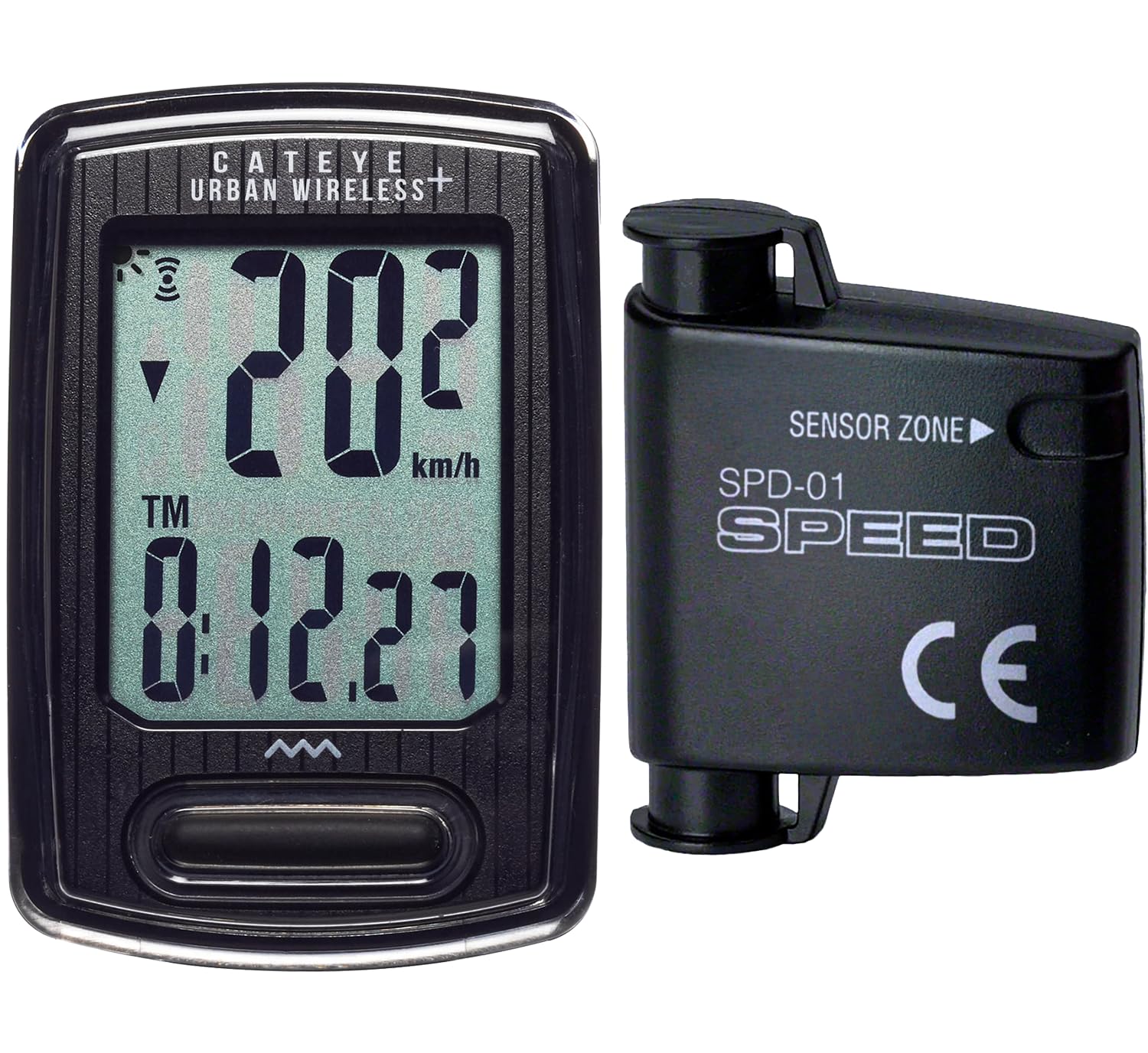
The CATEYE Urban is for the rider who wants a wireless computer that still uses a wheel sensor — a middle ground between GPS and full wired installs. Its defining feature is the backlit display, which means your ride doesn’t have to stop when the sun goes down. You get current, max, and average speed, total and trip distance, elapsed time, calorie consumption, a pace arrow, and a clock, all in a compact head that weighs just 1.12 ounces.
What wins people over is the ease of use — owners consistently call out the big, easy-to-read numbers and a setup that takes under 10 minutes. The FlexTight Bracket lets you mount, adjust, and move the computer by hand, so transferring it between bikes is tool-free. There’s a smart pause too: when you stop at a red light or for coffee, it automatically stops counting time and averaging your speed, so your numbers stay honest.
The reliability is solid over the long haul, but there’s one recurring complaint to know: occasional speed readings can drop to 0, which some trace to the magnet failing to communicate with the sensor. One owner’s battery cover tab broke, so treat the back carefully. The IPX8 rating means it’s fully protected against water immersion, more weatherproof than most. It runs for a year on a lithium metal battery, so you’re not tethered to a charger, saving your miles with a manually set odometer even after battery changes.
What Shines
- Backlit display keeps riding data visible after dark
- Tool-free FlexTight bracket moves between bikes easily
- IPX8 waterproofing tops this list for wet rides
What to Watch
- Occasional speed readings drop to 0 for some owners
- Battery cover tab is delicate
- Wheel sensor install still required
Best Suited To: Commuters and after-work riders who need a readable screen when daylight fades.
Consider Another If: You want GPS without a wheel sensor, or you’re rough on battery compartments.
5. Sigma BC 7.16 ATS Wireless Bike Computer
The no-frills wireless unit for riders who just want miles and speed logged
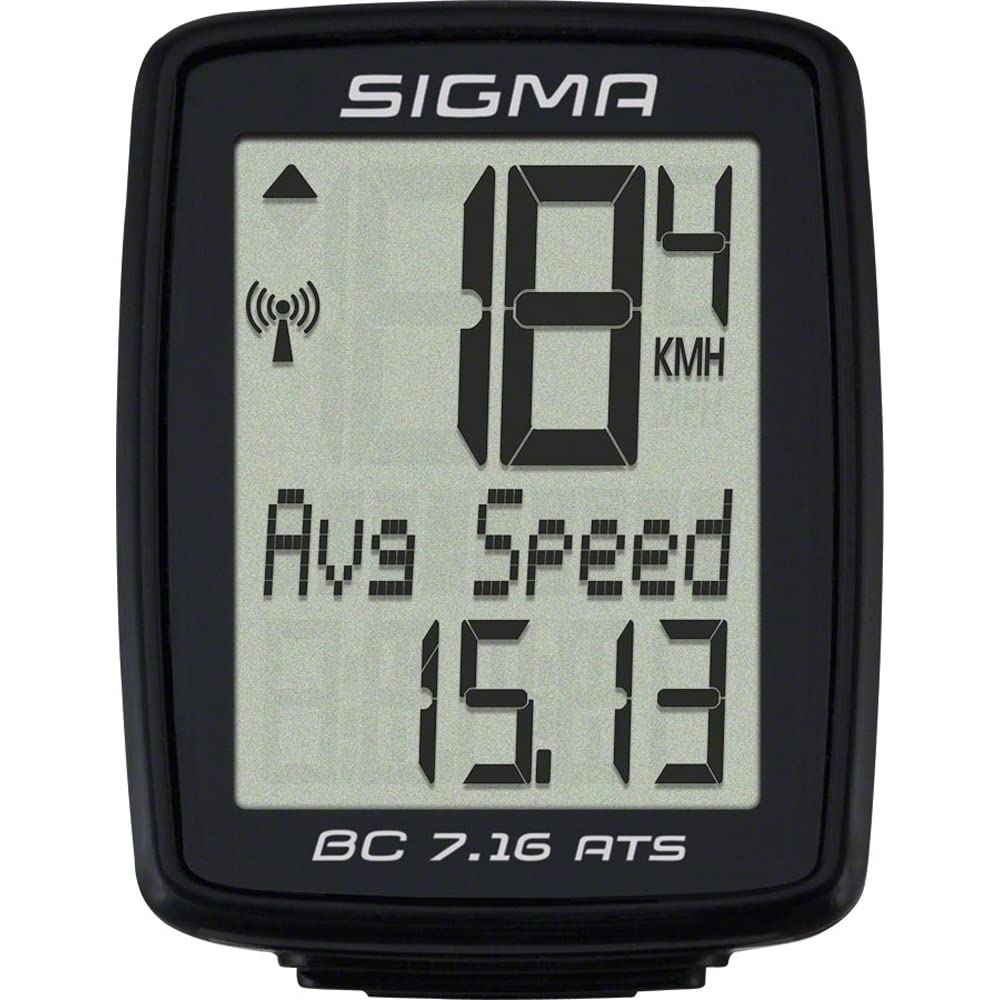
The Sigma BC 7.16 keeps things genuinely basic, and that’s exactly who it’s for. It’s a 7-function analog wireless computer with a large, easy-to-read display and automatic start/stop, built for riders who want to track miles and speed without a single app or cable. The 27-millimeter LCD screen is compact, and the whole unit weighs just 18.14 g — the lightest option in this roundup by a wide margin.
Where it stands out is the ride time: up to 100 hours, which is a lifetime of logging before you worry about the battery. Owners describe it as easy to set up and reset, with one parent noting their son had it ready in minutes for his first ride. The large numbers are the draw for many, especially older riders who appreciate bold digits over dense data. It’s weatherproof, so a rain-soaked commute won’t faze it.
The catch is the compatibility, which gets mixed feedback — some units don’t work for every rider, and a few owners mention units failing to work after a season of storage. The real friction, though, is the manual: it comes on a giant tissue-paper-style sheet printed in nine languages, and owners find it genuinely hard to follow. The small button on the back also makes programming tricky. This is a great pick for a kid’s first computer or a simple commuter, less so if you want clear instructions from the start.
Keep It Simple
- 100-hour ride time means rare battery changes
- Large numbers are easy to read at speed
- Featherweight 18.14 g barely registers on the bars
The Friction
- Notoriously hard-to-follow multi-language paper instructions
- Compatibility is mixed — some units don’t work for some riders
- Small back button is tricky to program
Who It’s For: A first bike computer for a young rider or anyone wanting the lightest, simplest speed-and-miles tracker.
Who Should Pass: Anyone who wants clear instructions or who’s had wireless compatibility issues on an e-bike.
6. Prophete Wired Bike Computer

The value-priced wired unit that nails speed and time without radio fuss
The Prophete takes the wired route for a reason: a stable connection with no radio interference, which is a genuine advantage for riders who’ve fought with wireless dropouts. It packs 9 functions — speed, average, driving time, distance, total mileage, and more — all the basic data at a glance. The large display is easy to read while driving, and it’s waterproof for all-weather touring.
Customers note the speed display is reliable and it shows the time well, making it good value for the money. The wired connection means what’s on screen is what’s happening with your wheel, no satellite lag or signal hunting. It’s easy to install too, mounting quickly to the handlebars with front or handlebar mounting options.
The recurring gripe is the micro-print installation guide, which lacks clear instructions on magnet spoke placement — the one step that actually matters for accuracy. Some owners note the tiny text is hard to read, especially with bifocals on. It runs on a lithium ion battery included in the box, so you can install and ride immediately. This one is for the budget-conscious rider who values rock-solid speed data over GPS maps and doesn’t mind a bit of setup tinkering.
What Works
- Wired connection means no signal dropouts or radio interference
- Reliable speed display and clock per owner reports
- Waterproof design is ready for outdoor tours
What Frustrates
- Micro-print guide lacks magnet placement details
- Small text in the instructions is hard to follow
- Wired install still required
Ideal For: Budget riders who want dependable wired speed tracking without wireless headaches.
Not For: Anyone who needs clear setup instructions or refuses to route a wire.
7. Schwinn 11 Function Wired Computer
The wired budget option that wins over e-bike riders frustrated by wireless
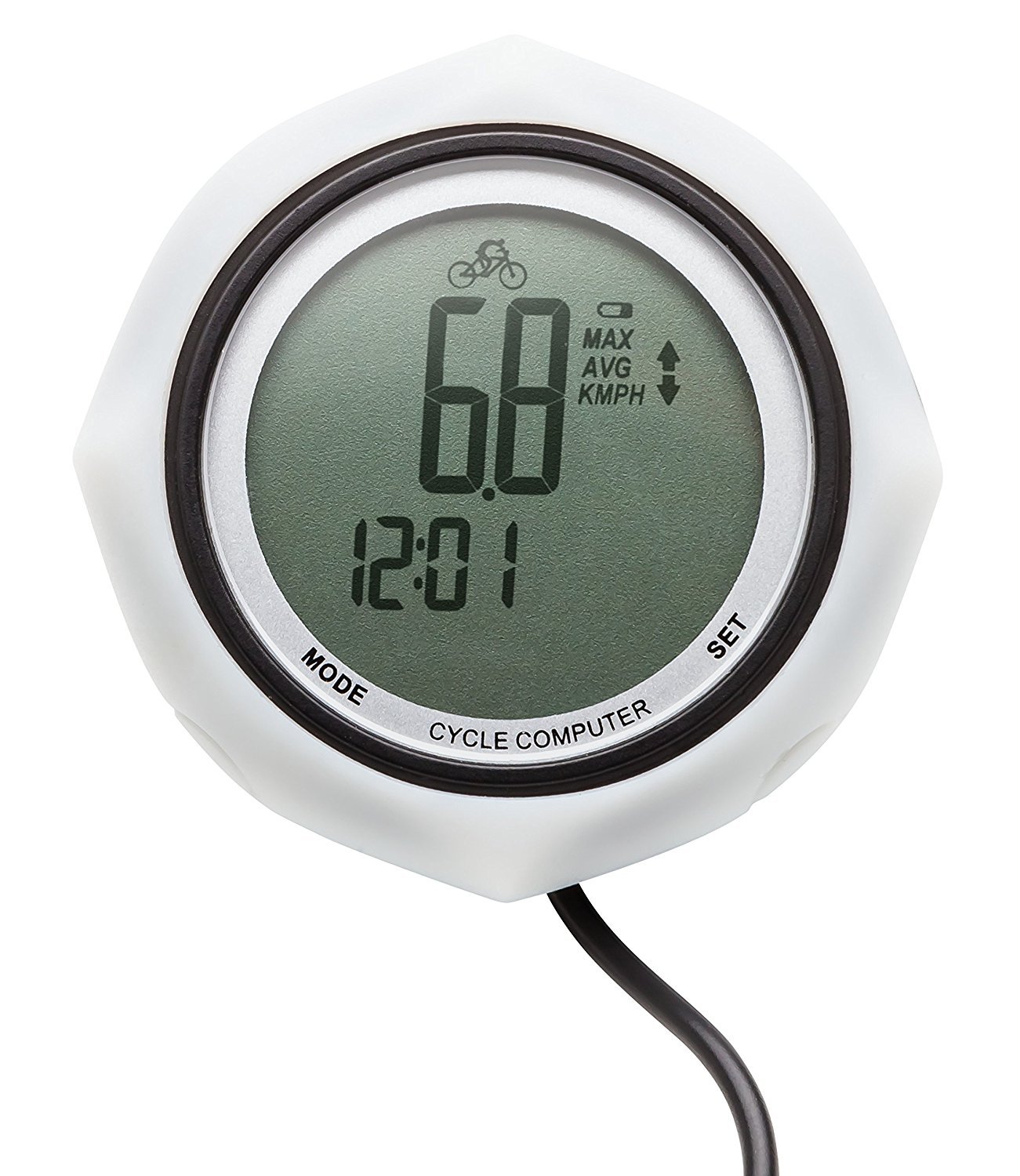
The Schwinn 11 Function is the quiet solution for a specific problem: wireless sensors that don’t play nice with electric bikes. One owner specifically found wireless didn’t work on their e-bike, while this wired unit worked perfectly for recording trip miles, total miles, trip time, and time of day. It’s a basic, easy-to-use computer with a large display that monitors distance and speed well.
The 11 functions cover average speed, calorie burn, and distance, with the large display screen making readings easy while riding. It’s lightweight at 16 ounces and runs on alkaline batteries, the most common and cheapest battery type. For the price, it’s the kind of unit that gets the job done without fuss — owners call it the simplest setup they’ve experienced.
The honest reality is mixed feedback on functionality. Some find it works great, while others report it quitting after about 30 seconds regardless of fiddling — and the install relies on zip ties instead of screw clamps, which some riders actively dislike. Setup is also genuinely hard for some, with one owner unable to get it to register at all. These are real complaints, but framed as fit: if you get a working unit, it’s a capable little tracker, and it uniquely solves the e-bike wireless problem.
The Upside
- Wired design works where wireless fails on e-bikes
- 11 functions including calorie burn at a budget price
- Large display is easy to read mid-ride
The Downside
- Some units quit working shortly after install
- Zip tie mounting instead of screw clamps frustrates some
- Setup can be genuinely difficult
Choose It For: E-bike riders who’ve given up on wireless sensors picking up speed.
Hesitate If: You want guaranteed reliability from the start — quality control is inconsistent here.
8. Vdo M3.1 Wl Updated Cycling Computer

The wireless multi-function unit for riders who want 17 tools on the bars
The VDO M3.1 Wl goes big on function count — 17 functions in a wireless, Bluetooth-connected package. That’s more data points than most basics offer, covering everything from current speed to cumulative stats, all in a digital black design that suits most bikes. It mounts to the handlebar and runs on a lithium battery.
The illumination is adjustable to a specific schedule — you can set when you want the backlight active, which is a thoughtful touch for dawn commuters. The IPX4 rating means it Resists splashes from any direction, so light rain won’t stop it.
The trade-off is clarity, not features. Compared to the VDO M1, the display is not as clear, with the M1’s screen being both larger and clearer. It also runs a bit sluggishly — functional, but not snappy. The instructions are complete but demand careful reading to set defaults and mounting correctly. This is a fit for riders who want the sheer number of functions on a budget rather than the crispest display.
Feature Rich
- 17 functions cover nearly every stat a basic rider needs
- Adjustable backlight schedule suits dawn and dusk rides
- Bluetooth wireless keeps the bars clean
Where It Fades
- Display is less clear than the larger VDO M1 screen
- Runs a bit sluggishly per long-term owners
- Instructions demand careful reading
Reach For It If: You want the maximum function count in a wireless unit without paying premium prices.
pass on it if: Screen clarity and snappy response matter more to you than feature count.
9. Planet Bike Protege 9.0 Wireless Bike Computer

The wireless big-screen unit that shows everything at once including temperature
The Planet Bike Protege 9.0 takes everything riders love about the wired 8.0 and cuts the cable. It’s a 9-function wireless computer with a 4-Line Macro monitor LCD that displays up to 5 pieces of data at a glance — speed, ride time, trip distance, average, and max all visible together. The 55mm screen is generous, and the case size of 40mm x 55mm keeps it tidy on the bars. It fits 25 to 31.8 mm handlebars.
What makes this one different is the dual odometer for two wheel sizes, plus a clock and thermometer — a rare feature in this class. The digital wireless technology eliminates messy wires, and the universal handlebar/stem compatible bracket makes mounting flexible. Reviewers point out accurate distance within a tenth of a mile after calibration, and one noted it stayed flawless over 200 miles. It’s reliable over the long haul too, with one owner running it for 18 months on the original battery.
The 4-line display is the most-praised feature, with 75 owners singling it out, and installation is easy for most. But reliability is the most-discussed issue overall, with some units stopping signal reception over time. The thermometer reads about 12°F high per some owners, and there’s no backlight, so night riding means carrying a light. You’ll also need to wake the unit from sleep before riding. This is a strong pick for daylight riders who want a data-rich screen without wires.
The Standout Screen
- 4-line display shows 5 data points at once — no menu diving
- Dual odometer handles two wheel sizes on one unit
- Thermometer adds an all-in-one info edge
Know Before You Buy
- No backlight limits night use
- Some units stop receiving signal over time
- Thermometer runs about 12°F high
Best For: Daytime riders who want a big wireless screen with every stat visible without pressing buttons.
Think Twice If: You ride after dark or need guaranteed signal reliability on every ride.
Understanding the Specs
GPS vs. Wheel Sensor Accuracy
GPS computers (like the COOSPO and Bikevee) calculate speed from satellite positioning, which means zero installation beyond mounting the head unit. Wheel sensor units (wired or analog wireless) measure a magnet passing a pickup, which requires careful magnet-to-sensor alignment. The trade-off is simple: GPS is cleaner to install but needs recharging; sensor units run for a year or more on a coin battery but demand accurate wheel circumference settings for correct distance.
Battery Life and Screen Size
Battery life ranges from 25 hours on the COOSPO to 28 hours on the Bikevee for GPS units, while sensor-based models like the CATEYE and Planet Bike run about a year on a single battery. Screen size matters more than you’d think — a 2.3-inch or 2.4-inch screen shows large numbers you can read at speed, while a 4-line display on wired units shows multiple stats at once. Look for an auto backlight if you ride at dawn, dusk, or through tunnels.
FAQ
What’s the difference between a GPS bike computer and a wired one?
Will a bike computer work on an electric bike?
How long does the battery last on a basic bike computer?
Do I need a wheel magnet for a GPS bike computer?
What does IPX7 waterproof rating mean for cycling?
Can I track calories with a basic bike computer?
How do I set the correct wheel size on my bike computer?
Is a wireless bike computer worth paying more for?
Can I use a basic bike computer at night?
How do I sync my ride data to Strava?
Final Thoughts: The Verdict
For most riders, the basic bike computer winner is the COOSPO BC26 because it delivers GPS accuracy, a sunlight-readable 2.3-inch auto-backlit screen, and 25 hours of battery with zero wheel sensors to install. If you want the biggest screen and longest runtime, grab the Bikevee Wireless GPS with its 2.4-inch display and 28-hour battery. And for year-long battery life on a wired budget, the Planet Bike Protege 8.0 is the one to reach for.
How We Picked
We do not accept paid placement. Every pick is matched to a real buyer and a real use-case; we do not hands-on test units.
Sources & Methodology
Specifications: manufacturer listings and product documentation. Review insights: verified customer reviews, as of August 2026. Pricing: not shown on this page (it changes often); check the current price via the retailer link.
As an Amazon Associate, Gadgets Feed earns from qualifying purchases. This does not affect which products we feature.